Exploring California’s Most Famous Road Trip? These 13 Stops Make The Journey Legendary
An unforgettable stretch of roadway hugs the edge of the continent where cliffs rise sharply above the Pacific and waves crash far below.
Each mile delivers a new perspective as coastal bluffs beaches and open water unfold in a continuous display of natural beauty.
The Pacific Coast Highway stands as one of the most iconic routes in California offering travelers an ever-changing journey shaped by sea air sunlight and rugged terrain.
Small coastal towns appear between dramatic viewpoints inviting unhurried stops and quiet exploration.
Ocean mist drifts across the road in the early hours while golden light transforms the coastline as the day unfolds. Scenic pullouts reveal sweeping vistas that encourage drivers to slow down and take it all in.
More than a scenic drive this route captures the spirit of the coast through powerful landscapes peaceful moments and an enduring sense of freedom that makes every mile feel unforgettable.
1. Devil’s Slide, Pacifica
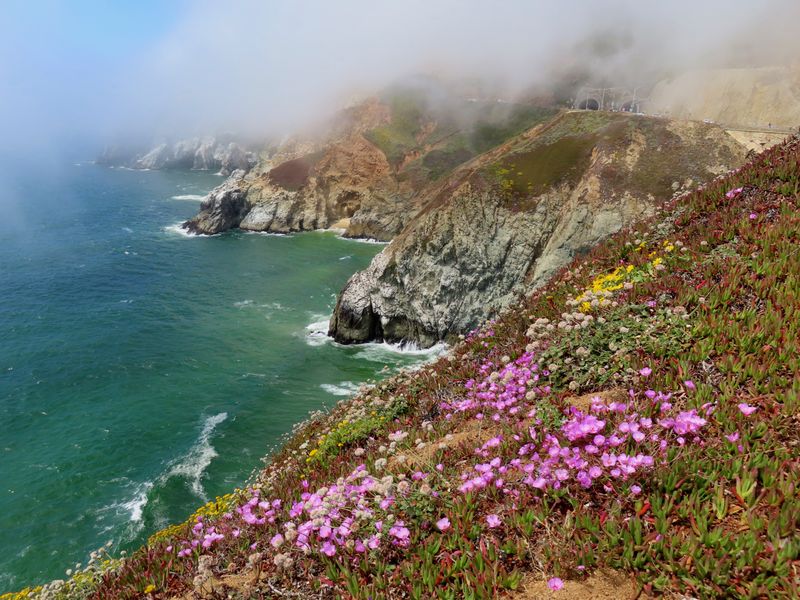
Carved into steep coastal cliffs just south of San Francisco, this stretch of highway offers some of the most dramatic ocean views on the entire Pacific Coast.
The old roadway has been transformed into a paved recreational trail that walkers and cyclists now enjoy, while modern tunnels carry vehicle traffic safely through the mountain.
Waves crash against jagged rocks far below, and on clear days, the horizon stretches endlessly across the blue Pacific.
Parking areas near the trail provide easy access to overlooks where visitors can pause and take in the scenery without rushing.
Morning fog often rolls in from the ocean, creating an ethereal atmosphere that shifts throughout the day.
Afternoon light brings out the rich colors of the cliffs and the deep blues of the water. The trail itself spans about 1.3 miles and remains relatively flat, making it accessible for most fitness levels.
Benches along the path offer spots to rest and listen to the sound of the surf below. Bringing a light jacket is wise, as coastal winds can pick up quickly even on sunny days.
Wildlife sightings are common here, with seabirds gliding along the cliffs and occasional dolphins visible in the waves.
The area feels wild and untamed despite being so close to urban centers. Timing a visit for weekday mornings helps avoid crowds and allows for a more peaceful experience.
2. Pescadero
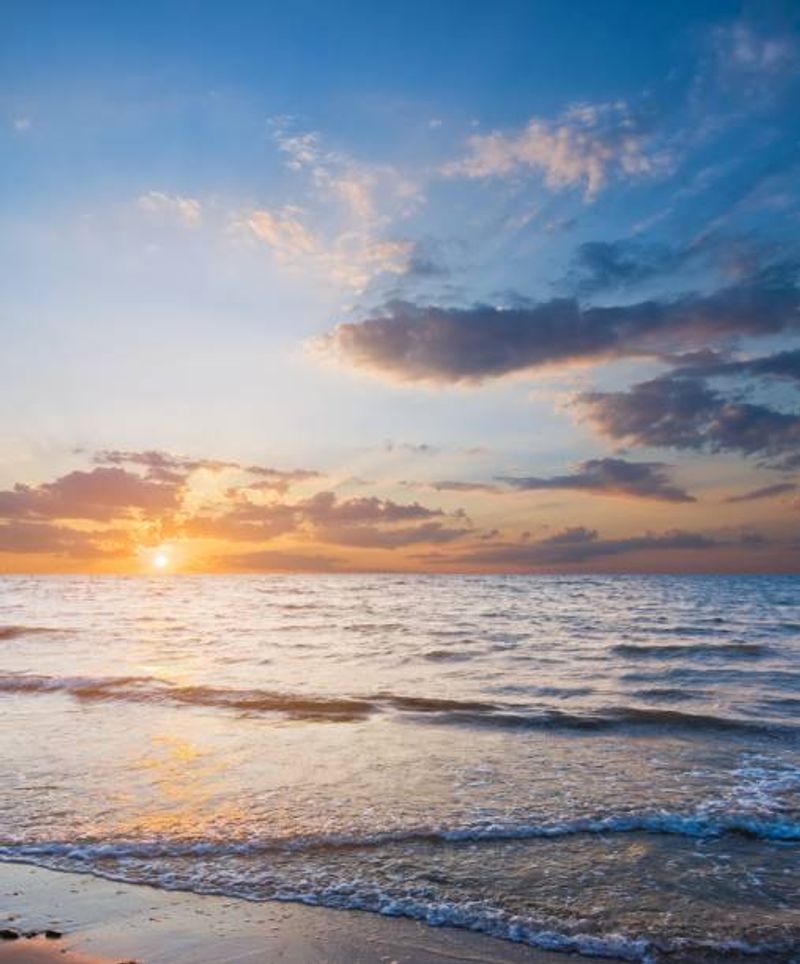
Tucked into the rolling hills of San Mateo County, this small agricultural town offers a quiet escape from the highway’s constant motion.
Family-run farms and roadside stands sell fresh artichokes, strawberries, and other seasonal produce grown in the fertile coastal valleys.
The main street features a handful of historic buildings that reflect the area’s ranching and farming heritage dating back more than a century.
Pescadero Creek runs through town, providing habitat for steelhead trout and other native species. Walking along the creek’s banks offers a peaceful contrast to the ocean’s power just a few miles west.
The surrounding countryside is dotted with barns and grazing livestock, creating a pastoral scene that feels far removed from California’s bustling cities.
Local bakeries serve homemade bread and pastries that draw visitors from miles around, and the aroma of fresh-baked goods fills the air on weekend mornings.
Small cafes provide simple, hearty meals made with ingredients sourced from nearby farms. The pace here is slow and unhurried, inviting travelers to linger over a meal or browse the modest shops.
Nearby Pescadero State Beach and Marsh Natural Preserve offer opportunities for birdwatching and beachcombing.
The marsh is an important stopover for migratory birds traveling the Pacific Flyway. Visiting during spring or fall migration seasons increases the chance of spotting rare species.
3. Point Lobos State Natural Reserve, Carmel-By-The-Sea
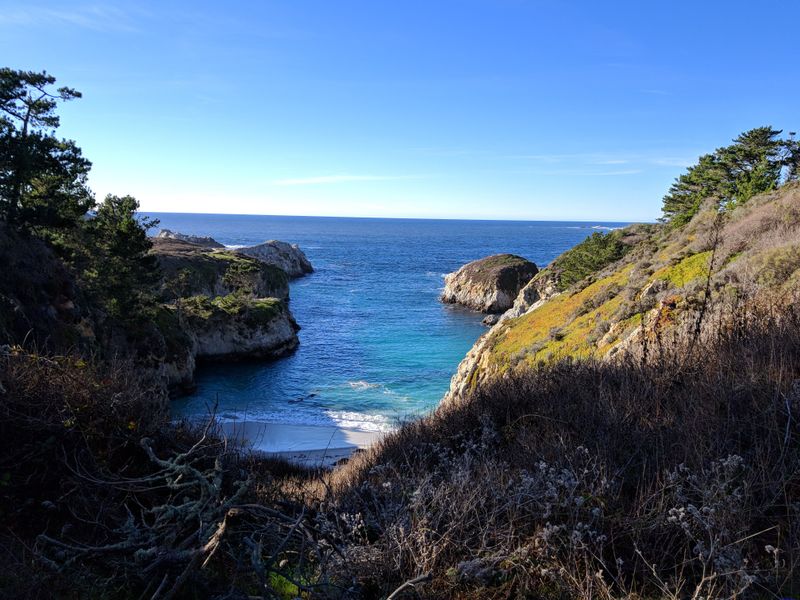
Often called the crown jewel of California’s state park system, this reserve protects a stunning stretch of rocky coastline where land and sea meet in spectacular fashion.
Cypress groves cling to granite headlands, their twisted branches shaped by decades of salt wind and fog.
Turquoise coves nestle between the rocks, their clear water revealing kelp forests swaying in the current below.
The reserve is located at Highway 1, Carmel-by-the-Sea, CA 93923, positioned just south of the charming village of Carmel.
Multiple trails wind through the reserve, ranging from easy shoreline walks to more challenging routes that climb inland through coastal scrub and forest.
Each path offers different perspectives on the dramatic landscape, and trail maps are available at the entrance station. Sea lions often haul out on the offshore rocks, their barking calls echoing across the water.
Harbor seals bob in the kelp beds, and sea otters can be spotted floating on their backs while cracking open shellfish.
During winter and spring, migrating gray whales pass close to shore, visible from several of the clifftop viewpoints.
The reserve limits daily visitors to protect its fragile ecosystems, so arriving early in the day is recommended, especially on weekends and holidays.
Photography opportunities abound, with dramatic compositions possible at nearly every turn. Staying on designated trails helps preserve the native vegetation and prevents erosion on the steep slopes.
4. Garrapata Bluff Overlook, Big Sur
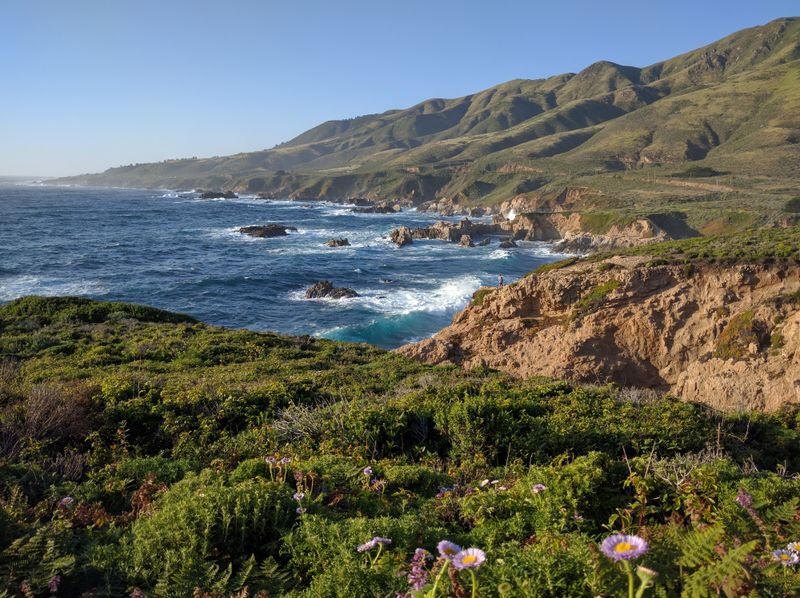
Perched high above the crashing surf, this overlook provides sweeping views of Big Sur’s iconic coastline without requiring a long hike.
The bluff sits at the edge of Garrapata State Park, where wildflowers bloom in vibrant patches during spring months, painting the hillsides in shades of yellow, purple, and orange.
Wind constantly moves through the grasses, creating waves of motion that mirror the ocean below. Parking is available in small pullouts along Highway 1, though spaces fill quickly during peak travel times.
A short walk from the road leads to the main viewpoint, where the coastline curves away in both directions.
The height of the bluff offers a bird’s-eye perspective on the wave patterns and the way the ocean changes color from deep blue to jade green near the rocks.
Photographers favor this spot for sunset shots, when golden light washes across the cliffs and the ocean takes on warm hues.
Bringing binoculars allows for better views of seabirds riding the updrafts along the cliff face. The sound of the waves reaches the overlook as a constant, rhythmic background that encourages quiet contemplation.
Trail access to the beach below is available for those willing to make the steep descent, but the overlook itself requires minimal effort to reach.
Layered clothing is essential, as temperatures can shift quickly when fog rolls in from the sea. Respecting the fragile vegetation by staying on established paths helps preserve the beauty for future visitors.
5. Pfeiffer Beach, Big Sur
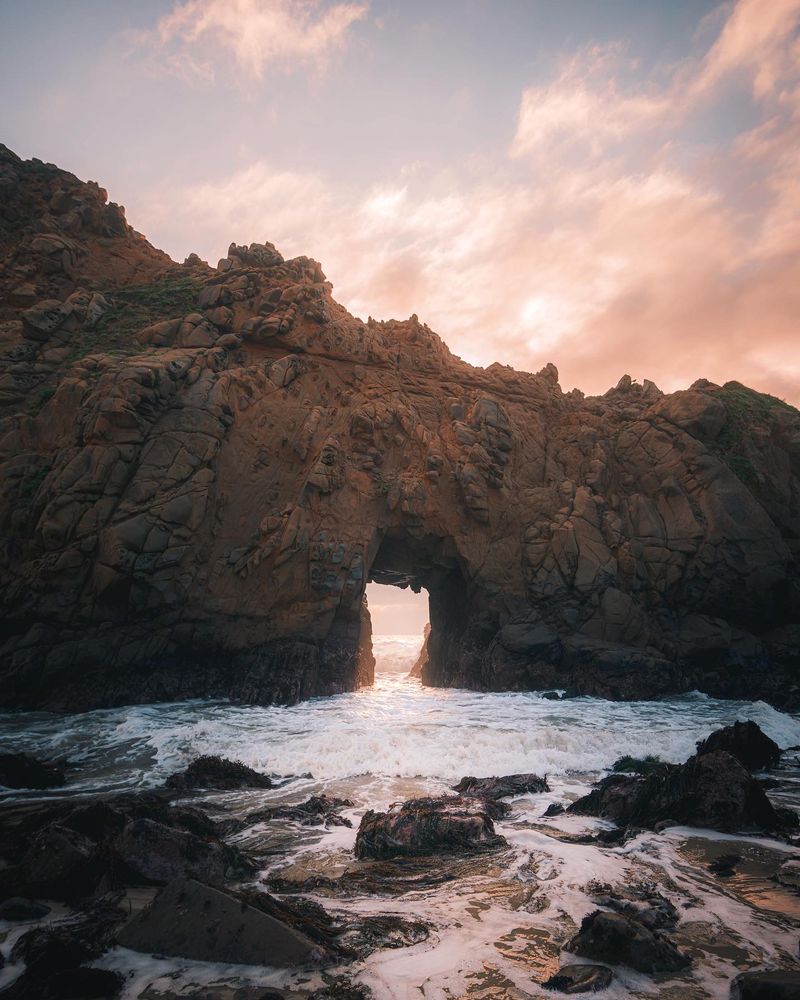
Hidden down a narrow, winding road, this secluded beach rewards those who make the effort to find it with purple-tinged sand and dramatic rock formations.
The distinctive coloring comes from manganese garnet particles washed down from the surrounding hills, creating patches of lavender that contrast beautifully with the white foam of the waves.
A massive rock arch rises from the surf at the south end of the beach, framing the ocean and sky in a natural window. The access road is unmarked and easy to miss, so watching for the turnoff carefully is important.
The narrow, two-mile route winds through cypress forest before emerging at a small parking area. Parking fees are collected at a self-service station, and the lot fills early on sunny weekends.
Photographers flock here during winter months when the sun sets through the rock arch, creating stunning silhouettes and golden light streaming through the opening.
Tide conditions greatly affect the beach experience, with lower tides revealing tide pools and more sand to explore.
Strong currents and cold water make swimming unsafe, but wading in the shallows and searching for sea glass and interesting stones provides plenty of entertainment.
Driftwood scattered across the sand creates natural sculptures, bleached white by sun and salt.
The beach feels remote and wild, with steep cliffs rising on both sides and minimal development visible in any direction. Bringing water and snacks is wise, as no facilities or services are available at the beach itself.
6. Ragged Point, San Simeon
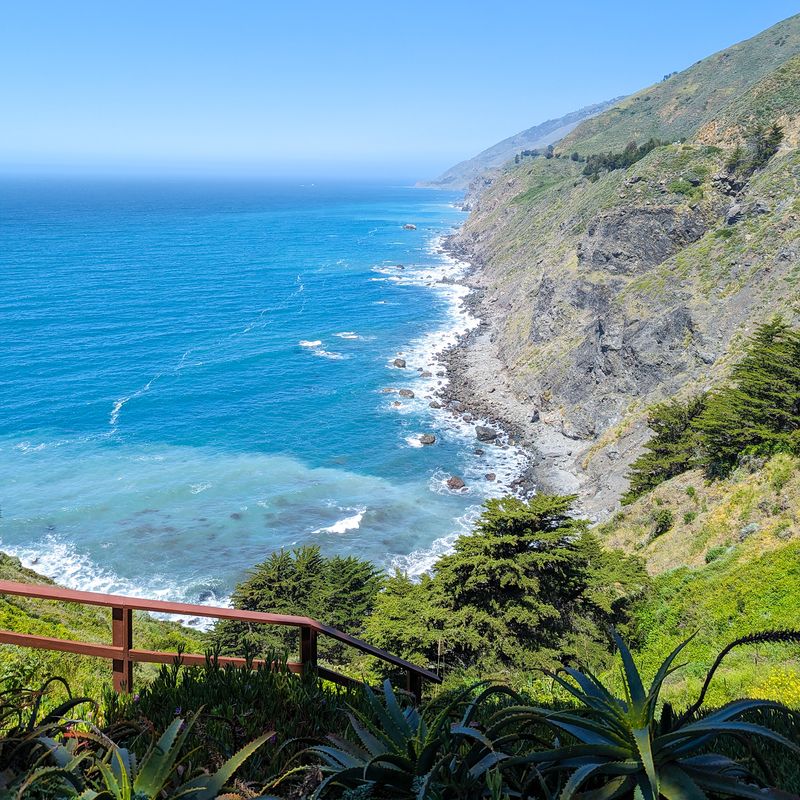
Marking a transition point where the rugged Big Sur coastline begins to soften, this clifftop stop offers expansive ocean views and a chance to stretch legs after hours of winding mountain roads.
A steep trail descends from the parking area to a small cove and waterfall that tumbles directly onto the beach, creating a unique combination of freshwater and salt spray.
The descent involves several hundred steps, but the unusual scenery at the bottom makes the effort worthwhile for those able to manage the climb back up.
The main viewpoint sits right at the edge of the cliff, with safety railings providing reassurance while visitors peer down at the waves far below.
Picnic tables scattered around the grounds offer spots to enjoy a meal while taking in the panoramic views.
Gardens near the main building feature native plants that attract butterflies and hummingbirds during warmer months.
A small gift shop and cafe provide basic refreshments and souvenirs, along with clean restrooms that are appreciated after long stretches of highway with few services.
The outdoor seating area catches afternoon sun and offers protection from the wind that often whips along this exposed stretch of coast.
Whale watching is productive here during migration seasons, with the elevated vantage point allowing for excellent visibility.
The name comes from the jagged, uneven appearance of the coastline, which contrasts with the smoother beaches found further south.
Morning visits often feature clearer skies before afternoon fog rolls in. Taking time to simply sit and watch the ocean’s constant motion provides a restorative break from driving.
7. Harmony
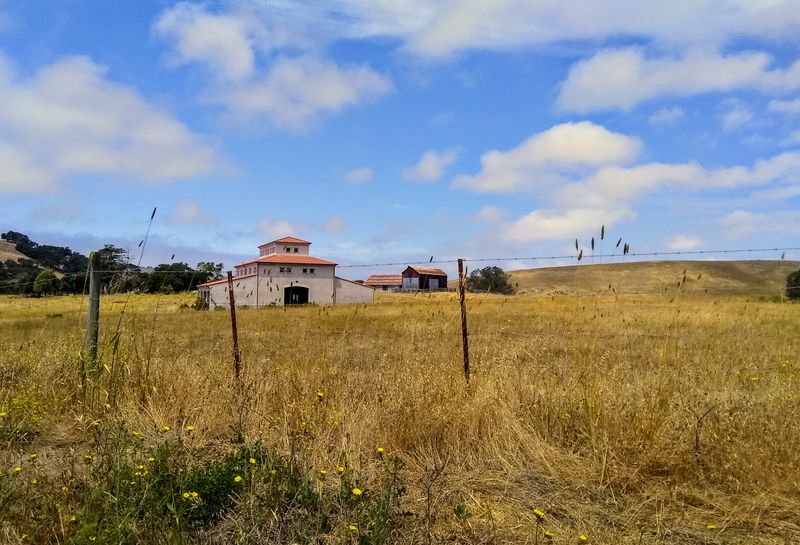
With a population that rarely exceeds a dozen residents, this tiny community represents one of California’s smallest post offices and most unusual roadside stops.
The cluster of buildings sits just off Highway 1, easy to miss if not watching for the small sign.
What began as a dairy settlement in the 1800s transformed into an artists’ colony, and remnants of that creative spirit still linger in the handful of structures that remain.
A wedding chapel draws couples seeking an intimate ceremony location, while the historic creamery building now houses a glassblowing studio and pottery workshop.
Watching artisans work provides a glimpse into the creative process, and finished pieces are available for purchase in the small gallery.
The scale of everything here is miniature compared to typical tourist destinations, creating an atmosphere that feels almost like stumbling upon a secret.
The surrounding hills are dotted with vineyards, as this area has become known for quality wine production in recent decades.
Rolling pastures still host grazing cattle, connecting the present to the community’s agricultural past. The quiet here is profound, with only the occasional vehicle passing on the highway breaking the stillness.
Visiting takes only a few minutes, but the peaceful atmosphere and quirky character make it a memorable stop.
The post office remains operational, and sending a postcard stamped from Harmony has become a tradition for some travelers.
Photography opportunities include the weathered buildings and the pastoral landscape stretching inland from the coast.
8. Cayucos
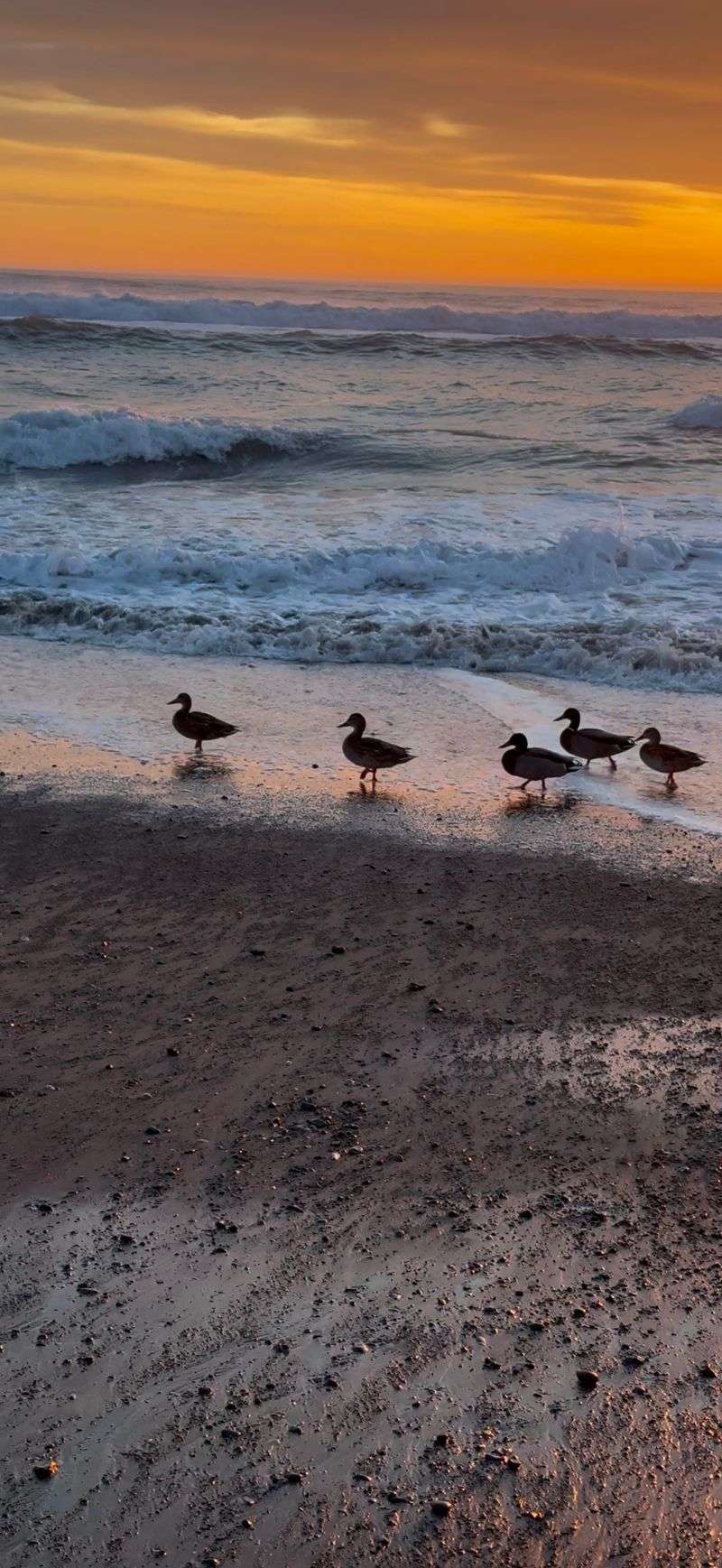
This laid-back beach town retains an authentic California coastal vibe that feels increasingly rare along the developed stretches of Highway 1.
A long wooden pier extends into the ocean, popular with anglers casting lines for perch and rockfish while pelicans perch on the railings waiting for scraps.
The main street runs just a few blocks, lined with antique shops, casual eateries, and surf shops that cater to locals as much as visitors.
The beach stretches for miles in both directions, with soft sand and gentle waves that make it family-friendly compared to the more dramatic coastline further north.
Tide pools form at the rocky points on either end of town, revealing starfish, anemones, and small crabs during low tide. Beach access is easy and free, with several parking areas close to the sand.
Founded in the 1860s as a shipping port, the town’s history is visible in the architecture of the older buildings and the working pier that still serves fishing boats.
A relaxed, unhurried atmosphere prevails, with people strolling along the beachfront promenade and dogs running in the surf. The lack of chain stores and corporate development helps maintain the town’s authentic character.
Local bakeries serve fresh pastries and bread, perfect for a beachside picnic, while cafes offer simple meals with ocean views. Sunset watching from the pier has become an evening ritual for both residents and visitors.
The town’s small size makes it easy to explore on foot, and parking is generally available even during summer weekends.
9. Montaña De Oro State Park, Los Osos
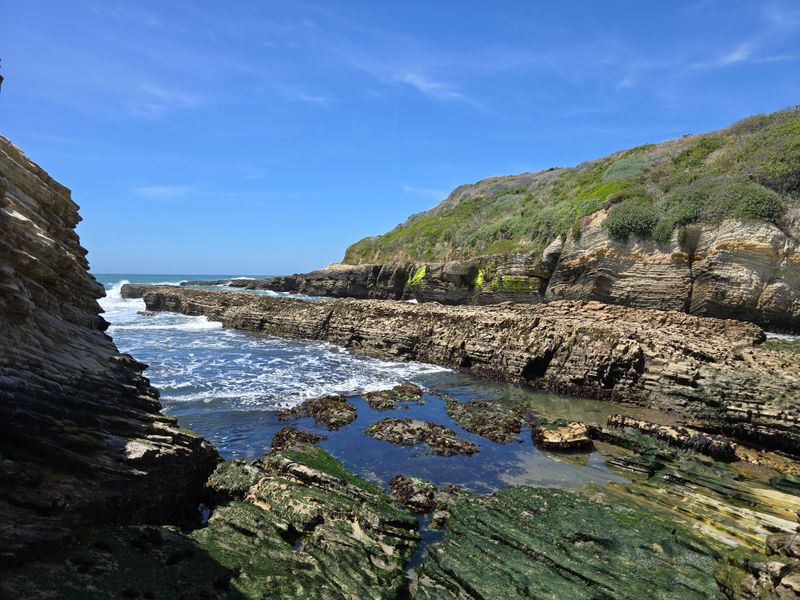
Named for the golden wildflowers that blanket the hillsides each spring, this expansive coastal park protects over 8,000 acres of diverse terrain ranging from sandy beaches to rocky headlands and inland valleys.
The name translates to Mountain of Gold, and during peak bloom season the landscape lives up to that description with brilliant displays of California poppies, mustard, and other native flowers.
Miles of trails wind through the park, offering options for every fitness level and interest.
Spooner’s Cove serves as the main beach access point, where a crescent of sand sits protected by sandstone bluffs that rise on either side.
Tide pools along the rocky areas teem with marine life during low tide, making it an excellent spot for families to explore.
The Bluff Trail follows the coastline for several miles, providing dramatic views of sea stacks, natural arches, and the waves constantly reshaping the shoreline.
Inland trails climb through coastal scrub and oak woodland, where deer are commonly spotted grazing in the early morning and late afternoon.
The park’s remote location and lack of commercial development create a sense of wilderness that feels far removed from civilization. Backcountry camping is available in designated areas for those wanting to extend their visit beyond a day trip.
The park tends to be less crowded than more famous coastal destinations, offering a more solitary experience with nature. Bringing layers is essential, as weather can shift from sunny to foggy within minutes.
The park remains open year-round, with each season offering different highlights from wildflower blooms to whale migrations.
10. Gaviota State Park
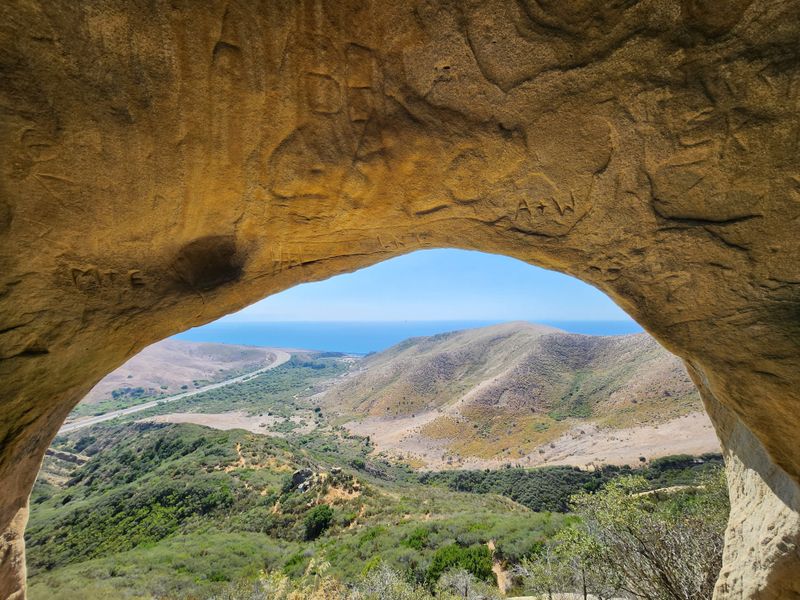
Where the coastline begins to curve eastward and the mountains press closer to the sea, this park offers a blend of beach access and inland exploration.
A railroad trestle crosses the canyon above the campground, and the occasional passing train adds a nostalgic touch to the coastal setting.
The beach here is less visited than those in nearby Santa Barbara, providing a quieter experience for those willing to venture slightly off the main tourist path.
A hot springs trail leads inland from the day-use area, climbing through chaparral-covered hillsides to a small natural spring where water emerges warm from the rocks.
The hike is moderately challenging, with some steep sections, but the reward of soaking tired feet in the warm water makes it worthwhile.
The spring itself is small and rustic, without any developed facilities, maintaining a natural character. The beach features a fishing pier that extends into the ocean, popular with local anglers trying their luck for halibut and other species.
Picnic areas under tall eucalyptus trees provide shaded spots for meals, with the scent of the trees mixing with salt air.
The park’s relatively undeveloped nature appeals to visitors seeking a more authentic outdoor experience without crowds or commercial amenities.
Highway 1 and Highway 101 merge near here, marking a geographical transition point in the road trip.
The coastal mountains that have dominated the northern sections begin to recede, and the landscape takes on a different character.
Camping facilities are available for those wanting to break up the drive with an overnight stay surrounded by nature rather than in a town.
11. El Matador State Beach, Malibu
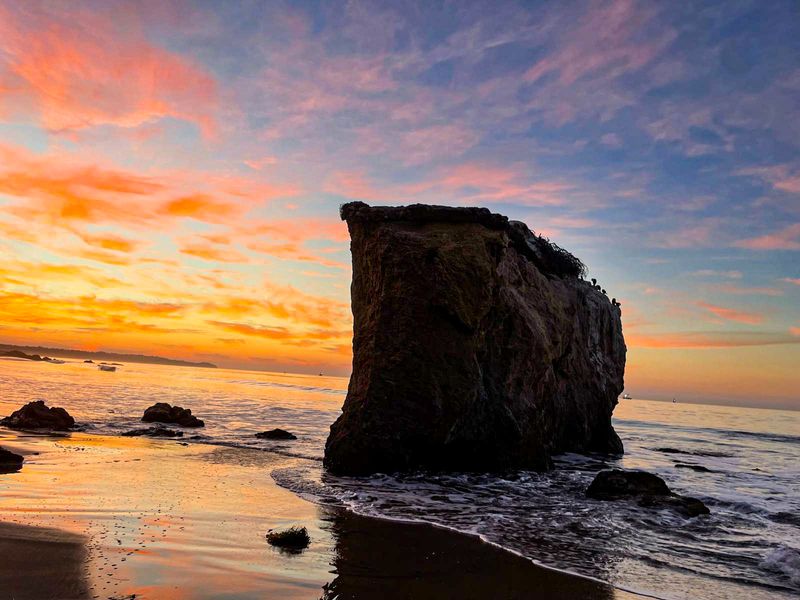
Steep stairs descend from a small parking area to one of the most photographed beaches along the Southern California coast.
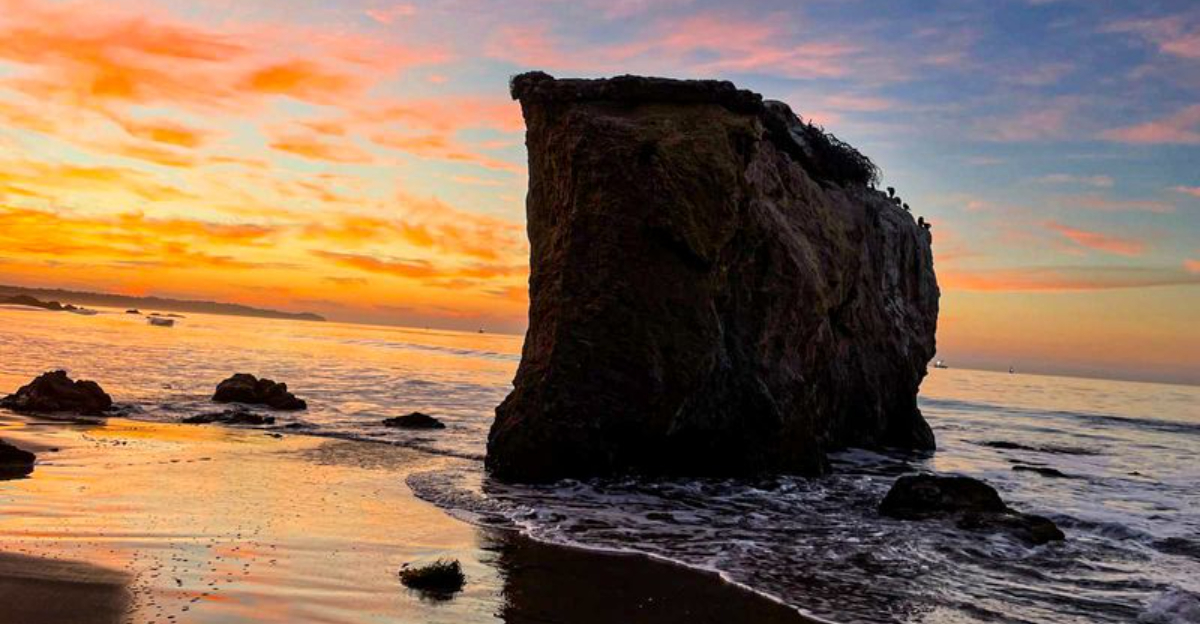
Massive rock formations rise from the sand and surf, creating dramatic silhouettes against the sky and framing views of the endless ocean beyond.
Sea caves tunnel through some of the rocks, accessible during low tide when the water recedes enough to allow exploration.
The beach’s relatively small size and spectacular scenery make it popular with photographers, especially during golden hour when the light transforms the rocks into glowing sculptures.
Tide conditions significantly affect the beach experience, with high tide covering much of the sand and making some areas inaccessible.
Checking tide tables before visiting helps ensure the best experience and safest conditions.
Unlike the wide, flat beaches found elsewhere in Southern California, El Matador feels more intimate and wild, with the towering rock formations creating a sense of enclosure.
The sand here is coarse and mixed with small pebbles worn smooth by the waves. Beachcombers search for sea glass and interesting stones, while others simply sit on the rocks and watch the waves roll in.
The parking area is small and fills quickly, particularly on sunny weekends and during summer months.
Arriving early in the morning provides the best chance of securing a spot and enjoying the beach before crowds arrive.
The stairs back up to the parking area are steep and can be challenging after a long beach visit, so taking breaks during the climb is perfectly acceptable. No facilities are available beyond a portable restroom in the parking area.
12. Point Dume, Malibu
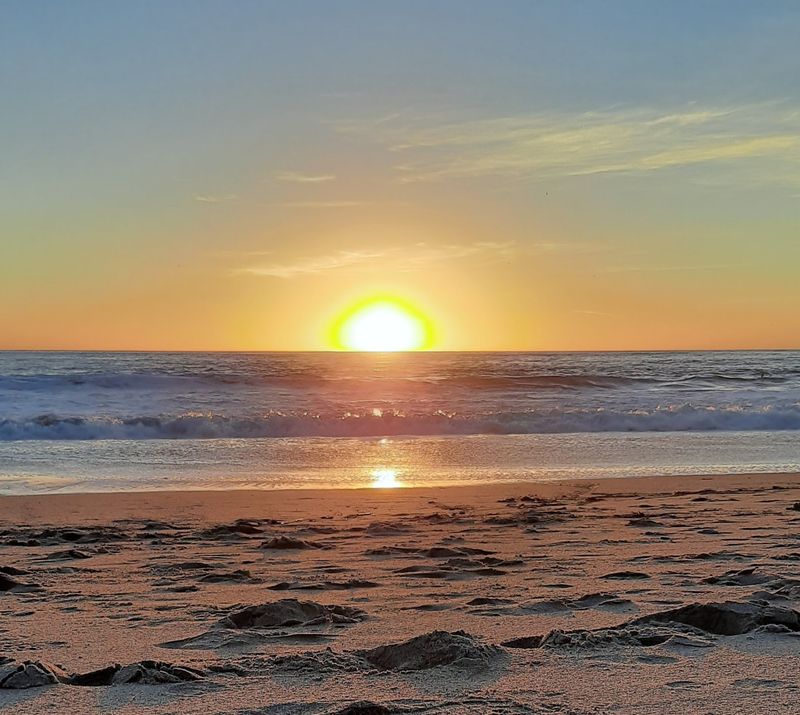
A prominent headland jutting into the Pacific, this rocky point offers some of the best whale watching in Southern California along with sweeping views that stretch from the Santa Monica Mountains to the Channel Islands on clear days.
A trail climbs from the parking area to the top of the bluff, where a lookout point provides 360-degree views of the coastline and ocean. The climb is short but steep, gaining elevation quickly on a well-maintained path.
During winter and spring, gray whales migrate past the point close enough to shore that their spouts are visible without binoculars.
Patient observers can sometimes watch the massive animals breach, launching their bodies partially out of the water before crashing back down. Dolphins are present year-round, often surfing in the waves near the beach below the point.
The beach at the base of Point Dume curves away to the south, forming a wide crescent of sand popular with swimmers and sunbathers.
Rock formations at the north end create tide pools that fill with sea creatures during high tide and become accessible for exploration when the water recedes.
The contrast between the wild, rugged point and the developed coastline visible in the distance captures the tension between nature and urbanization that defines much of Southern California.
Parking can be challenging during peak times, with the small lot filling early and street parking sometimes restricted. The area attracts locals and visitors alike, creating a lively atmosphere on sunny days.
Sunset from the top of the bluff is particularly spectacular, with the sun sinking into the ocean and painting the sky in shades of orange and pink.
13. Palos Verdes Peninsula
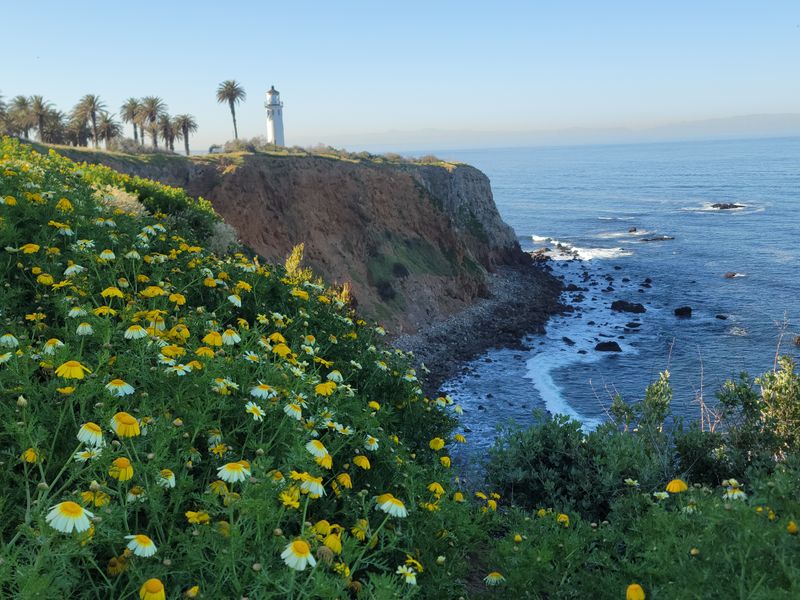
Rising dramatically from the Pacific, this rocky peninsula offers a striking contrast to the flat beaches that dominate much of the Los Angeles coastline.
Steep cliffs drop hundreds of feet to the ocean below, and a network of trails follows the edge, providing spectacular views at every turn.
The peninsula’s unique geology and position create microclimates that support plant species found nowhere else, and the preserved open spaces feel remarkably wild considering their proximity to one of the world’s largest metropolitan areas.
The Point Vicente Lighthouse at 31550 Palos Verdes Dr W, Rancho Palos Verdes, CA 90275, stands as a historic landmark on the western edge of the peninsula, its beam still guiding ships along the coast.
An interpretive center near the lighthouse provides information about local marine life and the peninsula’s natural history.
Whale watching is excellent from the bluffs here, with elevated viewpoints allowing for long-distance sightings during migration seasons.
Multiple beach access points descend from the bluffs to rocky coves and small pocket beaches, though the steep trails require good fitness and sure footing.
Tide pools along the shore rank among the best in Southern California, with diverse marine life including sea stars, urchins, and colorful anemones.
The rocky substrate and clear water create ideal conditions for these ecosystems to thrive. Scenic drives wind through the residential areas on top of the peninsula, offering glimpses of impressive homes and the ocean beyond.
The Portuguese Bend area features a landslide zone where the earth continues to slowly move, creating buckled roads and tilted structures that demonstrate the dynamic nature of the coastline.
This geological activity is ongoing and visible, providing a reminder that the landscape is constantly changing.