10 Florida Beach Towns So Affordable, Retirees Say They Should Have Come Sooner
You have probably run the numbers on a Florida beach town and closed the browser tab. The famous ones price you out by the second listing.
That is the problem with searching for the postcard version. The coast is long, and most of it is not Naples.
There are towns where the beach is public, the parking is free, and the grocery store is not charging resort prices. Retirees who found them tend to say the same thing, which is that they waited too long.
You get the water and the weather without the address that bankrupts you. Some are on the Gulf, some face the Atlantic, and a few are quiet enough that traffic means three cars at a light.
You will want to check insurance costs before you fall in love. Do that part first.
Then go look at the water and start imagining it.
1. Pensacola, Escambia County
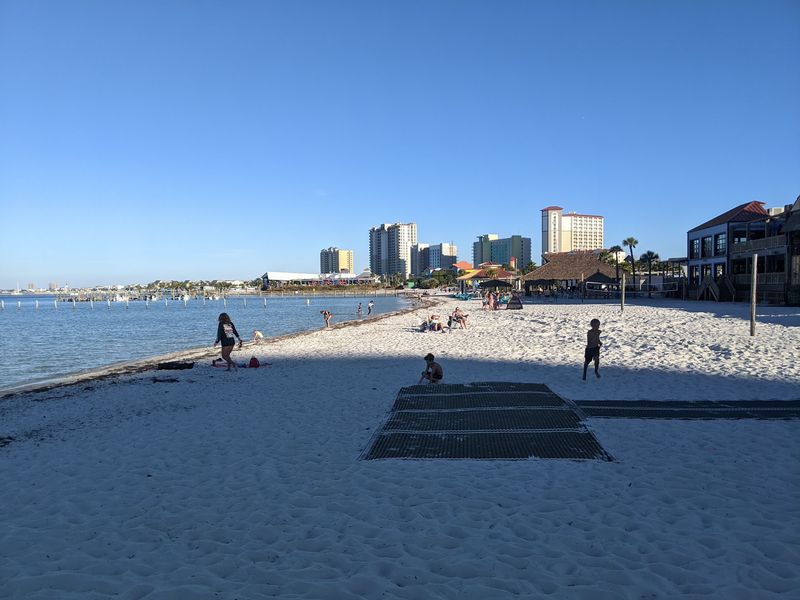
Sugar-white sand and jets overhead make for an unusual retirement pitch. Pensacola delivers both without charging resort prices.
The median home price sits around $269,000, which is gentle by Florida coastal standards. Monthly budgets here start near $4,900 for a comfortable lifestyle.
Florida charges no state income tax, so your pension stretches further. Property taxes stay manageable too, which matters on a fixed income.
Downtown Palafox Street carries real history in its brick storefronts and shaded sidewalks. The pace feels slower than Florida’s flashier coastal cities.
Naval Air Station Pensacola sits nearby, home base for the Blue Angels. Their practice sessions cost nothing to watch, and locals plan their mornings around them.
The National Naval Aviation Museum charges no admission either. You can spend hours among vintage aircraft and still have your wallet untouched.
U.S. News and World Report ranked the area the number three Best Place to Retire in the country.
That ranking rests on affordability, healthcare access, and quality of life.
Beaches here stay less crowded than those farther south. The sand squeaks underfoot because it is nearly pure quartz.
Neighbors tend to be friendly without being nosy. For many retirees, that balance seals the decision.
2. Panama City, Bay County
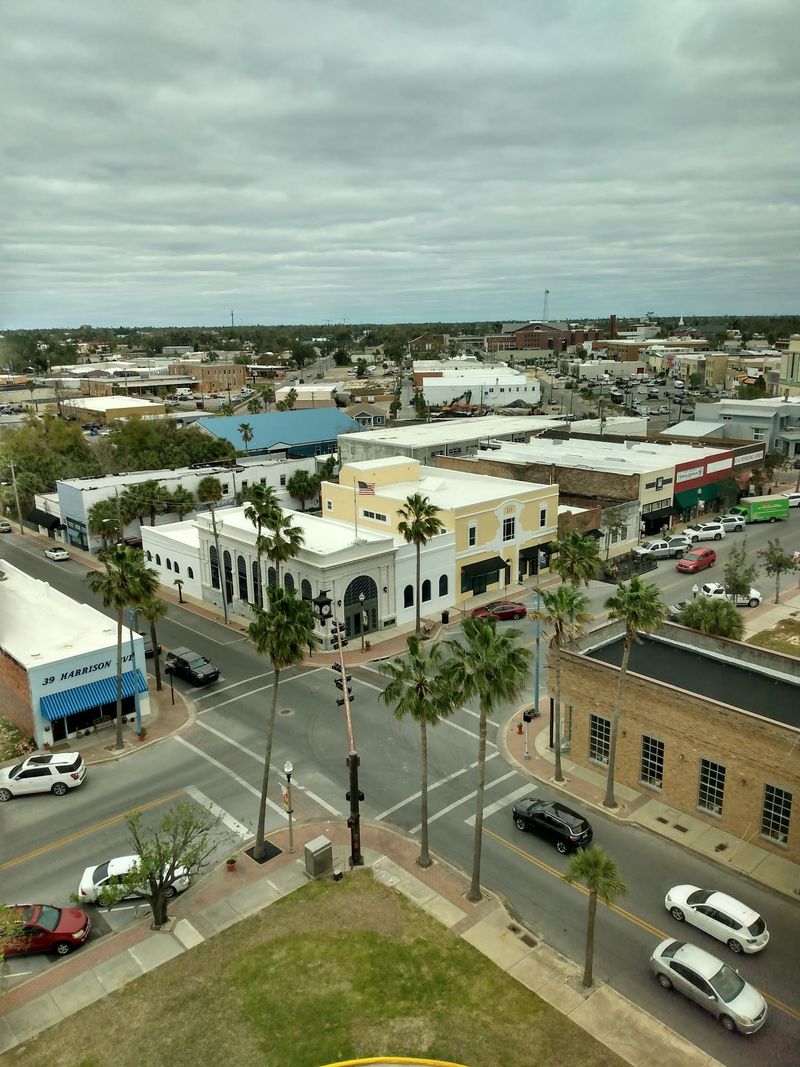
Some towns make you choose between beach access and breathing room. Panama City refuses to play that game.
Cost of living here runs slightly below the national average. That single fact changes the math for anyone watching retirement savings.
Median home values land in the mid $200s, which feels almost nostalgic. Median rent hovers around $1,000 per month in Panama City.
Head to Panama City Beach and the median monthly rent climbs to roughly $1,543. Still reasonable for a spot this close to the water.
Florida’s no state income tax rule applies here, same as everywhere else in the state. Property taxes stay reasonable as well.
Newer communities have reshaped the area for active adults. Latitude Margaritaville in Panama City Beach draws plenty of attention.
Those developments often include pools, golf courses, and walking trails. Social calendars fill up faster than newcomers expect.
The bay side offers calmer water for kayaking and fishing. The gulf side brings the classic wide beaches people picture.
Restaurants lean casual, and seafood shows up on nearly every menu. Nobody will judge your flip-flops at dinner.
Retirees who land here often mention the ease of daily errands. Traffic stays sane outside of spring break season.
3. Hudson, Pasco County
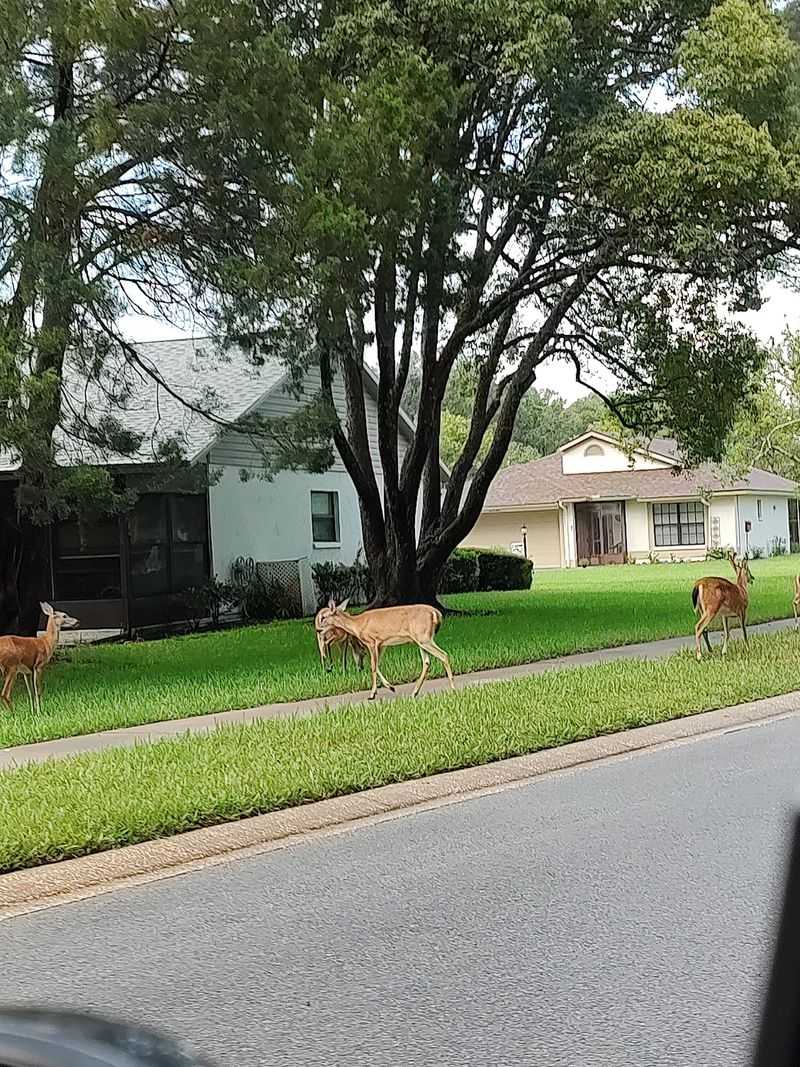
Nearly half the people in Hudson are 65 or older. If you want neighbors who understand your schedule, that number speaks loudly.
Exactly 46.4 percent of residents fall into that age bracket. Retirement is not a minority lifestyle here, it is the default.
Monthly cost of living sits around $3,567. For a Gulf Coast town, that figure raises eyebrows in the best way.
Hudson sits along Pasco County’s quieter stretch of coastline. The energy is low-key, and that is the whole appeal.
Canals wind through many neighborhoods, so boat access comes easier than you might expect. Plenty of homes have a dock out back.
Fishing is the local pastime, and the waters stay shallow and calm. Manatees drift through the warmer channels during cooler months.
Florida’s lack of state income tax keeps more money in your account. That advantage compounds over a long retirement.
Shopping and medical services sit within a short drive. Tampa is close enough for specialists and airport runs.
You will not find nightclubs or crowded boardwalks. You will find sunsets, seafood shacks, and people who wave from their driveways.
Retirees who move here often describe the shift as instantly calming. The town simply asks less of you.
4. New Port Richey, Pasco County
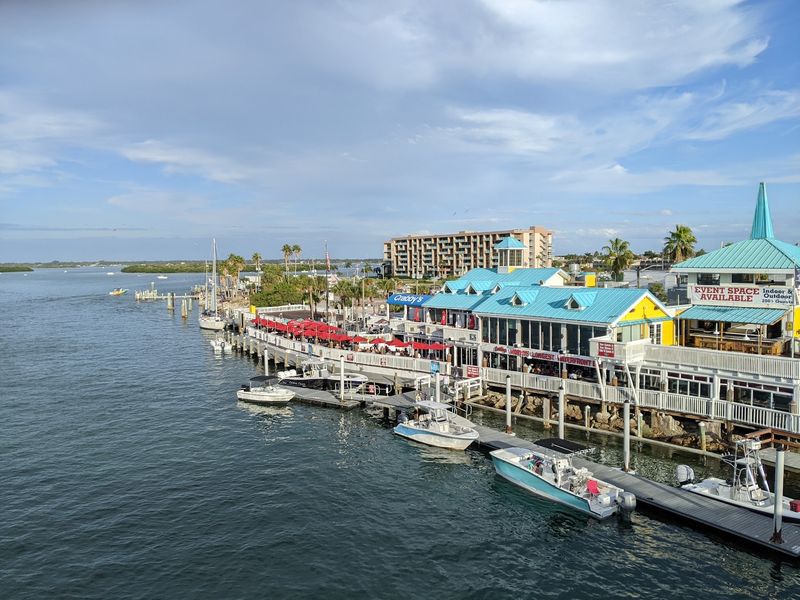
A median housing price of $142,500 sounds like a typo in modern Florida. In New Port Richey, it is simply the going rate.
That figure lands well below Florida’s state average. For retirees priced out elsewhere, it reads like good news.
Independent living averages about $1,650 per month, below the national average. Assisted living runs closer to $3,250 monthly.
Reports vary on overall costs, which happens with fast-changing markets. Housing costs measure 18.8 percent lower than the national average.
Food expenses run 11.0 percent below national numbers. Groceries adding up to less is a quiet daily win.
Roughly 37 percent of residents here are seniors. The town earned a SeniorScore of 79, which reflects services and amenities.
Winters stay mild and summers turn balmy. Heavy coats become storage clutter fairly quickly.
The Pithlachascotee River runs right through downtown, giving the area a genuine center. Sims Park hosts community events beside the water.
Florida’s no income tax policy applies here too. Pensions and withdrawals stay untouched by the state.
Downtown has been steadily revitalized with cafes and shops. Walking around feels pleasant rather than chaotic.
Retirees often mention how quickly they made friends here.
5. Englewood, Sarasota And Charlotte Counties
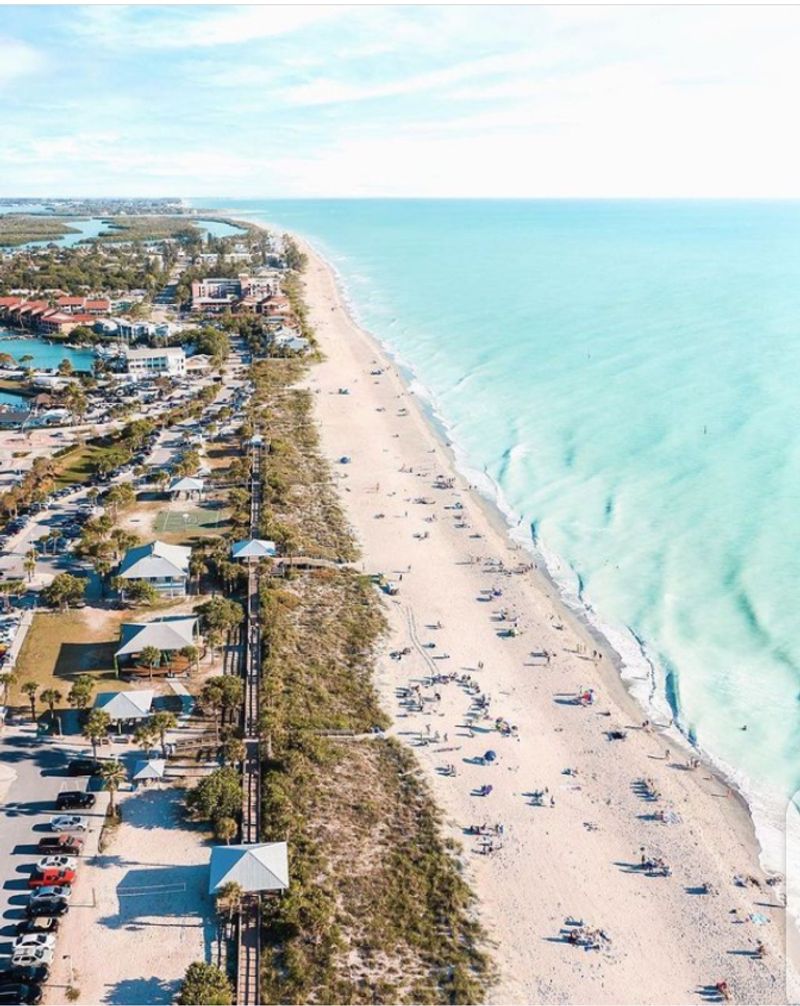
Over 57 percent of Englewood residents are 65 or older. That makes it less a beach town and more a retirement headquarters with sand.
Median home prices sit near $363,000. Monthly housing costs run roughly 33 percent lower than the Southern U.S. average.
Two-bedroom condos frequently list between $300,000 and $400,000. Monthly rentals average around $1,242.
Property taxes hover near 0.85 percent of assessed value. Overall monthly cost of living lands around $3,703.
Seven beaches belong to this stretch of coast, including Englewood Beach and Manasota Key. Gentle surf makes swimming easy on the joints.
Manasota Key is famous for fossilized shark teeth. Beachcombers sift the shell line every morning hoping for a big black triangle.
Drum circles gather at sunset, and nobody needs an invitation. The Old Florida character survived the development boom here.
Englewood Community Hospital handles local care. Larger facilities sit nearby in Port Charlotte and Punta Gorda.
Florida’s tax structure keeps more of your income where it belongs. That advantage never stops mattering.
Shelling, fishing, and kayaking fill most calendars. Nobody here seems in any particular hurry.
Newcomers often say the neighborhoods feel genuinely welcoming.
6. Daytona Beach, Volusia County
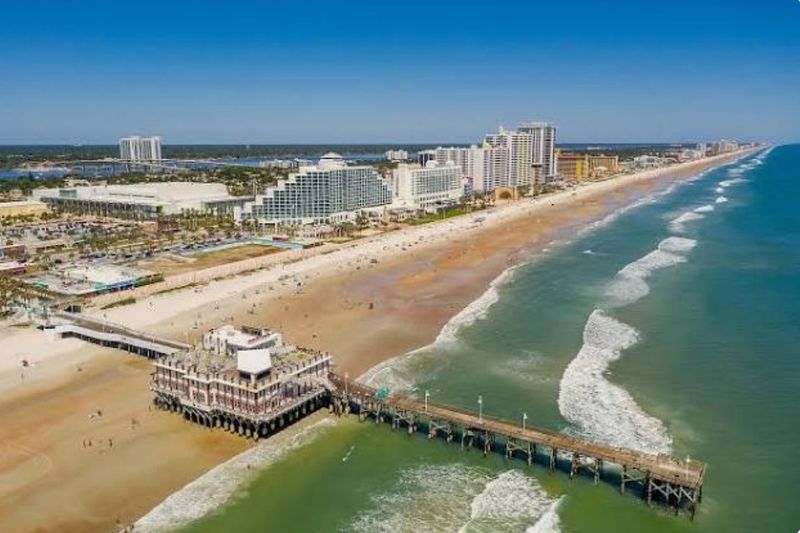
Cars can drive right onto parts of the sand in Daytona Beach. Few places let you park beside the ocean and call it a normal Tuesday.
The median home price for buyers aged 60 and older is $185,000. That ranks among the most affordable of top retirement destinations.
Overall median list price runs about $300,000. Rentals average between $1,600 and $1,700 monthly.
Monthly cost of living sits near $3,371. Housing, food, gas, utilities, and healthcare all come in under national averages.
Sales tax stays at 6.5 percent, below the national average. No state income tax applies, as across Florida.
Daytona Beach International Airport keeps travel simple. Interstate 95 runs right alongside for road trips north or south.
Golf, tennis, biking, hiking, fishing, and boating fill the activity list. Miles of white sand stretch in both directions.
Latitude Margaritaville and other 55-plus communities offer resort-style amenities. Pools, fitness centers, and social clubs come standard.
Healthcare here includes both primary and specialized services. That access matters more each year.
Museums, galleries, and historic sites round out the culture. Rainy days have plenty of options.
Retirees appreciate having a real city attached to their beach.
7. Ormond Beach, Volusia County
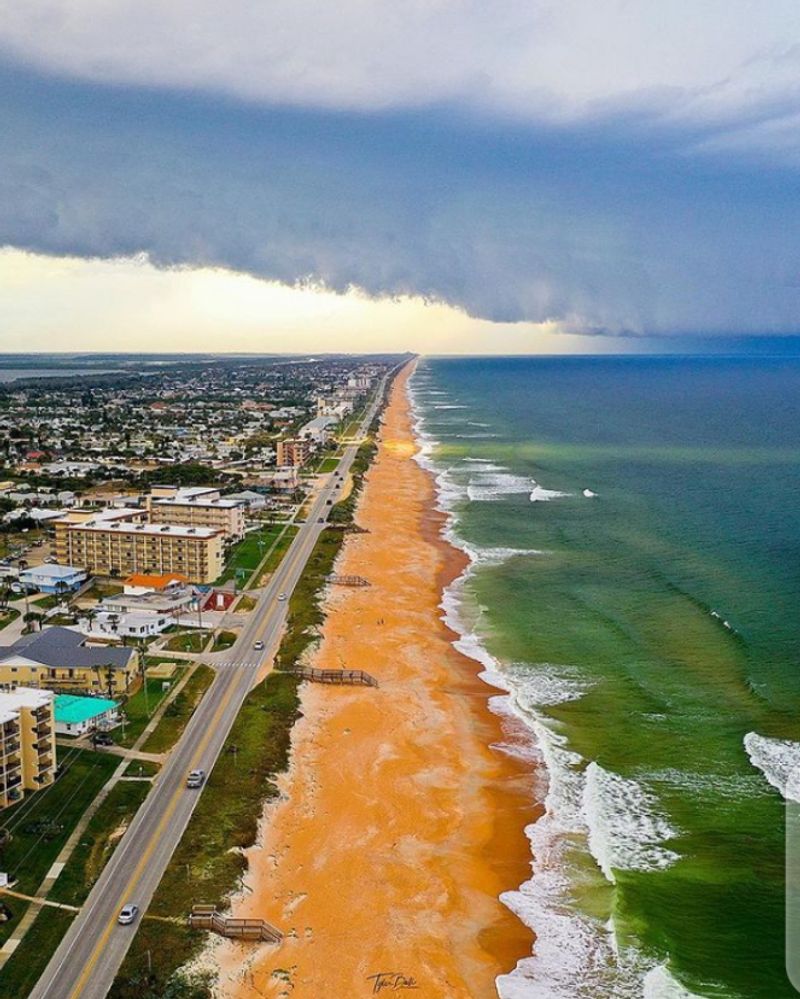
Just north of Daytona sits a quieter cousin with better parking. Ormond Beach trades crowds for calm and charges less for the privilege.
Cost of living here matches the national average almost exactly. Healthcare and transportation both run below average.
Housing expenses measure 7 percent lower than national numbers. Utilities come in 1 percent lower.
Food costs drop a striking 25.5 percent below average. Grocery runs feel noticeably lighter on the wallet.
A single person can live here for about $2,422 monthly. Median rent sits at $1,614.
Homes and condos regularly sell for under $300,000. Volusia County’s median effective property tax rate is roughly 0.82 percent.
The Ormond Scenic Loop delivers oak canopies and marsh views. Drivers slow down without being told.
Tomoka State Park offers trails, paddling, and quiet afternoons. Birdwatchers show up with binoculars year-round.
Beaches here stay less crowded than those a few miles south. Neighborhoods feel residential rather than touristy.
The Daytona Beach and Ormond Beach metro area ranks highly for retirement. Free community events happen regularly.
Small-town atmosphere pairs with big-city amenities minutes away. That combination is harder to find than you would think.
8. Edgewater, Volusia County
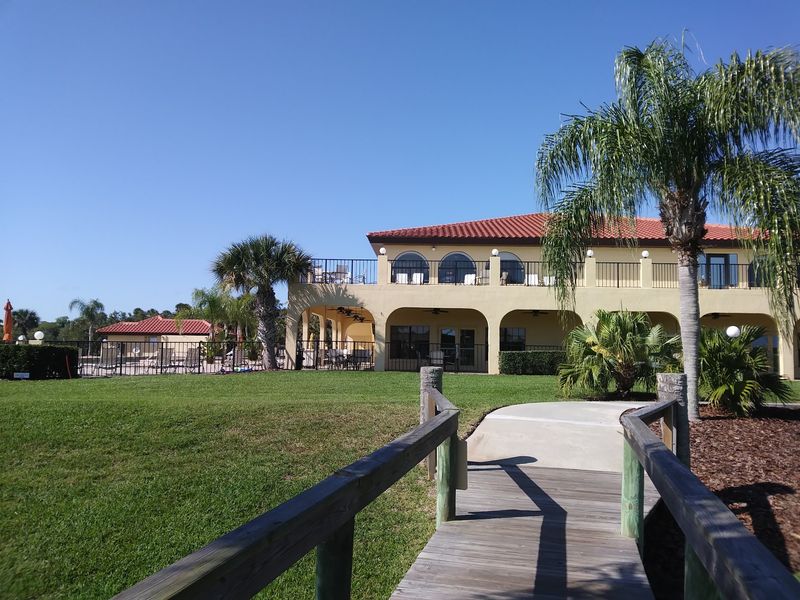
Some towns build their reputation quietly. Edgewater is one of those, sitting along the Indian River in Volusia County.
Retirees have found it welcoming without much fanfare. Word spreads through neighbors rather than advertising.
The town hosts 55-plus communities, including Hacienda Del Rio. That presence tells you plenty about who chooses to settle here.
Volusia County residents benefit from Florida’s lack of state income tax. Every dollar of retirement income stays yours at the state level.
The Indian River Lagoon borders the town, one of the most biodiverse estuaries in North America. Dolphins and manatees appear regularly.
Kayakers launch from public access points and paddle through mangrove channels. Fishing is a serious local hobby.
New Smyrna Beach sits just north, offering ocean access within minutes. Daytona is a short drive beyond that.
The pace stays slower than neighboring beach communities. Traffic rarely tests your patience.
Housing in the area tends to attract buyers looking for value near the water. Waterfront living without resort pricing appeals to many.
Community events keep the social calendar reasonable rather than overwhelming. Nobody feels obligated to attend everything.
For retirees who want water views and quiet streets, Edgewater answers both requests.
9. Cape Canaveral, Brevard County

Rockets launch from just up the road here. Watching one climb from your own beach chair never quite becomes routine.
Cape Canaveral sits in Brevard County along the Space Coast. The location gives residents a front-row view of launch schedules.
Florida’s tax policies apply fully, including no state income tax. There is also no state inheritance or estate tax.
Beaches here stretch wide and stay relatively uncrowded. Surfers, walkers, and shell collectors share the sand easily.
Port Canaveral sits nearby, one of the busiest cruise ports in the world. Boarding a ship becomes a short drive rather than a travel ordeal.
Fishing charters leave from the port daily. The jetty area draws anglers year-round.
Condos make up a large share of local housing. That style suits retirees who prefer less yard work.
Kennedy Space Center Visitor Complex is minutes away. Space history sits practically in your backyard.
Orlando is about an hour west for airports and big-city errands. Melbourne offers closer shopping and medical care.
The mix of beach, boats, and rocket launches gives the town real personality. Few coastal places can claim that combination.
Residents often say the launches still draw them outside.
10. Fort Pierce, St. Lucie County
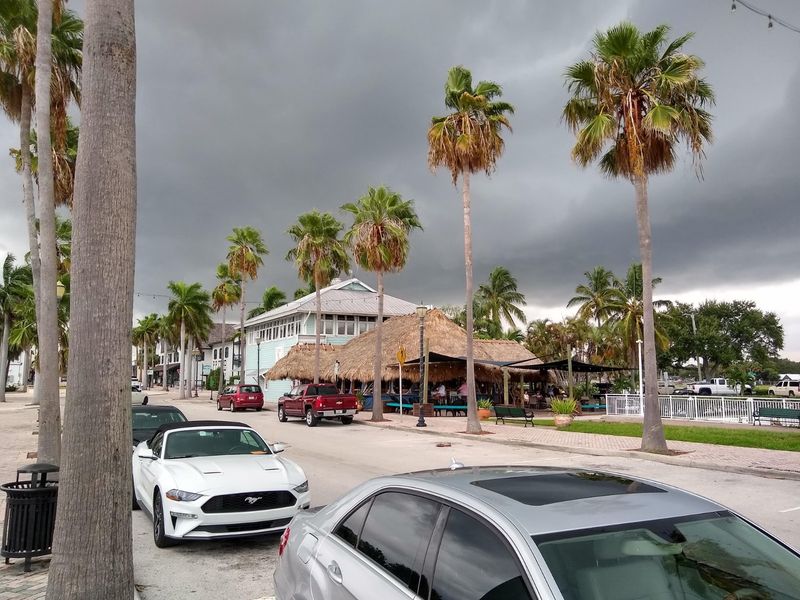
More than 20 percent of Fort Pierce residents are 65 or older. The town has quietly become a retirement favorite on the Treasure Coast.
Cost of living runs 1.4 percent below the U.S. average. It also sits 4.4 percent lower than the Florida average.
Some reports place the figure as much as 12.4 percent below national numbers. Either way, the direction is friendly.
Average housing costs land around $340,000. In September 2025, homes listed at a median of $309,000.
Apartment rent averages about $1,600 monthly. Independent living runs roughly $3,731 per month.
Florida charges no state income, inheritance, or estate taxes. Estate planning gets simpler as a result.
Downtown carries quaint architecture, museums, and art galleries. The waterfront farmers market draws steady crowds.
Marinas line the water, and restaurants sit right beside them. Boat rentals and paddling trails are easy to arrange.
Fort Pierce Inlet State Park offers swimming, picnicking, and birdwatching. Jetty Park adds a beach and a fishing pier.
Resort-style adult communities like Spanish Lakes serve active retirees. Amenities cover pools, clubs, and social events.
The town keeps growing without losing its easygoing character. Both leisurely and active lifestyles fit comfortably here.