11 Florida Campgrounds So Well Secluded Even Most Residents Miss Them
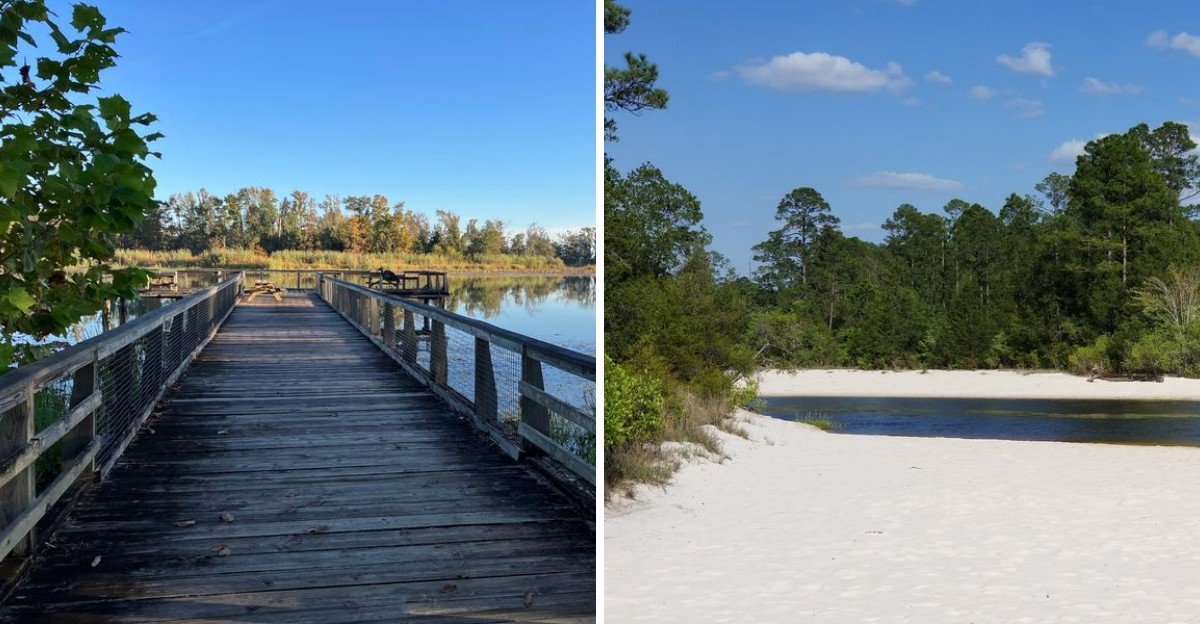
Florida keeps its best secrets close to the ground, literally. While tourists chase theme parks and crowded beaches, a quieter version of the state exists just off the main roads.
It raises an interesting question: how do so many campgrounds stay peaceful even during busy holiday weekends? Long dirt roads and faded entrance signs seem to do the filtering naturally, keeping crowds away without anyone trying.
Some sit along blackwater rivers, others perch on high bluffs or open into wide prairies, each one worlds away from the Florida most people picture. What stands out is how many locals never notice these spots at all, driving past them for years without pulling in.
Real quiet still exists in Florida, it turns out, for anyone willing to look past the obvious.
1. Torreya State Park, Bristol
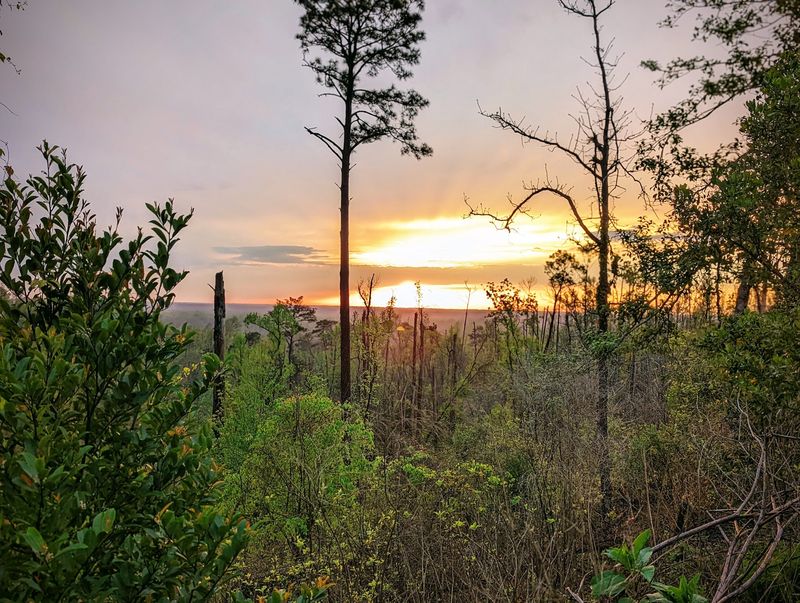
Steep hills in Florida sound like a joke until you hike the ravines above the Apalachicola River. Torreya sits on bluffs that rise more than 150 feet, which feels almost impossible in a state known for pancake-flat land.
The park takes its name from the rare Torreya tree, a stumpy evergreen that grows almost nowhere else on Earth. Fewer than a thousand mature ones remain in the wild, and most of them cling to these very slopes.
Campsites here are shaded by beech, magnolia, and hickory, so fall actually brings real leaf color. The full-facility loop has water and electric hookups, while primitive sites along the Torreya Challenge Trail reward hikers willing to carry gear a few miles in.
Cell service drops off quickly, which is either a problem or the entire point, depending on your mood. Bring a paper map, a headlamp, and shoes with decent grip because the trails climb and drop constantly.
Don’t skip the Gregory House, a restored 1849 plantation home that was floated across the river piece by piece in the 1930s. Rangers give short tours most days, and the porch view over the river valley is worth the walk uphill.
Fall and spring are the sweet spots. Summer humidity here is no joke.
2. Fred Gannon Rocky Bayou State Park, Niceville
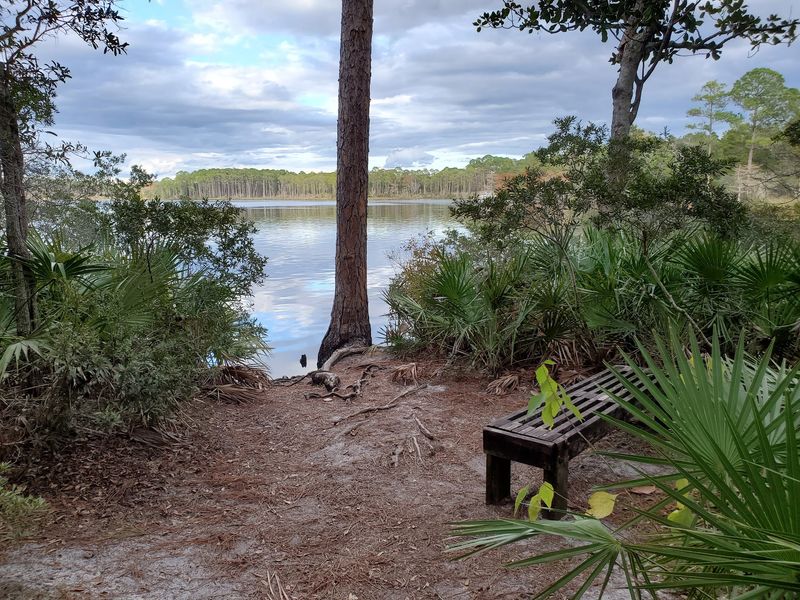
Right off a busy highway near Destin sits a pocket of longleaf pine forest that most beach traffic blows straight past. Rocky Bayou is small, only about 350 acres, and that compact size is exactly why it stays quiet.
Paddling is the main event. The bayou is protected from Choctawhatchee Bay’s chop, so kayaks and canoes glide easily, and you’ll likely spot ospreys, herons, and the occasional dolphin that wanders in.
Three short hiking trails loop through sandhill and swamp habitat. The Sand Pine Trail is the longest at around a mile and a half, easy enough for kids and grandparents alike.
The park honors Fred Gannon, a former Eglin Air Force Base civil engineer who helped turn the property into a public recreation area.
Book ahead for spring and fall since word is slowly spreading. Bring bug spray for evenings, and pack a swimsuit because the small beach area near the boat ramp is a fine place to cool off.
3. O’Leno State Park, High Springs
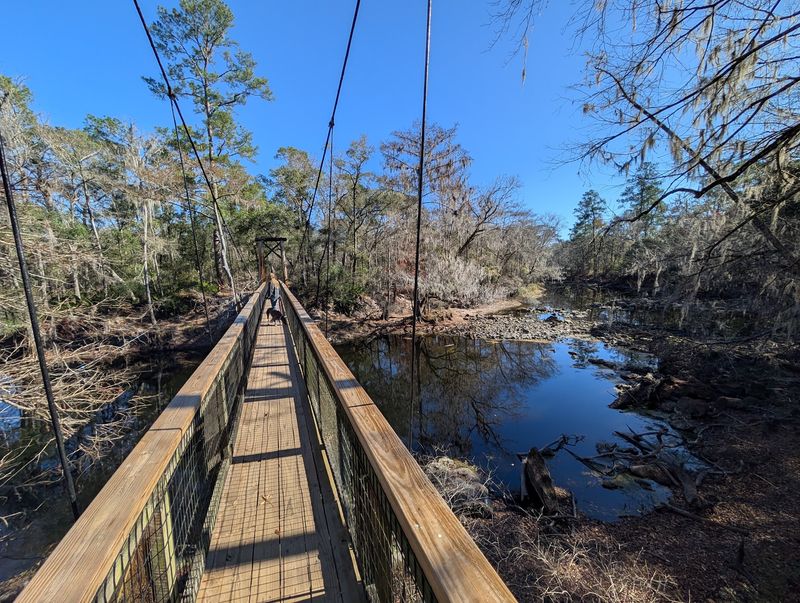
A river that vanishes into the ground and pops back up three miles later? That’s the headline act at O’Leno, where the Santa Fe River slips into a sinkhole and travels underground before resurfacing at River Rise.
The park sits on land that was once a town called Keno, later renamed Leno, and the ghost of that settlement still lingers in old mill foundations scattered through the woods.
Two campgrounds, Magnolia and Dogwood, offer shaded sites under hardwoods and pines. Neither is huge, and both stay surprisingly calm for a park just off Interstate 75.
The suspension bridge built by the Civilian Conservation Corps in the 1930s still sways over the river, and crossing it is basically required. Kids love the bounce; adults grip the cables a little tighter.
Miles of trails wind through sinkholes, hammocks, and river bluffs. Bikes are welcome on several routes, and the flat terrain makes for relaxed riding.
Swimming is available in the park’s designated river swimming area when water conditions allow.
Come in winter if you want the place nearly to yourself. Cool mornings, no mosquitoes, and campfire weather that Florida only hands out a few months a year.
4. Ochlockonee River State Park, Sopchoppy
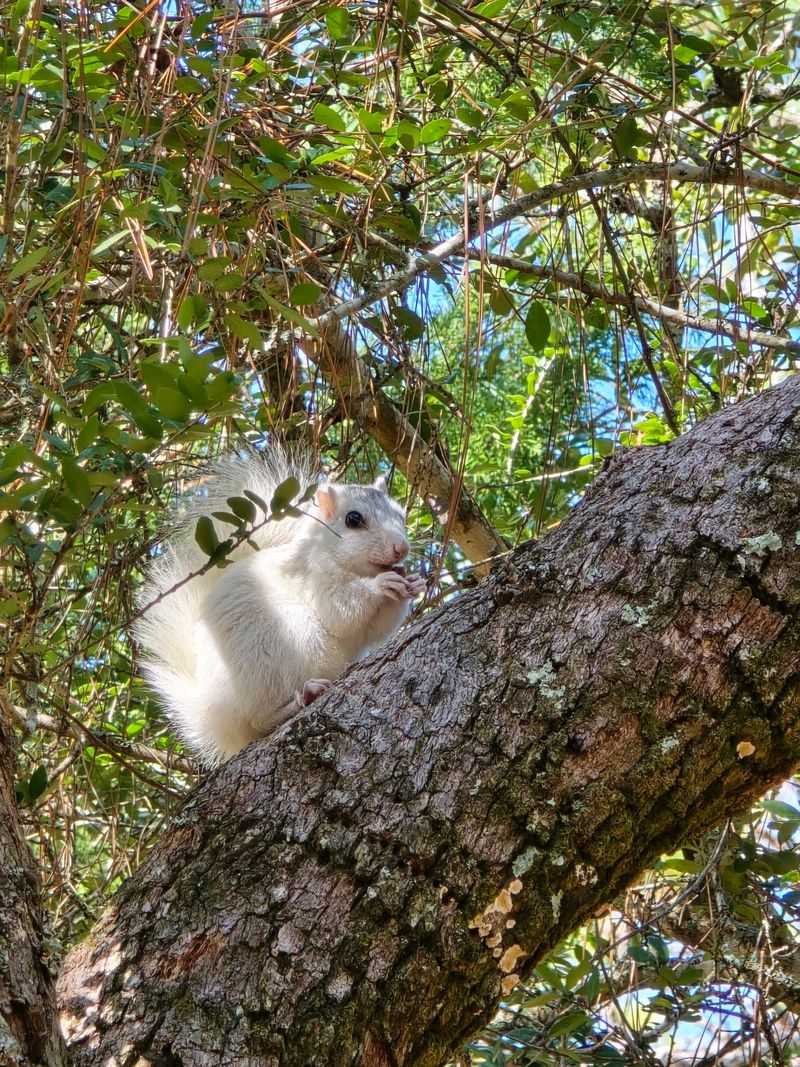
White squirrels. Not albino, just white, and they scamper around this campground like tiny celebrities.
Photographers show up specifically hoping to catch one on camera.
Ochlockonee River State Park sits where two rivers meet near the Gulf, about four miles south of Sopchoppy. The area is thick with pine flatwoods, and the park’s 30 campsites feel spread out rather than stacked on top of each other.
Fishing pulls in a loyal crowd. Bass, bream, and speckled trout all show up depending on where you drop a line, and the boat ramp gives easy access to brackish water where fresh meets salt.
Gopher tortoises plod across the road, red-cockaded woodpeckers rattle through the pines, and deer graze near the swimming area at dusk. Wildlife watching here requires almost no effort.
The swimming spot along the river has a sandy edge and tannin-stained water that looks like sweet tea. Perfectly safe, just don’t expect to see your toes.
Facilities are basic but clean, with electric and water at most sites plus a bathhouse. Cell coverage is patchy.
Stargazing after dark is excellent since the nearest bright town is small. Bring a blanket, lie back on the boat ramp, and let your eyes adjust for twenty minutes.
5. Kissimmee Prairie Preserve State Park, Okeechobee
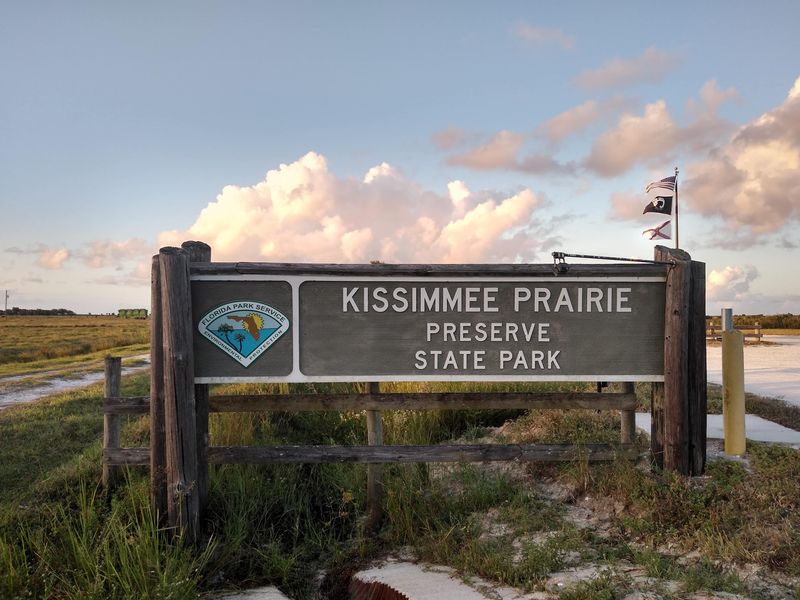
Kissimmee Prairie is one of Florida’s premier destinations for exceptionally dark night skies. Kissimmee Prairie earned an official Dark Sky Park designation, and on a moonless night the Milky Way stretches from horizon to horizon like spilled sugar.
Getting here takes commitment. The last stretch is a long dirt road through cattle country, and the park sits far from any town glow, which is precisely why the sky performs so well.
By day the landscape is a sea of grass, saw palmetto, and scattered oak hammocks covering more than 54,000 acres. It looks like Florida did before drainage ditches and orange groves rearranged everything.
The main campground has about 30 sites with electric hookups, plus a separate astronomy pad where white lights are banned after dark. Red flashlights only, and people take that rule seriously.
Birders hunt for the crested caracara and the endangered grasshopper sparrow, a small brown bird that exists almost nowhere else. Rangers can point you toward recent sightings.
Bring everything you need because there are no stores nearby. Water, food, firewood, and extra bug spray for the warmer months.
Winter offers the best conditions: fewer insects, cooler nights, and crisp air that makes the stars look sharper than any photo can capture.
6. Falling Waters State Park, Chipley
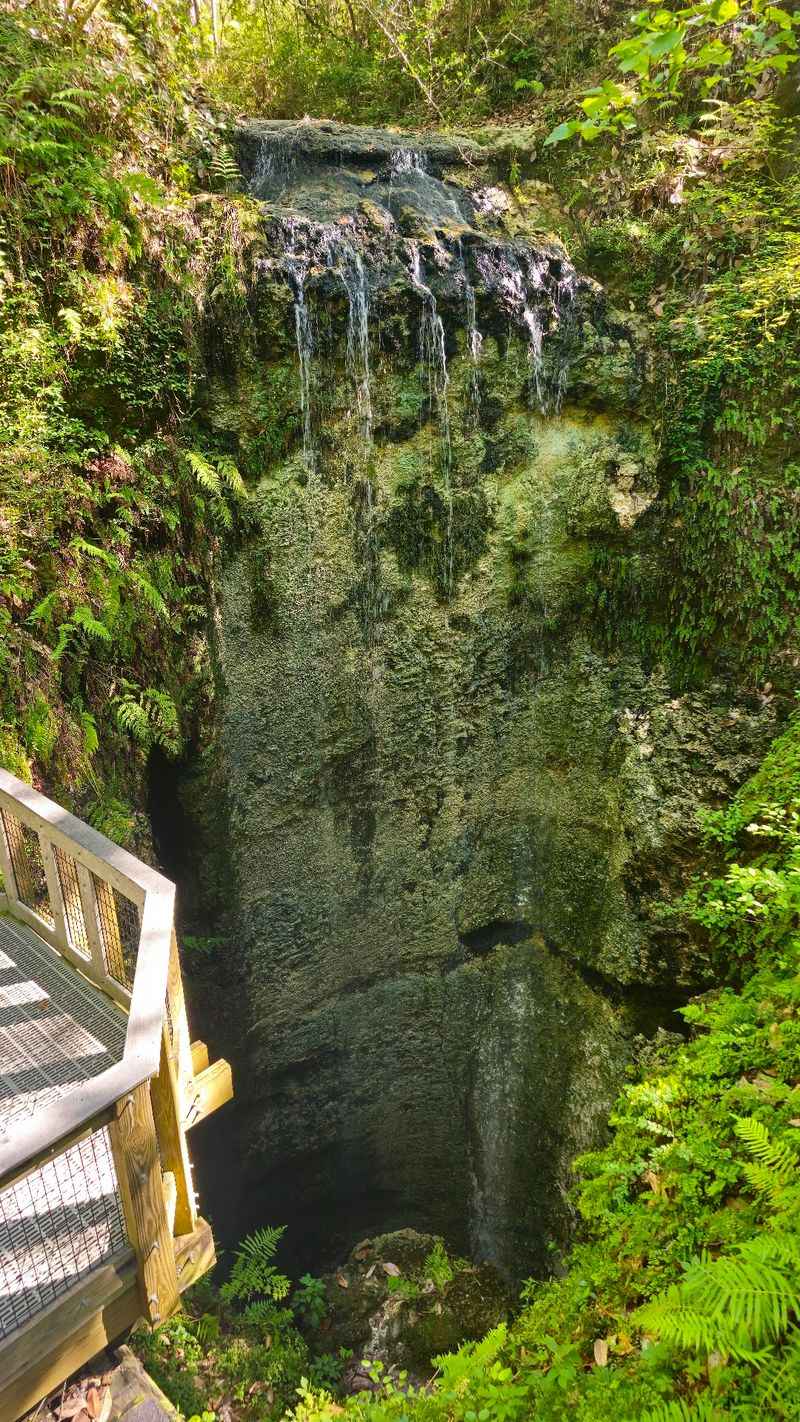
Florida’s tallest waterfall drops 73 feet into a sinkhole and then disappears completely. Nobody knows for certain where the water goes after it vanishes underground, which is a fun thing to think about while you stare over the railing.
Chipley isn’t on most vacation routes, so this park stays refreshingly uncrowded. The campground holds around 24 sites shaded by pines and hardwoods, with electric and water available.
Boardwalks lead visitors past a series of smaller sinkholes before reaching the main falls overlook. The whole loop is short, maybe half a mile, and manageable for almost anyone.
A two-acre lake with a sandy beach handles swimming duty in warm months. Lifeguards aren’t on duty, so keep an eye on younger swimmers.
Oddly enough, the site once held an oil well drilled back in 1919. It never struck oil, but the abandoned casing is still marked along the trail, a strange little piece of Panhandle history.
Waterfall flow depends entirely on rain. After a dry stretch it can slow to a trickle, so check recent conditions before driving out if the falls are your main goal.
Spring, after the seasonal rains, usually delivers the most dramatic show and comfortable camping temperatures at the same time.
7. Three Rivers State Park, Sneads
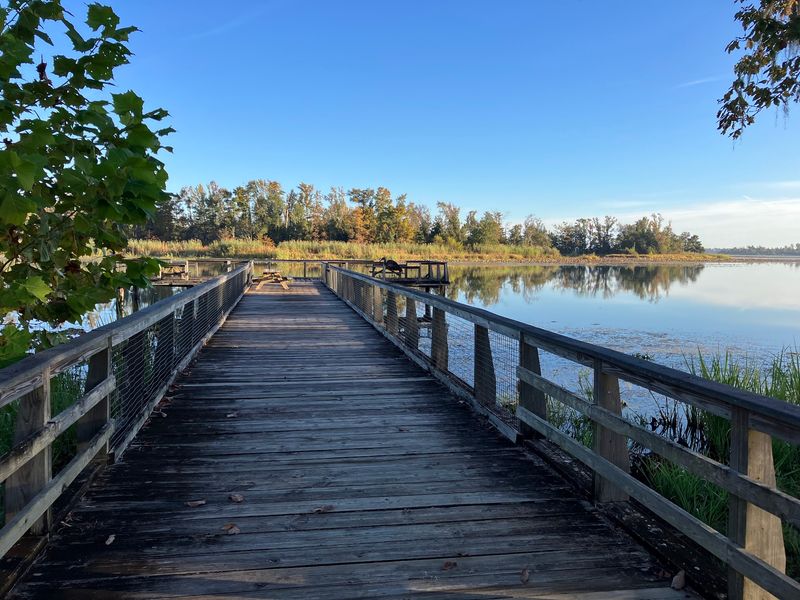
In the far northwest corner of the state, where Florida, Georgia, and Alabama nearly touch, Three Rivers overlooks Lake Seminole and stays off almost everyone’s radar.
The park sits where the Chattahoochee and Flint rivers join to form the Apalachicola, hence the name. Sunrise over that wide water, with fog curling off the surface, is the kind of view people drive hours for without realizing it’s here.
Camping is simple and lakeside. About 30 sites offer water and electric, and several back right up to the shoreline so you can fish from your campsite chair.
Bass fishing on Lake Seminole has a serious reputation among anglers, and tournaments run out of nearby ramps. Crappie and bream keep casual fishers happy too.
Hikers get roughly five miles of trails through hardwood forest and pine ridges. Deer, gray fox, and alligators all live here, though the gators mostly keep their distance.
A cozy cabin is available for anyone who wants walls and a roof rather than a tent.
Winter camping is truly chilly this far north, sometimes dipping near freezing. Pack a warm sleeping bag, and you’ll be rewarded with empty trails and zero mosquitoes.
8. Collier-Seminole State Park, Naples
Wedged between Naples and the Everglades, Collier-Seminole protects a slice of tropical hammock with wild royal palms growing naturally, something you rarely see outside a cultivated landscape.
Most travelers on the Tamiami Trail are speeding toward Miami or Marco Island and never notice the entrance. Their loss.
The campground offers around 100 sites, but the layout and dense vegetation make it feel much more private than the number suggests. Electric and water hookups are available, along with a dump station.
Paddlers get a 13.6-mile canoe trail winding through mangrove tunnels and salt marsh out toward the Ten Thousand Islands. Tides matter enormously here, so plan your trip around them or rent from the on-site outfitter for advice.
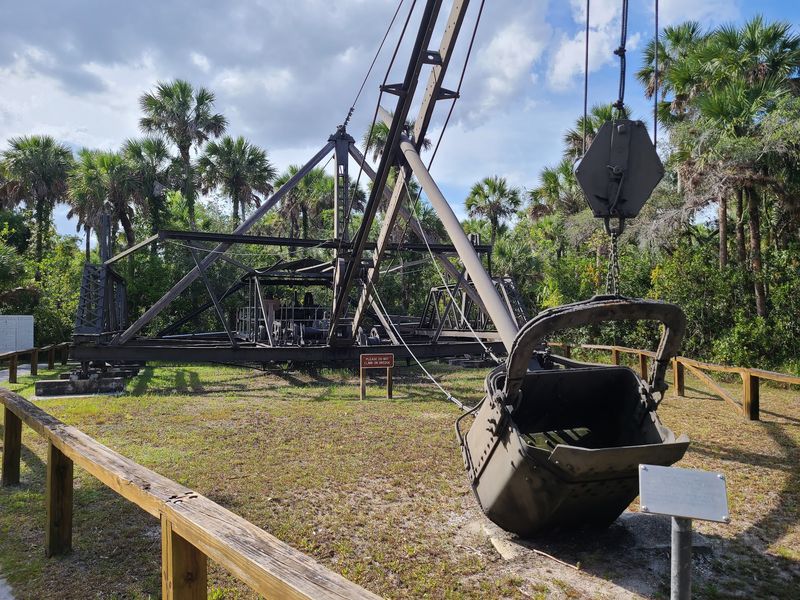
A restored Bay City walking dredge sits near the entrance, the same machine used to carve the Tamiami Trail through the swamp in the 1920s. It looks like something from a steampunk novel.
Wildlife includes wood storks, roseate spoonbills, black bears, and the occasional Florida panther track in soft mud.
Summer brings heat, thunderstorms, and mosquitoes in impressive numbers. Aim for December through March when the weather turns pleasant and the bugs finally back off.
9. Blackwater River State Park, Holt
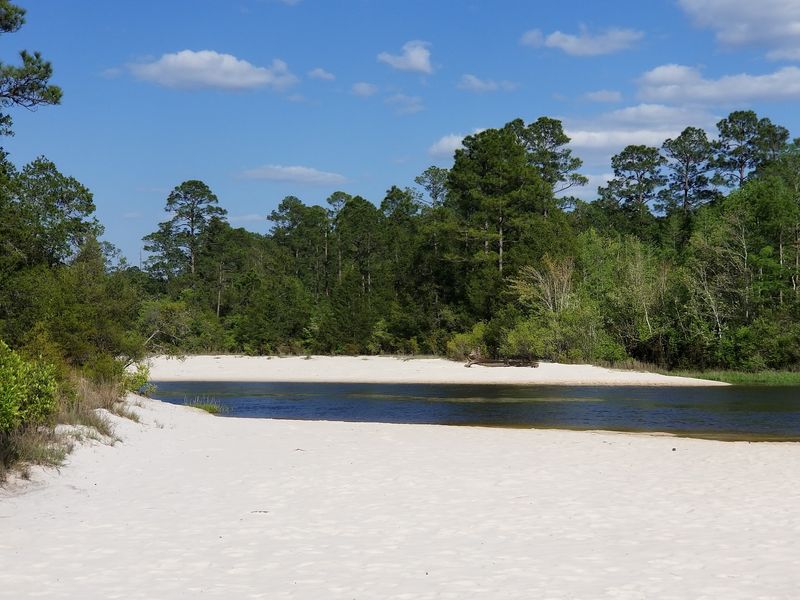
Sugar-white sandbars line a river the color of strong tea, and the contrast is honestly startling the first time you see it. The Blackwater is considered one of the purest sand-bottom rivers left in the country.
Holt is a small town most people know only as a highway exit, which keeps the crowds thin outside of summer tubing season.
The campground has roughly 30 sites with electric and water, shaded by pines and Atlantic white cedars. A short walk puts you on the riverbank.
Floating is the classic activity. Outfitters just outside the park rent tubes, canoes, and kayaks, and the gentle current does most of the work while you drift past sandbars perfect for a lunch stop.
Two nature trails, Chain of Lakes and Juniper Lake, wind through swamp and forest. Neither is long, and both offer good odds of spotting turtles and wading birds.
The river’s dark color comes from tannins leaching out of decaying leaves, not pollution. It’s clean enough that fish are easy to see in the shallows.
Weekends in July fill up fast with paddlers. Visit midweek or in early fall to trade the noise for cicadas, birdsong, and the sound of moving water.
10. Manatee Springs State Park, Chiefland
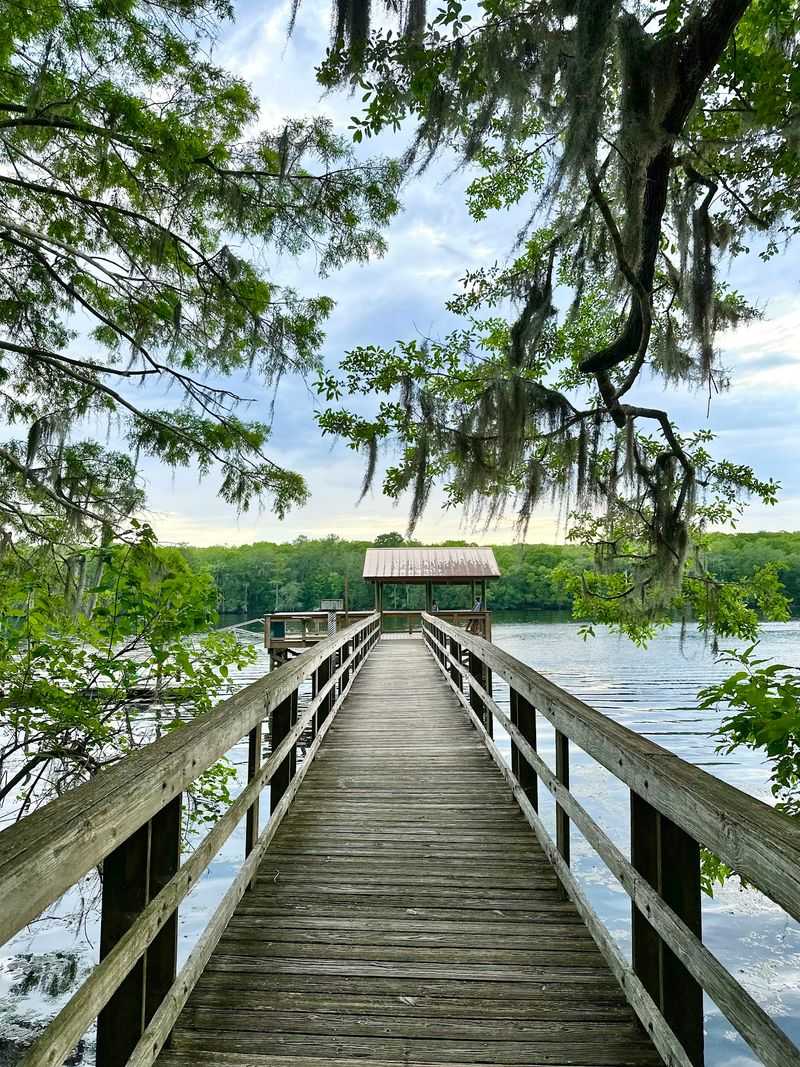
Roughly 100 million gallons of 72-degree water bubble out of the ground here every single day, then run down a short spring run into the Suwannee River. That flow makes it a first-magnitude spring, one of Florida’s largest.
Winter is manatee season. When the river turns cold, the gentle giants crowd into the warm spring run, and the boardwalk becomes the best free wildlife show in the region.
Two campgrounds, Magnolia and Hickory, hold about 80 sites total under towering trees. Reservations are smart during manatee months but midweek availability is often decent.
Swimming and snorkeling in the spring basin are popular in summer, and certified cave divers come from all over to explore the underwater cave system below.
The 800-foot boardwalk to the Suwannee passes through a cypress swamp where woodpeckers hammer away overhead. Deer wander the campground loops at dusk without much concern for people.
Chiefland is a small farming town, so stock up on groceries before you arrive rather than expecting late-night options.
Bring water shoes, a mask, and patience. Sitting still on the boardwalk for fifteen minutes usually rewards you with something worth watching, whether it’s a manatee, an otter, or a gliding gar.
11. Rock Springs Run State Reserve, Sorrento
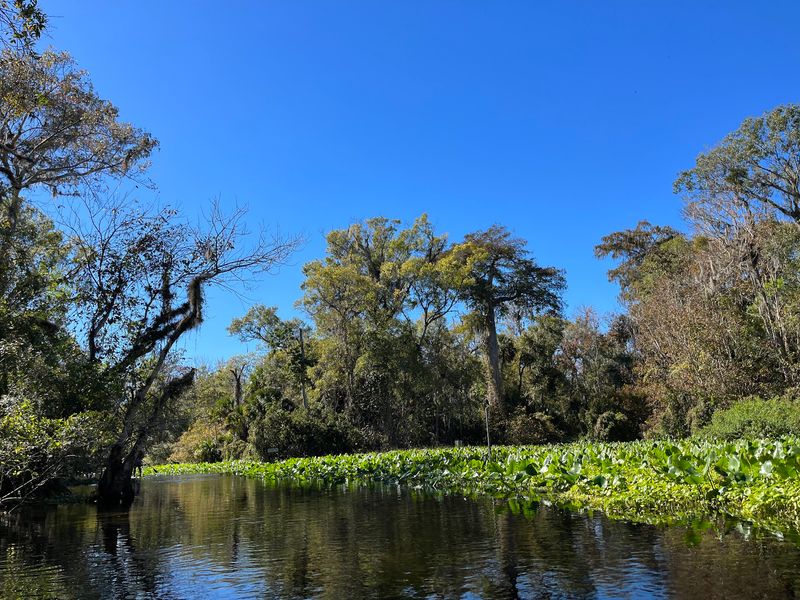
Just 30 minutes from Orlando’s theme parks lies a place where you can walk for hours without seeing another human. Rock Springs Run State Reserve covers about 14,000 acres of scrub, pine flatwoods, and river swamp.
Camping here is genuinely primitive. Sites are reached by hiking, biking, horseback, or paddling, and there are no bathrooms, no showers, and no hookups waiting for you.
That barrier is exactly what keeps it empty. Most visitors to central Florida have no idea the reserve exists, let alone that you can sleep in it.
Black bears live here in real numbers, so proper food storage isn’t optional. Hang your food or use a bear canister, and keep a clean camp.
Paddlers can float Rock Springs Run and the Wekiva River, spotting turtles stacked on logs and otters ducking under the surface. Outfitters nearby handle rentals and shuttles.
Equestrians love the sandy trails, and there’s a designated horse camp for riders bringing their own animals.
Carry every drop of water you’ll need since none is available on the trail. Cooler months make the load easier and cut down on ticks and mosquitoes considerably.
Solitude this close to a major city is rare. Treat it gently so it stays that way.