12 Georgia Ghost Town Landscapes Where Nature And History Meet On The Same Ground
Beyond Georgia’s busy cities lies a quieter world where history lingers in unexpected places. Scattered across forests, fields, and backroads are forgotten towns and abandoned landmarks that tell stories of industries that faded, communities that moved on, and buildings left to the passage of time. Weathered walls, rusting structures, and cracked foundations reveal glimpses of the past while nature slowly takes the space back.
Vines climb through old windows, wildflowers spread across empty streets, and creeks wind past structures that once bustled with life. These places carry a mysterious beauty that draws explorers, photographers, and curious travelers alike. Visiting them feels less like a typical sightseeing trip and more like stepping into a living piece of history.
If you enjoy quiet trails, atmospheric scenery, and stories hidden in the landscape, these 15 ghost towns and abandoned sites across Georgia offer an unforgettable journey.
1. Scull Shoals Mill Ruins, Oconee National Forest
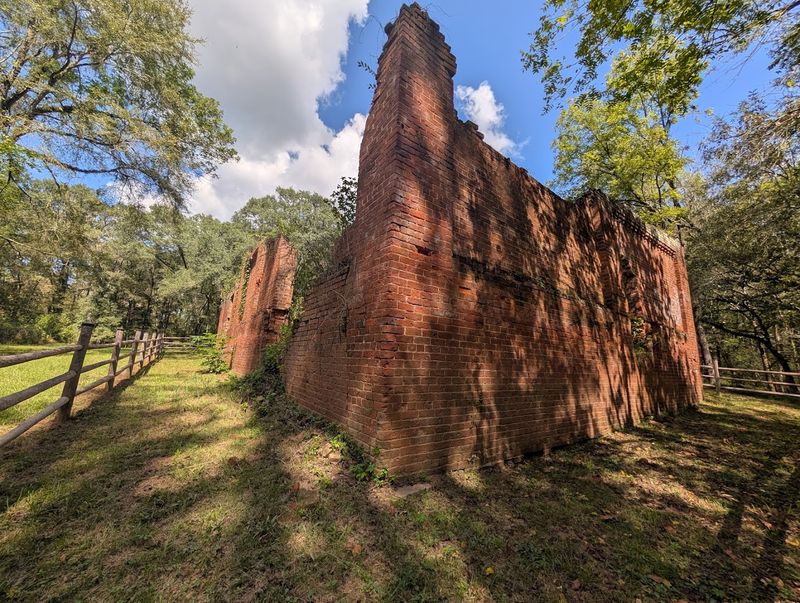
Tucked deep inside the Oconee National Forest, Scull Shoals feels like a place the modern world simply forgot. The ruins sit at 6350 Scull Shoals Rd, Greensboro, GA 30642, surrounded by towering pines and a quiet stretch of the Oconee River that once powered the whole operation. Back in the early 1800s, this was a buzzing industrial hub with a grist mill, paper mill, cotton gin, and even a post office.
Floods and fires slowly chipped away at the town until nothing was left but foundations and millstones. Interpretive signs along the trail explain what each crumbling structure once was, which makes the walk feel almost like time travel. The forest has fully wrapped itself around the ruins now, with roots threading through brick and moss blanketing old walls.
Weekdays are quieter and better for exploring at a relaxed pace. Wear sturdy shoes since the trail can get muddy after rain.
2. High Falls State Park Ghost Town Site
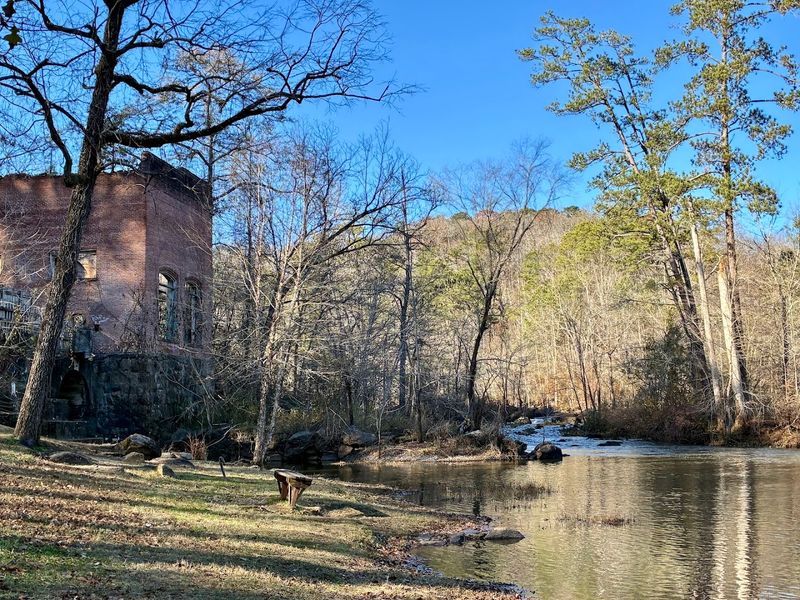
Before it became a beloved state park, High Falls was a town with real ambitions. Located at 76 High Falls Park Dr, Jackson, GA 30233, this spot once hummed with industry, boasting a thriving community built around its powerful waterfall, the largest in middle Georgia. Then the railroad bypassed the town in the 1880s, and almost overnight, residents packed up and left.
What remains is a stunning natural landscape layered with quiet history. The waterfall still roars over ancient rock ledges just as it did when mills lined the banks, and stone ruins peek out from the vegetation near the water. A 650-acre lake now adds to the park’s appeal, attracting campers, kayakers, and history lovers alike.
Morning visits offer the best light for photography and fewer crowds. The ruins are accessible from the main trail loop, so comfortable walking shoes are all you really need to explore this layered place.
3. Ebenezer, Georgia and Jerusalem Lutheran Church
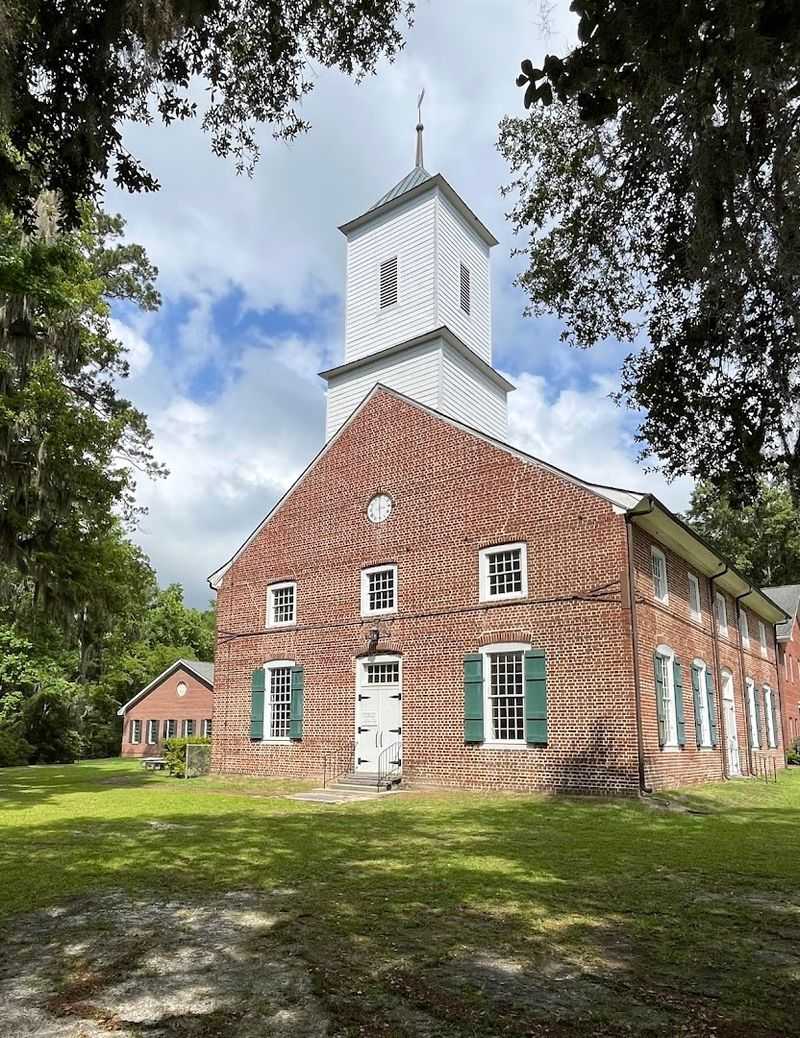
Established in 1734 by a group of Salzburger emigrants fleeing religious persecution in Austria, Ebenezer was once one of Georgia’s most promising early settlements. The town is located near the Savannah River along Ebenezer Rd, Rincon, GA 31326, and at its peak it operated silk mills, a school, and a busy port. Revolutionary War damage and a devastating yellow fever outbreak slowly drained the life from the community until it was fully abandoned by 1855.
What survived is remarkable: the Jerusalem Lutheran Church, completed in 1769, still stands with its original brick walls and thick wooden beams intact. It is believed to be the oldest continuously used church building in the United States. Surrounding the church are old grave markers and interpretive panels that piece together the town’s layered story.
The site is open to visitors and best explored in the cooler months when shade from the surrounding oaks makes the walk more comfortable. Guided tours may be available seasonally.
4. Resaca Battlefield and Abandoned Townsite
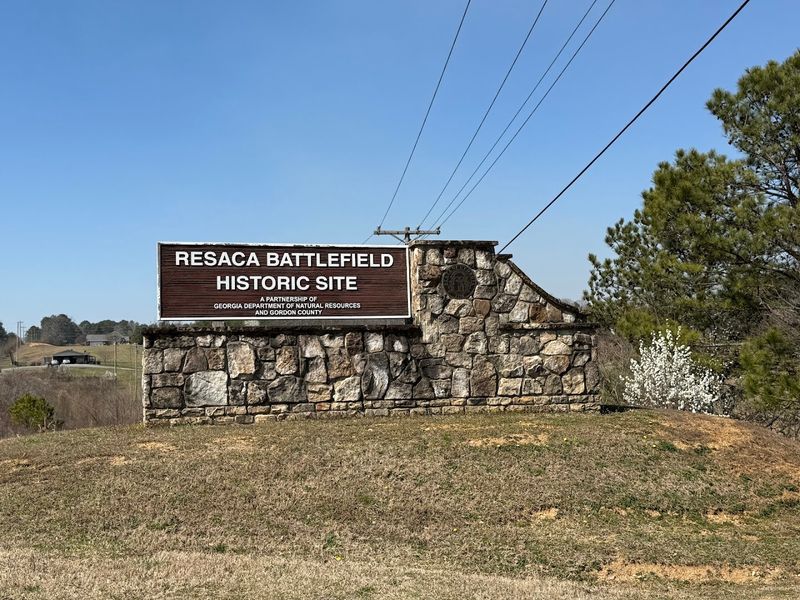
Resaca carries the heavy memory of one of the first major battles of the Atlanta Campaign, fought in May 1864 when Union and Confederate forces clashed across these fields for two bloody days. The site is located near 100 Confederate Cemetery Rd, Resaca, GA 30735, where a preserved Confederate cemetery still holds the remains of soldiers who never made it home. After the war, the town that once stood here never fully recovered its former size or energy.
Walking the battlefield today feels strikingly calm given the violence that once unfolded here. Earthworks, trenches, and artillery positions are still visible in the landscape, partially reclaimed by grass and cedar trees. Interpretive signs guide visitors through troop movements and key moments of the engagement in clear, accessible language.
The cemetery is always open and free to visit. A quiet weekday morning is the best time to absorb the atmosphere without distraction. Comfortable walking shoes are recommended since the terrain is uneven in places.
5. Tate City, Rabun County
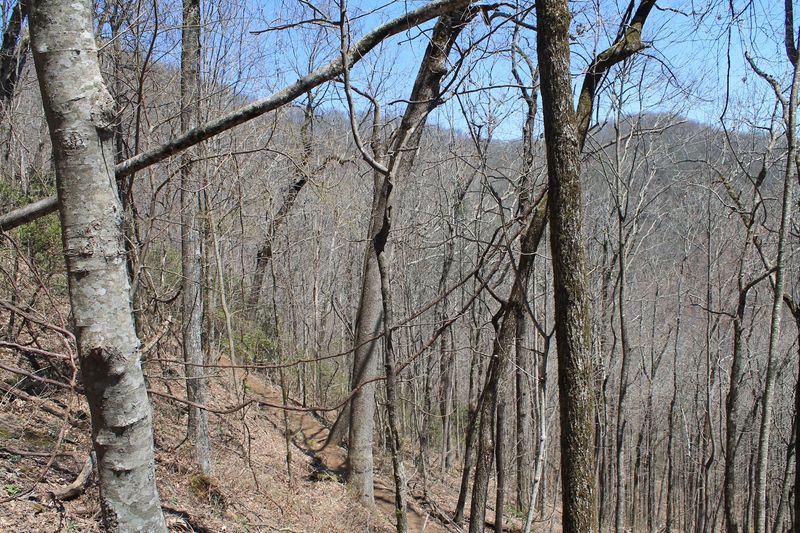
Tate City sits so far back in a narrow mountain valley in Rabun County that it feels like a place deliberately hiding from the rest of the world. Accessible via Tate City Rd off GA-246 near Hiawassee, GA 30546, this tiny community was once a self-sufficient logging and farming settlement that thrived in relative isolation through the late 1800s and early 1900s. When logging operations wound down and younger generations moved away, Tate City quietly hollowed out.
A handful of structures still stand along the dirt road that threads through the valley, and the surrounding Chattahoochee National Forest has wrapped the area in a green cocoon of hardwoods and rhododendron. The nearby Tallulah River adds a cool, rushing soundtrack to the whole experience. Wildlife sightings, including deer and wild turkey, are common here.
The road into Tate City can be rough, so a vehicle with decent clearance is helpful. Fall foliage season turns this valley into one of the most photogenic spots in north Georgia.
6. Okefenokee’s Chesser Island Homestead
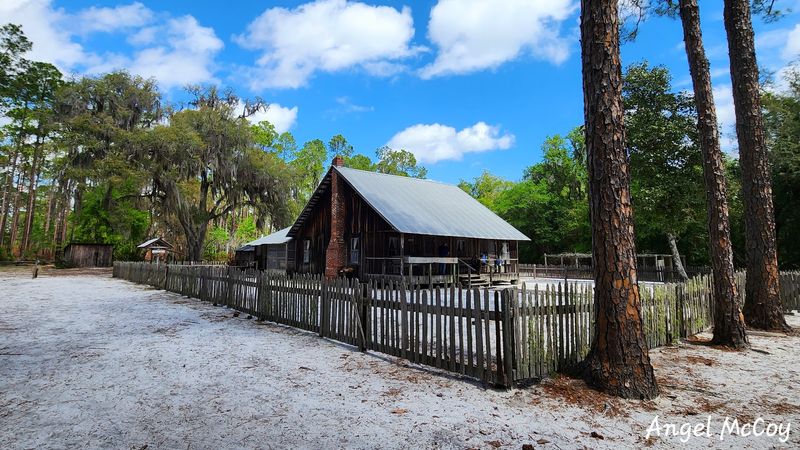
Chesser Island inside the Okefenokee National Wildlife Refuge is the kind of place that makes you wonder how anyone managed to build a life surrounded by alligators, cypress swamps, and relentless humidity. The refuge entrance is located at 2700 Suwannee Canal Rd, Folkston, GA 31537, and Chesser Island is reachable via a short boardwalk trail from the main visitor area. The Chesser family homestead, built in the early 1900s, still stands on the island with its original wooden structures, smokehouse, and syrup mill preserved in place.
Seeing the homestead puts the toughness of rural swamp life into sharp perspective. The family farmed, hunted, and fished entirely within the swamp ecosystem for generations before the land became a federal refuge. Surrounding the homestead, the swamp stretches out in every direction, dark and glassy and alive with birdsong.
The Chesser Island Boardwalk is flat and easy to walk, making it accessible for most visitors. Early morning visits offer the best wildlife viewing and the most atmospheric light over the water.
7. Milltown, Georgia (Trion Area)
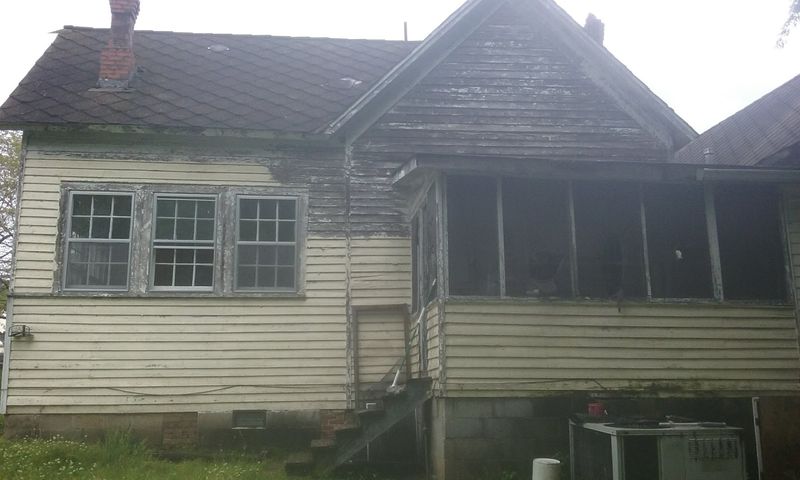
Chattooga County’s Milltown district near Trion tells the classic story of a company town that rose, thrived, and slowly faded when the industry that built it moved on. Located along GA-27 near Trion, GA 30753, Milltown grew up entirely around the Trion textile mill, one of the oldest continuously operated mills in Georgia’s history. Workers lived in company-owned houses, shopped at the company store, and built an entire community inside the mill’s orbit.
When textile manufacturing declined across the American South in the latter half of the 20th century, Trion’s mill eventually shuttered, leaving behind brick buildings and quiet streets that once buzzed with shift-change energy. Some of the original mill housing still lines the neighborhood, giving the area a preserved, time-capsule quality that’s rare to find. Local historical groups have worked to document and protect what remains.
Driving through slowly on a weekday gives the best sense of the town’s original layout. Pair the visit with a stop at the Chattooga County Historical Society for deeper context on the mill era.
8. Lexington, Georgia and Its Faded Courthouse Square
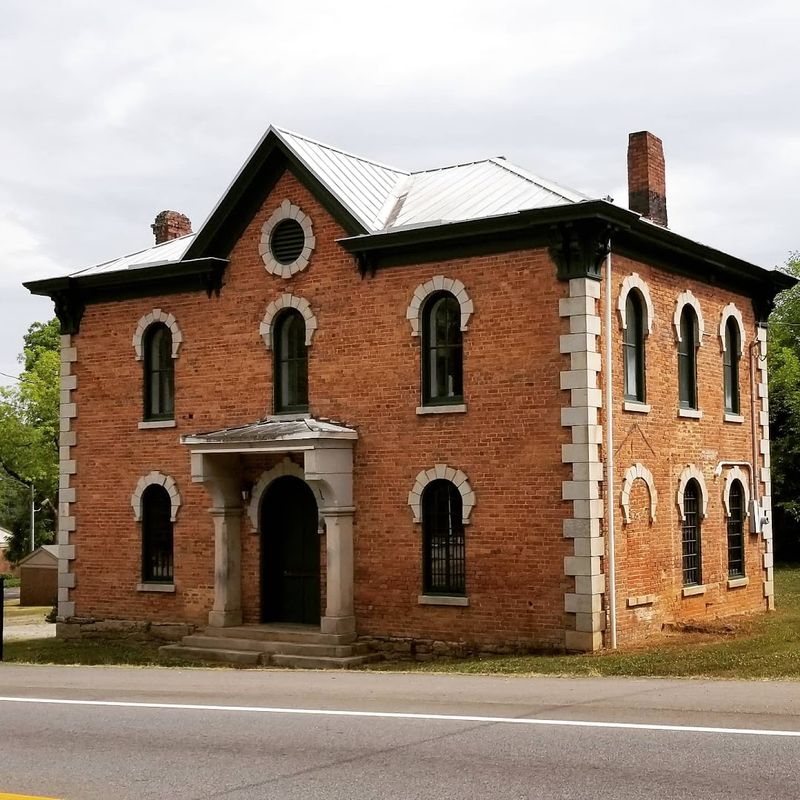
Lexington, the seat of Oglethorpe County, carries the elegant bones of a prosperous antebellum town that time gradually passed by. The historic courthouse stands at 111 Main St, Lexington, GA 30648, anchoring a square that once served as the commercial and social heart of a thriving agricultural community. Cotton wealth built this town’s wide streets and graceful homes, and its influence faded when the agricultural economy shifted after the Civil War.
Walking around the square today feels a bit like finding a film set that everyone forgot to take down. A few businesses still operate among the mostly quiet storefronts, and the courthouse itself remains an active government building with impressive Greek Revival architecture. Surrounding neighborhoods hold antebellum homes that speak to the town’s former prosperity.
Oglethorpe County’s rolling countryside makes the drive to Lexington scenic in its own right. Fall is especially beautiful, with hardwood color spreading across the farmland that surrounds the town on all sides.
9. New Manchester Mill Ruins at Sweetwater Creek State Park
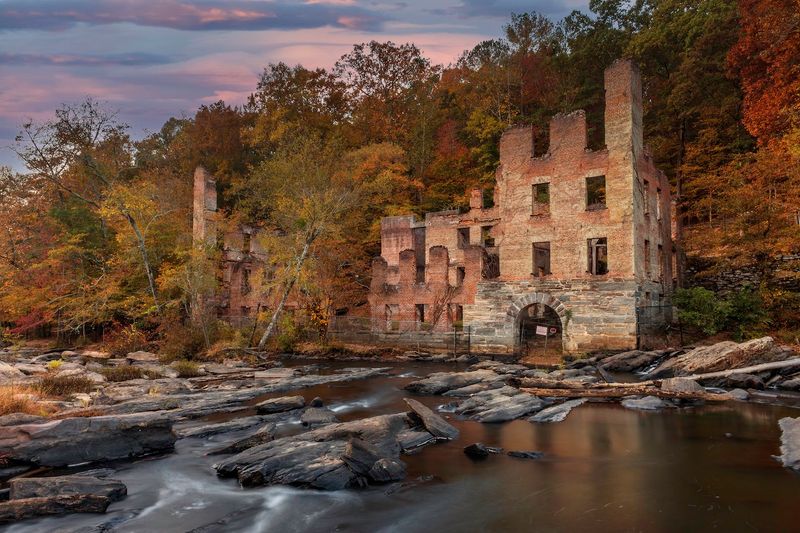
Few ruins in Georgia carry as dramatic a backstory as the New Manchester Manufacturing Company mill at Sweetwater Creek. The park is located at 1750 Mount Vernon Rd, Lithia Springs, GA 30122, just a short drive west of Atlanta, making it one of the most accessible ghost town experiences in the state. Union soldiers burned the mill in 1864 during Sherman’s March to the Sea, and the four-story brick shell has stood quietly ever since.
The mill workers, mostly women and children, were arrested and sent north as prisoners of war, a detail that adds a sobering weight to every crumbling wall you pass. Today the ruins rise dramatically above the creek, framed by forest canopy and the sound of rushing water below. The Red Trail leads directly to the site and is well-marked throughout.
Spring and fall offer the most comfortable hiking temperatures. Arrive early on weekends to snag a parking spot, as this park draws steady crowds year-round.
10. Bulloch Hall and Roswell’s Vanished Mill Village
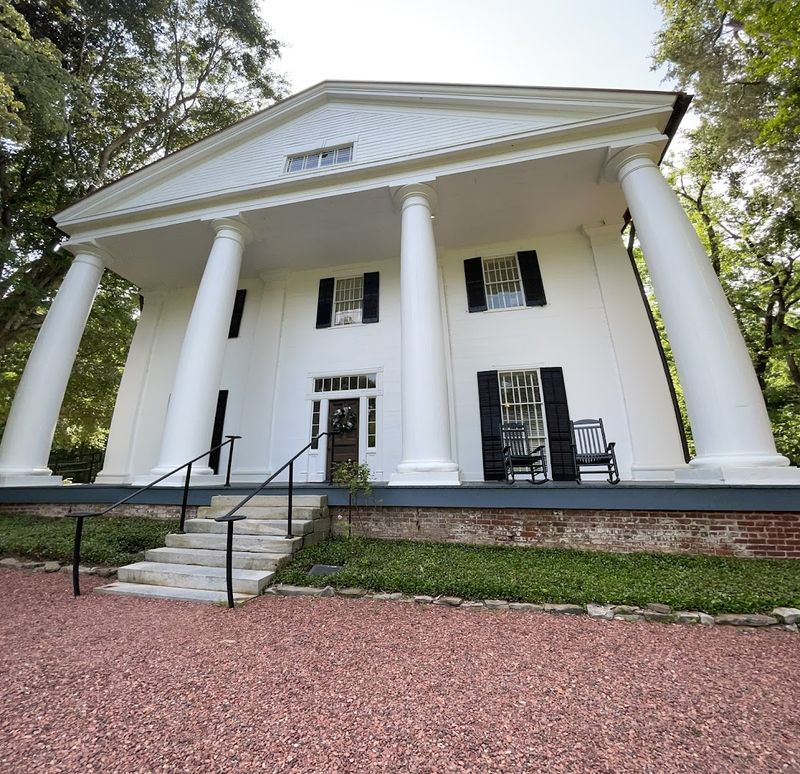
Roswell, Georgia is known today as a thriving suburb north of Atlanta, but its origins are rooted in a mill village that was essentially erased during the Civil War. Bulloch Hall, located at 180 Bulloch Ave, Roswell, GA 30075, is one of the few antebellum structures that survived intact, a Greek Revival mansion that once belonged to the family of Theodore Roosevelt’s mother. The mill workers who lived nearby were not so fortunate, as Union troops burned the mills and arrested hundreds of workers in 1864.
The mill village itself is largely gone, absorbed into the landscape of the modern city, but interpretive materials at Bulloch Hall and nearby Roswell Mill ruins help reconstruct what life looked like here before the war. The creek that powered the original mills still runs through the area, threading past walking trails and old stone walls.
Bulloch Hall offers guided tours that bring the antebellum era to life in honest, nuanced terms. The grounds are free to walk and lovely in any season.
11. Andersonville, Georgia and the Civil War Prison Site
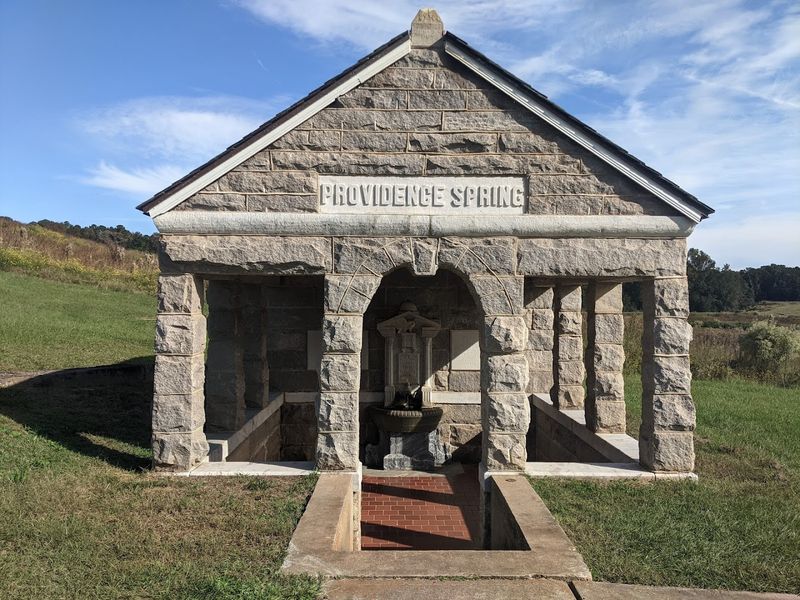
Andersonville is one of those places that stays with you long after you leave, not because of its beauty, but because of the weight of what happened there. The Andersonville National Historic Site is located at 496 Cemetery Rd, Andersonville, GA 31711, and it preserves the site of Camp Sumter, the Confederate prison camp where nearly 13,000 Union soldiers died from disease, malnutrition, and exposure during the Civil War. The town of Andersonville itself, once a small railroad depot, shrank dramatically after the war and has remained a quiet, small community ever since.
The national cemetery on site holds more than 13,000 graves marked with clean white stones, arranged in rows that stretch across a gentle hill in a way that is quietly overwhelming. A museum on the grounds tells the full story of Civil War prisons on both sides without flinching from difficult details.
Plan at least two to three hours for the full site. The experience is moving and educational in equal measure, and it is appropriate for visitors of middle school age and older.
12. Barnsley Gardens Ruins and Estate, Adairsville
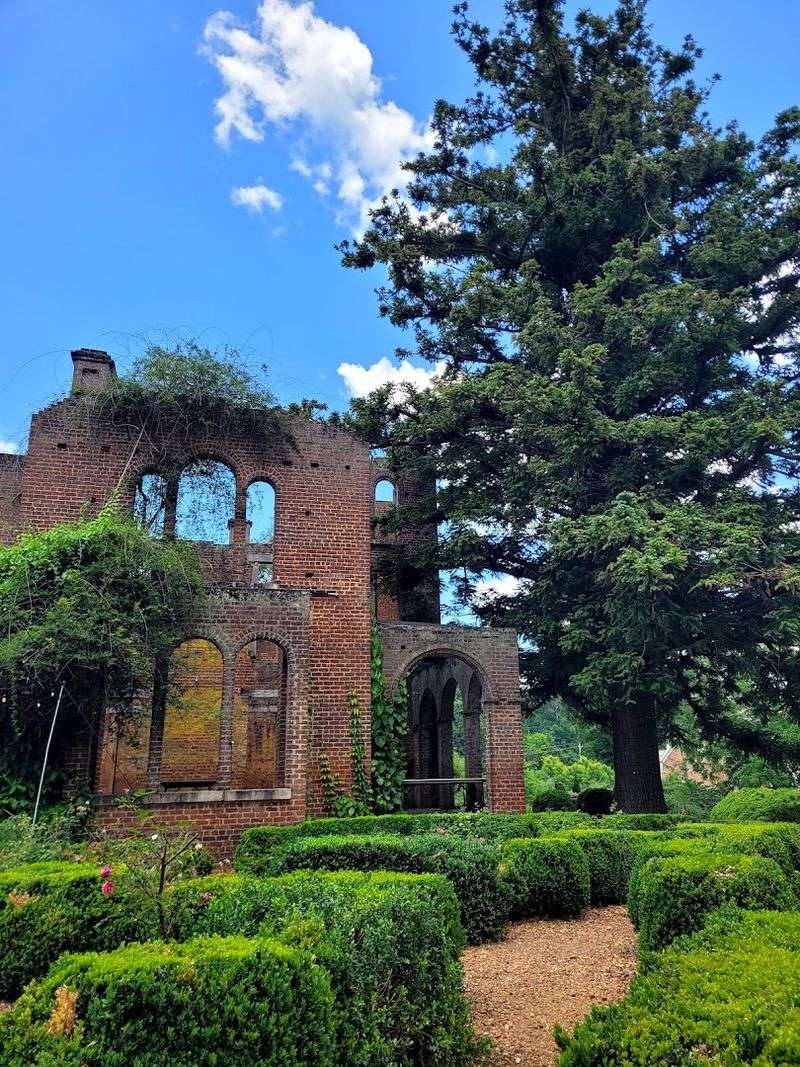
Godfrey Barnsley began building his dream estate in the 1840s with a vision of an Italianate manor worthy of an English country house. The property sits at 597 Barnsley Gardens Rd, Adairsville, GA 30103, nestled in the rolling hills of northwest Georgia. Personal tragedy struck repeatedly, including the death of his wife and financial ruin brought on by the Civil War, and the grand manor was never fully completed.
Today the roofless ruins stand at the center of a lush, beautifully maintained garden that Barnsley himself designed with help from a New York landscape architect. Wisteria, boxwoods, and heritage roses still bloom in their original beds, creating a striking contrast against the crumbling stone walls. A small museum on site tells the full story of the Barnsley family through artifacts and photographs.
The resort surrounding the ruins offers lodging, golf, and dining for those who want to linger longer. Weekend mornings tend to be the most peaceful time to wander the gardens without large tour groups.