Gerald Ford Was Born In Nebraska And The Spot Is Now A Quiet Rose Garden
A future president spent just 16 days in the house where he was born. Then his mother packed him up and left for good.
That baby was Leslie Lynch King Jr., the boy who grew up to be Gerald Ford. The grand Victorian home that sheltered those first days burned in 1971, and nobody rebuilt it.
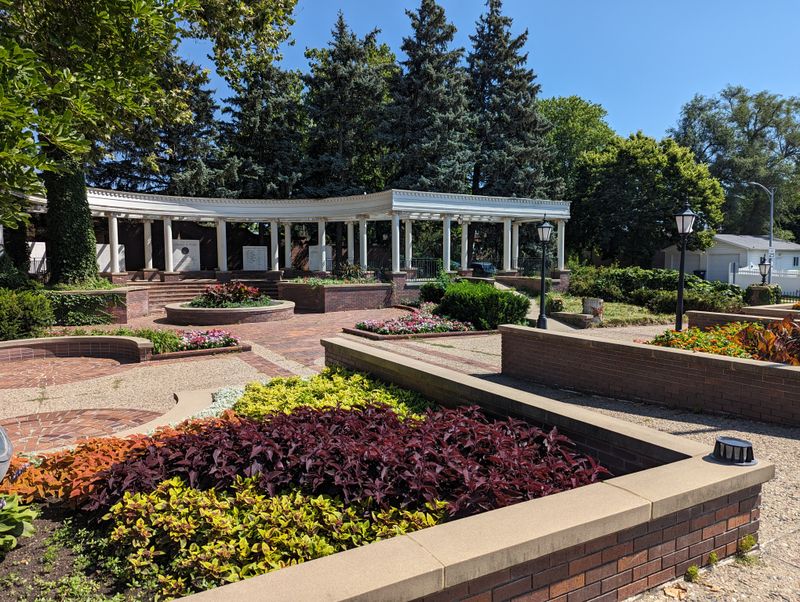
What stands there now is softer: roses, a White House-style portico and a time capsule waiting for 2076. I like how a neighborhood corner in Nebraska quietly holds a piece of presidential history most people drive right past without knowing.
I can’t imagine a calmer way to meet a president, with no crowds, ticket booths or velvet ropes anywhere in sight. So how did an empty lot become a presidential memorial, and what’s truly worth seeing there?
A Presidential Birthplace Sitting In Plain Sight On A Leafy Omaha Corner
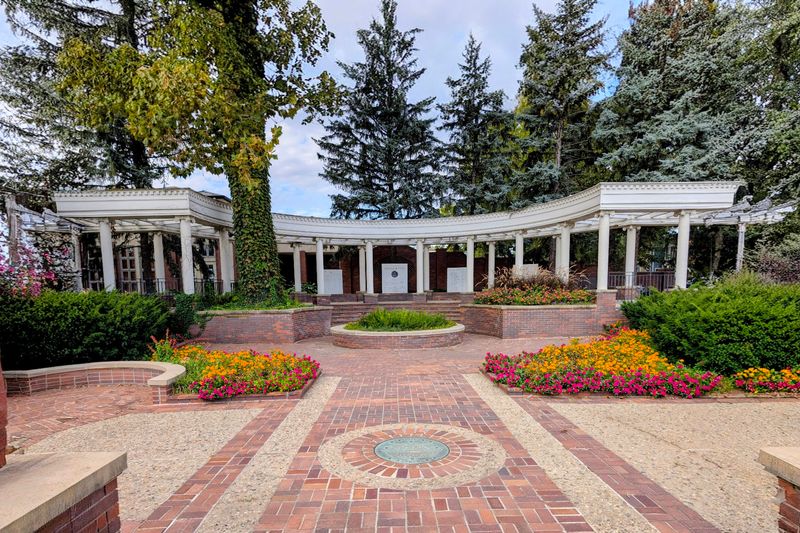
The Gerald R. Ford Birthsite and Gardens marks the exact spot where the 38th president was born in 1913.
It sits on a residential corner in Omaha, inside a leafy older neighborhood.
Nothing about the setting shouts presidential history at you from the street. The original house is gone, and a public memorial garden now fills the lot instead.
Omaha Parks and Recreation looks after the main structure today, so the site works like a small city park. Expect paths, flowerbeds, monuments, sculpted busts and an exhibit kiosk about Ford’s life.
The whole place is compact enough to explore at an easy pace in a short visit. That makes it a natural add-on to an Omaha day rather than an all-day commitment.
Nebraska claims plenty of famous names, but a president’s birthplace is a rare kind of bragging right. Ford remains the only president born in the state, which gives this little garden real weight.
Call it a history lesson wearing a flower crown. The roses do most of the talking, and the plaques quietly fill in everything else.
Sixteen Days Was All The Time Baby Leslie Spent Here
Leslie Lynch King Jr. arrived on July 14, 1913, in a grand three-story Victorian home on this lot. The house belonged to his paternal grandparents, Charles Henry and Martha King.
His stay was famously short. His mother, Dorothy, left with her infant son roughly sixteen days after his birth.
She eventually settled in Michigan, where the boy grew up and later took his stepfather’s name. That’s how Leslie King Jr. became Gerald Rudolph Ford, the name history remembers.
So Nebraska got the opening scene and very little else. Still, a birthplace is a birthplace, and Omaha has held onto this one proudly.
I love that the story starts with a baby who barely unpacked. Two weeks in town, and he still earned a permanent memorial on the block.
The kiosk on site tells this chapter clearly, so you don’t need to arrive as a history buff. A few minutes of reading connects the empty lot to the man who later led the country.
Few presidential birthplaces come with a stay this brief attached. It’s a quirky detail worth sharing on the drive home.
A 1971 Fire Took The House But Not The Story
Flames swept through the old King family mansion in 1971, and the Victorian house was lost. Ford was a congressman from Michigan at the time, not yet in the White House.
That timing matters more than it seems. Only a few years later, Ford became vice president and then president, and suddenly the empty lot had national meaning.
Plenty of historic homes vanish without anyone marking the spot. A future commander in chief’s birthplace nearly became just another quiet vacant parcel in Omaha.
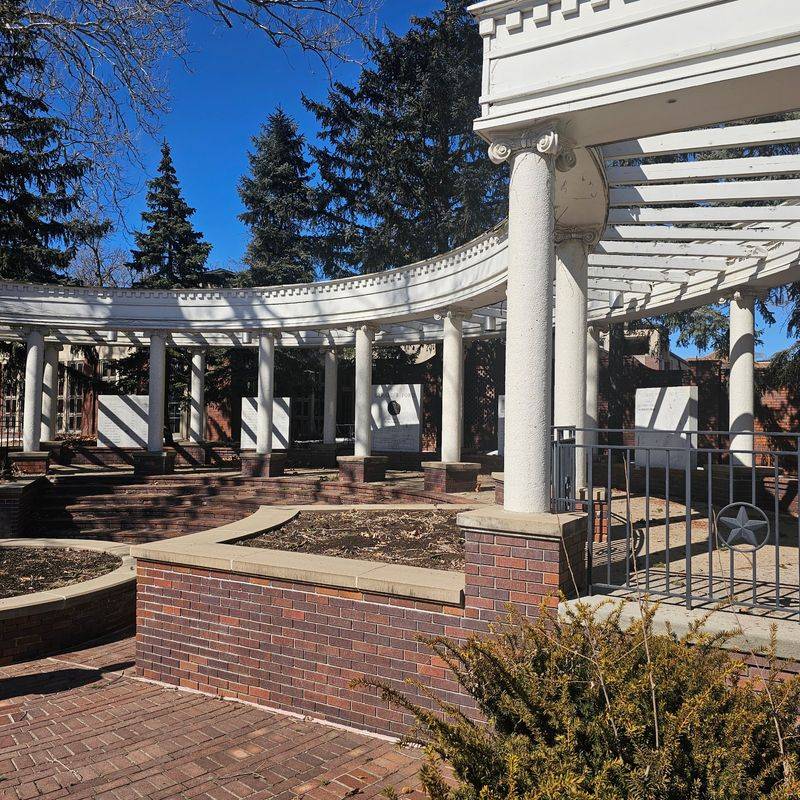
Today, the site doesn’t try to fake the past with a rebuilt mansion. Instead, it uses design touches and a scale model to suggest what once stood here.
I appreciate that honesty. You get a clear sense of the lost house without pretending the walls are still standing.
The colonnade on the grounds nods to the original home, which helps the imagination along. Pair that with the model, and the Victorian silhouette comes back to life a little.
The building is gone, yet the address still carries its story. That might be the most Nebraska thing about it: practical, modest and quietly proud.
One Omaha Businessman Saw Something Worth Saving
James M. Paxson was a local businessman who looked at the vacant lot and saw a memorial waiting to happen.
He bought the land in 1974, soon after Ford became president.
His plan was simple and ambitious at the same time. He wanted a permanent tribute that would honor Ford on the very ground where his life began.
Fundraising followed, and the idea grew from a hopeful purchase into a real public space. Without that push, the lot could easily have become one more ordinary building site.
I believe this is the part of the story that deserves more credit. Presidents get statues, but the neighbors who make those tributes possible rarely get their names remembered.
Paxson’s effort turned a fire-scarred lot into something the whole city could share. Families, photographers and history fans all benefit from his decision decades later.
There’s a very Nebraska streak in that kind of initiative. Someone saw a gap, rolled up their sleeves and simply got it done.
Next time you stroll the paths, give a small mental nod to the man who bought the dirt. The roses are lovely, yet the real foundation was one person’s stubborn good idea.
The Day A President Came Back To Where He Started
Ford returned to Omaha in person for the memorial’s dedication in 1977. Few presidents ever get to see and cut the ribbon on their own birthplace tribute.
That visit gave the site an extra layer of meaning. He wasn’t just honored here, he actually showed up and stood on the spot.
Three years later, in 1980, he came back again. That second trip was for the dedication of the rose garden honoring his wife, Betty.
Two visits from a former president is a strong showing for a modest city garden. It suggests Ford genuinely valued the connection, even though his Omaha chapter lasted barely two weeks.
I can’t imagine how surreal that must have felt for him. He was standing beside flowers planted where his grandparents’ house once rose above the street.
For Omaha, the visits sealed the memorial’s place in local history. They turned an idea from the mid-1970s into a site with a real presidential stamp of approval.
Keep those ceremonies in mind as you walk around today. The same paths once welcomed the man himself, which gives a simple stroll a surprising bit of extra weight and meaning.
Columns That Borrow A Little White House Swagger
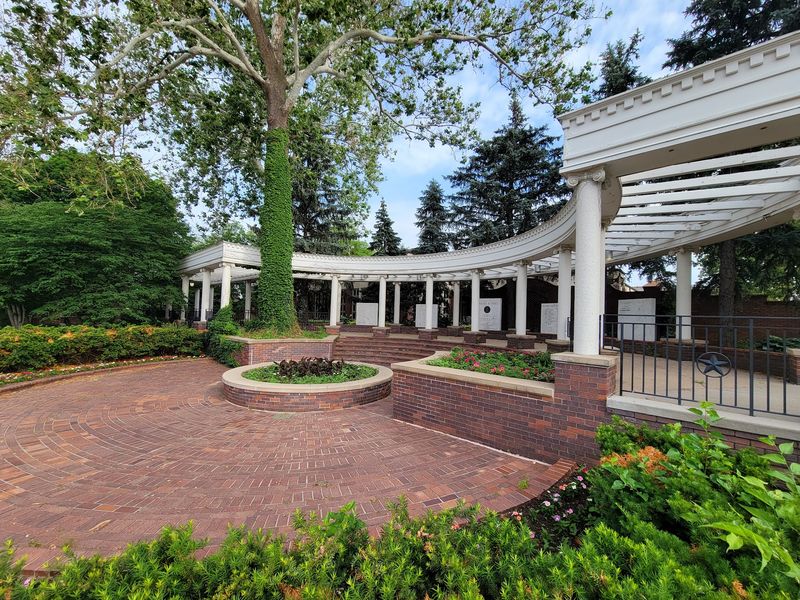
Columns are the first clue that this garden has presidential ambitions. A portico on the grounds was designed to evoke the north side of the White House.
It’s a clever and fitting touch for a site with no original building left. The architecture instantly links the grounds to Ford’s years in the highest office in the country.
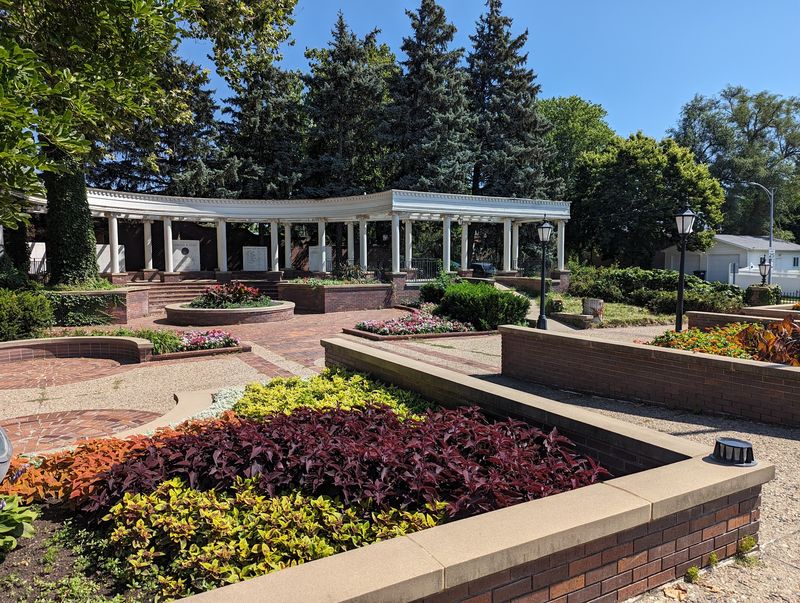
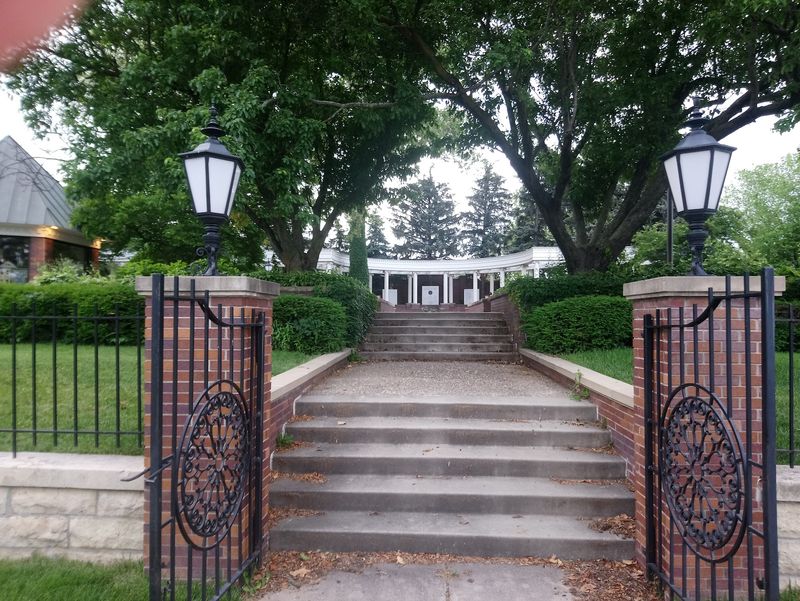
Nearby, a graceful colonnade offers a second, quieter reference. It echoes the Victorian home that once stood here, so past and presidency share the same small stage.
I like how the design tells two stories without a single word. One structure points to Washington, while the other points straight back to 1913 Omaha.
Both features also give the grounds a sense of structure. Instead of an open lawn with a sign, you get a framed space that feels intentional and calm.
Clean white lines make an easy subject for a camera. The architecture pairs nicely with green lawns and summer blooms in season.
Take a slow lap around the portico before heading to the flowers. Seeing a White House echo in a residential Omaha neighborhood never stops being delightfully unexpected.
Betty Ford’s Rose Garden Steals The Whole Show
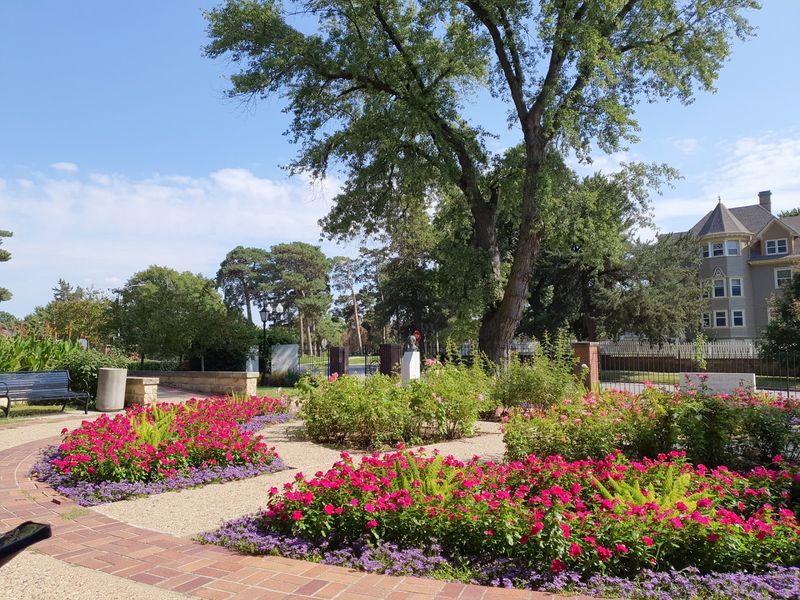
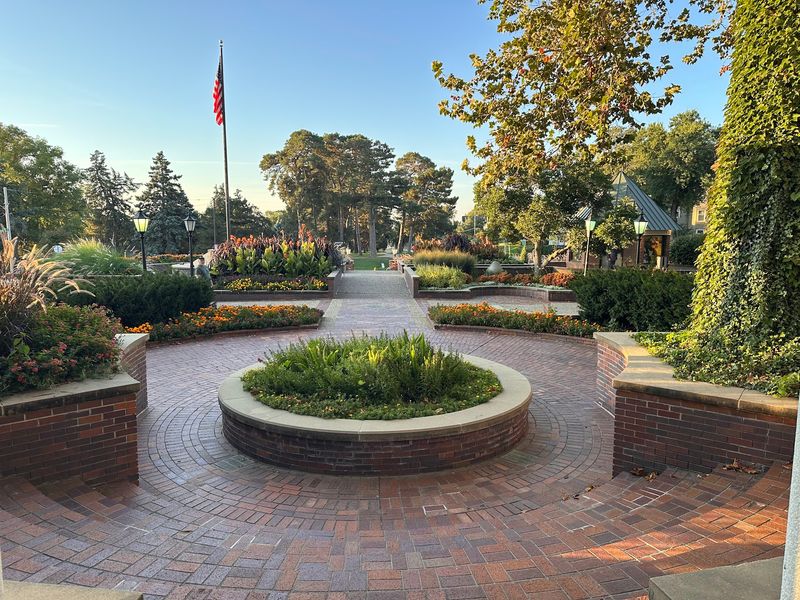
More than 170 rose bushes fill the garden dedicated to former First Lady Betty Ford. They’re spread across 22 flowerbeds inside the Gerald R.
Ford Birthsite and Gardens.
The garden was dedicated in 1980, and President Ford attended to honor his wife. That makes it a love note planted in soil, which is far sweeter than any plaque.
Betty Ford earned admiration for her candor and her public advocacy work. A rose garden feels fitting for someone remembered for her warmth and honesty.
Timing your trip matters here. Blooms begin waking up in spring, and summer is when the beds look their fullest and most colorful.
Visit in winter and you’ll see the bones of the garden instead of the flowers. The paths and monuments remain, but the roses are clearly saving their energy.
I believe the best plan is a warm-weather visit with time to wander slowly. The quiet setting rewards anyone who lingers a little between the beds.
Roses are a Nebraska summer favorite for a reason. Here, they also carry a story, which makes every bloom feel a bit more meaningful.
Push A Button And Let Ford Tell His Own Story
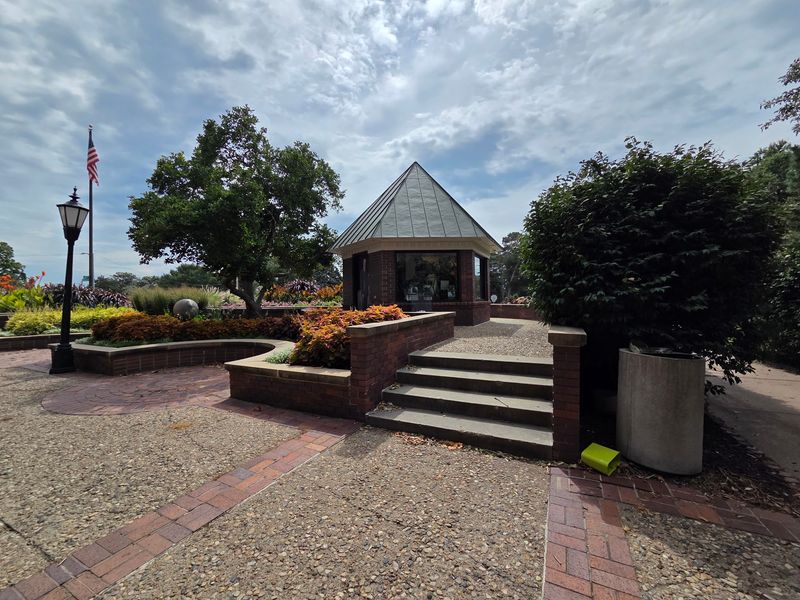
A push-button narration feature lets visitors hear President Ford recount moments from his own life. That’s a pretty great upgrade over reading a faded sign in the sun.
The exhibit kiosk covers several parts of his story. Panels touch on his athletic background, his presidency and the life of Betty Ford.
His sports past surprises a lot of people. Ford played football at the University of Michigan before politics ever entered the picture.
A replica turret echoes the original house and holds more information along with presidential mementos. A model of the lost Victorian home helps you picture the grand building that once stood here.
Ford also holds an unusual distinction that the exhibits help explain. He served as both vice president and president without being elected to either office.
That fact alone makes the kiosk worth a few minutes. It’s the kind of trivia that wins arguments at family gatherings.
Kids may enjoy pressing the button and hearing a real president’s voice. Adults will likely appreciate the quick, clear overview that fits into a short visit.
Set aside a little time for this part. It adds context that makes the gardens outside feel far more personal.
Gerald And Betty Keep Watch Over The Garden Paths
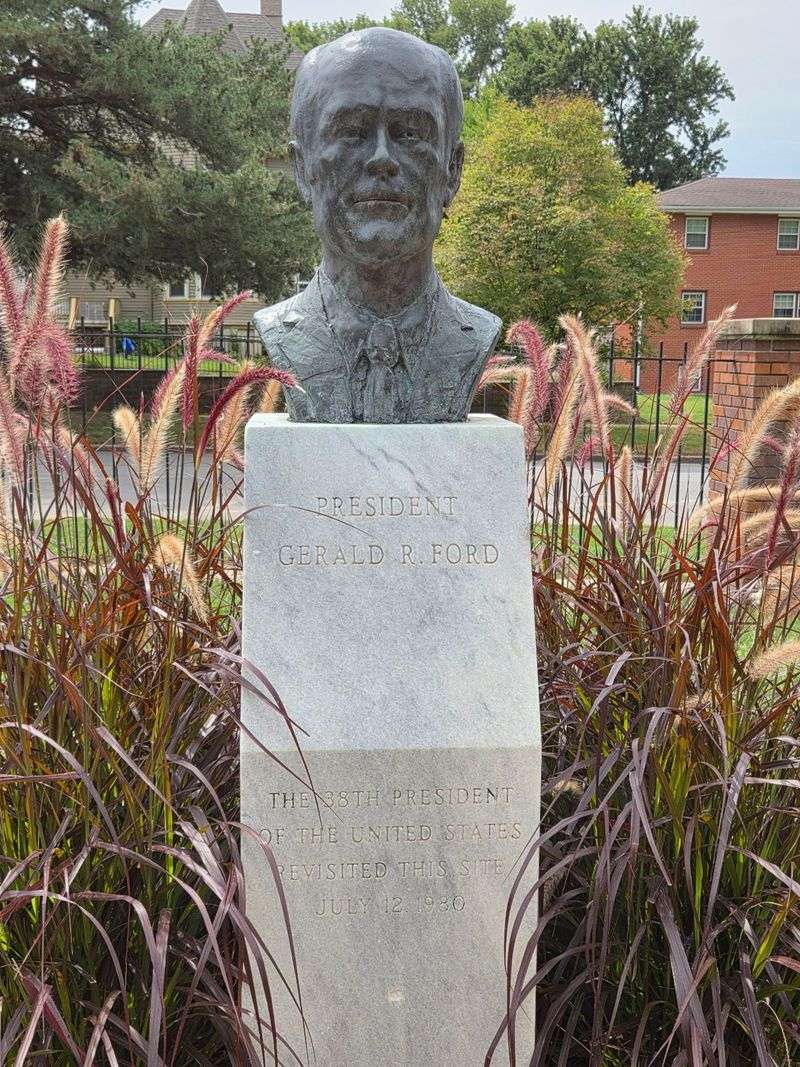
Sculpted busts of Gerald and Betty Ford give the garden a pair of familiar faces. They make the memorial feel personal rather than purely architectural.
Placing the couple together feels right. Their partnership shaped Ford’s public life, and the site honors both of them with equal care.
Some memorials focus only on the president and leave the spouse as a footnote. Here, Betty gets her own rose garden and her own likeness, which says a lot.
I like how the busts slow people down. It’s hard to rush past a face, even in a quick stroll between flowerbeds.
They also make an easy anchor for a visit with kids. Ask them who these two people were, then let the kiosk answer the question.
Ford was the 38th president, serving from 1974 to 1977. Betty became one of the most outspoken First Ladies of her era.
Seeing their faces here, in the city where his life began, closes a loop nicely. Nebraska got the first chapter, and the busts quietly remind you how the whole story unfolded.
Snap a photo if you like, but leave time to simply look. These likenesses reward a calm moment more than a hurried selfie.
Stone Markers That Double As A Civics Refresher
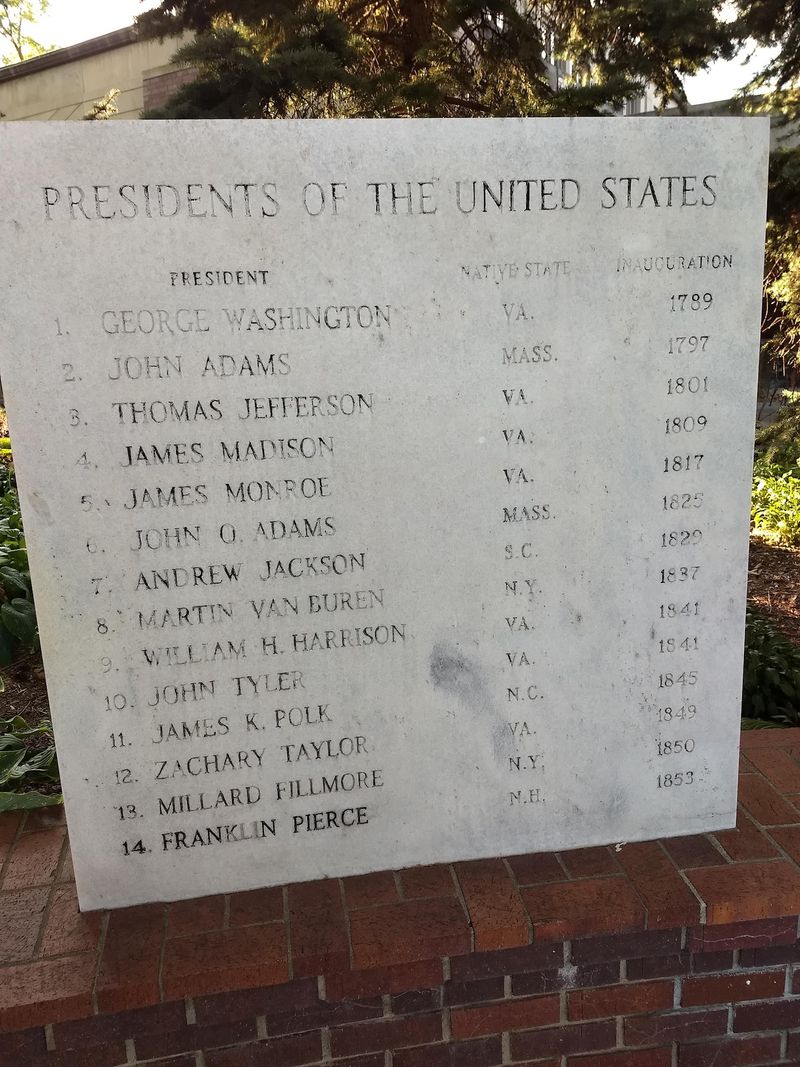
Monument stones on the grounds list past U.S. presidents and Nebraska governors. It’s a surprisingly handy history lesson carved right into the landscape.
History fans can easily spend extra minutes here. Scanning the list of names turns into a quiet quiz about who served when.
The stones weren’t designed to stay perfectly current forever. More recent elections may not appear yet, so treat them as a snapshot rather than a live scoreboard.
Even so, the markers place Ford inside a much bigger story. He becomes one name among many, yet the only one whose life began on this exact ground.
Nebraska readers may enjoy spotting familiar governors from their own lifetimes. Grandparents can share memories while younger visitors try to guess which names came first.
A presidential stone marker also stands among the features here. It formally identifies the site, which helps first-timers confirm they found the right place.
I believe these stones are the most underrated part of the visit. They aren’t flashy, yet they connect a neighborhood garden to the entire sweep of American and state leadership.
Pause here before heading back to the roses. A little civics goes nicely with a lot of flowers.
A Time Capsule Is Waiting For 2076 Right Under Your Feet
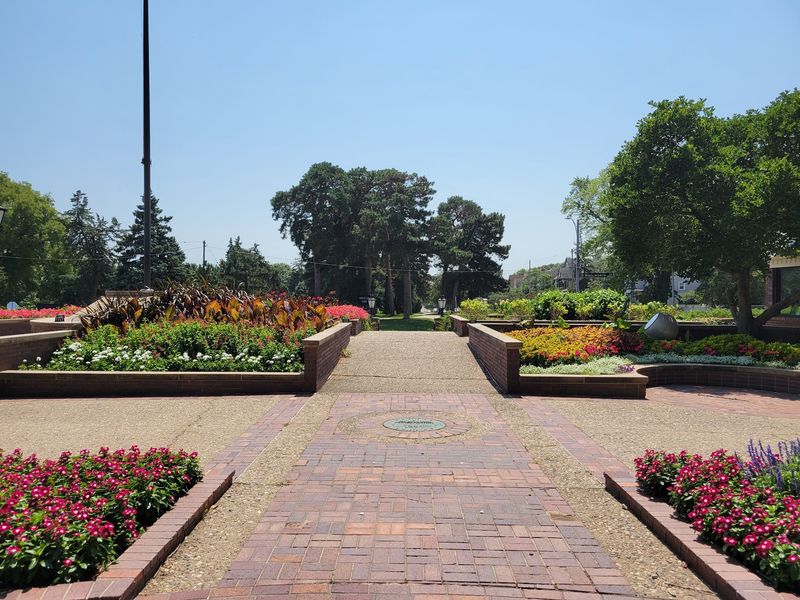
Somewhere in the sidewalk sits a time capsule that won’t be opened until 2076. That’s the nation’s tricentennial, a fitting date for a presidential memorial.
It was placed in the ground in 1976, the year the country celebrated its bicentennial. So the capsule spans exactly one century of American history, from burial to opening.
The contents stay a mystery to casual visitors. Half the fun is guessing what Omaha in 1976 thought future generations should see.
I can’t help wondering what 2076 visitors will make of it. Will the roses still be blooming, and will anyone recognize the gadgets packed inside?
The capsule is set into the walkway, so pay attention as you stroll. Kids especially love a mission, and finding it makes a great one.
It’s a forward-looking feature at a site that mostly honors the past. That mix of then and later gives the gardens an unexpected sense of play.
Mark your calendar, even if it’s a very long-range calendar. Someone reading this today might actually be around for the opening.
Until then, the capsule keeps its secrets. Consider it Omaha’s longest-running surprise party, and the guest list includes your grandkids.
Small Weddings And Senior Photos Bloom Here Too
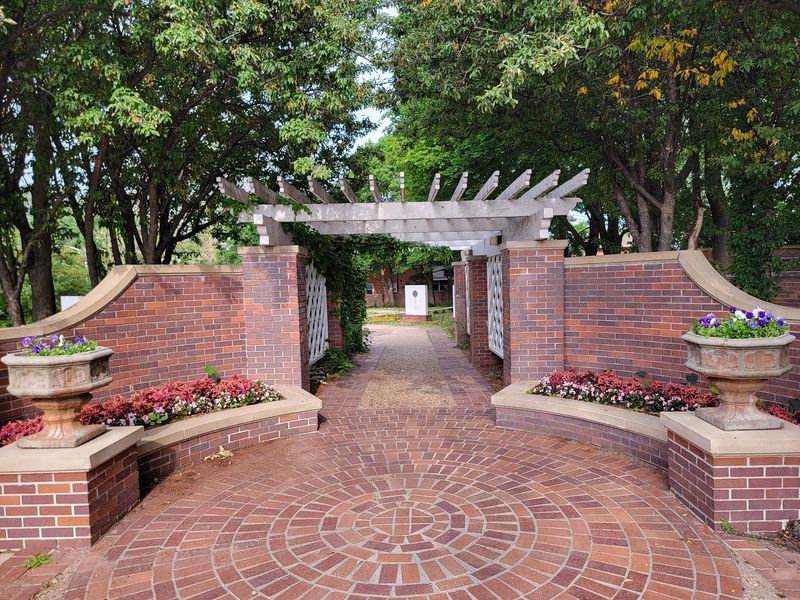
Couples can reserve the Gerald R. Ford Birthsite and Gardens for weddings.
Roses, columns and a dash of presidential history create a backdrop that’s hard to beat.
The scale suits intimate ceremonies better than huge receptions. Close family, a handful of friends and photos framed by blooms and white architecture fit the space beautifully.
Reservations matter, since it’s a public space shared with neighbors and visitors. Booking ahead keeps the day smooth for everyone involved.
Engagement sessions and senior portraits also fit naturally here. The portico and colonnade give photographers clean lines, while the rose beds add soft color.
The mood is peaceful rather than busy, which suits more than just wedding parties. Retirees, history fans and families on a short outing all find something here.
It also works as a quick reset during a busy Omaha day. A short wander between errands can feel surprisingly restorative.
I like that one small garden can host a solemn history lesson and a joyful celebration. Few places balance both moods so easily.
Planning a Nebraska wedding on a modest scale? Put this on your shortlist, and plan around the bloom season for the most color.
Everything To Know Before Pointing The Car Toward Woolworth Avenue
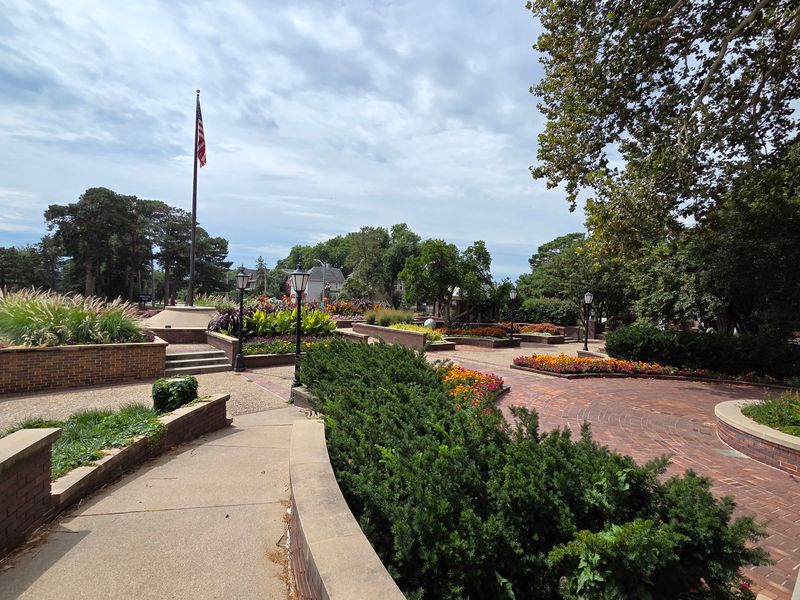
Head to 3202 Woolworth Ave, Omaha, NE 68105, to find the gardens. The site sits in a residential neighborhood a short drive from downtown Omaha.
The grounds are open year-round during daytime hours, with no admission fee. Since there’s no gate around the garden, a spontaneous stop is easy.
The neighboring Gerald R. Ford Conservation Center is a separate facility run by History Nebraska.
It preserves historic and artistic works and keeps a small exhibit of Ford memorabilia.
Seeing that exhibit requires an appointment, so call ahead rather than knocking on the door. Weekday visits by arrangement are your best bet.
Expect a few steps around the memorial structure, and wear comfortable shoes for the paths. Spring through summer brings the best color.
So is the Gerald R. Ford Birthsite and Gardens worth the stop?
For a short, free, flower-filled slice of Nebraska history, I think it absolutely is.
It won’t fill a whole day, and it doesn’t try to. It simply gives a brief Omaha chapter the graceful, rose-scented ending it deserves.
Bring a curious kid, a camera or just a quiet hour. The roses and the 16-day story will handle the rest.