10 Historic Small Towns In Georgia That Belong On Your Bucket List
I once got hopelessly lost on purpose. No GPS, no plan, just a two lane road and whatever showed up around the next bend.
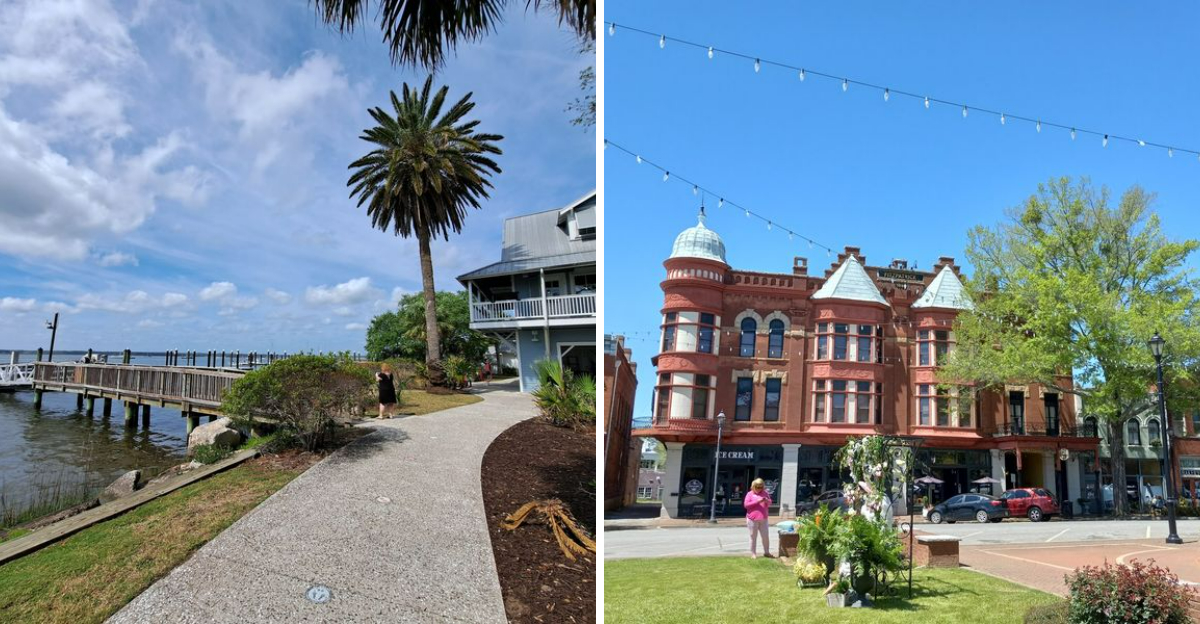
What showed up was a courthouse square straight out of an old postcard, complete with a barber pole still spinning. I parked the car and just walked for an hour, past porches, brick storefronts, and a diner that looked like it had not changed a menu since the seventies.
Nobody was rushing anywhere. That is when it hit me how many towns like this are scattered across Georgia, quietly holding onto their history while the rest of the world speeds past.
Georgia keeps its best stories in places most people drive straight through. I started keeping a list after that day, and it kept growing every time I got lost again.
1. Madison
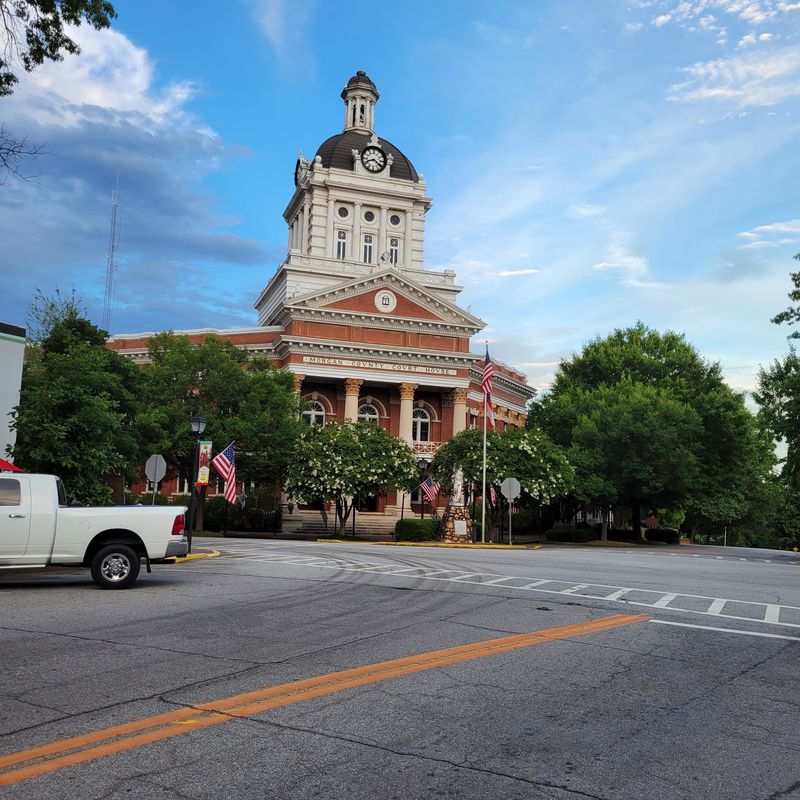
Few towns wear their old architecture so proudly. Madison is often called the town Sherman refused to burn, and the surviving homes make that story feel real.
Heritage Hall, built in 1811, is the classic stop for first-time visitors. Guides walk you through the rooms and explain how families actually lived in that era.
Rogers House dates to around 1809 and shows a simpler, earlier style. Just nearby, the 1891 Rose Cottage represents Folk Victorian design and a very different chapter of local life.
Art lovers should aim for the Madison-Morgan Cultural Center. Housed in an 1895 Romanesque Revival building, it mixes rotating exhibits with regional history displays.
The Morgan County African-American Museum adds depth that many historic districts skip. It highlights local heritage, community achievements, and stories that shaped the county.
If your feet get tired, the Madison Trolley Company runs tours through the district. Riding beats squinting at a paper map while dodging low-hanging magnolia branches.
Hard Labor Creek State Park sits a short drive away for hiking and lake time. Pack a picnic and stretch the day into the evening.
My advice is simple: start early on a weekday. The streets are quieter, the light is softer, and photographs turn out far better before noon crowds arrive downtown.
2. Dahlonega
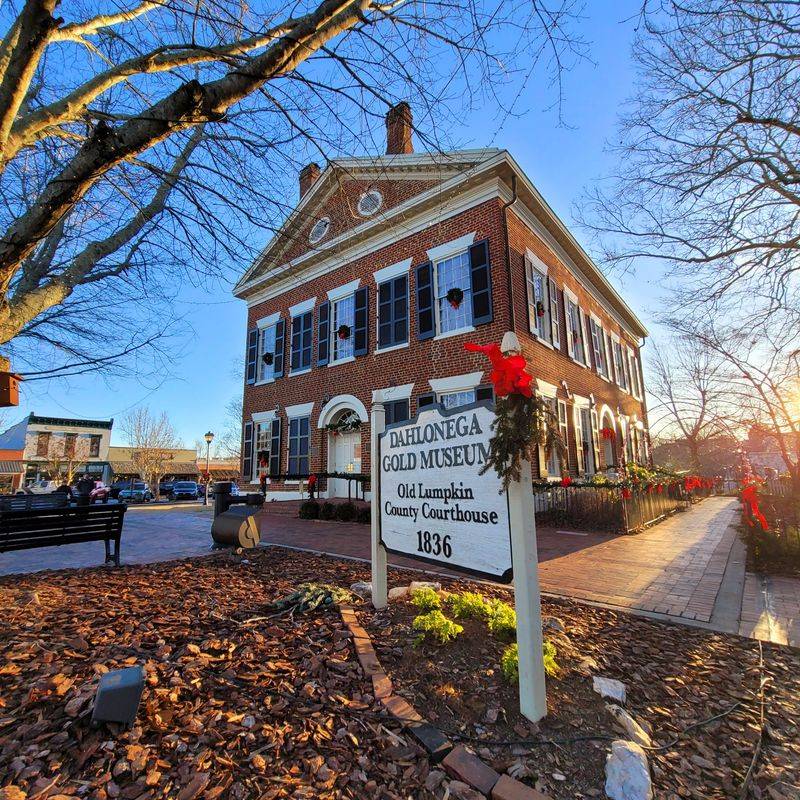
Gold fever hit here long before California got famous. America’s first major gold rush started in 1829, and the town has never stopped talking about it.
The Dahlonega Gold Museum Historic Site fills the 1836 Lumpkin County Courthouse. Inside you can see coins minted locally and nuggets weighing more than five ounces.
Reading about mining is fine, but going underground is better. Consolidated Gold Mine and Crisson Gold Mine both offer tours plus panning for anyone willing to get wet hands.
Crisson has the only working stamp mill in the area. Watching that machinery crush rock explains the whole industry faster than any plaque could.
Kids usually love the panning troughs. Adults pretend they are being patient, then get competitive within about four minutes.
Up the hill, the University of North Georgia’s Price Memorial Hall wears a gold-covered steeple. It catches afternoon sun and makes a great photo from the square.
Beyond mining, this part of the state has grown into wine country. Vineyards spread across the foothills with mountain views in every direction.
Plan for a full day rather than a quick stop. Between the museum, a mine tour, and a slow lap around the square shops, time disappears quickly here.
Bring closed-toe shoes for the underground portion. The floors stay damp year-round.
3. Senoia
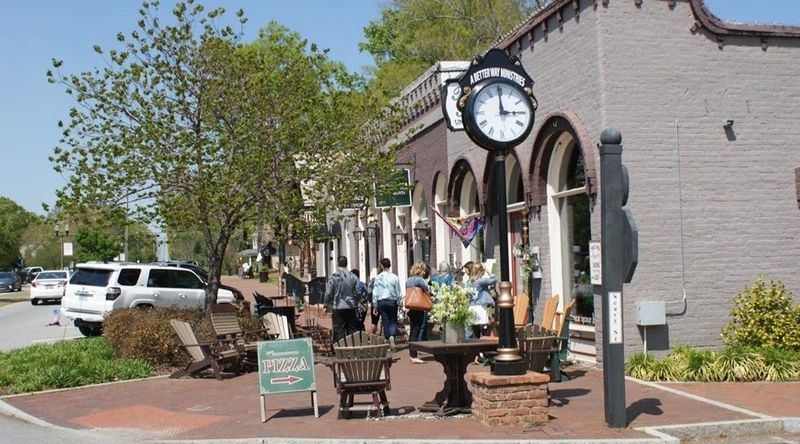
Television turned this old cotton town into a pilgrimage site.
Streets here stood in for the fictional towns of Woodbury, Alexandria, and Hilltop. Once you know the angles, you start recognizing corners everywhere.
The Gin Property, a residential neighborhood, served as the Alexandria set. It remains a real place where people live, so admire from the sidewalk and keep your voice down.
The Woodbury Shoppe stocks show merchandise for fans who want proof they came. Guided tours cover filming locations and behind-the-scenes details.
Film history runs deeper than one series. Fried Green Tomatoes and Driving Miss Daisy both filmed in the area, which says a lot about the streetscape.
Even without the cameras, the downtown holds up. Boutique stores, brick facades, and shaded benches make an easy afternoon of browsing.
My suggestion is to book a tour first, then wander on your own. Context makes the second lap far more interesting than the first.
Weekends bring crowds, especially in cooler months. A Thursday visit gives you room to breathe and better parking near the main strip.
Fun detail: production crews left several structures standing, so the sets blend into everyday life.
4. Darien
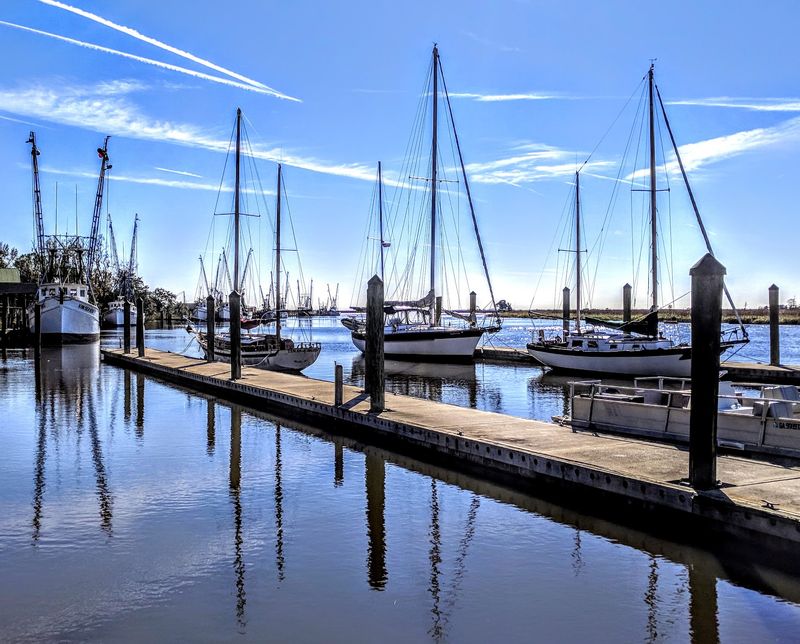
Shrimp boats and colonial ruins share the same view. Founded in 1736, Darien ranks as the second-oldest planned town in this state.
The waterfront still shows tabby ruins and the original site of Fort Darien. Tabby is a coastal building material made from oyster shells, lime, sand, and water.
Fort King George preserves the site of an early British fort, with reconstructed buildings based on historical records. Reconstructed blockhouses and a small museum explain rough colonial life clearly.
Hofwyl-Broadfield Plantation covers the story of the rice coast. The site helps visitors understand how tidal fields and labor shaped this whole region.
Seafood is the obvious reason to stay for dinner. Local shrimp arrives fresh, and the Annual Blessing of the Fleet festival celebrates that tradition every spring.
Tabby House Brewing Co. occupies the Adam Strain Building from 1815. That structure counts among the last intact tabby buildings standing.
Ferries to Sapelo Island leave from Meridian, about eight miles northeast of Darien. Reservations matter, so check schedules well ahead.
Sunset over the marsh is the payoff. Find a spot near the docks about thirty minutes early.
5. Plains
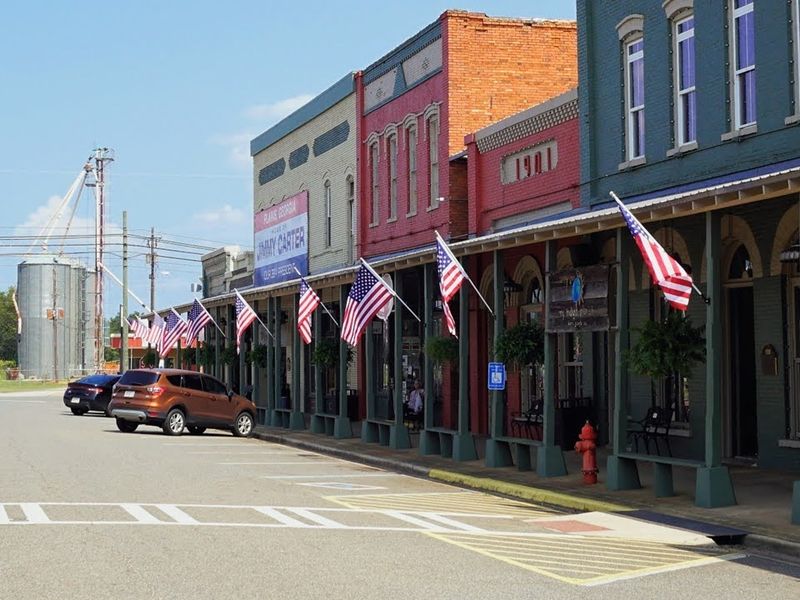
Presidential history sits inside a farming town of modest size. Plains is the hometown of former President Jimmy Carter and First Lady Rosalynn Carter.
The Jimmy Carter National Historical Park protects several connected sites. Together they show a childhood, a career, and a community.
His boyhood farm has been restored to its 1938 appearance. Walking the yard and outbuildings makes the pre-electricity era feel surprisingly concrete.
His former high school now serves as the visitor center and museum. Classroom displays and exhibits fill rooms he actually studied in.
The 1888 railroad depot became campaign headquarters in 1976. It is small, plain, and completely charming for that reason.
Downtown shops sell peanut products and local souvenirs. Boiled peanuts here are a rite of passage, salty and warm.
The Rosalynn Carter Butterfly Trail sits at the Visitors’ Center. Late summer brings the most activity among the plantings.
The former Billy Carter Service Station has been converted into a museum. Old pumps and memorabilia give a snapshot of small-town life decades back.
Give yourself three hours minimum. Sites are spread out slightly, and driving between them is part of the experience.
Southwest farmland surrounds everything, so the views stay wide and green through summer.
6. St. Marys
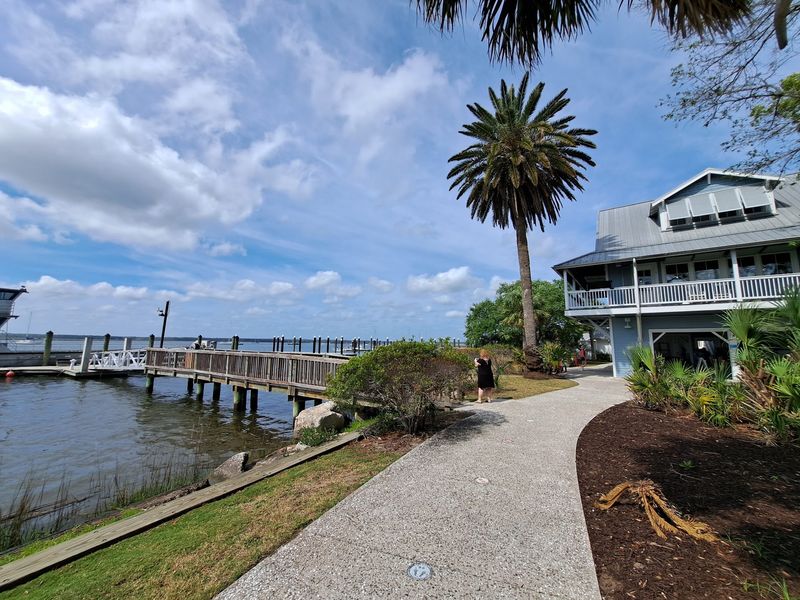
A Paul Revere bell hangs in this riverside town. Established in 1787, St. Marys counts among the oldest continuously occupied towns in the country.
Most travelers come for the ferry. Cumberland Island National Seashore is reachable only by boat, and this is the gateway community.
Skipping the town itself would be a mistake. The Historic District holds well-preserved nineteenth-century architecture along shaded streets.
Orange Hall stands out as a striking Greek Revival example. Its columns and proportions draw photographers all year.
The 1808 Presbyterian Church houses one of the few surviving bells cast by Paul Revere. That detail alone justifies a stop.
Archibald Clark House, built between 1801 and 1805, is the oldest private home here. Aaron Burr was once a guest inside those walls.
Waterfront Park delivers easy river views and breezes. Benches face the water, and dolphins occasionally pass by.
A Submarine Museum adds an unexpected modern layer. Periscopes and naval exhibits appeal to visitors of every age.
Book Cumberland Island ferry tickets early, especially in spring. Wild horses and empty beaches make that trip the highlight for many people.
Pack water and snacks for the island. Services out there are extremely limited by design.
7. Washington
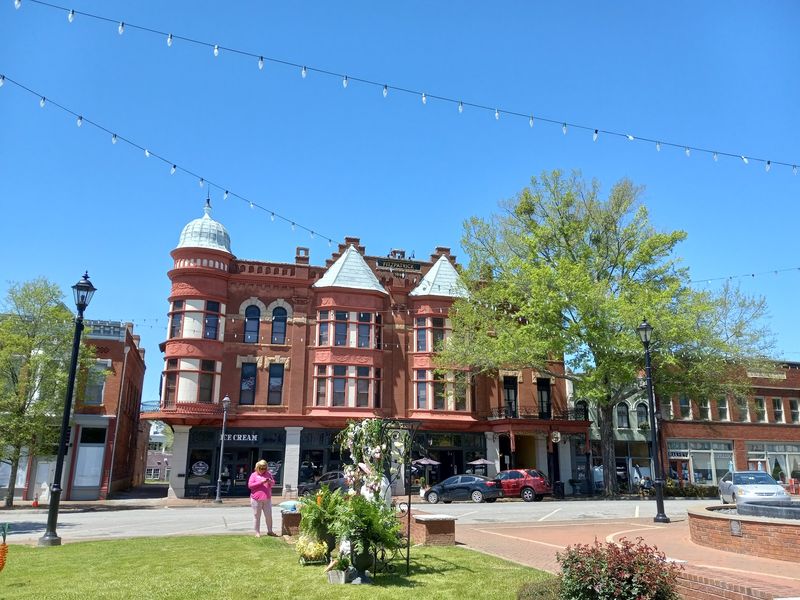
Here is a trivia win for your next road trip. Washington was the first town in the United States named after George Washington, founded in 1773.
Antebellum homes line the streets in remarkable numbers. The town holds more per capita than any other city of its size in this part of the state.
Washington hosted the final meeting of the Confederate cabinet in May 1865, as the Confederacy neared its end.
The Robert Toombs House is a National Historic Landmark. It was the nineteenth-century home of a Confederate Secretary of State.
Invention history belongs here too. Eli Whitney developed the cotton gin in 1793 at Mulberry Grove Plantation near Savannah, not in Washington.
Local legend claims Confederate gold remains buried somewhere in Wilkes County. Treasure hunters have searched for generations without settling the question.
For overnight stays, the Fitzpatrick Hotel offers restored rooms in an 1898 building. High ceilings and a wide balcony make the upgrade worthwhile.
The county courthouse square anchors the walkable core. You can cover the main sights on foot in an easy morning.
Spring visits reward you with blooming gardens around several private homes.
8. Milledgeville
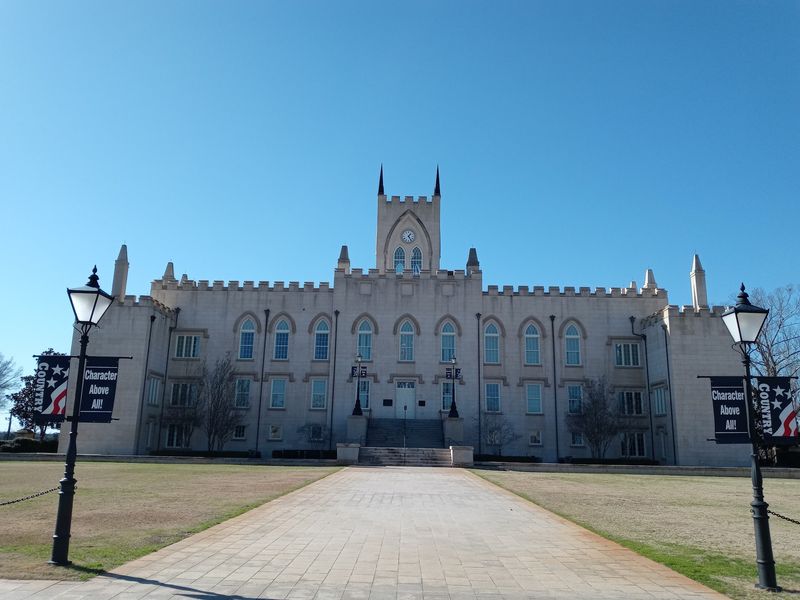
For sixty-four years, this city ran the whole state. Milledgeville served as the capital from 1804 to 1868, and the buildings still show it.
Georgia’s Old Governor’s Mansion, completed in 1839, anchors the downtown. Architecture fans call it a fine example of High Greek Revival design.
The Old Capitol Building dates to 1807. It holds the title of the first public building in the country designed in Gothic Revival style.
Narrated trolley tours cover the historic district efficiently. Guides connect the dots between the mansion, the capitol, and surrounding neighborhoods.
Literature lovers head to Andalusia Farm. Author Flannery O’Connor lived and wrote there, and the farmhouse remains open to visitors.
Memory Hill Cemetery holds the graves of many notable former residents, including O’Connor. The grounds are quiet, shaded, and worth a slow walk.
Lockerly Arboretum blends gardens with the 1852 Rose Hill Mansion. Trails wind past collections of trees and seasonal plantings.
Outdoor time is close at hand. Lake Sinclair and the Oconee River offer boating, fishing, and paddling within minutes.
Milledgeville is located in Baldwin County in central Georgia.
Two days lets you cover history and water without rushing either one.
9. Thomasville
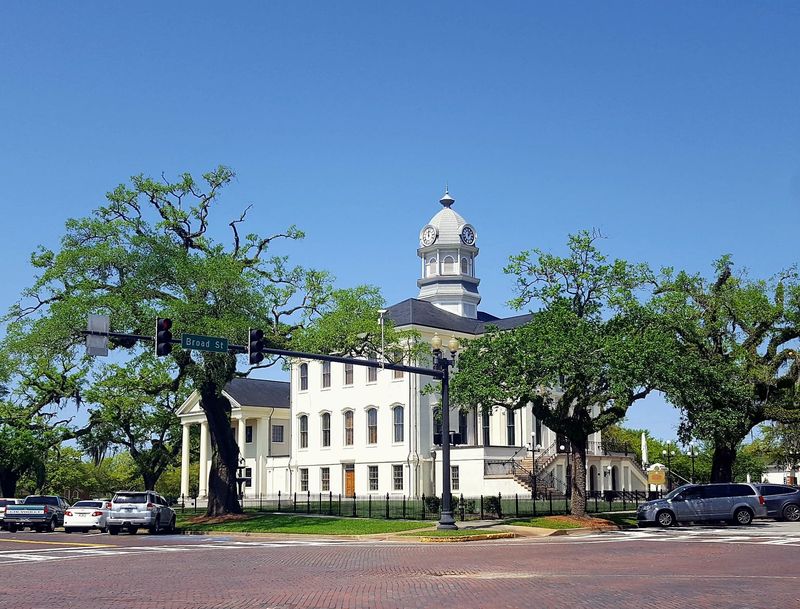
Over 1,500 rose bushes grow in one garden here. Thomasville carries the official designation of Georgia’s Rose City, and it takes that seriously.
The Thomasville Rose Garden arranges plantings into themed beds. Sections honor heroes, holidays, love, and famous people.
Every April the town hosts its Annual Rose Show and Festival. That tradition traces back to 1921, which makes it older than most state fairs.
Cherokee Lake Park sits right next to the garden. A walking trail loops the water for an easy stroll after all that flower gazing.
Railroad expansion in the late 1800s changed everything. The area became known as the Winter Resort of the South.
Wealthy Northern families arrived for the mild climate. They built Victorian mansions and grand estate homes that still stand today.
Pebble Hill Plantation spreads across 3,000 acres. It began as a working farm and later became a prominent winter residence.
The 1885 Lapham-Patterson House is delightfully odd. Queen Anne styling meets unusual floor plan choices that guides enjoy explaining.
Notable guests have included Jacqueline Kennedy and President Dwight D. Eisenhower.
Not bad for a town of this size.
Visit in April if roses are your goal. Otherwise, fall brings comfortable weather and thinner crowds downtown.
10. Blue Ridge
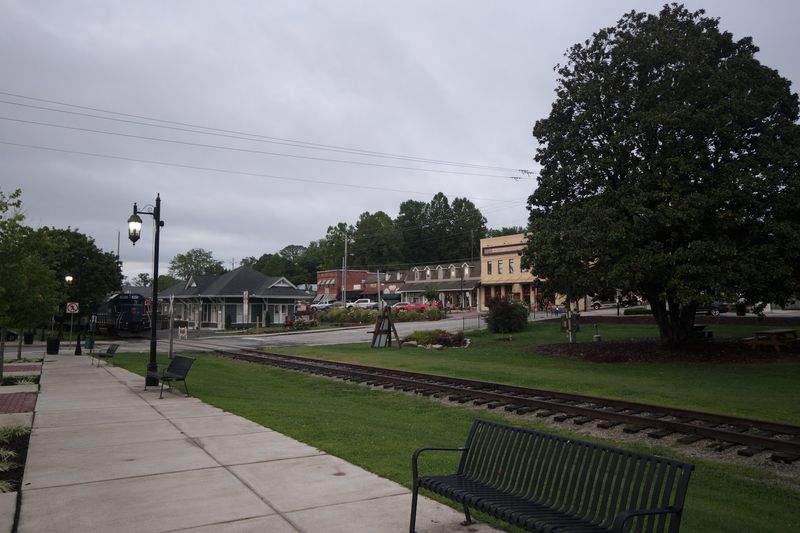
You can stand in two states at once on this trip. Blue Ridge is a mountain village surrounded by the Chattahoochee National Forest.
The Blue Ridge Scenic Railway runs a four-hour, 26-mile roundtrip. Tracks follow the Toccoa River through forest and gorge scenery.
The train stops at the sister towns of McCaysville, Georgia, and Copperhill, Tennessee. A painted line lets you straddle the border for a photo.
Wildlife sightings happen often along the route. Herons, deer, and the occasional turtle keep kids glued to the windows.
For something more active, custom-built electric railbikes let you pedal the tracks yourself. Pedaling is assisted, so it feels breezy rather than exhausting.
Downtown shopping leans old-time and unhurried. Storefronts stock crafts, candy, and mountain-made goods.
Seasonal rides sell out fast. Fall foliage trips and holiday trains book months ahead of time.
Beyond the rails, the region delivers waterfall hikes, backpacking, birding, and fishing. Trout streams run cold and clear through the valleys.
My tip is to reserve a window seat on the river side. The views on that side are noticeably better.
Bring a light jacket even in warm months. Mountain mornings run cooler than you expect.