How Coleridge, North Carolina Was Built By Industry And Forgotten By Time
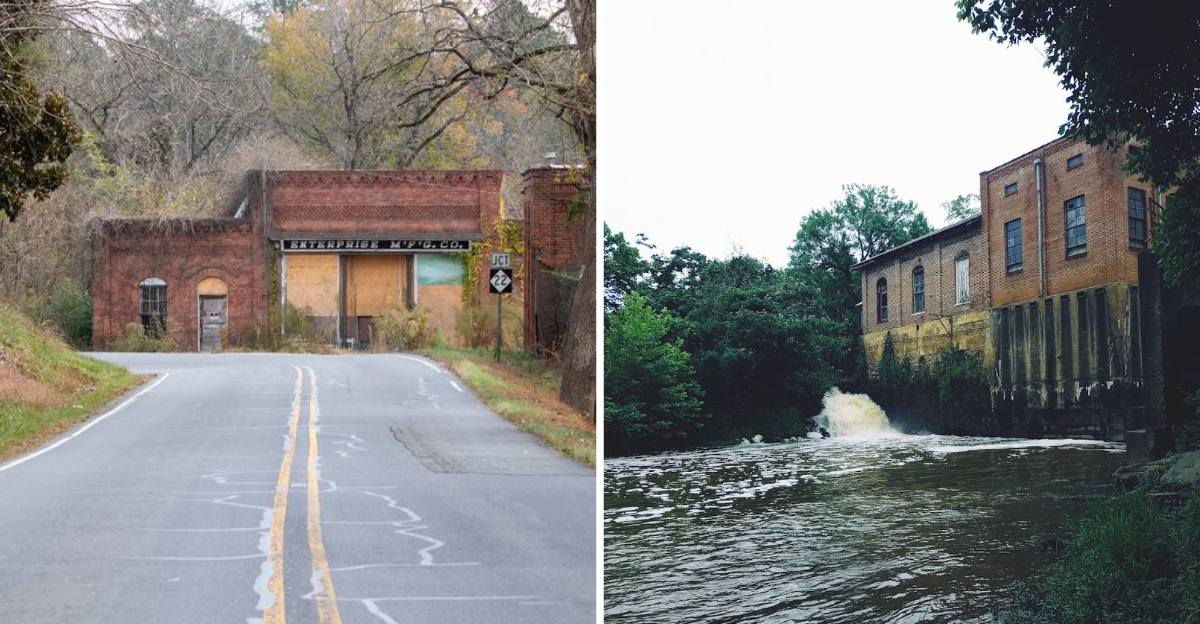
Somewhere along the Deep River in Randolph County, North Carolina, a town that once was filled with the noise, now stands almost perfectly still.
Coleridge grew fast in the late 1800s, powered by cotton mills, company stores, and the ambitions of a few determined men.
Then, just as quickly as it rose, it faded, leaving behind brick buildings, quiet roads, and a story most people have never heard. If you have ever wondered what happens to a town when its reason for existing disappears, Coleridge has your answer.
This town is not entirely gone, but it lingers as a quiet reminder of how swiftly prosperity can vanish and how deeply industry can shape and reshape a community. But also, it remains a symbol of how the creations of hard work and ambition can outlast their creators and tell their story.
This town used to be all about spinning machines and rushing workers. Now, most movements are done by the vines swallowing the buildings.
Where It All Began
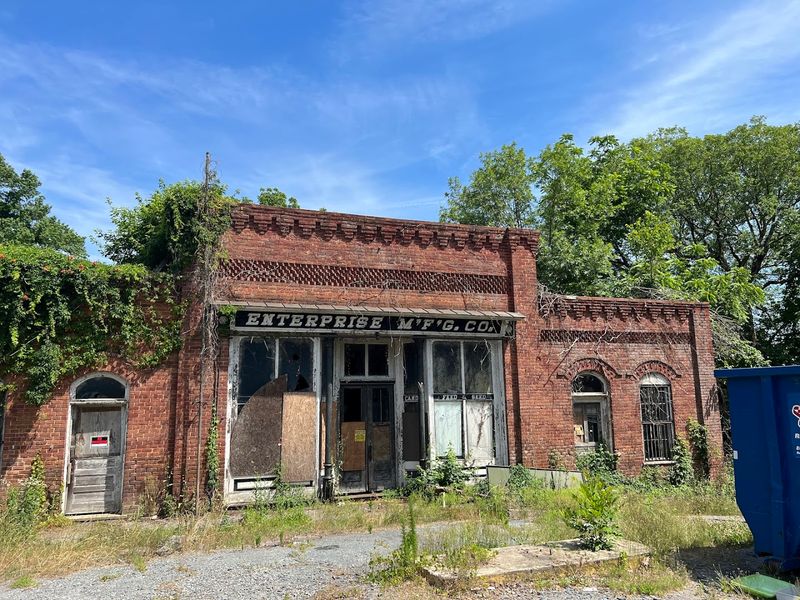
Back in 1882, three men with big plans and a stretch of land along the Deep River changed the course of Randolph County forever. H.A. Moffitt, Daniel Lambert, and James A.
Cole joined forces to establish the Enterprise Manufacturing Company, a mill that would become the heartbeat of an entire community in North Carolina.
From the very start, the operation was ambitious. The original structure was a two-and-a-half-story wooden building packed with 800 spindles and staffed by 26 workers.
The mill was not just a place to work. It anchored everything around it. A wool-carding mill, a sawmill, and a flour mill all operated alongside the main building, making the Enterprise Manufacturing Company a full-scale industrial hub rather than a single factory.
Workers and their families depended on it for income, purpose, and community.
James A. Cole gave the town its name. The surrounding village, originally called Cole’s Ridge, was renamed Coleridge in his honor.
That kind of influence speaks volumes about how tightly mill owners and mill towns were connected in the American South during this era. The Enterprise Manufacturing Company was not simply a business; it was the foundation on which an entire way of life was built, brick by carefully laid brick.
James A. Cole And The Man Behind The Town’s Name
Not every town gets named after the person who built it, but Coleridge is one of the rare places where the founder left a mark so deep it became part of the landscape itself.
James A. Cole was one of the original organizers of the Enterprise Manufacturing Company, and his role in shaping the early community went far beyond signing papers and cutting ribbons.
He was a driving force behind the mill’s early growth and the surrounding village’s identity.
In 1904, Cole made a decision that would shift the town’s direction. He sold a majority interest in the company to his son-in-law, Dr. Robert L. Caveness.
That handoff was not a quiet retirement move; it was a passing of the torch to someone equally determined to grow what Cole had started. The transition kept momentum alive at a critical point in the mill’s history.
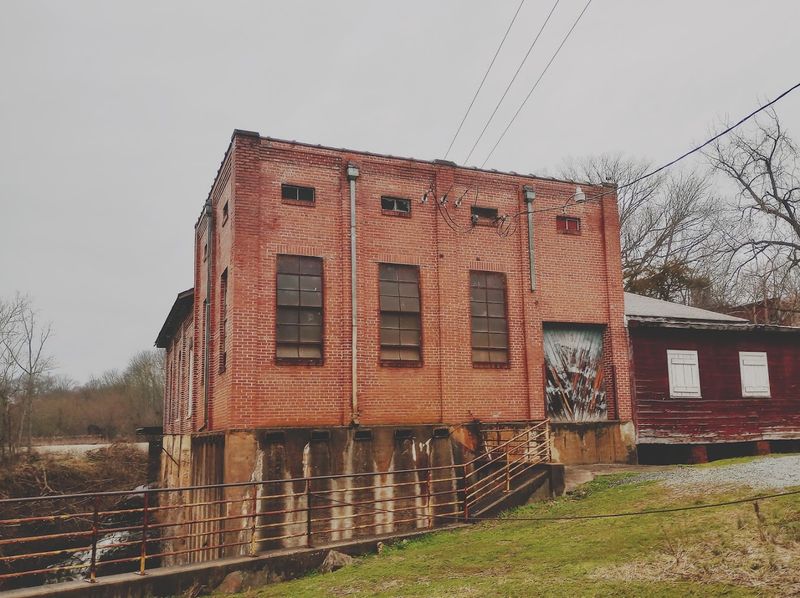
Cole’s legacy is woven into every building and every road in Coleridge. When you drive through today and see the old brick structures still standing along NC Route 22, you are seeing the physical result of one man’s determination to leave behind a legacy.
Towns are rarely built by accident. Coleridge was built by Cole’s vision, and the name on the map is the clearest proof of that.
Dr. Robert L. Caveness And The Era Of Total Control
By 1917, a local newspaper summed up the situation in Coleridge with striking clarity: “R.L. Caveness is at the head of practically everything in Coleridge.” That alone tells you how thoroughly one person could shape a mill town in the early 20th-century.
Dr. Robert L. Caveness had taken over the Enterprise Manufacturing Company from his father-in-law and proceeded to transform it into something far larger and more permanent.
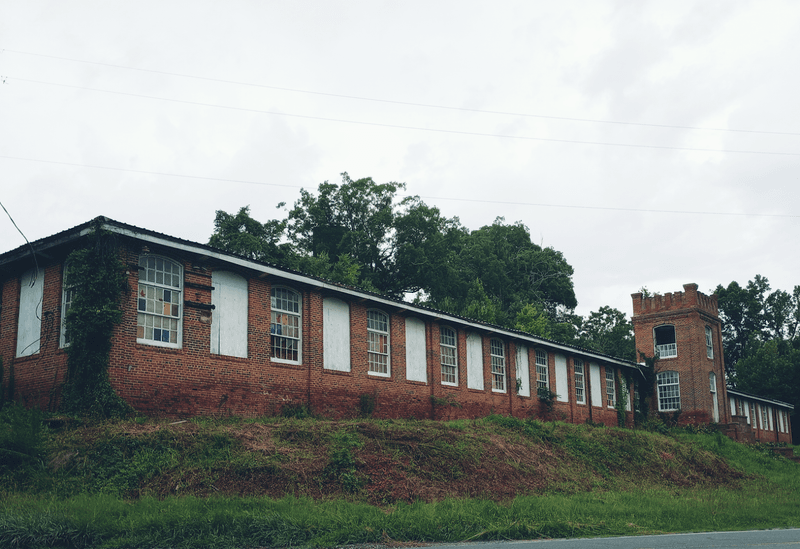
Under his leadership, the original wooden mill was torn down and replaced with a sturdy brick facility featuring Tudor Revival entrance towers. It was an architectural choice that gave the industrial complex an almost stately appearance.
Caveness also oversaw the construction of a company store, a bending mill, a warehouse, a company office, and the Bank of Coleridge, all built in the Romanesque Revival style. They were designed to last generations.
Caveness ran the mill with the kind of hands-on authority that made him both essential and irreplaceable. Employment grew, production expanded, and Coleridge thrived under his watch.
The mill operated 6,000 spindles by the time the 1950s arrived, producing cotton yarn, knitting yarn, and twine. His “Our Leader” flour brand even found fans well beyond Randolph County.
When Caveness passed away in 1951, Coleridge lost far more than a business owner; it lost its compass.
The Brick Buildings That Outlasted The Boom
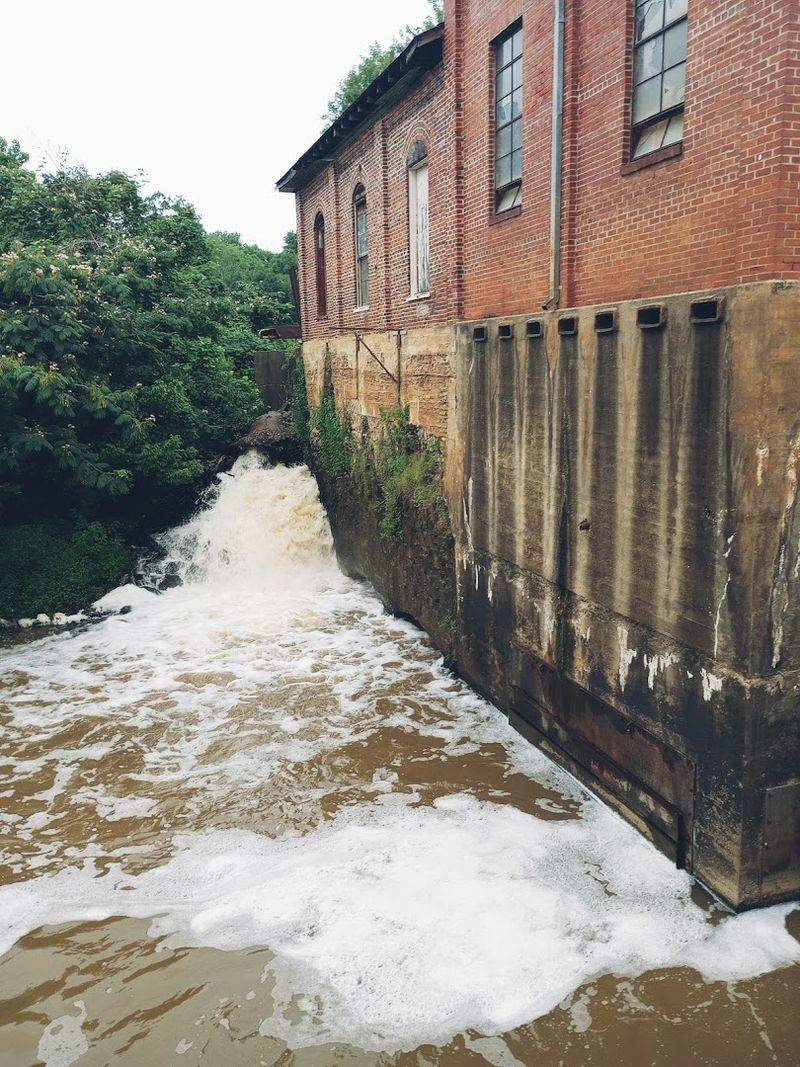
There is something quietly remarkable about walking past a building that has survived more than a century of weather, economic shifts, and neglect. The brick structures that Caveness commissioned in Coleridge were built with an obvious intention.
The Romanesque Revival style, with its thick arched windows and solid masonry walls, was not chosen by accident. These buildings were meant to signal permanence and prosperity in a small North Carolina mill town.
The Enterprise Cotton Mill complex, the company store, the mill office, and the Bank of Coleridge all still stand today, forming the core of the Coleridge Historic District. Seventeen contributing buildings from the late 19th and early 20th centuries remain within the district.
Visitors can view them from the road along NC Route 22 and NC 902, though the structures sit on private property and are not safe to enter.
What makes these buildings so compelling is not just their age, but what they represent. Every cracked brick and weathered lintel is a record of the labor, ambition, and daily life of the workers who spent their years inside these walls.
North Carolina has many historic sites, but few carry the specific weight of a place that was fully alive and then quietly set aside. The buildings of Coleridge hold that story without saying a single word.
More Than Just A Place To Shop
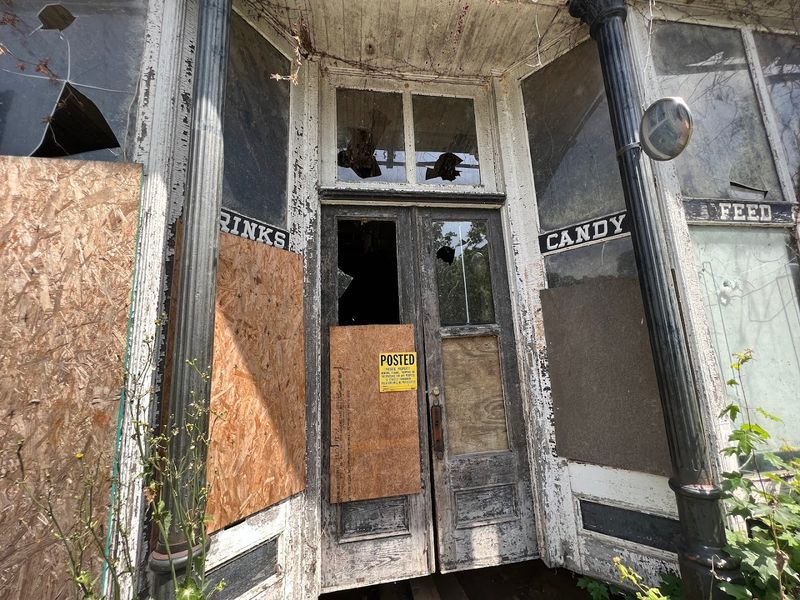
Company stores in mill towns were unlike any other retail experience in American history. Workers at the Enterprise Manufacturing Company in Coleridge did not just shop at the company store, but they depended on it completely.
Wages were often paid in company-issued credit rather than cash, which meant the store was less a convenience and more a necessity built directly into the economic system of the town.
The Coleridge company store’s Romanesque Revival style matched the architectural tone of the surrounding mill complex.
It stocked everything a mill family might need. For workers who lived in company-owned housing nearby, the store formed a kind of self-contained world, one where the mill’s influence touched nearly every part of daily life.
This arrangement was common across mill towns throughout the South during the late 19th and early 20th centuries. The company store kept workers economically tied to the mill, which helped ensure a steady workforce but also limited financial independence.
Today, the building still stands as part of the Coleridge Historic District. Looking at it from the road, it is easy to imagine the quiet traffic of families moving in and out, in a rhythm that lasted for decades before the mill finally went silent.
Small Town, Serious Ambitions
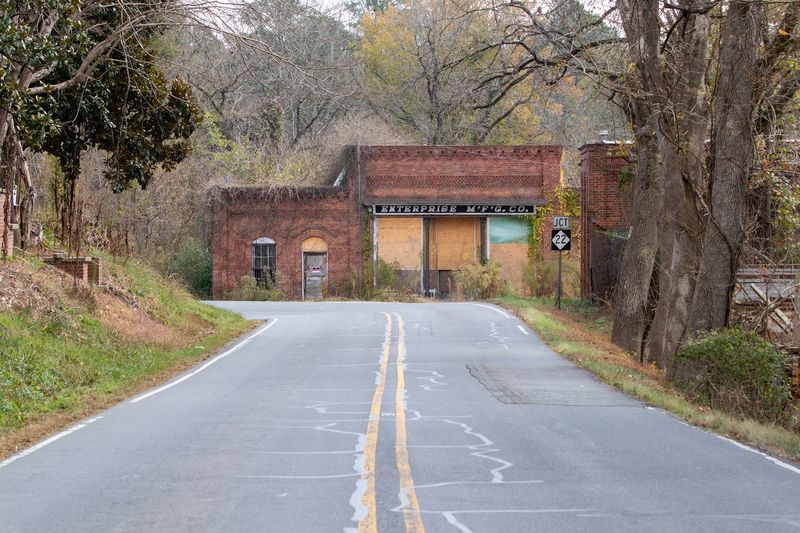
Most tiny mill villages never had their own bank. Coleridge did, and that fact alone says something meaningful about the scale of ambition that Dr. Caveness brought to this corner of Randolph County.
The Bank of Coleridge was constructed in the Romanesque Revival style alongside the other major structures of the mill complex, giving the town a financial institution that matched its growing industrial profile in North Carolina.
Having a local bank meant that Coleridge was a functioning community with economic infrastructure. Workers, business owners, and local farmers could deposit money, secure loans, and conduct financial business without traveling to a larger city.
For a rural mill town in the early 1900s, that kind of access was genuinely significant and reflected how seriously Caveness viewed the long-term future of the place he controlled.
The bank building still stands today as part of the Coleridge Historic District, which was added to the National Register of Historic Places in 1976.
Seeing it now, a small brick building with serious architectural detail in the middle of a quiet rural landscape, makes you appreciate how much effort was once concentrated into this one small spot along the Deep River. Coleridge.
Boaz Mills And The End Of An Era
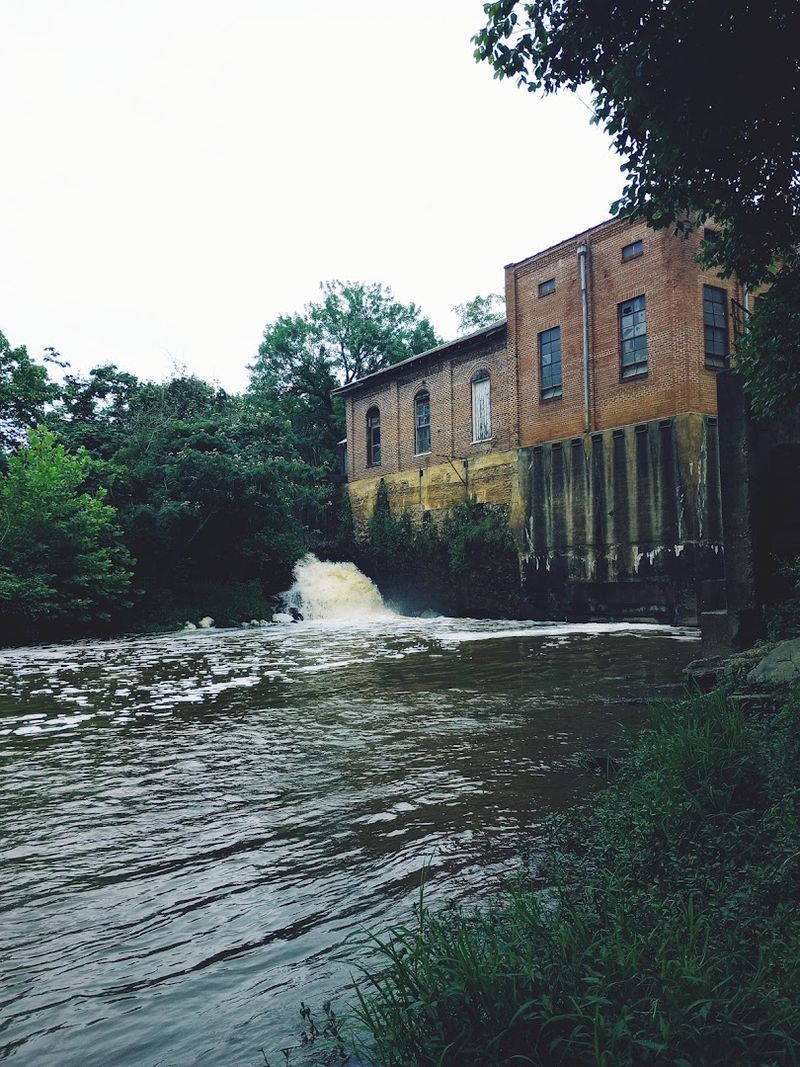
When Dr. Caveness passed away in 1951, the Enterprise Manufacturing Company lost the steady hand that had guided it for nearly half a century. His heirs, faced with the practical realities of running a large industrial operation, made the decision to sell.
In 1954, the mill was purchased by Boaz Mills of Alabama, a company that stepped in as the new owner but could not reverse the economic pressures that were already closing in on small-town textile operations across the American South.
By 1958, the mill ceased operations entirely. The equipment was sold off, and the buildings that had once hummed with the sound of 6,000 spindles were converted into warehouse space.
The workers who had built their lives around the Enterprise Manufacturing Company found themselves without the anchor that had defined Coleridge for more than seven decades.
The closure of the mill was not an isolated event. Across North Carolina and the broader South, textile mills were shutting down as manufacturing shifted and economic conditions changed.
Coleridge simply experienced that larger story in one of its most concentrated forms. A town built almost entirely around a single industry had no fallback plan. When the mill stopped, the town stopped with it.
What remained were the buildings, the roads, and the quiet that has settled over Coleridge ever since; a stillness that speaks louder than any machinery ever could.
The National Register And What It Means to Be Remembered
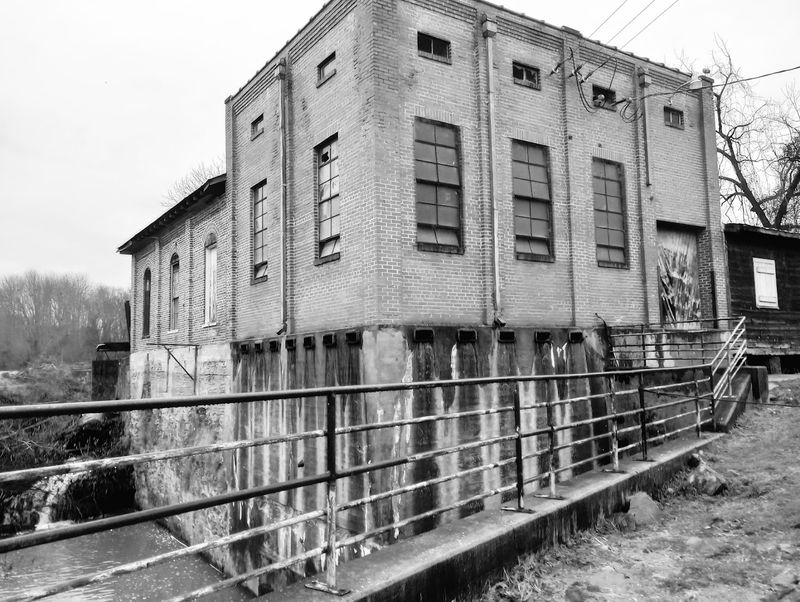
In 1976, the Coleridge Historic District was added to the National Register of Historic Places. The designation covers 17 contributing buildings from the late 19th and early 20th centuries.
For a town that time had largely moved past, it was a formal acknowledgment that what happened here mattered.
Being listed on the National Register does not guarantee restoration or public access. But the designation does ensure that the history of this North Carolina mill town is officially recorded and protected from being erased.
There is something quietly powerful about driving past those buildings and knowing that someone, somewhere, decided they were worth preserving on paper even if not in person.
Coleridge may not draw crowds, but it draws people who want to feel the specific texture of a place that worked hard, lived fully, and then grew still.
That lingering sense of a life once lived, the echo of spinning machines, flour sacks, and early morning work shifts, is the feeling that stays with you long after you have driven back down that rural road and returned to the present.