10 Incredibly Scenic Day Trips In Louisiana Your Family Won’t Soon Forget
Need a family day out that does not end with everyone asking: “Are we done yet?” Louisiana has you covered!
Bayous, beaches, gardens, wildlife, historic spots, and scenic back roads give every age something to latch onto.
One trip might involve animals. Another may turn into a paddle, a walk under mossy trees, or a detour for something delicious. That unpredictability is half the fun!
Nobody needs a military-style itinerary when the scenery is doing this much work.
The best memories usually come from the thing nobody planned anyway, especially when it involves a weird roadside stop or a snack worth arguing over.
1. Jungle Gardens, Avery Island
Picture hundreds of them, glowing like snowflakes in the warm Louisiana sun.
Jungle Gardens on Avery Island spreads across 170 acres of live oaks, lagoons, bamboo, camellias, and other subtropical plantings.
A three-mile self-guided route can be explored by car, bicycle, or on foot, making the visit easy to adjust for different ages and energy levels.
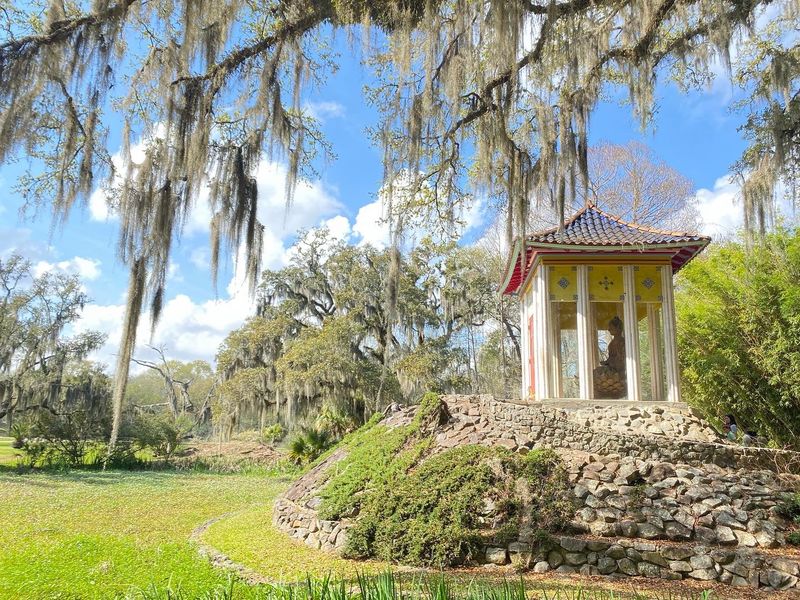
Spanish moss hangs from mature oaks along the roadway, while Bayou Petite Anse and nearby wetlands bring water into much of the scenery.
Alligators, deer, raccoons, and other wildlife may appear, so slow travel and respectful distance matter more than trying to get close.
Bird City becomes especially active during nesting season, when thousands of egrets and other waterbirds gather around the rookery. The observation area gives families a clear reason to pause instead of rushing through the loop.
Another memorable stop is the glass pavilion holding a Buddha statue more than 900 years old. The surrounding Asian-inspired garden, bridge, and pond create a quieter contrast to the bayou landscape.
Spring brings strong bird activity and plenty of flowers, though the gardens remain open through the year. Camellias, azaleas, irises, palms, and towering bamboo help the scenery change from one section to the next.
Bring water, insect repellent, and comfortable shoes if walking between stops. Use LA Highway 329 for the Avery Island entrance, then follow the marked route through the gardens.
2. Poverty Point World Heritage Site, Pioneer
Have you given any thought to who built America long before any castles existed? Prepare for a history lesson that comes with fresh air and wide open fields.
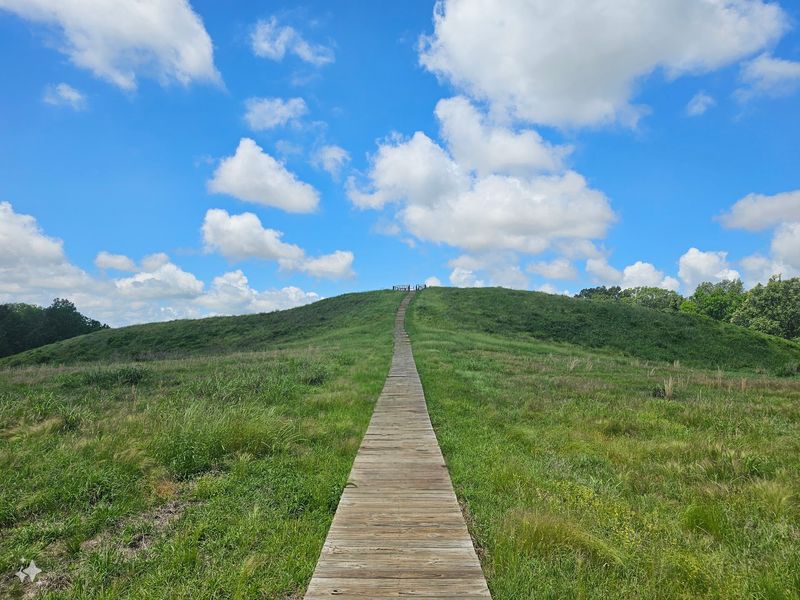
Poverty Point World Heritage Site in Pioneer preserves a massive earthwork complex created by Indigenous hunter-fisher-gatherers between about 1700 and 1100 BCE.
Six concentric C-shaped ridges, a broad plaza, and several mounds reveal engineering on a scale unmatched in the region for many centuries.
Building the landscape required moving an estimated 53 million cubic feet of soil, much of it carried in basket loads.
The outermost ridge measures nearly three-quarters of a mile across, while Mound A rises about 70 feet above the surrounding ground.
The museum is the best starting point because artifacts explain how people cooked, traded, traveled, and used materials brought from distant parts of North America.
Fired clay Poverty Point Objects are especially distinctive and were used in food preparation.
A 2.6-mile hiking route crosses the archaeological landscape, while ranger-guided tram tours operate on a regular schedule several days each week when conditions allow.
The open terrain can feel exposed in warm weather, so hats, water, and sun protection help.
UNESCO added the site to the World Heritage List in 2014. Set your GPS for 6859 Highway 577 and give the museum and earthworks enough time to make the scale sink in.
3. Rosedown Plantation State Historic Site, St. Francisville
Just imagine for a second strolling through a garden planted nearly two centuries ago. Every path seems to whisper a story about the 1800s.
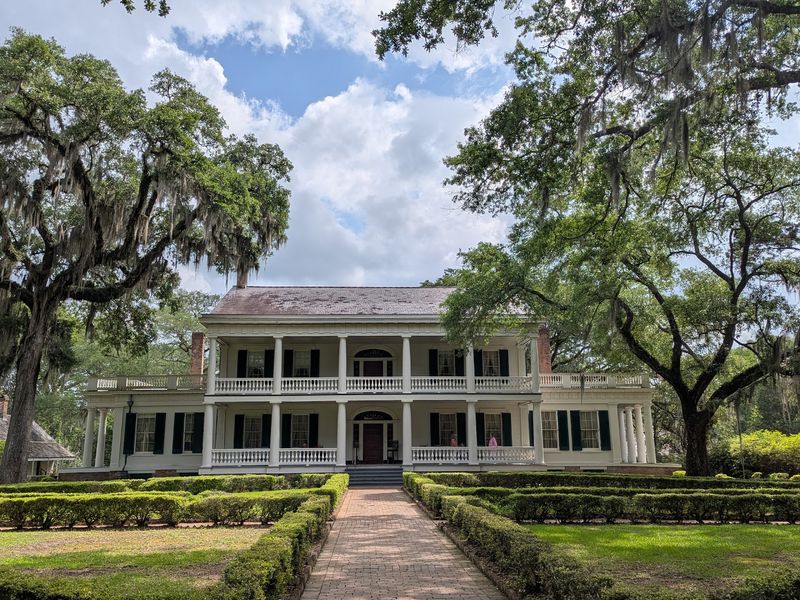
Rosedown Plantation State Historic Site in St. Francisville preserves a Greek Revival residence, formal gardens, and a broad collection of historic buildings tied to a nineteenth-century cotton estate.
The main house dates to the 1830s, and much of the property has been carefully restored rather than redesigned.
About 28 acres of formal gardens grew around the residence over many decades.
Their layout drew inspiration from European landscapes, while surviving garden records later helped guide restoration work and the return of historically appropriate plants.
Live oaks, magnolias, camellias, azaleas, and other Southern plantings shape the grounds through the seasons. Cooler months bring camellia color, while spring adds azaleas and fresh growth across the paths and lawns.
Guided house tours place the furnishings and architecture within the estate’s broader household, agricultural, and labor history.
Thirteen historic buildings remain on the preserved property, giving the grounds more context than the mansion alone can provide.
The site is recognized as a National Historic Landmark, and the gardens remain a major reason to explore slowly.
Comfortable shoes help on the outdoor routes, especially if the plan includes both the house and grounds. The entrance is at 12501 Highway 10 in St. Francisville.
4. Chicot State Park, Ville Platte
Call me silly, but one lake can keep a whole family busy from breakfast to sunset. Rods, bikes, hiking boots, and swimsuits all deserve a spot in the trunk.
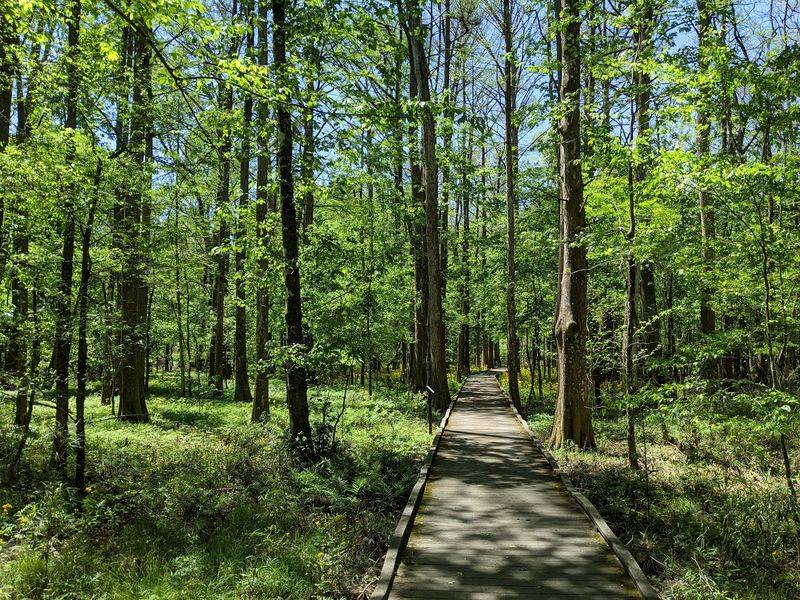
Chicot State Park near Ville Platte covers more than 6,400 acres of woodland and water.
Lake Chicot anchors the property, with cypress-lined edges, fishing areas, boat launches, and scenery that works equally well from shore or a paddle.
Largemouth bass, crappie, bluegill, and redear sunfish are among the freshwater species associated with the lake.
Three boat launches provide access, and boat rentals are available for visitors who want time on the water without bringing their own equipment.
A 20-mile hiking trail circles the lake and includes primitive camping areas along the route.
Families looking for a shorter outing can use individual sections instead of committing to the full loop. Much of the trail system also accommodates mountain bikes.
The Louisiana State Arboretum sits within the park and protects a mature beech-magnolia forest. Its nature trails include labeled native plants, adding context without turning the walk into a classroom exercise.
The South Landing also includes a playground and seasonal water playground, while cabins and campsites make longer stays possible.
Conditions and seasonal facilities can change, so checking the current park schedule before leaving is sensible. Navigate to 3469 Chicot Park Road and let the lake determine how active the day becomes.
5. Lake D’Arbonne State Park, Farmerville
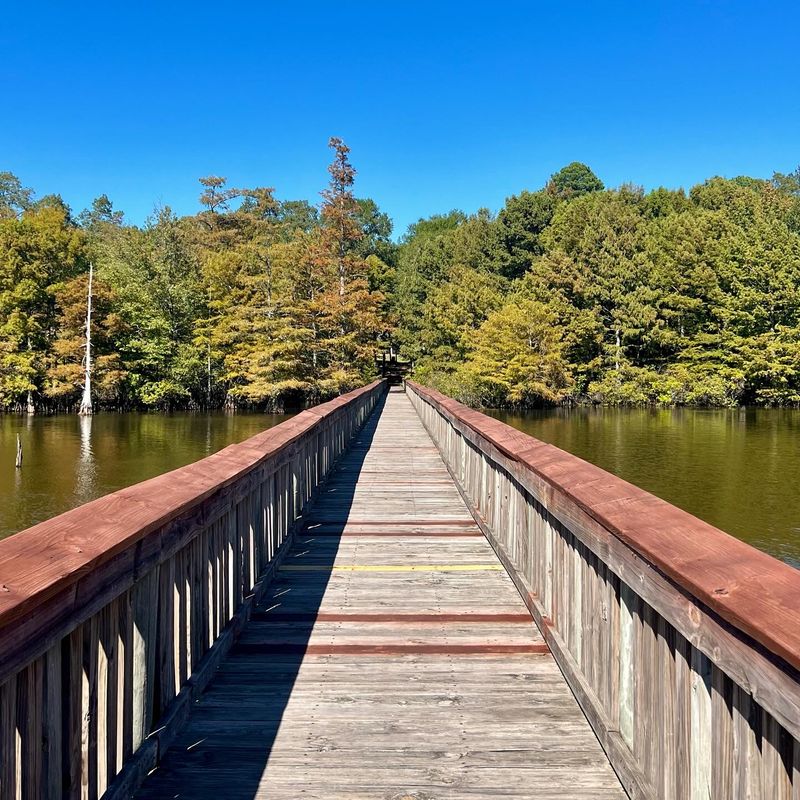
I judge parks by how many ways they help kids burn energy. North Louisiana delivers a winner tucked among towering pines.
Lake D’Arbonne State Park in Farmerville covers 655 acres beside a 15,250-acre lake.
Pine forest, rolling hills, open water, and cypress-studded edges give the park enough variety to keep a day from feeling locked into one activity.
Five fishing piers and a boat launch make the lake easy to reach from shore or water.
Bass, crappie, catfish, and bream are established catches here, while wider sections of the lake also support pleasure boating and water skiing away from the shoreline.
Four marked hiking routes range from half a mile to four miles. The shorter loops work well when younger walkers need something manageable, while the longer White Trail adds more time beneath the trees.
Disc golf and lighted tennis courts provide alternatives when the group wants a break from hiking.
A seasonal swimming pool operates on a limited warm-weather schedule, so it should be treated as a bonus rather than a year-round guarantee. Kayak rentals provide another way to explore the lake when conditions cooperate.
Cabins, lodges, campsites, picnic areas, and playground space make it easy to stretch the outing without cramming the schedule.
Wildlife and birding add quieter moments between activities. Find the park at 3628 Evergreen Road and let everyone choose a different reason to head outside.
6. Global Wildlife Center, Folsom
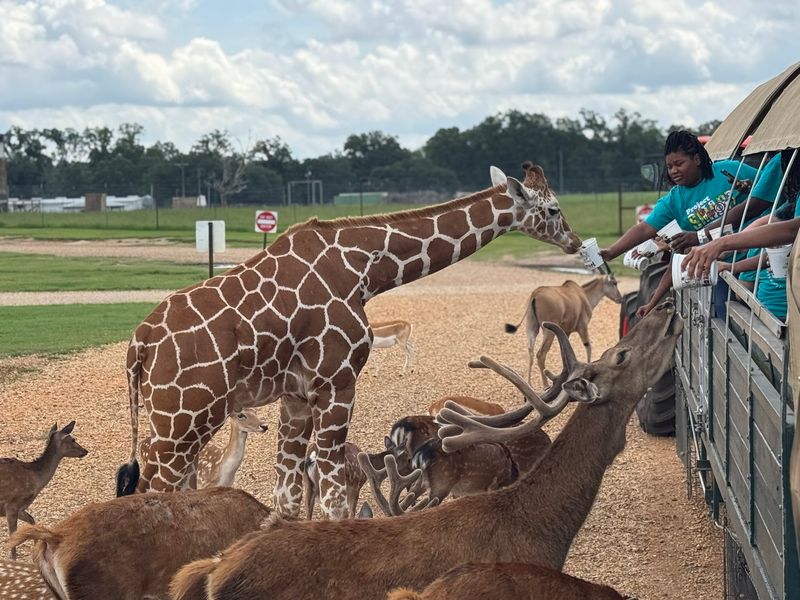
Global Wildlife Center in Folsom stretches across 900 acres of open land. Animals roam freely here, making it one of the largest free-roaming safaris around.
More than 2,000 animals representing species from around the world live across the preserve.
The standard guided safari uses a covered wagon for a ride lasting about an hour and fifteen minutes, with stops and close encounters along the way.
Giraffes, bison, zebras, camels, and elands are among the animals that may approach the wagon.
Guests can feed approved food from the vehicle, turning the tour into a more interactive experience than simply watching from a distant path.
Families wanting a smaller-group option can book a separate Pinzgauer tour, which travels across areas the larger wagons cannot reach.
Additional encounters are offered separately, including a walk-through red kangaroo habitat and a capybara experience with its own age and reservation requirements.
The center’s educational focus adds useful context about animal care, habitats, and conservation while the tour moves across the property. Twelve ponds and a lake break up the pasture scenery and keep the route visually varied.
Because every experience is scheduled, booking ahead matters more than arriving spontaneously.
Dress for outdoor weather and choose clothes that can handle dust or animal feed. The entrance is at 26389 Highway 40 in Folsom, where the day begins with a tour rather than a traditional zoo path.
7. Creole Nature Trail Adventure Point, Sulphur
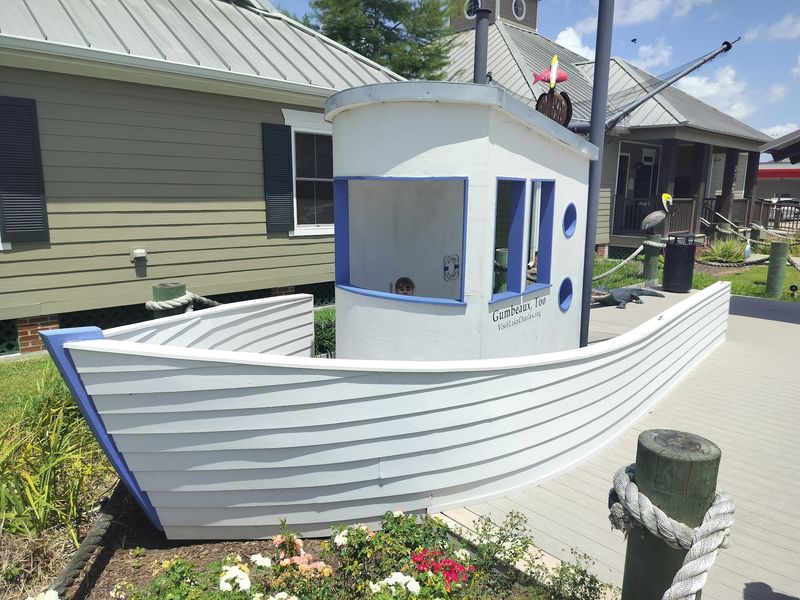
Let’s look at it from this angle: every great road trip needs a launch pad. Southwest Louisiana built one that kids actually enjoy.
Creole Nature Trail Adventure Point in Sulphur is an interactive visitor center designed to prepare travelers for the Creole Nature Trail All-American Road.
Hands-on exhibits introduce coastal wildlife, local food traditions, and the music associated with Cajun and Zydeco culture before the drive begins.
Displays help families learn where alligators and migratory birds are most likely to appear, while another station recreates the sounds and feel of a regional band.
Route maps and current guidance make it easier to decide which stops fit the available time.
Outside, the scenic byway stretches about 180 miles through marshes, farmland, wildlife refuges, and Gulf shoreline.
More than 400 bird species have been recorded along the broader route, with fall through spring bringing especially strong migration activity.
The trail also includes about 26 miles of natural Gulf beaches, along with fishing, crabbing, boardwalks, and wildlife-viewing areas.
Services become less frequent once the road leaves the main towns, so water, snacks, insect repellent, and a full fuel tank belong in the plan.
Adventure Point is at 2740 Ruth Street and currently operates on a limited weekly schedule. Starting there keeps the road trip flexible because families can choose a short western section or build the outing into a much longer coastal loop.
8. Grand Isle State Park
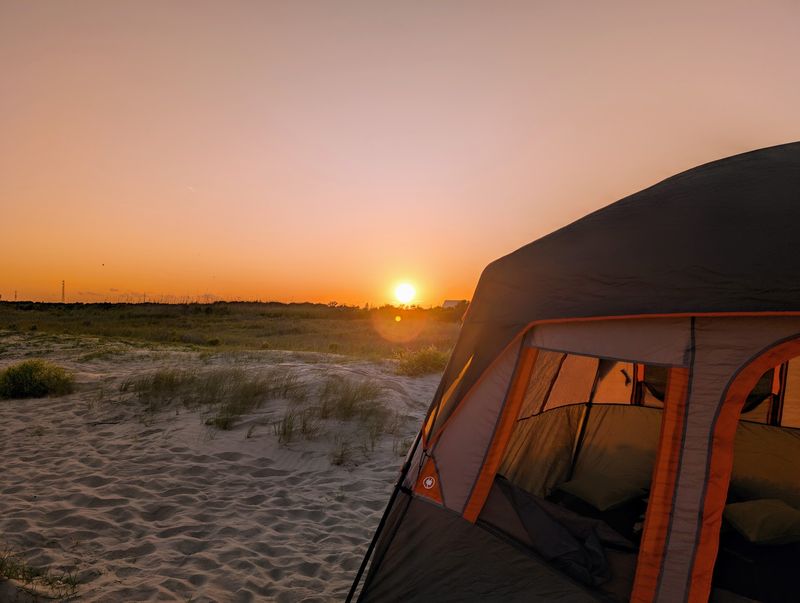
Louisiana has a beach that rivals any Gulf getaway. Sandy toes and salty breezes are closer than you might expect.
Grand Isle State Park occupies the eastern end of Louisiana’s only inhabited barrier island.
Gulf shoreline, lagoons, marsh views, and bird habitat give the park a coastal character that feels very different from inland Louisiana.
Swimming, surf fishing, crabbing, paddling, and beach walking are all established activities. Speckled trout are commonly targeted from the surf, while seasonal conditions can bring other inshore species within reach of anglers along the shore.
Birding becomes especially rewarding during migration because Grand Isle is an important stopping point for birds crossing the Gulf.
Lagoons and low coastal vegetation add habitat beyond the open beach, so binoculars can be useful even on a trip centered on sand and water.
A 2.5-mile nature trail provides a longer walk away from the shoreline. The park also has a three-tiered lookout with broad views across the island landscape and toward nearby coastal features.
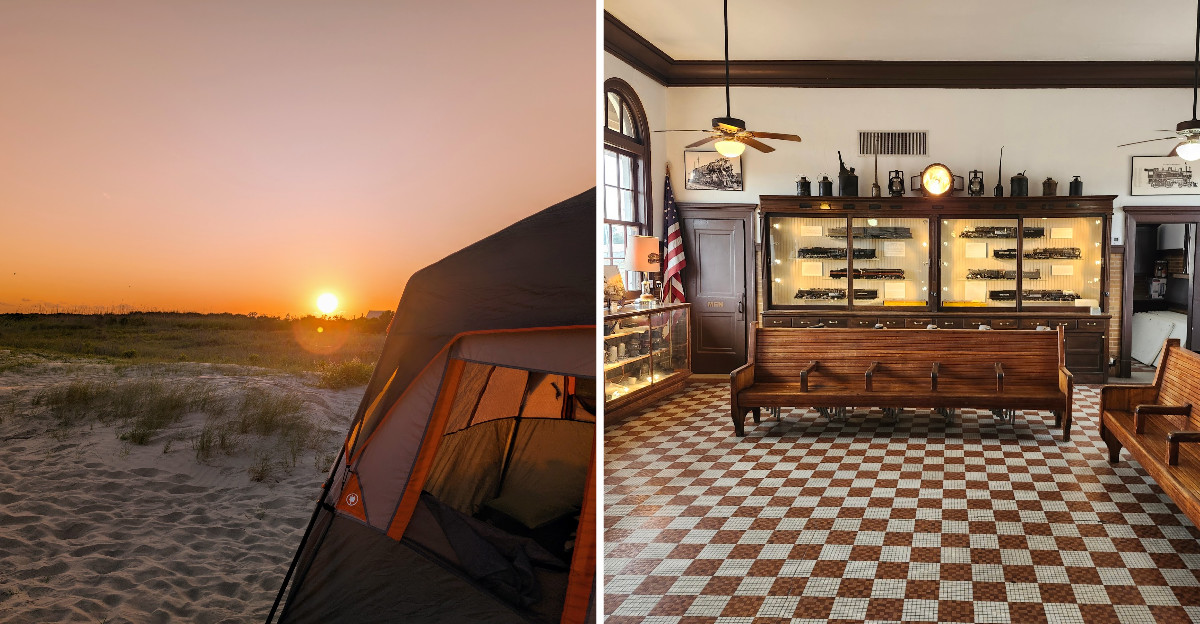
Beach tent campsites and RV sites make an overnight sunrise possible, but a day trip still leaves plenty of time for swimming, walking, and wildlife watching.
Shade is limited, and coastal conditions can change quickly, so water, sun protection, and current swimming guidance matter. Enter from Admiral Craik Drive at the island’s eastern end and let the Gulf set the pace.
9. DeQuincy Railroad Museum, DeQuincy
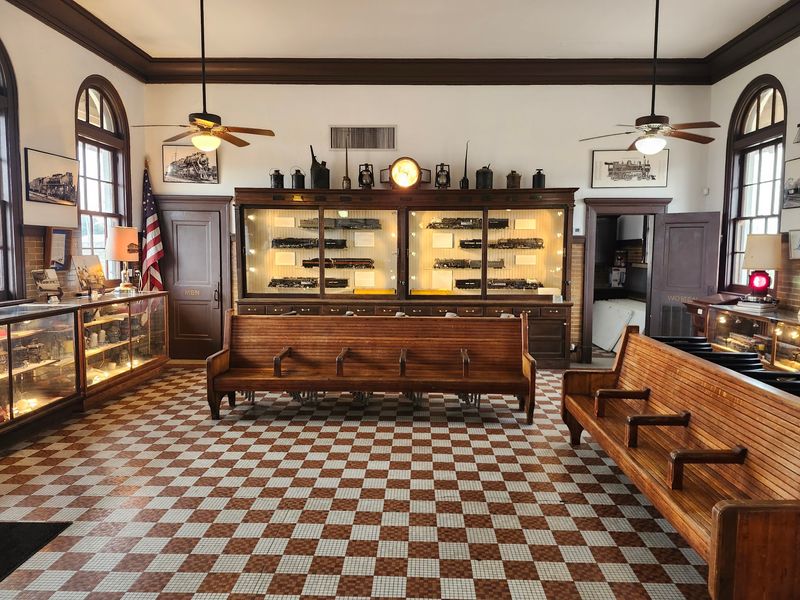
All aboard, because the train fans in your crew are about to lose it. Even grown-ups start making whistle sounds after a few minutes here.
DeQuincy Railroad Museum occupies a restored 1923 Kansas City Southern depot in downtown.
The Mission Revival building is listed on the National Register of Historic Places and still retains waiting rooms, ticket windows, an agent’s office, and other features connected to its railroad past.
Indoor displays bring together photographs, equipment, memorabilia, and a substantial collection of model steam and diesel engines.
A working layout recreates parts of DeQuincy as they appeared in the 1940s, adding movement and scale to the museum experience.
The outdoor collection gives younger visitors something much larger to study. A 1913 steam switch engine stands beside a 1947 Pullman coach and two vintage cabooses beneath a covered display area.
A landscaped park and playground sit next to the depot, making it easy to balance museum time with a break outdoors.
The grounds also host Louisiana Railroad Days on the second weekend in April, when rides, crafts, contests, and other activities expand beyond the regular exhibits.
The museum is currently open Tuesday through Saturday, except for city holidays. It sits at 400 Lake Charles Avenue, so downtown exploration can be added without moving the car.
10. Louisiana Purchase Gardens & Zoo, Monroe
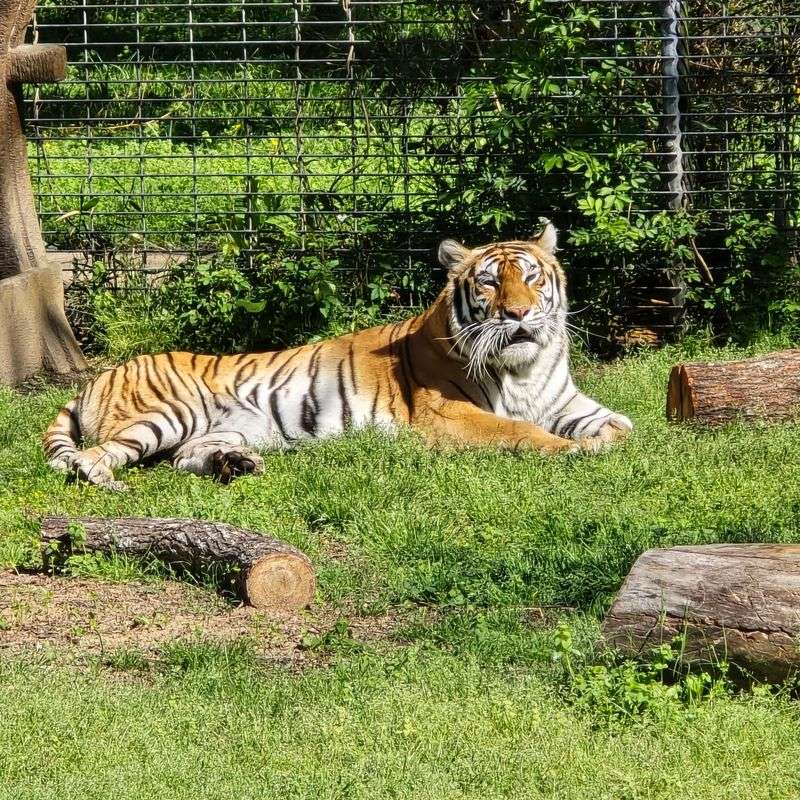
I had to do a double-take when a tiger strolled past a garden full of blooms. Wild animals and peaceful flowers make an unexpected yet charming pair.
Louisiana Purchase Gardens & Zoo in Monroe covers more than 80 acres, with nearly two miles of paths winding through animal habitats, park-like grounds, and landscaped areas.
Current collections include roughly 400 animals representing about 200 species.
Lions, tigers, bears, zebras, bison, monkeys, reptiles, and many bird species give the walking route variety.
The Hall of Small adds an immersive insect-focused exhibit with interactive elements, while the Children’s Zoo allows supervised feeding and petting when that area is operating.
A train travels nearly a mile through open grassland and mature cypress areas, offering another view of animals along its route. The Safari Boat explores swamp habitat and reaches areas not visible from the main walking paths.
The grounds also include 27 acres of landscaped garden space and a walk-through greenhouse, creating quieter pauses between animal areas.
The zoo is open daily except for holiday closures. Earlier visits can make the walking more comfortable during hot weather. Set the map for 1405 Bernstein Park Road and plan enough time for both the pathways and one ride option.