Inside A California Forest Stands A Tree So Massive It Takes A Crowd To Circle It
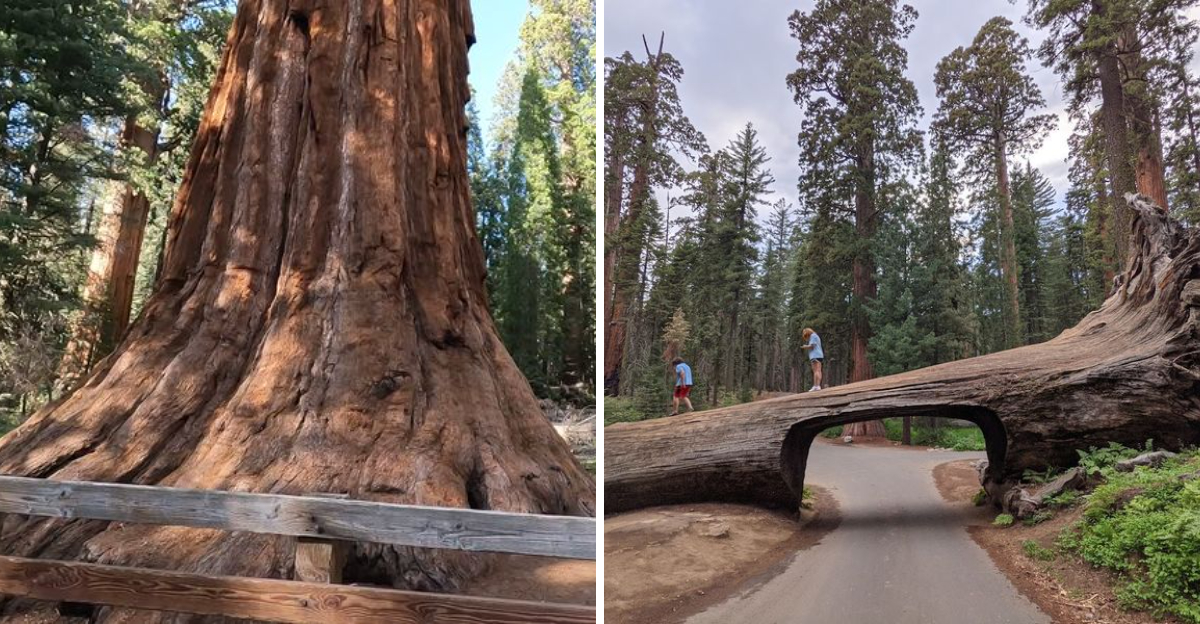
Some trees are big. This one makes that word feel almost useless.
Deep in a California forest, the trunk rises with the kind of scale that turns grown adults into tiny measuring tools.
People stand near it, look up, look around, and immediately understand why a single photo never really does the job.
The tree is not just tall. It is massive in a way that feels physical, almost funny, like nature decided to build a landmark and forgot to stop.
Out here, California sightseeing comes with a neck workout and a very clear reminder to feel small.
The crowd test says plenty. It takes a group to circle the base, and even then, everyone looks slightly ridiculous trying to compare themselves to something that has been standing for centuries.
The forest around it adds to the effect, with giant sequoias making the whole walk feel oversized.
The reaction is usually the same. Silence first. Then staring. Then someone trying to take the impossible picture anyway.
Big Enough To Rewrite Your Sense Of Scale
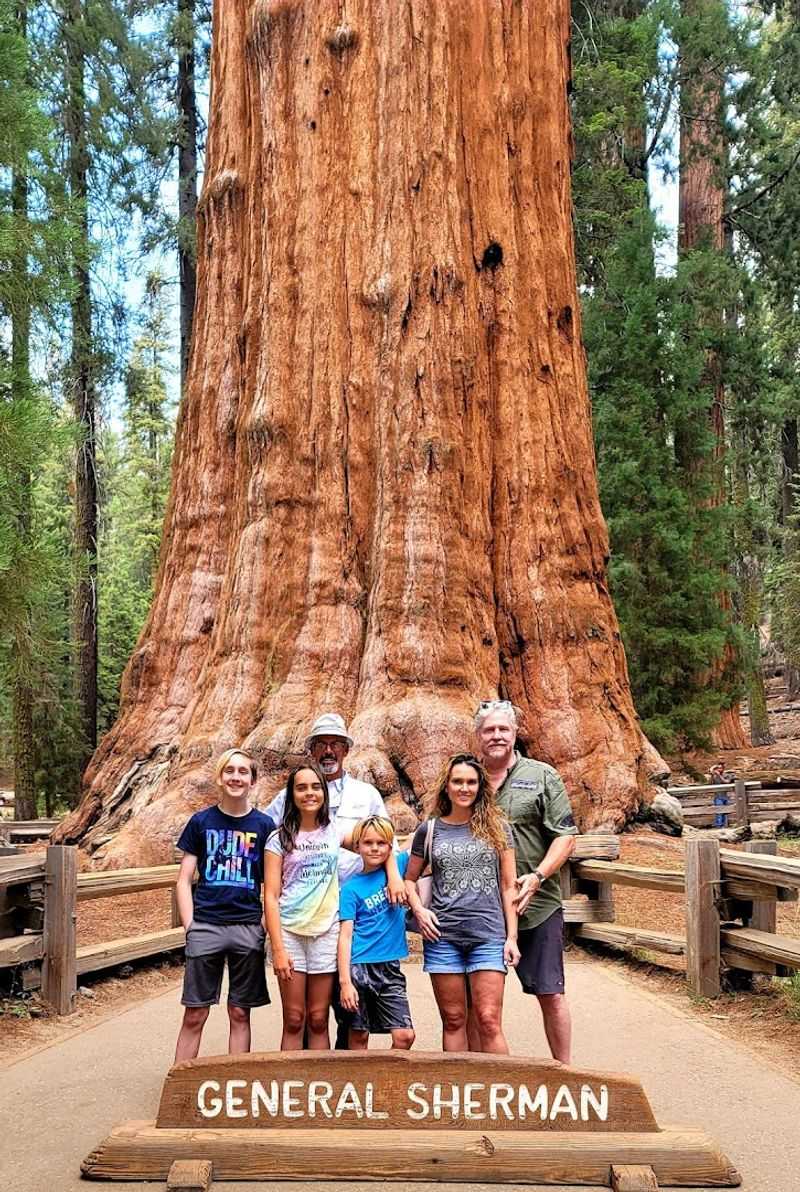
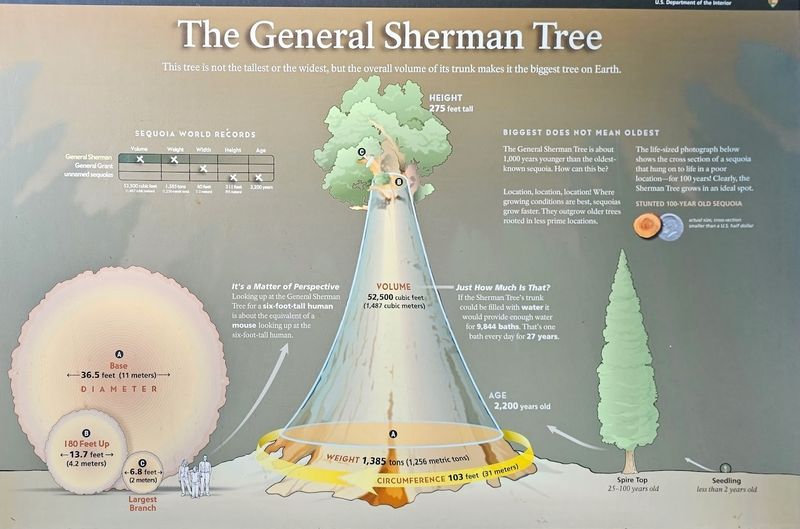
Numbers can only do so much, but 52,508 cubic feet of wood packed into a single living trunk tends to make even skeptical visitors go quiet.
The General Sherman Tree holds the record as the largest tree on Earth by trunk volume, a title confirmed by the National Park Service.
Standing at roughly 274.9 feet tall, it reaches about as high as a 26-story building.
The trunk alone weighs nearly 1,400 tons, which works out to approximately 2.7 million pounds.
For context, an average mature giant sequoia can add enough new wood in a single year to build an entire 60-foot-tall oak tree with a 3-foot diameter.
That kind of growth rate, sustained over centuries, explains how a tree gets this enormous.
Even at 60 feet above the ground, the trunk still measures 17.5 feet across, making it the widest tree at that height anywhere on the planet.
The base diameter stretches to 36.5 feet, which is wider than many city streets. No photograph fully prepares a person for the moment the tree actually comes into view on the trail.
Crowd Test Comes Naturally Here
A ground circumference of 102.6 feet has a way of turning casual visitors into amateur mathematicians.
People naturally start counting heads and estimating how many adults standing side by side would be needed to wrap around the base. The answer tends to surprise everyone.
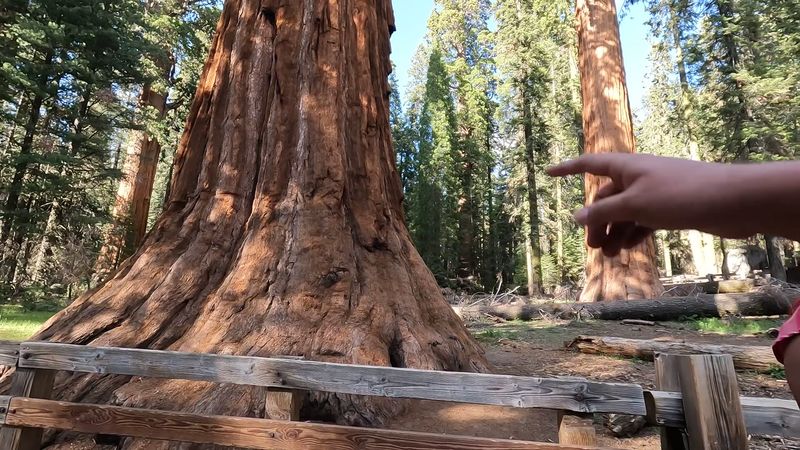
Standing near the protective fence that surrounds the tree, the trunk stops looking like a tree and starts looking more like a wooden wall that happens to have branches.
The reddish-brown bark is deeply furrowed and thick, built to survive the wildfires that sweep through the Sierra Nevada. That bark is part of why giant sequoias have lived this long without burning away.
The maximum diameter at the base measures 36.5 feet, which is a number that feels abstract until someone is standing directly in front of it.
Most visitors spend more time here than they planned, simply because the brain keeps trying to recalibrate the scale.
Groups tend to spread out along the fence naturally, which means even on busy days there is usually room to find a quiet angle and just stare for a while.
Half-Mile Walk With A Huge Payoff
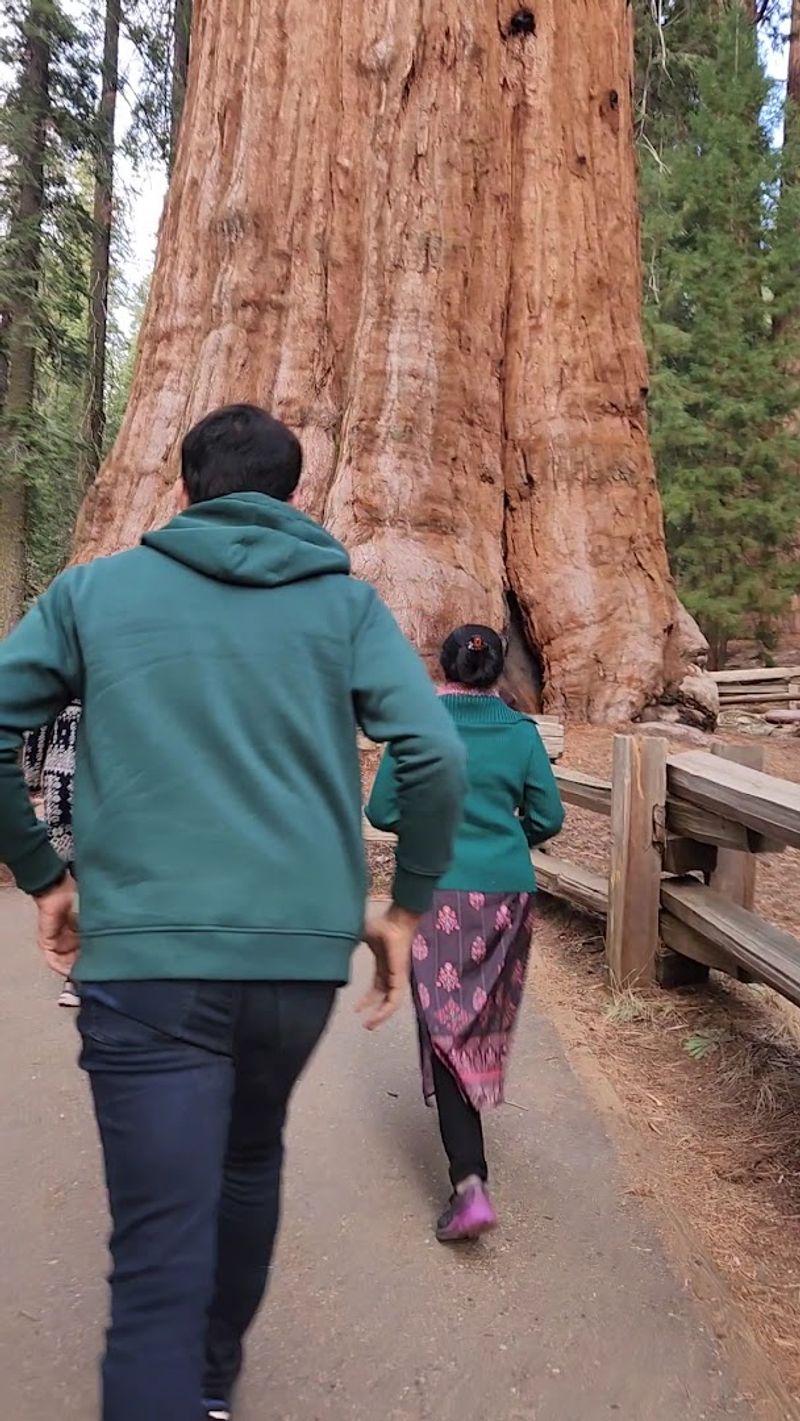
Getting to the General Sherman Tree does not require a backcountry permit or a full day of hiking.
The General Sherman Tree Trail is a paved route that descends about half a mile from the upper trailhead parking area down to the tree itself.
The path includes a few stairs and runs through a shaded grove that already starts to feel impressive before the main attraction appears.
Educational exhibits placed along the trail explain the natural history of giant sequoias, covering topics like fire ecology, root systems, and how these trees reproduce.
The round-trip distance covers about 1.2 miles with an elevation gain of roughly 200 feet on the return. That uphill walk back is gentle enough for most visitors but worth keeping in mind on warm summer days.
For visitors with disability parking placards, a separate small lot along the Generals Highway provides access to a wheelchair-accessible path that leads a short distance directly to the tree.
The National Park Service lists the General Sherman Tree as a must-see stop within the Giant Forest, and the trail design reflects that priority by keeping the experience accessible and well-maintained for a wide range of visitors.
Giant Forest Makes The Name Feel Earned
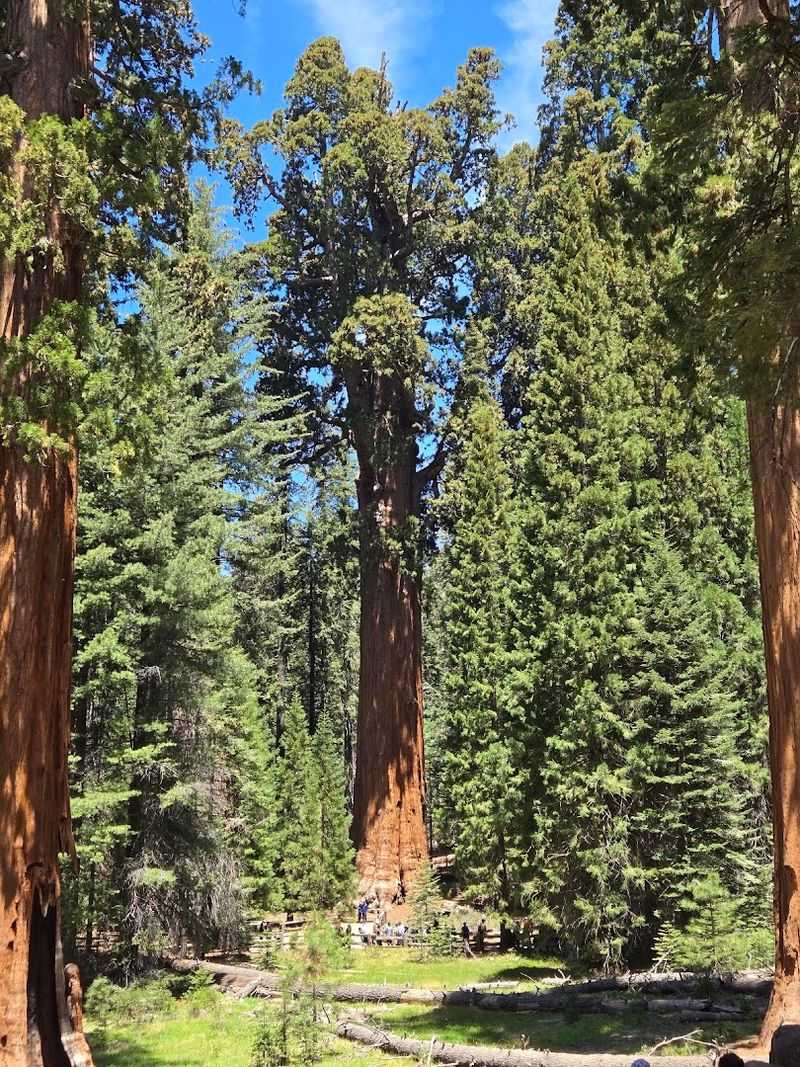
Before even reaching the General Sherman Tree, the surrounding forest makes it clear that something unusual is happening here.
Giant Forest covers 1,880 acres of Sequoia National Park and sits at elevations exceeding 6,000 feet in California’s western Sierra Nevada.
The air is noticeably cooler and cleaner than what most visitors experience at lower elevations.
Five of the ten most massive trees on Earth stand within this forest, which gives the whole grove a quiet sense of scale that builds gradually as the trail winds deeper.
The trunks are so wide and the canopy so high that the usual sense of proportion tends to slip away after the first few minutes.
Lush meadows open up between the trees in places, and granite formations add texture to a landscape that already feels oversized.
Over 40 miles of hiking trails thread through the forest, ranging from short accessible paths to longer backcountry routes.
Most visitors spend at least a few hours here and leave wishing they had more time.
The forest does not rush anyone, and the scale of everything in it has a way of slowing people down without them even noticing it is happening.
Congress Trail Adds More Sequoia Drama
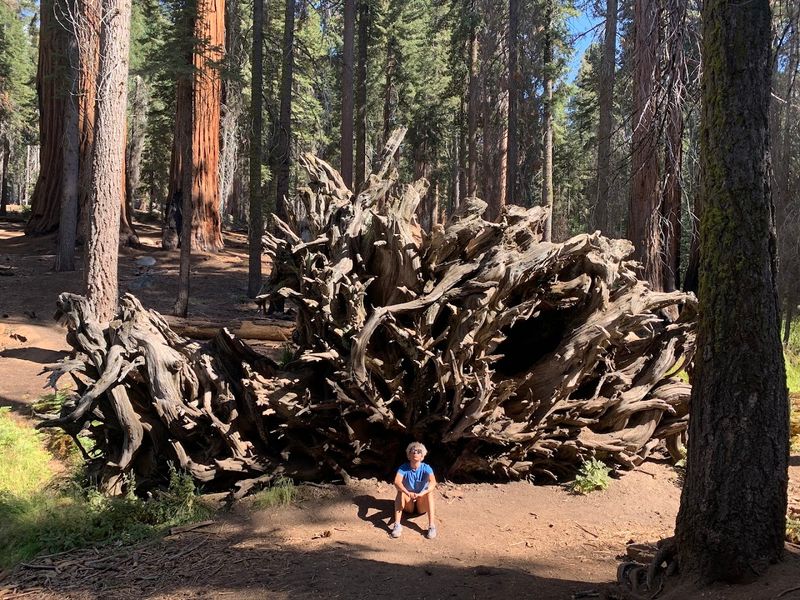
After standing at the General Sherman Tree, the natural instinct is to keep walking, and the Congress Trail is exactly the right place to do that.
Starting near the General Sherman Tree, this paved loop stretches approximately 2.7 miles through the heart of the giant sequoia grove. The incline is gentle enough to feel manageable at elevation.
Along the way, the trail passes some remarkably named sequoia clusters, including the House and Senate groups, as well as the President Tree, which ranks among the largest trees in the world by volume.
Each of these stops adds another layer to the visit without requiring any extra navigation. The trail is well-marked and easy to follow even for first-time visitors.
One of the practical advantages of continuing onto the Congress Trail is that the crowd density tends to thin out noticeably beyond the General Sherman Tree area.
Most day visitors stop at the main attraction and turn around, which means the rest of the loop often feels quieter and more immersive.
The trail also connects to other pathways for anyone who wants to extend the hike further into the forest and spend more time among the sequoias at a slower pace.
Shuttles Help With Summer Crowds
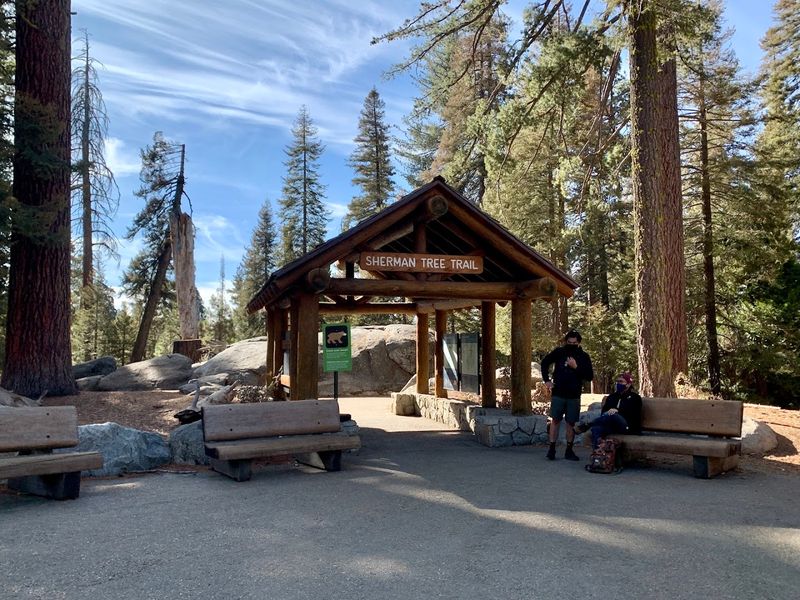
Parking at the General Sherman Tree area fills up fast, often before mid-morning on summer weekends.
The National Park Service runs free in-park shuttle routes throughout the Giant Forest area to help manage the volume of visitors and reduce congestion on narrow park roads.
Route 1, known as the Green Route, connects the Giant Forest Museum, the General Sherman Tree, Lodgepole Campground, Lodgepole Visitor Center, Tokopah Falls Trail, and Twin Lakes Trail.
Route 2, the Grey Route, covers the Giant Forest Museum, Moro Rock, Crescent Meadow, Tunnel Log, and several trailheads in between.
Route 3 links Lodgepole Campground and Wuksachi Lodge, while Route 4 connects the Sherman Tree Trail parking area, Wolverton, and the Lakes Trailhead.
Shuttles typically run from around 8:00 AM to 6:30 PM during the summer season, and parking at Wolverton tends to have more availability than the lots closer to General Sherman.
A separate fee-based shuttle also picks up passengers in Visalia, Lemon Cove, and Three Rivers for transport into the park.
Winter shuttle service runs as well, stopping at the Wolverton Snowplay Area, the General Sherman Tree, and the Giant Forest Museum.
Moro Rock Turns The Day Vertical
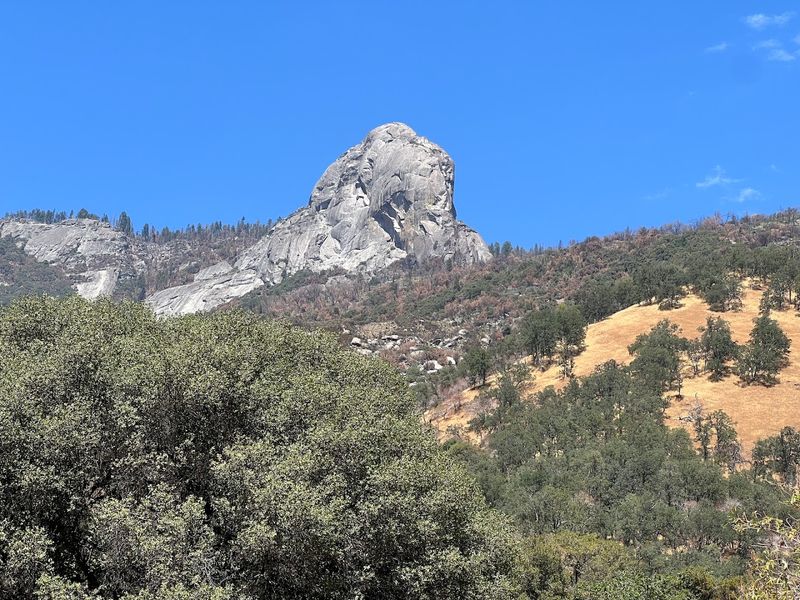
About a mile from the Giant Forest Museum road intersection, Moro Rock offers a completely different kind of scale than the one provided by the sequoias.
Instead of looking up at something enormous, the view from the top looks outward across an enormous landscape.
The summit reveals panoramic views of the Great Western Divide, the San Joaquin Valley foothills, and miles of surrounding Sierra Nevada wilderness.
Getting there involves climbing a stairway made of concrete and stone with over 350 steps, covering 300 feet of elevation gain over a quarter-mile distance.
The climb is steady rather than grueling, but the altitude at Giant Forest means some visitors feel the effort more than expected.
Sturdy footwear and a water bottle make a noticeable difference on the ascent.
During summer, free shuttles run from the Giant Forest Museum directly to the Moro Rock parking area.
On weekends, the road to Moro Rock and Crescent Meadow closes to private vehicles, making the shuttle the only option for access. On weekdays, the road stays open but the parking area fills quickly.
The stairway closes in winter when icy or snow-covered steps make the climb unsafe, so a summer or early fall visit is generally the most reliable timing.
Tunnel Log Keeps The Giant Theme Going
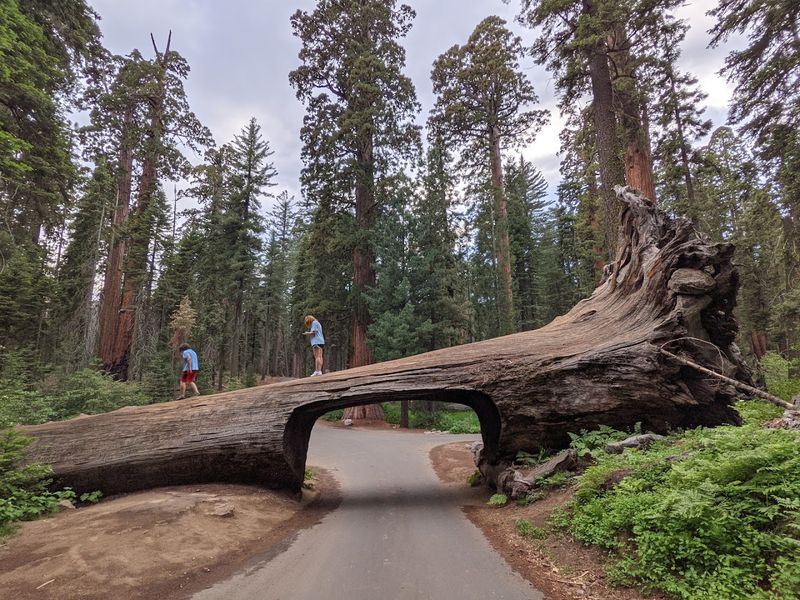
There is something genuinely playful about Tunnel Log that stands apart from the more solemn experience of standing at the base of the General Sherman Tree.
A giant sequoia fell naturally across Crescent Meadow Road in late 1937, and rather than remove it, crews carved a tunnel straight through the log in the summer of 1938 to restore traffic flow.
The result has been a beloved park attraction ever since.
The tunnel measures 17 feet wide and 8 feet high, which is large enough for standard passenger vehicles to pass through without any trouble.
Taller vehicles like RVs and trucks have a bypass route available on the side that keeps traffic moving smoothly.
The fallen log extends far beyond the road on both sides, giving a clear sense of just how long a mature giant sequoia can grow.
Located along Crescent Meadow Road in the Giant Forest, Tunnel Log pairs naturally with a visit to Crescent Meadow and fits easily into the Grey Route shuttle loop.
Stopping here after seeing General Sherman has a way of reinforcing the theme of the day, because after hours surrounded by enormous trees, driving through one feels like a completely reasonable thing to do.
Crowds Move Fast, But The Tree Does Not
Most visitors spend somewhere between ten minutes and an hour at the General Sherman Tree before moving on to the next stop.
The tree itself has been in the same spot for an estimated 2,200 years, with some assessments placing its age closer to 2,700 years. It was already old when the Roman Empire was still a functioning government.
That kind of age is hard to hold in the mind for very long, which may be part of why people take their photo and start drifting toward the next trail.
The pace of the visit tends to feel rushed in a way that the tree itself seems completely indifferent to.
Giant sequoias do not measure time the way humans do, and standing near one long enough starts to make that feel obvious.
Early morning visits tend to offer the quietest experience, with softer light filtering through the canopy and smaller crowds near the fence.
Arriving before 9:00 AM during the summer months often means having a few minutes of genuine stillness near the base before the day gets busy.
That stillness, even briefly, tends to be the part of the visit that people remember most clearly long after returning home.