Inside A Georgia Fabric Warehouse Packed With Retro Prints And Endless Rolls
My grandmother had a sewing machine older than most cars on the road today. I grew up watching her fingers move fast over fabric, turning scraps into something worth keeping.
That memory pulled me back the moment I heard about a place in Georgia that most people drive past without a second glance. No sign screams for attention.
No storefront gives away what’s hiding behind it. But step past the front door and the space opens up fast, aisle after aisle of color, texture, and pattern stacked floor to ceiling.
Bold prints sit next to soft florals. Retro patterns look like they were pulled straight from someone’s childhood living room.
Quilters linger for hours. Upholsterers show up with swatches and big plans.
First-timers just stand there, a little stunned. Georgia has a way of hiding its best finds in plain sight, and this one might be the boldest yet.
The House That Hides A Warehouse

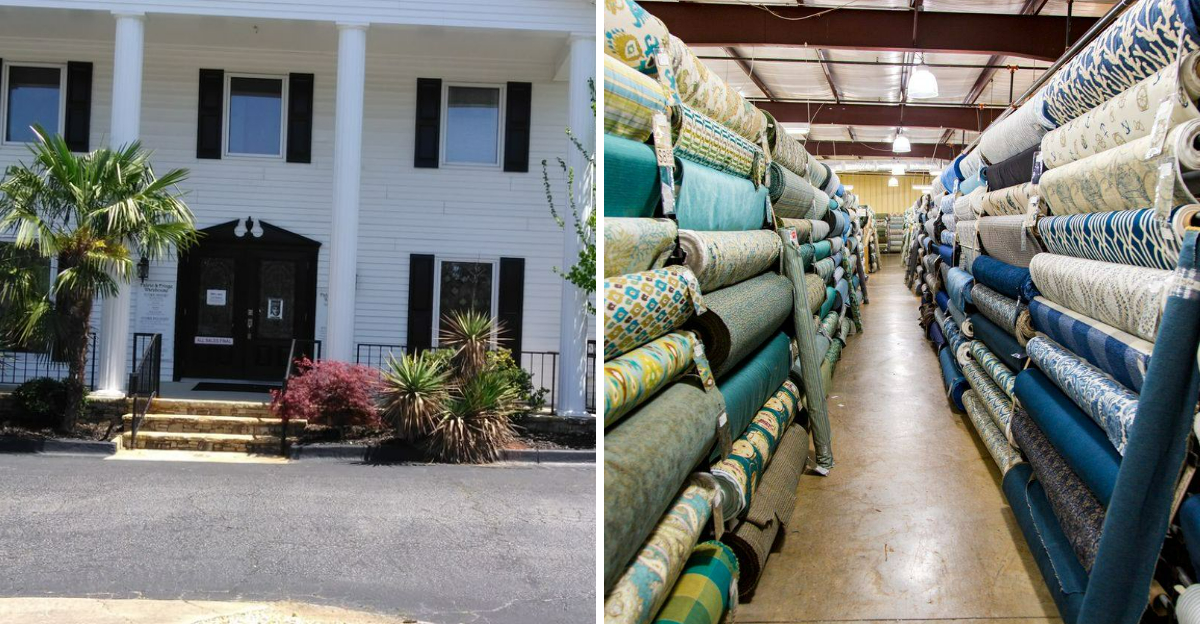
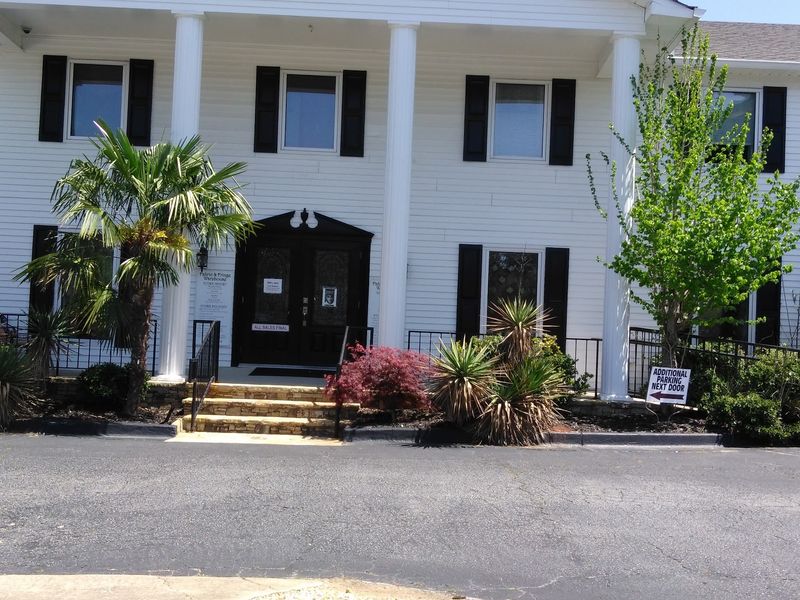
Plenty of shoppers admit they drove by three or four times before figuring out where the store actually was. The front looks like a tidy Georgia house sitting close to Canton Road, nothing that screams warehouse.
Step through the door, though, and the space keeps unfolding. Attached to the back of that house is a massive open room filled with rolls of fabric standing shoulder to shoulder, plus fringe, lace, vinyl, and stacks of actual pillows, including feather-filled ones.
One reviewer put it perfectly, saying the place fools you from the road. That surprise is half the fun of a first trip.
Parking sits right out front, so you can pull up, walk in, and start browsing without hunting for a spot in a crowded shopping center. The address is 2440 Canton Rd, Marietta, GA 30066.
If you like discovering places that locals call hidden gems, this one earns the title honestly. Nothing about the outside prepares you for the sheer amount of textile packed behind those walls.
Retro Prints Worth Slowing Down For
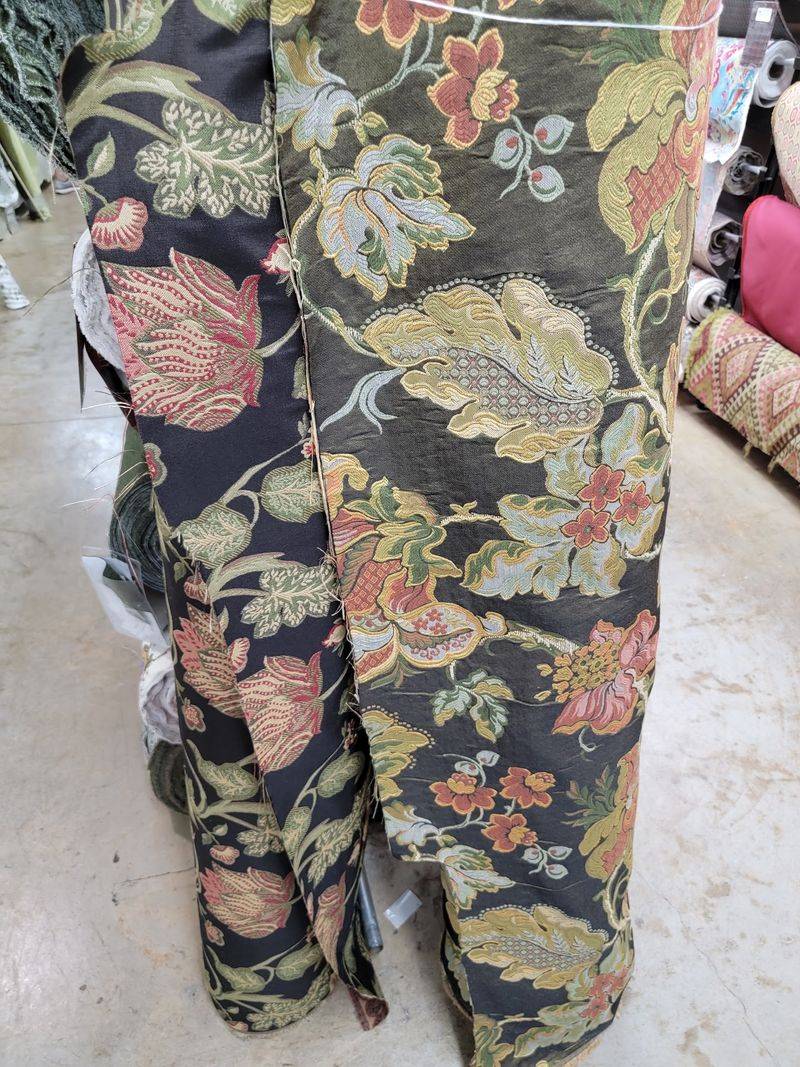
Retro is not an accident here. It is an actual print category the store lists, sitting alongside geometrics, florals, stripes, and solids.
Walking those rows feels like flipping through decades of home decorating. Big swirling florals that could have covered a 1970s sofa share space with sharp geometric repeats and groovy color combos in avocado, gold, rust, and burnt orange.
Vintage-loving sewists tend to lose track of time in this section, and honestly, who could blame them. Retro prints work beautifully for accent pillows, headboards, kitchen chair seats, tote bags, or a single bold statement chair in an otherwise plain room.
A helpful trick when hunting these patterns: hold the fabric up at arm’s length instead of studying it up close. Large-scale retro repeats look completely different across a whole cushion than they do in a small swatch.
Because the inventory rotates as new bolts arrive and older ones sell out, the retro selection shifts over time. Shoppers who visit regularly say that is part of the appeal, since something new and wonderfully old-fashioned always turns up.
A Sea Of Fabric, Sorted By Pattern
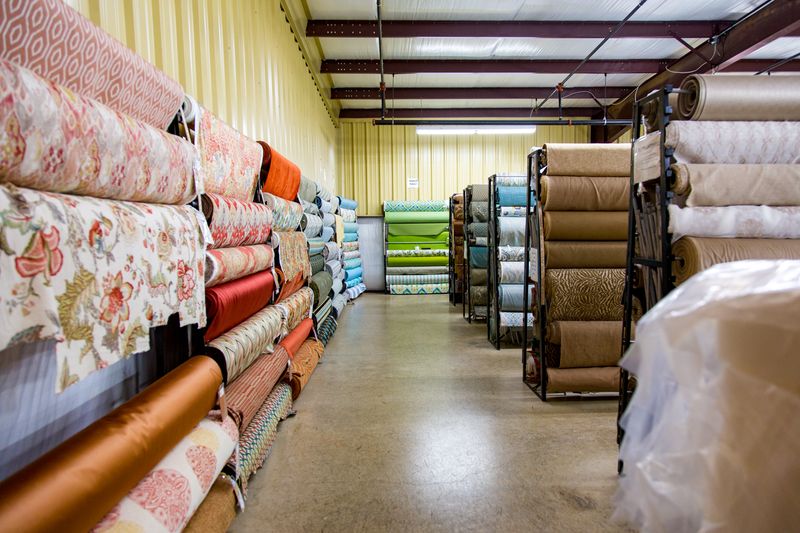
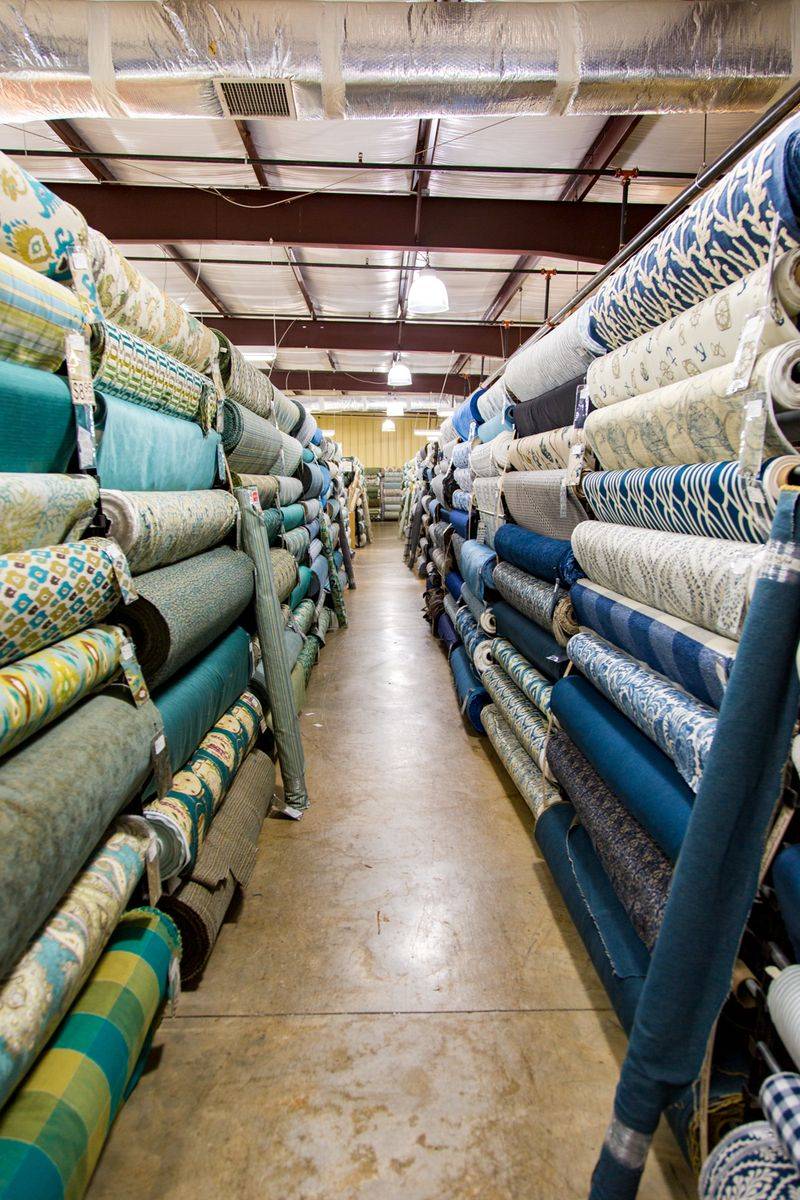
Over 3,500 in-stock fabrics could easily turn into chaos, but the layout keeps things manageable. Everything is grouped by fabric type and then by color, which means a shopper hunting for a deep teal chenille has a real starting point.
Wide aisles and bright lighting make a difference too. You can pull a heavy roll partway out, look at it in good light, and put it back without bumping elbows with three other people.
Reviewers describe the selection as incredible and overwhelming in the best way possible. One visitor said she felt completely lost in the upholstery area until a staff member walked her through the layout and explained which fabric types suited her project.
The range covers nearly every weight and purpose: heavy upholstery goods, lightweight drapery textiles, vinyl, outdoor fabrics, linings, and leather hides.
A smart move is to snap a photo of the section signs as you browse. That way, when you come back next month for more yardage, you already know exactly which corner of the warehouse to head toward first.
More Than A Thousand Kinds Of Fringe
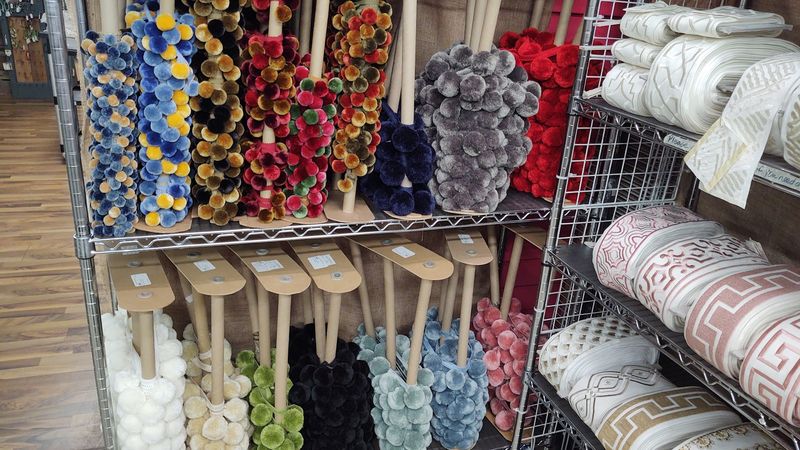
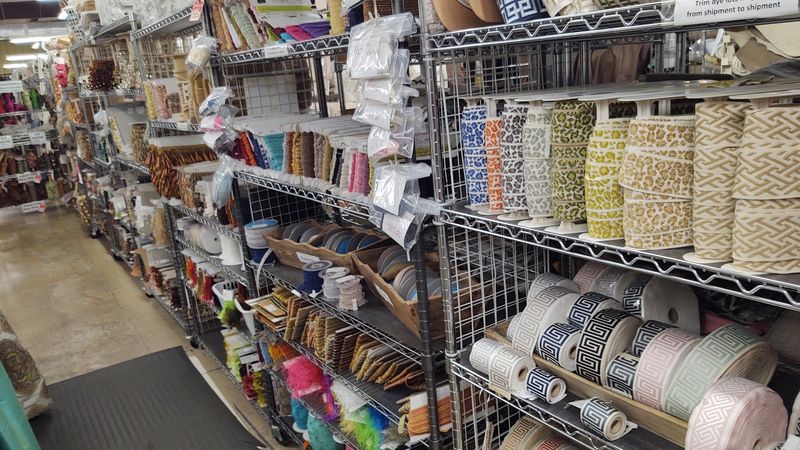
Fringe made it into the store’s name for good reason. More than 1,000 varieties hang here, from simple brush fringe to chunky tassels, beaded trims, gimp, cording, and ribbon-style braid.
Trim is the detail that quietly upgrades a project. A plain pillow becomes a designer pillow once brush fringe runs along its edges, and a basic curtain panel gains weight and polish with a banded trim down the leading edge.
Shoppers mention the trim selection often in reviews, calling it plentiful and reasonably priced. That combination is rare, since specialty trims usually carry painful price tags at chain stores.
Bring your fabric with you when you shop trims, or at least a swatch. Colors that seem like a match in your memory rarely match in person, and holding the two together under the store lighting saves a lot of regret.
Measure generously as well. Trim gets used up faster than people expect once you account for corners, seams, and the little bit you fold under at the ends.
Bargain Bins And Deals In The Front Room
Budget shoppers, listen up. The front room has a reputation for deals, and regulars head straight there before doing anything else.
One interior designer who lives five minutes away walked out with 40-plus yards of fabric for just over one hundred dollars and called herself delighted. Stories like that explain why she visits often.
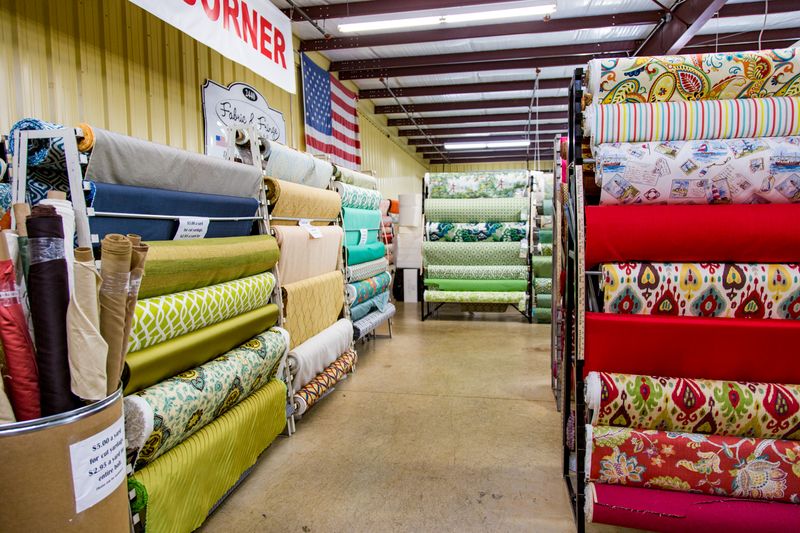
Big bins hold discounted fabric bundles, with many pieces measuring roughly two feet by two feet and coming from earlier collections. Crafters use squares like those for pillow fronts, chair pads, book covers, patchwork ottomans, and sample boards.
Shoppers have also noted that persistence pays. As one longtime customer wrote, keep looking and you should find something in your budget.
The owner, Marty, gets credit in reviews for being conscious of pricing things competitively, which shows up in the everyday shelf prices, not only the clearance corner.
Come with an open mind rather than a rigid plan for the bargain areas. Several visitors admit they did not find the exact thing they came for but left with treasures they had not known they needed.
Free Swatches And Detail Cards On Every Display
Here is a small touch that shoppers rave about. Nearly every fabric on display has a pouch attached holding free cut swatches, plus a card packed with details about that specific textile.
Those cards list the kind of information that actually matters: content, width, and other specs that help you judge whether a fabric suits a dining chair or a window treatment.
The swatch pouches solve a problem anyone who decorates knows well. You can carry samples home, tape them to a wall, set them beside your existing sofa, and watch how they look in morning light versus lamplight.
One reviewer pointed out how useful this is for matching fabric to a project already in progress. No guessing, no ordering blind online and hoping the color on your screen matches reality.
Grab several swatches even for options you are unsure about. Comparing three or four choices at home costs nothing and often leads you to a fabric you would have skipped in the store.
Keep them in an envelope with your measurements written on the outside.
Sixty Years Of Family Know-How Behind The Counter
The story starts in 1965, when Jack Williamson opened a shop called The Cloth Barn in Alabama. His son Marty, along with partner Marla, grew the business and eventually brought Fabric & Fringe Warehouse to its Marietta home.
That long history shows up in the staff, mentioned in reviews close to fifty times for being helpful. Mark once spent time on the phone with a woman he had never met, answering her cornice board questions and texting her contact information for people who could build them.
Polly walked a customer through a custom order from start to pickup. Employees regularly haul heavy bolts out to cars for shoppers.
Marty and Marla have even opened the doors after hours for Kennesaw State University interior design classes, teaching students about fabrics and linings.
A Men’s Den Filled With Family History
Not every corner of this warehouse is devoted to fabric rolls. The store also has a small area called the Men’s Den, where visitors can pause and discover another piece of the family story.
Some of the upholstery tools displayed there once belonged to John “Harvey” Garrett, Marla’s grandfather. He worked as an Atlanta firefighter while doing upholstery projects on the side for decades.
The tools offer a glimpse at how furniture was repaired and covered before modern equipment simplified the process. They also connect today’s warehouse to an earlier generation of hands-on textile work.
Fabric & Fringe Warehouse does not operate its own drapery or upholstery workroom. Instead, the staff focuses on helping customers choose materials for projects completed at home or by outside professionals.
This small display is easy to overlook when thousands of colorful fabrics are competing for attention. Still, it adds a personal detail that makes the locally owned Georgia business feel like more than a place to buy yardage.