Kentucky And Victoria Falls Have Something In Common That Almost Nobody Knows
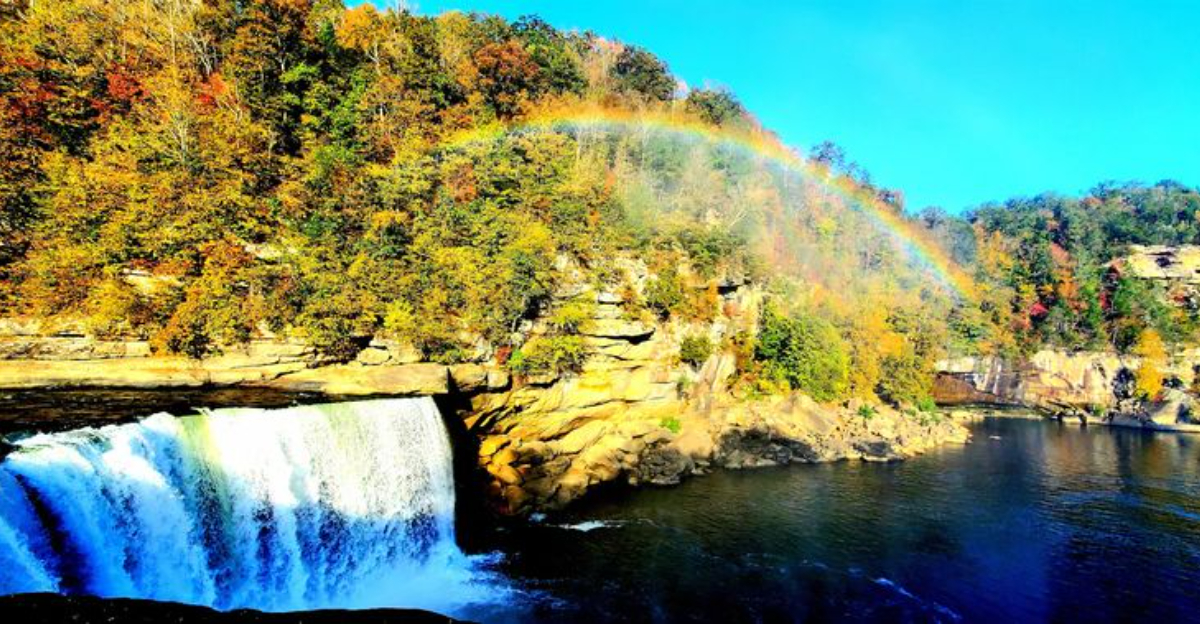
You probably assume Kentucky and Zimbabwe have nothing in common. One has bluegrass and cave country.
The other has a mile-wide wall of falling water. Yet there is one thing they share, and only two places on Earth can claim it.
The connection is not history, food, or anything a guidebook would flag. It has nothing to do with weather records.
It happens after dark. It requires a full moon, clear skies, and a lot of mist.
It lasts a couple of hours and then it is gone. Miss the window and you wait a month.
Most Kentuckians have never seen it, and plenty live within driving distance. Scientists have a name for it.
Photographers plan entire trips around it. One southeastern Kentucky state park even publishes a calendar so you can catch it on purpose.
Zimbabwe has the more famous version. This state has the one you can plan around.
The Moonbow Phenomenon Explained
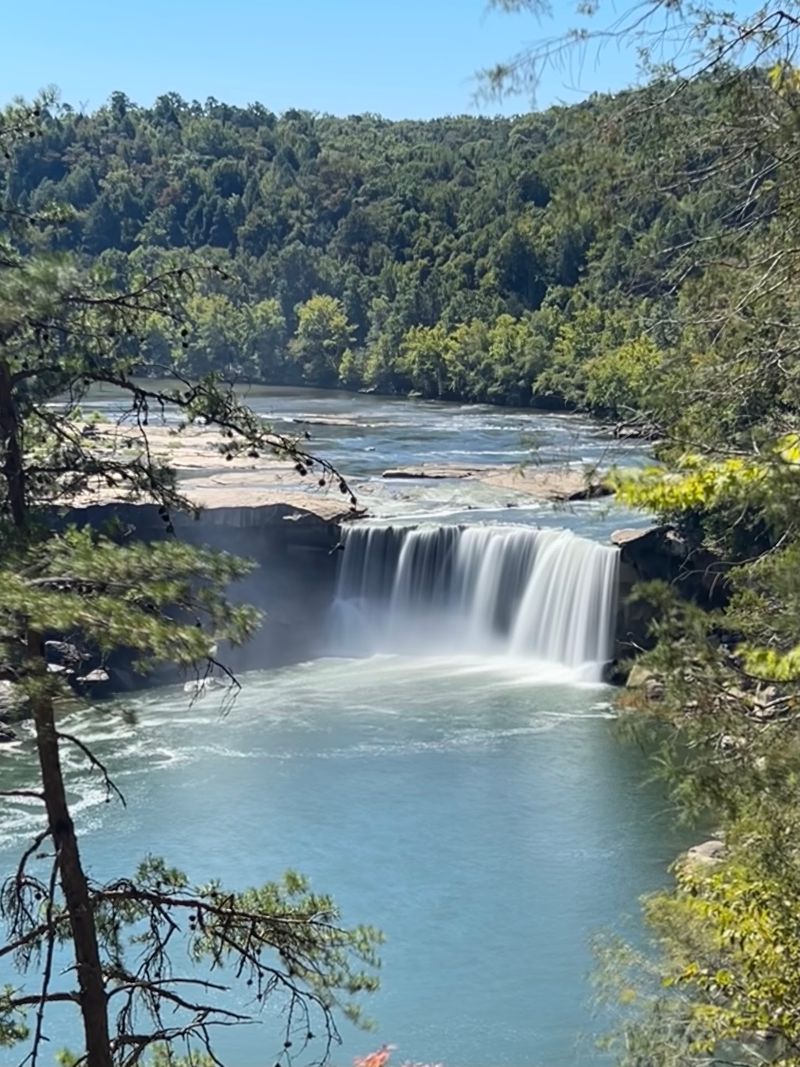
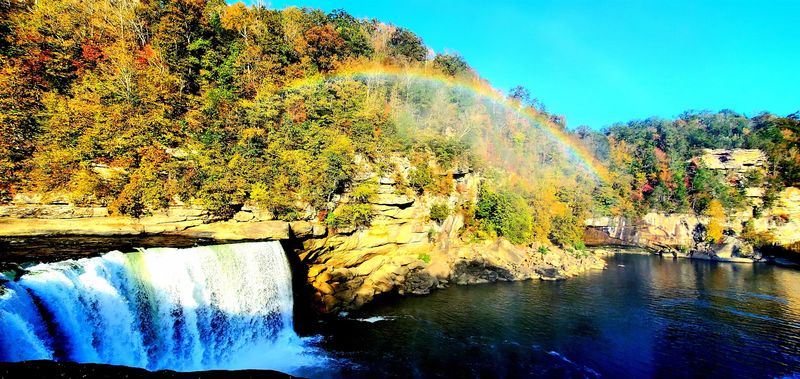
Cumberland Falls near Corbin, Kentucky, produces one of the rarest natural light shows on the planet. A moonbow is exactly what it sounds like: a rainbow made by moonlight instead of sunlight.
Most people have never even heard of one.
It works the same way a regular rainbow does. Light refracts through water droplets in the mist.
The difference is that moonlight is much dimmer, so the colors appear softer and almost ghostly white to the naked eye.
Long-exposure photography reveals the full color spectrum, which is genuinely jaw-dropping. Scientists confirm that only two waterfalls in the world produce moonbows reliably: Cumberland Falls and Victoria Falls.
That puts a small town in Kentucky on the same list as one of the Seven Natural Wonders of the World.
The conditions have to be just right. You need a clear sky, a full moon, and a powerful waterfall with heavy mist.
Cumberland Falls at 7351 Highway 90, Corbin, Kentucky, delivers all three on a regular schedule, making it one of the most consistent moonbow locations anywhere. Visitors who time their trip correctly are rarely disappointed by what they see.
Victoria Falls And Its Moonbow Connection
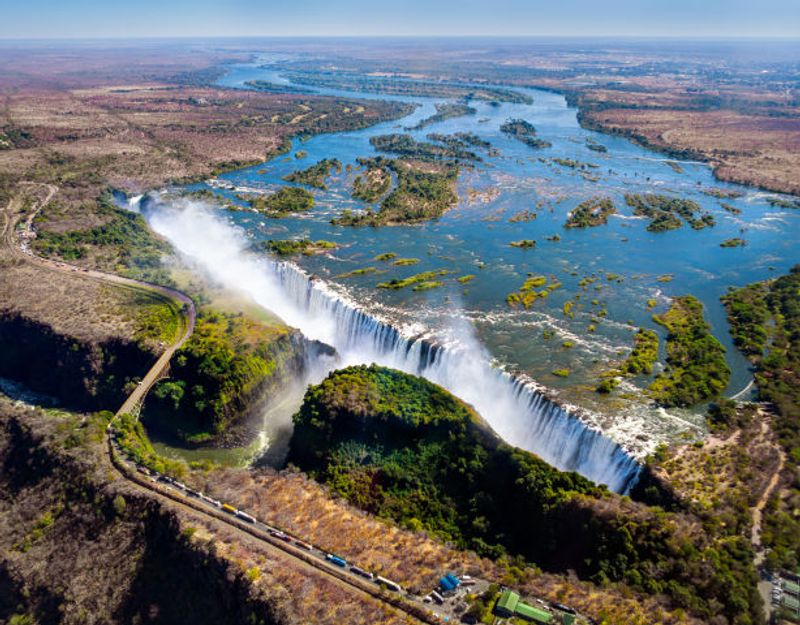
Victoria Falls sits on the border of Zambia and Zimbabwe in southern Africa. It is one of the largest waterfalls in the world by combined width and height.
The sheer volume of water creates a permanent mist cloud that locals call “the smoke that thunders.”
That mist is exactly what makes moonbows possible there. During a full moon, the lunar light passes through the fine water droplets and bends into a visible arc.
The effect is breathtaking and completely natural.
Victoria Falls has been a moonbow destination for centuries. Indigenous communities in the region recognized the phenomenon long before Western explorers documented it.
The falls produce moonbows so consistently that tour companies schedule specific moonbow nights for visitors.
What links Victoria Falls to Cumberland Falls is not just the moonbow itself.
Both waterfalls share similar mist conditions, similar water volumes relative to their drop height, and similar geographical positioning that allows lunar light to hit the mist at the right angle.
The comparison is not a stretch. Scientists and naturalists have noted the parallel for decades.
Two places, two continents, one shared and extraordinary natural event that most travelers never plan to witness.
Why Cumberland Falls Is Called The Niagara Of The South
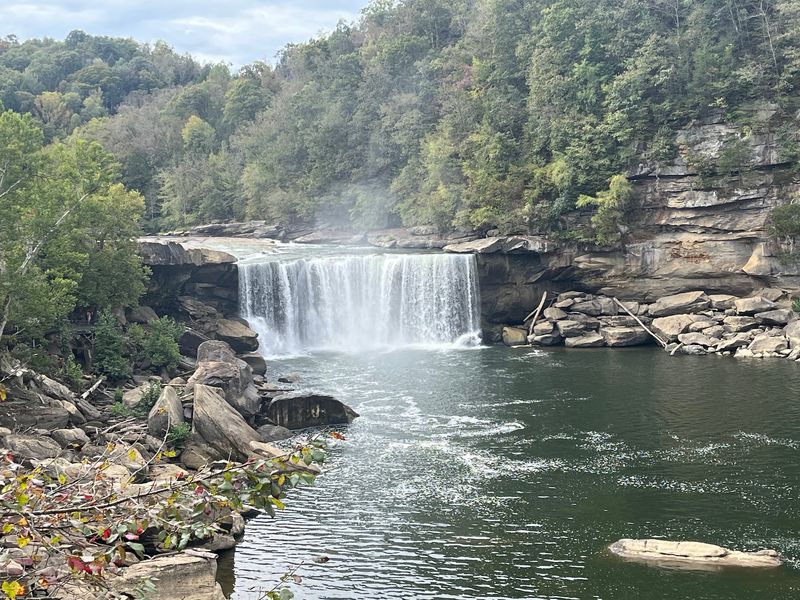
Cumberland Falls drops 68 feet and stretches 125 feet wide, making it one of the largest waterfalls in the eastern United States. That is not a small claim.
The nickname “Niagara of the South” has been used since the 1800s, and it actually holds up.
The falls sit inside Daniel Boone National Forest, surrounded by old-growth trees and rocky gorges. The setting feels remote even though the nearest town, Corbin, is only about 20 miles away.
Getting there is straightforward, and the parking area puts you within easy walking distance of the overlook.
The waterfall runs year-round with no seasonal shutdown. Winter visits are especially striking because ice formations build up along the edges while the main flow keeps rushing.
Spring brings the highest water levels, which also means the most dramatic mist and the best moonbow conditions.
Corbin itself is worth noting as the town where Harland Sanders first perfected his fried chicken recipe, which later became Kentucky Fried Chicken. So one small Kentucky city gave the world both a globally famous food and a moonbow location that rivals a natural wonder of the world.
That combination is genuinely hard to beat.
The Best Time To See The Moonbow At Cumberland Falls
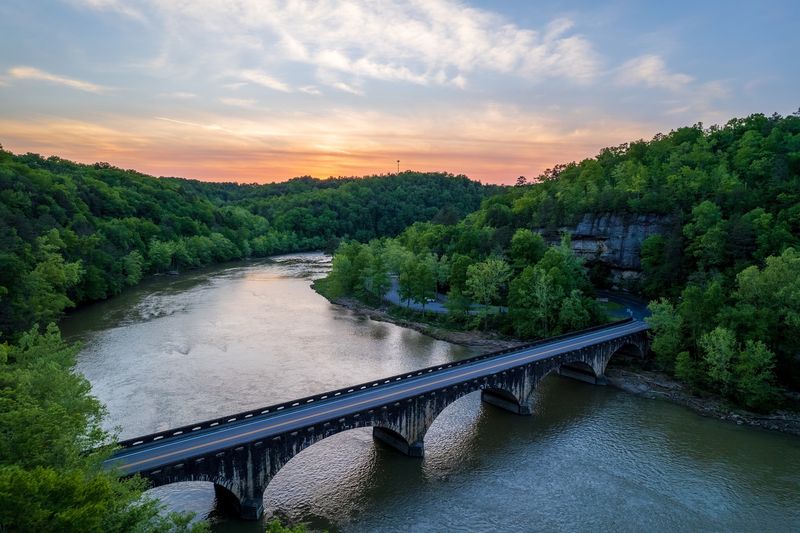
Timing is everything with moonbows. The window for seeing one at Cumberland Falls is specific: you need a full moon night with a clear sky and no heavy cloud cover.
The park posts a moonbow schedule on its official website, which makes planning much easier.
The best months run from late spring through early fall. June, July, and August offer warm nights and strong water flow.
October moonbow nights have a cool, atmospheric quality that many visitors find even more memorable than summer visits.
Arrive at the falls at least 30 minutes before moonrise. Your eyes need time to adjust to the darkness.
Bring a flashlight for the trail but turn it off once you reach the viewing area. Bright lights ruin your night vision and make the moonbow harder to see.
The moonbow becomes visible roughly 30 to 45 minutes after moonrise and stays visible for about two hours as the moon climbs higher. Photographers typically set up tripods on the rocky bank below the main overlook.
A long exposure of 15 to 30 seconds will capture the full color spectrum clearly. Going on a weekend means more company, but weeknight visits feel quieter and more personal.
How Moonbows Form
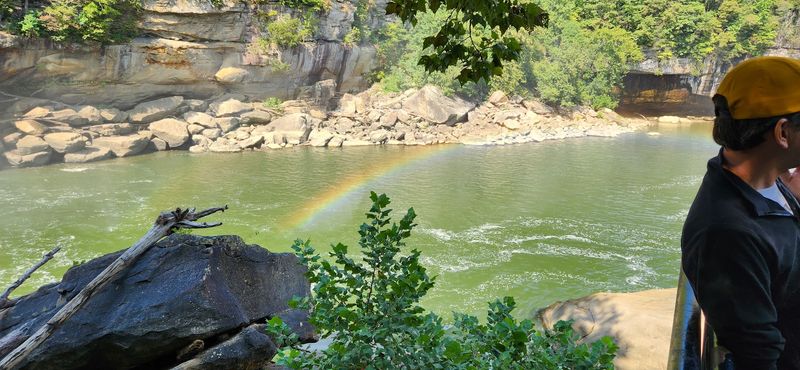
Moonbows form through the same optical process as regular rainbows. Light enters a water droplet, bends as it passes through, reflects off the inside wall, and exits at a specific angle.
That bending separates light into its color components.
The key difference is intensity. Sunlight is about 400,000 times brighter than a full moon.
That lower intensity is why moonbows appear white or pale to the human eye under normal conditions. Our color-sensing cone cells need more light to activate fully.
Camera sensors, however, capture light over time. A long-exposure photo accumulates enough light to reveal red, orange, yellow, green, blue, and violet bands.
The image looks like a normal rainbow, just taken at night. This surprises a lot of first-time visitors who expect to see vivid colors with their own eyes.
The mist from a powerful waterfall creates the ideal environment. The droplets need to be fine enough to refract light but dense enough to produce a visible arc.
Both Cumberland Falls and Victoria Falls generate exactly this type of mist naturally. No artificial conditions are needed.
The science is simple, the result is extraordinary, and the experience of standing in front of one stays with you long after you leave.
What Makes These Two Waterfalls Scientifically Unique
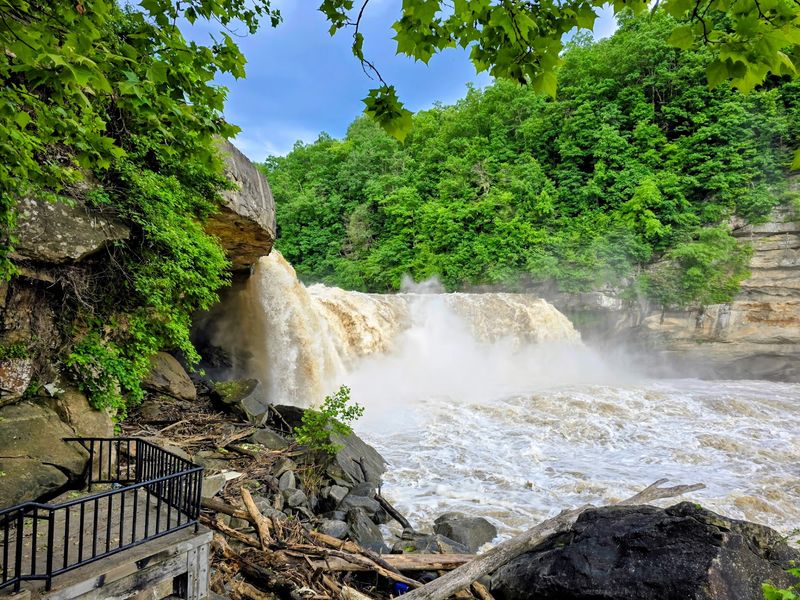
Not every waterfall can produce a moonbow. The conditions required are surprisingly specific.
A waterfall needs significant drop height, high water volume, and the right geographic orientation to allow moonlight to hit the mist at the correct angle.
Most waterfalls around the world fail at least one of these criteria. Some are too narrow.
Some face the wrong direction. Some do not generate enough mist.
Cumberland Falls and Victoria Falls both clear every requirement consistently, which is why they stand alone on this particular list.
Researchers have noted that the angle of the moon relative to each waterfall during full moon nights is nearly identical in effect. That is a remarkable coincidence given that the two locations are on entirely different continents.
The physics does not care about geography.
Both falls also share a characteristic of being surrounded by protected natural land. Victoria Falls has national parks on both sides of the border.
Cumberland Falls is inside a state resort park and surrounded by national forest. That protection keeps light pollution low, which is critical for moonbow visibility.
Without dark skies, even a perfect full moon night will not produce a visible moonbow. Conservation and natural wonder turn out to be deeply connected here.
Staying Near Cumberland Falls
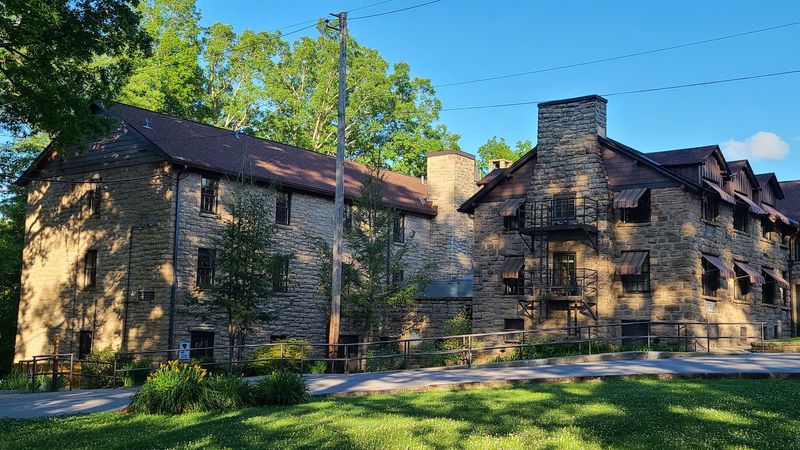
DuPont Lodge sits right inside Cumberland Falls State Resort Park. Staying there puts you steps away from the falls with no commute required on moonbow night.
That convenience is genuinely hard to overstate when you are trying to time a 45-minute viewing window.
The lodge has a classic Kentucky state park feel: stone construction, wood interiors, and a dining room that serves solid regional cooking. Nothing about it feels fancy, and that is part of the appeal.
It is comfortable, practical, and surrounded by forest on every side.
Cabins are also available throughout the park for visitors who prefer more space or privacy. Many regular moonbow visitors book their stays months in advance because full moon weekends fill up fast.
Midweek stays during full moon periods are a smarter option if your schedule allows flexibility.
Waking up the morning after a moonbow visit to walk back to the falls in daylight is a completely different experience. The falls look entirely transformed without the lunar light and mist drama.
Daytime hiking trails around the gorge reveal swimming holes, rock formations, and forest views that make a two-night stay worth every penny. Combining both experiences gives you a much fuller picture of what this place actually offers.
Practical Tips For First-Time Visitors
Check the official Cumberland Falls State Resort Park website before booking anything. The moonbow calendar is listed there with exact full moon dates and optimal viewing times.
Planning around that calendar is the single most important step you can take.
Wear layers even in summer. The mist from the falls drops the temperature near the viewing area noticeably.
Wet rocks are slippery, so waterproof footwear with grip is a smart choice. A small dry bag for your camera gear is also worth bringing.
The main overlook is accessible and well-maintained. For closer views, a rocky trail leads down to the bank below the falls.
That lower vantage point gives photographers the best angle for capturing the full moonbow arc. Arrive early to claim a good spot because the area fills up on full moon nights.
No special permits are required to view the moonbow. Park admission is standard Kentucky state park pricing, which is reasonable.
If you are driving from outside Kentucky, Corbin is easily reached from Interstate 75. The town has plenty of lodging options at various price points for visitors who do not stay in the park itself.
One visit is usually enough to make you want to come back for the next full moon.