Leave The Crowds Behind On These 10 Dreamy New York Bike Routes
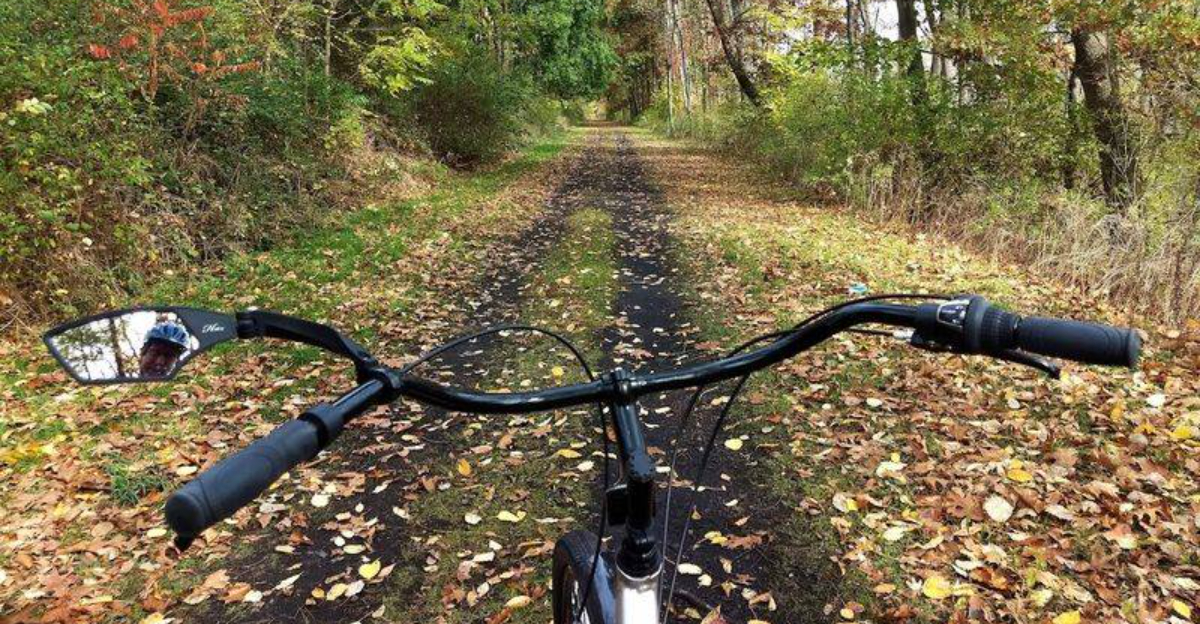
New York loves to surprise you, and not always with skyscrapers and taxi horns.
Some of the best rides in the state are the ones nobody mentions at the trailhead. I learned this by accident, chasing a quiet route somebody swore was nothing special.
It turned out to be the best afternoon I had all summer. These ten paths slip through river valleys, old rail corridors, and gorge country so calm the worst traffic jam involves a family of ducks.
No horns. No gridlock.
Just the hum of your tires and the occasional curious deer. Some follow rivers for miles.
Others tunnel through forest so thick the light turns green.
I gathered the ones that feel like a real escape, not a workout. Pack a snack and pump your tires before you go.
Then point yourself somewhere quiet.
This is the New York most cyclists pedal right past without ever knowing.
1. Ashokan Rail Trail
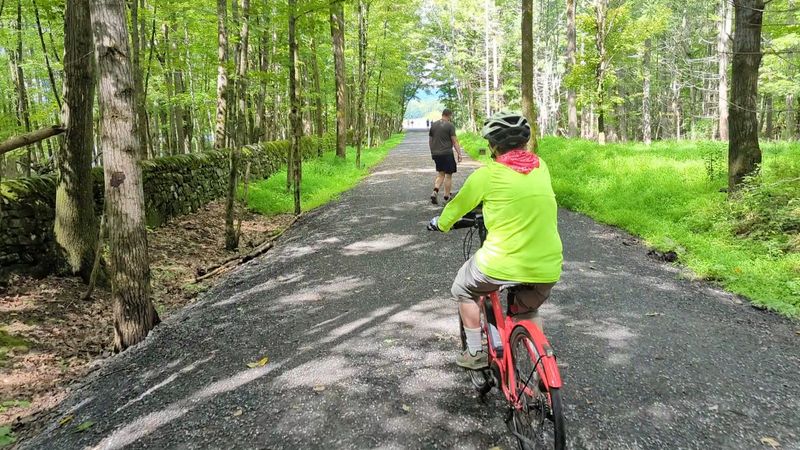
Few bike rides in New York open with a view this dramatic.
The Ashokan Rail Trail runs along the northern edge of the Ashokan Reservoir, and on a clear morning, the Catskill Mountains reflect off the water like a mirror that forgot to hang itself on a wall.
The trail stretches about 11.5 miles and sits on a converted rail bed, so the surface is smooth and the grade is almost completely flat. That makes it genuinely enjoyable for riders of most fitness levels.
Families, casual cyclists, and serious riders all share the path without much friction.
Parking and trailhead access are available at 1285 NY-28, West Hurley. The western sections offer the most dramatic reservoir views, so start early if you want that glassy water reflection before the wind picks up.
Fall foliage here is legitimately world-class, and the crowds stay surprisingly thin even in peak season.
Bring water because amenities along the trail are minimal. The scenery more than compensates for that small inconvenience.
2. Wallkill Valley Rail Trail
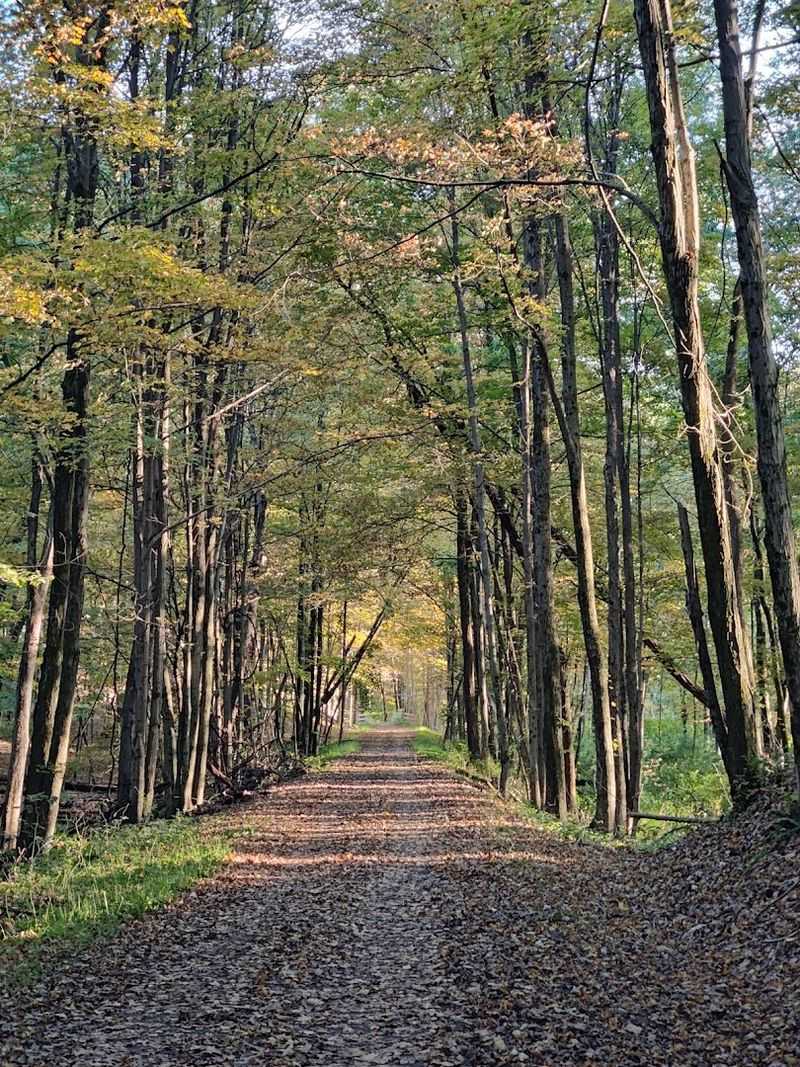
There is something quietly magical about riding through a landscape that looks like it belongs on a postcard someone mailed in 1987 and never arrived.
The Wallkill Valley Rail Trail near New Paltz delivers exactly that kind of unhurried, pastoral beauty that makes you slow down on purpose.
The trail runs approximately 23 miles through farmland, wetlands, and small woodlands along the Wallkill River corridor.
The surface varies between packed gravel and crushed stone, so a hybrid or gravel bike handles it best. Road bikes can manage the smoother sections, but wider tires will keep the ride comfortable throughout.
The trail passes through several small communities, including Rosendale with its impressive stone arch bridge that is worth a photo stop.
Wildlife sightings are common here. Great blue herons, red-tailed hawks, and the occasional fox appear regularly along the route.
The trail connects to the village of New Paltz at its southern end, where post-ride food options are plentiful. Starting from the northern trailhead gives you the best early-morning light across the open farm fields.
This one rewards riders who like their adventures served slowly.
3. Harlem Valley Rail Trail
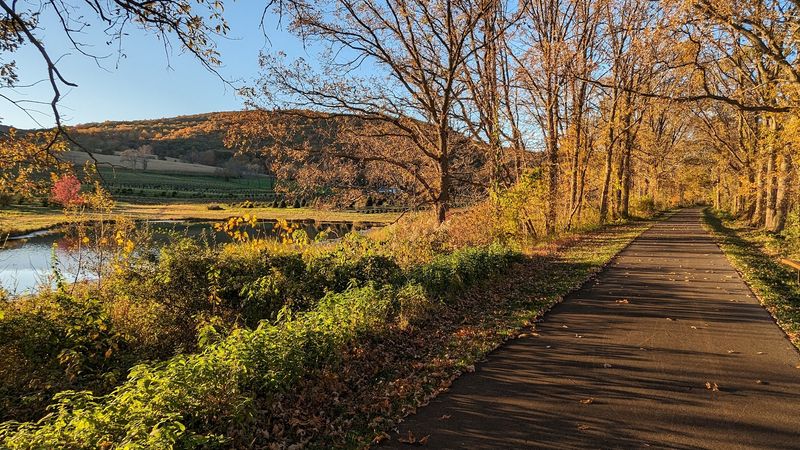
Riding the Harlem Valley Rail Trail feels like someone pressed pause on the modern world and handed you a bicycle.
Located in the far eastern corner of New York, this trail runs through one of the least-developed corridors in the Hudson Valley region, and that is precisely its appeal.
The trail currently spans about 16 miles between Wassaic and Millerton, with the Millerton trailhead sitting at 48 S Center St.
The pavement is well-maintained, the grade is gentle, and the surrounding landscape shifts between open meadows, dense woodlands, and views of the Taconic ridge. It is the kind of ride where you keep stopping to look around.
Millerton itself is a charming small town with good coffee shops and a bookstore that could easily absorb an extra hour of your afternoon.
The trail is popular with locals but rarely crowded, especially on weekday mornings. Keep an eye out for red-tailed hawks riding the thermals above the ridge.
Fall transforms this corridor into a full-color spectacle that rivals anything New England claims to offer. Bring a camera with a real lens, not just a phone.
You will want the resolution.
4. O&W Rail Trail
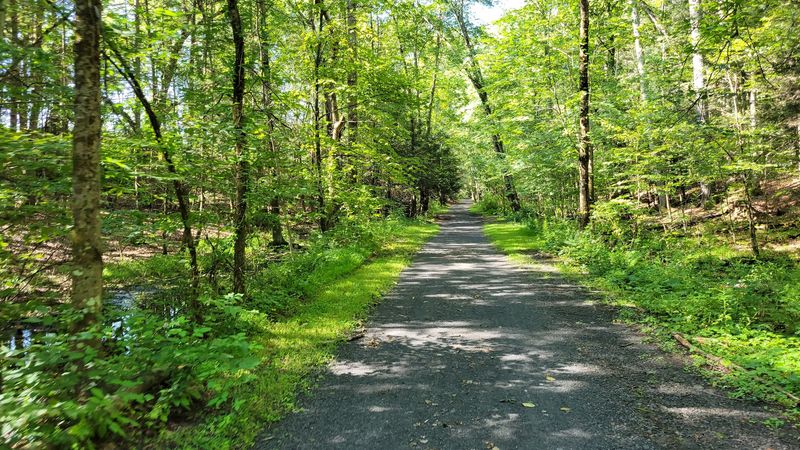
Named after the old Ontario and Western Railway, the O&W Rail Trail in Hurley carries a certain ghost-train energy that makes every pedal stroke feel a little bit historic.
The railway itself ceased operations in 1957, but the corridor it left behind has become one of the Catskills region’s most peaceful cycling routes.
The trail runs through forested terrain in Ulster County, offering a shaded, cool ride even during summer months.
The surface is natural packed stone and gravel, so mountain bikes and gravel bikes are the preferred tools for this job.
The terrain stays relatively flat, following the old rail grade through woodlands and past stream crossings that are genuinely scenic.
Because this trail sees far less traffic than the more publicized Catskill routes, you get long stretches of genuine solitude. Birdsong replaces road noise.
Squirrels make most of the decisions about right-of-way.
The Hurley area also has strong historical significance as one of New York’s oldest stone house communities, so a pre-ride or post-ride walk through the village adds real cultural depth to the day.
This is the kind of route that gets recommended between cyclists in hushed, slightly possessive tones.
5. Old Croton Aqueduct Trail
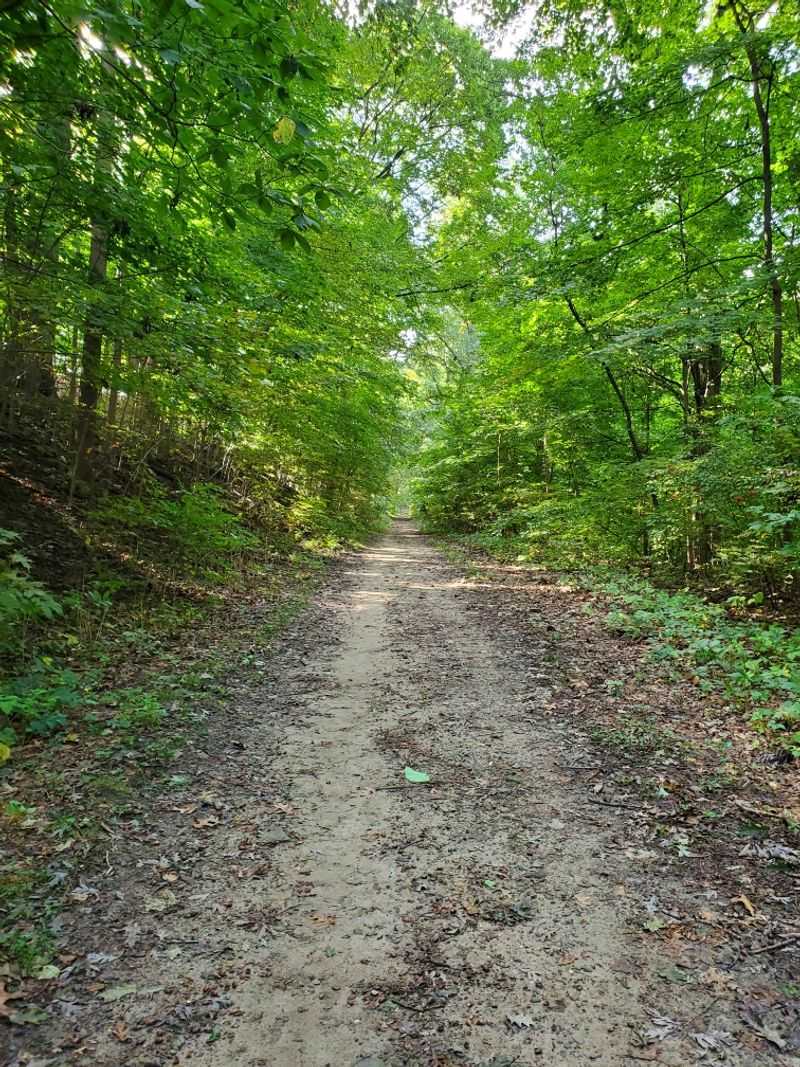
Riding the Old Croton Aqueduct Trail means cycling on top of a working piece of 19th-century engineering, which is either thrilling or mildly surreal depending on your relationship with history.
Built between 1837 and 1842, the aqueduct once carried fresh water from Croton-on-Hudson all the way to New York City, and the trail above it still follows that original path.
The full trail stretches about 26 miles through Westchester County, passing through a series of charming river towns including Ossining, Tarrytown, and Dobbs Ferry.
The surface is mostly packed dirt and grass, which keeps it soft and pleasant but also means wet weather can make sections muddy. A hybrid bike handles it comfortably.
What makes this route genuinely special is the combination of history, nature, and Hudson River views that appear at unexpected moments through the trees.
The trail also passes the Keeper’s House in Croton-on-Hudson, which serves as the main visitor center and a logical starting point.
Some sections pass directly behind historic estates and old stone walls that feel completely out of step with the nearby suburbs. That contrast is actually part of the charm.
Ride it slowly and notice everything.
6. Joseph B. Clarke Rail-Trail
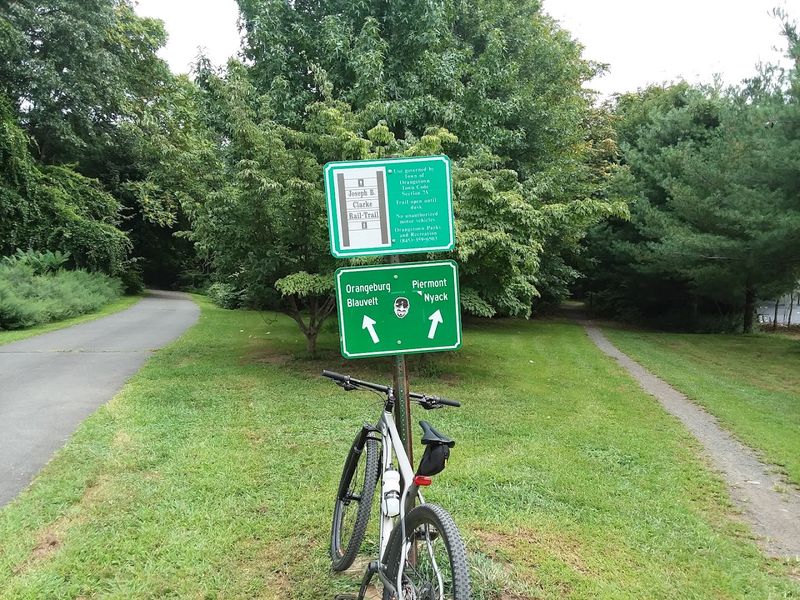
Short does not mean forgettable. The Joseph B.
Clarke Rail-Trail in Orangetown, Rockland County, proves that a five-mile route can deliver an outsized amount of satisfaction when it is designed well and maintained properly.
This one checks both boxes with quiet confidence.
The trail runs between Piermont and Sparkill on a converted rail corridor, passing through a mix of residential neighborhoods, open woodland, and marshland.
The paved surface is smooth and well-kept, making it accessible for road bikes, hybrids, and even kids on smaller wheels.
The flat grade means almost no effort is required, which leaves energy for paying attention to the surroundings.
Piermont itself is worth the visit on its own merits. The village sits at the edge of the Hudson River and has a genuine small-town character with good food options and a long pier that juts dramatically into the river.
Many cyclists combine the rail trail with a ride out onto Piermont Pier for a bonus view of the Tappan Zee area.
The trail is popular on weekends but moves quickly because it is point-to-point rather than looping. Pair it with a riverside lunch and call it a full day without any guilt whatsoever.
7. South County Trailway
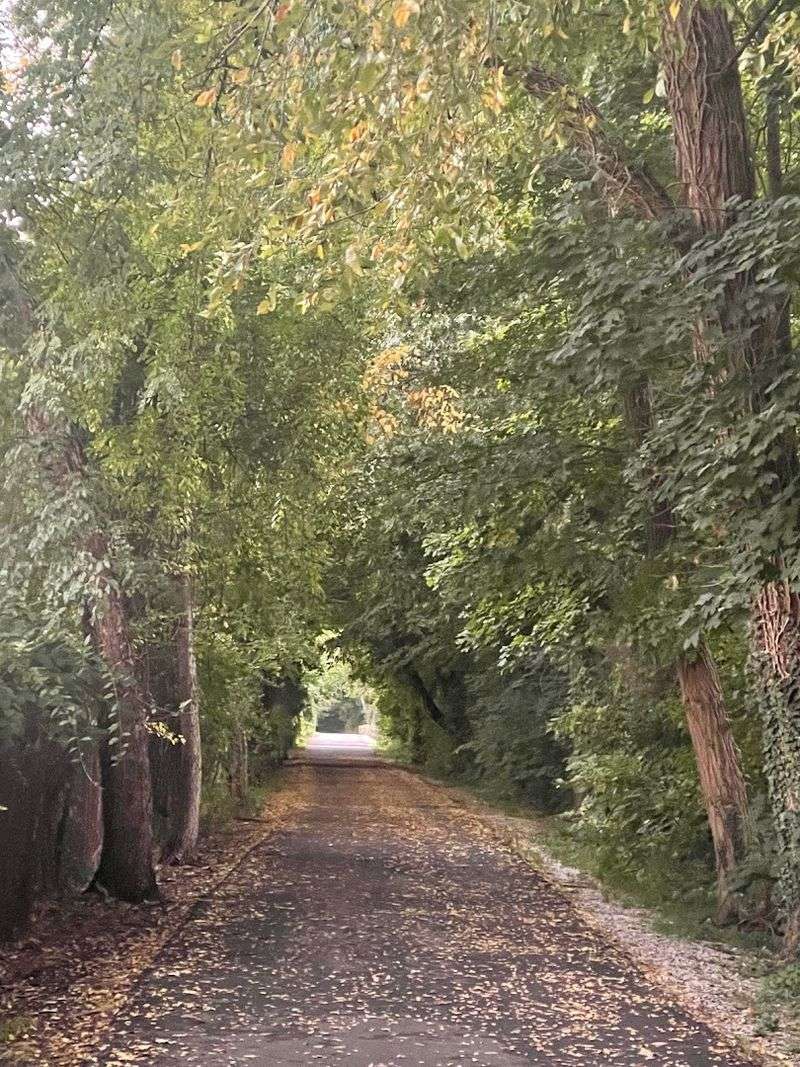
Running from Yonkers northward through Westchester County, the South County Trailway is the kind of route that suburban cyclists quietly rely on while everyone else fights traffic on the parkway.
It connects seamlessly with the North County Trailway to form one of the longest continuous multi-use paths in the New York metro region.
The trail covers about 14 miles on a paved surface that is wide, smooth, and well-marked.
It passes through wooded parkland for much of its length, which creates a surprisingly immersive nature experience despite being just minutes from densely populated communities.
The tree canopy overhead makes summer rides genuinely pleasant rather than punishing.
One of the trail’s best features is its connectivity. Cyclists can link it with the North County Trailway for rides exceeding 35 miles without touching a road.
Parking access points are scattered along the route, so you can tailor the distance to your exact energy level that day.
The trail also passes near several Westchester parks where side trails branch off for additional exploration. Weekday mornings are noticeably quieter than weekends, when the path draws larger crowds of joggers and families.
Still, even at peak times, it never feels chaotic. Just lively.
8. Black Diamond Trail
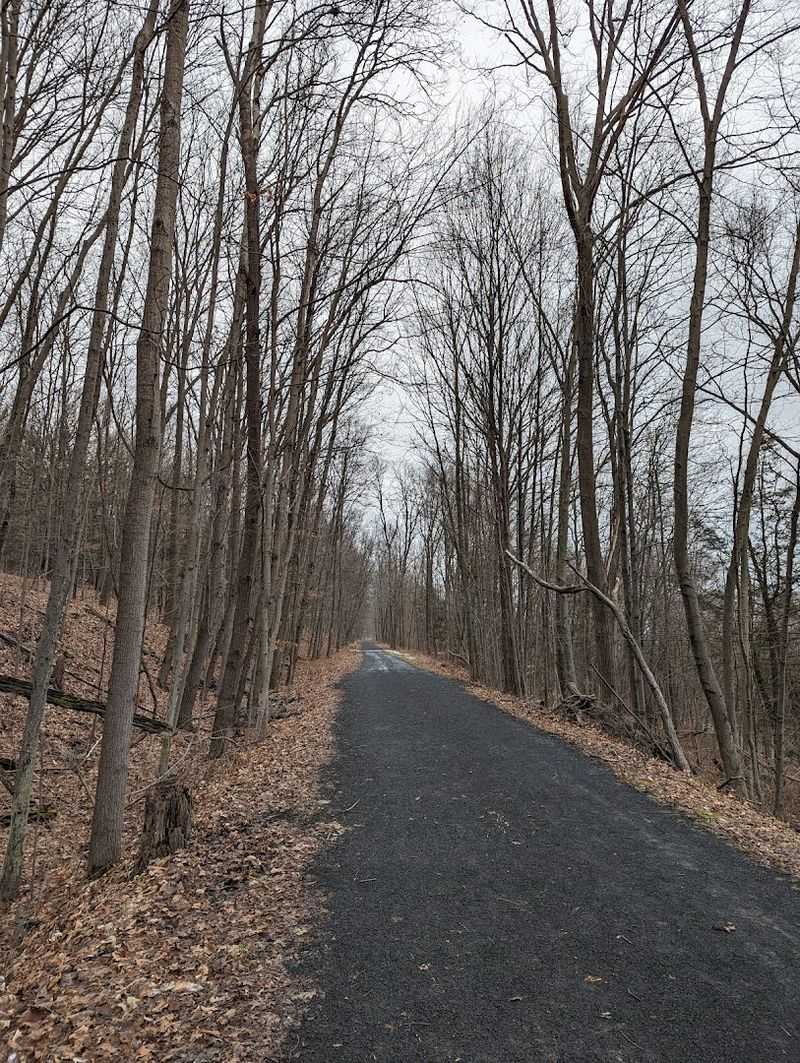
Named after the coal that once traveled through this corridor by rail, the Black Diamond Trail near Ithaca carries a rougher, more adventurous personality than most rail trails in New York.
This is not a casual Sunday spin. It is a legitimately scenic challenge through some of the most dramatic terrain in the Finger Lakes region.
The trail runs about 7.5 miles along the western shore of Cayuga Lake, passing through gorges, over trestles, and through sections of dense forest.
The surface is natural packed stone and dirt, requiring a mountain bike or sturdy gravel bike. Some sections are steep and technical enough to demand attention.
The reward for that effort is a series of views across Cayuga Lake that are simply extraordinary.
Trailhead access is available from multiple points around Ithaca, with parking near the southern terminus off Taughannock Boulevard.
The trail connects with Taughannock Falls State Park, where a short detour leads to one of the tallest waterfalls east of the Rocky Mountains.
Combining both in a single day makes for a genuinely memorable outing. Fall is the peak season for color, but spring brings rushing waterfalls and fresh green that is equally worth the trip.
Come prepared for mud in wet conditions.
9. Catharine Valley Trail
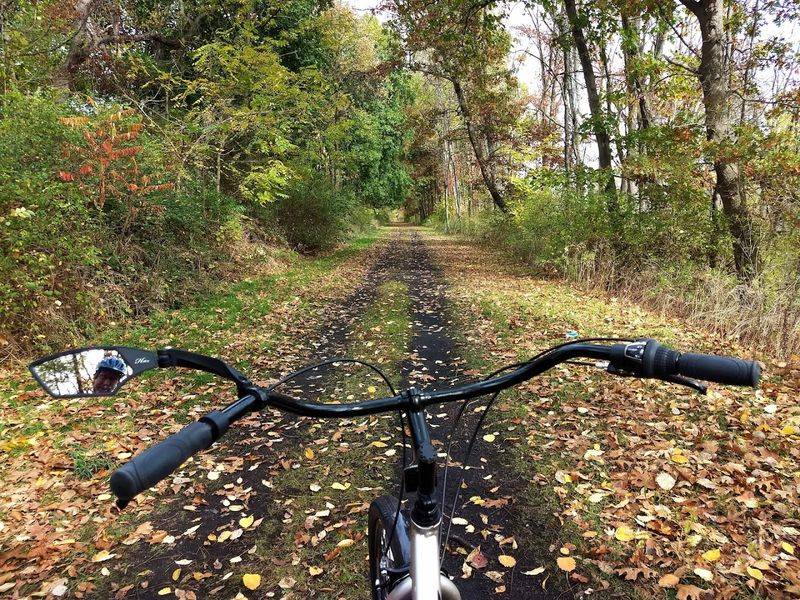
Most people associate Watkins Glen with the famous state park gorge, but the Catharine Valley Trail offers a completely different kind of scenic payoff without the crowds or the steep stone steps.
This trail follows the Catharine Creek through an open agricultural valley that feels genuinely remote despite being close to town.
The trail currently runs about 10 miles between Watkins Glen and Montour Falls, with a paved surface that accommodates road bikes, hybrids, and casual riders without issue.
The flat terrain makes it an excellent choice for families or anyone who wants a long, relaxed ride with maximum scenery and minimum suffering.
The creek is visible for much of the route and provides constant ambient sound.
Spring is particularly spectacular here because Catharine Creek is a known migration corridor for wild steelhead trout, and the birdlife along the valley is exceptional during that period.
The trail passes through farmland and wetland habitats that support a surprising diversity of wildlife year-round. Watkins Glen at the northern end has excellent food options for post-ride recovery.
The southern terminus near Montour Falls is close to Chequaga Falls, a 156-foot waterfall that most visitors completely overlook. That waterfall alone justifies the detour.
Bring a jacket for the early morning mist.
10. Genesee Valley Greenway
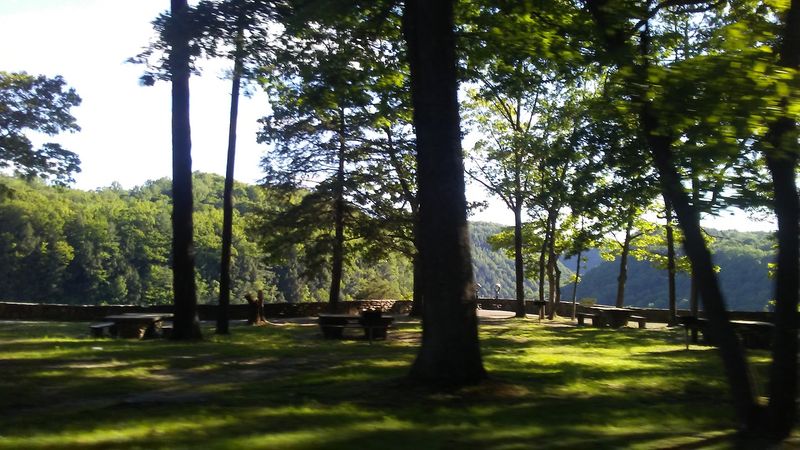
Stretching nearly 90 miles through Western New York, the Genesee Valley Greenway is the kind of trail that makes serious cyclists rearrange their schedules.
It follows the Genesee River and the old Genesee Valley Canal corridor from Portageville south to Rochester, passing through some of the most quietly beautiful countryside in the entire state.
The Belfast section offers a representative sample of what makes this greenway so compelling. Wide river bottomlands, limestone bluffs, and long agricultural vistas stretch in every direction.
The surface is a mix of packed gravel and natural surface, making it ideal for gravel bikes or mountain bikes. The terrain is mostly flat with occasional gentle grades where the old canal locks once operated.
History is woven into almost every mile here.
The canal system that once connected the Genesee Valley to the Erie Canal left behind stone remnants, old lock structures, and towpath grades that tell the story of 19th-century commerce in a way no museum quite replicates.
Belfast serves as a practical access point for the southern sections of the trail, with parking available near the hamlet center.
Camping options exist along the route for those planning multi-day rides. Few trails in New York offer this combination of distance, history, and solitude in a single corridor.