Locals Have Been Lining Up At This Humble New York Restaurant For More Than Four Decades
A steaming bowl of wonton soup can make a chilly New York day feel instantly more manageable.
Add roast duck, crispy pork, and a plate of noodles, and this Chinatown stop becomes very easy to work into the day.
Since 1981, the kitchen has served Cantonese comfort food in a casual dining room that keeps the focus firmly on the plates.
Roast meats hanging near the window offer a tempting preview before you even sit down.
The menu gives hungry visitors plenty to explore, especially when sharing makes another dish possible.
Come with an appetite, because narrowing the order down may be the hardest part.
A Corner That Never Quits
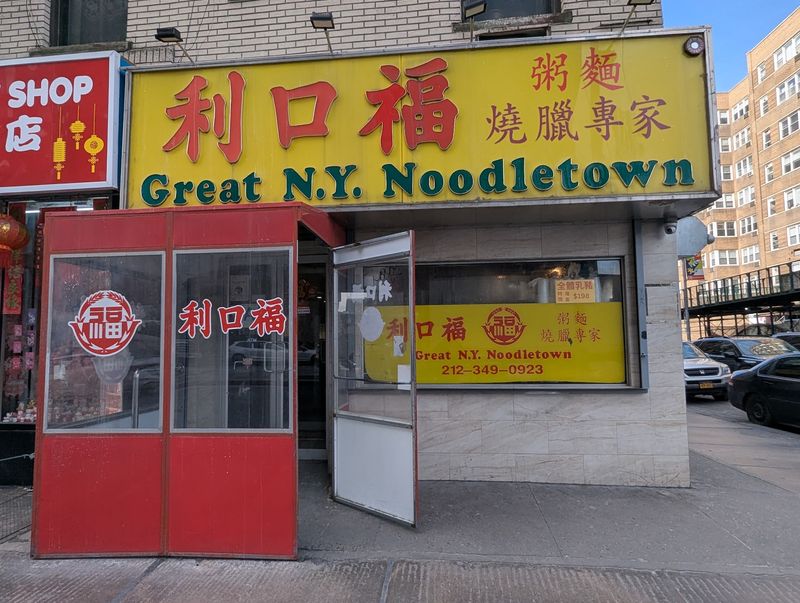
Some corners in Manhattan change faces every few years. This one has stubbornly refused to budge since 1981.
Great N.Y. Noodletown sits right where Bowery meets Bayard Street in Chinatown. Large windows look directly onto one of the neighborhood’s busiest intersections.
The restaurant opened during a period when many new arrivals from Hong Kong were settling in New York.
Its Cantonese menu drew on the noodle shops and roast-meat counters that had long been familiar parts of everyday dining there.
More than forty years later, noodles, congee, barbecue meats, rice plates, seafood, and soups still dominate the menu.
The restaurant temporarily closed for renovations in 2022 before returning to the same corner with an updated interior and its core menu intact.
The windows remain an important part of the experience. Roast meats hang near the counter while the dining room looks out toward the steady movement along Bowery and Bayard.
The restaurant has stayed focused on the Cantonese dishes that established its reputation rather than repeatedly reinventing the menu.
You can find it at 28 Bowery in Manhattan, close to the Manhattan Bridge and several blocks of Chinatown restaurants and shops.
Window Roasts Worth A Closer Look
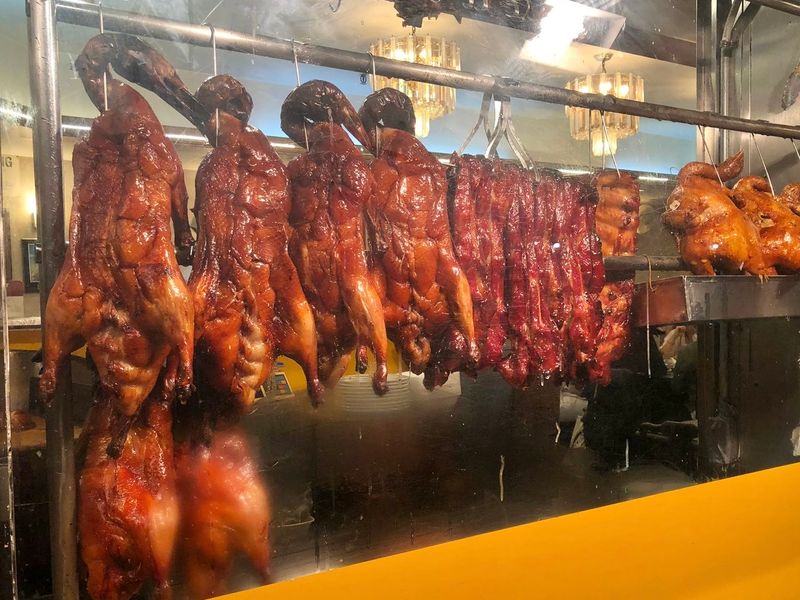
The front window gives diners a useful preview before they even open the menu.
Glossy roast duck hangs beside char siu, roast pork, chicken, and other Cantonese barbecue selections.
This style of cooking is commonly known as siu mei, a Cantonese tradition built around carefully roasted meats prepared for slicing and serving over rice or noodles.
The current menu keeps that part of the restaurant firmly at the center. Roast duck, roast pork, chicken, ribs, and seasonal roast pig can all appear among the choices.
A combination rice plate makes it easy to sample more than one barbecue item without building the entire meal around a single selection.
Ginger-scallion sauce is closely associated with the restaurant’s barbecue dishes and adds a fresh, savory contrast to the richer roasted meats.
Roast duck brings deeply seasoned meat beneath its glossy exterior, while roast pork offers a different balance of tender meat and crisp texture.
The window is more than decoration. It shows one of the clearest links between the current menu and the Hong Kong-style roast-meat tradition that shaped the restaurant from the beginning.
Wonton Soup That Hugs Back
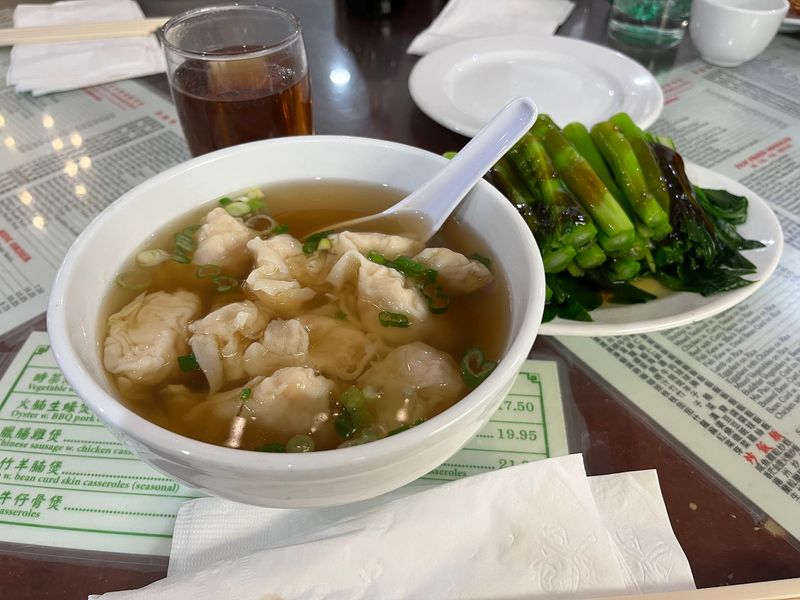
Cold day, empty stomach, one bowl of soup. The formula remains difficult to improve.
Wonton noodle soup continues to be one of the restaurant’s signature Cantonese dishes.
A clear broth surrounds thin noodles and large wontons, creating one of the simplest combinations on a very long menu.
The wontons here are filled with shrimp rather than the more common shrimp-and-pork mixture found at many Cantonese restaurants.
That distinction gives them a different texture and keeps the seafood flavor at the center of each dumpling.
The regular menu also lets diners build on the basic bowl with additions such as roast duck, roast pork, chicken, or beef stew.
A barbecue item with wonton noodle soup is an easy way to combine two of the kitchen’s strongest categories without ordering separate full plates.
Congee offers another comforting option, with versions built around fish, beef, seafood, roast duck, pork, and other additions.
Breakfast begins early here, so bowls of congee and noodles are available well before the usual lunch rush in this part of New York.
Chow Fun And Plenty Of Noodles
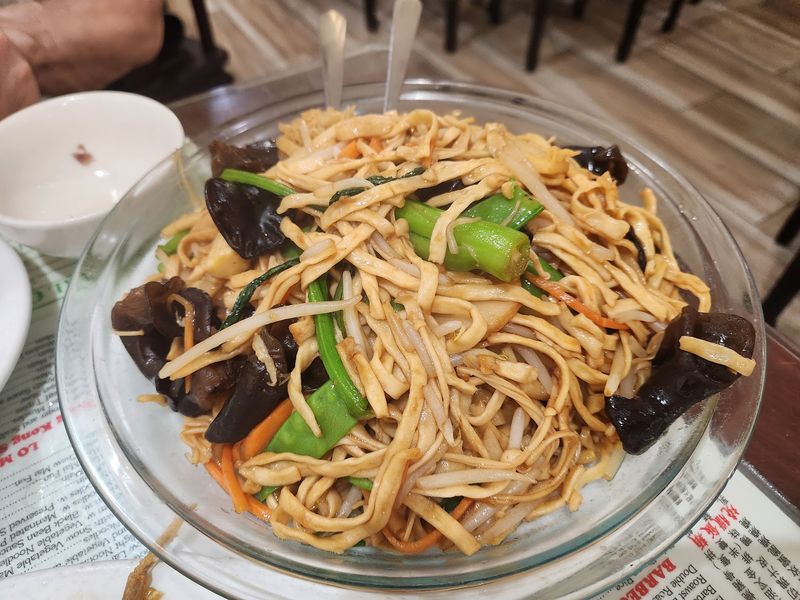
Wide noodles, high heat, and a hot wok give beef chow fun its distinctive character.
The current version combines broad rice noodles with beef, while another option adds vegetables.
A well-heated wok can give stir-fried noodles the toasted aroma commonly called wok hei, one of the defining qualities diners look for in Cantonese stir-frying. Ginger-scallion lo mein takes a simpler route.
The Hong Kong-style steamed noodles rely on ginger and scallions rather than a long list of toppings, making them useful beside richer barbecue or seafood dishes. E-fu noodles offer another texture entirely.
Current versions pair them with combinations such as mushrooms and chives, mixed vegetables, crab meat, or lobster when available. Vegetables deserve room on the table too.
Sautéed pea shoots, baby bok choy, watercress, string beans, eggplant, bean curd, and mixed vegetables provide plenty of choices beside the noodle and meat dishes.
Across New York, beef chow fun is a familiar Cantonese standard, but the breadth of noodle preparations here makes it possible to build an entire meal without ordering the same style twice.
Soft Shell Crab Season
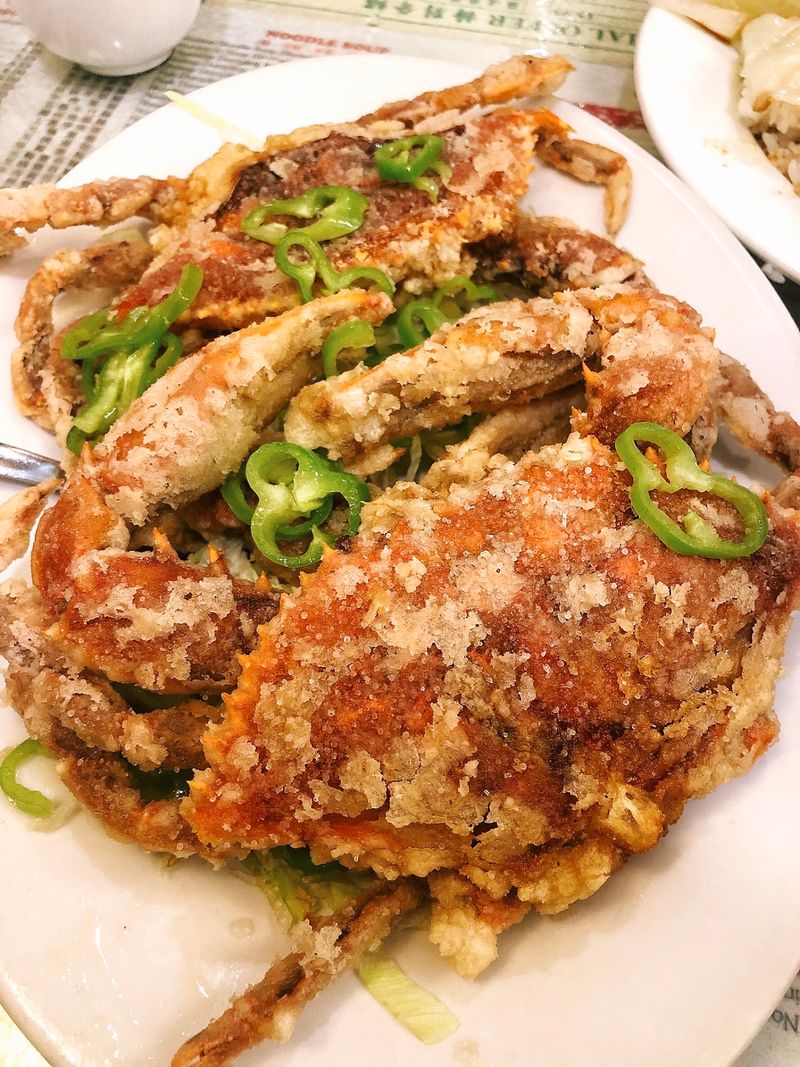
Soft-shell crab remains one of the menu’s most recognizable seasonal dishes.
The salt-baked version appears when the ingredient is available rather than staying on the menu as a guaranteed year-round choice.
The preparation keeps the crab crisp on the outside while seasoning it with the salty, aromatic style used across several seafood dishes. Because the shell is soft during this stage, the crab can be eaten whole.
Availability changes with the season, so it makes sense to look for the special before planning the rest of the order around it.
The seafood section still provides plenty of alternatives when soft-shell crab is unavailable. Salt-baked shrimp, squid, scallops, and sea bass remain part of the regular selection.
A salt-baked seafood combination brings several of those ingredients together on one plate.
Lobster can also be prepared with ginger and scallions or black bean sauce, while clams, shrimp, and other seafood appear in several additional preparations.
The range keeps this part of the menu interesting well beyond one seasonal specialty.
Bright Lights, Zero Fuss
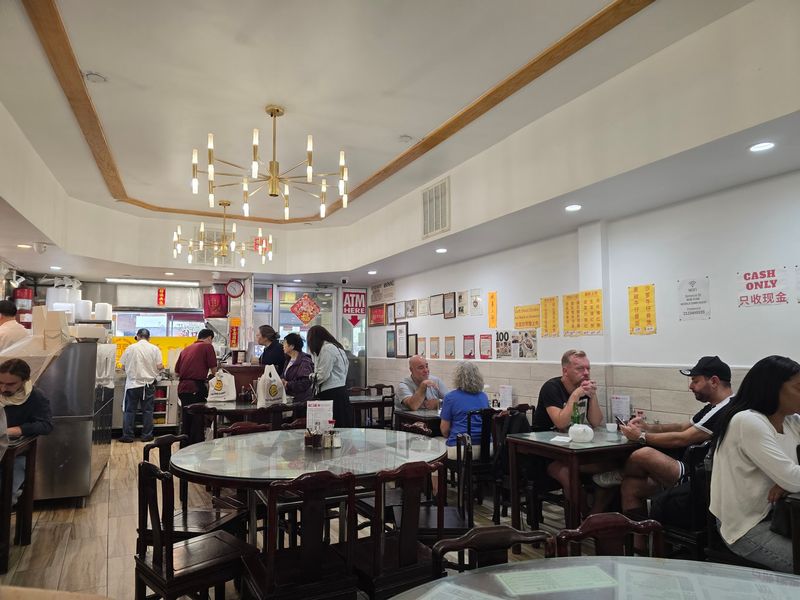
Candlelit formality is not the idea here.
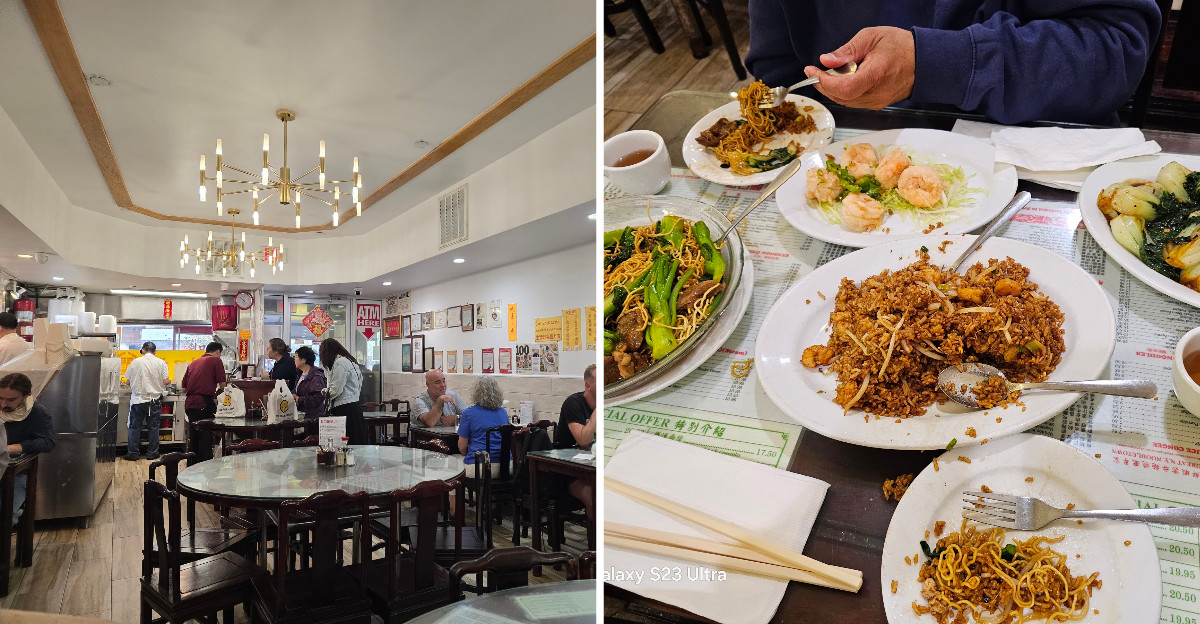
The dining room stays bright and straightforward, keeping the attention on the food and the quick movement between the kitchen, barbecue counter, and tables.
Renovations in 2022 refreshed the interior while leaving the restaurant’s familiar no-frills character largely intact.
Round and square tables fill the room beneath a coffered ceiling and hanging light fixtures.
The barbecue counter remains visible, so the preparation of roast meats stays part of the visual rhythm of the room. Service is first-come, first-served, and reservations are not accepted.
That keeps the experience closer to a traditional neighborhood Cantonese restaurant than a carefully scheduled dining room.
Another practical detail matters before arriving: the restaurant remains cash only. The current schedule starts at 9 in the morning every day.
Sunday through Thursday service continues until 10 at night, while Friday and Saturday run one hour later.
Those hours still make Great N.Y. Noodletown useful for breakfast, lunch, dinner, or a later meal without returning to the much later schedule it once kept.
A Chinatown Cross Section
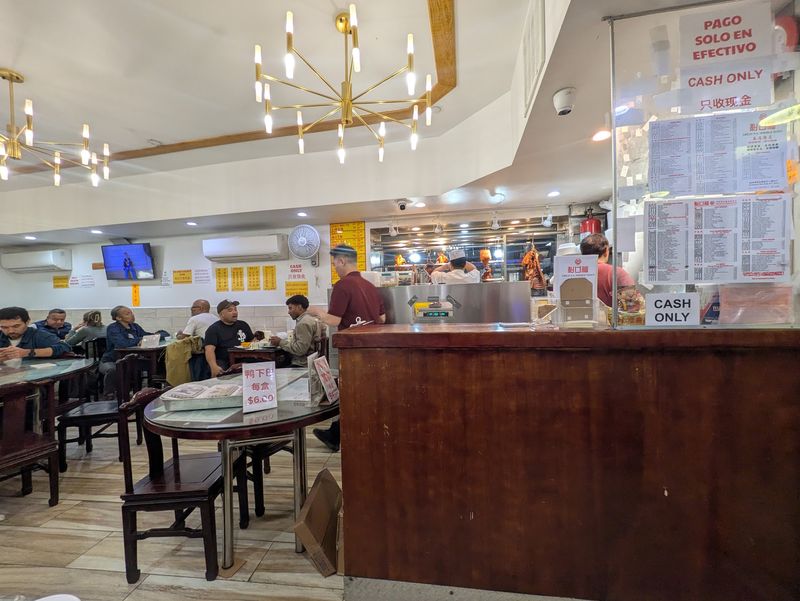
The dining room has spent decades serving a broad mix of people passing through Manhattan Chinatown.
Its location at Bowery and Bayard puts it within easy reach of neighborhood residents, workers, shoppers, and visitors exploring the surrounding streets.
That mix has helped the restaurant remain part of New York’s Chinatown dining landscape for more than four decades.
The menu works equally well for a quick individual meal or a table sharing several larger dishes. Rice plates and noodle soups keep solo ordering straightforward.
Larger seafood dishes, vegetables, noodles, and combination barbecue plates make group meals easy to expand.
The restaurant was also known for much later hours in earlier decades and once stayed open deep into the night. Those hours have changed, but the early opening still makes breakfast possible.
Congee, wonton soup, noodle dishes, and barbecue over rice are all available from the morning onward.
The restaurant has appeared in major food publications and in earlier editions of the Michelin Guide, adding another layer to its long-running Chinatown profile. The room itself remains uncomplicated despite that attention.
The Real Secret Is Staying Focused
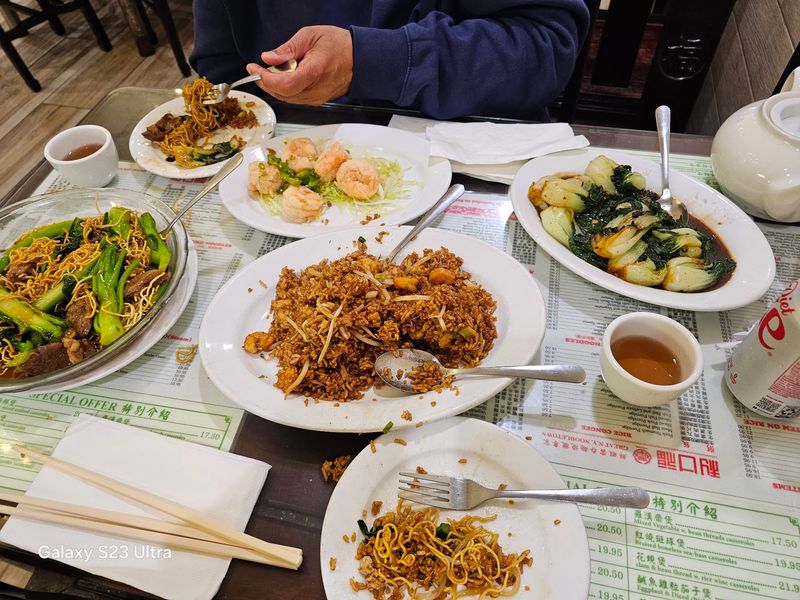
Four decades of restaurant history do not require a complicated explanation.
Great N.Y. Noodletown has continued to center its menu on Cantonese barbecue, noodles, soups, congee, rice dishes, vegetables, and seafood.
The restaurant returned from its 2022 renovation with those familiar categories still firmly in place. Roast duck and roast pork remain visible near the front. Shrimp wontons still anchor several soup and noodle combinations.
Beef chow fun, ginger-scallion lo mein, e-fu noodles, and pan-fried noodles continue to provide very different ways to approach the noodle section. Seasonal soft-shell crab adds something less predictable when it becomes available.
The menu is broad, but its strongest identity comes from dishes that have been associated with the restaurant for years.
Across New York, dining trends change quickly, but this Bowery kitchen continues to lean on the Cantonese cooking that has defined it since 1981.
First-time visitors can build a straightforward meal around a barbecue combination and shrimp wonton noodle soup.
A later visit leaves room for chow fun, vegetables, salt-baked seafood, congee, or one of the seasonal dishes.