Locals Keep Returning To This Historic Connecticut Destination Every Fall, Home To America’s Last Steam-Powered Cider Mill
Fall traditions earn their status slowly.
One visit becomes an annual habit, then suddenly you cannot imagine September or October without making the same familiar trip again.
Here, the centerpiece is a historic mill that still uses steam power to press sweet cider, and the family behind it identifies the operation as the last steam-powered cider mill in the United States.
That alone gives the place a wonderfully old-fashioned pull.
Watching machinery from another era still doing real work feels far more satisfying than seeing it behind museum glass.
Fresh cider adds an obvious seasonal reward, while baked treats make lingering very easy.
Locals have had generations to build memories around this place. You can understand the attachment pretty quickly.
Few fall outings blend working history with seasonal nostalgia quite this naturally, which may explain why people keep making the trip back year after year in Connecticut.
1. Fall Tradition Comes Alive At This Historic Mill
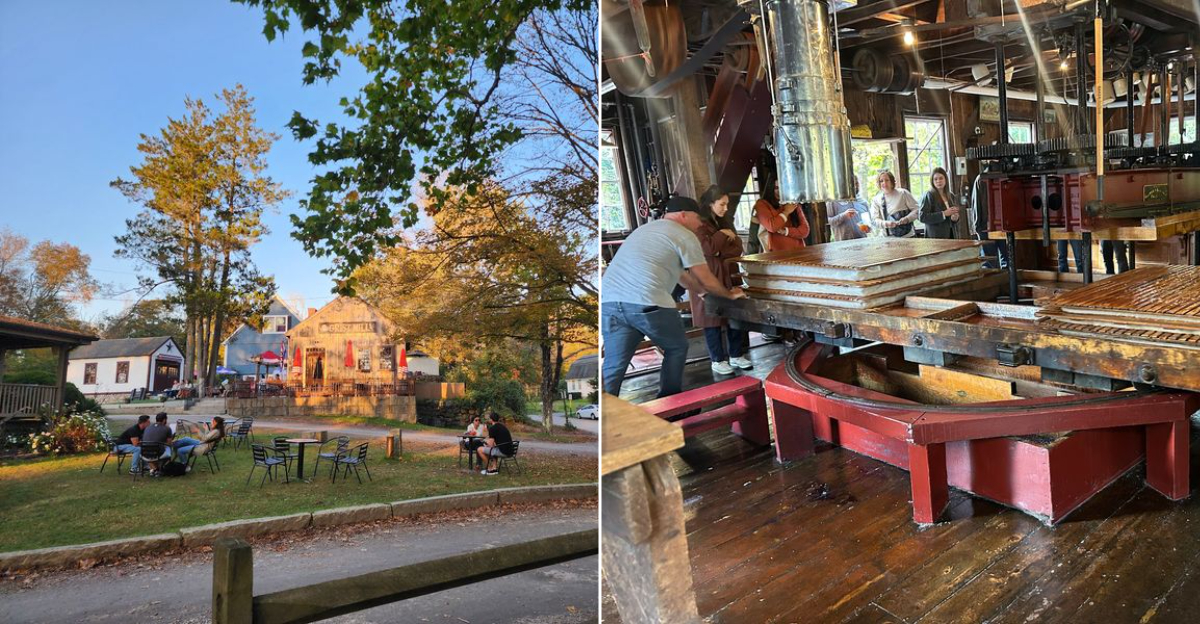
Fall in southeastern Connecticut has a sound, and at this Old Mystic landmark part of it comes from a steam engine and a press that has been squeezing apples since the 1890s. The mill is not a re-creation or a museum display behind glass.
It is a working business that still makes cider much the way it did generations ago.
The season opens on September 1st every year, and for plenty of families in the region that date functions like an unofficial holiday. Cars fill the small lot, a line often wraps around the building, and the air carries the sweet, slightly tart smell of pressed apples mixed with a hint of wood and steam.
What makes a visit stick in your memory is how ordinary it all feels. The history feels lived-in rather than staged here.
The presses run because there is cider to make, and the shop stays busy because people genuinely want warm donuts and a jug to take home.
Plan on more time than you expect. Between watching the machinery, browsing shelves of local goods, and finding a table outside, a quick errand can easily turn into an hour or two of pleasant wandering.
2. The Family Story Goes Back To 1881
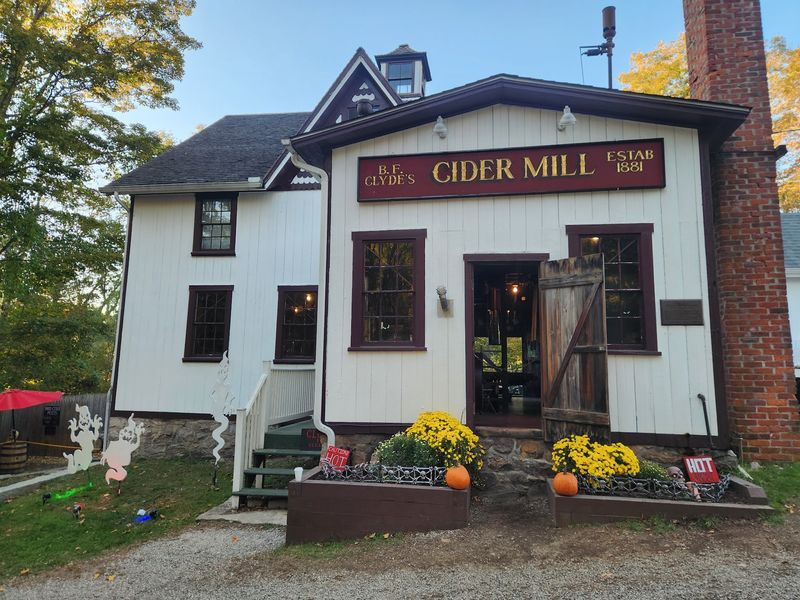
The story starts in 1881, when the founder began making and selling cider in the area. At first he pressed his apples at other local mills, then rented a press of his own before buying the mill outright.
By 1898 the equipment that still defines the place was installed: an all-steel screw press, an apple grater, an elevator, and a cider pump.
More than 140 years later, the business remains in the same family, which is rare for any American enterprise, let alone one that depends on seasonal fruit and antique machinery.
Continuity like that shows up in small ways. The layout of the mill building follows the logic of the original process rather than modern convenience.
Apples move where gravity and old engineering intended them to move.
Visitors often mention how willing the people working there are to explain what is happening and why. Kids asking questions tend to get real answers, not rehearsed lines.
That mix of longevity and approachability is a big part of the appeal. You are not just buying a jug of cider.
You are buying something made with a process that predates cars on these roads, in a place where the family behind the name is still doing the work.
3. Country Roads Lead Away From The Busy Waterfront
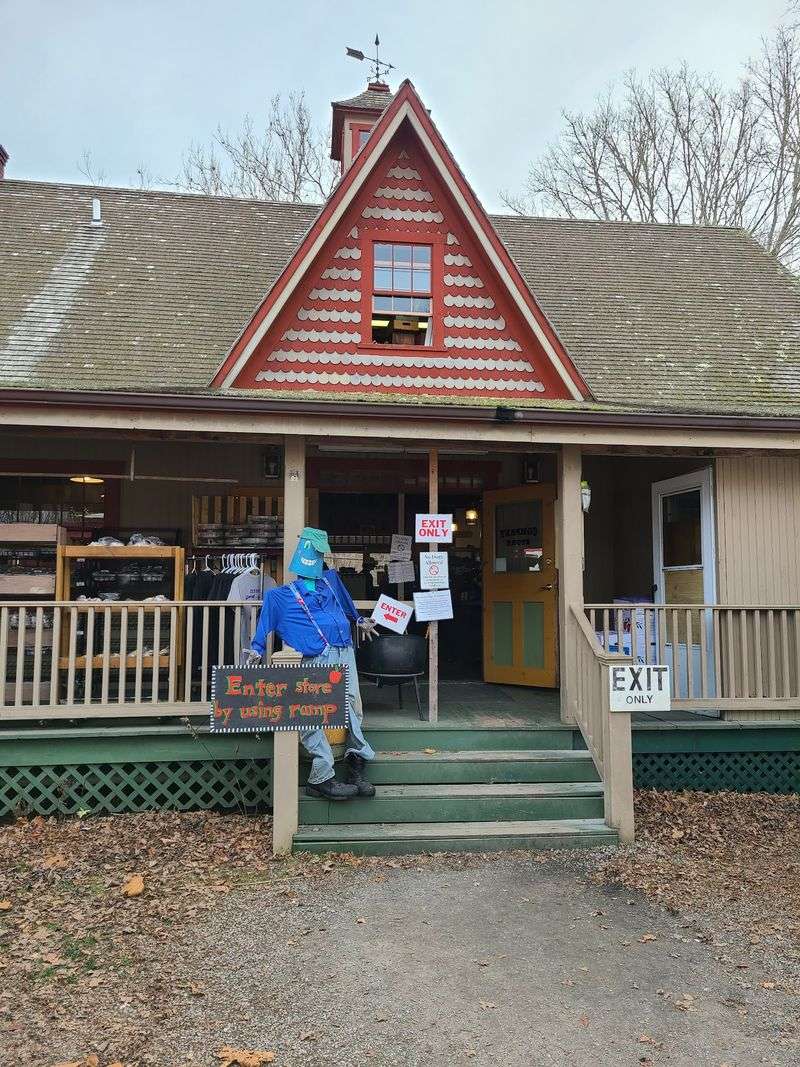
Things change fast once the harbor disappears in the rearview mirror. A few minutes inland, busy sidewalks give way to stone walls, leafy roads, and a much quieter kind of scenery.
That shift is part of what makes a trip to B.F. Clyde’s Cider Mill feel like its own little fall outing.
The mill sits in Old Mystic, roughly three miles from Mystic Village and about five miles from downtown. Getting there brings stretches of country road and old New England homes, especially pretty when the leaves begin turning.
Parking deserves a little planning on busy autumn weekends. The main lot can fill quickly, and an auxiliary lot is available about four-tenths of a mile away at 49 North Stonington Road.
Street parking may also be possible where signs allow, so paying attention to posted restrictions matters.
The grounds and driveway are unpaved, something worth remembering for visitors who prefer smoother walking surfaces. B.F.
Clyde’s Cider Mill welcomes guests at 129 North Stonington Road, Mystic, CT 06355. The approach feels far removed from downtown even though the drive is short.
4. America’s Last Steam-Powered Cider Mill Still Runs
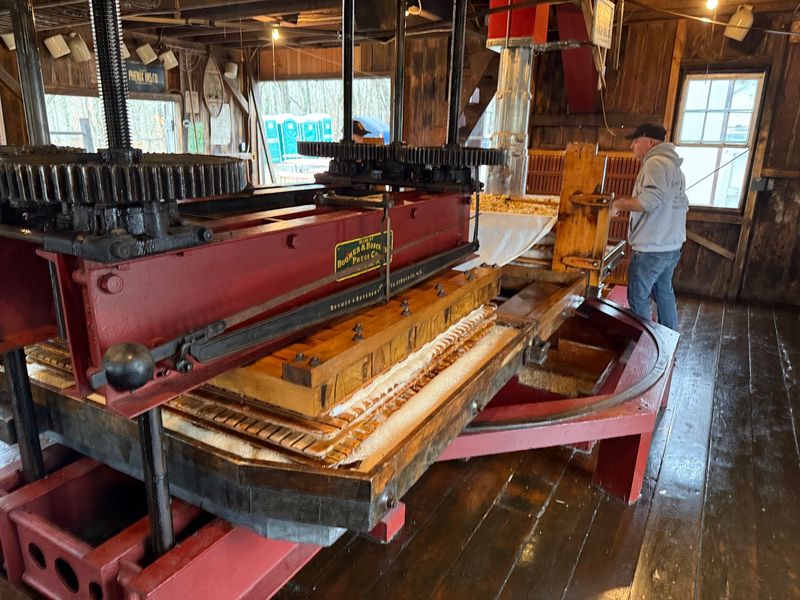
Here is the detail that puts this place on the map: it is the last steam-powered cider mill still operating in the United States. Not the oldest replica or the best preserved.
The last one actually running.
The machinery installed in 1898 continues to do its job, driven by a steam engine rather than an electric motor.
In 1994, the American Society of Mechanical Engineers named the mill a National Historic Mechanical Engineering Landmark, a recognition usually reserved for equipment sitting in museums.
Pressing demonstrations generally happen on Tuesdays, Thursdays, Saturdays, and Sundays between 10 a.m. and noon during the season, though the schedule can shift depending on how much cider needs to be made.
If watching the press work matters to you, aim for those windows and build in a buffer. Arriving right at ten gives you time to find parking and get a spot where you can actually see.
The experience is loud in a satisfying way. Belts move, the press groans under pressure, and steam hisses somewhere behind it all.
Even people who came only for donuts tend to stop and watch, because there is genuinely nothing else like it left in the country.
5. The Old Press Turns Apples Into Fresh Sweet Cider
Cider making looks simple until you watch it happen. Apples, often from local orchards, get sorted and washed, then ground into a coarse, wet pulp by the grater.
The pulp is spread across layers of wooden racks, stacked into a tall column, and rolled under the screw press. Pressure builds slowly.
Juice runs out along the edges and into collection channels, and the whole room fills with a smell that no candle has ever matched.
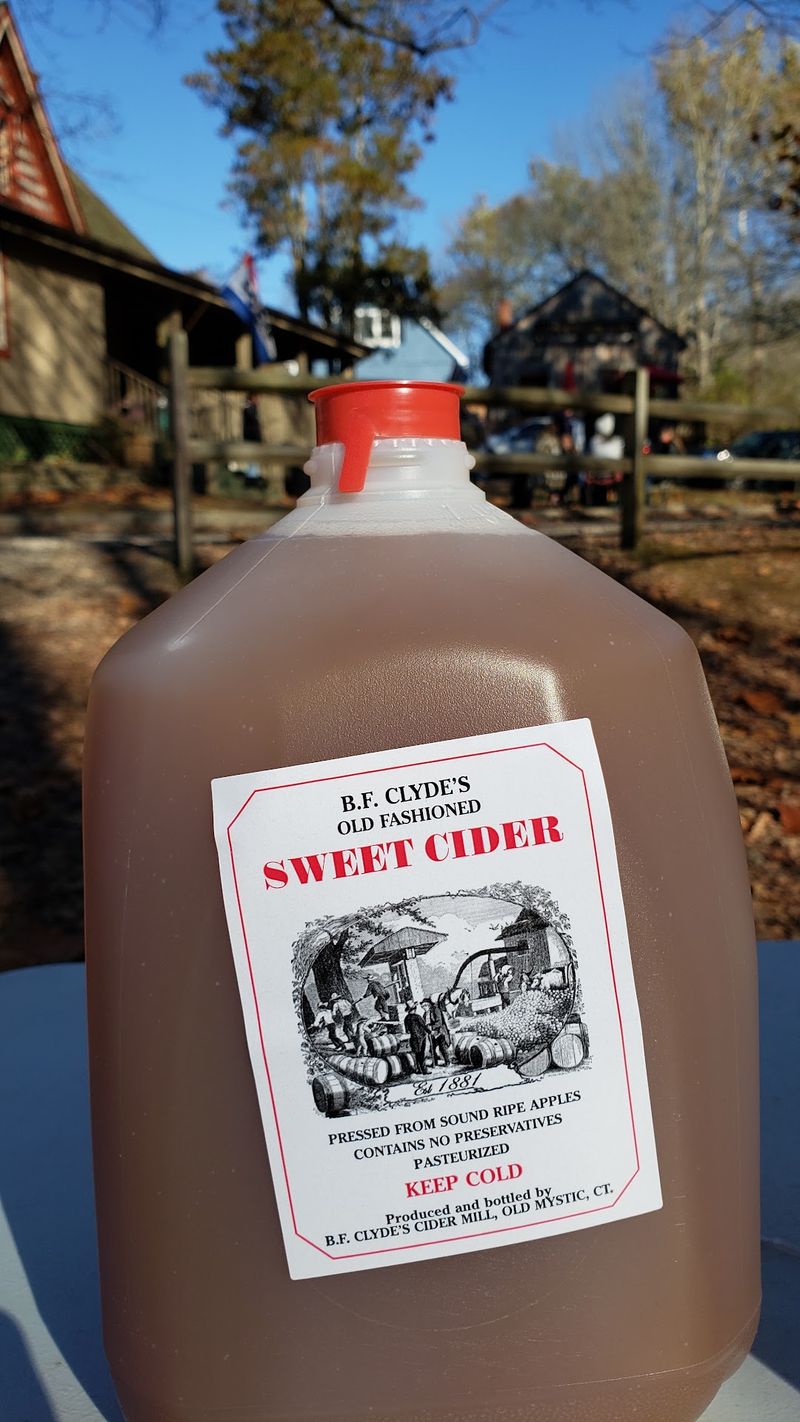
The mill’s fresh sweet cider is flash pasteurized on site, which keeps the flavor bright while making it safe for everyone. Many visitors call it some of the best they have tasted, and it is common to see people leave carrying a full gallon.
Cold cider is the classic choice, but hot cider on a chilly afternoon has its own following, and the cider slushy gets mentioned constantly by families with kids.
One practical tip: cider is heavy and needs refrigeration once you get home. If you are traveling, a cooler in the trunk saves you from cutting your day short.
Watching the press work first and then tasting the result changes the whole experience. The cider stops being a drink and starts being the end of a process you just watched.
6. Cider Donuts Add Another Fall Favorite
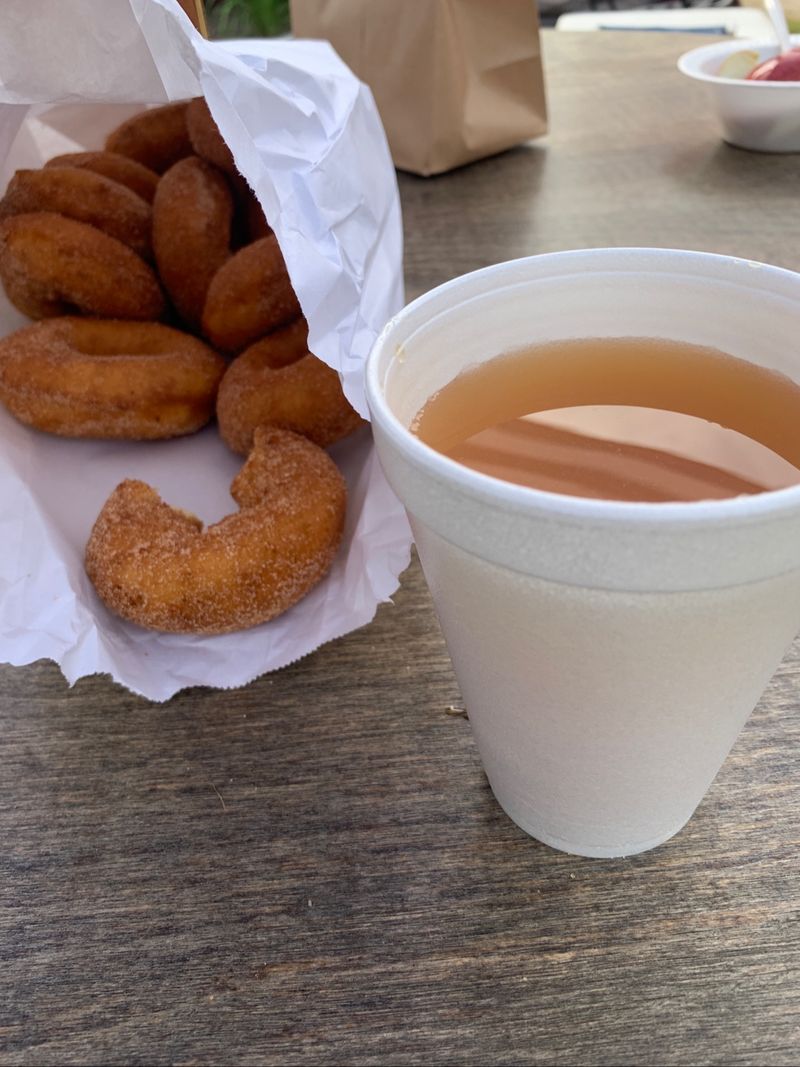
Cider donuts disappear fast here. That is the kind of problem worth having.
At B.F. Clyde’s Cider Mill, the old-fashioned donuts have become one of the biggest reasons visitors line up during the busy fall season.
They are dense, cake-like, and made for eating while they are still fresh. The bakery case offers more than the famous donuts, too.
Apple turnovers, apple dumplings, baked apple pie, jelly donuts in limited quantities, and other sweets can easily turn a quick stop into a much larger order than planned.
The store layout makes waiting part of the experience. Shelves of local goods and seasonal treats give visitors plenty to browse while the line moves toward the counter, which helps even crowded periods feel less tedious.
Buying a dozen cider donuts is an easy choice for families or groups, especially when everyone wants another one before leaving. The mill does not accept call-ahead orders or preorders, so purchases are made on site during the visit.
Save one for the porch. A fresh cider donut tastes especially good with the mill nearby and the fall air around you.
7. September First Starts The Season Every Year
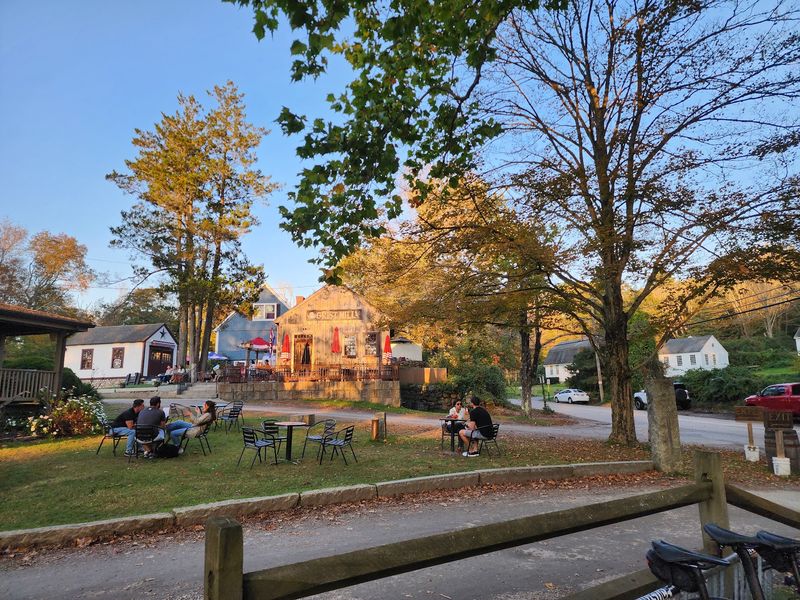
Fall is already rolling here. B.F. Clyde’s Cider Mill is open for the season, and the old steam-powered press is back at work when production calls for it. That makes September a great time to visit before autumn crowds reach their busiest stretch.
The mill opens daily from morning into early evening, rain or shine, throughout its seasonal run. Pressing demonstrations usually happen on select weekday mornings and again over the weekend, although the schedule can shift depending on production needs.
Watching the historic machinery turn apples into fresh sweet cider is one of the most memorable parts of a visit.
Early in the season, warmer afternoons and lighter crowds can make exploring the grounds feel especially relaxed. As foliage deepens, the setting becomes even more colorful, though weekends naturally draw more visitors.
Cool shade around the mill can make mornings feel crisp, so an extra layer is useful once autumn settles in. Holiday hours generally stay consistent during the season, apart from Thanksgiving Day when the mill closes.
Checking the latest schedule before a longer drive is still a smart idea. With the season underway in Old Mystic, there is no need to wait for fall to feel official.
8. The Country Store Shelves Are Worth A Slow Browse
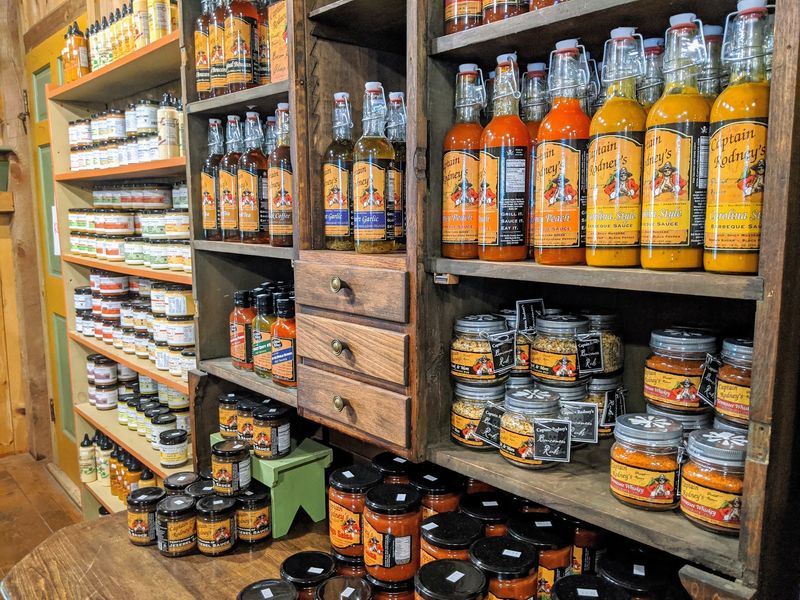
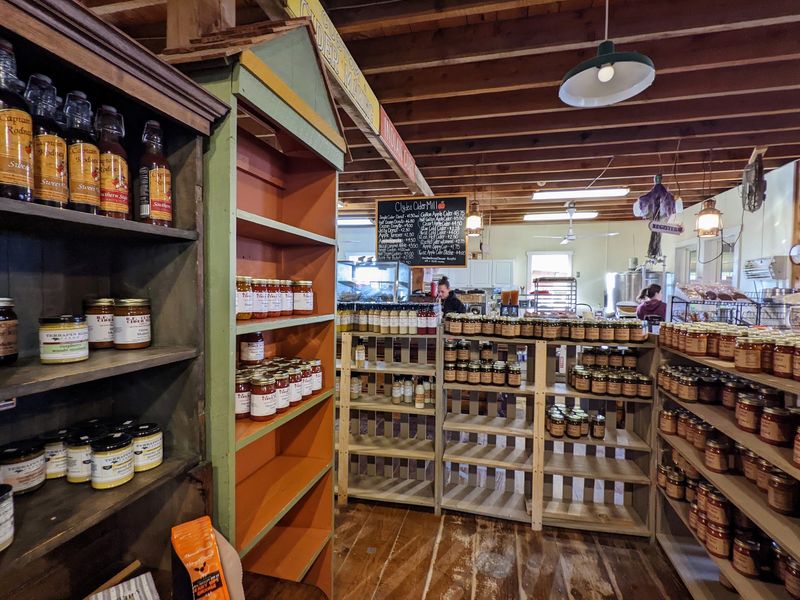
The country-store feeling kicks in before you reach the register. Beside the bakery counter, shelves are packed with jarred goods, local honey, maple products, candied apples, and plenty of small treats that make browsing easy.
The checkout line runs through the shop, so waiting naturally turns into looking. Sauces, dips, pickled vegetables, salsas, and spices fill the shelves, and it is easy to spot something that was never on the original shopping list.
Gift ideas come together quickly here. Local honey and maple cream travel well, while handmade crafts and small keepsakes in the adjoining gift area offer something different from the bakery case.
The selection feels practical without losing the old-fashioned charm that suits the mill.
Access is worth noting before a visit. Some buildings have two or three steps at the entrance, while the main building includes a ramp.
That detail can make planning easier for visitors using a walker or wheelchair. The whole shop rewards a slower pace, especially when the line gives you time to notice what is hiding on the shelves before heading back outside.
9. Six Generations Keep Visitors Coming Back
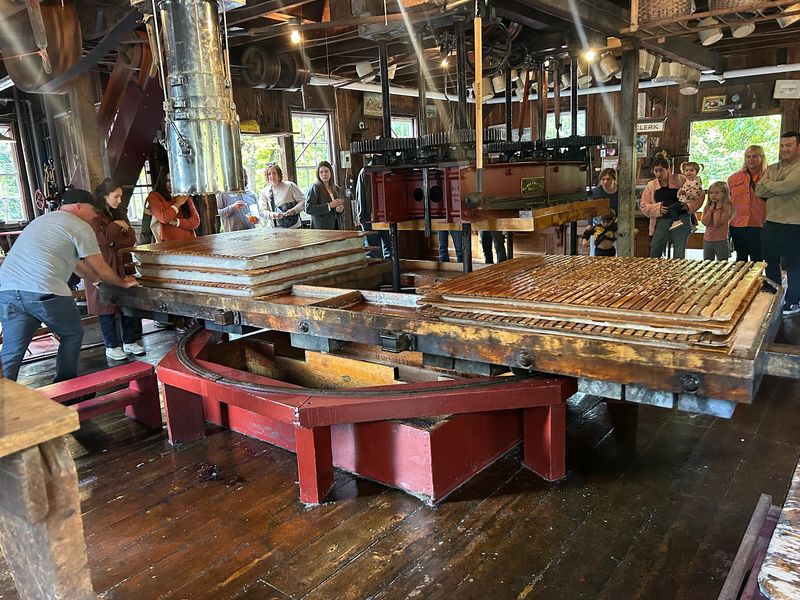
Six generations is a long relay race. Members of the fourth, fifth, and sixth generations of the founding family are involved in running the mill today, which explains why nothing here feels outsourced.
Traditional methods stay in place not out of nostalgia but because they work, and because the people making the decisions grew up with them. The steam-powered press remains the center of the operation.
For a lot of families in the region, a trip out here is inherited. Parents bring the kids they were once brought as, and the routine barely changes: watch the press, wait in line, eat a donut on the porch, carry a jug to the car.
Visitors regularly describe the people working there as friendly and happy to talk about how everything works, which is a big reason first-timers turn into repeat customers.
A place can be historic and still feel completely alive. That combination is unusual, and it is the real reason this mill has outlasted every other steam-powered cider operation in the country.
Go once and you will probably understand why September on the calendar starts to mean something a little different. Plenty of people who came as visitors now plan their fall around it.