Manatees Crowd Into Florida’s Blue Spring The Moment Cool Weather Arrives
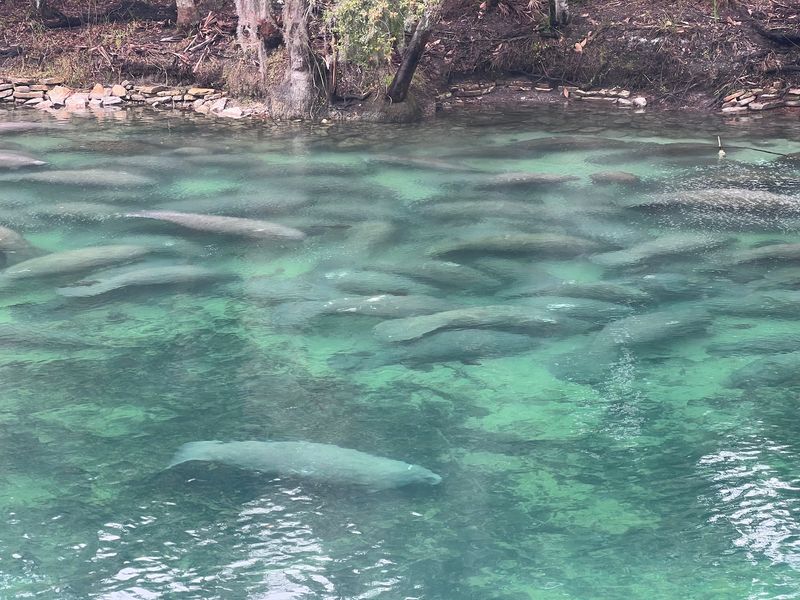
I once drove to a state park expecting a nice walk and maybe a turtle, and I left with a phone full of blurry gray shapes I could not stop showing people. Florida has a spring on the St. Johns River where the water holds steady near 72 degrees all year, and when a cold front rolls through, manatees pour in by the hundreds.
A parking line forms early on chilly mornings, and families return winter after winter to watch the gathering from the boardwalk. Pack a jacket, bring patience, and plan to stand still longer than you expect.
A Spring on the St. Johns River
From the parking area, nothing about the scene shouts spectacle. Picnic tables sit under big shade trees, a paved path heads toward the water, and a small cafe and gift shop hum along quietly near the entrance.
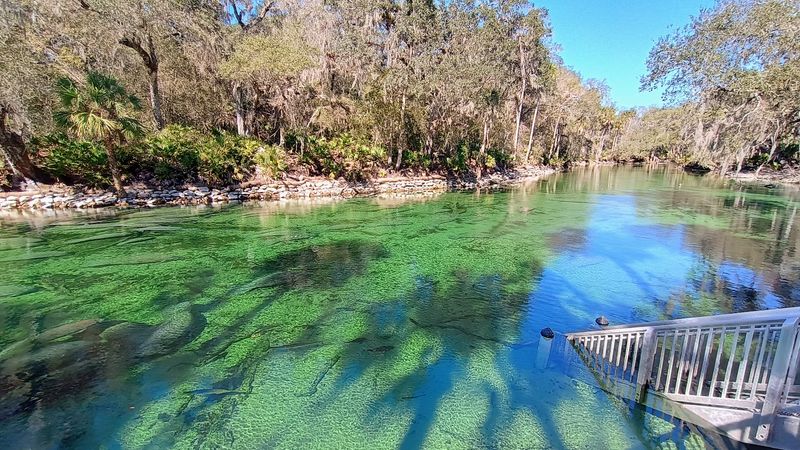
Then the spring run comes into view. Blue Spring State Park sits in Volusia County on the east side of central Florida, where a short, clear run of spring water flows out into the St. Johns River.
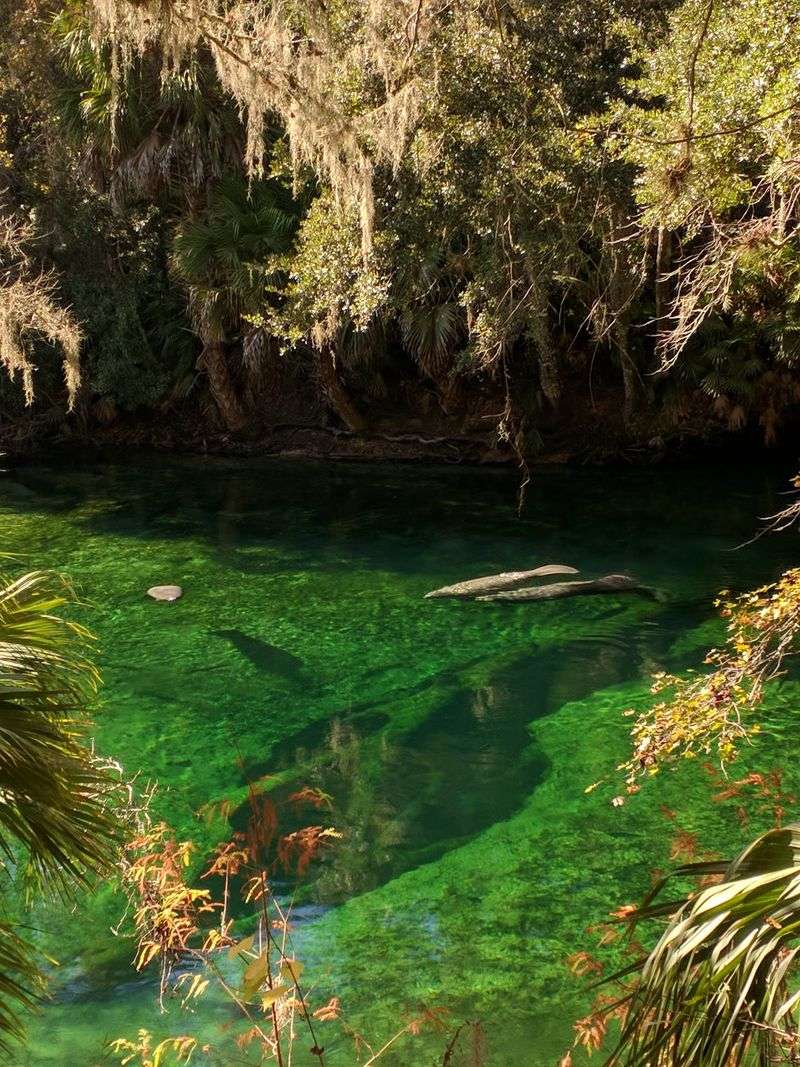
The water is so transparent that fish, sandy bottom, and fallen logs all show up in sharp detail from the railing.
Drive time is manageable from several hubs. Orlando sits roughly 45 minutes away, and the park is an easy detour off I-4 for anyone heading between Orlando and Daytona Beach.
That short hop makes it a practical half-day outing, though a full day fills up quickly once the boat tours, trails, and historic house enter the picture.
Here is the part that matters most in winter: the spring pumps out water at a steady temperature near 72 degrees, no matter how chilly the air turns. For a manatee, that number is everything.
The park sits at 2100 West French Avenue, Orange City, Florida.
Why Cold Fronts Send Manatees Upstream
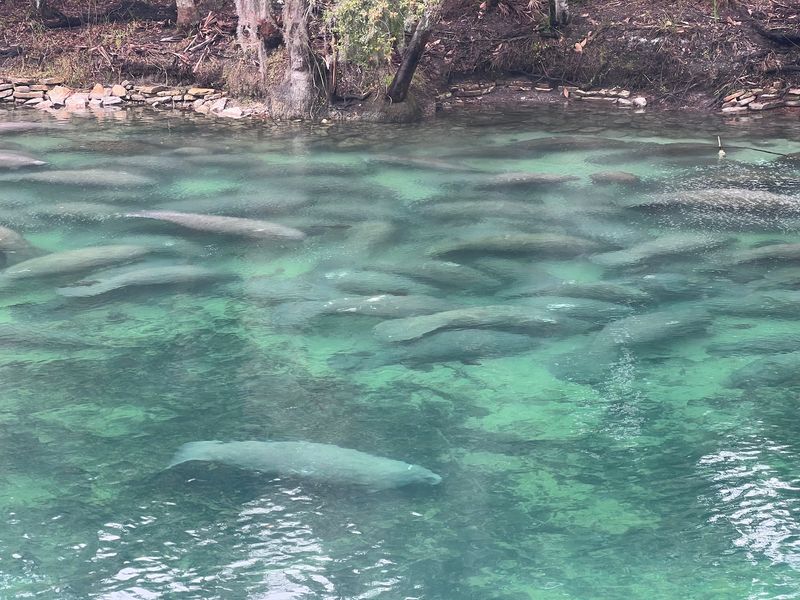
Picture a large, round animal with barely any insulation. Manatees carry only about an inch of fat and run on a slow metabolism, so chilly water hits them hard.
When river temperatures slide below roughly 68 degrees for an extended stretch, manatees risk cold stress, a condition similar to hypothermia. The St. Johns can drop into the 50s after a strong front.
The spring, meanwhile, stays warm, and the animals know exactly where to find it.
Season runs from around mid-November through March. The biggest crowds of manatees show up during the coldest weeks, usually December through February, and especially on the morning after a front pushes through.
On record-setting cold days, Blue Spring has counted nearly a thousand manatees inside its boundaries. Posted daily counts in the hundreds are common during a good cold snap.
Once inside, the animals mostly rest. They float near the surface, hang suspended in the clear water, or settle on the sandy bottom, rising every few minutes to breathe.
On milder afternoons, some slip back out to graze on river plants, then return as evening cools things down. So the best viewing forecast is, oddly enough, a chilly one.
Boardwalk Views Over the Warm Water
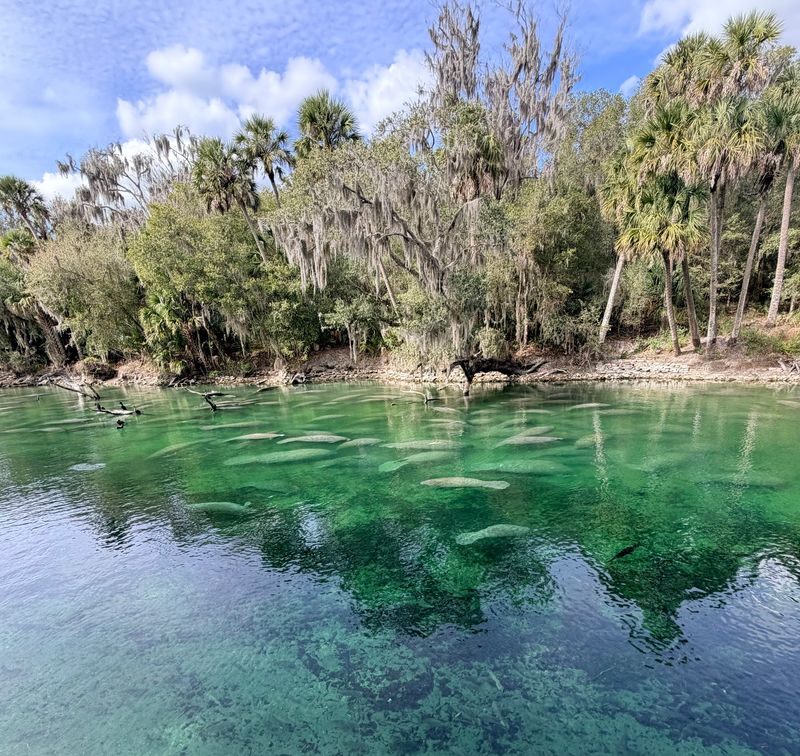
Planks creak underfoot, breath fogs a little in the morning air, and below the railing a dozen gray backs drift in slow motion. That is the boardwalk on a cold January day.
A long wooden walkway follows the spring run from the river up toward the head of the spring, with several viewing platforms along the way. Because the water is so clear, manatees are easy to spot even from a distance, including mothers with calves tucked close alongside.
I caught myself counting whiskers on one snout, which is not a sentence I expected to write.
During manatee season, the spring run closes to swimming and paddling so the animals have an undisturbed refuge. Viewing happens entirely from the boardwalk, which keeps everything calm and lets the animals rest.
A few rules apply, and they matter. Touching, feeding, or offering water to manatees is prohibited, since those habits can change their behavior and put them at risk around boats.
Keep voices low and give the platform space to others.
Tactic worth stealing: walk the entire boardwalk once before settling at a platform. Clusters shift through the morning, and the best view often turns up near the spring head.
Gar, Gators and Other Neighbors
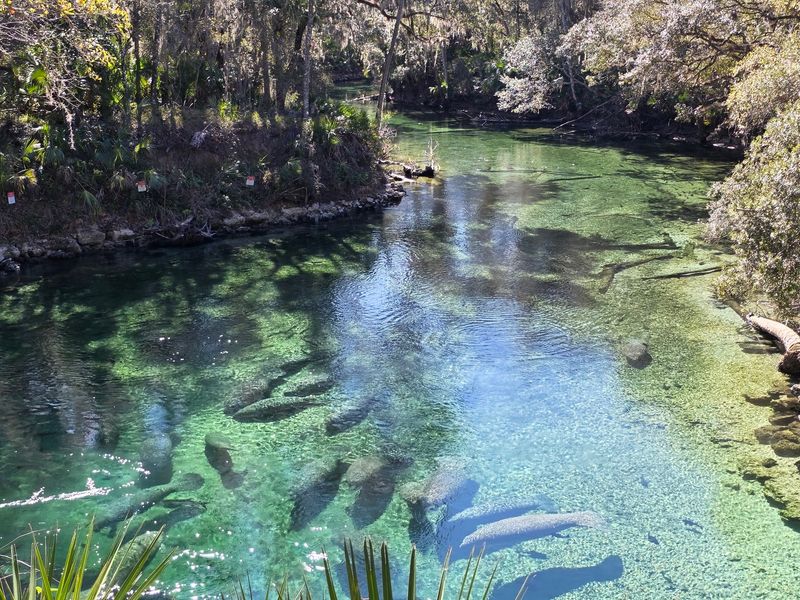
Manatees get the headlines, but the supporting cast deserves credit. Look closer at the clear water and it fills with fish.
Long, needle-nosed Florida gar cruise in lazy lines, sometimes by the dozen. Schools of smaller fish flicker over the sand, and a few surprise species turn up too, including plecos and pacu, both non-native fish that have found their way into the spring.
Since fishing is not allowed in the spring, the fish seem remarkably unbothered by an audience.
Along the banks and out toward the river, alligators sun themselves on logs and muddy edges. Turtles stack up on branches.
Anhingas perch with wings spread to dry, and bald eagles occasionally pass overhead. Early evening, after most crowds leave, tends to bring calmer water for spotting fish and gators near the spring.
A pair of binoculars pays off here. So does a little patience at one spot, since wildlife that seems absent at first often appears after five quiet minutes.
For kids, this becomes a scavenger hunt without the paper list. Gar, gator, turtle, bird, repeat.
Manatees remain the grand prize in winter, yet the rest of the lineup keeps things lively year-round.
Out on the River by Boat or Kayak
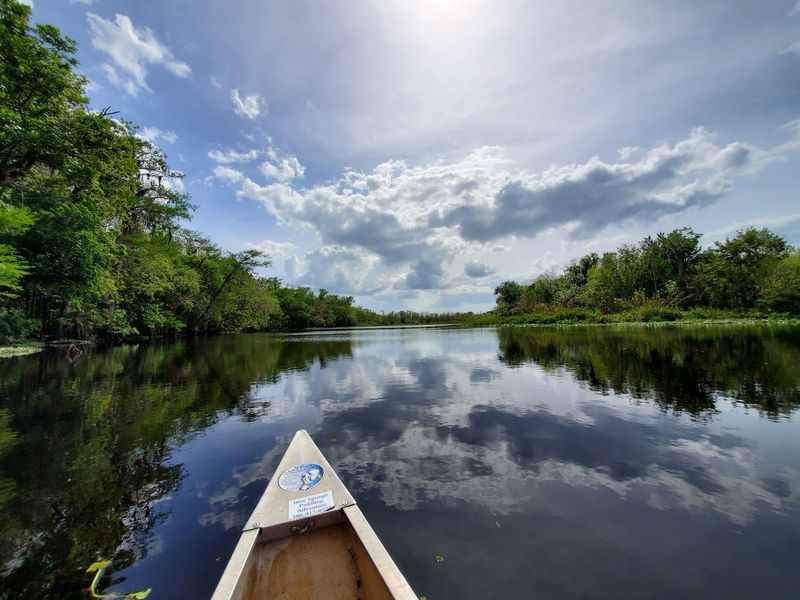
Some of the best wildlife lives beyond the spring run, out on the wide, dark St. Johns River. Getting there is easy.
A narrated boat tour departs from the park and runs about two hours, cruising past wading birds, turtles, and alligators along the shoreline. Captains make a point of pointing things out so everyone on board gets a look, and the boat can accommodate a wheelchair.
Expect a few groan-worthy jokes from the guide as a bonus feature.
Paddlers have their own options. Canoes, kayaks, and paddleboards are available to rent, or bring your own.
Outside of manatee season, tubes can also be rented for floating the spring run. Keep in mind that the spring run closes to paddling and swimming during winter, so cold-weather paddling happens on the river instead.
One timing trick helps on busy winter days. If a boat tour is booked, let the ranger at the entrance know, since that can move you ahead in the entry line and save a long wait.
Wear layers on a winter cruise. The river breeze feels colder than the parking lot, and a sunny forecast in Florida still can turn brisk on open water.
The Old Thursby House and Steamboat Days
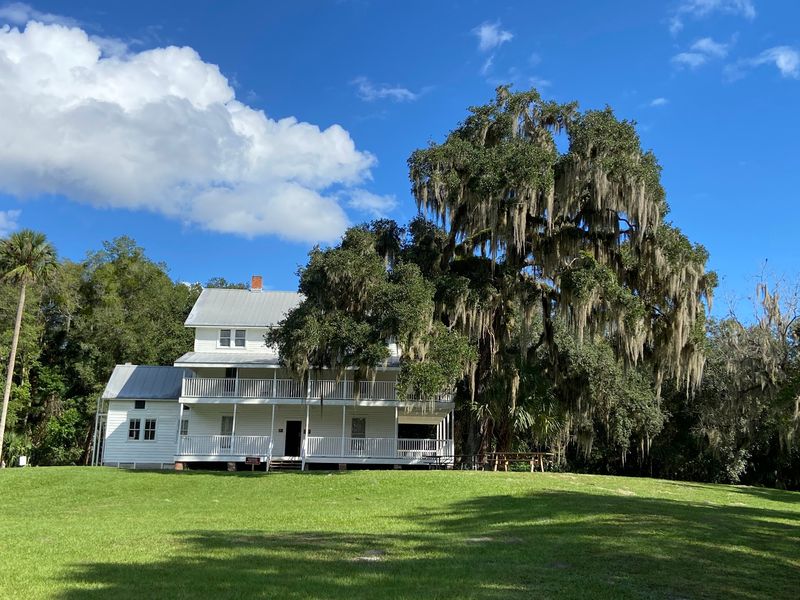
Long before anyone lined a boardwalk with cameras, steamboats chugged up the St. Johns carrying people and goods. A reminder of that era still stands on the property.
The historic Thursby House, a large wooden home on a rise above the water, is open to explore. Inside, exhibits explain what life along the river looked like when steamboats ran regular routes, and a guide is often on hand to share stories about the family who lived there and how the area grew.
The porch alone offers a fine look back toward the spring.
Why does this matter on a manatee trip? Because it adds depth.
Standing in a house built for river traffic makes the St. Johns feel less like scenery and more like a working highway with a long past.
Budget a short stretch of time for the house, perhaps between a boardwalk loop and lunch. It makes a nice warm-up break on a cold morning too.
Kids who lose interest in history exhibits can usually be bribed with the promise of more manatees afterward. That strategy has a perfect success record, at least in my small sample.
Trails, Picnics and Fireflies After Dark
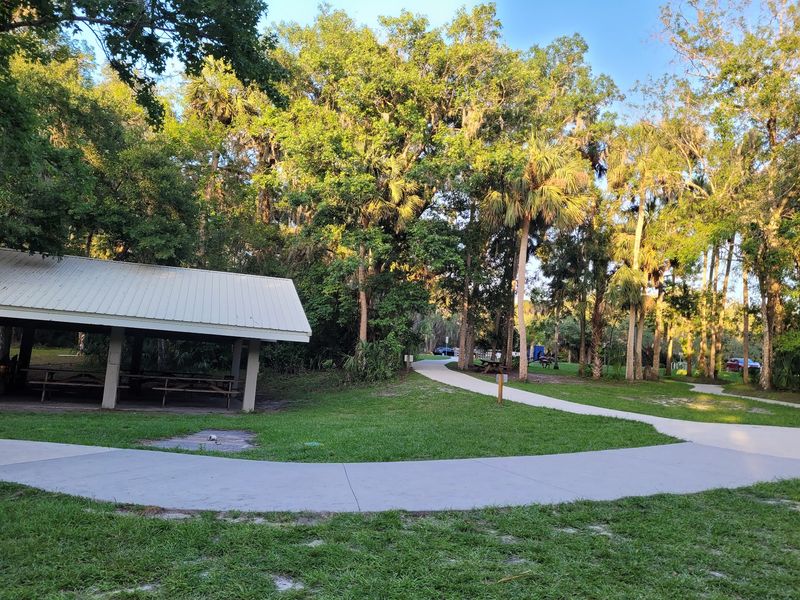
Grills smoking, kids darting toward the playground, a family spreading lunch across a table under the oaks. Midday at the park often looks like a neighborhood cookout.
Picnic tables sit throughout the grounds, many with grills nearby, and there are ample restrooms, a canteen, and a gift shop for forgotten snacks. A playground keeps younger children busy between rounds of wildlife watching.
A paved walking path follows the spring, and dirt nature trails wind off beneath heavy tree cover for a quieter stroll.
Want to stay overnight? The park has cabins, clean and updated, with linens provided and kitchens stocked with pots, pans, and utensils.
Air conditioning handles summer, and staying on site means beating the entrance line the next morning.
Spring brings a different kind of show. During firefly season, the forest along the boardwalk lights up after sunset with thousands of tiny flashes blinking in waves.
Rangers manage the crowd and ask everyone to keep lights low. Come early for parking, pack bug spray, and plan to stand very still.
Summer turns the spring into a swimming hole, with steps leading straight into the cool water for easy access and snorkeling over the fish.
Planning a Winter Visit to Florida’s Manatee Refuge
Timing decides almost everything here. Cold weekday mornings deliver the biggest manatee counts with the smallest crowds, and the day after a front is the sweet spot.
Expect a line. During manatee season, the wait to get into the park can stretch to an hour, and the lot fills quickly on chilly weekends.
Arriving early helps, and so does checking the official Florida State Parks website before driving out, since entry rules and schedules change. At certain times of year, a reservation is required to enter, so confirm that step ahead of time.
Cost stays friendly. Entry is a modest per-vehicle fee, a few dollars, and Florida State Parks offers passes, including a free lifetime pass for qualifying disabled veterans.
Rentals and the boat tour carry separate charges.
Accessibility is solid, with a paved path, boardwalk platforms, and a tour boat that fits wheelchairs.
For a longer day, pair the visit with nearby DeLand’s historic downtown, a short drive away, for lunch and a stroll. Then head home warm, a little windblown, and already watching the forecast for the next cold snap.
Manatees will be waiting, piled into that 72-degree water like it is their favorite blanket.