Many People Live Their Whole Lives In Georgia Without Visiting These 13 Incredible Places
A coworker once asked me to name my favorite waterfall in Georgia. I could not name a single one.
I had lived here for thirty years. I knew every shortcut to the airport and every decent lunch spot within five miles of my office.
That was the whole map in my head. The question bothered me for weeks, so I started driving.
What I found embarrassed me. Mountains I had never climbed.
Swamps full of alligators and glowing water. Islands where wild horses walk the beach.
Mounds built by people a thousand years before my street existed. All of it sat within a tank of gas the entire time.
Georgia kept offering, and I kept saying no without realizing it. This list is my apology.
Every place on it deserves a full day, and a few deserve more.
1. Providence Canyon State Park, Lumpkin
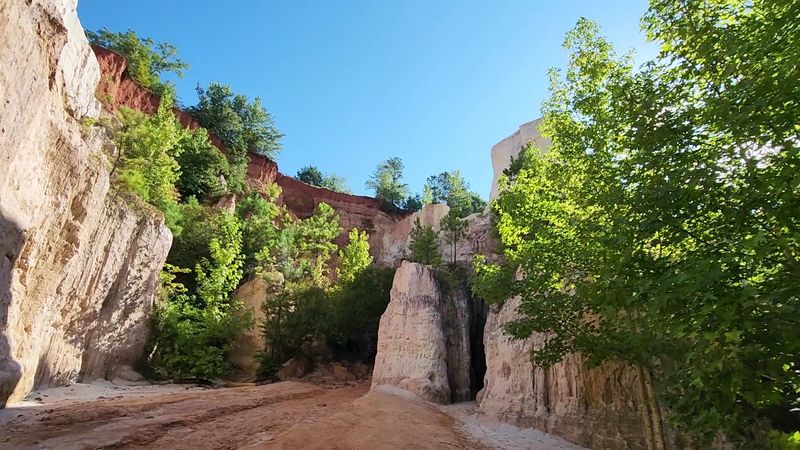
Poor farming choices from the 1800s accidentally created one of the most dramatic landscapes in the entire Southeast. That is the wild origin story of Providence Canyon, nicknamed Georgia’s Little Grand Canyon.
The canyons plunge up to 150 feet deep, carved entirely by erosion over just a few generations.
The walls glow in layers of orange, pink, red, and white. Those vivid colors come from minerals baked into the sandstone soil.
Walking along the Canyon Loop Trail feels like stepping onto another planet entirely.
If you visit in late summer, keep your eyes open for the rare plumleaf azalea. It blooms right here and almost nowhere else on Earth.
An abandoned homestead with rusting 1950s cars sits nearby, adding a quirky bonus to the whole experience.
The Backcountry Trail follows the rim and delivers sweeping views across the canyon. You can also hike down into the canyon floor for a completely different perspective.
The park is located at 8930 Canyon Rd, Lumpkin, GA 31815, and admission is very affordable.
2. Stephen C. Foster State Park, Fargo
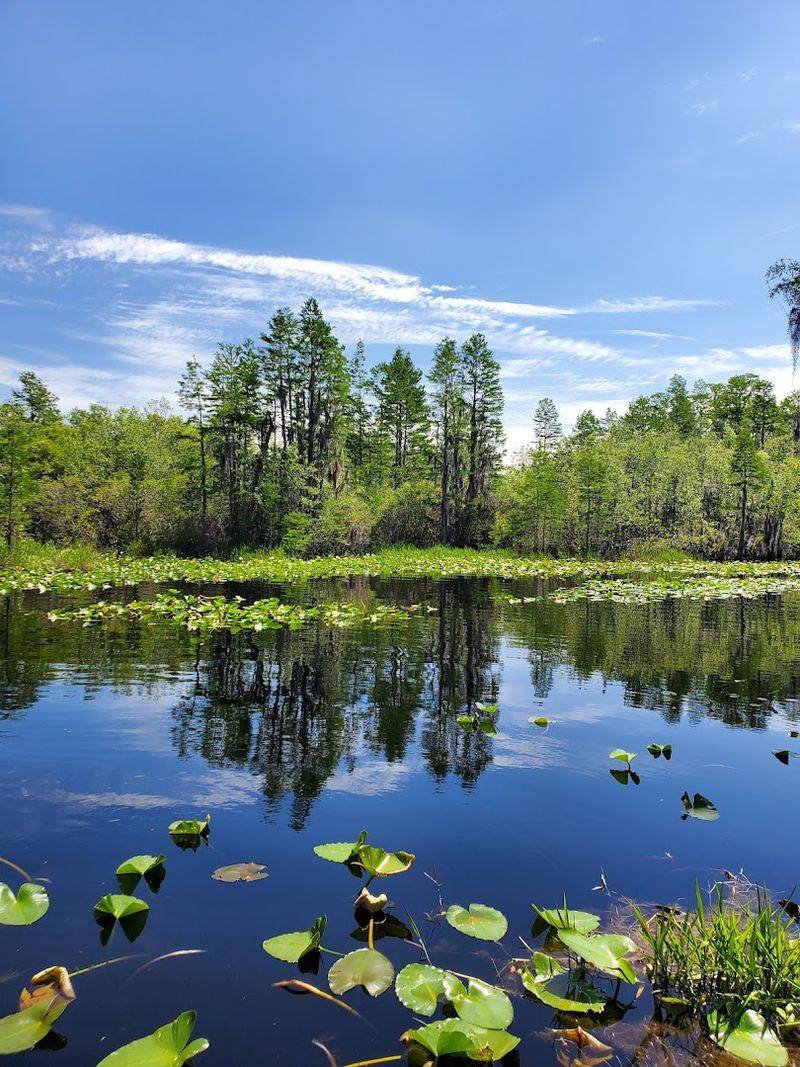
Somewhere deep in southern Georgia, the trees wear Spanish moss like old coats, and the water is so dark it looks like black glass. That is the Okefenokee Swamp, and Stephen C.
Foster State Park is your front door to all of it. This is the largest blackwater swamp in North America, and it is genuinely unforgettable.
Around 12,000 alligators call this swamp home. You will likely spot several before your first hour is even up.
Ibis, herons, wood storks, and red-cockaded woodpeckers also make appearances throughout the day.
The park at 17515 GA-177, Fargo, GA 31631 sits so far from city lights that the night sky is extraordinary. Stargazing here feels completely different from anything near a town.
The darkness is almost total, and the silence makes it feel sacred.
Guided boat tours are available for those who want a knowledgeable escort through the waterways. Canoes, kayaks, and jon boats are also available to rent.
Paddling alone through those cypress corridors is one of the most peaceful things I have ever done in this part of the state.
3. Cumberland Island National Seashore, St. Marys
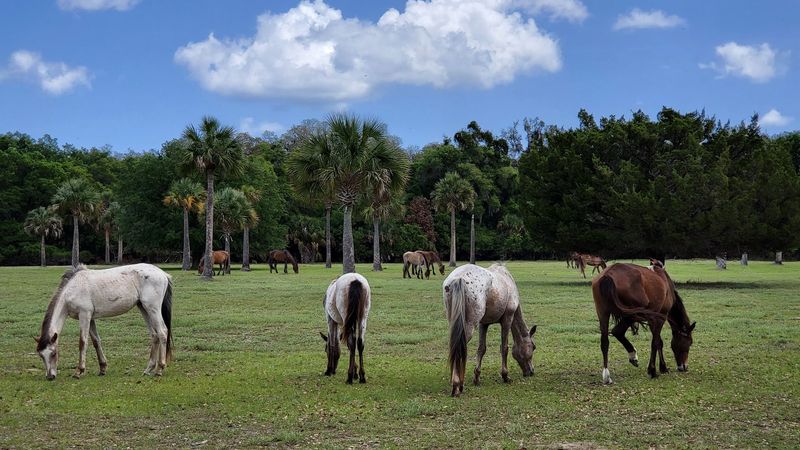
Wild horses roam freely on a barrier island just off the Georgia coast, and most people have no idea they are even there. Cumberland Island is the largest barrier island in the area, and it is almost entirely protected wilderness.
You can only reach it by ferry, which keeps the crowds very manageable.
Between 150 and 200 feral horses live on the island year-round. They are descendants of domestic horses brought here centuries ago.
The herd is unmanaged and receives no supplemental food, water, veterinary care, or population control.
Visitors often round a bend in the trail and come face to face with a horse grazing near the dunes. It never gets old, no matter how many times it happens.
The historic Dungeness ruins nearby add a layer of mystery to an already fascinating place.
The ferry departs from 113 St Marys St W, St Marys, GA 31558. Book your tickets well in advance because spots fill up fast.
Bring everything you need for the day, since the island has very limited services and that is part of its enormous charm.
4. Driftwood Beach, Jekyll Island
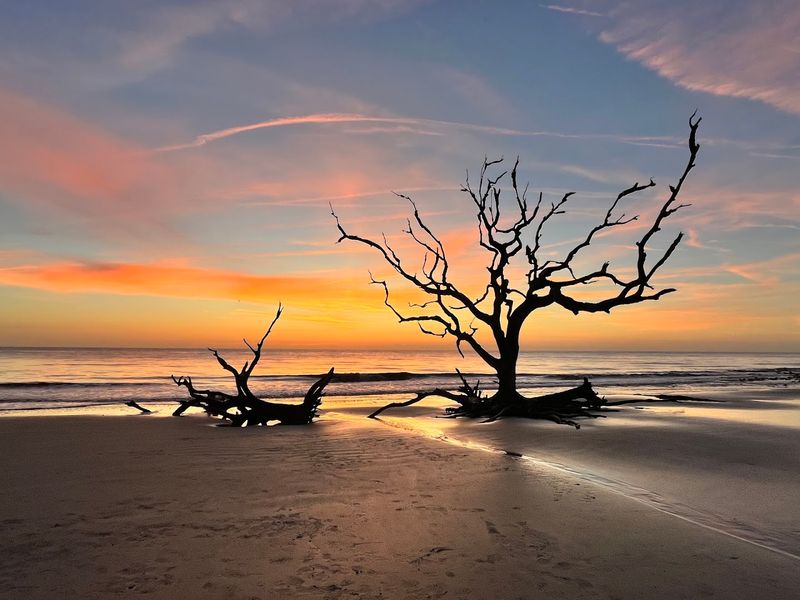
A beach covered in enormous bleached tree skeletons sounds like something from a science fiction novel. Driftwood Beach on Jekyll Island is completely real, and it is one of the most visually striking places I have ever stood.
Photographers travel from across the country just to capture this coastline at sunrise.
Natural erosion slowly consumed a coastal forest here over decades. As the trees fell and the sea shaped them, they became the haunting sculptures you see today.
The result is an otherworldly landscape that changes slightly with every tide.
Low tide is the best time to visit because the full expanse of driftwood becomes accessible. You can walk among the massive trunks and find angles that look almost surreal.
Sunrise and sunset both produce light that makes the bleached wood glow gold and amber.
The beach is located along N Beachview Dr, Jekyll Island, GA 31527. Parking is easy and the walk to the beach is short.
Bring a camera, wear comfortable shoes, and plan to stay longer than you originally intended. Almost everyone does, because this place has a way of slowing time down beautifully.
5. Radium Springs Gardens, Albany
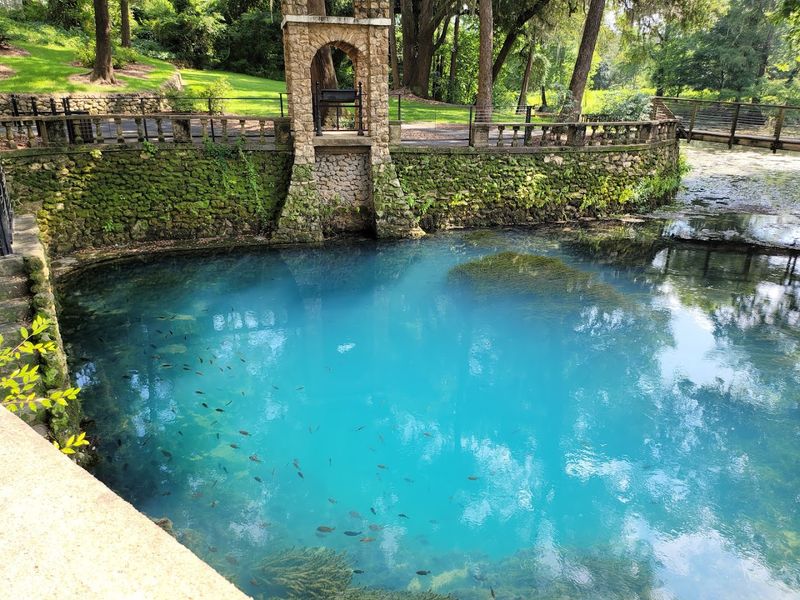
Imagine a spring so powerful it pushes 70,000 gallons of crystal-clear water to the surface every single minute. That is Radium Springs, counted among the seven natural wonders of the state and located in Albany at 2501 Radium Springs Rd, Albany, GA 31705.
The water holds a steady temperature of 68 degrees year-round.
The spring was originally called Blue Spring, named for the striking vivid blue color of the water. In the 1920s, a luxurious casino resort was built right on its banks.
The ruins of that casino now form the dramatic entrance to a beautifully restored garden.
Today the site features a restored terrace, new sidewalks, a casino garden, and charming gazebos scattered throughout the grounds. Swimming is no longer permitted, but several observation points give excellent views of the brilliant blue pool below.
The color of the water on a sunny day is genuinely hard to describe.
This is one of those spots that rewards a slow, unhurried visit. Bring a picnic and walk the grounds at your own pace.
The combination of natural beauty and layered history makes it feel unlike anywhere else in the area.
6. Howard Finster’s Paradise Garden, Summerville
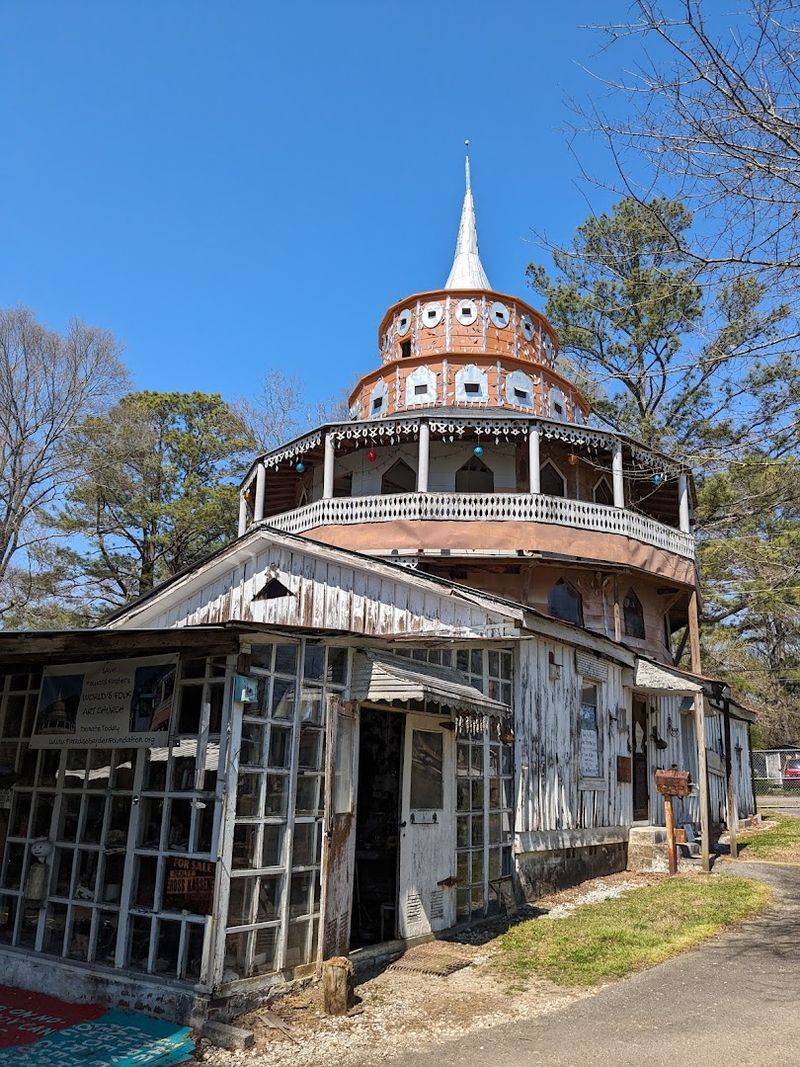
A Baptist minister once covered 2.5 acres of land in over 46,000 pieces of art, and the result is one of the most gloriously strange places in the entire Southeast. Howard Finster’s Paradise Garden at 200 N Lewis St, Summerville, GA 30747 is listed on the National Register of Historic Places.
It is equal parts art installation, religious statement, and pure creative explosion.
Finster blended pop culture icons with spiritual messages across every surface imaginable. He built the Hubcap Tower, the Bicycle Tower, the Mirror House, and the Bible House, all by hand.
The five-story Folk Art Chapel dominates the skyline of the property like a joyful fever dream.
He also designed album covers for R.E.M. and Talking Heads, which brought international attention to his work. After his passing, the Paradise Garden Foundation carefully restored and preserved the entire site.
Walking through it today feels like reading someone’s mind made physical.
Plan at least two hours here because there is genuinely so much to absorb. Every corner reveals something new and unexpected.
This is not a polished museum experience, and that raw quality is exactly what makes it so memorable and alive.
7. Ocmulgee Mounds National Historical Park, Macon
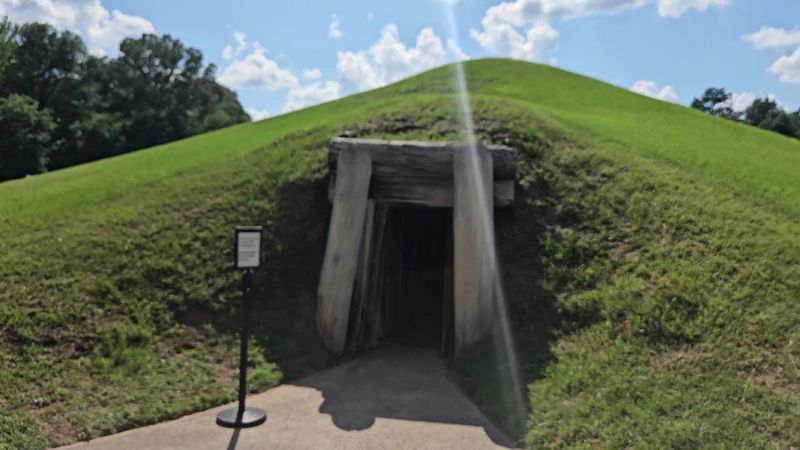
Evidence of roughly 12,000 years of human history is preserved at this park near Macon. Ocmulgee Mounds is not just impressive, it is humbling in a way that very few places manage to be.
The 55-foot Great Temple Mound rises dramatically from the flat landscape and demands your full attention immediately.
The massive earthworks were built by the South Appalachian Mississippian culture between 800 and 1100 A.D. The reconstructed Earth Lodge contains an original floor carbon-dated to about 1015 CE.
Stepping inside that lodge is one of the most genuinely moving experiences available at any historic site in this region.
The park museum holds over 2,000 artifacts, some dating as far back as 10,000 B.C. Eight miles of hiking trails wind through the park grounds.
The area holds deep cultural significance as the ancestral homeland of the Muscogee (Creek) people.
The park is at 1207 Emery Hwy, Macon, GA 31217 and is free to enter. Rangers offer talks that bring the history to life in a very accessible way.
Even visitors with no prior interest in archaeology tend to leave feeling genuinely moved and surprisingly curious for more.
8. Etowah Indian Mounds State Historic Site, Cartersville
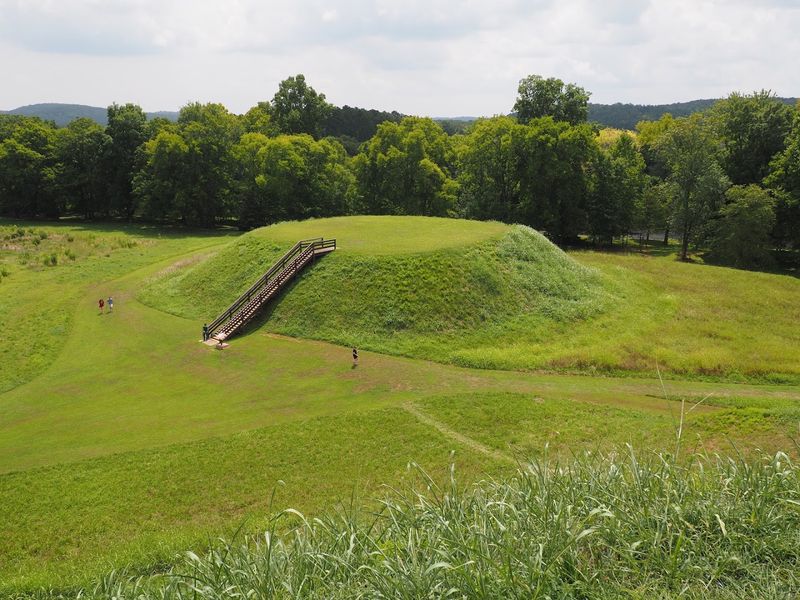
The most intact Mississippian Culture site in the entire Southeast is sitting quietly outside Cartersville, and most people drive right past it on the highway. Etowah Indian Mounds covers 54 acres and preserves six massive earthen mounds, a central plaza, village sites, and a defensive ditch.
Native Americans occupied this site continuously from around 900 A.D. to 1550 A.D.
The tallest mound reaches 63 feet high and likely served as the elevated home of a priest-chief. Another mound contains burials of nobility, filled with elaborate ceremonial goods and costumes.
The on-site museum displays rare 125-pound hand-carved effigies that still show faint traces of original paint.
Along the Etowah River, you can observe an ancient V-shaped fish trap still visible in the water. That single detail always stops visitors cold because it makes the past feel suddenly very close.
The site was designated a National Historic Landmark in 1965 and fully deserves that recognition.
Find it at 813 Indian Mound Rd SE, Cartersville, GA 30120. The museum is small but packed with genuinely remarkable objects.
Give yourself at least two hours to walk the mounds and absorb the full scale of what was built here.
9. Rock Eagle Effigy Mound, Eatonton
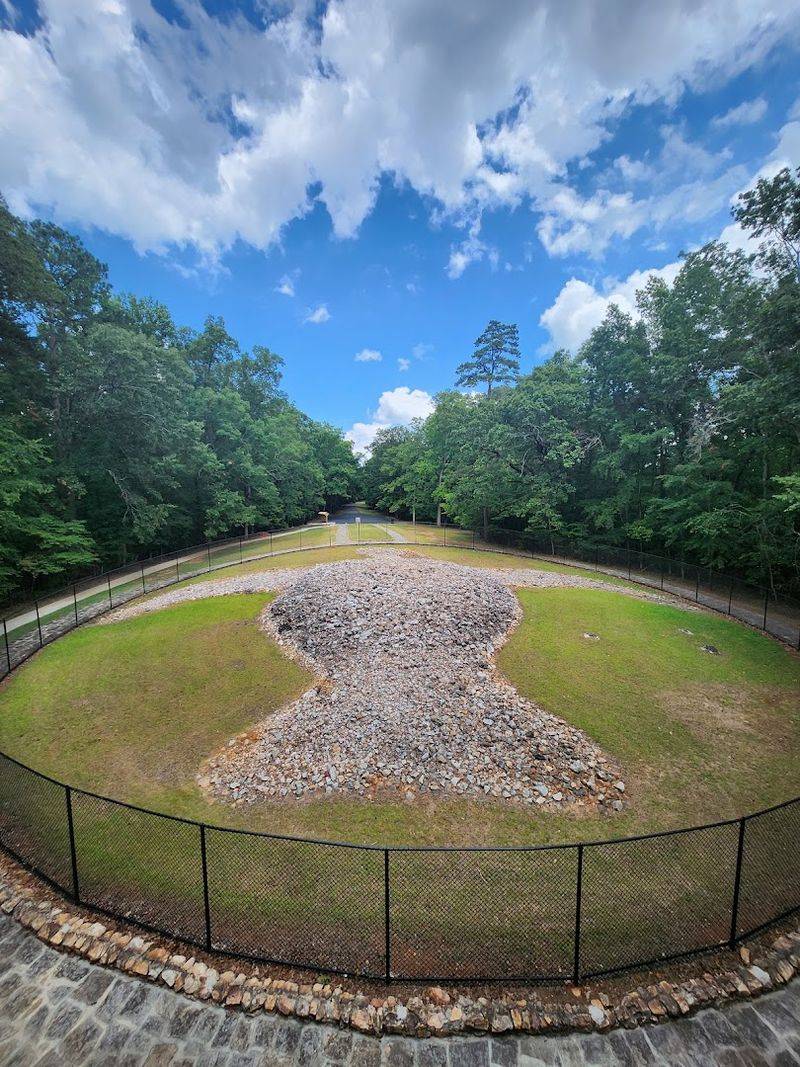
Thousands of white quartz stones were arranged by hand into the shape of a massive bird, and nobody is entirely sure why. The Rock Eagle Effigy Mound near Eatonton is between 1,000 and 3,000 years old, built during the Woodland Period by Native American peoples.
The effigy stretches 102 feet long and 120 feet wide across its outstretched wings.
This is one of only two bird effigy mounds found east of the Mississippi River. The other is also in Georgia, which makes this part of the state uniquely significant in North American archaeology.
The purpose of the mound remains a genuine mystery, likely ceremonial or spiritual in nature.
An observation tower at the site lets you see the full bird shape from above. That elevated view is the moment the whole thing clicks into focus and becomes truly astonishing.
Without the tower, the scale of the effigy is almost impossible to grasp from ground level.
The mound is located at 350 Rock Eagle Rd, Eatonton, GA 31024 within the Rock Eagle 4-H Center. Hiking trails and educational programs are also available on the grounds.
This is a genuinely rare and thought-provoking place that earns every bit of wonder it inspires.
10. Brasstown Bald, Hiawassee
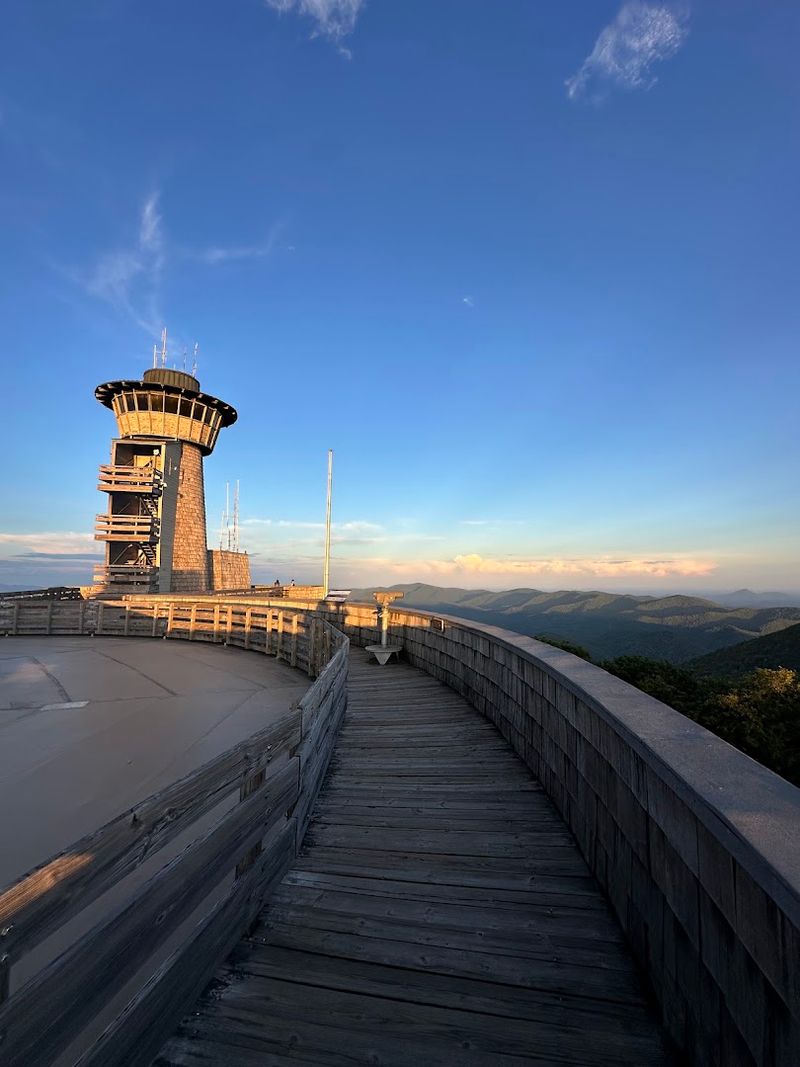
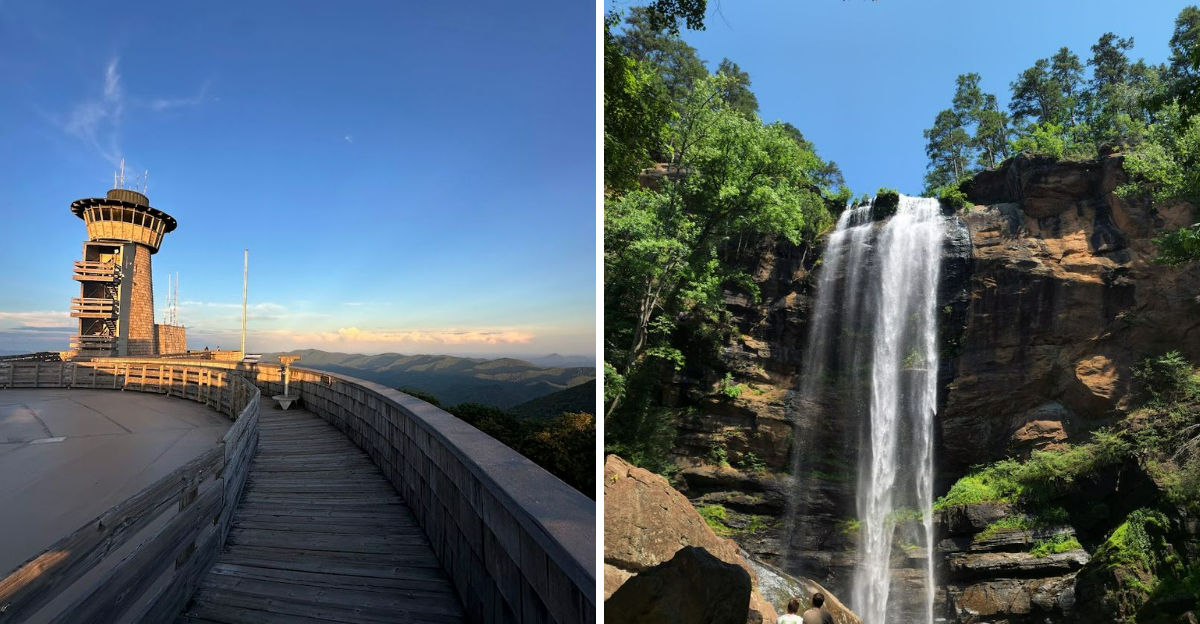
Standing at 4,784 feet above sea level, Brasstown Bald is the highest natural point in Georgia and offers expansive mountain views. On a clear day, you can see portions of four states simultaneously from the observation deck.
Georgia, Tennessee, North Carolina, and South Carolina all appear at once on the horizon.
On exceptionally clear days, the distant skyline of Atlanta becomes faintly visible from the summit. That fact alone tends to make people stop and recalibrate their sense of distance.
The mountaintop also has a visitor center, a museum, and a small theater with informative programs.
A shuttle service runs from the parking area to the summit for those who prefer not to hike. The half-mile Summit Trail is also available for those who want to earn the view on foot.
Either way, the payoff at the top is absolutely worth the effort.
Late spring brings rhododendrons, mountain laurel, and flame azaleas blooming across the slopes. October delivers some of the best fall foliage in the entire region.
The address is 2941 GA-180 Spur, Hiawassee, GA 30546, and the drive up the mountain road is a destination in itself.
11. Wormsloe State Historic Site, Savannah
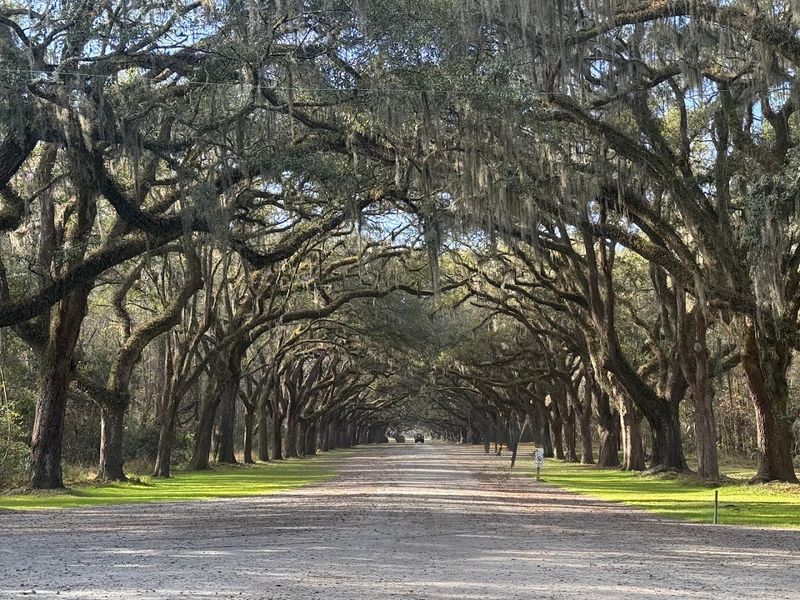
A mile-long road lined with over 400 towering live oaks draped in Spanish moss is one of the most photographed landscapes in all of Savannah. Wormsloe State Historic Site produces that exact image, and it is even more breathtaking in person than in any photo.
The canopy overhead feels like a cathedral built entirely from living wood.
At the end of the avenue sit the tabby ruins of the colonial estate of Noble Jones, one of the area’s earliest founders. Tabby is a building material made from oyster shells, lime, sand, and water.
These ruins are among the oldest standing structures in the Savannah region.
An interpretive nature trail winds past the ruins and through the marshes. A Colonial Life Area at the end of the trail features period demonstrations that bring the 1700s back to life.
The fortified house was originally built around 1737 to defend against potential Spanish invasion.
The site is at 7601 Skidaway Rd, Savannah, GA 31406 and is open most days of the week. Morning visits are especially rewarding when the light filters through the moss in long golden shafts.
Few places anywhere combine natural beauty and layered history quite this effortlessly.
12. Toccoa Falls, Toccoa
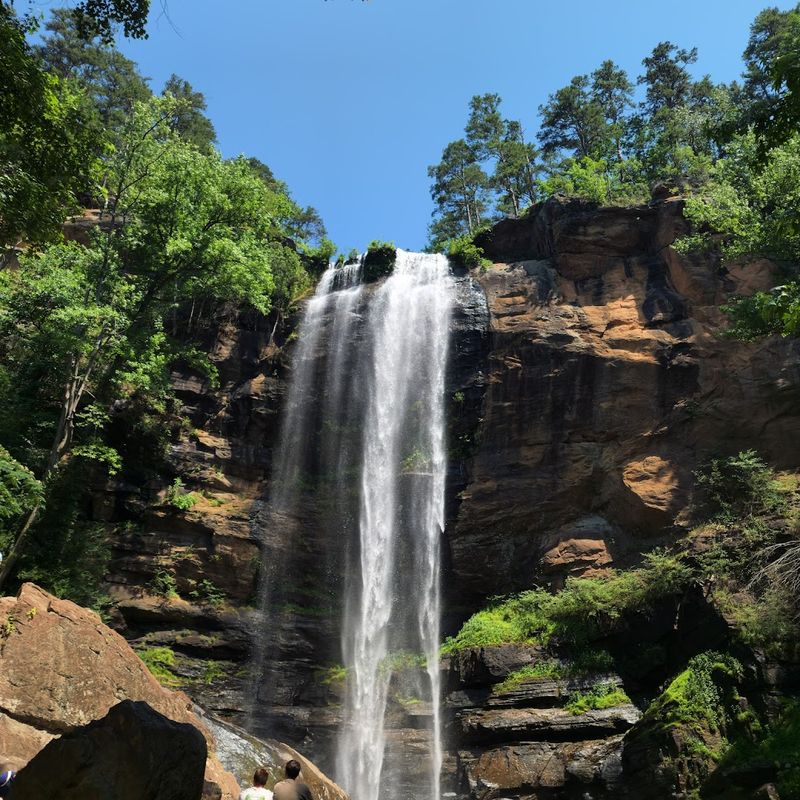
At 186 feet tall, Toccoa Falls is one of the tallest free-falling waterfalls east of the Mississippi River. Here is the detail that always surprises people: it stands 19 feet taller than Niagara Falls.
The difference is that almost nobody outside of northern Georgia knows this waterfall even exists.
The falls sit on the campus of Toccoa Falls College at 107 Kincaid Dr, Toccoa Falls, GA 30598. A short, easy walk from the entrance brings you directly to the base of the falls.
The roar of the water grows louder with every step, and the first full view of it is genuinely jaw-dropping.
The name Toccoa comes from a Cherokee word meaning beautiful, and the Cherokee were not wrong. The mist at the base keeps the surrounding rocks and vegetation permanently lush and green.
Standing there and looking straight up the rock face is a perspective that photographs simply cannot replicate.
Because the site is privately owned by the college, it stays quieter and more serene than most major natural attractions. There is no loud commercial atmosphere here.
Just water, rock, mist, and the kind of quiet that makes you want to stay for hours without saying a word.
13. Roosevelt’s Little White House Historic Site, Warm Springs
A simple six-room pine cottage in rural Georgia was once the personal retreat of a sitting United States president. Franklin D.
Roosevelt first came to Warm Springs in 1924, drawn by the 88-degree buoyant spring waters that offered real relief from polio. He returned so often that this modest house became his most personal sanctuary away from Washington.
Roosevelt built the cottage in 1932 while he was still governor of New York. His deep connection to this rural community directly inspired many of his New Deal programs.
The place shaped policy in ways that still affect everyday American life today.
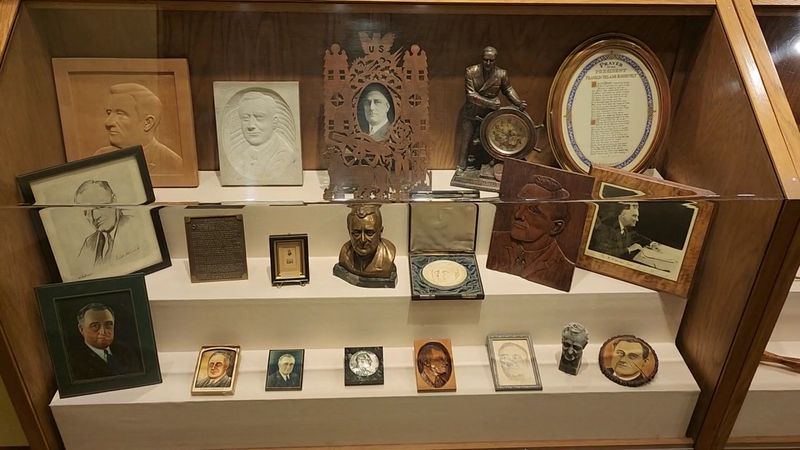
The museum at 401 Little White House Rd, Warm Springs, GA 31830 displays his 1938 Ford convertible with hand controls, a genuinely moving artifact. A 1930s radio plays recordings of his famous Fireside Chats in the exhibit space.
The Unfinished Portrait by Elizabeth Shoumatoff, painted on the day he passed away in April 1945, is the emotional centerpiece of the entire museum.
The home has been preserved almost exactly as it appeared during his final visit. Every room feels personal and specific rather than staged.
This is the kind of historic site that stays with you long after you have driven away from it.