10 Michigan Historic Sites With Stories That Rarely Make The Travel Guides
Michigan has places that look ordinary on a map until you start reading what happened there.
One historic vessel carries a story involving an emergency operation far below the surface.
Elsewhere, an unusual building exists because one writer wanted somewhere quiet to work. Ancient markings on rock entered the spotlight only after the surrounding landscape changed dramatically.
Those are the details that pulled me into this list. None of these stops needs a flashy attraction to hold attention. The story does the work.
I like places that reward a little curiosity, especially when the most interesting fact is easy to miss at first.
These sites have exactly that kind of pull, and a few of their backstories get surprisingly strange.
1. Honolulu House Museum, Marshall
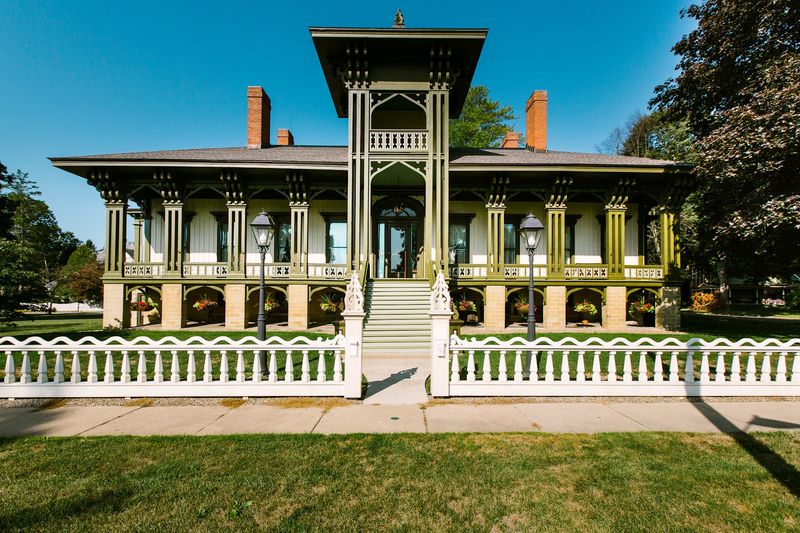
Hawaii and small-town Michigan don’t usually share a zip code. In Marshall, they share a front porch.
Built in 1860, Honolulu House was the home of Abner Pratt, a former chief justice of the state’s Supreme Court who had also served as United States consul to the Kingdom of Hawaii.
His island experiences inspired a residence unlike its Victorian neighbors.
A broad, nine-bay veranda stretches across the front, while a pagoda-topped tower rises above the center. Italianate and Gothic Revival elements meet Polynesian influences, giving the exterior an unexpected personality.
The interiors carry a second surprise. Walls originally displayed painted tropical scenery, but a subsequent owner replaced much of that decoration with elaborate Victorian designs in 1887.
Restored painted surfaces and period furnishings now help explain the house’s changing tastes over time.
You’ll find the museum at 107 N Kalamazoo Ave, near Marshall’s historic downtown. Guided visits make it possible to connect the unusual architecture with Pratt’s travels and the community that surrounded his home.
Public tours run Thursday through Sunday from noon to 4 p.m., May through December. Give yourself time to examine the porch before entering, then take a walk past the neighboring historic houses.
2. Fayette Historic State Park, Garden
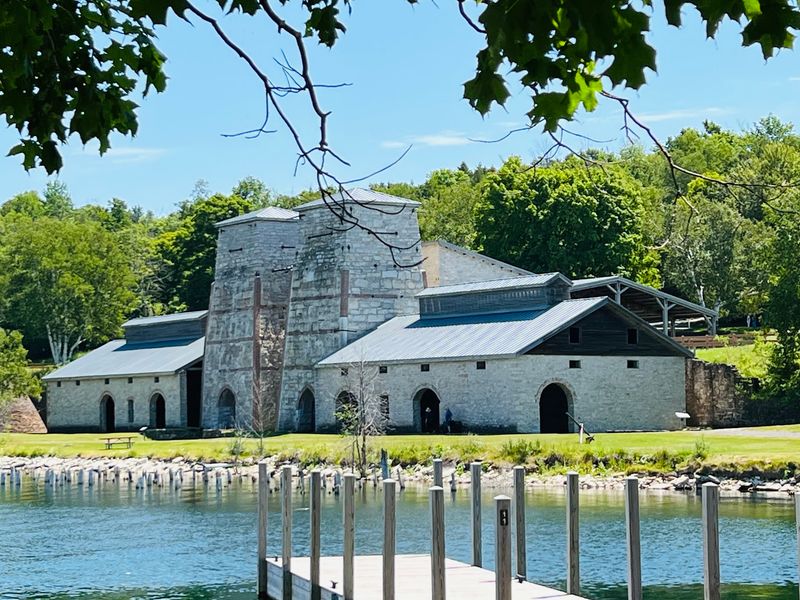
Once upon a time, a busy company town cooked iron on a quiet Lake Michigan harbor. Today, the furnaces are silent, but the town is still standing.
Fayette produced charcoal pig iron from 1867 to 1891, when a thriving settlement grew around the Jackson Iron Company’s operations.
The harbor brought supplies and carried finished iron away, while nearby forests provided wood for making charcoal. Families built everyday lives alongside the industrial machinery.
The preserved townsite includes a hotel, workers’ homes, the company store, and other structures that illustrate life on the Garden Peninsula.
The massive furnace remains give the small community a particularly striking backdrop. A visitor center and interpretive displays explain how the settlement operated and why families eventually moved elsewhere.
Travelers reach the park via 4785 II Rd near Garden. Snail Shell Harbor and pale limestone cliffs frame the buildings, while roughly five miles of trails offer elevated views across the water.
Picnic areas and a campground make it possible to spend longer exploring the peninsula.
Historic building access is seasonal. The 2026 townsite season ended October 11, although the wider park remains available for outdoor recreation. Allow two hours when exhibits are open, and check access before setting off.
The contrast is the memorable part: substantial stone industrial structures standing beside a remarkably peaceful harbor, with the former streets still inviting a slow wander.
3. Owosso Curwood Castle
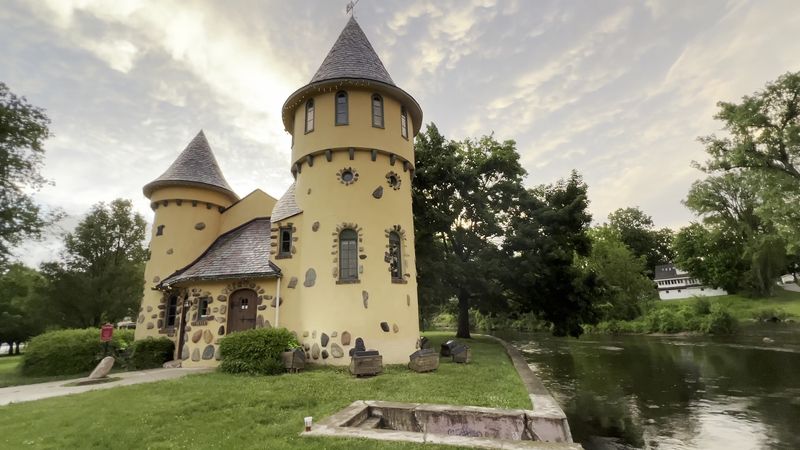
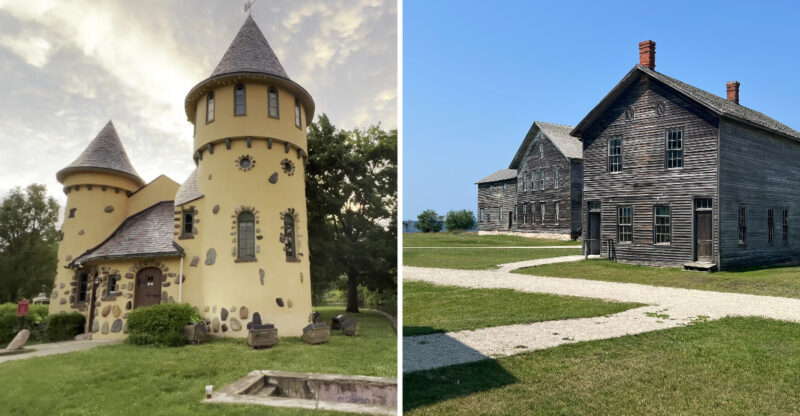
Most writers settle for a desk by the window. James Oliver Curwood built himself an actual castle.
The adventure novelist commissioned a French Norman-inspired studio beside the Shiawassee River, with work beginning in 1922 and finishing in 1923.
It wasn’t his family residence. It was a separate place to write, entertain publishers, and look out across the river from a tower room.
The design features pointed roofs, narrow windows, and a spiral staircase leading to Curwood’s elevated writing space.
His stories frequently drew on wilderness journeys and the forests of northern North America, so the riverfront setting suited his interests. Curwood also became a prominent advocate for conservation.
Today, exhibitions trace the author’s literary career and connections to Owosso.
The building is compact, but its dramatic silhouette gives the impression of a much larger estate. Curwood Castle Park also offers walking paths, river views, and nearby cultural attractions.
The entrance is at 224 Curwood Castle Dr, a short distance from downtown. Tours generally run Tuesday through Sunday from 1 to 5 p.m., April through December. Monday is a closing day, and major holidays can affect access.
Take a look at the tower’s small windows from outside before exploring the museum. It’s easy to imagine the novelist searching for the next sentence with the Shiawassee flowing below. Not every writer’s workspace comes with a turret.
4. Sanilac Petroglyphs Historic State Park, Cass City
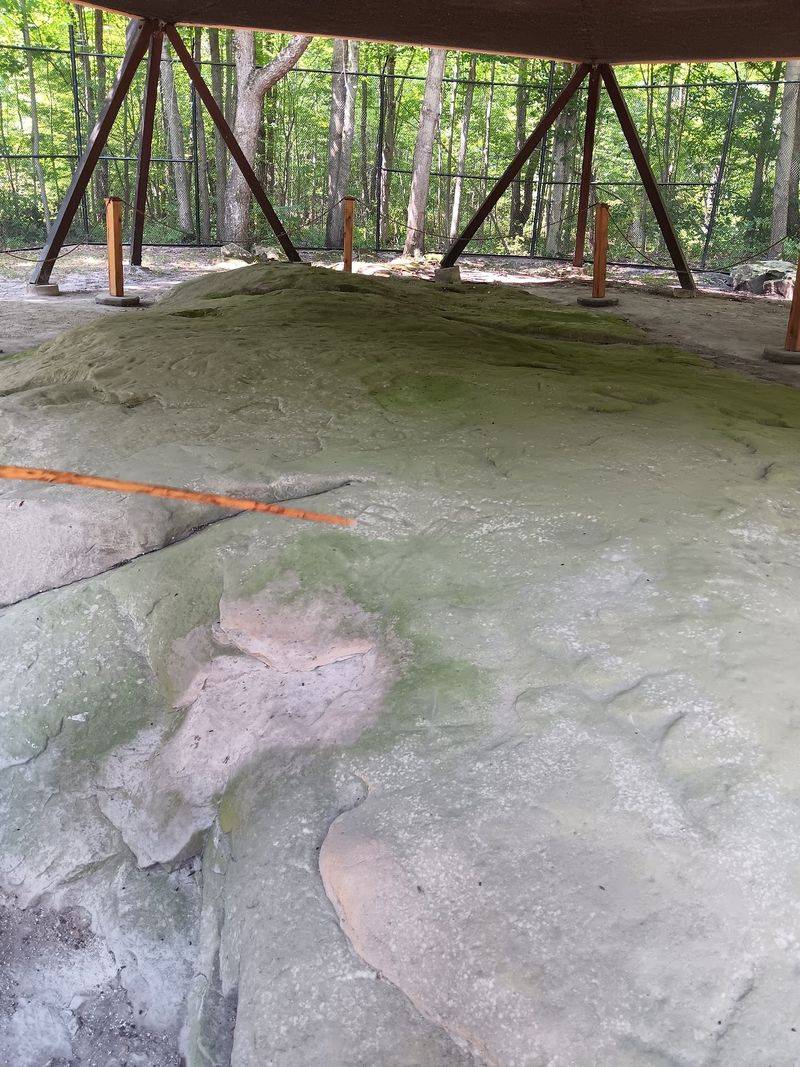
An 1881 forest fire changed the landscape of Michigan’s Thumb, exposing sandstone marked with carvings made generations earlier.
What emerged is the state’s largest known collection of Indigenous petroglyphs.
Known as Ezhibiigaadek Asin, meaning “written on stone” in Anishinaabemowin, these images carry cultural teachings connected to Anishinabek communities.
Human figures, birds, handprints, and swirling forms appear across the exposed rock. Their precise age is uncertain, making respectful interpretation more important than assigning a single date.
The protected viewing shelter is reached by an accessible crushed-limestone path from the parking area.
Guided interpretation explains the significance of the carvings and why direct access to the sandstone is carefully managed. The site is jointly stewarded by state heritage agencies and the Saginaw Chippewa Indian Tribe.
The entrance is along 8251 Germania Rd near Cass City. Beyond the shelter, a roughly mile-long wooded loop passes the North Branch of the Cass River, traces of a nineteenth-century logging camp, and a notable old white pine.
The park grounds remain accessible year-round, but viewing the actual carvings requires a seasonal guided visit.
In 2026, those tours ran Wednesday through Sunday between May 22 and September 6. Arrive during that window if the petroglyphs are the main reason for your trip.
5. Quincy Mine, Hancock
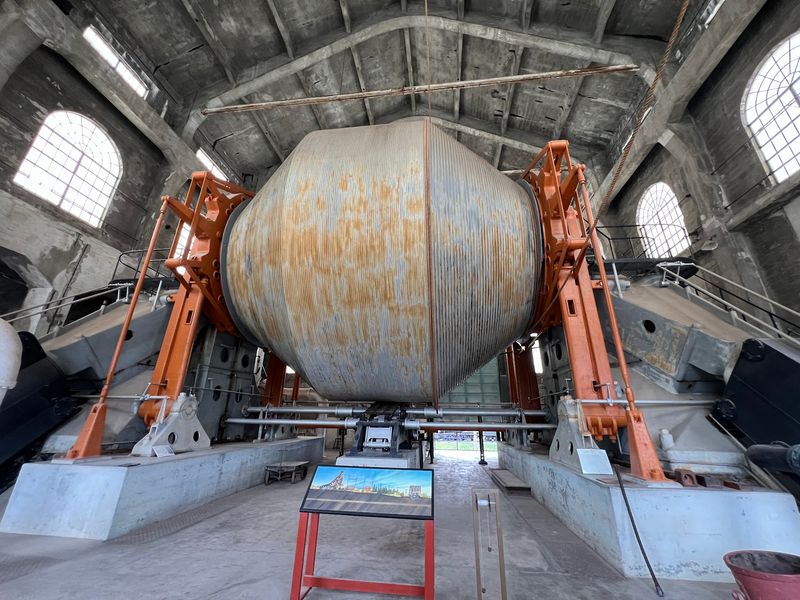
Folks in Copper Country gave this mine a nickname: Old Reliable. Spend an afternoon here, and you’ll discover the industrial achievement behind it.
The Quincy Mining Company extracted copper beneath the Keweenaw Peninsula for nearly a century, beginning in 1846.
Its reputation for consistent production helped earn that familiar nickname.
Above ground, the enormous No. 2 shaft-rockhouse and powerful steam hoisting equipment illustrate the engineering needed to move material from deep below the surface.
One extraordinary centerpiece is the largest steam hoist ever constructed, preserved within its historic hoist house.
The equipment reveals the scale of work involved long before modern automated systems existed. The hillside also holds remnants of industrial buildings and machinery.
Quincy Mine stands at 49750 US-41 in Hancock, overlooking the Portage Lake waterway.
A full guided experience includes the hoist house, a cog-rail tram ride, and a section of underground workings more than 350 feet beneath the surface. Shorter above-ground options are available for those who prefer to stay outdoors.
Temperatures underground remain around 43 degrees, so bring a warm layer and shoes suitable for damp gravel.
The main tour takes more than two hours. Hours for the gift shop change seasonally, and tour availability depends on the day’s schedule.
The giant machinery is impressive, but the narrow underground passages make the history of mining especially tangible.
6. Fort Wilkins Historic State Park, Copper Harbor
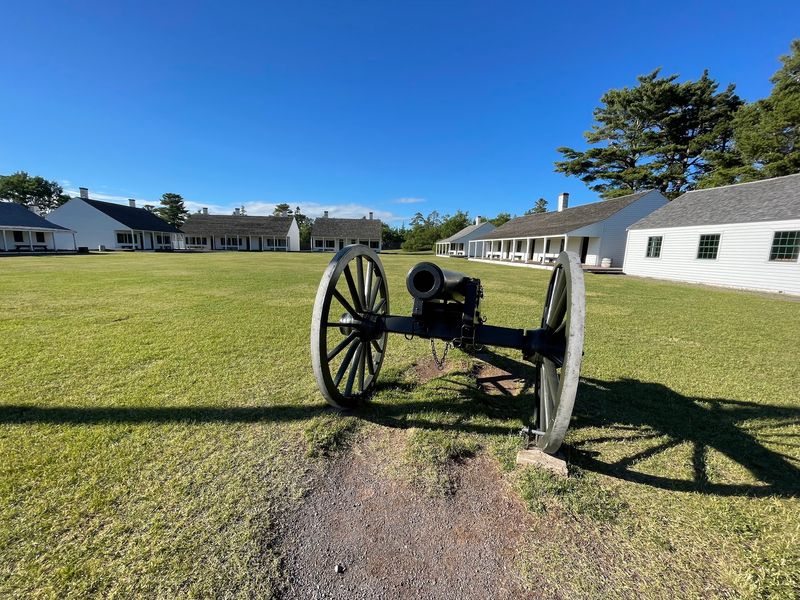
Soldiers arrived at the top of the Keweenaw Peninsula in 1844, expecting an eventful assignment during the copper rush. Instead, everyday frontier routines became the fort’s lasting story.
The United States Army established Fort Wilkins near Copper Harbor as prospectors and settlers arrived in the region.
The post was occupied briefly in the 1840s and again from 1867 to 1870. Today, nineteen historic buildings survive, including twelve original structures, offering a window into daily life along this remote northern frontier.
Barracks, officers’ quarters, and other buildings show how people cooked, worked, and lived in a place far from established population centers.
During summer, costumed interpreters portray the routines of the 1870 era, adding movement and conversation to the preserved rooms.
The park extends around Lake Fanny Hooe and toward Lake Superior, so a history visit can become an outdoor outing. Two campgrounds, walking routes, picnic spaces, and water access provide several ways to explore the landscape.
The nearby Copper Harbor Lighthouse is associated with the historic complex, but lighthouse tours require separate planning.
Find the fort along 15223 US-41 in Copper Harbor. Historic interpretation is seasonal, beginning in mid-May, with the busiest living-history programming during summer. Outdoor facilities have their own operating arrangements.
Allow roughly two hours for the buildings. The combination of preserved rooms and lakeside surroundings makes this frontier post more than a brief roadside landmark.
7. The Calumet Theatre
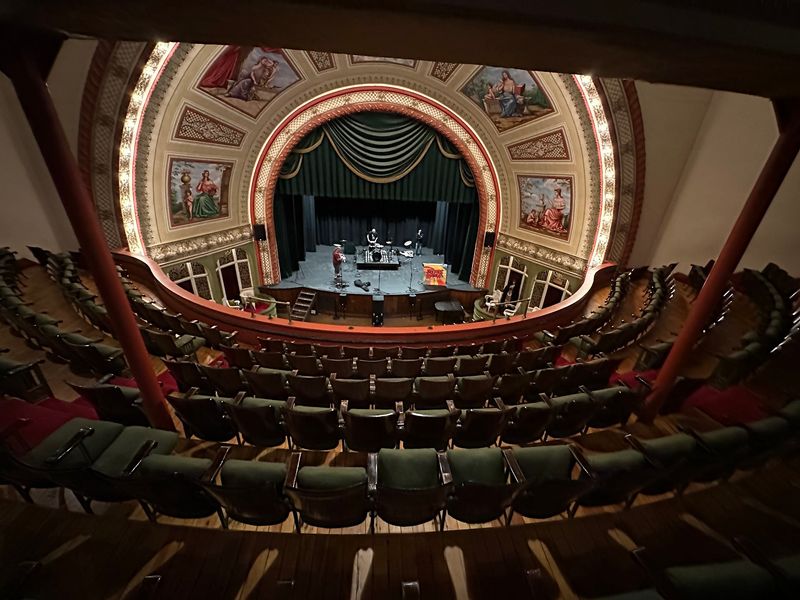
Broadway stars in a copper mining town? Back around 1900, Calumet made that happen.
The Calumet Theatre opened on March 20, 1900, with a touring stage production called The Highwaymen.
Built and owned by the municipality, the elaborate opera house reflected the prosperity generated by the surrounding copper industry.
At the time, the community could support performances more often associated with much larger cities.
Inside, a crimson-and-gold auditorium, painted murals, decorative plasterwork, and multiple balconies recall the ambition of its original design.
The building later served as a movie theatre before returning to a broader program of stage productions and community events.
A guided tour may take visitors through the auditorium, dressing rooms, balconies, and Red Jacket Ballroom.
There’s a surprising amount behind the elegant stage, including stairs and backstage spaces rarely visible from an audience seat. The tour generally lasts about two hours and includes several flights of stairs.
The landmark stands at 340 Sixth St in Calumet, among historic storefronts associated with Michigan’s copper boom.
Scheduled guided tours are offered Wednesday through Friday at 1 p.m., with other arrangements possible depending on performances.
Music and theatre still fill the building, so checking the event calendar offers another way to experience its original purpose. Whether the lights are up for a tour or a concert, the room feels unusually grand for its small-town setting.
8. Castle Museum Of Saginaw County History
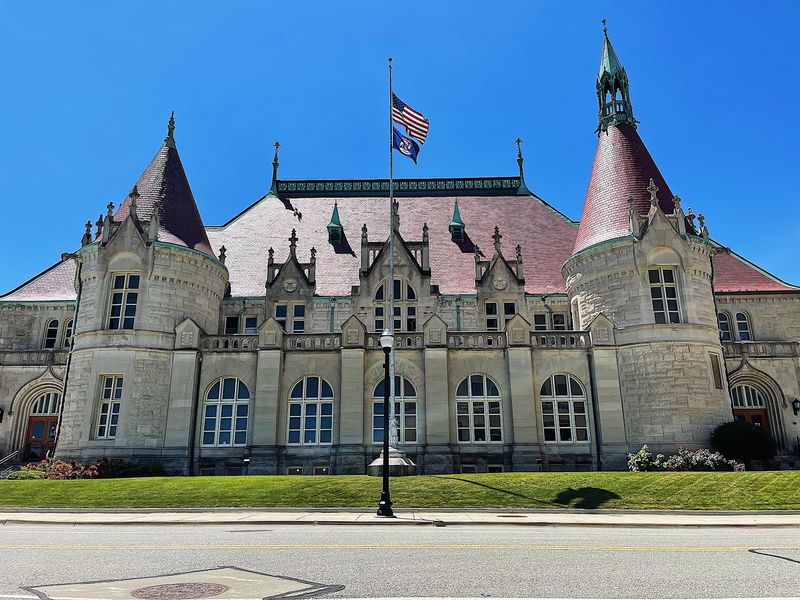
Mailing a letter used to feel a lot fancier in Saginaw. The city’s old post office looks like a French castle.
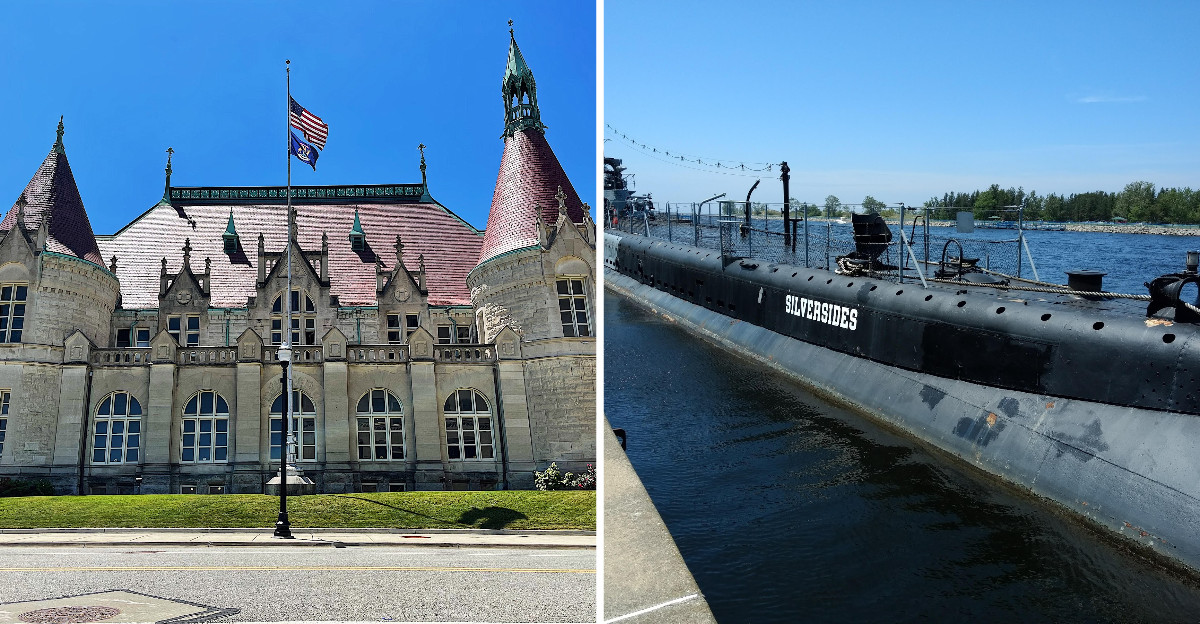
Dedicated in 1898, the limestone building was designed in a French Renaissance Revival style.
Architect William Martin Aiken connected its romantic appearance to the region’s early French settlement. Towers, steep rooflines, and ornamental stonework gave an everyday government building the profile of a grand residence.
The post office expanded in 1937, when a major addition preserved its Federal Avenue facade and introduced new interior spaces.
The building eventually became a local history museum, turning an architectural landmark into the setting for a much wider community story.
Inside, several floors explore the lives of Indigenous communities, early settlement, timber production, manufacturing, and inventions associated with Saginaw County.
Exhibits on the lumber industry and steering-gear production reveal how local work influenced commerce far beyond the city. The building itself remains one of the collection’s most remarkable objects.
The museum welcomes visitors at 500 Federal Ave in downtown Saginaw.
Hours are generally 10 a.m. to 4:30 p.m. Monday through Wednesday and Friday through Saturday, with Thursday extending to 7 p.m. Sunday admission runs from 1 to 4:30 p.m.
Elevators connect the exhibition floors, and the accessible entrance is at the rear. Take time to examine the exterior turrets before exploring the galleries inside.
9. USS Silversides Submarine Museum, Muskegon
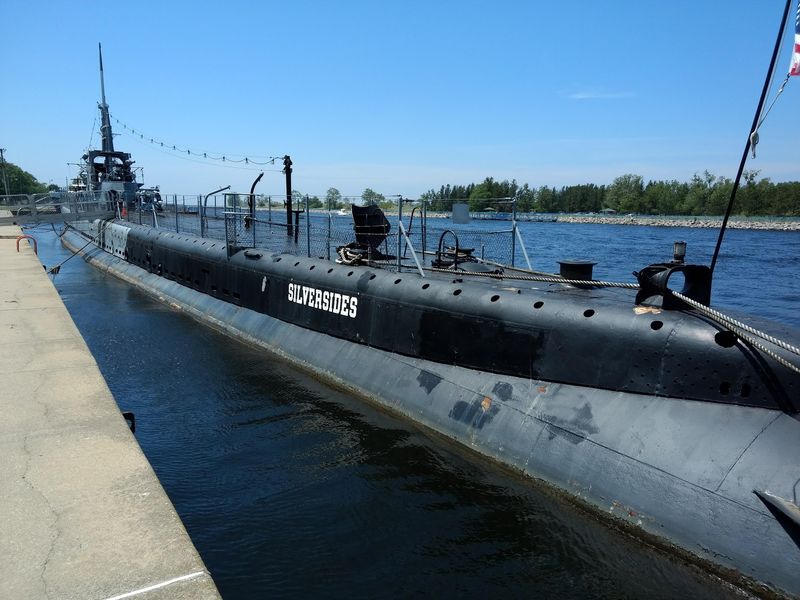
Picking a surgeon usually involves a medical degree.
Aboard USS Silversides, a pharmacist’s mate performed an emergency appendectomy while the submarine remained submerged far from a hospital.
That remarkable operation took place in December 1942, with Thomas Moore drawing on his medical training to help a fellow crew member.
It remains one of the most extraordinary accounts associated with this preserved American submarine.
The vessel normally belongs to the museum on the Muskegon channel, where its narrow hatches, steep ladders, and compact living spaces give an immediate sense of shipboard routines.
Exhibits in the adjoining building explore naval technology, local service history, and the people connected with the submarine.
During 2026, Silversides traveled to Sturgeon Bay, Wisconsin, for extensive dry-dock preservation, including hull inspections and repairs.
The museum building at 1346 Bluff St in Muskegon remains open, but onboard tours depend on the vessel’s confirmed return and renewed visitor access. An expected October return date is not itself a guarantee that boarding has resumed.
The museum’s exhibition A View From the Periscope traces submarine development through January 3, 2027. Summer-season hours run daily from 10 a.m. to 5 p.m.; winter brings a shorter weekly schedule.
10. Henderson Castle, Kalamazoo
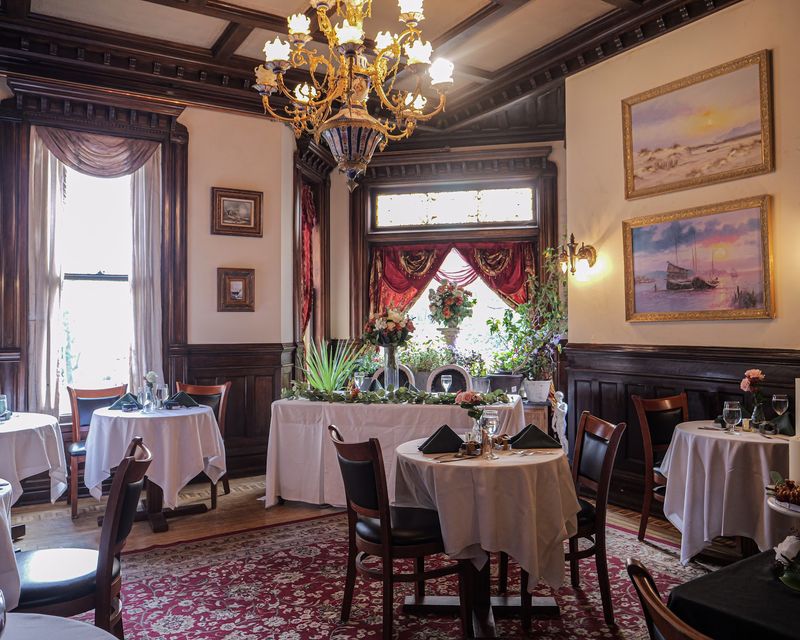
A regalia manufacturer built himself a castle on a Kalamazoo hill in 1895. More than a century later, you can sleep inside it.
Frank Henderson made his fortune producing uniforms and ceremonial regalia, then commissioned architect Charles A. Gombert to design an extraordinary home overlooking the city.
Completed in 1895, the Queen Anne residence has towers, dormers, steep gables, and stonework quarried near Lake Superior.
The interior was equally ambitious. Its original twenty-five rooms featured richly varied woods, including mahogany, bird’s-eye maple, oak, birch, and sycamore.
An elevator, several bathrooms, and a third-floor ballroom helped make the house remarkably elaborate for its time.
Today the property operates as a historic inn, with guestrooms occupying the castle and nearby accommodations.
Rooms have different personalities: the King’s Tower sits inside a circular turret, while the French Room features a carved marble fireplace. A day spa and rooftop hot tub add modern comforts to the Victorian surroundings.
You can find the building at 100 Monroe St, in Kalamazoo’s West Main Hill neighborhood. The on-site h CHOPHOUSE serves French-inspired meals, and reservations are also offered for castle tours and afternoon tea.