More Fossil Horses Turned Up In This Idaho Hillside Than Anywhere Else On Earth
More than 200 ancient horses came out of one quarry in a single bluff. That’s not a herd on a ranch.
That’s a herd of fossils, and it’s the biggest find of its kind anywhere.
These horses looked a lot like zebras. They roamed southern Idaho more than three million years ago, alongside mastodons and saber-toothed cats.
I can’t imagine stumbling onto that while working cattle.
A rancher did exactly that in the 1920s, and the Smithsonian came running. Crews hauled tons of bones east to Washington, D.C.
Today the story waits for you in a modern building beside the highway.
I like how close this all sits to everyday Idaho life. You can see the bluffs, hear the river, and hold a cast in your hands.
So what else was living out here back then?
A Modern Front Door To A Three-Million-Year-Old Neighborhood
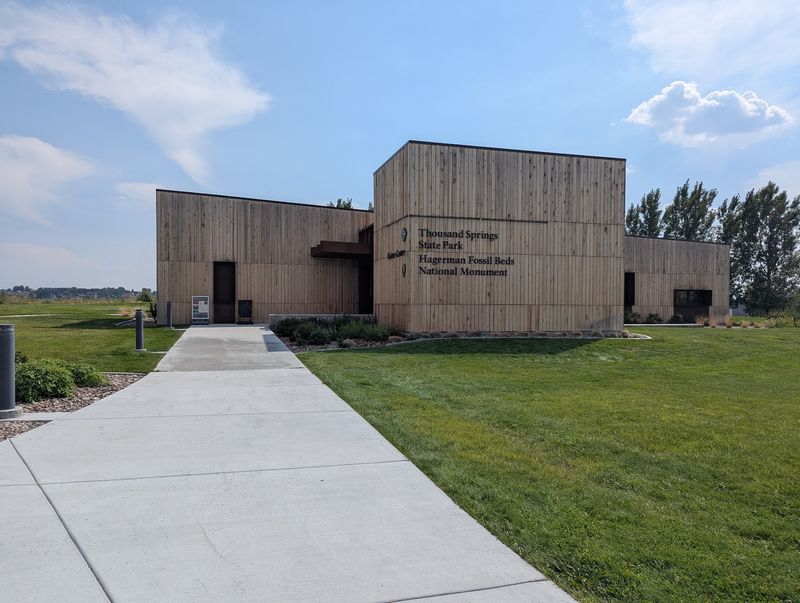
Start your trip at the Visitor Center: Thousand Springs State Park & Hagerman Fossil Beds National Monument. It’s a shared stop run by the National Park Service and Idaho Department of Parks and Recreation.
That partnership matters more than it sounds. You’ll find someone inside who can speak for the fossil monument and someone who knows the state park.
The building opened in 2022, so it still feels fresh. Inside, you’ll see fossils, casts, and interpretive panels about local history and recreation.
The monument itself covers more than 4,300 acres along the Snake River. Its fossils date to the Pliocene Epoch, roughly three to four million years ago.
Here’s a wrinkle worth knowing before you go. Older brown highway signs may still point toward downtown Hagerman, but the center moved out of town.
So trust your map over those signs. The new spot sits right along US-30, which makes it an easy pull-off.
It’s also the only place in the monument where you can see actual Pliocene fossils on display. Out on the bluffs, you’ll find views, not bones.
Think of it as the key that unlocks everything else nearby. Without it, the hillsides are just pretty scenery.
The Zebra-Striped Celebrity Of Southern Idaho
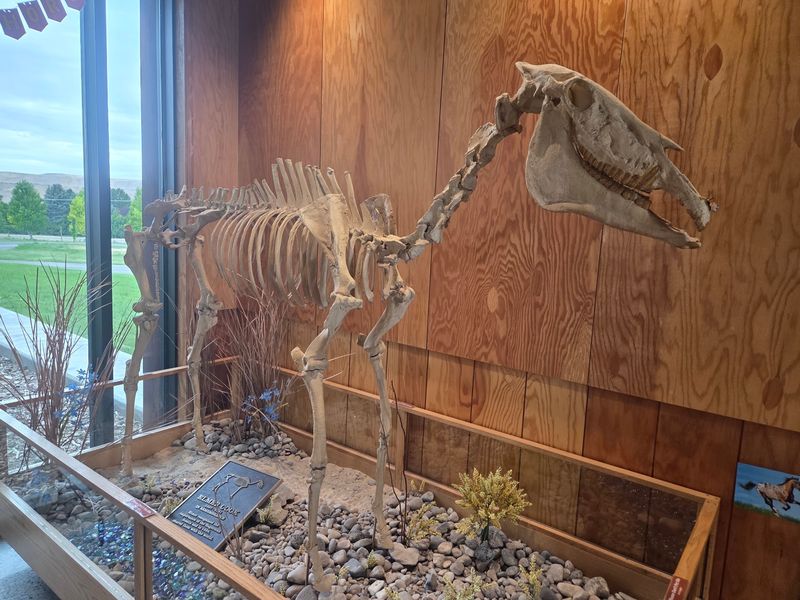
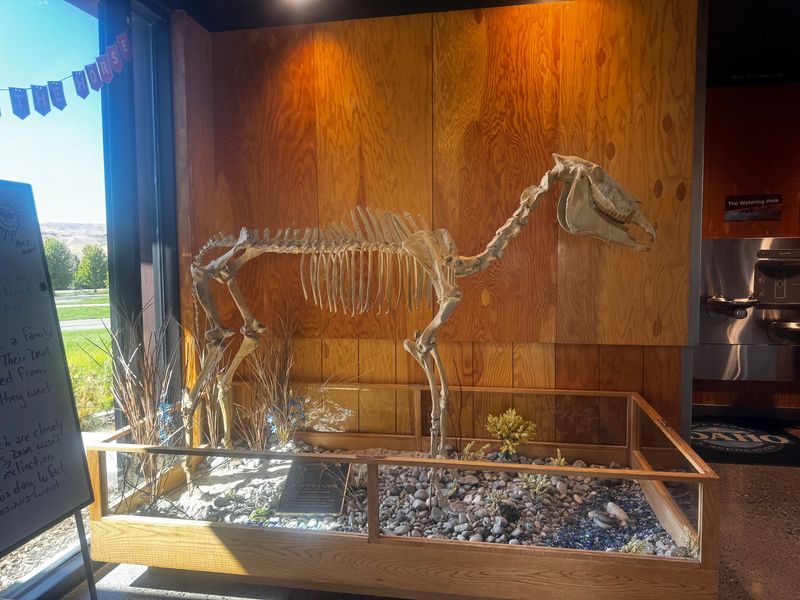
Meet Equus simplicidens, better known as the Hagerman Horse. It’s Idaho’s official state fossil, and it earned the title fair and square.
Scientists pulled more than 200 individuals from one quarry here. No other site has produced a bigger find of this species.
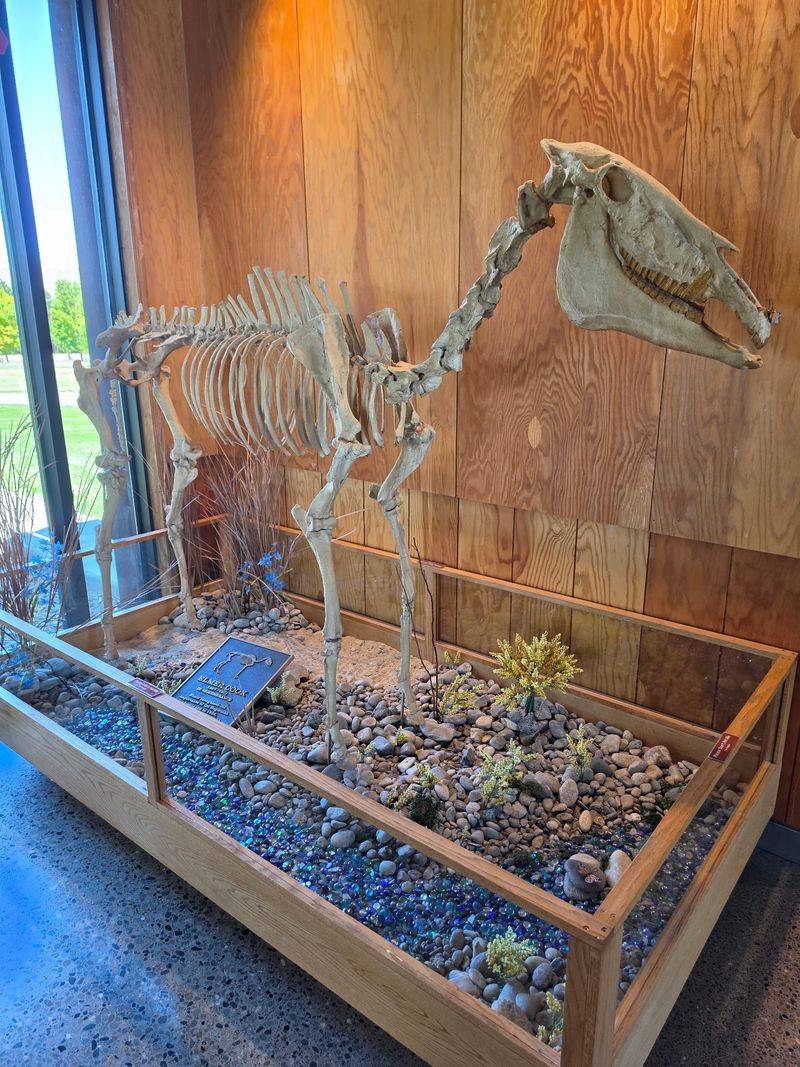
These animals were about the size of a modern Arabian horse. Their build, though, looked a lot like a zebra’s.
That resemblance is a big deal for science. The Hagerman Horse ranks among the earliest known members of the Equus genus.
Equus covers every modern horse, zebra, and donkey on the planet. So this Idaho animal sits close to the root of a very famous family tree.
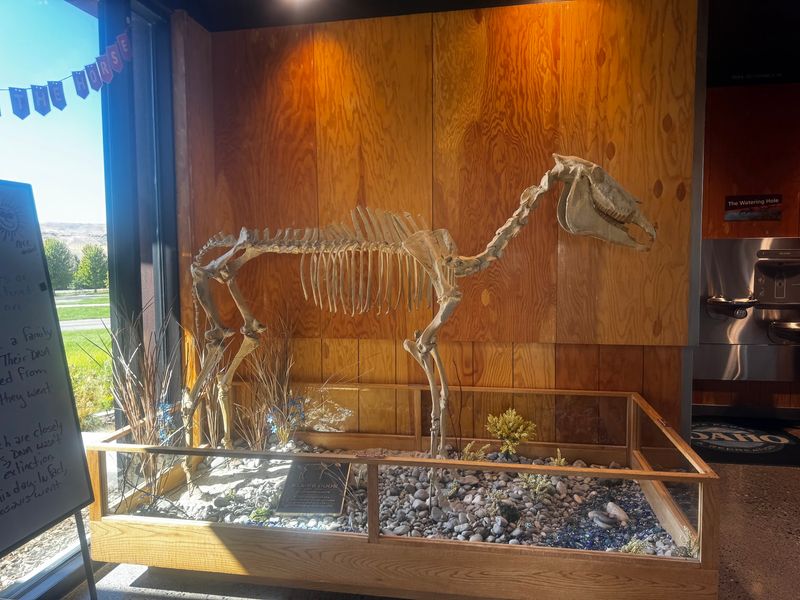
At the visitor center, a reproduction skeleton brings the horse to life. It gives you a real sense of size and shape.
Kids tend to have one question right away. Did it have stripes?
Nobody can say for certain from bones alone.
That mystery is half the fun. You get to wonder about a creature that once grazed right outside the door.
Not bad for a horse that’s been retired for three million years.
Saber Teeth, Mastodons, And A Surprising Supporting Cast
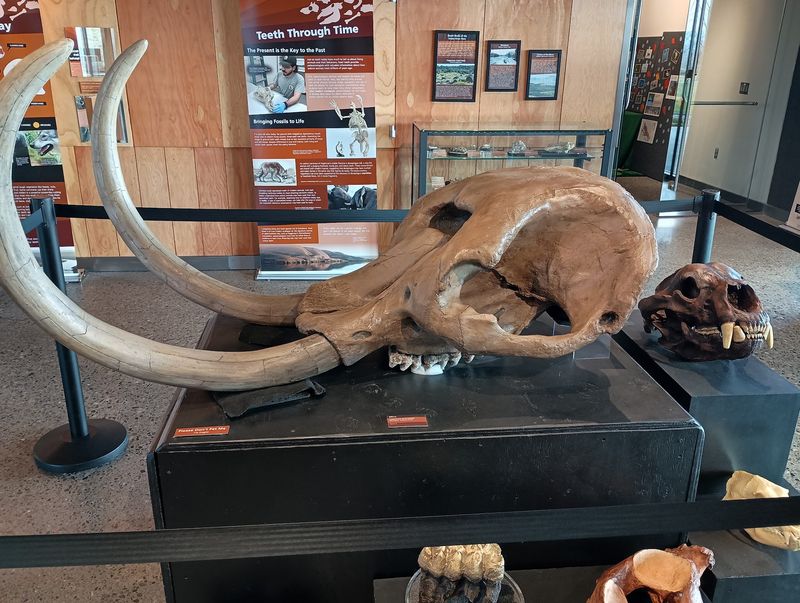
Horses got top billing, but they had plenty of company. The monument has turned up fossils from more than 200 species of plants and animals.
Saber-toothed cats prowled this ancient Idaho landscape. Mastodons and giant ground sloths lumbered through it too.
Then things get stranger. Bone-crushing dogs, somewhat like modern hyenas, shared the ground with a pig-like animal called a peccary.
Some residents would feel right at home today. Beavers, otters, birds, fish, and amphibians all left traces in the rock.
Together, they paint a picture of a wetter, greener world. Scientists use these clues to rebuild what the environment looked like long ago.
Inside the center, a cast of a mastodon head makes a strong impression. Authentic fossils share space with replicas, so you see both kinds side by side.
One of the most interesting lessons involves how researchers work. Exhibits explain the methods used to find fossils and piece together ancient habitats.
The digging hasn’t stopped, either. Thousands of new fossil fragments surface here every year.
That means the cast list keeps growing. Somewhere in those bluffs, the next surprise is already waiting.
How A Rancher’s Hunch Brought The Smithsonian To Town
In 1928, rancher Elmer Cook noticed odd bones eroding from the bluffs along the Snake River. He had a feeling they mattered, so he reported them.
Good call, Elmer. That tip reached the Smithsonian Institution in Washington, D.C.
Starting in 1929, Smithsonian crews arrived in southern Idaho. They opened up steep bluffs and scraped away sediment, using teams of horses for the heavy work.
Yes, living horses helped uncover ancient ones. History has a sense of humor.
The digs continued into the 1930s. Crews recovered remains of more than 200 Pliocene horses and shipped tons of specimens back east.
That spot became known as the Hagerman Horse Quarry. In 1975, it was named a National Natural Landmark.
Official monument status came later, on November 18, 1988. That’s when Hagerman Fossil Beds National Monument joined the national park family.
Today you can view the quarry area from an overlook. Active excavation isn’t part of the visit, and most research happens in labs.
Still, standing near that bluff hits differently once you know the story. One curious rancher changed how the world understands horses.
Short Films, Touchable Casts, And A Very Good Stamp Collection
Plan on a quick visit indoors. The center is small, and the exhibits are informative without being overwhelming.
A short film covers the Hagerman Horse and the fossil beds. It’s a handy primer before heading out to the overlooks.
Out back, a path circles the building. A table there has held casts and fossils that visitors can actually touch.
That hands-on moment beats a glass case every time. Ever wondered how antlers differ from horns?
Staff have explained it right there.
Rangers here are known for being knowledgeable and friendly. They can also tell you what the park offers and what it doesn’t.
Families should ask about the Junior Ranger programs. Kids can earn a badge while learning how scientists read ancient rocks.
Passport stamp collectors, take note. The stamp station includes Hagerman Fossil Beds, Oregon Trail, and Thousand Springs State Park cancellations.
There are fun extras too, like a Hagerman horse stamp and a small mastodon stamp. Bring your book.
A small gift shop rounds things out. Clean restrooms and a cool interior make it a welcome break on a hot Idaho drive.
Wagon Ruts And Wide Views Along The Snake River
Long before highways, wagons rolled right through this country. At the Oregon Trail Overlook, you can still see their ruts in the ground.
That’s a rare thing to spot with your own eyes. Pioneers crossed these same sagebrush flats on their way west.
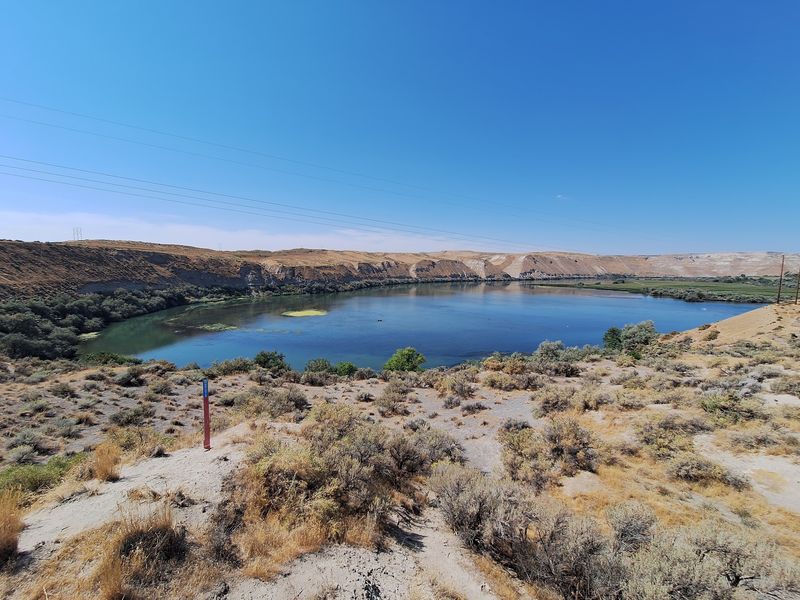
The overlook also delivers sweeping views over the Snake River. It’s a strong pick if you only have time for one stop.
Other overlooks let you gaze toward the bluffs where fossils formed. A Snake River Overlook sits along the self-guided driving route.
For a stretch of your legs, try the Emigrant Trail hike. It follows part of that pioneer path through open steppe.
Summer here gets hot. Bring plenty of water, wear a hat, and pick cooler hours for walking.
The park road and overlooks stay open year-round from sunrise to sunset. That gives you flexibility even when the center is closed.
I love how two eras stack up here. Ancient horses grazed this ground, and much later, wagon trains rolled across it.
Same Idaho landscape, wildly different travelers. Both left marks you can still find.
Blue Springs, Loaner Rods, And Plenty Beyond The Fossils
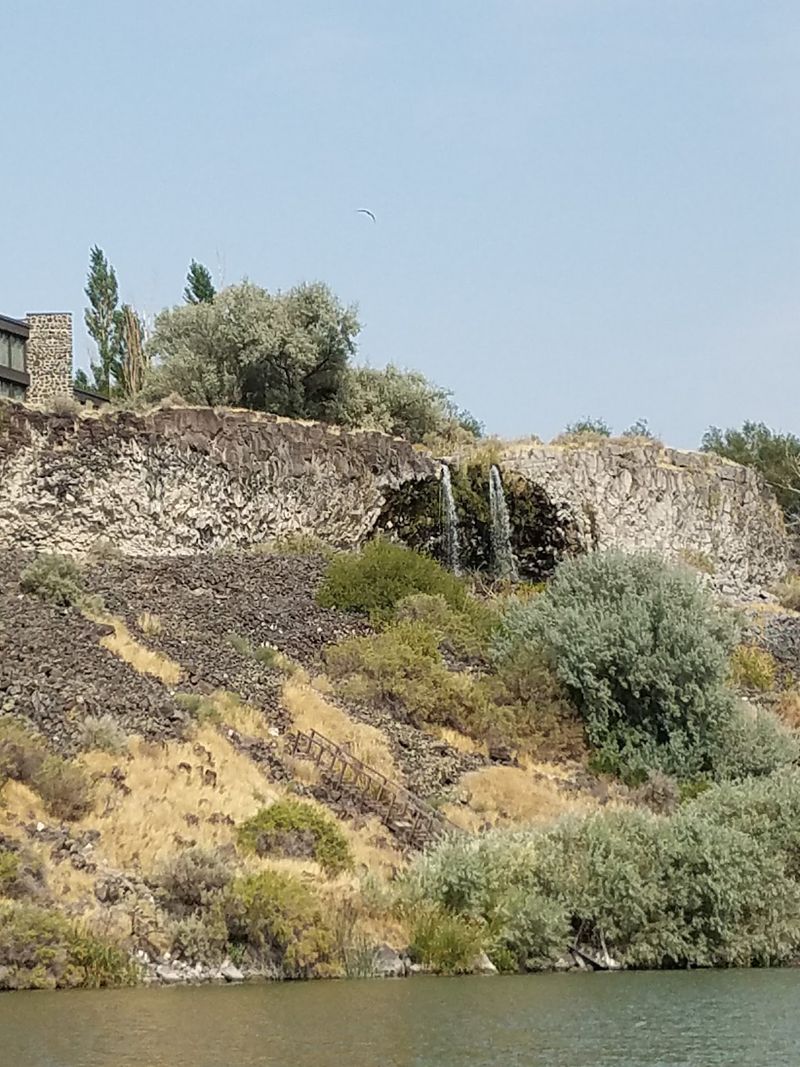
Water pours straight out of rock walls in this part of the Magic Valley. Thousand Springs State Park puts those springs front and center.
The state park has several separate units, so plan a little driving. Ritter Island is a favorite spot for exploring.
Paddlers can float out to Blue Heart Springs. The clear blue water there looks almost unreal.
Got anglers in the group? The visitor center offers a free fishing rod loaner program with a tackle box included.
Families have used those rods at stocked ponds and on Ritter Island. Rainbow trout have been part of the catch.
Camping is available nearby, with spacious sites, camp hosts, and heated shower rooms. A small grocery store and gas sit only minutes away.
Just north of the center, the dam area offers pretty river views. It’s an easy add-on before or after your fossil stop.
Hot springs are also within about a half-hour drive. That makes a full day out here very doable.
The Hagerman area packs a lot into a short stretch of US-30. Fossils simply open the door.
Timing Your Visit So The Doors Are Open
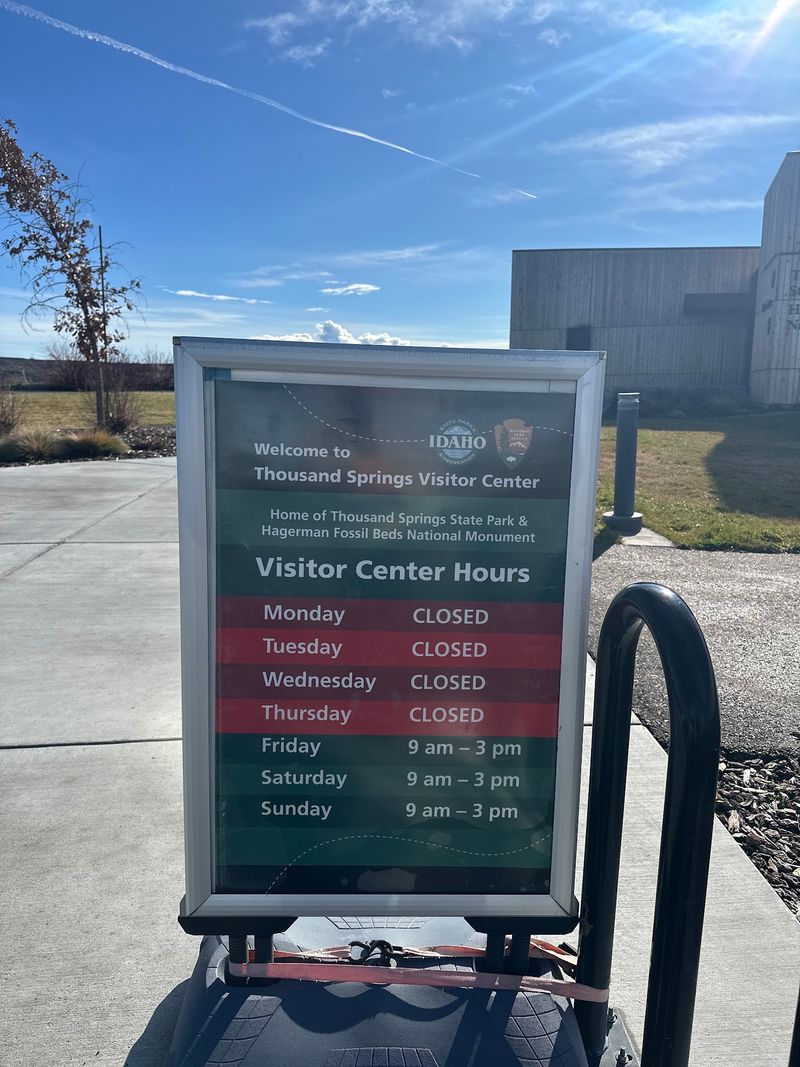
Set your GPS for 17970 US-30, Hagerman, ID 83332. That’s the Visitor Center: Thousand Springs State Park & Hagerman Fossil Beds National Monument.
Hours run shorter than you might expect, and the center closes on some weekdays. Check before driving so you don’t arrive to locked doors.
Good news on cost. Visiting the center and walking the grounds is free.
Parking is generous, with separate spaces for RVs, buses, and trucks with trailers. Please leave those big-rig spots for the folks who need them.
Plan on a short indoor visit. Pair it with the overlooks, the springs, or a picnic to fill out the day.
The center stays cool inside, which feels great in an Idaho summer. Still, pack water for the trails.
So is it worth the stop? If you love fossils, horses, or Oregon Trail history, I believe the answer is yes.
It’s a modest building with a world-class story behind it. Not many places can say their backyard produced the biggest ancient horse herd ever found.
Southern Idaho keeps that title quietly. Now you know where to see it.