Most Geysers Keep You Guessing, But This One In Idaho Erupts Like Clockwork Every Hour
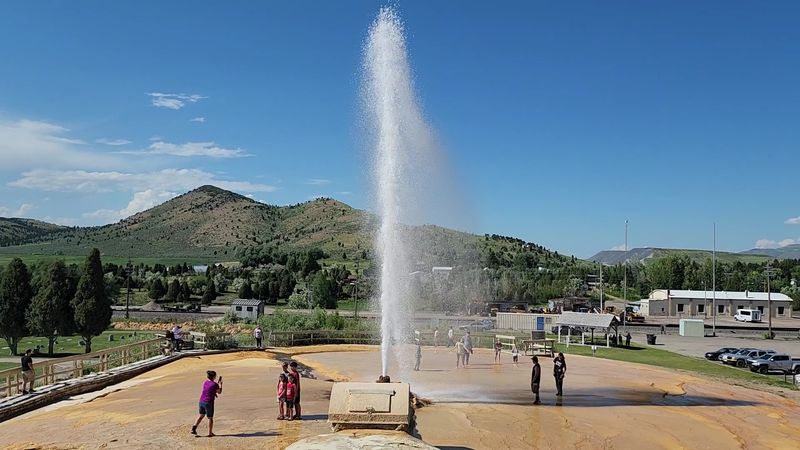
A drill crew in 1937 went looking for hot water in southeast Idaho and hit a pocket of gas that sent a fountain roaring into the sky. Nearly ninety years later, that same water still blasts upward, only now it waits politely for the clock to strike the hour.
It sits behind a row of ordinary storefronts, easy to miss unless you know where to look. Here is everything you need to plan a visit and catch the show.
A Geyser Behind Main Street
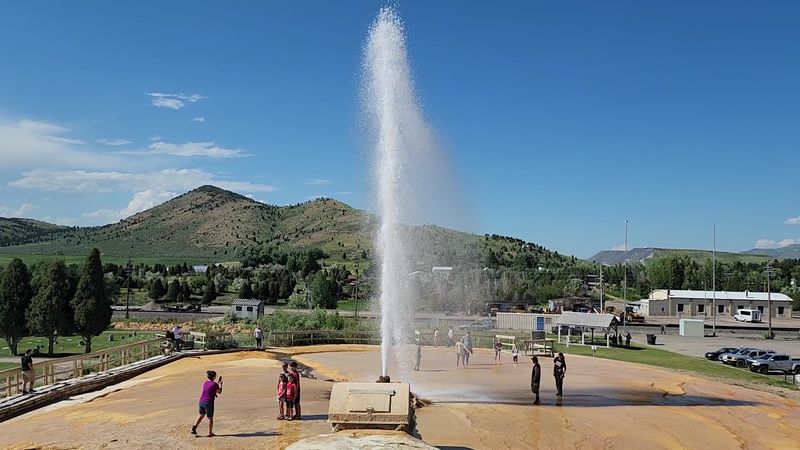
Soda Springs is a small town in Caribou County, tucked into the southeast corner of Idaho along the old Oregon Trail route. Right in the middle of town, near the police department and city buildings, sits Geyser Park, home to what is called the world’s only captive geyser.
That nickname is earned. Instead of erupting on its own schedule like the famous spouts in Yellowstone, this one is controlled by a timer and goes off every hour on the hour, all day and all night.
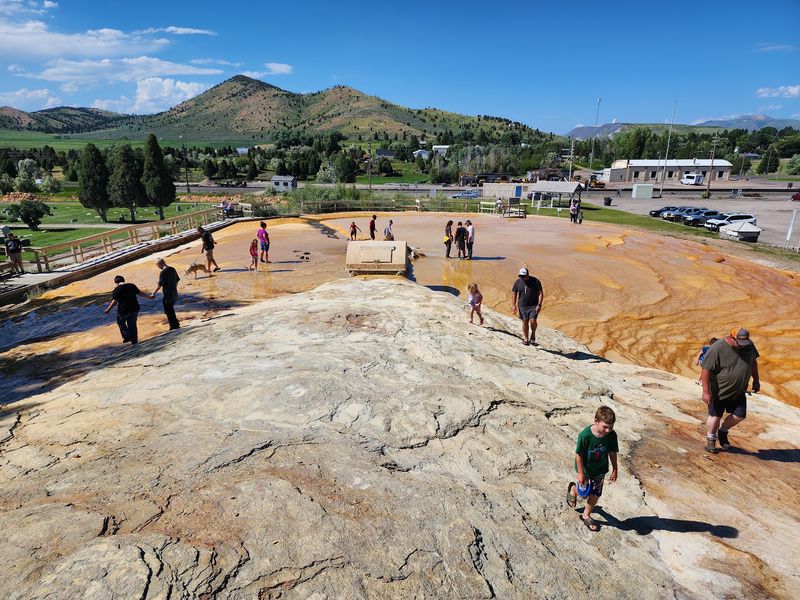
The park itself is simple. You get a grassy area, a boardwalk looping around a colorful mineral mound, a viewing platform, and signs that explain the strange story behind it all.
Visitors often say they would never guess something like this existed here. The geyser hides behind a row of street-side businesses, so you cannot spot it from the main road.
Following a map helps a lot.
Once you find the lot, though, the payoff is hard to forget. A column of naturally carbonated water rises high above the rooftops, then drifts across the park as a fine mist that sparkles in the sun.
The 1937 Drilling Surprise
Back in 1937, a group of local businessmen had big plans. They wanted to find a hot water source so they could build a commercial bathhouse and health resort, the kind of place travelers would pay to soak in.
So they started drilling. At a depth of 315 feet, the bit broke into a chamber packed with carbon dioxide gas, and the pressure did the rest.
Water came shooting out of the ground with no warning at all. It was not the warm pool the men had hoped for, but it was certainly something to talk about.
Think about how strange that moment must have been. One minute you are running a drill rig in a quiet Idaho town, and the next minute a fountain is towering over your head and refusing to stop.
The resort dream faded, but the geyser stayed. In a funny way, the town ended up with an attraction far more memorable than any bathhouse could have been.
The interpretive signs at the park walk you through this story in detail. Many visitors say reading them is half the fun, so give yourself a few extra minutes before showtime.
When The Water Would Not Stop
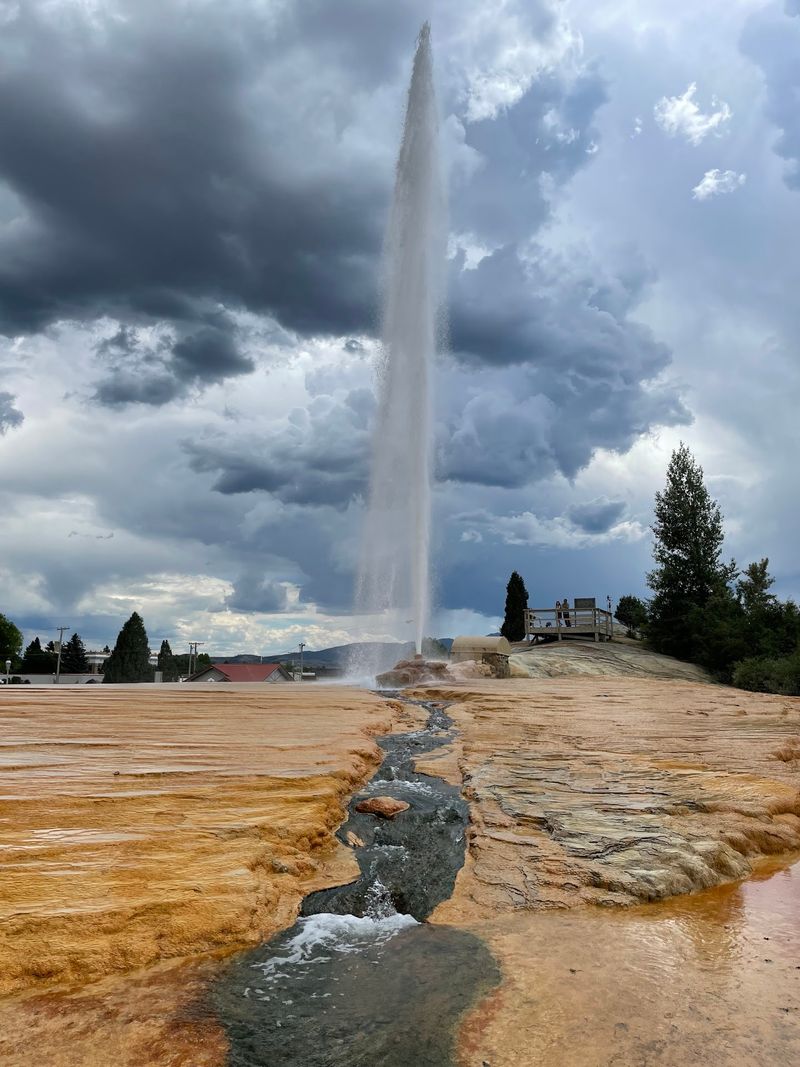
For the first few weeks, nobody could turn it off. The new geyser erupted continuously, and reports put its height anywhere from 45 to more than 70 feet, with some accounts claiming 100 feet or even 150 feet.
All that water had to go somewhere. Some stories say the steady spewing nearly flooded the town, which is quite a problem for a place that only wanted a nice bathhouse.
Then came a famous twist. The city reportedly received a request from the Secretary of the Interior to shut it off, out of concern that it was messing with the schedule of Old Faithful in Yellowstone.
Later on, that link to Old Faithful was dismissed as pure fantasy. Still, the tale stuck around, and you will hear it repeated by visitors who read the signs and love the idea.
The town made a smart choice in the end. Rather than plug the geyser for good, people realized a controlled eruption could be a dependable draw for travelers.
That decision is why you can show up today, check your watch, and know almost exactly when the water will climb skyward.
Clockwork Under The Ground
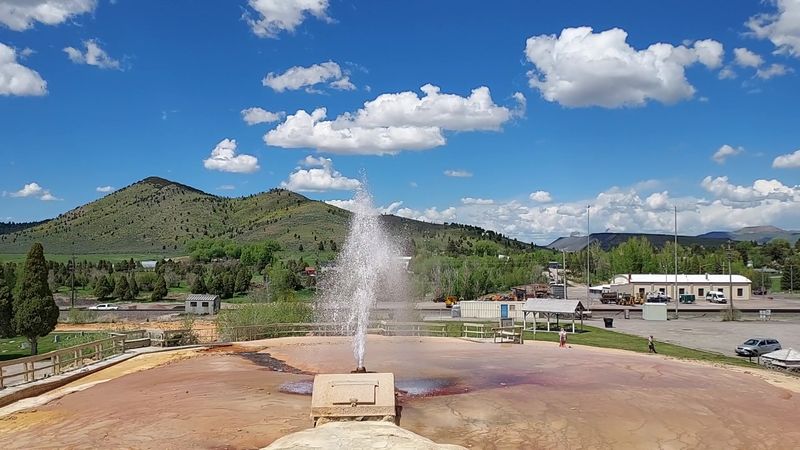
Here is the clever part. The geyser is capped and regulated by an electric motor and a mechanical timer, so it releases on schedule instead of spraying nonstop.
Pressure builds underground between eruptions. When the top of the hour arrives, the system lets it go, and up shoots the water.
Is it perfectly on time? Close to it.
Visitors mention it running anywhere from a few seconds to about a minute late compared to their phones, so arrive a little early and keep watching.
There is no siren or countdown. One moment the vent is quiet, and the next it is roaring, so do not wander off to the car at five till.
A few folks grumble that a timed geyser is not natural. That is fair, but the water and gas are real, coming straight from deep underground, and the timer just gives it manners.
One key detail to know: if the wind is blowing a certain direction, the geyser may not go off at all. Signs at the park explain this, so read them before assuming something is broken.
Seventy Feet Of Fizz
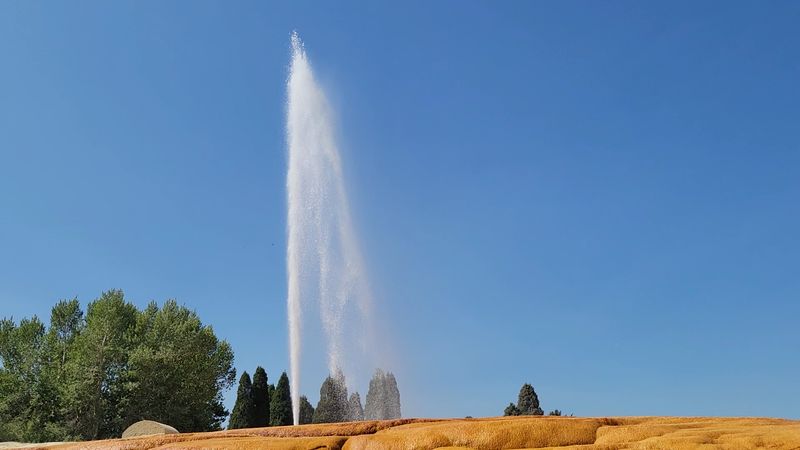
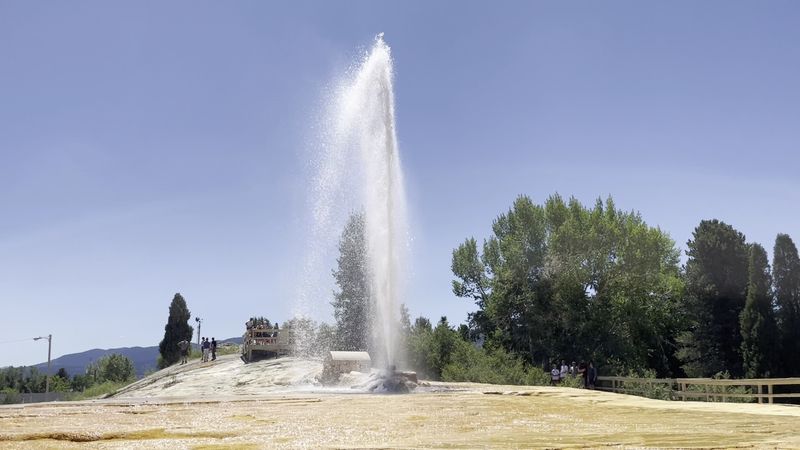
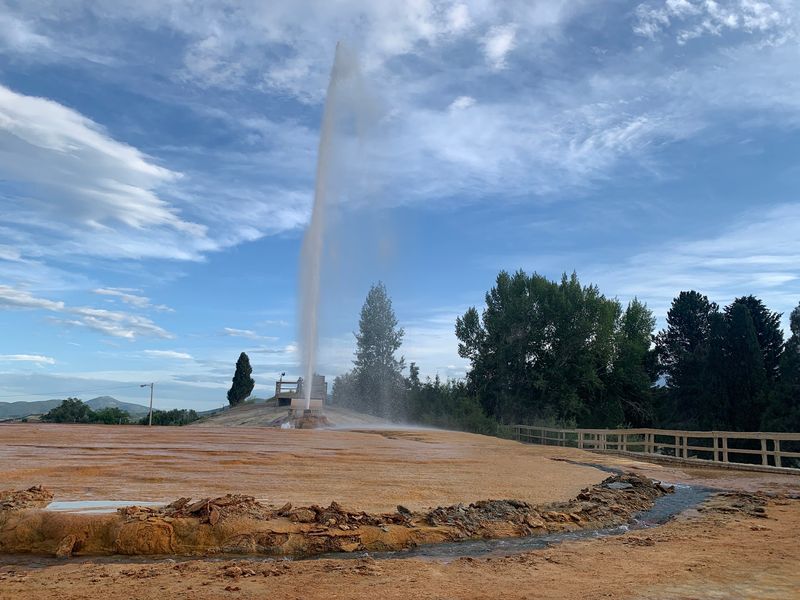
Stand on the boardwalk when the hour hits, and you will hear it before you fully see it. A rush of naturally carbonated mineral water bursts upward, usually climbing more than 70 feet into the air.
Some reports say it can still reach 100 feet on a good day. Either way, it towers well above the nearby buildings and looks especially bold against a bright blue sky.
Each eruption lasts roughly five to eleven minutes, depending on who you ask, with most visitors describing about ten. That is plenty of time to snap photos, take video, and simply stare.
Families say they like walking the whole loop while the water is still going. You can watch the column from different angles and see how the spray bends with the breeze.
The water itself is around 72 degrees Fahrenheit, often called luke-cool. It is also soft water, which is unusual in this part of Idaho.
Fun bit of trivia: the fizz comes from carbon dioxide, the same gas that helped give Soda Springs its name long before the drill ever showed up.
Rust, Orange, And Travertine
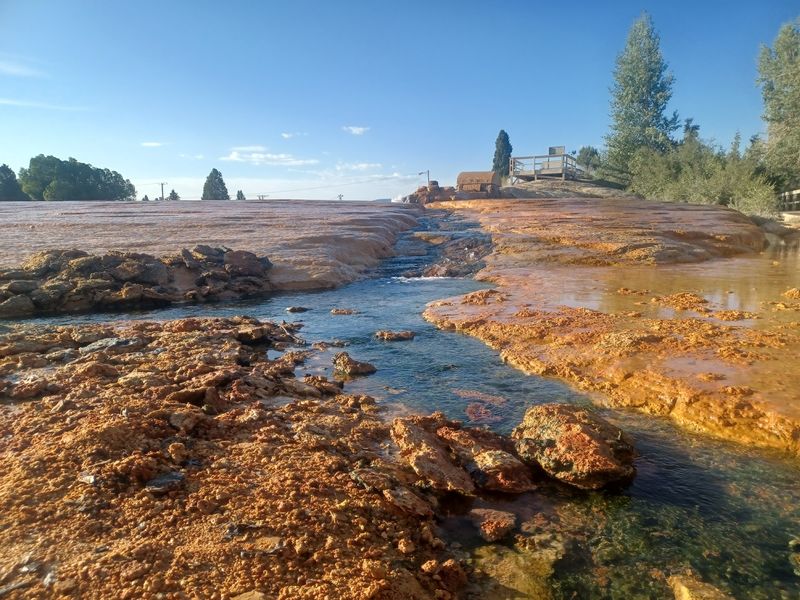
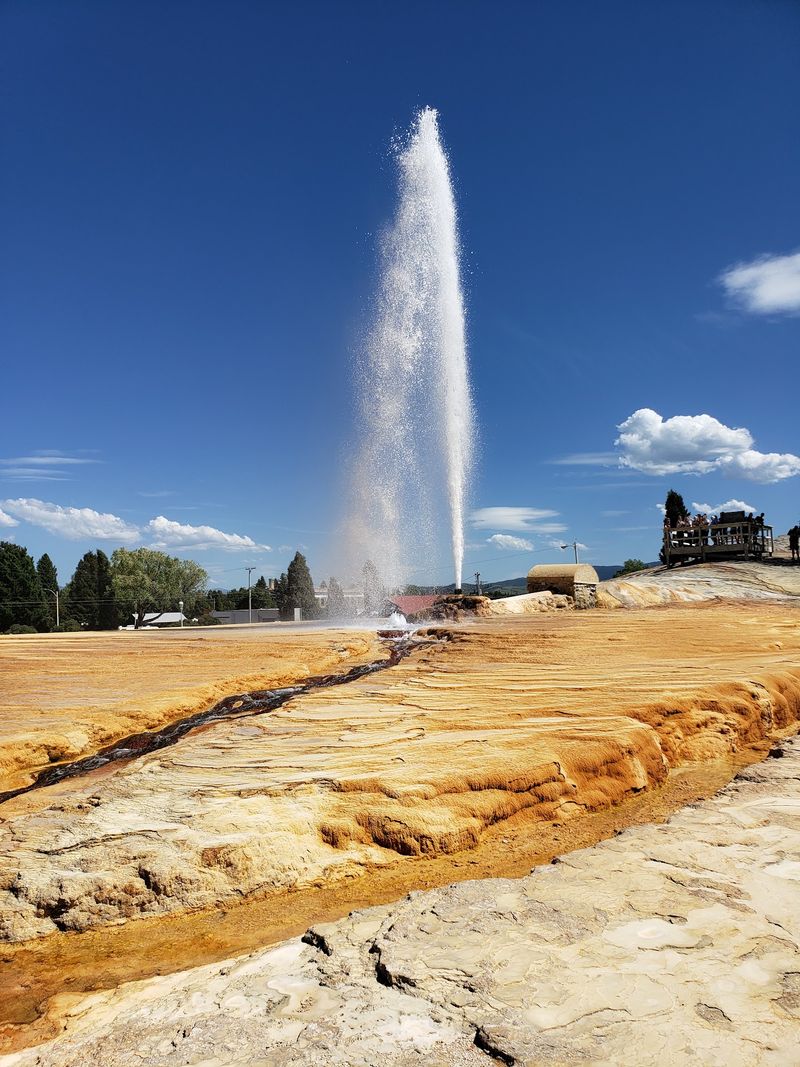
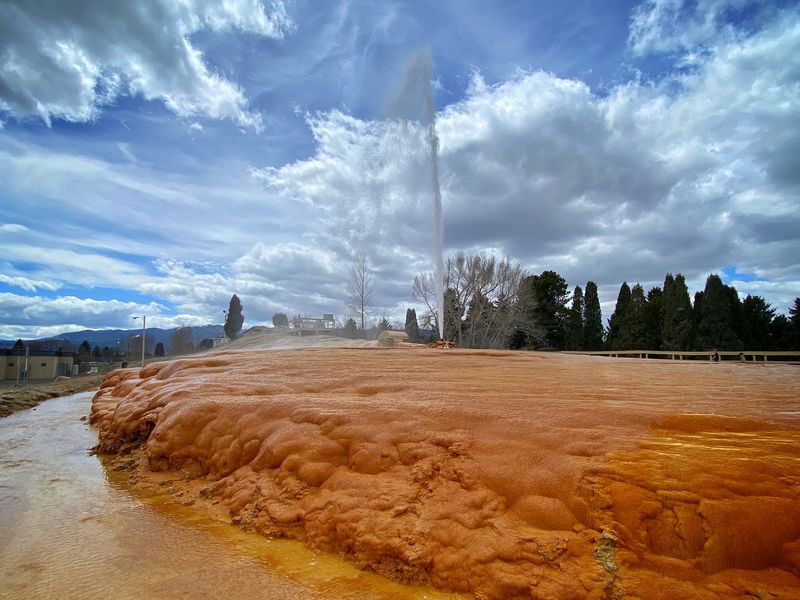
Look down between eruptions and you will notice the ground has a personality of its own. Decades of mineral-rich water have built up a striking mound of travertine around the vent.
The colors range from creamy white to deep orange and rusty brown. Little terraces and ripples form where the water flows and settles, almost like a miniature version of Yellowstone’s hot spring formations.
Geology fans tend to linger here. Visitors often call the surrounding rock one of the coolest parts of the stop, especially if you enjoy seeing how minerals shape a landscape over time.
Climbing on the deposits is not allowed, though. Stay on the path and boardwalk so the formations keep growing and everyone gets to enjoy them.
A camera with a zoom helps capture the textures without stepping off the walkway. Morning and late afternoon light can make the orange tones glow even richer.
Kids may be surprised to learn that all that color came from water alone. It is a simple, hands-off science lesson right in the middle of a small Idaho town, and it costs nothing to see.
Boardwalks, Benches, And A Lookout
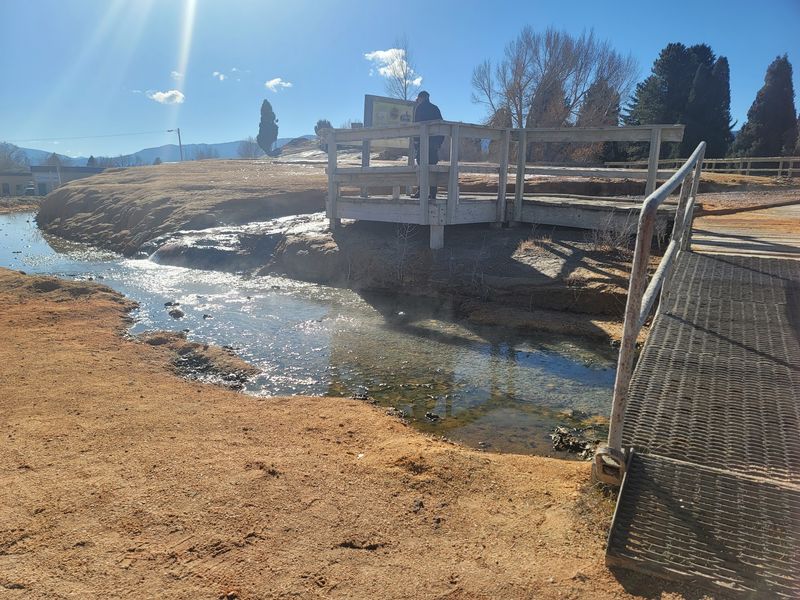
Effort is optional at Geyser Park. You can pull into the lot and watch from your car, or climb up to the viewing platform for a fuller look.
A boardwalk circles the geyser, giving you a steady, easy path around the mineral mound. A short trail leads up to the observation stand, where the eruption lines up nicely against the town and hills beyond.
Out on the grass, picnic tables and benches wait for anyone who wants to bring lunch and kill time before the next hour. It is a relaxed setup that works well for a road trip break.
Restrooms are on site, and travelers often call them a big plus. There is also an area with visitor information, plus a building south of the parking lot packed with more history.
Plenty of people pair the stop with a nearby museum that visitors describe as well done. Between the signs and exhibits, you can easily fill an hour.
Winter visitors should expect snow and ice on the walks at times. Good boots make that season much more comfortable.
Mind Where You Park
Ask anyone who has been, and they will warn you about the mist. The spray carries minerals, and when it lands on your car it can leave hard water spots that are tough to scrub off.
Several visitors learned this the hard way. One grandparent mentioned their car came away coated in a stubborn film after parking in the lot closest to the geyser.
The fix is easy. Check which way the wind is blowing and park upwind, or leave the car on the street and stroll over.
There is a large lot behind the street-side businesses, and parking there is free. On calm days it works fine, but breezy afternoons call for a little extra thought.
Same goes for your belongings. Camera lenses, sunglasses, and phones can pick up spots if you stand right in the drift.
Signs around the park seem to send mixed messages about playing in the spray, according to one family. When in doubt, enjoy it from the boardwalk and keep little ones on the path.
Grandkids, Road Trippers, And Rock Hounds
Kids get it right away. A tall burst of water on a schedule is basically a magic trick, and families say their children loved every minute of the show.
Grandparents appreciate the predictability. Knowing the eruption comes on the hour makes it easy to plan lunch, a museum visit, or a walk around town.
Road trippers on their way to Lava Hot Springs or Yellowstone find it an ideal leg stretch. Some call it Yellowstone in a mini version, and one visitor fondly dubbed it the working man’s Old Faithful.
Geology buffs will enjoy the travertine, while history fans can soak up the 1937 story on the signs. Curious wanderers even mention a cemetery right next door that is worth a quiet walk.
It is a small spot, so set expectations. One traveler noted it might not justify a long drive alone, but it shines as part of a day around southeast Idaho.
Most people spend around an hour between arriving, reading, walking, and watching. That is about the sweet spot for this little roadside wonder.
Finding E 1st S
Geyser Park sits at E 1st S in Soda Springs, Idaho, right in the heart of town. It is close to the police department and city buildings, but tucked behind a row of storefronts.
Because you cannot see it from the main road, a map app is your friend. Once you turn in, a large free parking lot opens up behind the businesses.
The best part for budget travelers? There is no fee to watch the geyser.
Families looking for a cheap outing will find few better deals in southeast Idaho.
The park is open around the clock, and the geyser runs year-round. Wind can pause an eruption, so it helps to check conditions or call the city before a special trip.
Soda Springs makes a handy stop for anyone traveling between the Snake River Plain and the Wyoming border. Lava Hot Springs is nearby too, so you can turn it into a full day.
Arrive about ten minutes before the hour. That gives you time to park upwind, use the restroom, and grab a good spot on the boardwalk.
Worth Setting A Watch For
Few small towns can promise a show at the top of every hour. Soda Springs can, and it has been doing so ever since a hopeful drill crew hit something far more surprising than a hot spring.
Is it a natural wonder in the purest sense? Not quite.
The timer and cap give it a quirky, human touch, and that is exactly what makes it such a fun Idaho story to tell.
Between the towering spray, the rusty travertine, and the tale of Old Faithful worries, there is plenty packed into a short stop. Add free parking, restrooms, and picnic tables, and it fits right into a lazy afternoon.
Just remember the simple rules. Park upwind, stay on the path, and keep an eye on the clock because there is no warning before it goes.
If you are heading through southeast Idaho, plan your route around the hour. Spend the wait reading signs or eating a sandwich on the grass.
Then watch the water climb. Chances are you will be checking your watch for the next eruption before you leave.