Most People Don’T Know This Seafood Spot Comes From Kentucky’S Most Celebrated Chef
Kentucky is about as far from an ocean as a state can get. That makes ordering fish here feel like a dare.
One Lexington counter has been winning that dare since 2013. You order at the register, take a number, and find a seat.
It looks like any casual lunch spot in the city. The chef behind it is a repeat James Beard semifinalist, which is not something the room advertises.
Fish and chips, catfish platters, po boys, tacos, and rotating specials fill the board. Vegetarians get real options rather than a sad afterthought.
Prices stay in normal lunch territory. There is a bike rack outside because the trail runs right past it.
You can eat well here without dressing up or making a reservation. That combination is rarer than it should be, and this place has been doing it the whole time.
A Counter Window With A Serious Pedigree
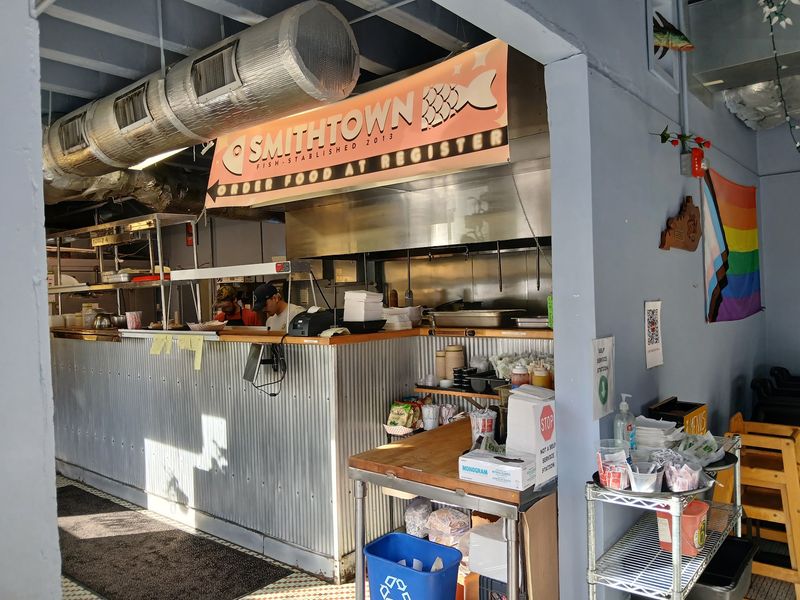
Smithtown Seafood does not announce itself with neon or nautical rope. You walk up to a counter, read a board, and place your order like it is any other lunch stop.
What throws people off is the gap between the setup and the food. Counter service usually signals speed over care.
Here the fry work is precise and the sourcing is unusually thoughtful.
The building itself used to be a bread factory, which explains the concrete, the high ceilings, and the general lack of fuss. Nothing about the room is trying to impress you.
That turns out to be part of the charm.
Regulars will tell you the trick is to ignore the plainness of the entrance. Plenty of first-timers assume it is a snack window attached to a taproom.
Then the catfish arrives and the assumption falls apart.
Ratings sit high across hundreds of reviews, which says something about consistency. A spot like this survives on repeat customers, not tourists. You get the sense the kitchen knows exactly who it is feeding.
The address is 501 W 6th St, Lexington, Kentucky.
Ouita Michel, The Name Behind The Fryer
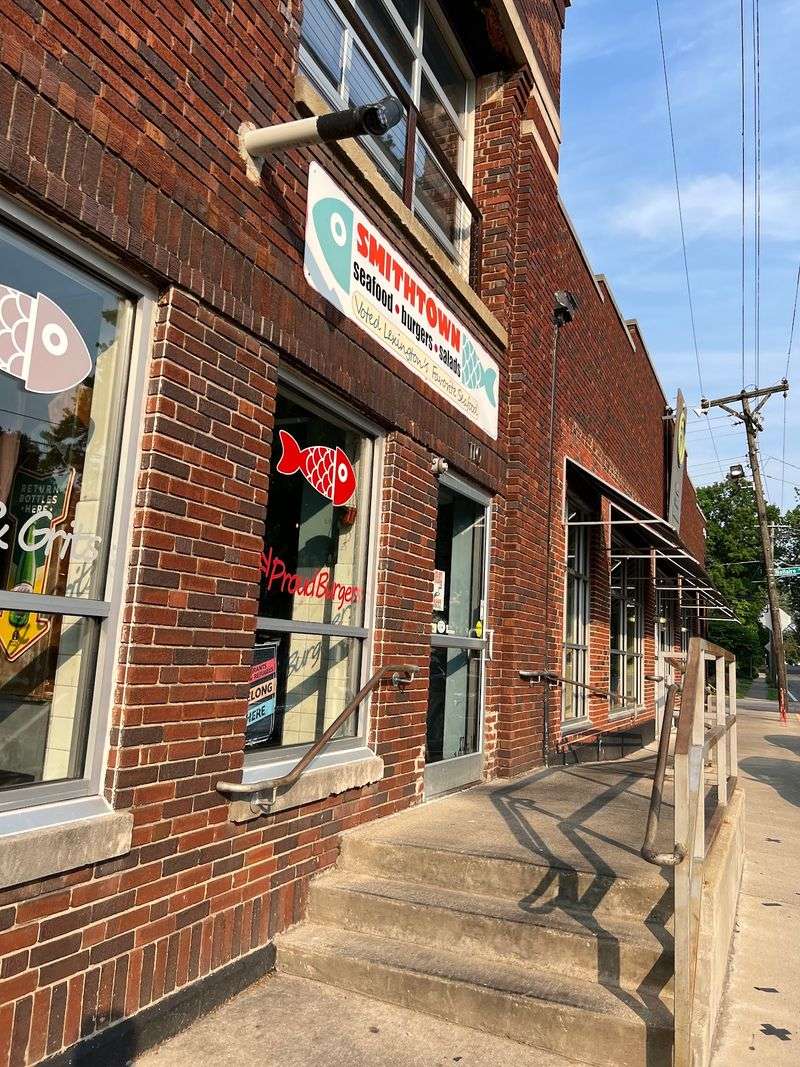
Chef Ouita Michel owns this place, and that detail changes how you read the menu. She has collected multiple James Beard Foundation Award nominations over her career.
In Kentucky food circles, her name carries real weight.
Most chefs with that kind of recognition open a white tablecloth room and charge accordingly. Michel went the other direction with this concept.
You order fish and chips from a counter and eat it off a paper boat.
Her restaurant family includes several Kentucky spots, each with its own personality. Smithtown Seafood is the casual sibling, built for a weekday lunch or a lazy Saturday.
The standards behind it did not get relaxed to match the setting.
You can taste that in small things. House-made sauces, fresh fry oil habits, batter that shatters instead of sogging.
None of it is accidental.
The pedigree is also why the menu keeps changing in small ways. Specials rotate through crab cakes, jambalaya, and other kitchen experiments.
A chef with that resume gets bored serving the same nine things forever.
Knowing who is behind it makes the modest prices feel almost unfair.
Kentucky Farms On Every Plate
Local sourcing is a phrase that gets thrown around loosely. Michel’s restaurants have purchased millions of dollars in Kentucky Proud products over the years.
That is a receipt, not a slogan.
You feel the difference in the sides more than anywhere else. Greens taste like they were cut recently.
Grits come from Weisenberger Mill, a Kentucky operation that has been grinding grain for generations.
Even the beef in the burgers is Kentucky Proud. A seafood restaurant sneaking in a genuinely good burger is a nice bit of mischief.
There is a practical upside for you as a diner. Short supply chains usually mean fresher flavor and fewer mystery ingredients.
Your money also circles back to farms within driving distance.
Menus built this way tend to shift with the seasons, so expect small changes through the year. Ask what came in recently if you want the freshest thing on the board.
The commitment is not loud or preachy. No one hands you a pamphlet about sustainability.
The sourcing just quietly shapes what lands in front of you.
That restraint makes the whole thing more convincing than any sign on a wall would.
Greens Grown Next Door, Literally
Few restaurants can point at a wall and say the salad came from behind it. Smithtown Seafood sits inside the Bread Box building alongside FoodChain, an urban aquaponic farm.
Neighbors do not get much closer than that.
Aquaponics pairs fish tanks with plant beds in one loop. Fish waste feeds the greens, the greens clean the water, and the cycle repeats.
It is efficient, tidy, and kind of fascinating to think about mid-bite.
Herbs, salad greens, and some tilapia come from that setup. Travel time from farm to fryer is measured in steps.
If you like microgreens on a house salad, this is where that garnish earns its keep. The soy ginger dressing gets a lot of love from people who order it.
The partnership also gives the place a genuine story, not a marketing one. Urban farming in a former bread factory is a good use of old industrial bones.
Worth doing before you leave: take a look around the building. The shared space concept explains a lot about how the food gets made.
It is rare to see production and plating share an address like this.
Order At A Counter, Eat In A Garden
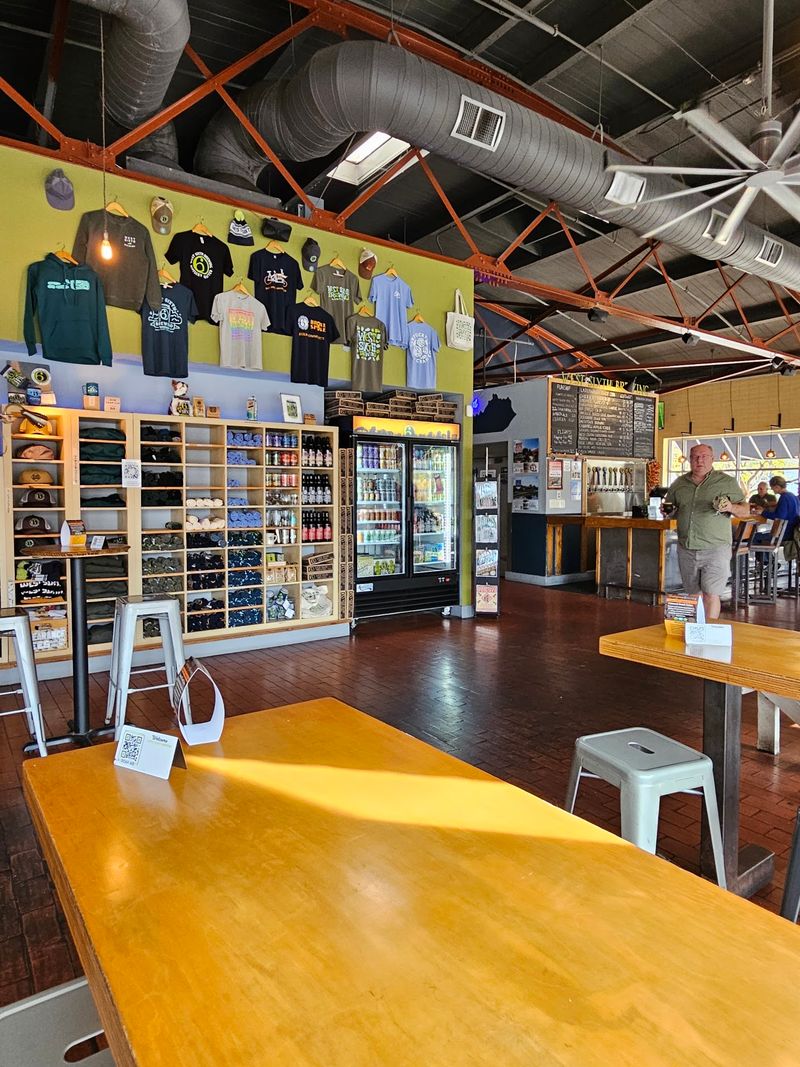
The layout confuses people on their first visit, and that is part of the fun. You order from Smithtown’s counter, then take a seat in the adjacent West Sixth Brewing space.
Food gets delivered to your table.
There is also a QR code system at the tables and an app for ordering. Scan, tap, wait, eat.
Nobody makes you stand in line twice.
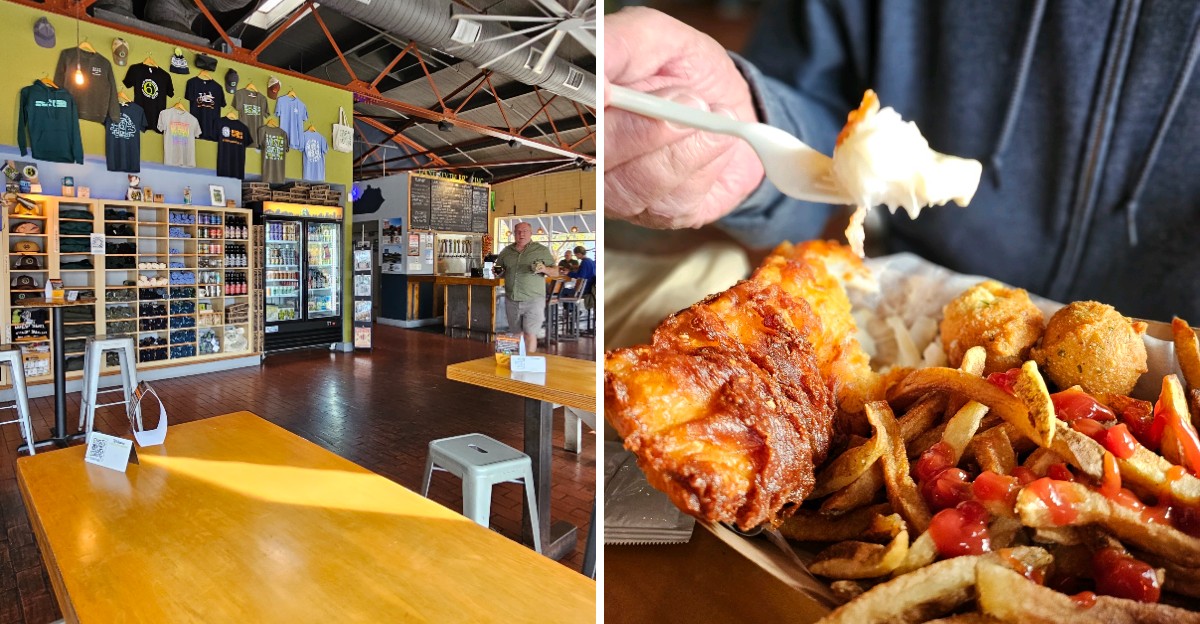
Seating is shared and open, so expect a lively room rather than a quiet one. The vibe leans social, with corrugated metal counters and bright fish-themed artwork on the walls.
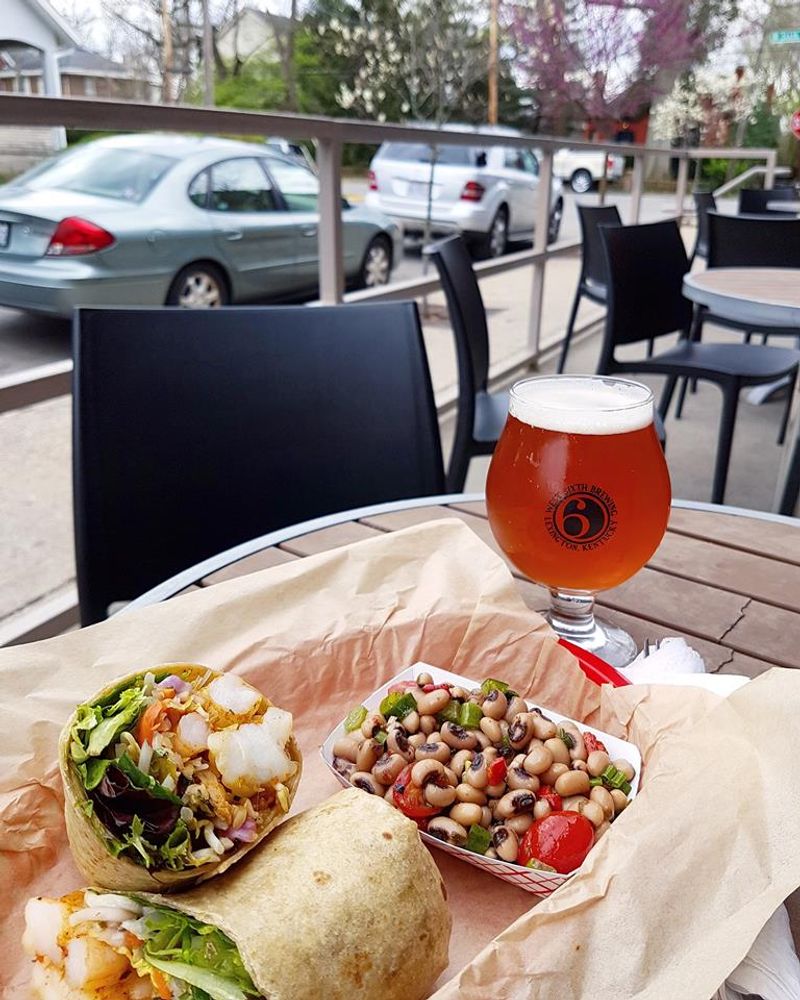
Outdoor seating exists too, which is the move on a mild Kentucky evening. The patio fills quickly when the weather cooperates.
Cyclists have it easy here. There is a bike rack out front and a bike trail runs right alongside the property.
One practical note: drinks do not come with free refills, though bottled and canned options are available. Plan accordingly if you are ordering something spicy.
Groups should know that dishes may arrive at slightly different times. Order together, be patient, and the kitchen usually moves fast.
Fried Things Worth Driving For
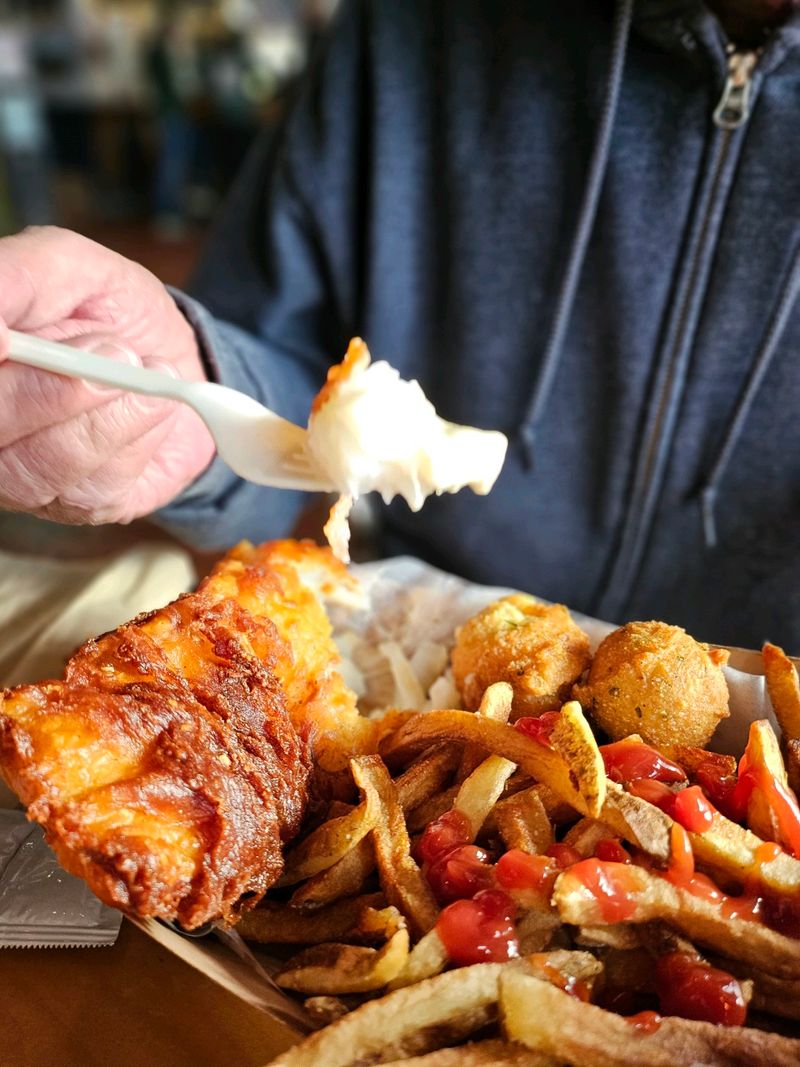
Catfish gets mentioned more than anything else here, and for good reason. It comes out clean-tasting rather than muddy, with a crust that actually crunches.
The buffalo catfish bites bring heat without drowning the fish.
Fish and chips use cod in a West Sixth beer batter. The coating turns deep golden, the fish stays flaky, and the fries are cut in house.
Hush puppies arrive bite-sized with bits of onion mixed in. Coleslaw leans crunchy instead of sweet, which keeps things balanced.
Fried banana pepper rings deserve their own paragraph. They are tangy, crisp, and shockingly hard to stop eating.
Regulars order them as a table snack and then order more.
Artichoke fritters show up as a starter, cheesy and served with a smoky tomato ranch. Clam chowder gets plenty of praise from bowl orderers.
Sauces are made in house, including ranch, tartar, and a beer cheese. The banana pepper dipping sauce that comes with the catfish platter has a small fan club.
Fair warning about allergies: the kitchen uses shared fryers. Tell the staff up front if that matters for you.
Grits, Po’ Boys, And Plant-Based Surprises
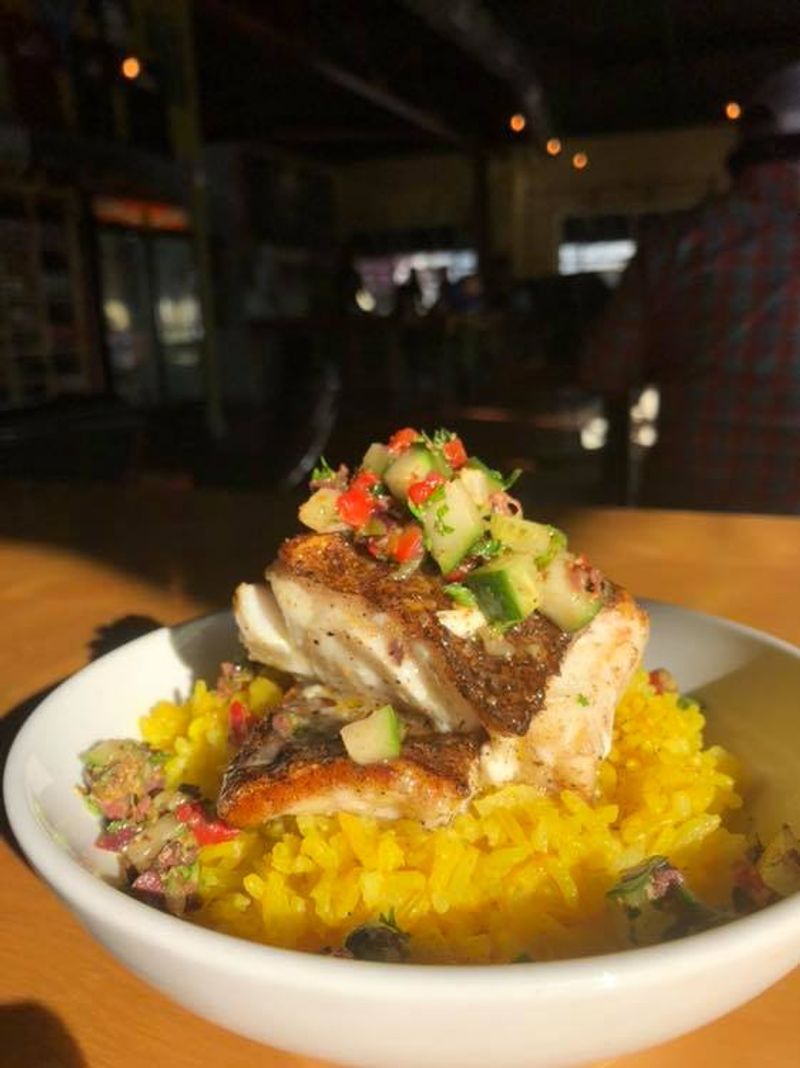
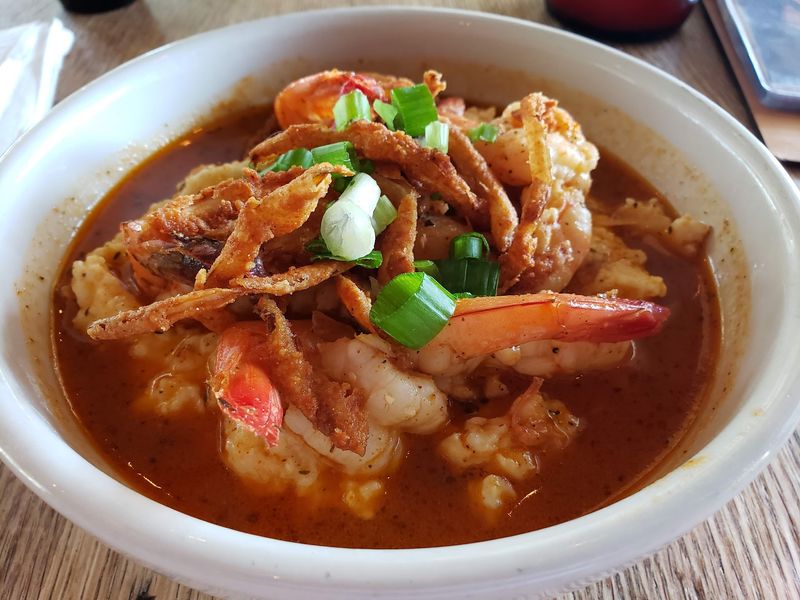
Seafood and grits is the sleeper order on this menu. Blackened shrimp or catfish sits over creamy Weisenberger cheese grits.
Rich, warm, and the kind of bowl that makes you quiet for a minute.
Po’ boys are a strength too. The oyster version earns comparisons to New Orleans, which is bold territory for Kentucky.
Shrimp po’ boys come packed and filling.
Vegans are genuinely taken care of here, not tacked on. Jackfruit crab cakes mimic the texture surprisingly well.
An oyster mushroom po’ boy delivers the meaty bite without any fish.
Other standouts include salmon croquettes, the Singapore wrap, and a Puerto Rican sweet potato salad that people rave about. Quinoa salad and super spice fries round out the lighter and bolder ends.
Platters come with two sides and hush puppies, which makes them the best value on the board. Oyster platters and catfish platters both travel that route.
Tacos are available, though portion sizes vary by report. If you want a full meal, a platter or po’ boy is the safer bet.
Burgers made with Kentucky beef sit there for the seafood skeptic in your group.
Save Room For The Bakery Connection
Dessert here comes with a family connection. Sweets are supplied by The Midway Bakery, another Ouita Michel operation.
Same standards, different building.
The sorghum cookie is the one people remember. Sorghum is a Kentucky syrup tradition, closer to molasses but softer and grassier in flavor.
It gives the cookie a chewy, old-fashioned character.
Weekend specials add another layer worth timing your visit around. Chef Agnes Marrero contributes dishes drawn from her own background.
Her mother’s cod fritter recipe has become a menu highlight.
Specials rotate through things like crab cakes and jambalaya during the week. Check the board when you arrive rather than deciding in the parking lot.
That rotating element keeps regulars coming back monthly instead of yearly. You rarely eat the exact same meal twice if you do not want to.
Portions run generous enough that dessert requires strategy. Split a platter with someone and you will have room.
Put simply, a landlocked city produced a seafood counter with a celebrated chef, a farm next door, and cookies made from local syrup. That combination is hard to find anywhere.