Most People Haven’t Discovered This Spectacular Cave In Georgia Yet
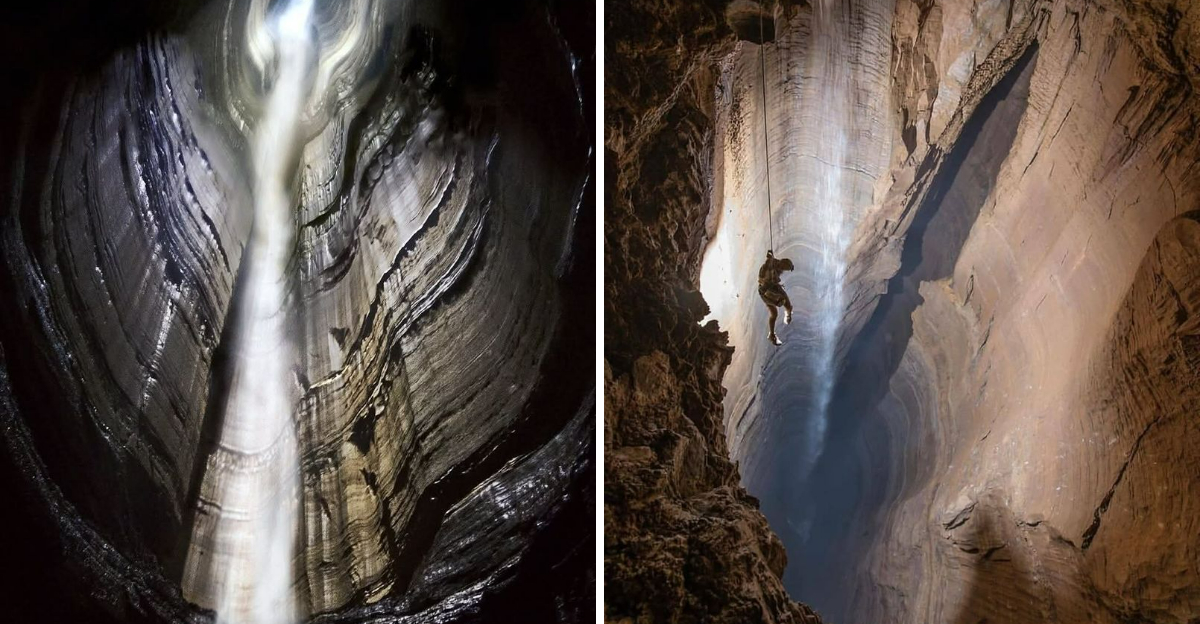
I almost drove right past the sign without a second glance. Something made me turn around, and I am so glad I did.
What I found underground left me completely speechless. Georgia hides a secret beneath its rolling hills that most people never think to look for.
I climbed down into darkness and felt the temperature drop instantly. The walls stretched higher than I expected, and the passage kept going and going.
Twelve miles of tunnels wind through solid rock, dropping over a thousand feet into the earth. My flashlight barely touched the ceiling in some spots.
I stood there feeling small in the best possible way. Georgia keeps surprising me with things hiding in plain sight.
If underground adventures excite you even a little, you will want to see this one for yourself.
A 586-Foot Drop That Ranks Among The Deepest In The Country
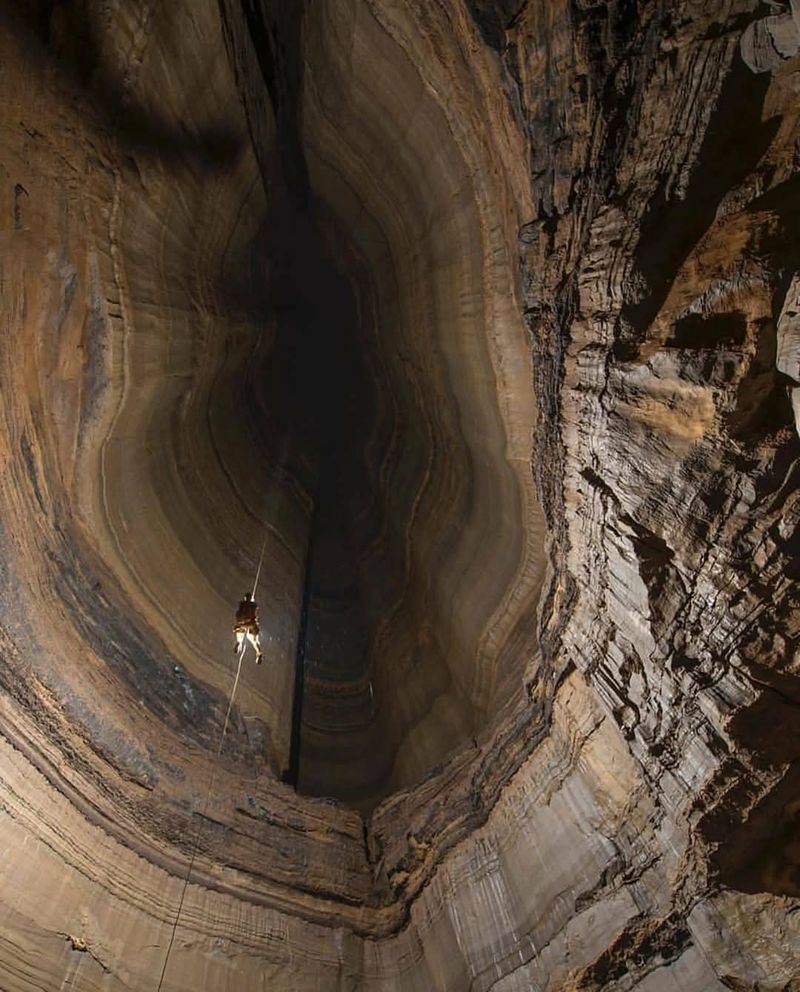
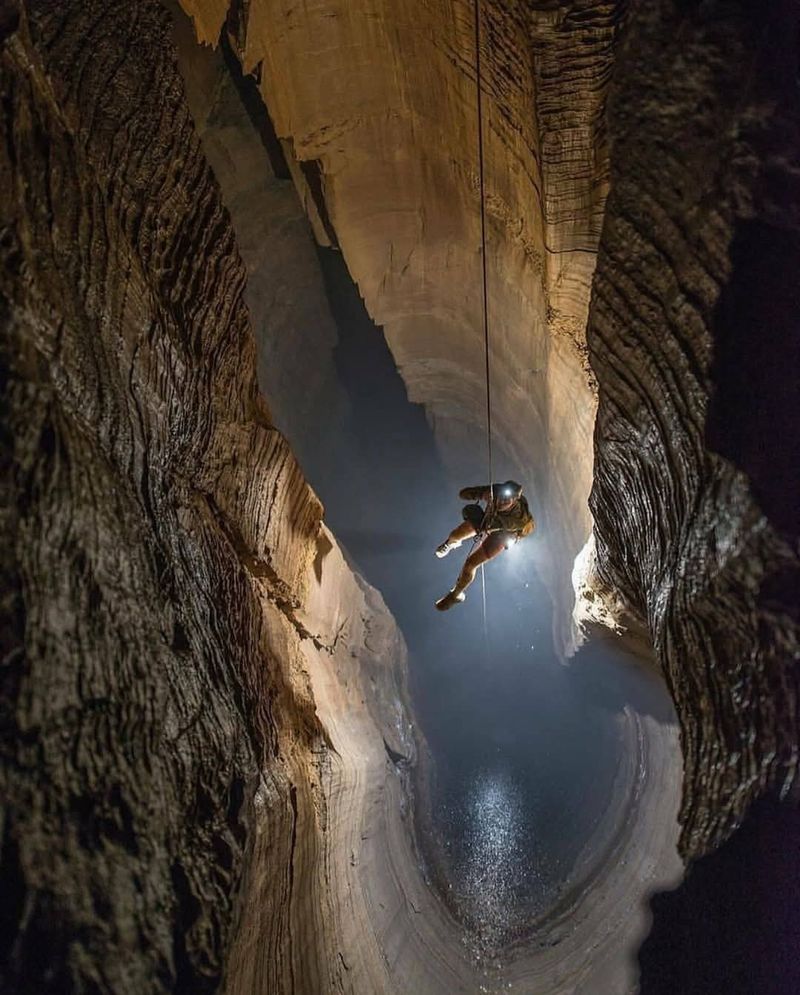
Standing at the edge of a 586-foot freefall underground is not something most people ever experience. Fantastic Pit holds the title of the deepest unobstructed underground pit in the contiguous United States.
That single fact is enough to make your legs feel a little wobbly.
To put the scale in perspective, this drop is roughly the same height as the Washington Monument. The pit sits inside Ellison’s Cave in Walker County, Georgia, on Pigeon Mountain.
Most people drive through this part of the state without ever knowing this jaw-dropping feature exists beneath the surface.
Cavers who have made the descent describe the experience as surreal and humbling. Your headlamp beam disappears into the darkness long before you reach the bottom.
The limestone walls around you are slick with moisture, and the silence is almost overwhelming. This is not a casual tourist attraction.
It is a serious geological wonder that rewards those willing to prepare properly and respect the cave environment completely.
Twelve Miles Long And Over A Thousand Feet Deep
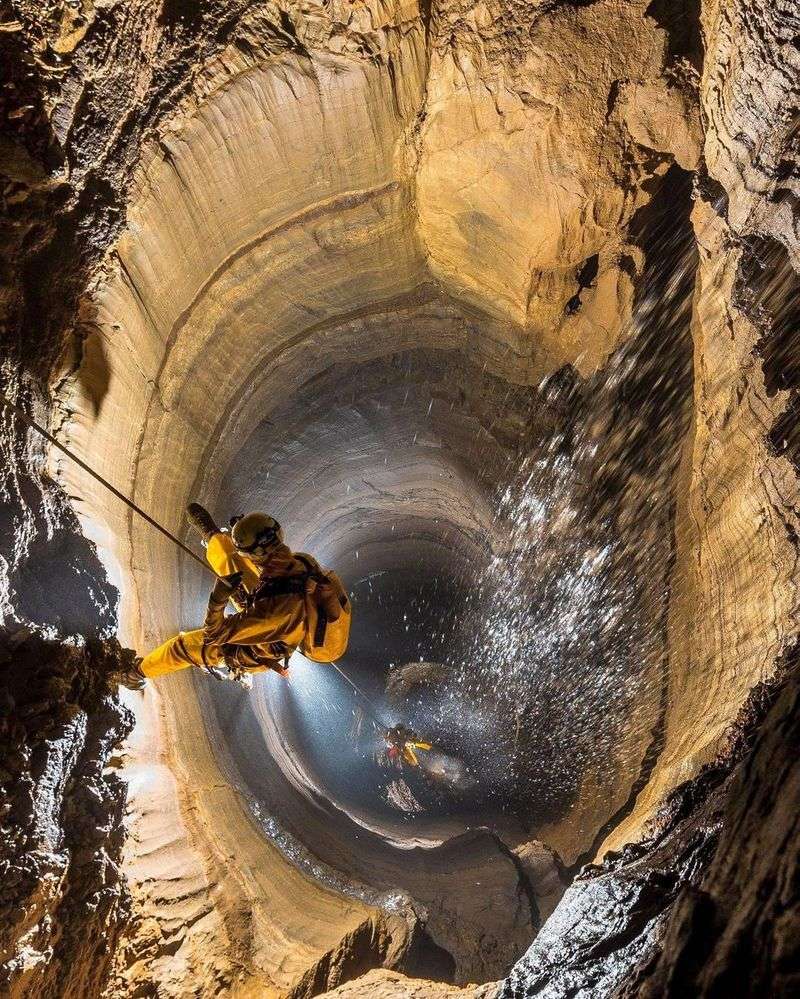
Twelve miles of underground passages sounds like something out of a fantasy novel. The total vertical depth of the system reaches 1,063 feet, making it the 12th deepest cave in the entire United States.
That ranking alone puts it in elite geological company.
The sheer size of the cave means that even experienced cavers rarely see all of it in one trip. Each section of the system has its own character, its own formations, and its own challenges.
Some passages are wide and walkable, while others require crawling through tight spaces with your gear strapped close.
Water carved all of this over an enormous stretch of time. The cave formed as water dissolved limestone rock along a bedrock fault, slowly creating the massive system we can explore today.
That process, repeated over millennia, produced one of the most complex pit cave systems in the eastern United States. The scale of the place puts everyday problems in sharp perspective.
You realize very quickly how small you are compared to the forces that shaped this underground world. It is the kind of place that sticks with you long after you climb back into the sunlight.
Two More Massive Drops Hiding In The Same Cave
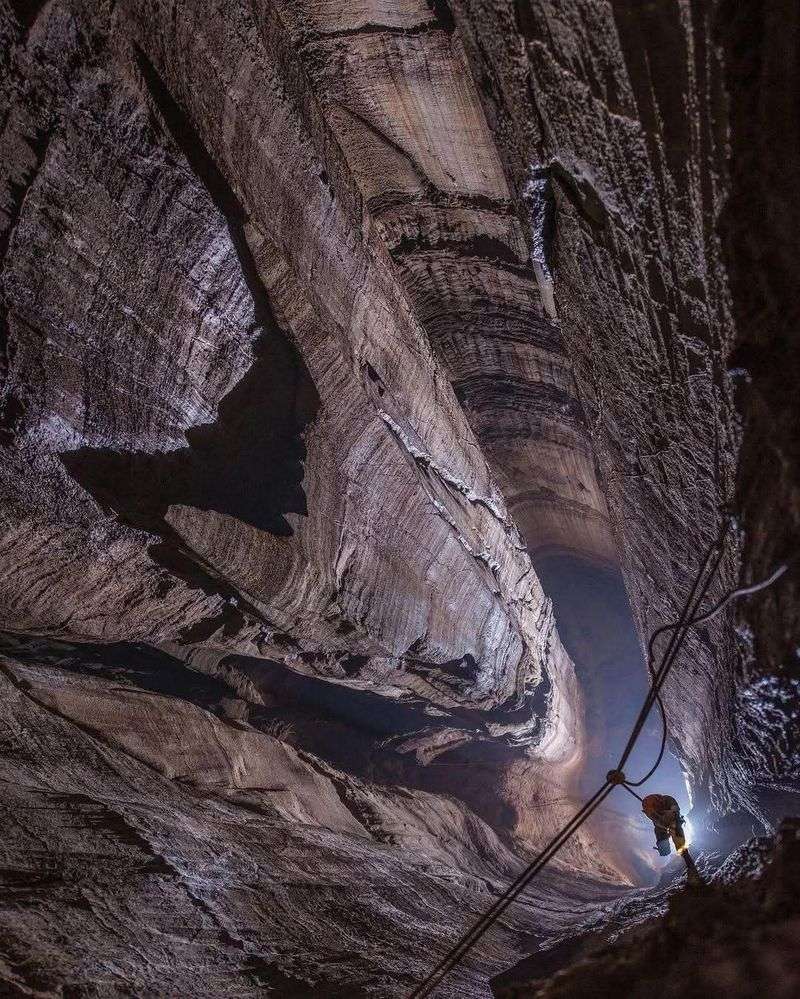
Fantastic Pit gets most of the attention, but Smokey I is quietly sitting there with a 500-foot drop and very little fanfare. Smokey II follows close behind at 262 feet.
Together, these two pits add serious depth to an already extraordinary cave system.
Cavers who have explored both Smokey pits describe them as demanding and technical. The approaches require careful navigation through narrow passages before you even reach the edge.
That buildup makes the moment you finally peer over the rim feel incredibly earned.
Smokey I in particular is impressive because its drop rivals the height of a 50-story building. The pit gets its name from the mist and moisture that sometimes hangs in the air near the opening.
That atmospheric quality makes the descent feel almost cinematic. These pits are not warm-up routes for beginners.
They demand the same level of preparation and vertical skill as the more famous drops in the system. But for cavers who have put in the work, Smokey I and Smokey II offer a raw, unfiltered underground experience that very few people on earth will ever have the chance to witness firsthand.
The Drop Every Caver Tackles Before The Real Descent
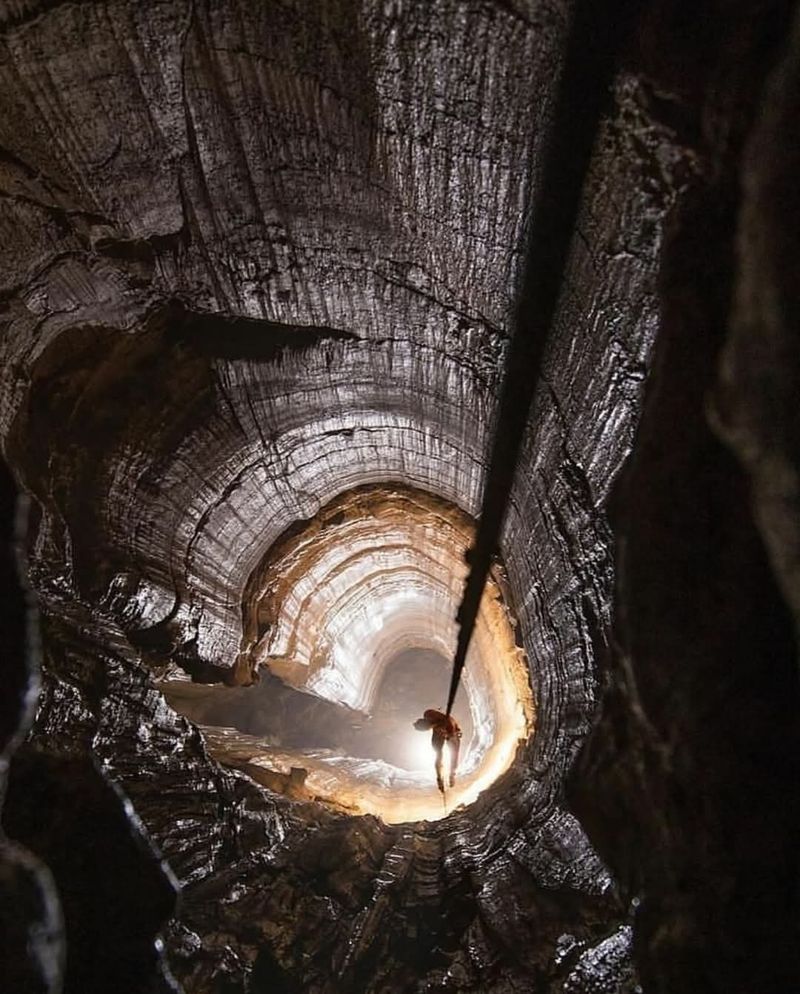
Every big adventure needs a proper introduction, and Warm Up Pit delivers exactly that. At 125 feet deep, it serves as the entry point for cavers heading toward the Fantastic side of the system.
Think of it as the cave’s way of checking whether you actually belong here.
The name is both practical and a little cheeky. You use this pit to test your gear, your technique, and your nerve before committing to the much deeper drops ahead.
If something feels off during the Warm Up Pit descent, you have a clear signal to reassess before things get more serious.
Single rope technique is required for this descent, just like every other vertical section in the cave. Proper rope management, anchor knowledge, and descent device control all come into play immediately.
There is no easing into it gradually. What I find most interesting about Warm Up Pit is how it sets the psychological tone for the rest of the trip.
Once you reach the bottom and look back up at the shaft above you, the scale of what you have committed to becomes very real. It is exhilarating in the best possible way.
Getting In Requires Some Planning First
Getting to the cave entrance is an adventure before the real adventure even starts. The cave sits within the Crockford-Pigeon Mountain Wildlife Management Area, managed by the Georgia Department of Natural Resources.
Visitors must carry a valid Georgia hunting or fishing license, or a Georgia Lands Pass to access the area legally.
The annual Lands Pass costs $30 for Georgia residents and $60 for non-residents. That is a reasonable price for access to one of the most geologically significant cave systems in the country.
Make sure you sort this out before you drive out to the mountain, because there are no shortcuts.
Once you have your pass, you still need to get to the entrance itself. The Blue Hole Trail is one established path leading up to the cave.
The approach requires a hike into rugged mountain terrain, and visitors should plan accordingly. ATVs are not permitted on the property.
The approach demands physical preparation and sturdy footwear. Caving and hiking trails are closed during firearm deer seasons, so visitors should check current Georgia DNR regulations before arriving.
Always check current conditions with the Georgia DNR before planning your trip to avoid any surprises at the trailhead.
Why This Cave Is Strictly For Experienced Cavers Only
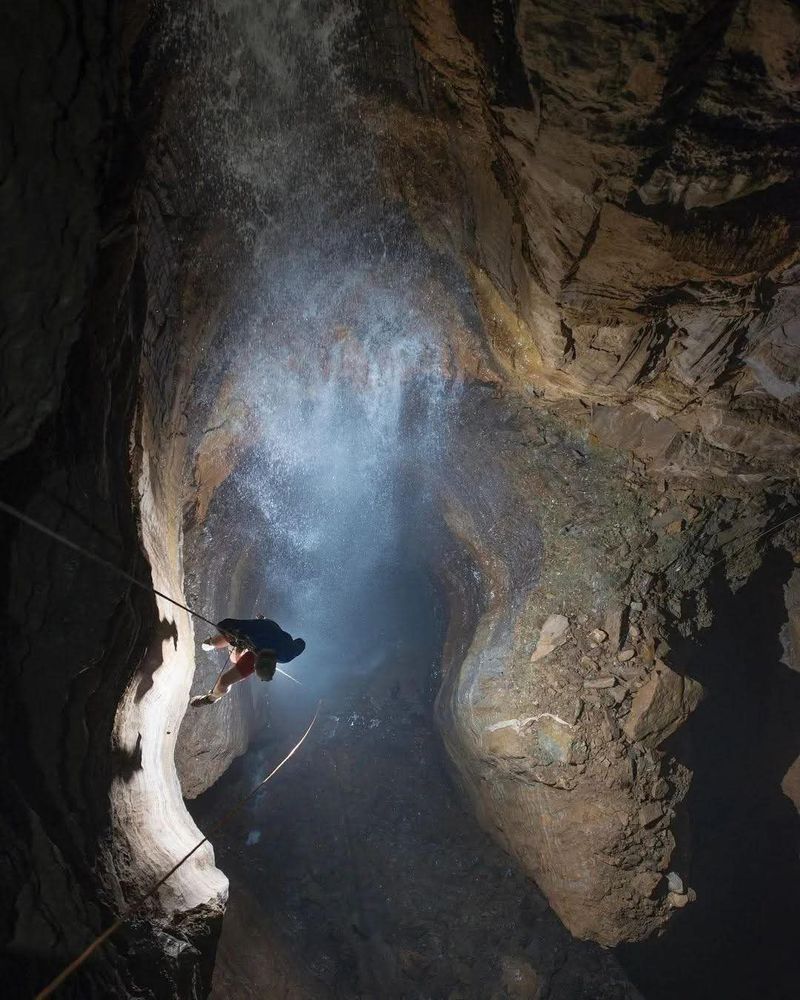
Let me be completely straight with you: this is not a cave for curious beginners. The terrain is technical, the surfaces are slippery, and the vertical sections require advanced single rope technique skills that take real time to develop.
Going in unprepared is genuinely irresponsible.
The Georgia Department of Natural Resources and experienced cavers both emphasize that preparation is non-negotiable here. You need advanced vertical caving skills, appropriate gear, and ideally a team experienced with this type of cave.
Solo visits are strongly discouraged across the board.
The risks inside the cave are real and include slippery rock surfaces, complex navigation, and the psychological challenge of operating in deep, dark, confined spaces. None of these factors are meant to scare you away permanently.
They are meant to push you toward proper training so you can experience the cave safely and responsibly. Organizations like the National Speleological Society offer training resources and local grottos where you can build the skills needed to tackle a system like this.
Connecting with experienced cavers before your first visit is one of the smartest decisions you can make. The cave rewards preparation with an experience that is genuinely unlike anything above ground.
How Water Carved This Massive Underground Wonder
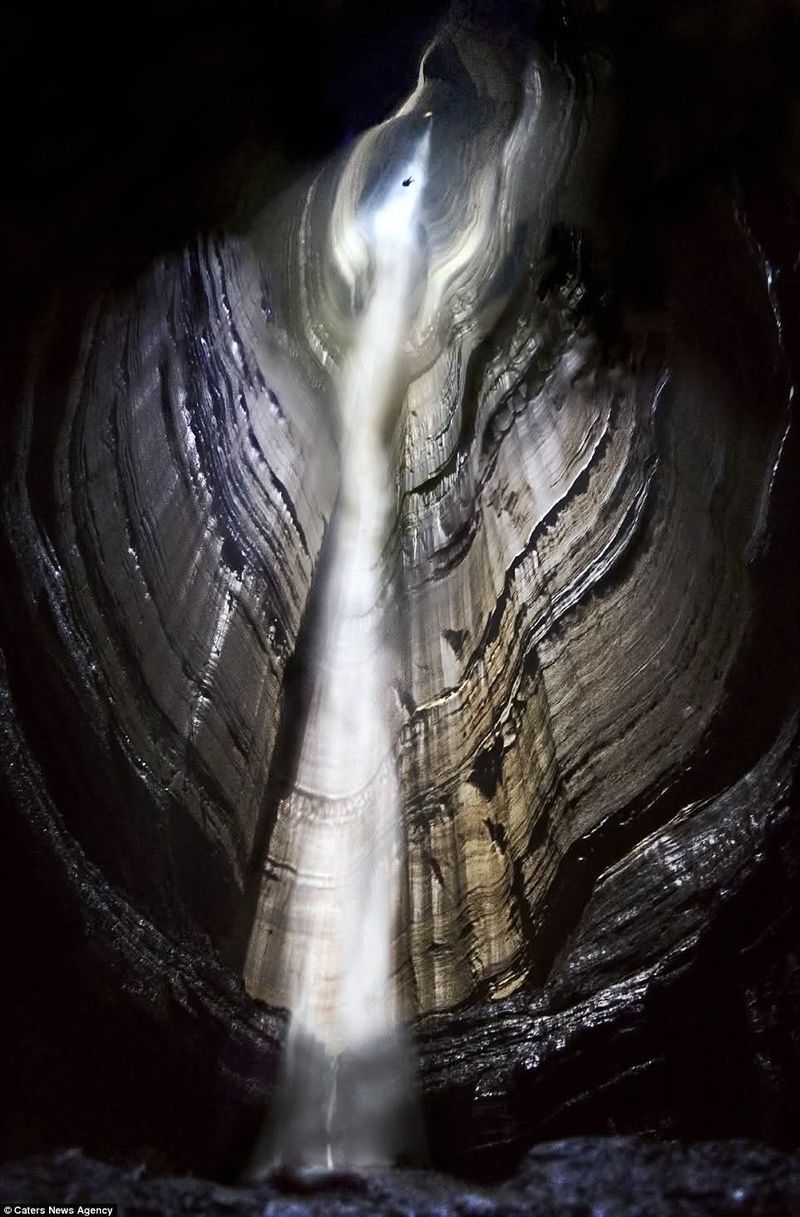
Water is surprisingly patient, and this cave is its masterpiece. The entire system formed as water slowly dissolved limestone rock along a bedrock fault over thousands of years.
That process, called speleogenesis, created the massive solution cave we can explore today.
The cave sits within the Appalachian Plateaus of northwest Georgia, a region rich in carbonate rock that is particularly vulnerable to water erosion. Over geological time, slightly acidic groundwater worked its way through cracks in the limestone, widening them into passages and eventually carving out the enormous pits the cave is famous for.
What makes the geology here especially compelling is the role of the bedrock fault. The fault created natural pathways for water to follow deep into the earth.
Those pathways became the vertical shafts that now define the cave’s character. The moisture you feel on the cave walls today is part of that same ongoing process.
The cave is still forming, slowly and imperceptibly, on a timeline that makes human history look like a brief footnote. Understanding that context transforms the experience from a cool underground trip into something genuinely profound.
You are standing inside a living geological process that has been running for longer than you can imagine.
What Makes Ellison’s Cave One Of The Most Remarkable Natural Sites In The Eastern U.S.
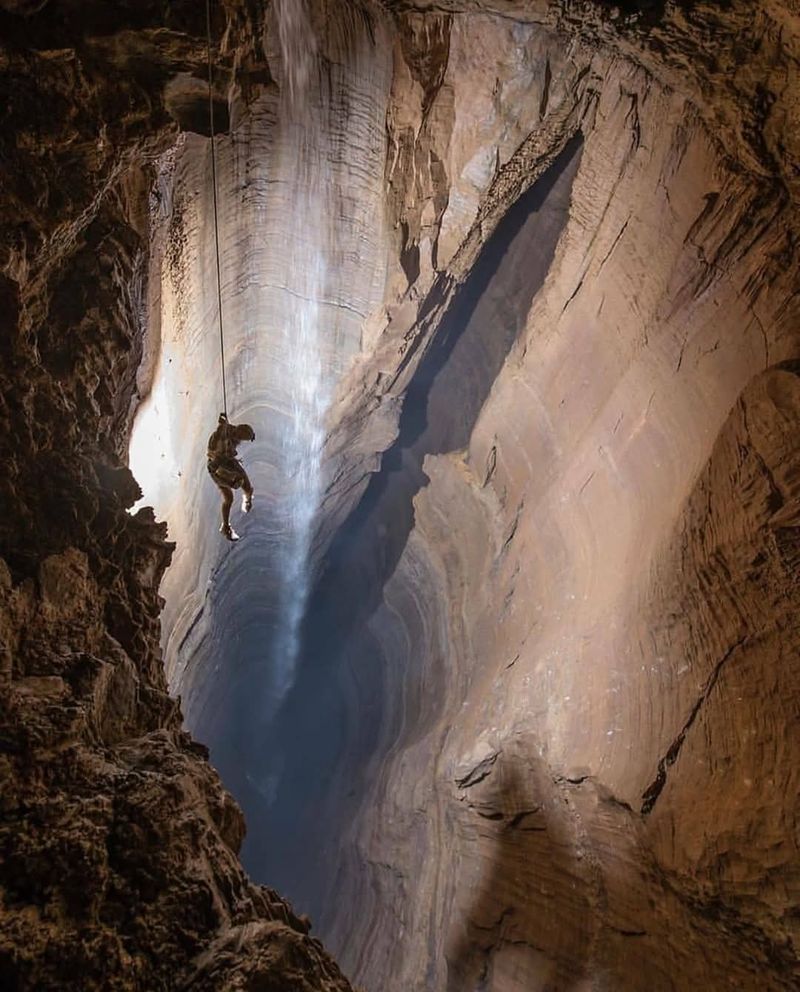
Not many natural sites in the eastern United States can claim records that hold up on a national scale. This cave holds multiple.
The deepest unobstructed underground pit in the contiguous U.S., the 12th deepest cave in the country, and a 12-mile passage system that still challenges even the most seasoned cavers.
The cave’s location on Pigeon Mountain in Walker County adds another layer of appeal. The surrounding Crockford-Pigeon Mountain Wildlife Management Area is beautiful Appalachian terrain, and the approach to the cave is scenic in its own rugged way.
The experience starts long before you reach the entrance.
What truly sets this spot apart is how few people actually know about it. Most of Georgia’s outdoor reputation centers on its coastline, mountains, and state parks.
Very few conversations include a world-class pit cave system sitting quietly beneath a northwest Georgia mountain. Discovering this place feels like finding a secret that most people simply walked past.
For cavers, geologists, and adventure seekers who are willing to do the work, it represents one of the most rewarding underground experiences available anywhere in the country.
The cave is located on Pigeon Mountain in Walker County, though its exact location is withheld from public tourism listings for safety reasons.