Mushroom-Shaped Rock Towers And Loose Agates Line The Moonlike Trails Of This Nebraska Badlands Park
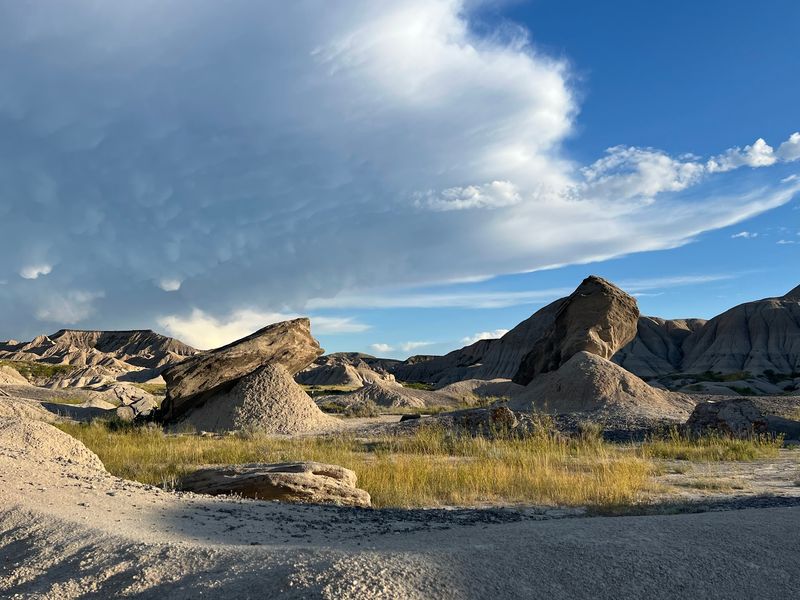
The gravel kept going long after the pavement gave up, and nothing on the horizon hinted at anything but more grass. Then the ground in the far northwest corner of Nebraska cracked open into chalky, crumbling hills topped with rocks shaped like giant mushrooms.
Loose agates glinted along the edges of the path, and the whole scene looked borrowed from the moon. Few places in the state reward a long, dusty drive quite like this one.
A Sweep of Public Prairie in Nebraska’s Far Northwest
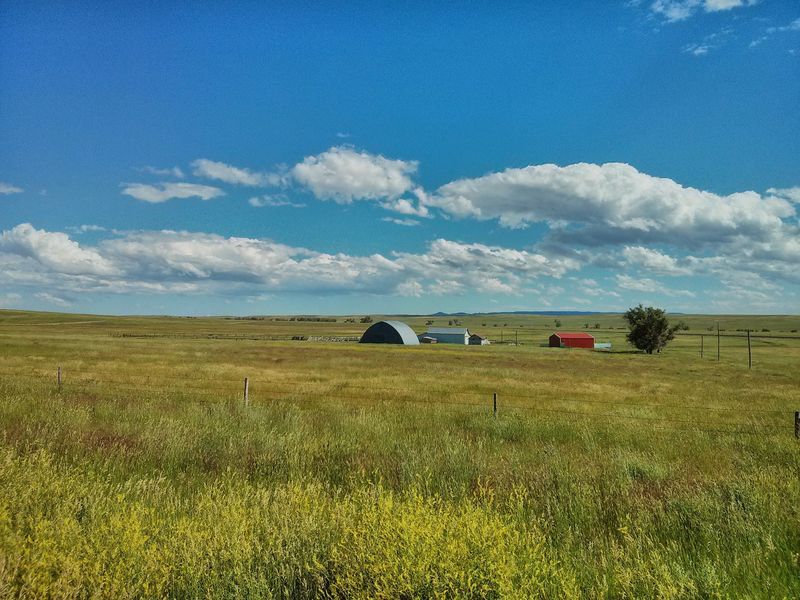
Slide a finger up to the far northwest corner of a Nebraska map, right where the state brushes against South Dakota and Wyoming. That lonely patch holds the Oglala National Grassland, a sprawling tract of public prairie managed by the USDA Forest Service.
The mailing address points to Harrison, though the land itself spreads well beyond any town limits.
Wind hisses across rolling hills of prairie grass and prickly cactus that run for miles with barely a building in sight. Cattle graze parts of the range, and fences mark where public ground meets private ranch land.
Gravel roads stitch it all together.
What sets the place apart is a small, odd pocket inside it called Toadstool Geologic Park. There, the grass gives way to bare, chalky badlands full of rock towers shaped like oversized mushrooms.
The contrast feels sudden, almost like someone swapped out the scenery halfway through the drive.
Is it a park, a range, or a rock collector’s playground? The answer is all three, and the rest of this guide sorts out how each piece fits together, from the ancient geology to the gravel you will be driving on.
Ancient Rivers, Volcanic Ash, and Millions of Years of Patience
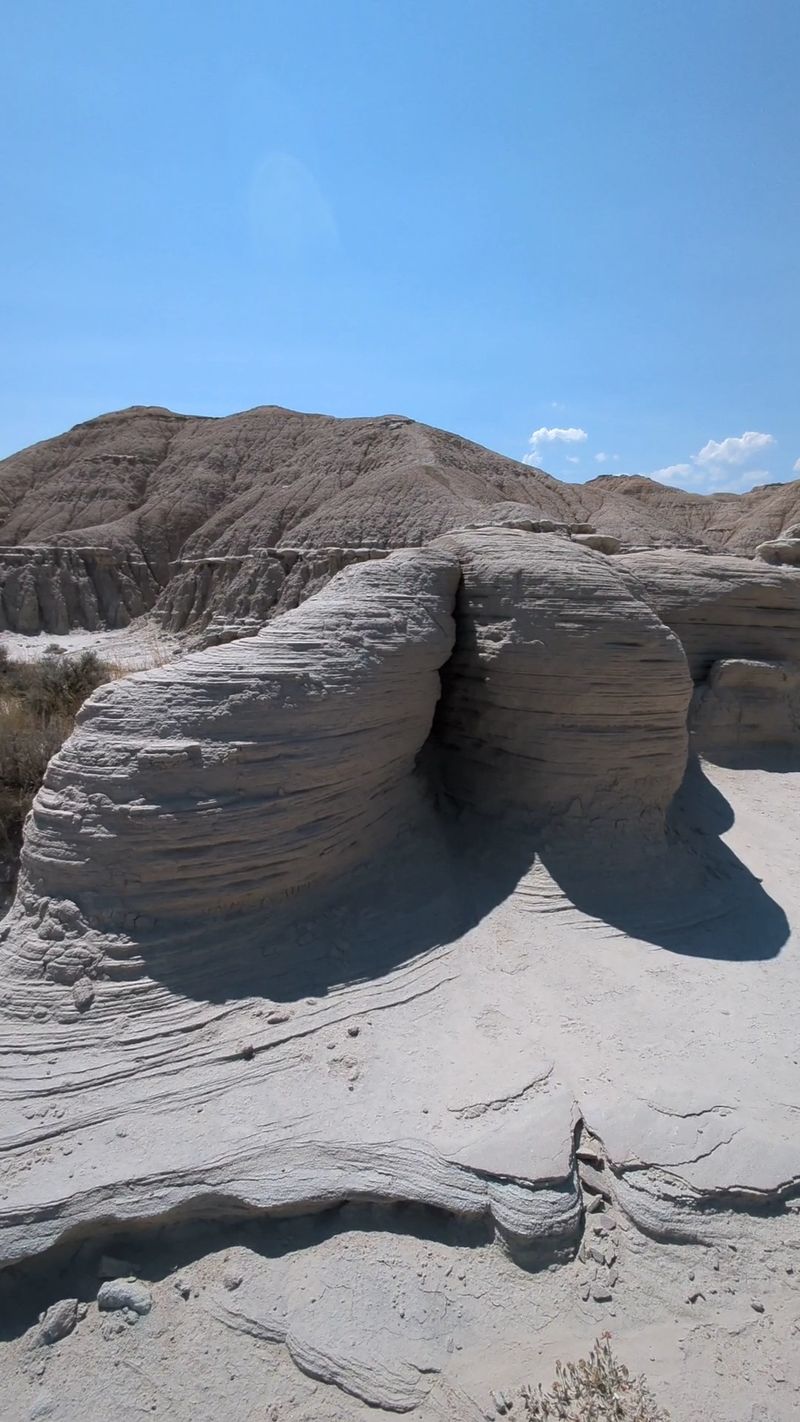
Between roughly 38 and 24 million years ago, slow rivers wandered across what is now northwest Nebraska, dropping layer after layer of sand, silt, and mud. Volcanoes far to the west added their own contribution in the form of drifting ash.
Over time, those deposits stacked up and hardened into soft rock.
Hard and soft layers do not wear away at the same pace, and that mismatch shaped everything you see today. Wind and rain chewed through the softer clay faster, while tougher sandstone held its ground.
The result is a landscape of gullies, ridges, and curious leftovers.
Why does the park look so bare when the grassland around it is so green? Badlands soil sheds water quickly and erodes constantly, so plants struggle to hang on.
That steady wearing keeps the rock exposed and the colors visible, from creamy whites to soft tans and grays.
Standing at the edge of the formations, you can trace the old layers like pages in a closed book. Each stripe marks a different chapter of rivers, ash, and time, all still readable in the Nebraska sun.
Geologists call much of this sequence the White River Group.
Sandstone Caps Perched on Clay Stems
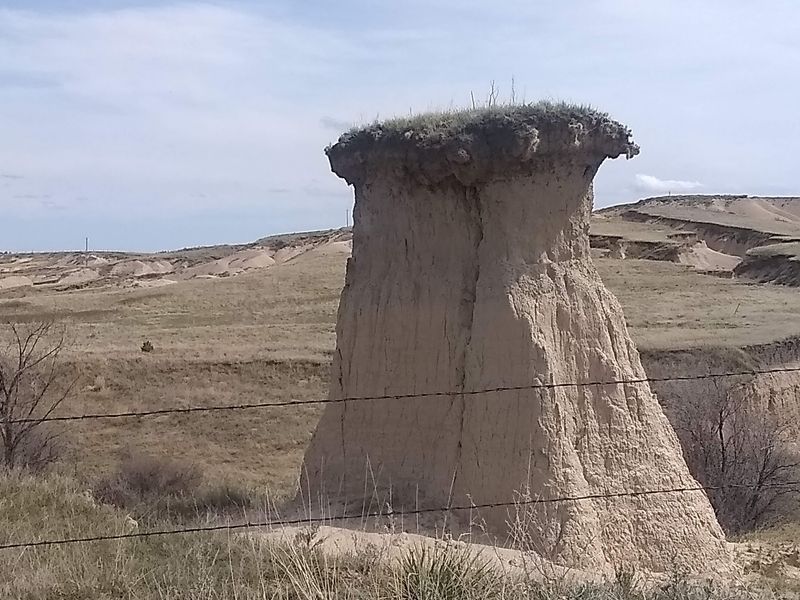
Up close, the toadstools look almost too balanced to be real, with flat slabs of sandstone resting atop skinny necks of clay. Some stand taller than a person, while others barely reach your knee.
Geologists often call formations like these hoodoos. The sandstone cap protects the softer clay directly beneath it, acting like an umbrella against rain.
Everything around the stem keeps washing away, so the pedestal grows taller and thinner over the years.
Will they last forever? Not a chance, and that is part of the fun.
Eventually the stem wears too thin, the cap tumbles, and a new toadstool starts forming somewhere nearby as erosion uncovers another tough slab.
Walk the area in the late afternoon and the shadows stretch out long and crooked behind each tower. Faces and animals seem to hide in the shapes, and naming them becomes a quick game for any family.
For all their drama, the formations are fragile. Climbing on them speeds up the damage, so admiring them from the ground keeps them standing for the next group of explorers.
One Mile of Trail That Feels Like Another World
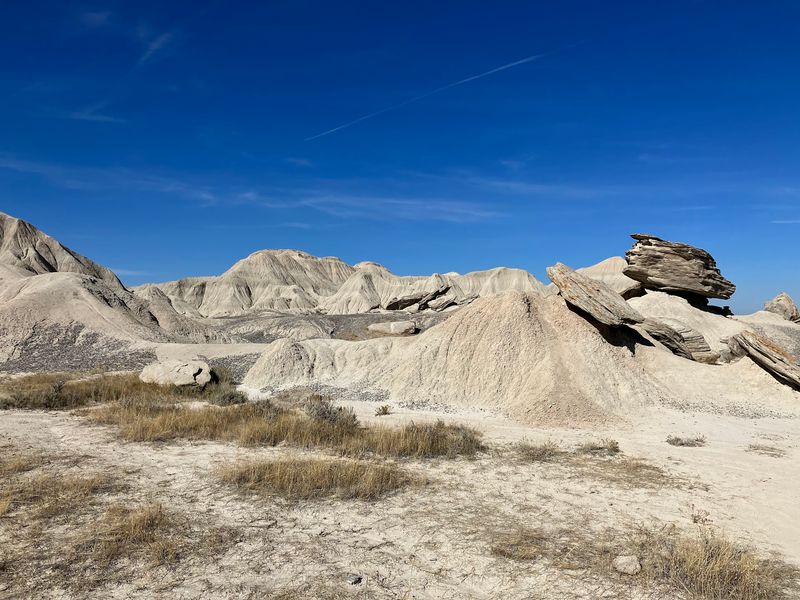
How far do you have to walk to feel like you’ve left Earth? At Toadstool Geologic Park, about one mile does the job.
A loop trail winds through the heart of the badlands, climbing over ridges and dipping into narrow washes.
The ground crunches underfoot, pale and gritty, and the air carries a dry, dusty smell after a warm day. Rock walls rise on either side in places, then fall away to open views of the grassland rolling off to the horizon.
The moonscape comparison fits for a reason. Without trees, grass, or much of anything green, the formations look stripped down to raw rock, and the light bounces off the surface in a way that flattens distance.
Short does not mean effortless. A few spots involve scrambling up slopes or stepping carefully down loose sections, so sturdy shoes beat sandals every time.
Kids and grandparents can usually manage it at an easy pace.
By the end of the loop, the parking area pops back into view, and it is hard not to turn around for another look.
Loose Agates and the Rules of the Hunt
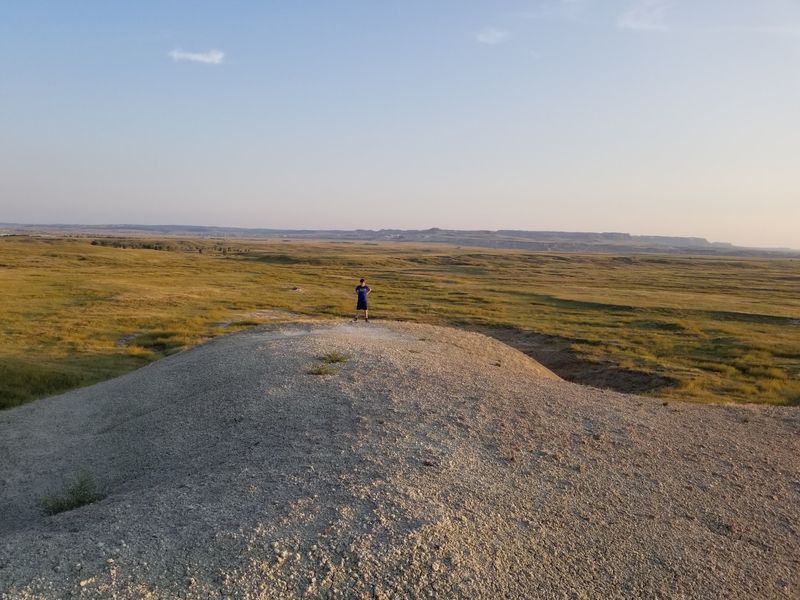
Small glints of red, blue, and honey gold wink out of the gravel across the surrounding grassland. Those are agates and chalcedony, sitting right on the surface as though someone scattered them on purpose.
Their hardness explains the easy finds. Agates resist erosion far better than the soft sediments around them, so as wind and rain strip away the loose material, the stones stay behind and pile up on top.
What might turn up? Prairie agate, the official Nebraska state rock, is a common target, along with Nebraska blue agate, carnelian, and the rarer Fairburn-type agate with its banded fortification patterns.
Blue chalcedony, the state gemstone, shows colors from light, see-through blue to a deep sky shade.
Here is the catch. Collecting is not allowed inside the designated interpretive area of Toadstool Geologic Park, but the wider Oglala National Grassland permits personal surface collecting of rocks and minerals.
Checking with the Forest Service about current rules before you pocket anything is a smart habit.
A small bag, a pair of sharp eyes, and a little patience turn an ordinary walk into a treasure hunt that can easily fill a whole afternoon.
Prehistoric Clues Hiding in Plain Sight
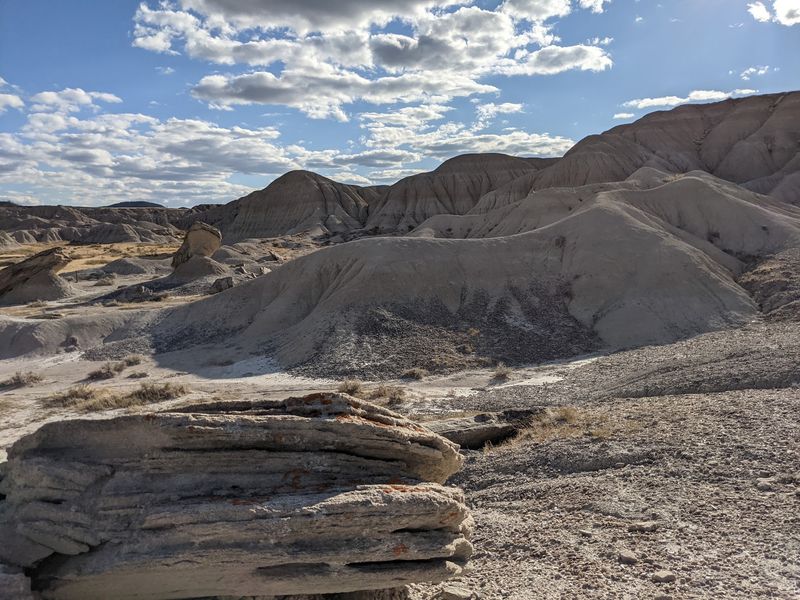
Long before the grass arrived, the ancient river valleys of this region teemed with prehistoric animals. Their remains got buried in the same sediments that later turned into the badlands, which makes the Toadstool area a significant site for paleontology.
Most fossil sites require a museum trip to see anything. Here, some fossils can be spotted right in the rock without special tools, poking out of the eroding slopes.
Every rainstorm shifts a little more soil, so what is visible can change from one season to the next.
So can you take one home? No. Fossil collecting is prohibited throughout the park, and that rule protects the scientific story these pieces tell.
Moving a fossil, even a few feet, can erase clues about where and how an animal lived.
Picture a family crouched beside a slope, pointing at a whitish fragment in the rock and wondering what creature it came from. That moment of discovery is the whole reward, and it stays right where it belongs.
A camera works better than a pocket. Snap a photo, note the spot, and leave the find for the next set of eager eyes.
From Hudson-Meng to Toadstool on Foot
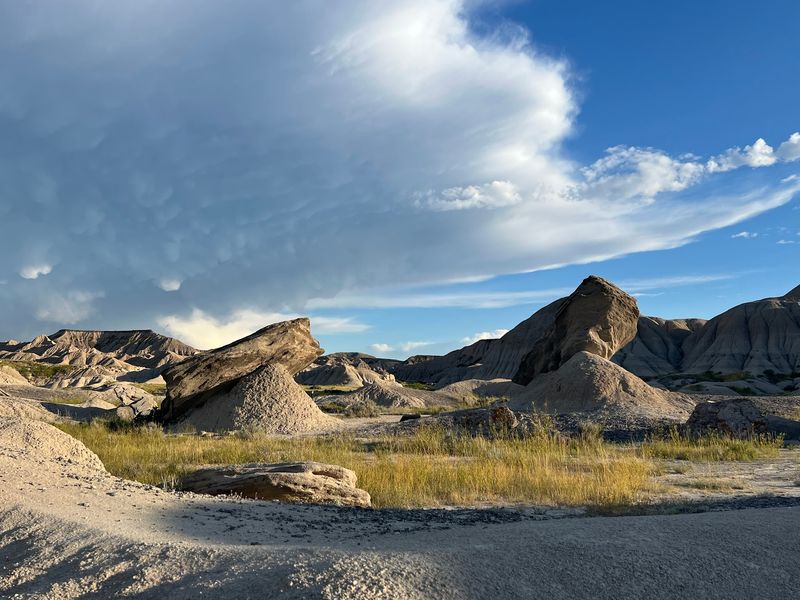
The loop at Toadstool is short, but a longer trail connects it to the Hudson-Meng site, turning a quick stroll into a proper hike. The route crosses a surprising mix of scenery for such an empty-looking region.
It makes a solid choice for anyone who wants more miles under their boots.
Tall grass brushes against your legs early on, then green valleys open up before the ground turns rocky and bleached near the badlands. Each stretch feels different, and the change from prairie to bare rock happens gradually enough to notice every step of it.
Markers along the way keep the path easy to follow. Most of the trail rates as low difficulty, with a couple of more moderate sections that call for steadier footing.
What is waiting at the Hudson-Meng end? An exhibit centered on ancient bison bones, with tours that walk through the story of the site.
Checking ahead on its operating season is wise.
Pack plenty of water, since shade is rare, and time the hike for a cooler part of the day. Sunscreen and a hat earn their spot in any bag out here.
Prairie Dogs, Pronghorn, and June Clover
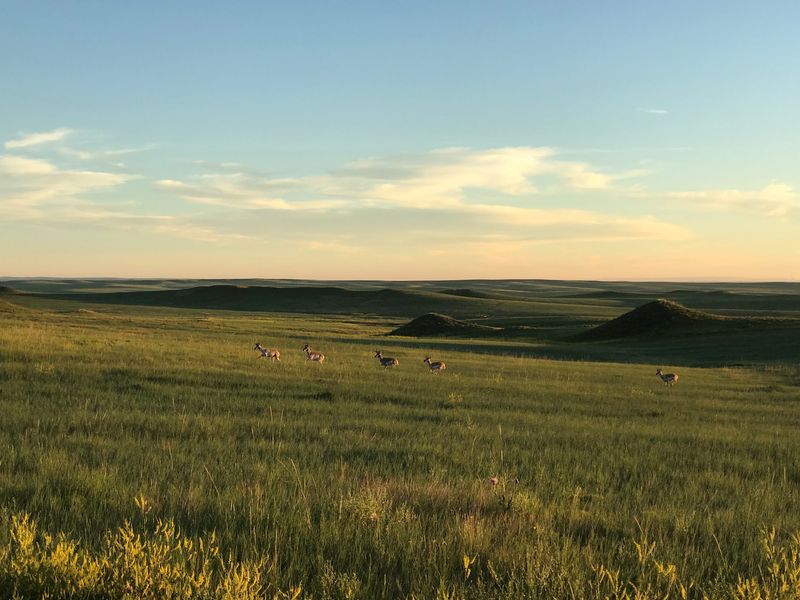
A sharp chirp from the grass usually means a prairie dog has spotted you first. Colonies pop up across the open ground, and watching the little lookouts stand tall on their mounds can eat up more time than planned.
Pronghorn roam the grassland too, often seen at a distance as tan and white shapes moving fast across the hills. They rank among the fastest land animals in North America, so blink and they may be gone.
Cattle share parts of the range as well, since ranchers run herds on this public land.
Early summer paints the hills in a different way. In June, clover can blanket the rolling slopes, softening the landscape with patches of green and bloom that look nothing like the bare badlands a few miles off.
Not everything here is soft, though. Cactus hides low in the grass, so watching where you sit or kneel saves a lot of trouble, especially for kids and pets hunting for agates.
Want the best odds for wildlife? Scan the horizon slowly, bring binoculars if you have them, and give every animal plenty of room.
Quiet voices help as well.
Wide Open Quiet for Campers, Cyclists, and Wanderers
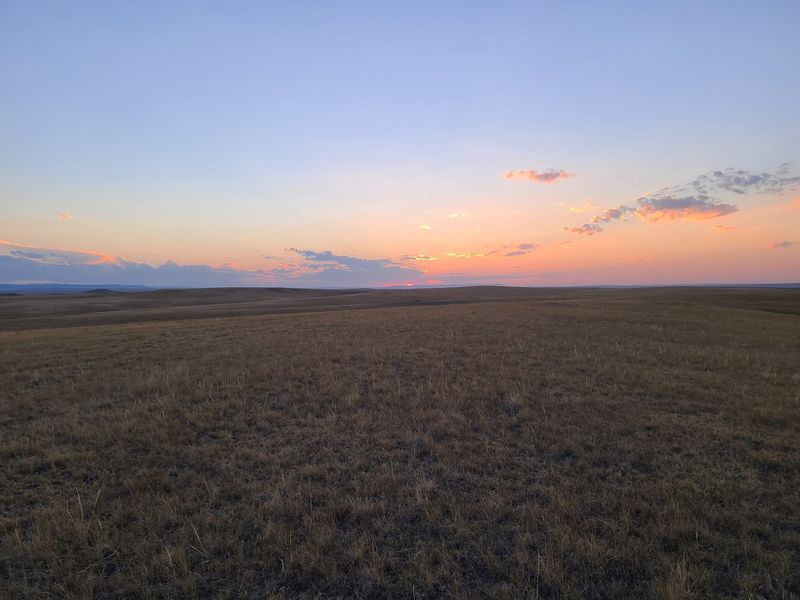
Silence out here has texture: wind rustling through grass, the odd bird call, then nothing for miles. It is the kind of solitude that is hard to find even in rural Nebraska.
At night, the camping area at Toadstool Geologic Park offers a place to stay right beside the formations. Without city lights anywhere nearby, the sky can fill with stars, and mornings bring soft light creeping over the rock towers.
Cyclists have plenty to love, too. The long gravel roads make a playground for gravel grinding, though the wind can be fierce and a headwind turns an easy ride into a workout.
Summer thunderstorms can also turn dirt roads to sticky mud, so checking the forecast matters.
Thrill seekers expecting crowds, gift shops, or big attractions may leave puzzled. The appeal here is subtle, built on space, sky, and slow discovery rather than constant excitement.
Families with young rockhounds, retirees who like a long scenic drive, and anyone craving room to breathe fit right in. Bring a folding chair and let the grass do the rest.
Gravel, No Signal, and Other Practical Notes for Nebraska’s Badlands
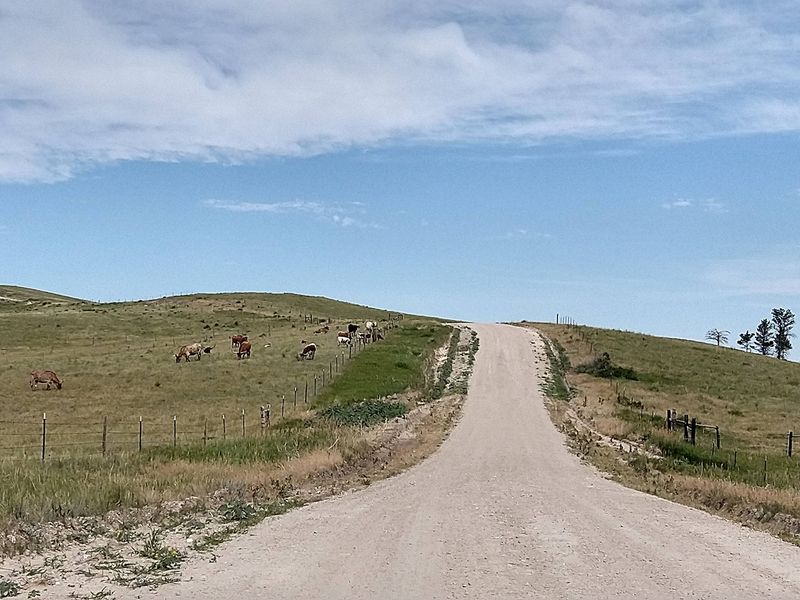
Around the clock, the Oglala National Grassland stays open, according to the USDA Forest Service, and Toadstool Geologic Park follows the same schedule. No gate closes at sunset, which makes sunrise and evening visits easy to plan.
Easy hours do not mean easy access. Reaching the park requires a long drive on gravel roads that can get rough, and a vehicle with higher clearance or four-wheel drive helps in spots.
Prairie grass off the main routes can hide rocks, stumps, and unseen holes.
Need gas, snacks, or a restroom along the way? Plan for that before leaving town, because services are scarce and the grassland itself has no visitor center.
Cell service drops out in many areas, so download maps ahead of time.
A well-packed car makes the trip smooth: extra water, food, sunscreen, a spare tire, and a paper map tucked in the glove box. Tell someone your route before heading out.
For current conditions, road updates, and collecting rules, the Forest Service office for the Nebraska National Forests and Grasslands is the best source. A quick check before any trip saves surprises.
A Long Drive With a Lunar Payoff
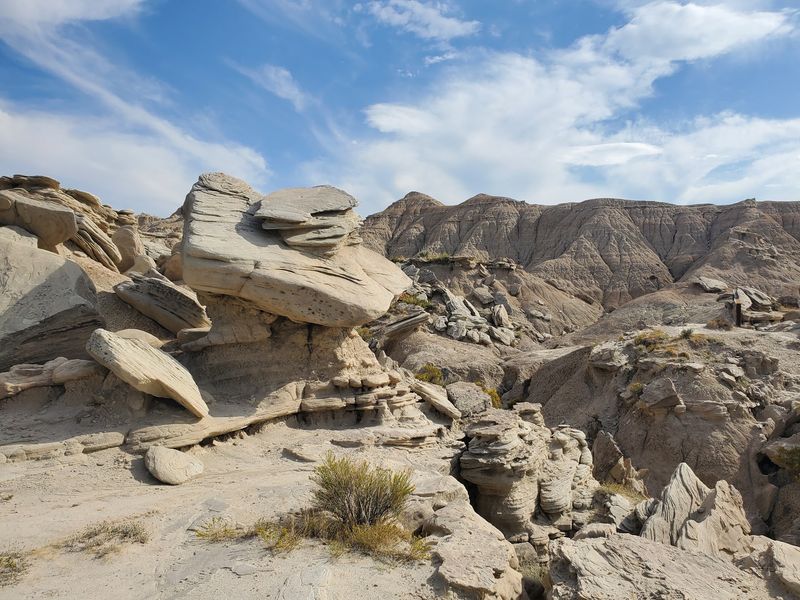
Sunlight drops low, the toadstools cast their last crooked shadows, and the gravel road points back toward home with a pocket full of agates rattling along. Behind you, the badlands fade back into grass as if they were never there.
It is a fitting end to a day spent in one of the most unusual corners of the plains.
Few spots in the state pack so much variety into one trip. Ancient geology, a moonlike trail, fossils in the rock, legal rockhounding nearby, and wide prairie views all share the same corner of the map.
Comfort seekers may find the lack of services a hurdle. For anyone willing to pack water, embrace the dust, and trade cell bars for silence, the payoff far outweighs the effort.
Is it the right fit for your next weekend? If a day of wandering, hunting for colorful stones, and staring at rock mushrooms sounds appealing, the answer leans strongly toward yes.
Warm stone, cool wind, and the crunch of gravel underfoot linger long after the drive home. Nebraska rarely looks this otherworldly, and that alone is reason enough to go see it.