15 Must-Have Wedding Foods In Georgia That Everyone Expects To See
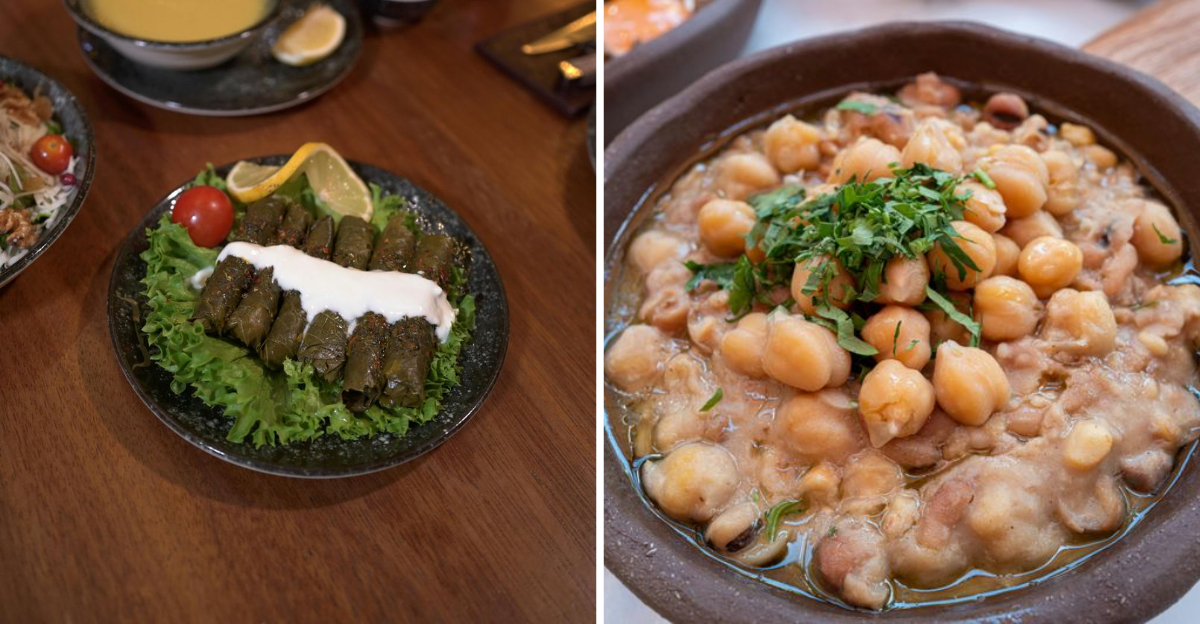
Georgian weddings are not just celebrations, they are full culinary experiences where the table becomes the heart of the entire event. Guests arrive knowing they will be treated to an incredible spread, one that reflects centuries of tradition, regional flavors, and a deep sense of hospitality. The dishes are rich, generous, and meant to be shared, creating a lively atmosphere where food and conversation go hand in hand.
From smoky grilled meats to hearty stews and walnut-based specialties, every item has its place and meaning. The presentation is just as important as the taste, with tables filled from end to end in a way that feels both abundant and inviting. Even those unfamiliar with Georgian cuisine quickly understand why it holds such a special reputation.
For anyone curious about these celebrations, the food offers the perfect introduction to a culture that takes pride in feeding its guests well.
1. Khachapuri

Few things signal the start of a Georgian celebration quite like the sight of freshly baked khachapuri arriving at the table. This iconic cheese-filled bread is shaped like a boat and loaded with a mixture of melted sulguni and imeruli cheese, then finished with a raw egg cracked right on top. The egg slowly cooks in the residual heat, creating a rich, golden center that guests stir together before tearing off pieces of the crusty bread to dip in.
Khachapuri is not just food at a Georgian wedding it carries symbolic weight too. The egg represents new life and fertility, making it a meaningful choice for a celebration of marriage. Different regions of Georgia have their own versions, from the round Imeretian style to the elongated Adjarian boat shape.
No matter which version appears on the table, guests will reach for it almost immediately.
2. Khinkali
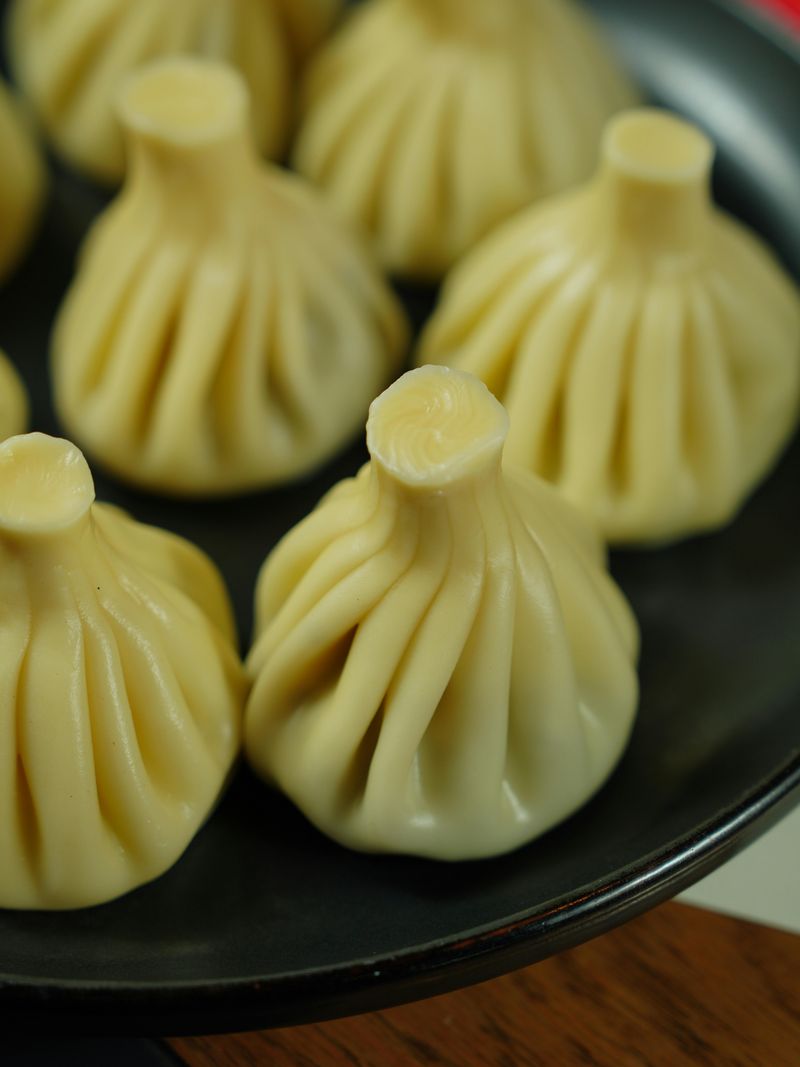
Eating khinkali is practically a skill in Georgia, and wedding guests take it seriously. These large, pleated dumplings are stuffed with a savory mixture of spiced ground meat and rich broth, and the technique for eating them is very specific hold the twisted top knob, bite a small hole in the side, slurp the hot broth first, then eat the rest. The knob is traditionally left on the plate, and counting the leftover knobs is a lighthearted way to track how many you have eaten.
At Georgian weddings, khinkali is a crowd favorite that gets people laughing and talking across the table. The filling can vary slightly by region, with some versions featuring mushrooms or potato for guests who prefer a meat-free option. Watching experienced guests demonstrate the proper technique to first-timers is one of those small, joyful moments that makes a Georgian wedding feel so alive and communal.
3. Mtsvadi
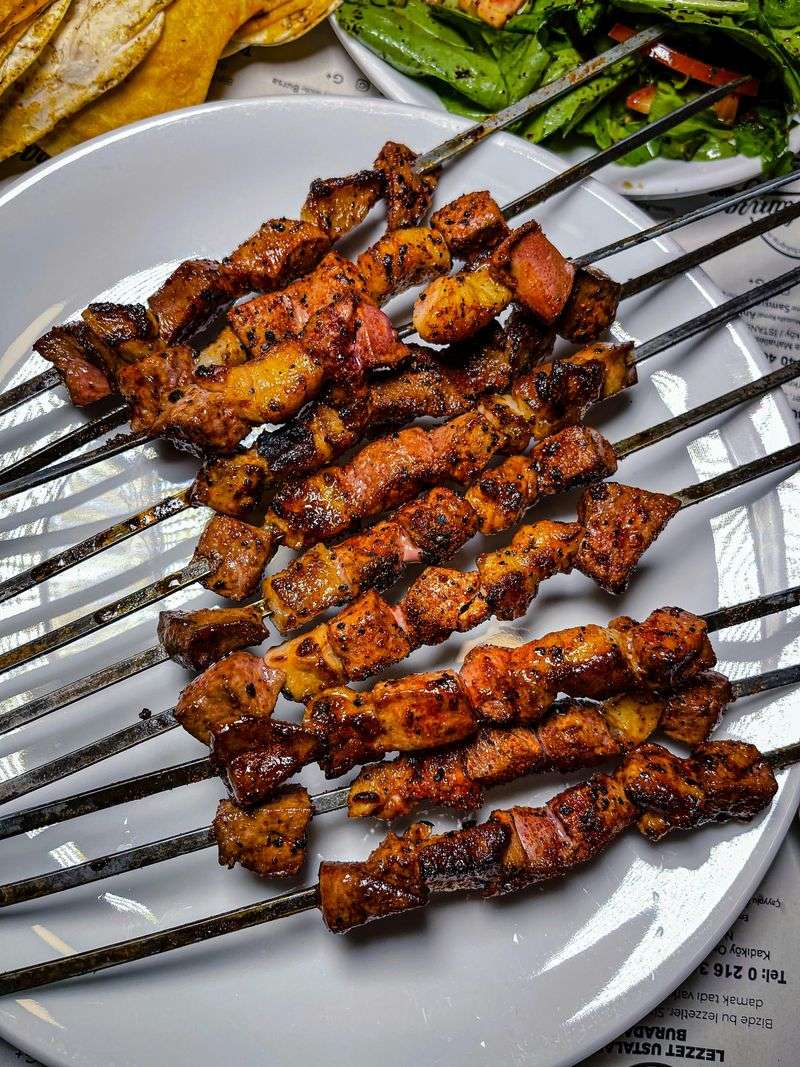
The smell of mtsvadi drifting through the air is one of the most recognizable signs that a Georgian celebration is underway. These skewered meats — most commonly pork, though lamb and beef also appear — are marinated in onion and vinegar, then grilled low and slow over glowing wood embers rather than gas or charcoal. That wood fire is non-negotiable for Georgian cooks, as it gives the meat its signature smoky depth and slightly charred exterior.
Mtsvadi brings a communal energy to weddings that few other dishes can match. The grilling itself becomes part of the event, with the tamada (toastmaster) and guests gathering around the fire while the meat cooks. Served directly from the skewer onto the plate, often alongside tkemali (sour plum sauce) and fresh herbs, mtsvadi is hearty, satisfying, and deeply tied to Georgian ideas of togetherness.
Guests rarely leave the table without having at least two skewers.
4. Satsivi
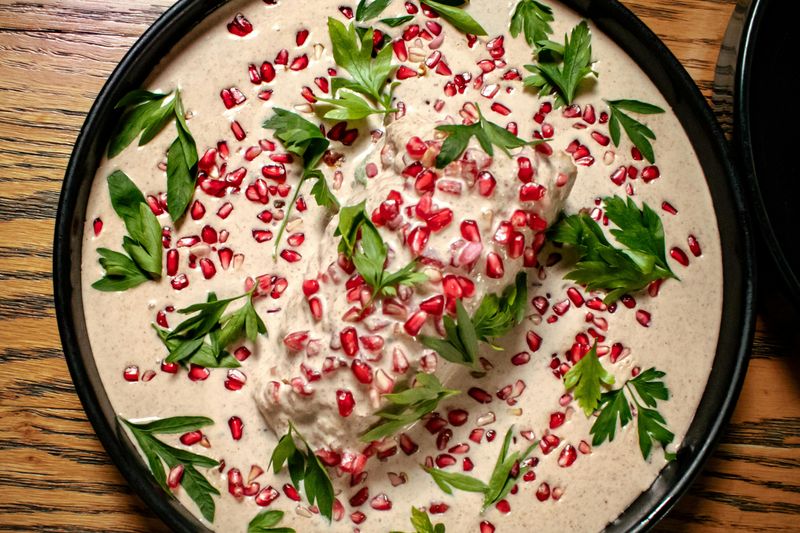
Cold dishes at a Georgian wedding might seem surprising, but satsivi is one of the most anticipated items on the entire table. Poached chicken or turkey is blanketed in a thick, aromatic walnut sauce made with blue fenugreek, garlic, cinnamon, cloves, and a hint of wine vinegar. The sauce is prepared in large batches and allowed to cool so the flavors meld fully before serving, which means it is always served at room temperature or chilled.
The walnut sauce is the real star here complex, earthy, and unlike anything in most other food traditions. Satsivi is considered a prestige dish, and its presence on the wedding table signals that the hosts have gone all out for their guests. It pairs beautifully with Georgian bread, which guests use to scoop up every last bit of the sauce.
Preparing it well takes real skill, and experienced cooks are quietly celebrated for a perfect satsivi.
5. Lobio
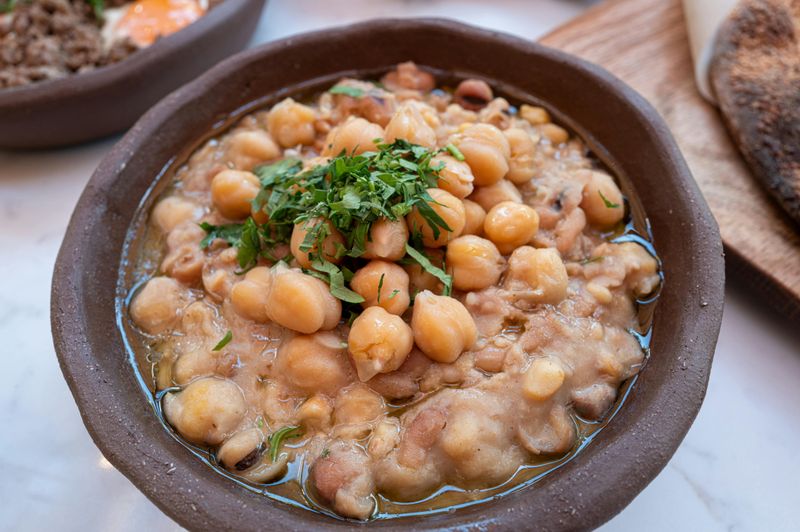
Lobio has been feeding Georgian families for centuries, and it earns its place at the wedding table without any argument. Made from kidney beans slow-cooked with onion, garlic, coriander, fenugreek, and sometimes crushed walnuts, this hearty stew is deeply savory and warming. Traditionally served in a clay pot called a ketsi, the presentation alone feels festive and intentional.
What makes lobio especially welcome at weddings is its versatility. It works beautifully as a side dish alongside grilled meats, but it also holds its own as a satisfying option for guests who do not eat meat. A bowl of lobio paired with mchadi (Georgian cornbread) and a side of pickled jonjoli (bladdernut blossoms) is a combination that regulars at Georgian tables return to again and again.
The stew tends to get better as it sits, meaning guests who come back for seconds are often rewarded with even richer flavor.
6. Pkhali
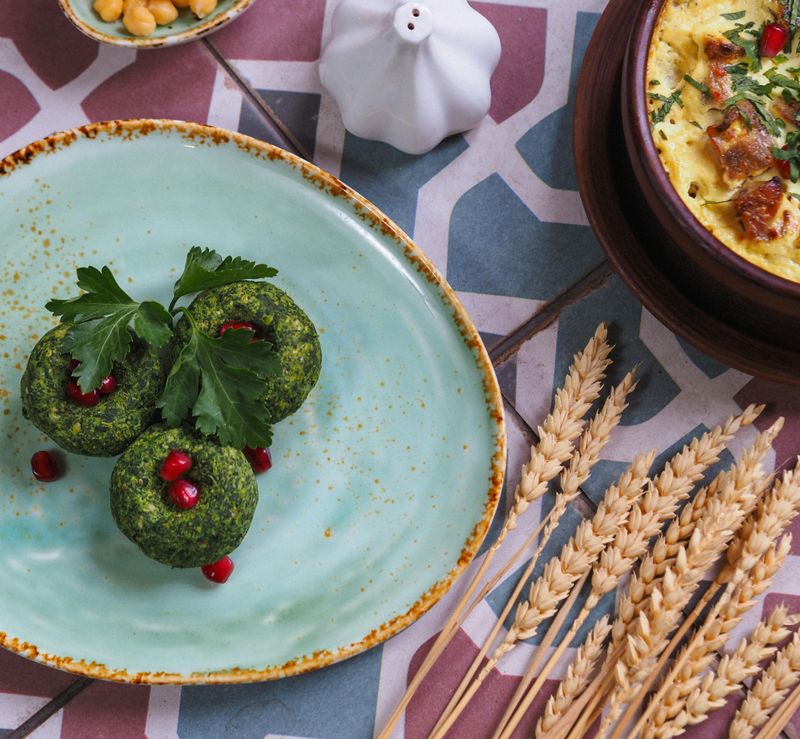
Pkhali might be the most visually striking appetizer on a Georgian wedding table. Vibrant little mounds or rolled balls made from finely chopped vegetables spinach, beet, green bean, or eggplant are blended with ground walnuts, garlic, and a blend of aromatic spices like coriander and marigold. Each variety carries its own color and flavor profile, so a platter featuring three or four types creates a natural rainbow effect that draws guests in immediately.
Beyond looking beautiful, pkhali is genuinely delicious. The walnut base gives every variety a rich, nutty undertone that balances the earthiness of the vegetables, while fresh herbs keep the flavor bright and lively. A single pomegranate seed is often pressed into the center of each piece as a garnish, adding a jewel-like touch.
Pkhali is light enough to eat freely at the start of a long meal, and experienced wedding guests know to grab a few pieces early before the platter disappears.
7. Georgian Cheeses
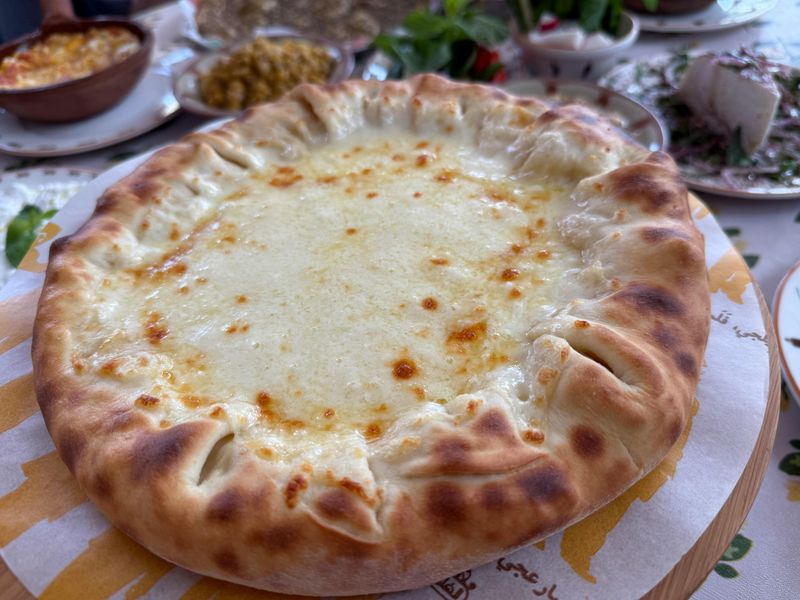
Georgia has a cheese culture that rivals any in the world, and a wedding table without a proper cheese selection would feel strangely incomplete to any local guest. Sulguni, the stretchy, lightly salty cheese from the Samegrelo region, is perhaps the most recognized variety, often served fried or grilled until it develops a golden crust. Imeruli, a milder and slightly crumbly white cheese, appears frequently alongside it and is the classic filling inside khachapuri.
Other varieties like tenili (thread-pulled cheese) and guda (aged sheep’s milk cheese) may also make appearances depending on the region and the family’s preferences. Cheese at a Georgian wedding is not an afterthought — it is a centerpiece. Guests graze on it throughout the meal, pairing slices with fresh bread, cold meats, and wine.
The quality and variety of the cheese selection often reflects how seriously the hosts have taken the entire feast.
8. Dolma in Grape Leaves
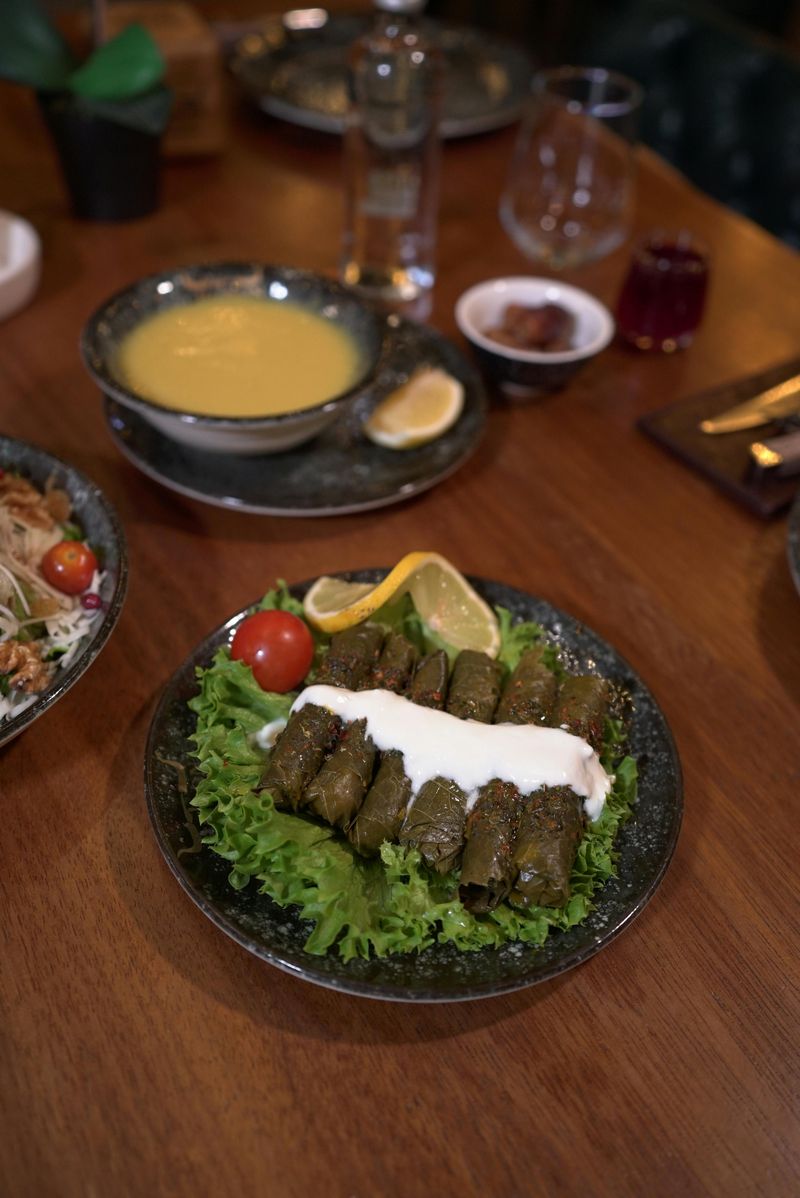
Tucked neatly into rows on a serving platter, dolma in grape leaves is one of those dishes that looks almost too tidy to eat but guests never hesitate for long. Tender young grape leaves are wrapped around a filling of seasoned ground meat and rice mixed with fresh herbs, then simmered gently until everything is soft and fragrant. The grape leaf adds a subtle, slightly tangy flavor that complements the savory filling in a way that is hard to describe but easy to appreciate.
At Georgian weddings, dolma tends to disappear quickly from the table, which is why experienced hosts always prepare generous quantities. The dish connects to Georgia’s deep agricultural traditions, as grapevines have been cultivated in the country for thousands of years. Serving dolma at a wedding is a quiet nod to that heritage.
A small spoonful of matsoni (Georgian yogurt) or a squeeze of lemon on the side makes each bite even more satisfying.
9. Roasted Whole Meat
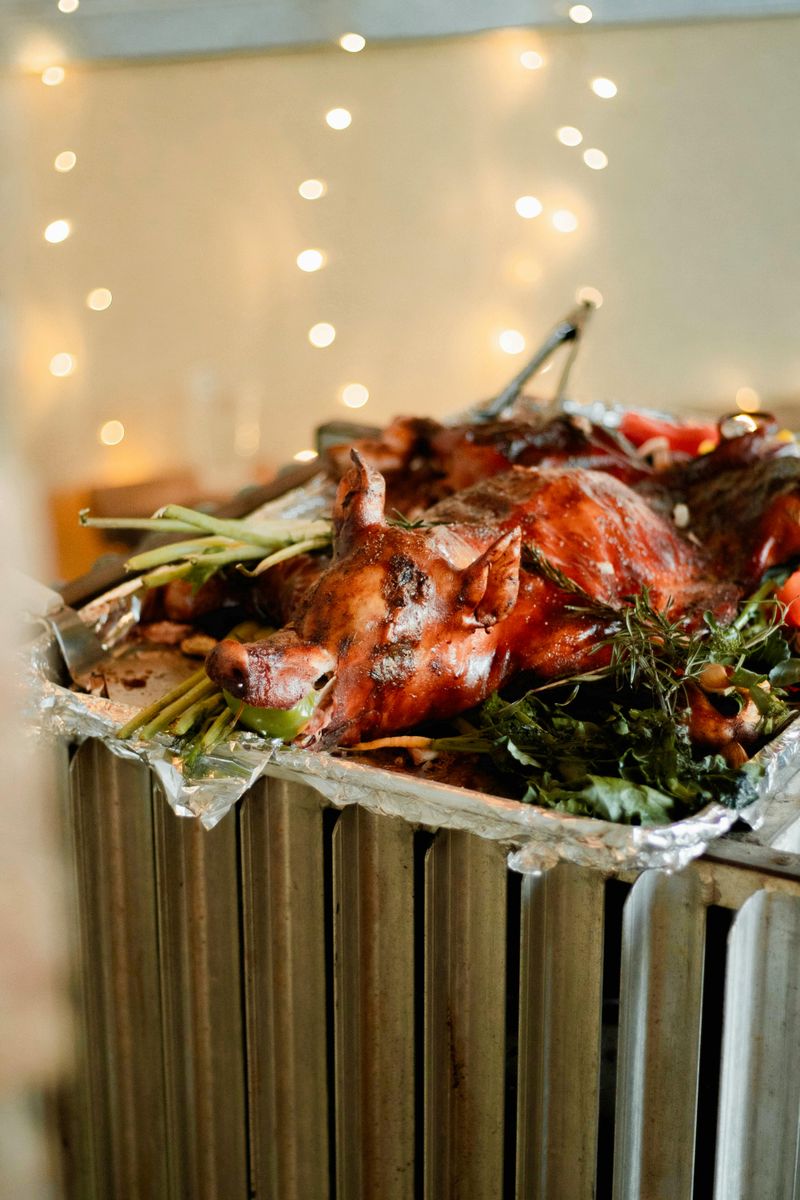
Nothing signals abundance at a Georgian wedding quite like a whole roasted animal arriving at the center of the table. Whether it is a suckling pig, a whole lamb, or occasionally a small calf, the presentation is intentionally dramatic. The roasting process takes many hours over wood fire or in a large traditional oven, and the result is meat that falls from the bone with almost no effort, carrying a deep, smoky richness from the long, slow cook.
The whole roast is more than just a dish — it is a statement. It tells guests that no expense was spared and that the celebration was taken seriously. Carving the meat at the table is often handled by the most respected elder present, adding a ceremonial quality to the moment.
Guests gather around, conversations pause briefly, and then the feast resumes with renewed energy. Paired with tkemali sauce and fresh herbs, every plate feels like a genuine honor.
10. Traditional Georgian Breads
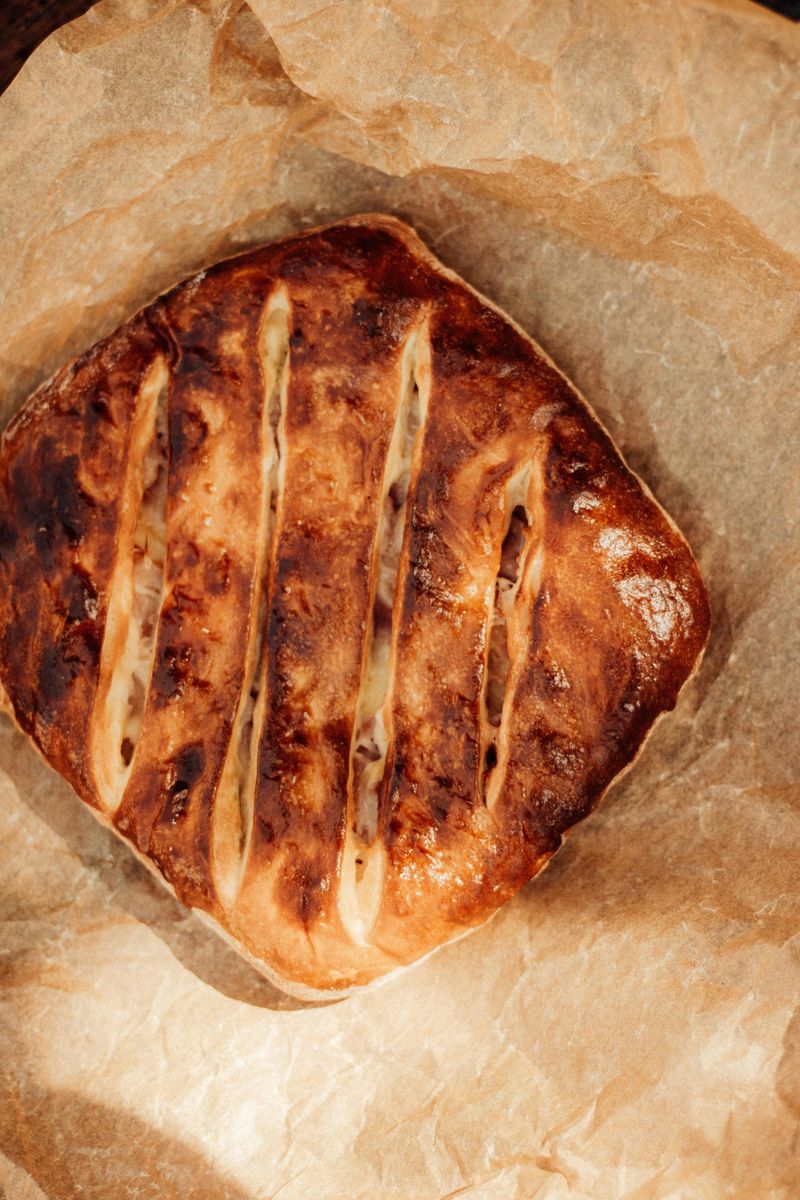
Bread in Georgia is treated with a reverence that goes beyond simple sustenance. Shoti, the long canoe-shaped loaf baked in a traditional tone (clay oven), arrives at the table with a crackly crust and a soft, chewy interior that is nearly impossible to resist. Lavash, the thinner flatbread, is equally common and serves as a versatile accompaniment to everything from cheese to grilled meats to dips.
At a wedding, bread is rarely just a side item it is a constant presence throughout the entire meal. Guests tear pieces to scoop up satsivi, wrap around mtsvadi, or simply eat with a thick slice of sulguni cheese. Georgian bakers take enormous pride in their bread, and the quality of the shoti at a wedding is often quietly noted and discussed among guests.
Warm, fresh-from-the-oven bread on a wedding table is one of those small details that elevates the entire experience.
11. Churchkhela
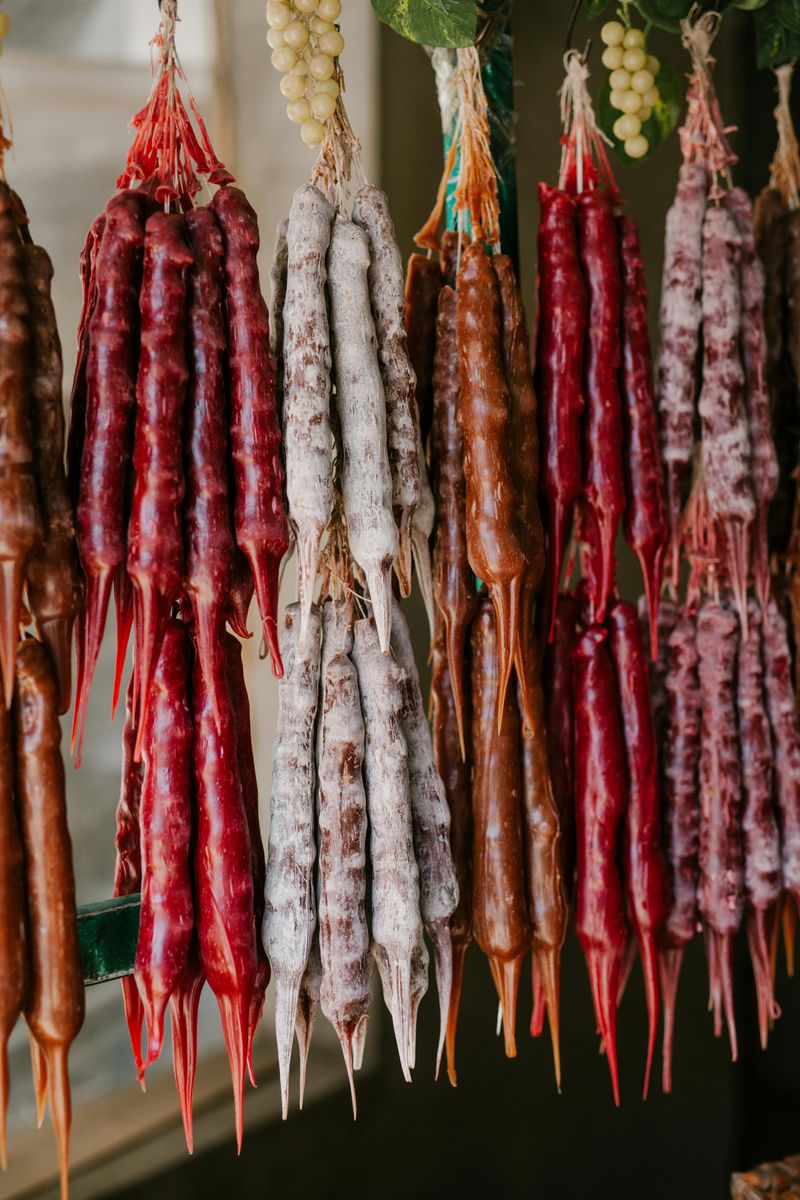
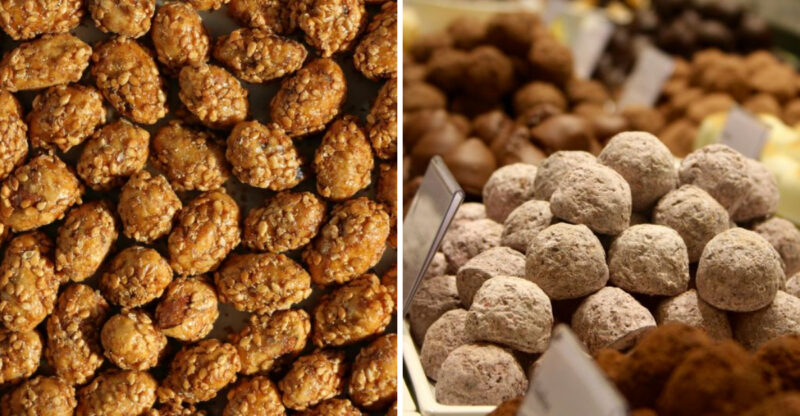
Churchkhela is one of those foods that looks almost too interesting to eat on the first encounter. Strings of walnuts or hazelnuts are threaded onto a cord, then repeatedly dipped into thickened grape juice (called tatara) until a firm, chewy coating builds up around each nut. The result is a long, sausage-shaped sweet that comes in deep purple, burgundy, or amber tones depending on the grape variety used.
Known affectionately as Georgian Snickers, churchkhela has been made in the country for centuries and was historically carried by warriors as an energy-dense travel food. At weddings, it appears as both a sweet treat and a decorative element — long strings are sometimes displayed as part of the table arrangement before being offered to guests. The flavor is naturally sweet with a pleasant nuttiness, and the chewy texture makes it satisfying without being overwhelming.
Children at the wedding table tend to claim it first.
12. Fresh Seasonal Fruits
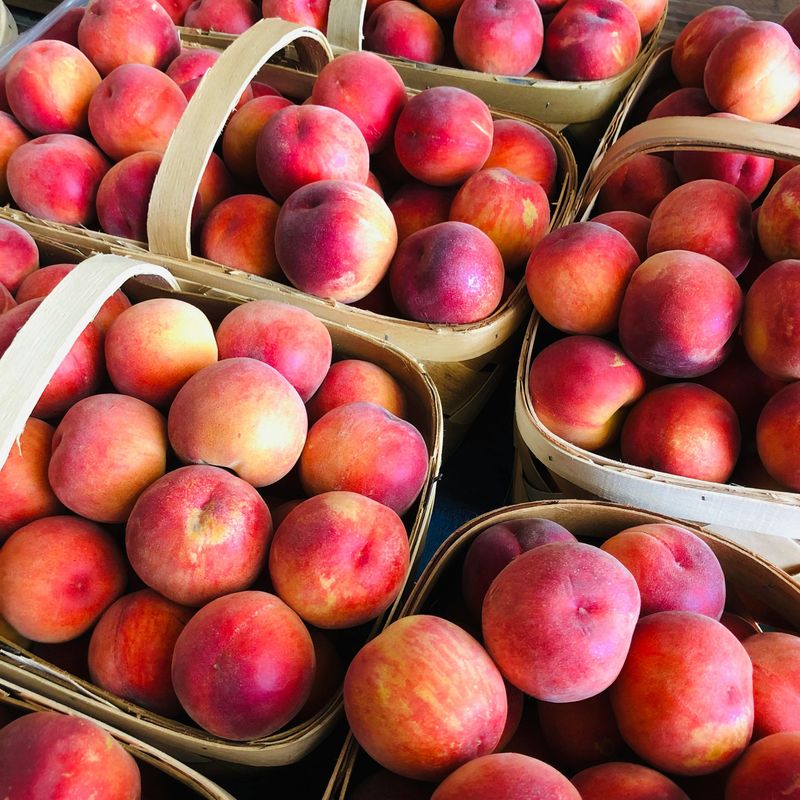
A Georgian wedding table without a generous fruit display would feel genuinely unfinished. Depending on the season, guests can expect to find heavy clusters of Georgian table grapes, split pomegranates revealing their jewel-like seeds, ripe figs, golden melons, and fragrant peaches piled high on large platters. The fruit is not an afterthought it is a proud showcase of Georgia’s fertile land and agricultural richness.
Fruit tends to appear at multiple points during a Georgian wedding feast: as part of the initial spread, as a palate cleanser between courses, and again near the end of the meal when guests are winding down. Pomegranates hold particular cultural significance in Georgia, symbolizing prosperity and good fortune, which makes them an especially meaningful choice at a wedding. The natural sweetness of seasonal fruit also provides a welcome contrast to the rich, savory dishes that dominate the rest of the table.
13. Pimento Cheese
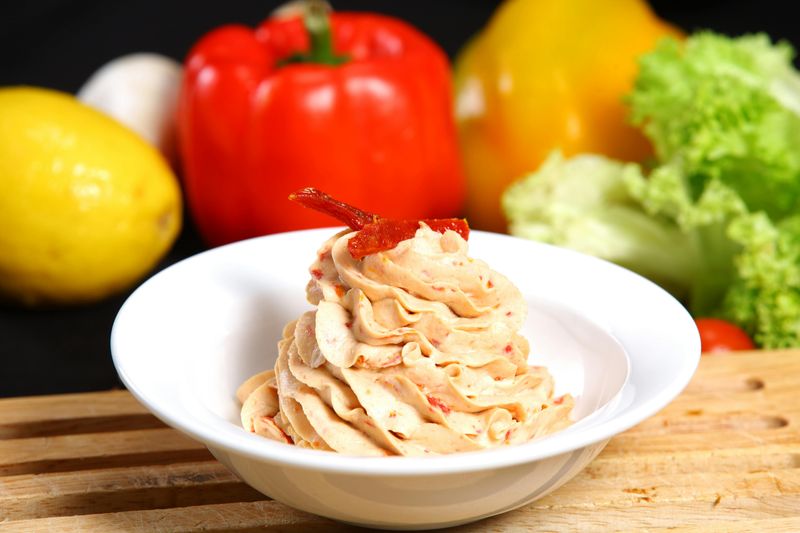
Pimento cheese is the kind of dish that Georgia (the U.S. state) has claimed so completely that it shows up at nearly every significant gathering, weddings included. Sharp cheddar is grated and blended with creamy mayonnaise and chopped pimentos — those small, sweet red peppers — until the mixture reaches a spreadable, slightly chunky consistency. Some cooks add a pinch of cayenne or a dash of hot sauce to give it a gentle kick.
At weddings across Georgia, pimento cheese appears as an appetizer spread on crackers or small toasts, tucked into finger sandwiches, or served alongside raw vegetables for dipping. It is the kind of food that feels both casual and deeply Southern at the same time. Guests who grew up eating it at family gatherings feel an immediate sense of comfort when they spot it on the table.
Making a great pimento cheese is a point of quiet pride for many Georgia home cooks and caterers alike.
14. Peach Cobbler
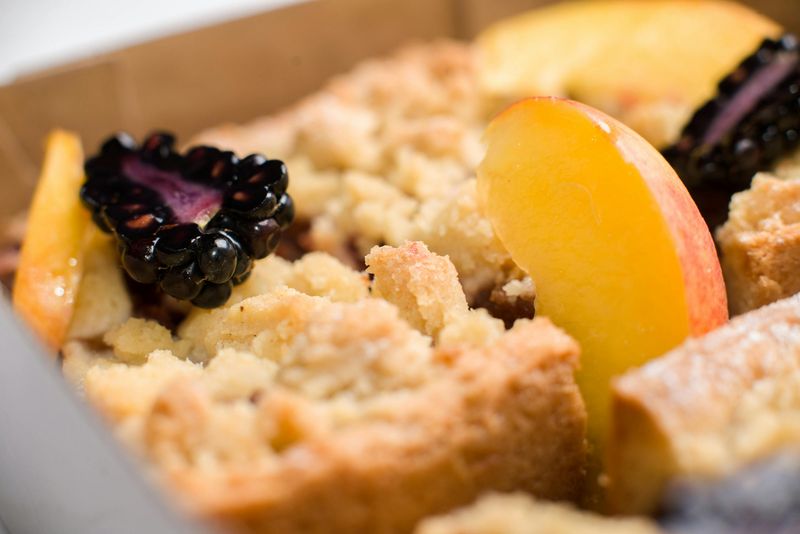
Georgia earned the nickname the Peach State for good reason, and peach cobbler is the dessert that best captures that identity. Fresh, ripe peaches are sliced and tossed with sugar and a little cinnamon, then topped with a buttery batter that bakes up into a golden, slightly crispy crust while the fruit beneath becomes jammy and fragrant. Served warm, ideally with a scoop of vanilla ice cream melting alongside it, peach cobbler is pure Southern comfort.
At Georgia weddings, cobbler often appears as an alternative or companion to the wedding cake, especially at outdoor summer receptions where the peaches are at their peak. The dessert carries a nostalgic quality that resonates deeply with guests who grew up in the state it is the taste of summer afternoons and family kitchens. Cast iron skillets are a popular vessel for serving it at weddings, adding a rustic, homey touch that guests genuinely appreciate and remember long after the celebration ends.
15. Badrijani Nigvzit
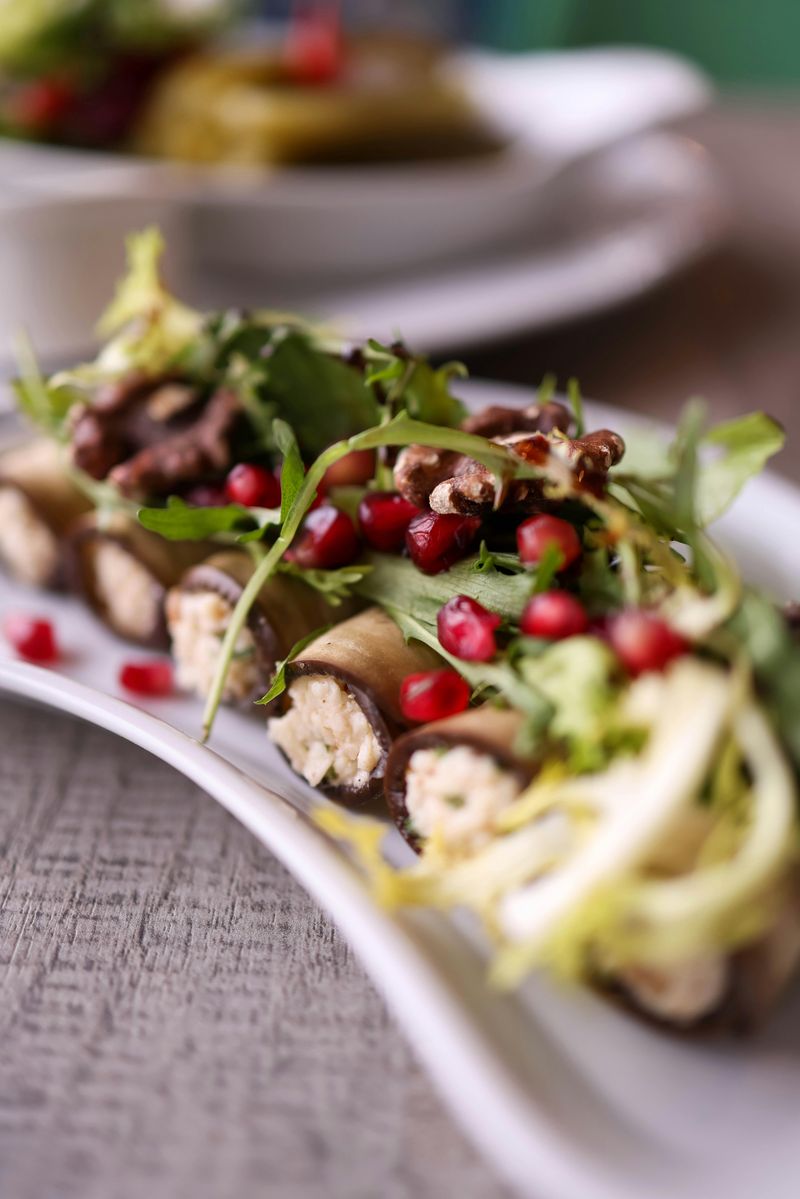
Badrijani nigvzit is one of those dishes that converts skeptics on the first bite. Thin slices of eggplant are lightly fried until tender and golden, then spread with a smooth paste made from ground walnuts, garlic, vinegar, and a warming blend of spices including coriander and fenugreek. Each slice is rolled into a neat cylinder and finished with a few bright pomegranate seeds on top, making the platter look as festive as it tastes.
At Georgian weddings, badrijani nigvzit is a staple of the cold appetizer spread and tends to sit beside the pkhali and cheese platters at the start of the feast. The eggplant provides a silky, mild base that lets the complex walnut filling take center stage. Guests who are unfamiliar with the dish often need only one piece to become fans.
It is vegetarian-friendly, easy to eat without utensils, and genuinely delicious exactly the kind of dish that earns its permanent spot on a wedding table.