11 Natural Wonders In Oregon That Go Beyond What You Expect
I have stood at the edge of places that made me forget how to speak. Most people picture rain and trees, maybe a dramatic cliff or two, but this state carries secrets that even seasoned travelers completely miss.
I have crossed a lot of ground in this country, and nothing has stopped me in my tracks quite like Oregon. Volcanic craters that swallow the sky.
A beach where ancient trees erupt straight out of the sand like something prehistoric. A high desert that makes you question which planet you are standing on.
None of this shows up in the brochures. None of it looks real in photos.
You just have to go, and when you do, the state has a way of making everything else feel ordinary by comparison.
1. Thor’s Well
The ocean does not drain anywhere. Except here.
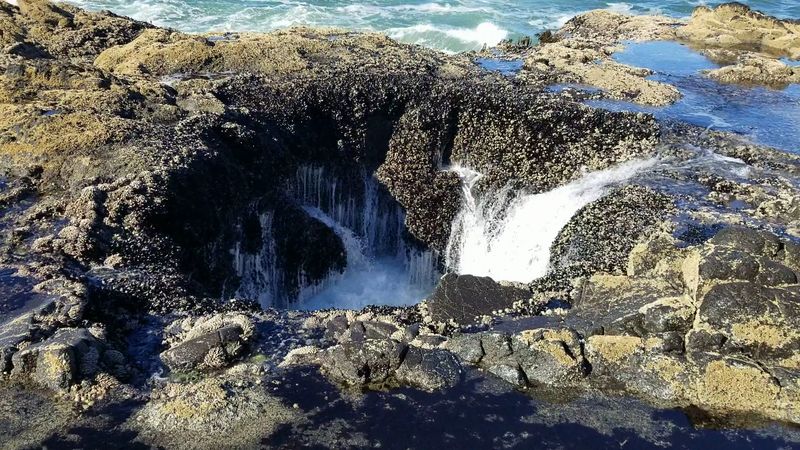
Standing at the edge of Thor’s Well feels like watching the Pacific lose its mind, water rushing into a massive bowl-shaped hole carved into volcanic rock, then getting sucked back down through underground channels below your feet.
Locals call it the drainpipe of the Pacific, and once you see it in action, you completely understand why. The well sits along the rocky shoreline near Yachats, Oregon, accessible via the Cape Perpetua Scenic Area on US-101.
The real magic happens about an hour before high tide, especially when a storm is rolling in. Waves explode upward through the hole with a sound like a cannon.
Photography here requires waterproof gear and a wide stance. Sneaker waves are real and the rocks are slippery, so staying back from the edge matters.
The light just before sunset turns everything golden and slightly unreal. It is one of those places where you keep watching long after you planned to leave.
2. Alvord Desert
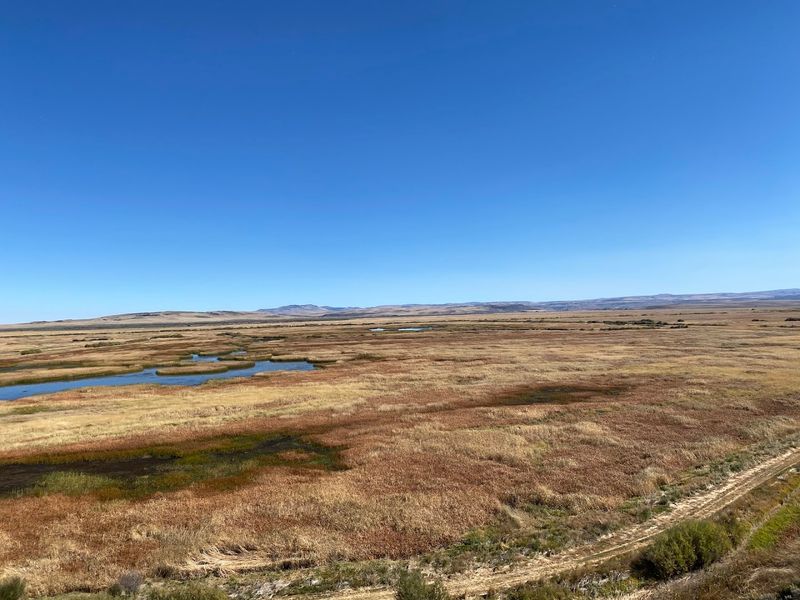
Most people picture Oregon as green and rainy, so stumbling onto a 12-by-7-mile dry lake bed in the southeastern corner of the state feels like a geography glitch.
The Alvord Desert sits in the rain shadow of Steens Mountain, which blocks nearly all moisture from reaching the basin below.
The result is a flat, cracked, bone-dry playa that feels more like Nevada or even the Bolivian salt flats than anything you would associate with the Pacific Northwest. Some visitors drive onto the surface when conditions are dry.
Others pitch tents in the middle of the playa and sleep under a sky so thick with stars it looks photoshopped.
The silence out here is the kind that presses against your ears. Steens Mountain rises dramatically behind you, often still capped with snow even in summer, creating a contrast so extreme it almost looks like a movie set.
There are no services, no crowds, and very few rules. Getting here requires a long drive on remote roads, but that isolation is precisely the point.
The Alvord Desert does not meet you halfway, and that is exactly what makes it unforgettable.
3. Neskowin Ghost Forest
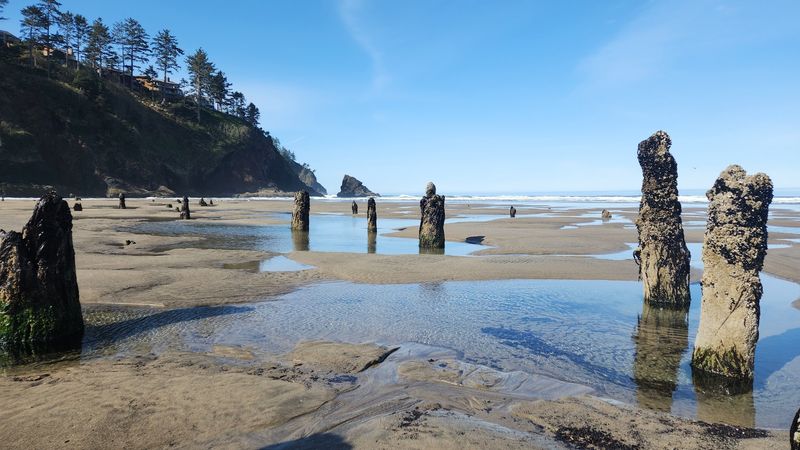
A forest stood here 2,000 years ago. Then the earth dropped, the ocean rushed in, and it disappeared.
At low tide on Neskowin Beach, roughly 100 dark, weathered Sitka spruce stumps push up through the sand like the ground is finally confessing what it buried.
An earthquake sank the land in an instant. Saltwater and sand swallowed the trees whole, and somehow preserved them almost perfectly.
A major storm in 1998 scoured away enough sand to expose them again, and the Ghost Forest has been pulling in curious visitors ever since.
Walking among them on a foggy morning is genuinely unsettling. The mist rolls in off the Pacific, the stumps range from knee-high to waist-high, and the whole scene feels like a forest frozen mid-breath.
No entrance fees, no crowds most days. Just you and a beach full of ancient wood that refused to rot.
Low tide timing is everything here.
4. Silver Falls State Park
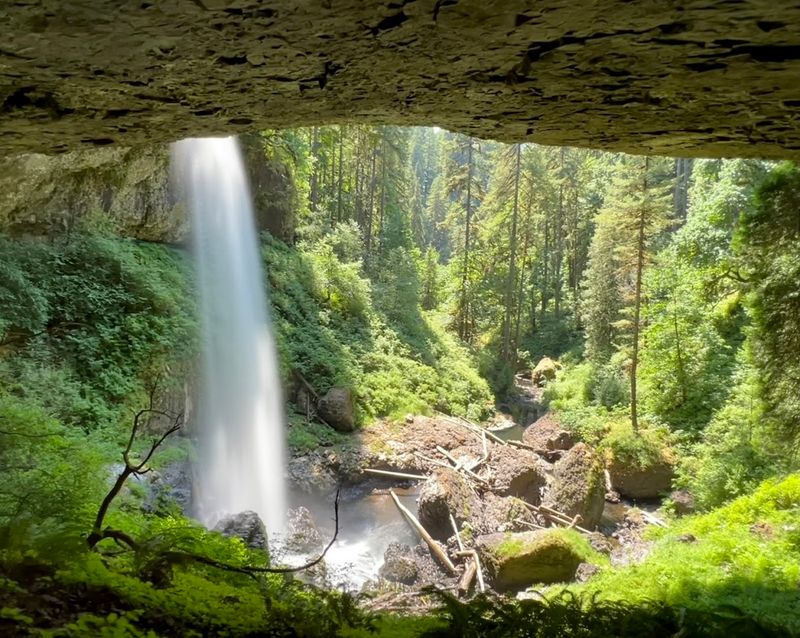
Walking behind a waterfall sounds like something you do once just to say you did it. At Silver Falls State Park, you do it four times on the same hike, and each one feels completely different from the last.
The Trail of Ten Falls is a 7.8-mile loop through dense Pacific Northwest rainforest, passing ten separate waterfalls along creek-carved canyon walls. South Falls drops 177 feet and has a trail curving directly behind the curtain of water.
The sound is immersive and loud in the best possible way.
What makes this hike special beyond the waterfall count is the canyon itself. Moss covers every surface, ferns line the trail edges, and the air smells like wet earth and cedar.
The loop is well-marked and accessible for most fitness levels, though the canyon descent adds some challenge. The park sits about an hour south of Portland near Sublimity.
Crowds are real on summer weekends, so arriving early gets you the kind of quiet that makes a waterfall hike feel meditative rather than like a theme park queue.
5. Wizard Island
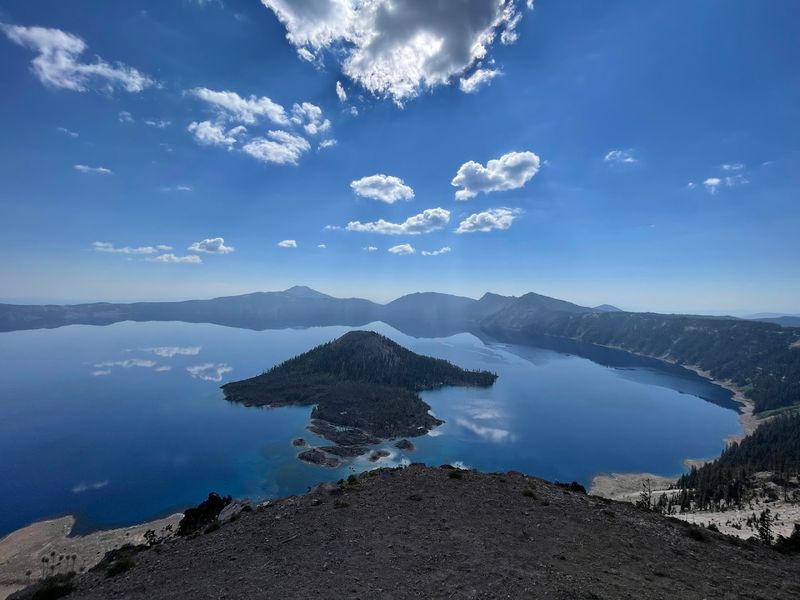
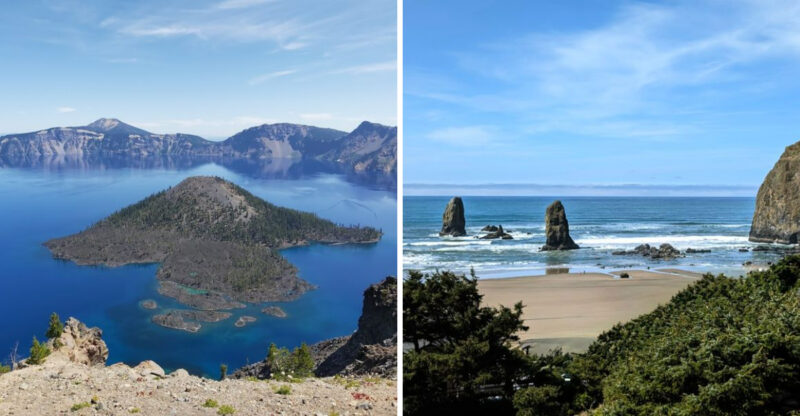
No photograph has ever done Crater Lake justice, and that is not an exaggeration. The blue is so saturated and so deep that your eyes keep adjusting, waiting for the image to resolve into something more believable. It never does.
About 7,700 years ago, Mount Mazama erupted and collapsed into itself, creating a massive caldera. Over thousands of years, rain and snowmelt filled it to create a lake 1,943 feet deep, the deepest in the United States.
Because no rivers or streams feed into Crater Lake, the water is extraordinarily pure, and that purity produces the color. Wizard Island, a cinder cone volcano, rises from the water near the western shore.
The 33-mile Rim Drive circles the caldera with viewpoints that each reveal a different angle of the lake. Boat tours to Wizard Island operate in summer and require advance reservations, which fill up fast.
Crater Lake National Park stays open year-round, though heavy snow closes most roads from October through late spring. The park sits in southern Oregon, roughly an hour north of Klamath Falls.
Winter visits, when the rim is blanketed in snow, offer a version of Crater Lake that very few people ever get to see.
6. The Painted Hills
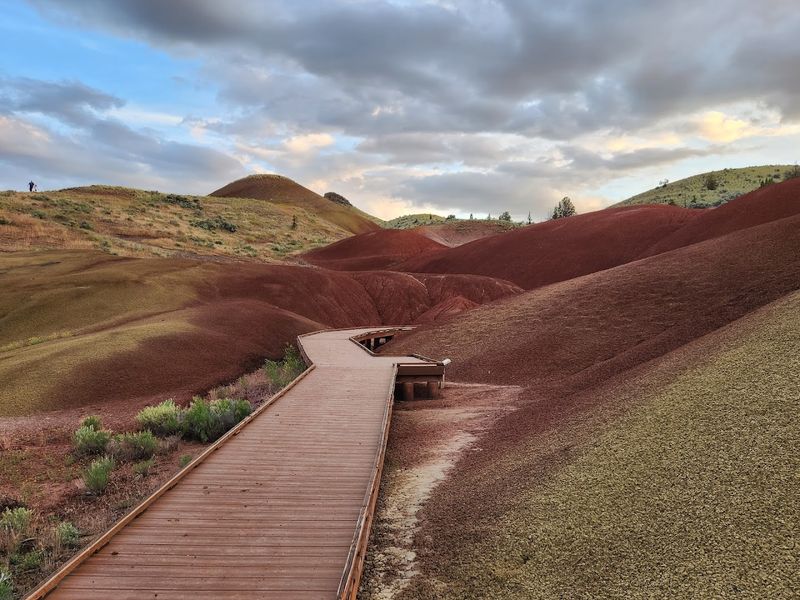
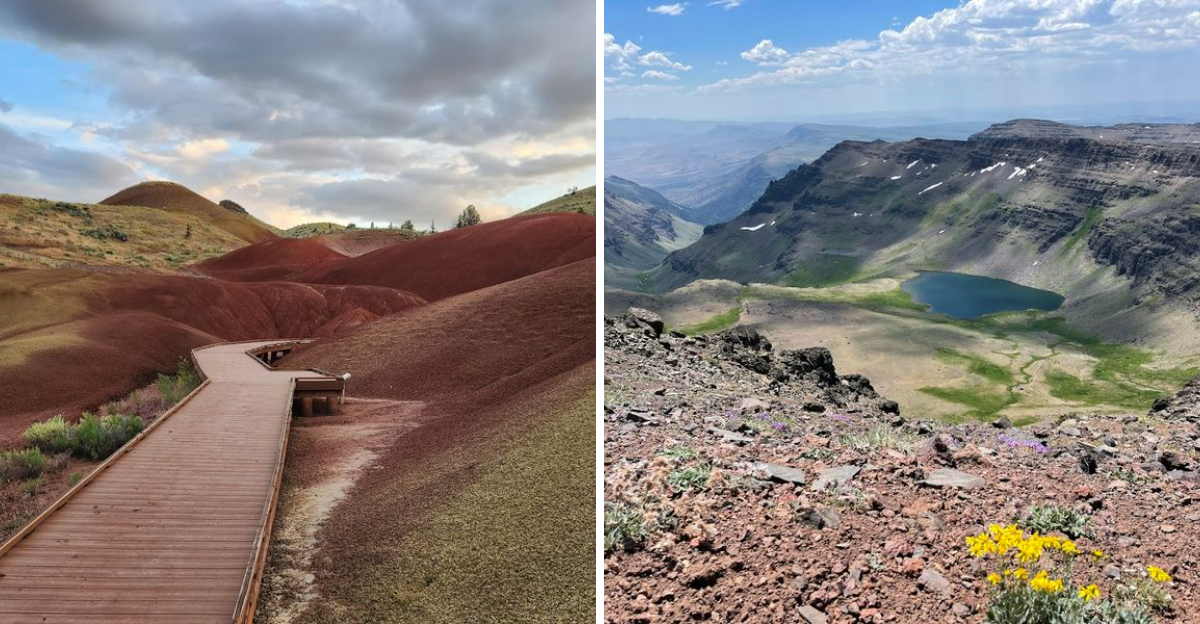
Your brain will briefly refuse to accept them as real. Rolling mounds of red, yellow, orange, and black stretch across the high desert, and no matter how many photos you have seen beforehand, rounding that bend for the first time still stops you cold.
These hills are not painted. The colors come from millions of years of soil chemistry, climate shifts, and ancient volcanic activity baked directly into the earth.
About four hours from Portland, the Painted Hills unit of John Day Fossil Beds National Monument sits in a remote stretch of central desert. This area was once a lush river floodplain where prehistoric animals thrived.
Fossils found here have helped scientists reconstruct entire ecosystems from 33 million years ago.
Far from any city lights, the night sky above the hills is extraordinary on its own. Astrophotographers make dedicated trips just for the stars.
Short boardwalk trails keep visitors off the fragile soil. Visit after rain for the most saturated colors, and stay for sunset, because the light turns those hills almost electric.
7. Smith Rock State Park
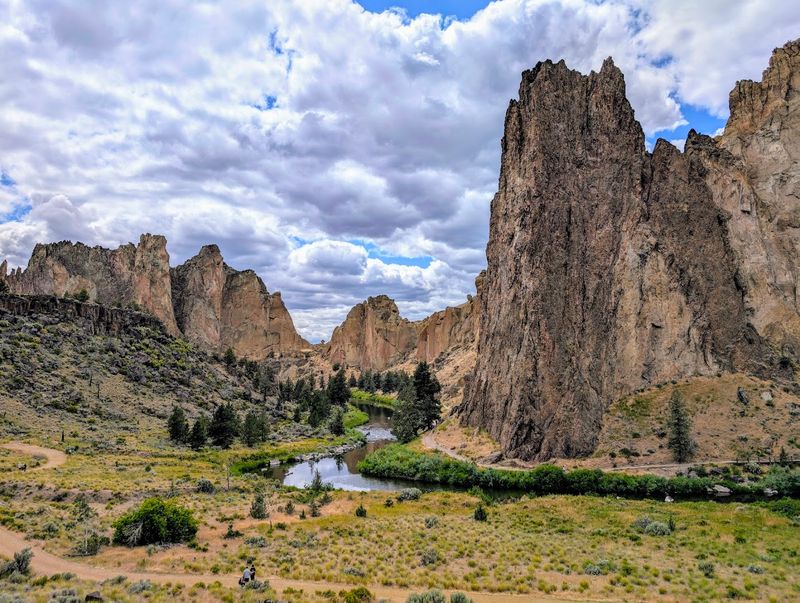
Sport climbing in America has a birthplace, and it is a high desert canyon that most people outside the climbing world have never heard of.
Smith Rock changed the sport in the 1980s, and climbers still travel from every corner of the world to stand at the base of its 300-foot volcanic spires.
The formations took shape from ancient volcanic ash that compressed and hardened over 30 million years. The Crooked River then carved through the base, leaving behind a canyon dramatic enough to stop you cold from the parking lot.
The Misery Ridge Trail earns its name on the climb up, but pays you back with views of rust-colored towers, golden eagles riding thermals, and the river curving 300 feet below.
Non-climbers make up a huge portion of visitors. Hiking and wildlife watching hold their own here.
River otters, mule deer, and prairie falcons show up regularly. Sunrise turns the rock faces copper and amber.
Pack serious water because the high desert heat catches people off guard, even in spring.
8. Steens Mountain
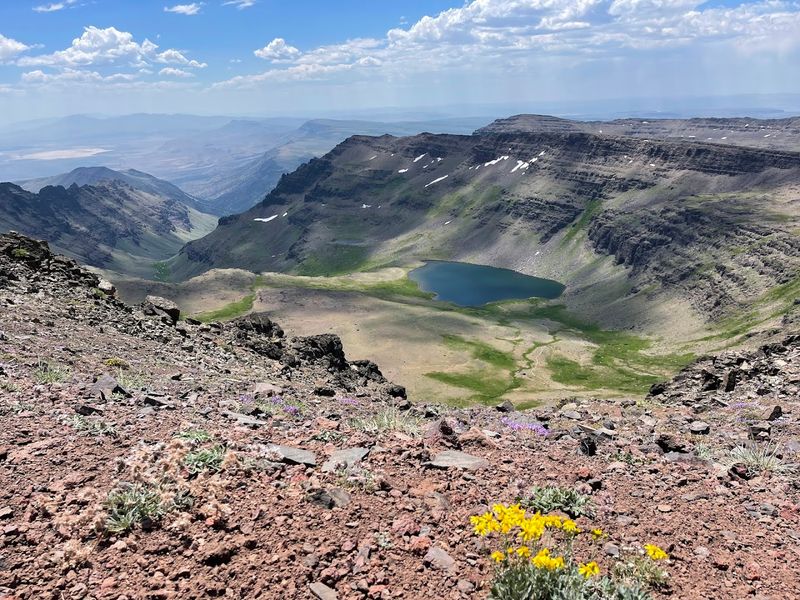
Almost nobody outside the climbing and hiking world knows this place exists, and that is a genuine shame. Steens Mountain rises nearly a mile in elevation over just a few horizontal miles on its eastern face, making it one of the most dramatic geological features in the American West.
It is a fault-block range, meaning one side tilted sharply upward while the other slopes gently westward into broad glacial basins full of wildflowers in summer. Glaciers carved deep U-shaped gorges into the eastern face.
The views from the summit road are legitimately staggering. Wild mustang herds roam the lower slopes, and the alpine lakes sitting inside the glacial basins are cold, clear, and completely still on calm mornings.
The Steens Mountain Backcountry Byway runs 52 miles and hits most of the key viewpoints, open roughly July through October depending on snowpack. No services exist on the mountain, so fuel up and pack supplies before leaving Frenchglen.
Bighorn sheep, pronghorn antelope, and golden eagles share this landscape with very few humans on any given day. The remoteness is the whole point.
9. The Columbia River Gorge
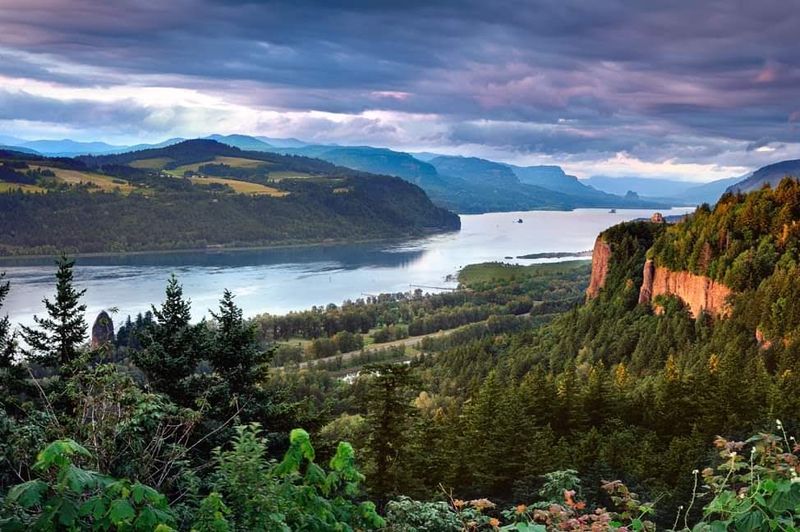
Seventeen million years of geological patience carved this place, and it shows. The Columbia River Gorge stretches 80 miles along the border with Washington, and it contains more waterfalls than most entire states combined.
Canyon walls reach up to 4,000 feet, shaped first by the Columbia River cutting through the Cascades, then by catastrophic Missoula Floods that roared through between 19,000 and 15,000 years ago.
Multnomah Falls pulls most of the crowd, dropping 620 feet in two tiers and drawing over two million visitors a year. The Gorge has over 90 waterfalls total, and most of them see a fraction of that foot traffic.
The Columbia River Gorge National Scenic Area is the largest in the country, protecting both sides of the river. The Historic Columbia River Highway on the south side connects multiple trailheads and quieter viewpoints worth slowing down for.
Around Hood River, the Gorge funnels consistent strong winds all summer, making it one of the top wind and kitesurfing destinations in the country.
10. Wallowa Mountains
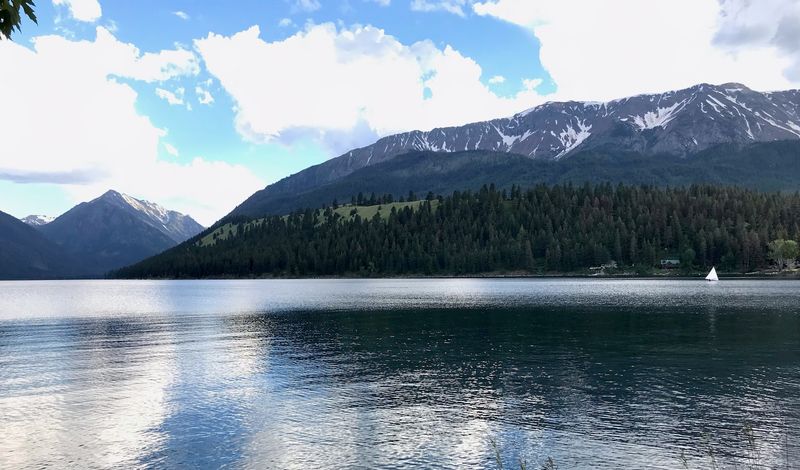
Calling them the Alps of Oregon sounds like something a tourism board invented. Then you see the granite peaks rising sharply above a glacially carved lake in the far northeastern corner of the state, and suddenly the comparison feels understated.
The Wallowa Mountains are serious mountains.
Wallowa Lake sits at the base of the range, its surface reflecting peaks that top 9,000 feet. Glaciers carved this valley during the last ice age, leaving behind a lake that is deep, remarkably clear, and surrounded by walls of rock that feel almost vertical.
The Wallowa Lake Tramway lifts visitors to near the summit of Mount Howard in about 15 minutes, with views stretching into Idaho and Washington on clear days.
The town of Joseph sits at the northern end of the lake and rewards a slow walk through its bronze sculpture galleries and quiet streets. Backpacking into the Eagle Cap Wilderness above puts you in a world of alpine meadows, granite basins, and near-total silence.
Compared to the Cascades, crowds here are minimal, which feels almost criminal given the scenery.
11. Umpqua Hot Springs
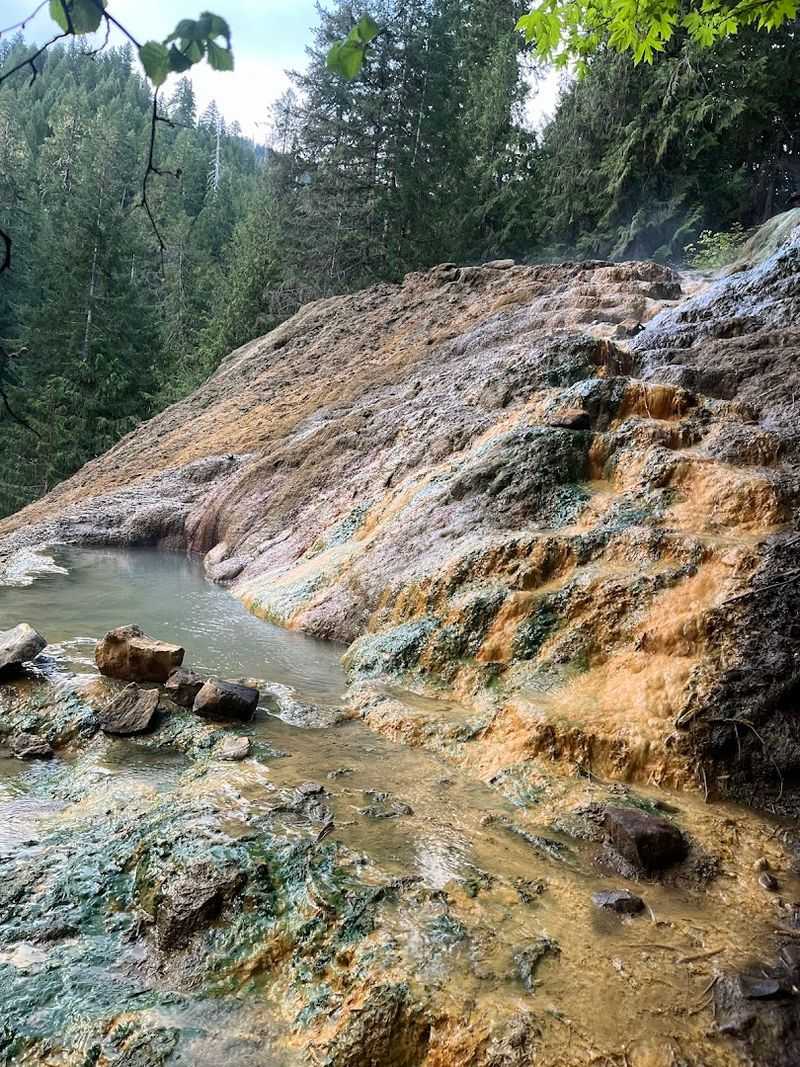
Geothermal pools cascading down a forested hillside above a rushing river sounds like something a screenwriter invented. Umpqua Hot Springs is completely real, and it is one of those places that makes you question why you ever book a hotel with an indoor pool.
Perched on a travertine terrace above the North Umpqua River, the pools step down the hillside, each one slightly cooler than the one above. The hottest pool at the top hits around 115 degrees Fahrenheit.
The sound of the river below mixes with hissing steam, and the travertine formations built up over centuries give the whole site a raw, organic look no human architect could replicate.
The area is day-use only, open sunrise to sunset. The trailhead sits off Forest Road 3401, near milepost 59 on Route 138, close to Idleyld Park.
The hike in is short but involves some elevation gain on uneven ground. Bring water shoes for the rocky edges.
Weekdays offer genuine solitude. Arriving at sunrise on a cool morning, when steam rises thick off the water, is the kind of thing you will describe to people for years.