Nebraska’s Only Lighthouse Rises 55 Feet Over A Panhandle Lake And Its Stairs Are Open To Climb
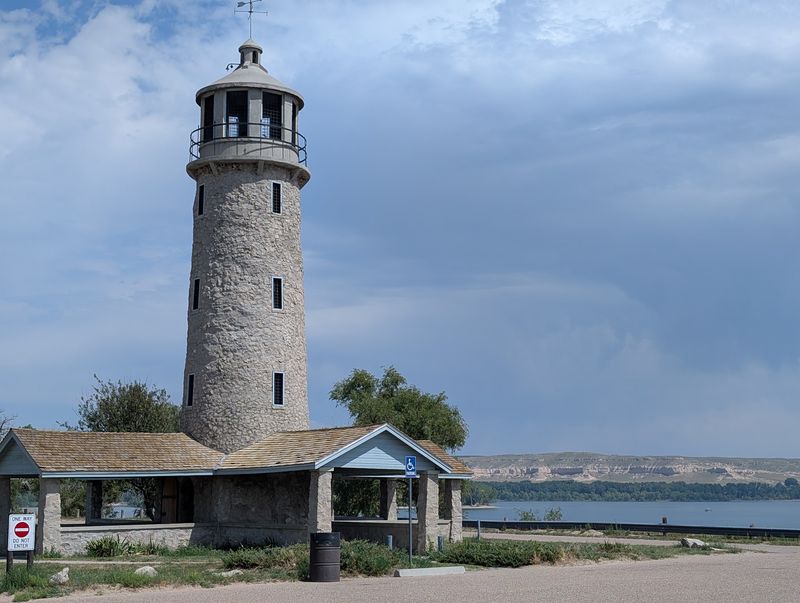
A lighthouse in Nebraska sounds like the punchline to a joke about a state with no ocean. But drive far enough west, past irrigation canals and sugar beet fields, and a 55-foot tower of native stone shows up on the shore of a big blue lake like it wandered in from Maine.
The stairs inside are narrow, winding, and open to anyone willing to climb them. What waits at the top is one of the widest views in the Nebraska Panhandle.
A Stone Tower on the Shore North of Scottsbluff
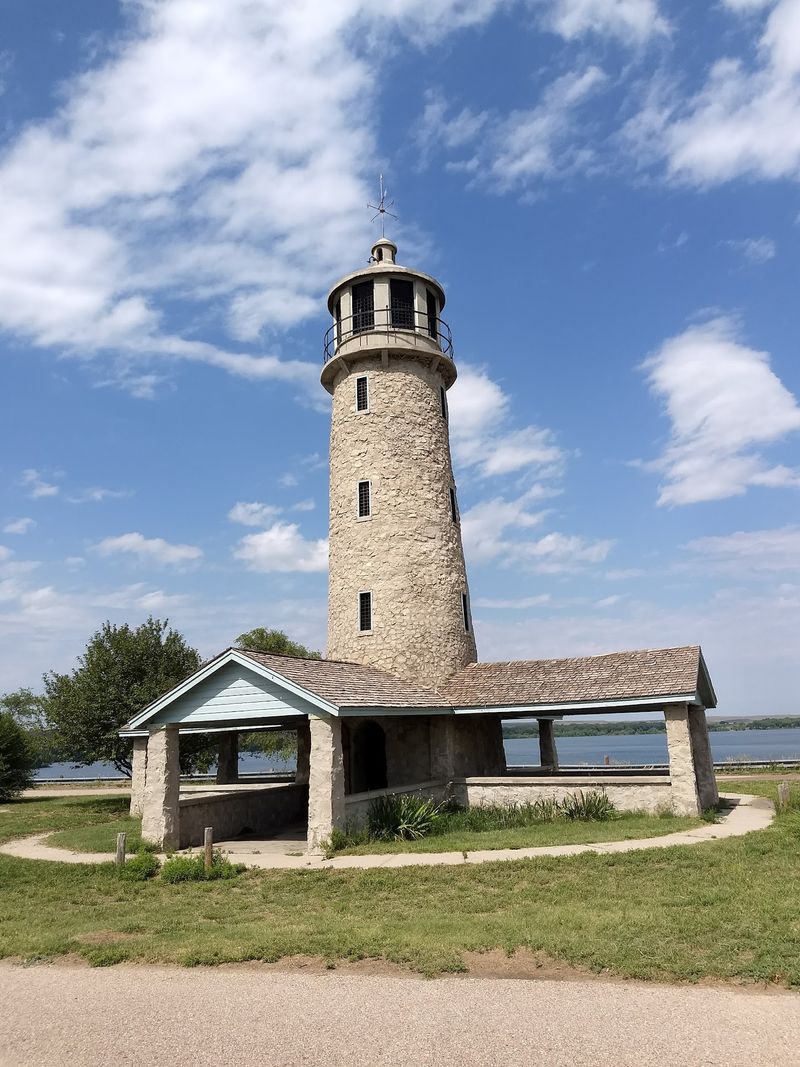
Roughly 11 miles northeast of Scottsbluff, at 290770 Main Rd near the town of Minatare, the entrance road to Lake Minatare State Recreation Area curls toward the water and delivers you to something no other place in the state can offer.
Native stone, mortar, a squat round shape, and a height of 55 feet add up to Nebraska’s only lighthouse. It never guided ships anywhere.
It was designed to look the part, and it does the job so convincingly that people driving by slow down to make sure they saw it right.
Officially it is an observation tower and shelter house. Practically, it is the reason a lot of people make the drive out here at all, even in a park with a huge lake, boat ramps, and campsites lining the shoreline.
Scotts Bluff County wraps around the whole scene. The North Platte valley farmland sits to the south, the bluffs rise in the distance, and the tower anchors it all like a punctuation mark somebody dropped in the wrong sentence on purpose.
Built by Conservation Corps Crews in the Late 1930s
Work on the tower ran from 1937 to 1939, carried out by Civilian Conservation Corps crews, sometimes credited as the Veterans Conservation Corps. Those were the years when federal work programs put crews to work across Nebraska building shelters, dams, and park facilities that are still standing.
Stone was the material of choice, and it was gathered locally rather than shipped in. Look closely at the walls and the irregular sizes and colors of each piece show hands placing them one at a time.
The design brief was unusual. Rather than a plain lookout, the plan called for a structure that would simulate a genuine coastal lighthouse, complete with a tapering profile and a top-level observation area reached by an interior stair.
Fewer than a dozen inland lighthouses exist in the United States, and this one counts among roughly seven. That statistic does a lot of work in explaining why a landlocked Panhandle lake ended up with a landmark shaped like it belongs on a rocky coast, almost 90 years after the mortar first set.
Climbing the Winding Interior Staircase
Push through the doorway and the temperature drops a few degrees. Stone holds cool air, and the base of the tower feels like a root cellar even on a hot July afternoon.
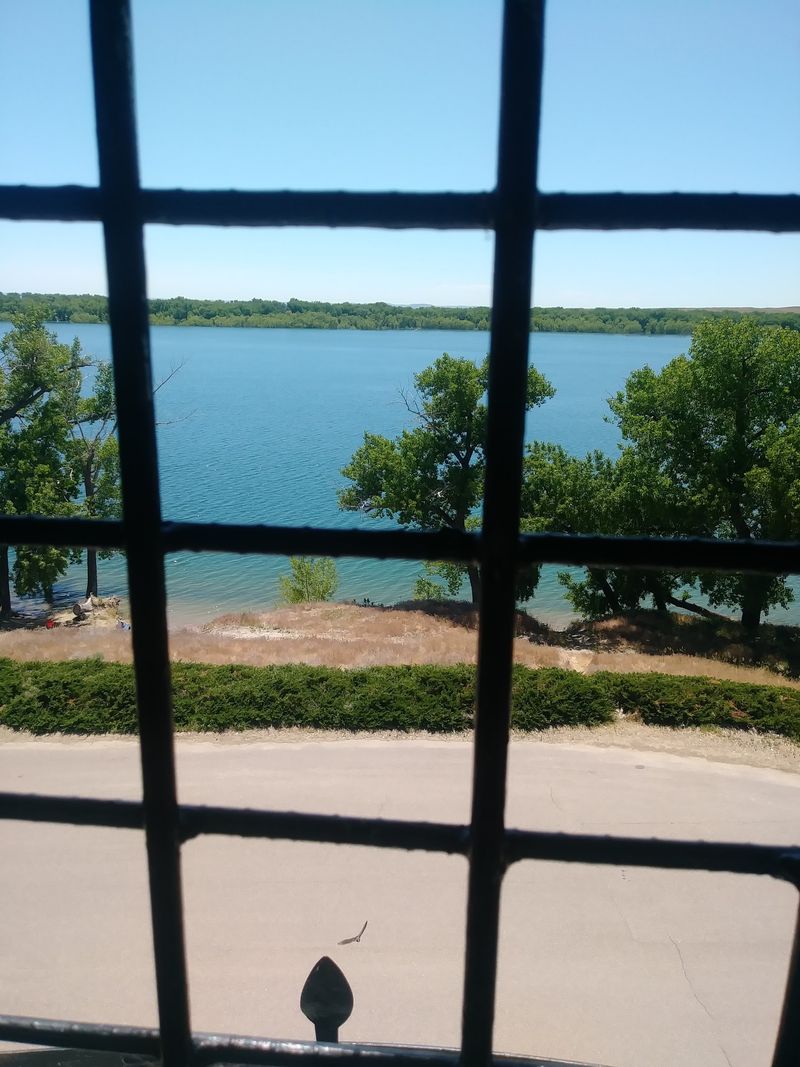
The stairway is narrow. It winds upward in a tight curve, one person wide in spots, with small openings letting in enough light to see the next few steps.
Nobody would call the climb strenuous, but it is snug, so a group moves best single file with a plan for who goes up and who waits.
Fifty-five feet passes faster than expected. The steps keep turning, and then daylight opens up and you are standing at the observation level with wind pulling at your sleeves.
Anyone uneasy in tight spaces or on curving stairs should know what they are walking into. For everyone else, it is a short, genuinely satisfying climb, and the pay-off arrives immediately rather than after a long slog.
Bring a camera, because the top rewards a photo more than the base ever will.
The View That Opens at the Top
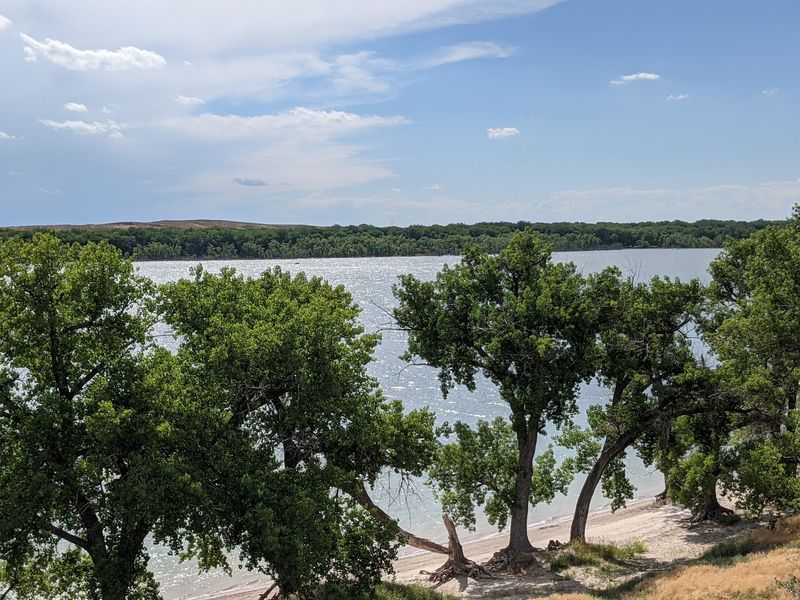
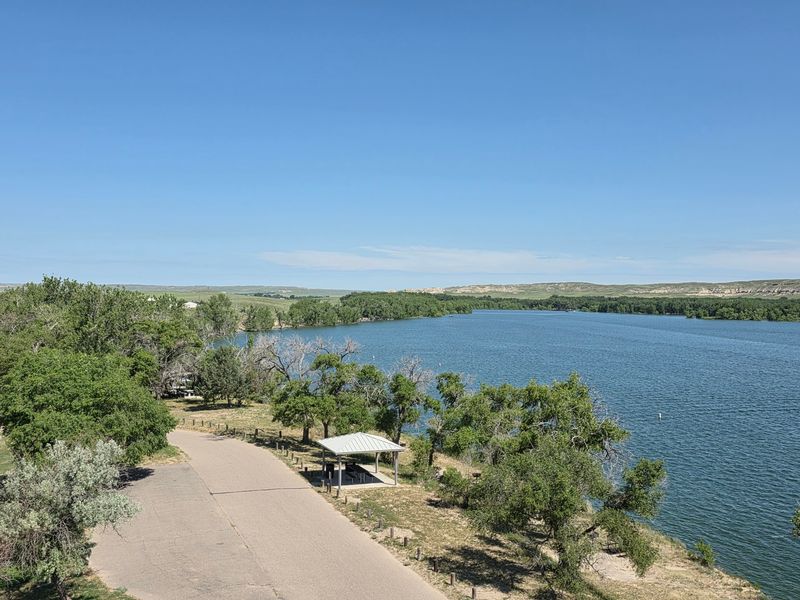
Wind is the first thing that hits you at the top. The second is the sheer amount of Nebraska visible from a mere 55 feet, which says everything about how flat the land around the lake sits.
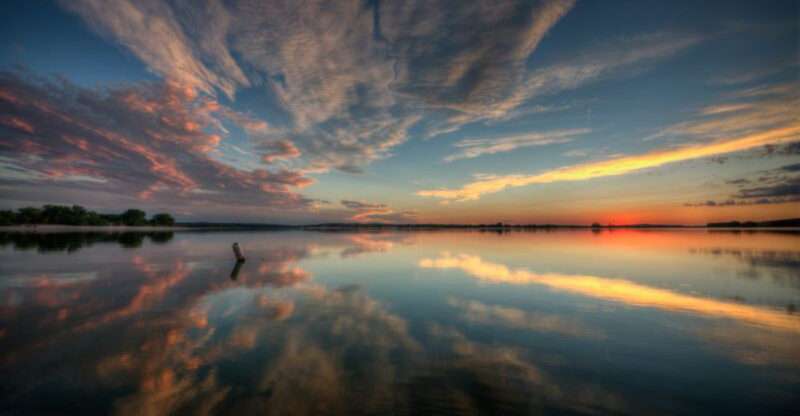
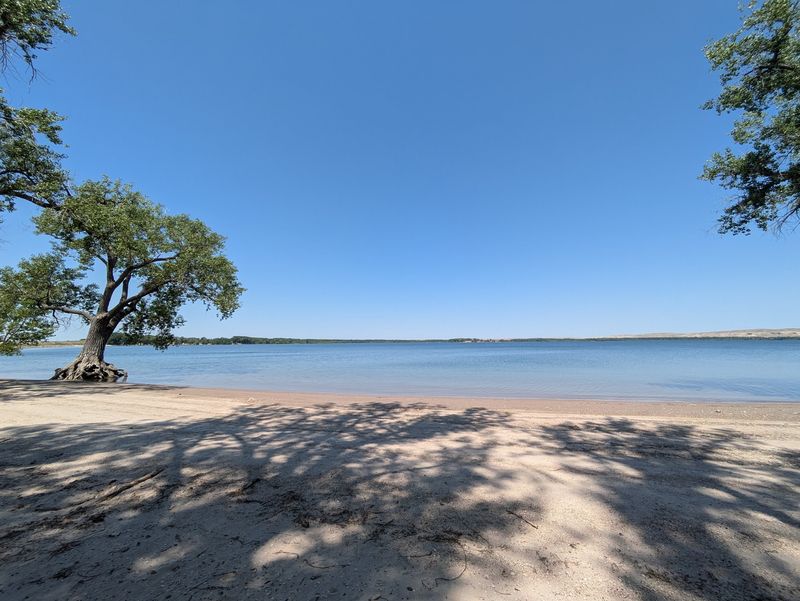
Lake Minatare spreads out below in a wide sheet of dark blue, big enough that boats look like specks on the far side. Campgrounds line the near shore, RVs parked close to the water with kayaks pulled up beside them.
Cottonwoods ring the edges, and beyond them the farmland of the North Platte valley runs out toward the horizon in green and gold rectangles. On a clear morning the distant bluffs to the southwest come into view, which puts the whole Panhandle landscape into one frame.
Hawks and geese work the airspace at eye level, which is a strange feeling. Sunrise and the last hour before closing give the water the best color, and the observation level is small enough that arriving early means having the whole view to yourself for a while.
A Panhandle Lake Built for Water Days
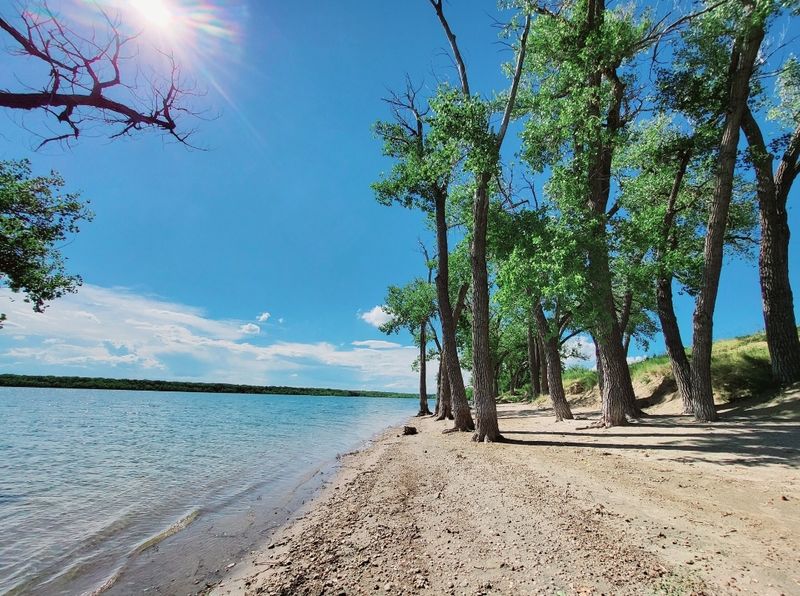
Forget the tower for a minute and there is still a serious amount of lake here. Minatare is a big irrigation reservoir, wide enough for boating, water skiing, and jet skis without anyone crowding anyone else.
Fishing gets a lot of use, and the park includes fish cleaning stations, which tells you people are catching things worth cleaning. Kayaks and canoes launch easily from the shoreline, and sandy stretches make swimming and wading straightforward for families.
Shade matters out here in August, and trees ring much of the shoreline. Some of the older cottonwoods have thick roots pushing up out of the soil, gnarled enough that kids treat them like playground equipment.
Water levels swing with the irrigation season and with how dry the year has been, so spring visits sometimes find the lake noticeably lower than in midsummer. Pets are welcome, which makes it an easy call for anyone who travels with a dog that likes to swim.
Glass containers are not allowed anywhere in the park.
Camping Along the Water’s Edge
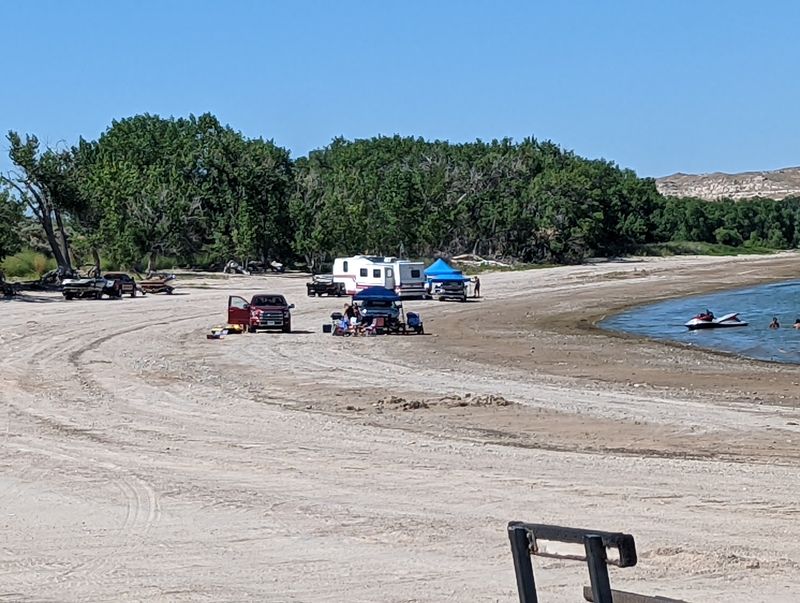
Asphalt parking pads, a grill, and a picnic table come with the developed sites, and electric hookups are available at some of them. Water is not plumbed to every site, though there is a spigot near the main bathhouse.
Primitive camping is the other option, and much of it sits right along the beach. Setting a tent within a few steps of the shoreline is possible here, which is not something most Nebraska parks can offer.
Bathrooms come in two grades. The modern bathhouse facilities are the ones to aim for, so choosing a site near them is a reasonable strategy over the older vault toilets scattered around the grounds.
Costs add up in ways worth planning for. Camping fees stack on top of a daily park entry fee, and short stays can run into a two-night minimum during busy stretches, so a single overnight sometimes costs more than expected.
Popular summer weekends fill the good spots early. Reserving ahead beats circling the loops hoping for a cancellation.
Hours, Permits, and Getting There
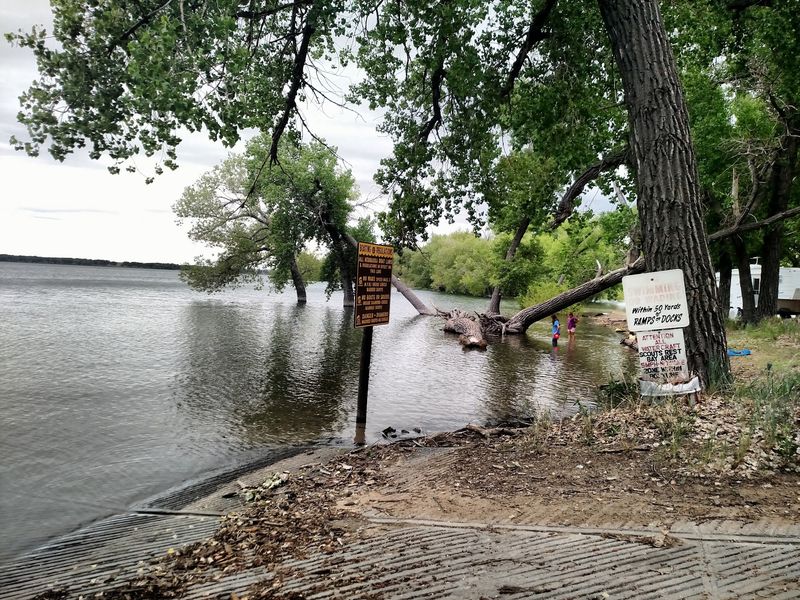
Gates open at 8 a.m. daily. Closing is 5 p.m.
Sunday through Thursday and stretches to 7 p.m. on Friday and Saturday, so weekends buy you two extra hours of evening light on the water.
Seasonally, the park generally welcomes visitors from January 15 through October 15, which makes late fall and early winter the wrong time to plan a lighthouse climb. Aim for spring through early October instead.
A Nebraska State Park entry permit is required, and enforcement is real, so buy it before you roll through the gate rather than after. Permits are sold as annual or daily, and out-of-state travelers should sort this out first thing.
Climbing the tower itself carries no separate charge beyond that park permit.
Getting there from Scottsbluff or Gering takes about 20 minutes, heading northeast on county roads toward Minatare, then following the park entrance road until it leads you straight to the lighthouse. Restrooms and trash cans sit near the tower, handy for anyone passing through on a longer drive.
Why the Detour Pays Off in Western Nebraska
Pair it with Scotts Bluff National Monument and you have a full day in the Panhandle: towering bluffs in the morning, a stone tower and open water in the afternoon. Both sit within a short drive of each other, and both trade on views you cannot get anywhere else in the state.
Families do well here because the climb is short, the shoreline is shallow in places, and the whole stop can be as brief as 30 minutes or stretched into an entire weekend of fishing and camping.
Expect a working recreation area rather than a polished tourist site. Campsite cleanliness varies, the water level does what irrigation demands, and fees stack up.
None of that changes the fact that a 1930s stone lighthouse is standing on a Nebraska lake and letting people walk to the top of it.
For anyone who has driven Highway 26 a hundred times without turning north, this is the turn to finally take. Go early, climb the stairs, and let the wind do the rest.