Nebraska Sculptor Gutzon Borglum’s Brother Carved This Giant Pioneer Statue That Still Watches Over A Courthouse Lawn
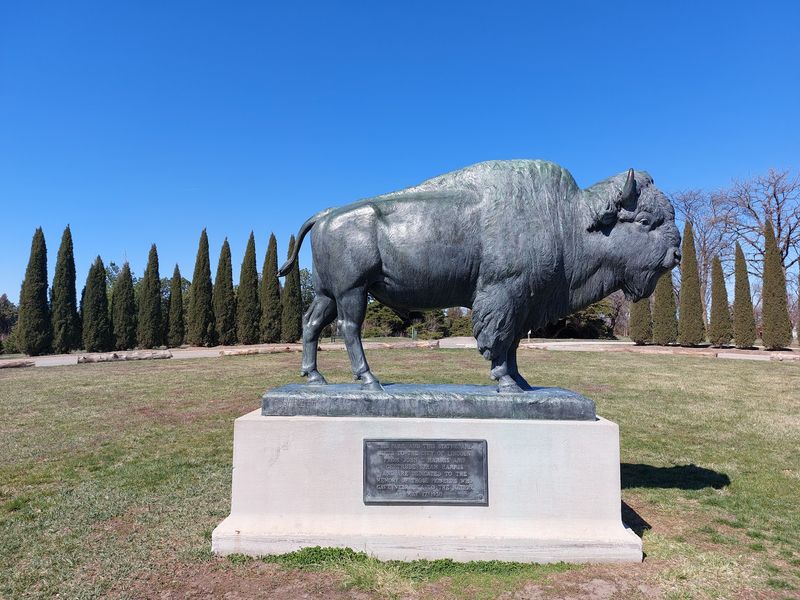
A bronze bison stands guard in a Lincoln park, and it opens the gate early. Its park keeps hours from the crack of dawn until late at night, every single day of the week.
The story people tell about it gets tangled fast. It drags in the brother of the man who carved Mount Rushmore.
That brother really did grow up ranching on the Nebraska prairie.
So who gets credit for what? I like how one quiet statue can lead you down a trail of cowboys, sculptors, and a lost California monument.
I also love that the bison itself asks for nothing. No ticket booth, no tour group, no rush.
It just waits for runners, cyclists, and puppies to wander by. Want to know where the real Borglum trail leads, and why this shaggy landmark still earns a stop?
A Bronze Bison That Greets Lincoln’s Early Risers
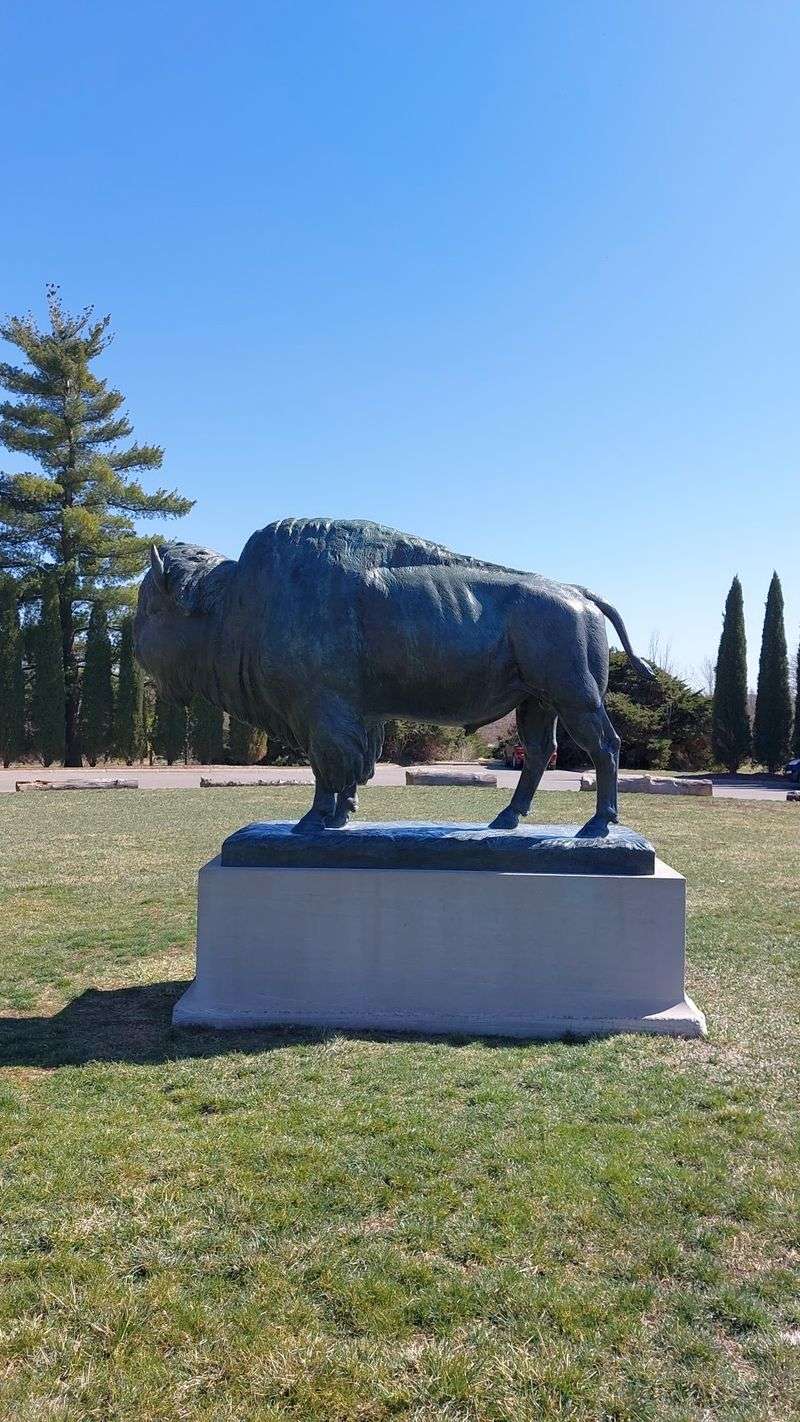
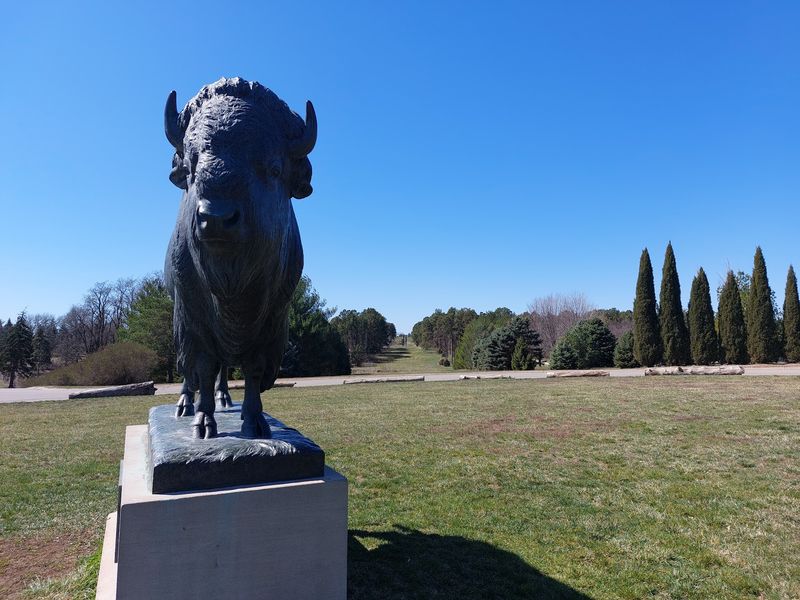
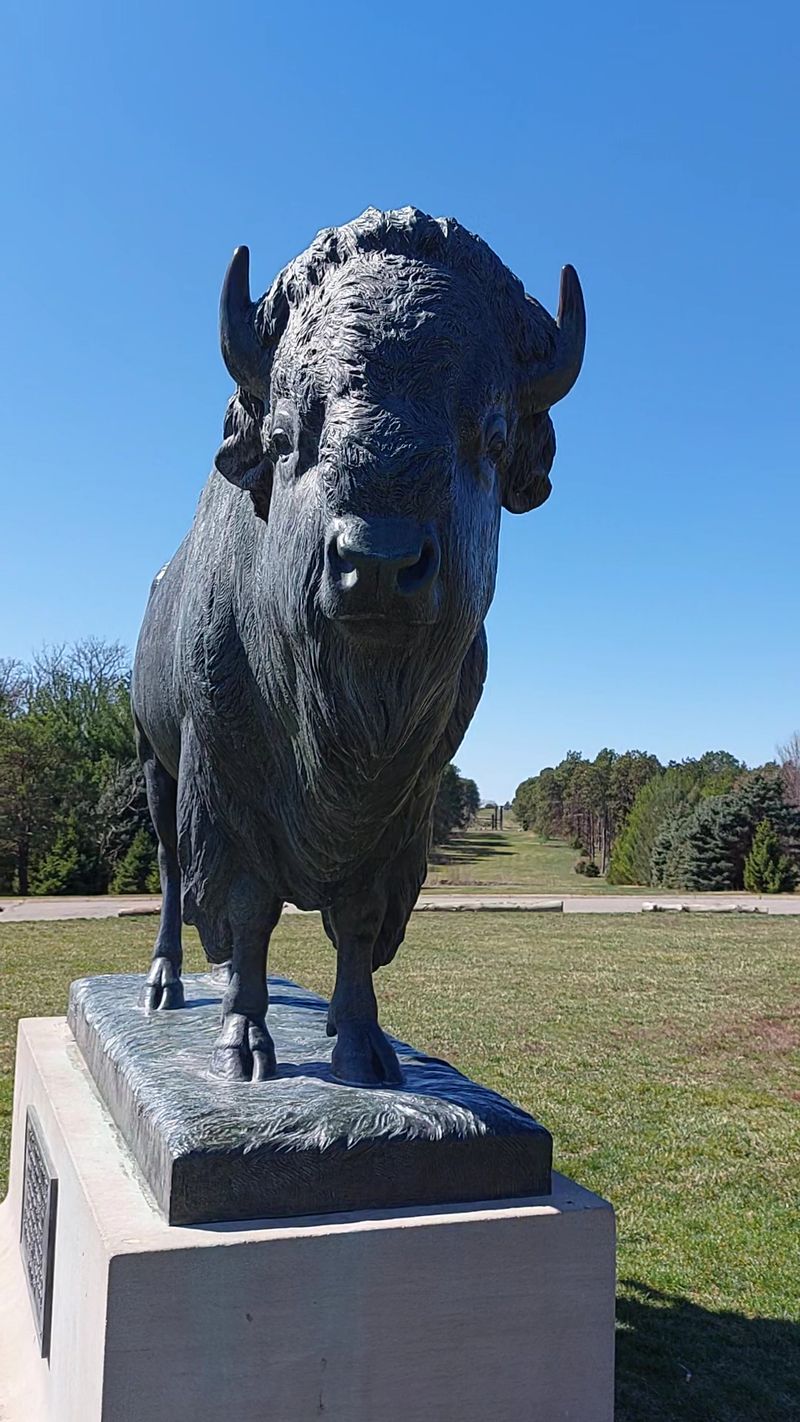
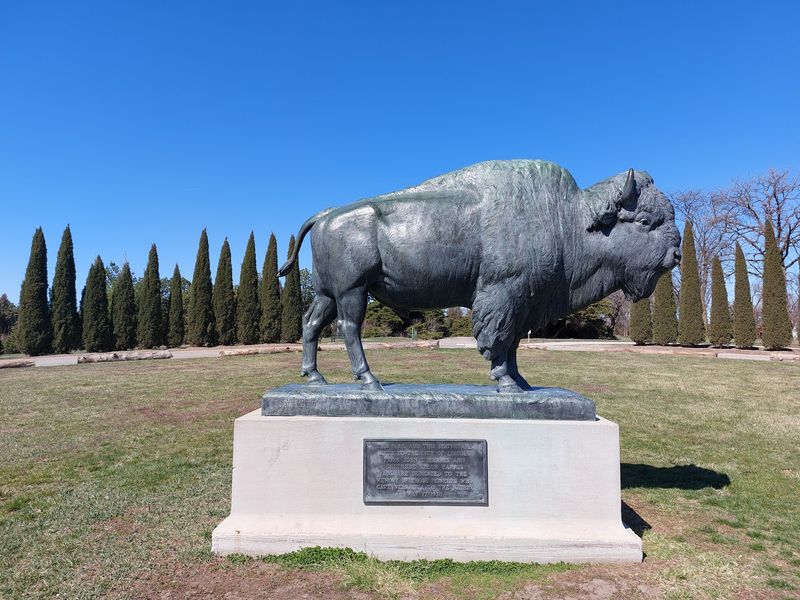
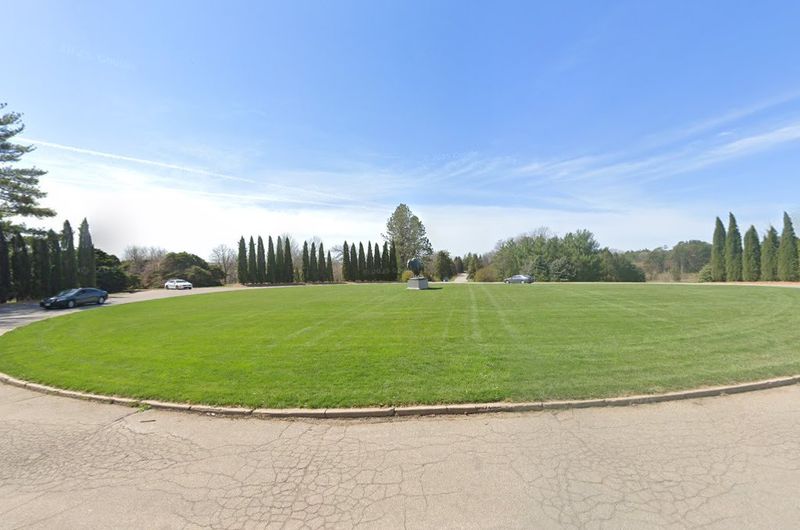
Some landmarks shout for attention, but the Pioneer Park American Bison Statue simply stands its ground. It sits in Pioneer Park on the southwest side of Lincoln, Nebraska.
Google lists it as a historical landmark, and the City of Lincoln includes it in its public art collection. That’s a nice bit of official recognition for an animal that never asked for any.
The appeal is easy to grasp. You get a big, shaggy symbol of the Great Plains, cast in metal, waiting beside a park built for walking and wandering.
Bison carry real weight in this part of the country. Huge herds once roamed the grasslands, and the animal still stands for the open prairie in many people’s minds.
So a bison greeting park visitors feels right at home here. It connects a modern city park to the wide land that came long before the paved paths.
The statue’s ratings are a perfect five stars, though the sample is small. Still, eleven happy votes and zero complaints is a record most landmarks would gladly frame.
Not bad for a creature that has never once moved from its post.
Untangling The Borglum Brother Story
Here’s a twist worth knowing before you go. The tale linking this bison to Gutzon Borglum’s brother doesn’t hold up when you check the record.
The brother in question is Solon Borglum, who lived from 1868 to 1922. He was the younger sibling of Gutzon, the sculptor behind Mount Rushmore.
Solon earned real fame on his own. He became known as the Sculptor of the Prairie for his cowboys, horses, and frontier scenes.
Yet no reliable source credits him with a giant pioneer statue on a Nebraska courthouse lawn. His courthouse works stand in Prescott, Arizona, at the Yavapai County Courthouse Plaza.
One of those is the Bucky O’Neill Monument, often called Rough Rider. Another, Cowboy at Rest, also stands on those Arizona courthouse grounds.
He also created an equestrian monument of General John Brown Gordon for the Georgia State Capitol grounds. That’s a busy career, just not one that parked a pioneer on a Nebraska lawn.
So enjoy the bison for exactly what it is. Then enjoy the Borglum story as a bonus chapter, with the facts kept straight.
The Prairie Roots Behind The Sculptor Of The Prairie
Cowboy first, sculptor second. That sums up Solon Borglum’s early life better than any museum label could.
He spent much of his childhood and early adulthood ranching in Nebraska. Those years shaped the art he made later, full of riders, horses, and Native Americans.
You can still find a physical trace of that chapter today. A historical marker honoring Solon H.
Borglum stands near Cairo, Nebraska.
Look for it at mile marker 338 on Nebraska Highway 2. The marker recognizes his roots and the prairie that inspired his work.
Highway 2 makes a fine excuse for a drive anyway. It heads northwest toward the Sandhills, so the marker fits neatly into a longer day out.
Pair the two stops and you get a fun little theme trip. Start with the bronze bison in Lincoln, then chase the real Borglum story up the highway.
One stop shows the prairie animal. The other shows the prairie kid who learned to sculpt it in his head long before he ever touched clay.
That feels like a pretty good afternoon, honestly.
What Became Of Solon’s Real Pioneer
Solon Borglum did make a statue called The Pioneer. It’s also known as American Pioneer, and it once stood tall indeed.
He created the equestrian piece for the 1915 Panama-Pacific International Exposition in San Francisco. After the fair, Tulare County acquired it.
The statue then moved to Mooney Grove Park in Visalia, California. For decades, it greeted folks near the park’s main entrance.
Then an earthquake on May 28, 1980, badly damaged it. Today, only its stone base remains at that entrance.
So the famous Borglum pioneer never watched over a Nebraska courthouse. It lived its whole public life in California, and now just its pedestal holds the spot.
That detail makes the Lincoln bison feel a little more precious. Public art doesn’t always stick around, and a sturdy bronze still standing is worth a moment of thanks.
Think of it as two monuments with very different fates. One left a base behind out west, while the other still plants its hooves in a Lincoln park.
History has a sense of humor about which pieces get to stay.
Why A Bison Belongs In A Park Named For Pioneers
Pioneers and bison share the same chapter of Plains history. Putting the animal in a park named for settlers just makes sense.
The bison stood for the wide-open grassland that early travelers crossed. A bronze one keeps that picture alive in the middle of a growing city.
I like that the statue doesn’t need a plaque speech to make its point. One look at the hump, the horns, and the heavy head tells the story.
Kids get it instantly, too. A giant animal statue needs zero explanation for a five-year-old, which is a rare gift in public art.
The City of Lincoln lists the piece under its public art program. That places it among works the city values as part of its shared spaces.
For Nebraska families, it’s a handy teaching moment on a casual walk. You can talk about the prairie, the settlers, and the animals without opening a single textbook.
And if nobody feels like a history lesson? The bison works just as well as a backdrop for a goofy photo.
Saturday Miles With A Shaggy Cheerleader
Runners have claimed this spot as part of their weekend routine. It’s described as a great place for a run on Saturday mornings.
That makes sense, since the park opens early. A bronze bison makes a far more memorable turnaround point than a random lamppost.
Cyclists get in on the action as well. The area is known as a good place for both walking and cycling.
So lace up, pump up the tires, or just stroll. The setting suits every pace, from serious training to slow coffee-in-hand wandering.
Early hours help a lot in a Nebraska summer. You can beat the afternoon heat and still check the statue off your list.
There’s something motivating about a big, sturdy animal at the side of your route. It never gets tired, never complains, and never asks how many miles are left.
Honestly, it might be the most patient training partner in Lincoln. You can show up late, skip a week, or walk the last stretch, and it won’t judge you one bit.
Puppies, Pauses, And Quick Little Detours
Not every visit needs a plan. A few minutes with a new puppy counts as a perfectly good reason to stop here.
That’s the charm of a statue in an open park. You can drop by for ten minutes or linger for an hour, and both feel right.
Pet owners will appreciate the room to roam. Bring a leash, some water, and maybe a camera, because a puppy beside a bronze bison is pure gold.
Families with little ones get an easy win too. There’s no admission line, no fragile exhibit, and no shushing required.
Retirees looking for a calm outing will find a lot to like. A gentle walk, fresh air, and a bit of Nebraska heritage make a tidy little morning.
Photographers might enjoy the statue at different times of day. The long park hours give you plenty of chances to catch early or evening light.
Really, the place suits anyone who likes their sightseeing low-key. It rewards curiosity without demanding a whole day, which makes it a sweet bonus stop on any Lincoln errand run.
Getting There Before The Sun Gets Bossy
Good news for early birds and night owls alike. The park welcomes visitors from early morning until late evening, seven days a week.
That wide window makes timing easy. Swing by before work, after dinner, or on a lazy Sunday without checking a calendar twice.
For directions, the Pioneer Park American Bison Statue uses a plus code address. Plug in Q6JX+2G, Lincoln, NE 68522, United States, and your map app will do the rest.
It sits on Lincoln’s southwest side, so it pairs nicely with other errands around the capital city. Coming from out of town makes for a manageable Nebraska day trip.
Dress for the weather, since this is an outdoor stop. Comfortable shoes help if you plan to walk or run the paths nearby.
Bring water on warm days, especially with kids or dogs in tow. A light jacket might help on breezy mornings, too.
And give yourself a little extra time. Quick stops have a sneaky habit of turning into long, happy strolls once the fresh air kicks in.
A Sturdy Little Landmark Worth Your Morning
Big legends can shrink under a fact check, but the bison doesn’t mind. It was never pretending to be anything else.
The Pioneer Park American Bison Statue offers something simple and solid. You get a public artwork, a prairie symbol, and a pleasant park in one easy stop.
The Borglum connection makes a fun side story, as long as you tell it right. Solon’s true Nebraska legacy lives along Highway 2, not on a courthouse lawn.
That leaves room for a great two-part outing. See the bison in Lincoln, then road-trip toward Cairo for the marker that honors the Sculptor of the Prairie.
I believe the best local landmarks are the ones you can actually reach on a whim. This one fits that bill with long daily hours and wide-open space.
Runners, cyclists, puppy parents, and curious families all find a reason to stop. Nobody needs a guidebook to enjoy a giant bronze bison.
So next time you’re in Lincoln with a spare hour, swing by and say hello. It’ll be right where you left it, horns up and ready.