Nebraska’s Witch’s Bridge Has The Kind Of Local Legend That Gets Creepier After Sunset
Old bridge legends know exactly how to misbehave after dark.
During the day, a place can look quiet enough. A narrow road. A rural stretch.
Then sunset changes the whole mood. Shadows get longer. The trees feel closer. Every little sound starts acting like it has a backstory.
Nebraska folklore gets especially bold when an old bridge is involved.
That is why a place like this keeps pulling in people who love local legends with a little edge.
Stories around it have been passed around for years. Some versions are eerie. Others are probably exaggerated.
All of them make the setting feel harder to ignore.
Nebraska’s Witch’s Bridge Has Real Historic Bones
Long before the ghost stories took hold, Nine Bridges Bridge earned its place in Nebraska history through honest engineering.
Built in 1913 by the Standard Bridge Company using steel components from Jones and Laughlin Steel Co., this structure was constructed to solve a real transportation problem for people moving between Doniphan and Grand Island across the Platte River.
County officials began discussing the crossing years before it was finished, and the bridge was formally ordered on Christmas Eve of 1912.
By the end of May 1913, the structure was complete and ready for use. That kind of quick turnaround was impressive for rural infrastructure at the time.
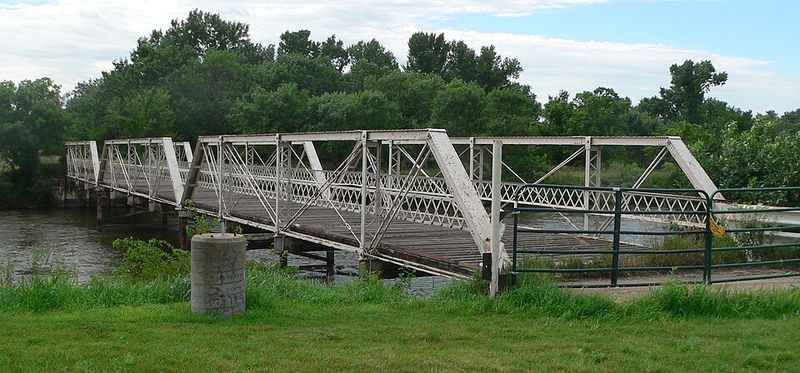
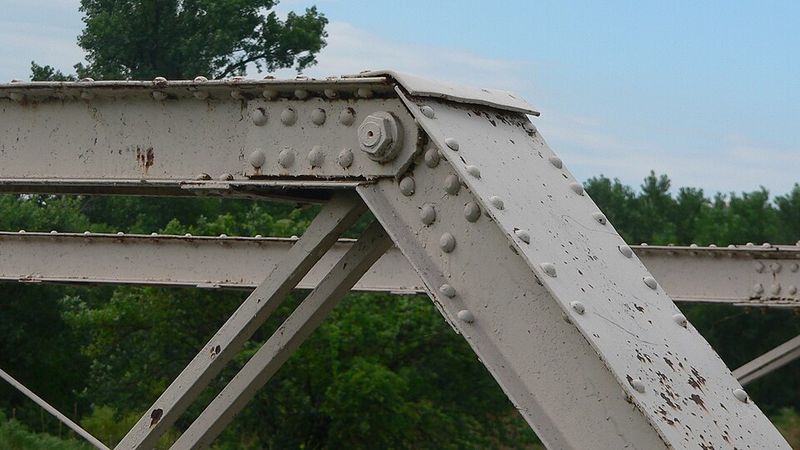
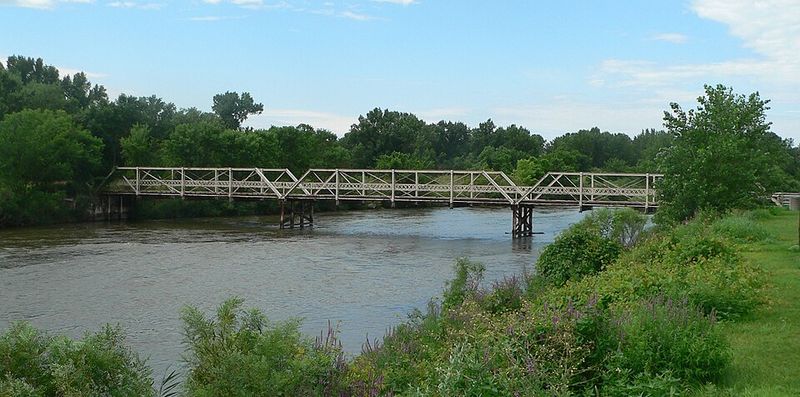
The bridge is classified as a Pratt half-hip pony truss, a style that was once common on smaller Nebraska crossings but has grown increasingly rare.
Its three-span design made it somewhat unusual for a Platte River crossing, which is part of why it caught the attention of historic preservationists.
Nine Bridges Bridge was added to the National Register of Historic Places in 1992 for its technological significance as an exceptional example of its structural type, giving the legend a foundation that is anything but fictional.
Daylight Makes It Look Almost Too Normal
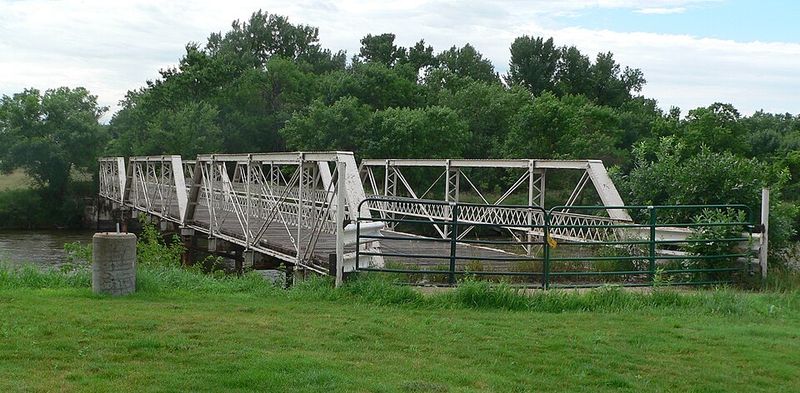
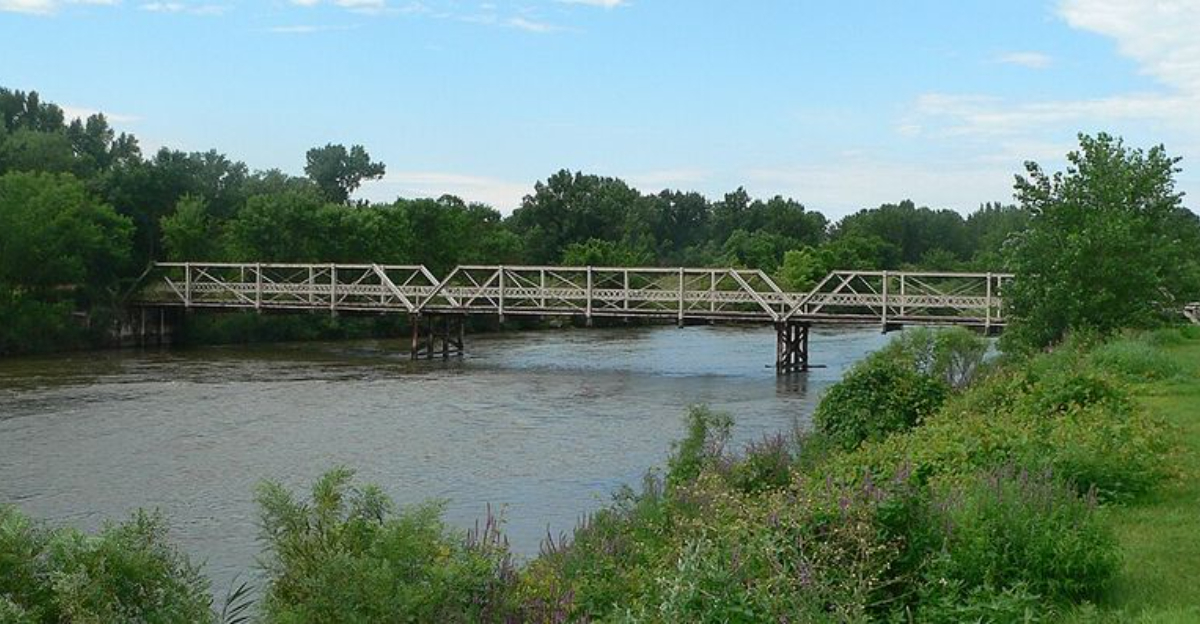
Pulling up to Nine Bridges Bridge on a clear afternoon, there is nothing immediately dramatic about what you see.
It looks like a modest one-lane crossing, the kind that still dots rural Nebraska roads, with weathered steel trusses framing a view of slow-moving Platte River water below.
Library of Congress photographer Carol M. Highsmith described it in similarly understated terms.
That ordinariness is actually part of what makes the legend so effective. A bridge that looked overtly threatening would feel like a movie prop.
Instead, this one seems perfectly harmless in the daylight, which makes the contrast with its nighttime reputation even more striking to people who know the stories.
The rural Hall County landscape surrounding the bridge does a lot of quiet atmospheric work on its own.
Flat fields stretch out in most directions, cottonwood trees line the river channel, and the general sense of isolation settles in quickly once the road narrows.
There are no nearby businesses or busy intersections to break the mood.
By the time the sun drops toward the horizon, the same bridge that looked routine at noon starts to feel like something else entirely, which is exactly the kind of contrast that keeps local legends alive across generations.
Local Stories Give The Bridge Its After-Sunset Reputation
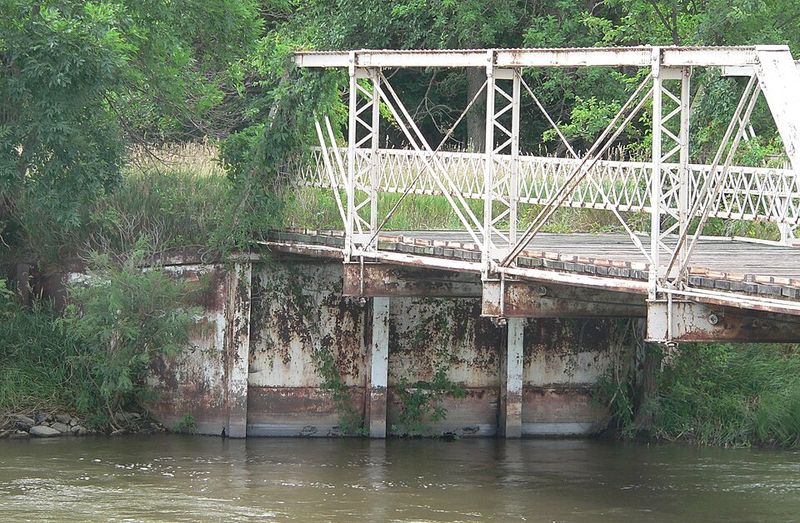
The folklore surrounding Witch’s Bridge comes in several versions, and each one adds a different layer of unease.
One widely repeated legend involves a woman believed to have practiced witchcraft.
According to the story, her body was dumped into the creek, and her presence never fully left the area.
Another version describes her final words serving as a curse on the land.
These are local tales passed down through generations, not documented historical events, but they have proven remarkably durable. The stories tend to get more detailed and more vivid the later in the evening someone tells them.
Beyond the witch legend itself, the bridge has accumulated additional folklore over the years.
Reports of phantom figures, shadow shapes near the water, and strange sounds drifting up from the river channel have all been added to the mix by people who claim to have visited after dark.
Whether any of these experiences have a rational explanation or not, they have collectively built a reputation that makes Nine Bridges Bridge one of the more talked-about spots in the region.
The Stalling Car Story Is The One People Remember Most
Among all the reported phenomena tied to Witch’s Bridge, the stalling vehicle story has proven the most persistent.
Visitors claim that cars will mysteriously shut off when stopped on the bridge, leaving drivers sitting in sudden silence with nothing but the sound of the river below.
That particular detail has been repeated so consistently that it has become the centerpiece of most retellings.
Paired with the stalling engine story is another claim that makes the scenario considerably more unsettling.
After the car goes quiet, some people report hearing the faint sound of a woman sobbing somewhere near the water.
Local lore connects this to a separate tragedy involving a mother who allegedly lost an infant in the Platte River. The child was never found, and the grief in that story has attached itself to the bridge over time.
Whether these reports reflect genuine unexplained experiences or the power of suggestion working on nervous visitors is genuinely unclear.
What is certain is that the combination of mechanical failure and eerie sound has made this particular legend remarkably sticky.
People who hear it once tend to remember it, and those who visit the area often find themselves thinking about it long after they leave.
Platte River Scenery Adds Naturally To The Mood
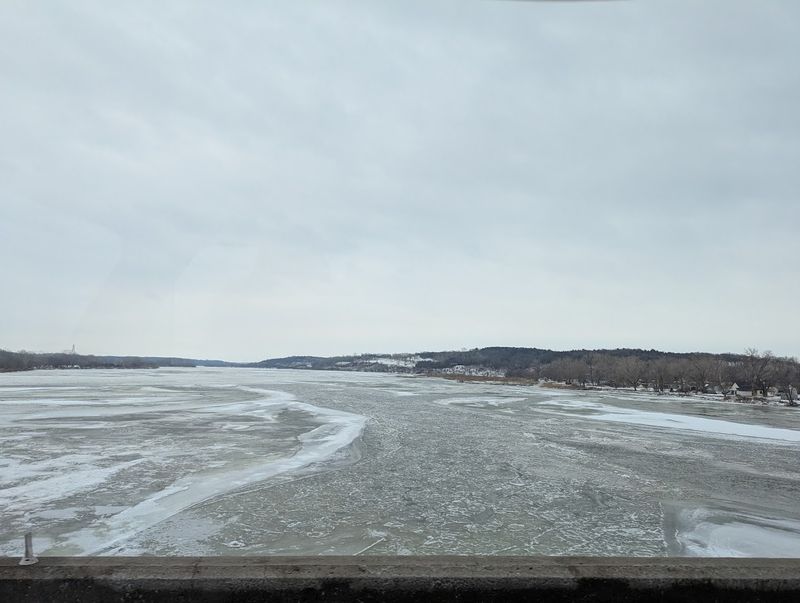
Even without a single ghost story attached to it, the physical setting of Nine Bridges Bridge would feel atmospheric in the right conditions.
The bridge crosses the Middle Channel of the Platte River roughly 3.9 miles north of Doniphan, placing it in a stretch of river landscape that is both beautiful and genuinely isolated. Water, sand, and sky dominate the view in every direction.
The Platte River in this part of Nebraska tends to run shallow and wide, spreading across braided channels that shift with the seasons.
Cottonwood trees cluster along the banks, their leaves catching any available light and turning the riverside into something that shifts dramatically between seasons.
In summer the area feels lush and green. In late autumn or early spring, stripped-down trees and grey water create a much starker picture.
That natural mood shift is part of why the bridge legend works so well in its specific location. A haunted bridge story set in a busy suburban area would lose most of its punch.
Placed instead in this kind of open, rural, river-edged landscape with long sight lines and very few structures nearby, the atmosphere does the storytelling work almost automatically.
The setting near Grand Island adds just enough proximity to make it accessible without stripping away the sense of remoteness.
Private-Road Status Makes The Legend Safer To Admire From A Distance
Here is something worth knowing before curiosity turns into a road trip plan.
Nine Bridges Bridge was sold to an adjacent landowner in the mid-1960s and now serves as a private road.
The National Park Service listing confirms this status, which means the bridge is not a public attraction visitors can freely access, particularly after dark.
That detail actually adds an interesting layer to the legend rather than diminishing it.
The bridge exists in a kind of semi-public awareness where everyone in the area seems to know the stories, but access is restricted enough to keep it from becoming a tourist destination.
The mystery stays intact partly because most people are experiencing it through secondhand accounts rather than personal visits.
For anyone genuinely curious about Nine Bridges Bridge, the better path is through history books, online archives, and photographs rather than a nighttime drive down a private road.
The National Register of Historic Places documentation, Library of Congress photographs, and local historical records offer a substantial amount of real information about the structure.
Respecting private property while still engaging with the legend is entirely possible, and it keeps the focus where it belongs: on a genuinely remarkable piece of Nebraska infrastructure history.
Old Engineering Makes This More Interesting Than A Generic Haunted Spot
Most locations that earn a haunted reputation rely almost entirely on atmosphere and storytelling. Nine Bridges Bridge brings something extra to the table: a specific, documented engineering identity that makes it genuinely worth studying apart from the folklore.
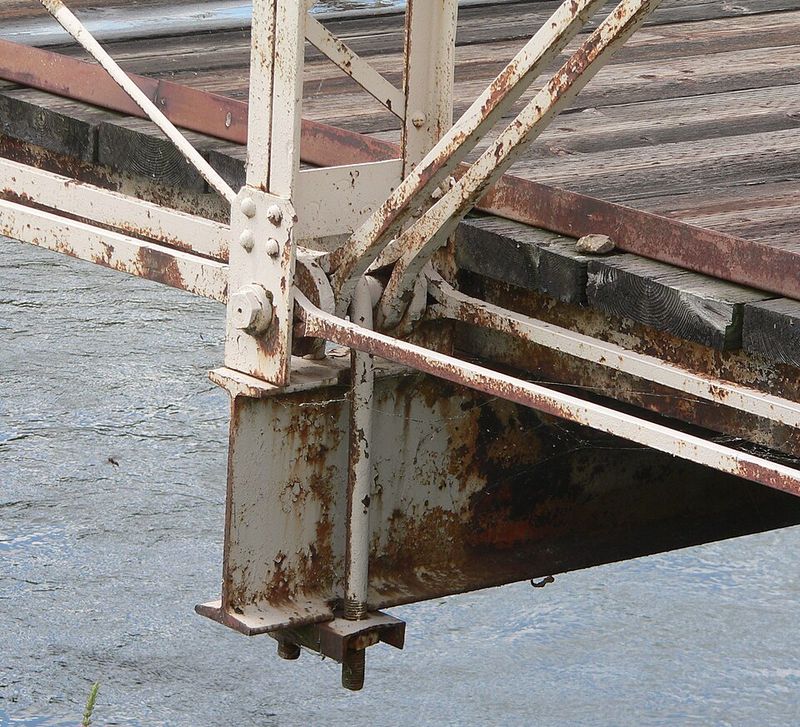
The Pratt half-hip pony truss design is not a common sight on Nebraska roads anymore, and that rarity is part of why preservationists fought to have it recognized.
A pony truss bridge differs from a through-truss in that its side trusses do not rise high enough to connect overhead, leaving the roadway open to the sky.
The half-hip variation refers to a specific treatment of the end panels that gives the structure a slightly distinctive profile.
For a rural crossing built in 1913, the three-span configuration was considered somewhat unusual for the Platte River corridor.
Jones and Laughlin Steel Co. supplied the steel components, and the Standard Bridge Company handled construction.
Both were established names in early twentieth-century bridge building, which means this was not a makeshift rural project but a professionally engineered structure built to last.
That it has survived more than a century in recognizable condition speaks to the quality of the original work.
Understanding what the bridge actually is makes the ghost stories feel richer rather than replacing them.
Doniphan’s Connection To Grand Island Gives The Bridge A Practical Past

Before Nine Bridges Bridge became Witch’s Bridge in local imagination, it served a straightforward and important purpose.
The crossing linked the Doniphan area with Grand Island at a time when the Platte River represented a genuine barrier to movement across the region.
Farmers, merchants, and families depended on crossings like this one to keep daily life connected across the water.
Grand Island sits just north of the Platte River and has historically been one of the more significant commercial centers in the area. Doniphan, located to the south, needed reliable access to that hub.
Nine Bridges Bridge was part of the infrastructure that made that connection possible before newer highway routes changed the traffic patterns entirely.
By the mid-1960s the bridge had been sold off to a private landowner, reflecting a broader pattern across rural America where older crossings were bypassed as road networks modernized.
What had once been a working piece of everyday transportation became something quieter and more isolated.
That transition from active public crossing to private, seldom-used rural structure is part of what created the conditions for the legend to grow.
Abandonment and isolation tend to invite stories, and Nine Bridges Bridge had both in abundance once the main traffic moved elsewhere.