10 New Mexico Destinations Perfect For An Unforgettable Friendcation
Every friend group has one planner, one late sleeper, one photographer, and one person asking where to eat next.
New Mexico gives all of them something to argue about in a good way.
The state mixes outdoor adventure, art, hot springs, unusual attractions, and wide-open scenery within the same trip. That makes compromise easier.
One day can be active. The next can be deliberately slow. Nobody has to enjoy the same thing at the same speed.
Build the getaway around a few shared priorities, then leave gaps for surprises.
The best friendcations are not perfectly organized. They simply give everyone enough stories to keep retelling later.
1. Meow Wolf Santa Fe, Santa Fe
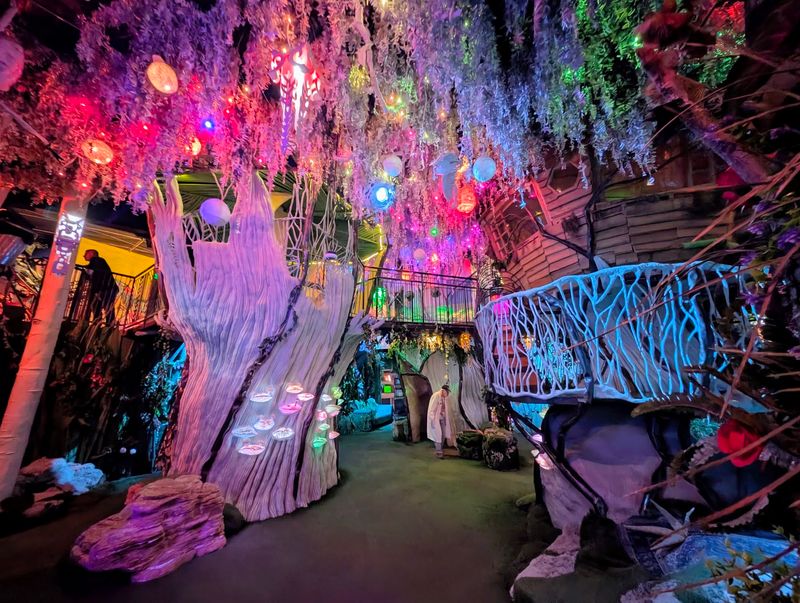
Nothing prepares you for a refrigerator that doubles as a doorway. Meow Wolf Santa Fe throws your group into the House of Eternal Return, a 20,000-square-foot art wonderland.
More than 70 rooms wait inside, built by local and community artists. A strange family mystery ties everything together, and clues hide in drawers, letters, and glowing hallways.
You can crawl through tunnels, climb into treehouses, and press buttons that make music. Nobody follows the same route, so friends often split up and reunite with wild stories.
Half the fun comes from arguing about what the plot actually means. Bring comfortable shoes, because you will be on your feet longer than expected.
The exhibit opened in 2016 after a partnership with author George RR Martin helped secure the old bowling alley building. Since then, House of Eternal Return has remained Meow Wolf’s original permanent immersive exhibition.
Entry uses reserved timeslots, and advance purchase is strongly recommended because dates can sell out. Same-day tickets may be available, but immediate entry is not guaranteed.
Plan at least two hours, though many people stay far longer. Find this multiverse at 1352 Rufina Cir, Santa Fe, and let curiosity lead the way.
2. Sandia Peak Tramway, Albuquerque
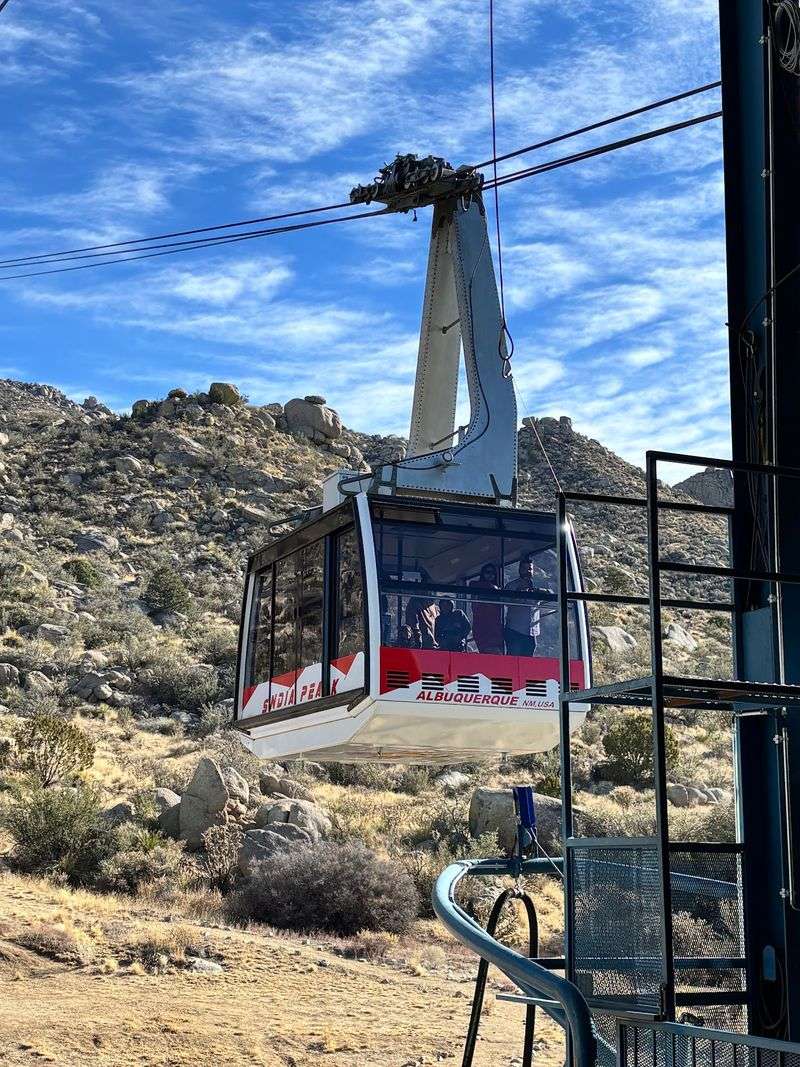
The Sandia Peak Tramway lifts your whole group above the Rio Grande Valley in one smooth glide.
The cables stretch 2.7 miles, linking the city’s eastern edge to the mountain summit. Riders start at 6,559 feet and finish at 10,378 feet in roughly 15 minutes.
Temperatures drop noticeably up top, so bring a jacket even in summer. The observation deck reveals about 11,000 square miles of New Mexico terrain.
Sunset rides remain the crowd favorite for good reason. Desert skies turn orange and pink while city lights flicker on below.
Several summit trails remain accessible, although portions of the crest are closed for forest-health work through fall 2027. TEN 3 restaurant sits right there too, serving meals with wide mountain views.
Winter changes the mood completely. Sandia Peak Ski Area operates nearby, giving friends a chance to swap desert heat for snow.
Holiday periods can bring waits of one to two hours, so buying tickets online before arrival is recommended. The glass-sided tram cars provide broad views throughout the ascent.
The base sits at 30 Tramway Rd, Albuquerque. Few group outings deliver this much altitude for so little effort.
3. Taos Pueblo, Taos
Just imagine for a second standing where families have lived for a thousand years.
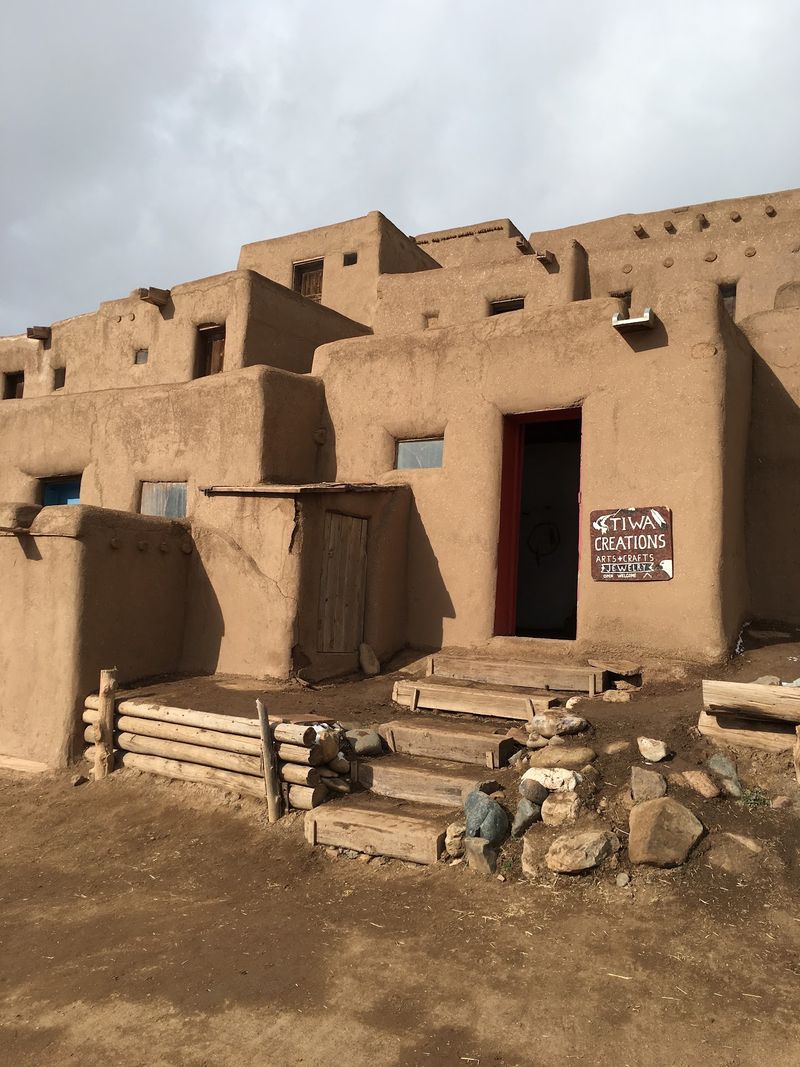
Taos Pueblo rests at the foot of the Sangre de Cristo Mountains, one of North America’s oldest continuously inhabited communities.
UNESCO named it a World Heritage Site, and it also holds National Historic Landmark status. The multi-storied adobe homes were shaped using traditional earth and straw methods.
Guided tours are offered while the Pueblo is open and add interpretation about its culture, history, and people.
Remember that people still live here every day. Certain areas stay closed to protect privacy and religious practices, so follow posted signs carefully.
Red Willow Creek flows through the middle of the community. Since it serves as the sole drinking water source, nobody should wade or splash in it.
Artisans sell pottery, jewelry, and leatherwork made with natural materials. Buying directly supports the families who create each piece.
Personal photography is allowed under current rules, but ask permission before photographing tribal members and never photograph inside San Geronimo Chapel.
Your friends will leave quieter, thoughtful, and genuinely moved.
4. White Sands National Park Visitor Center, Alamogordo
Sounds too good to be true, but the sand here stays cool under bare feet. White Sands National Park protects the largest gypsum dunefield on the planet.
Moisture held within and beneath the gypsum dunes helps keep the sand surprisingly cool to the touch. The result is a glowing white landscape that stretches for miles.
Sledding down the slopes on a waxed plastic saucer ranks as the top group activity. Saucers are sold at the gift shop, and wax matters more than you think.
Scenic drives loop through the dunes for anyone who prefers staying near the car. Marked hiking trails and ranger programs explain the strange geology and desert wildlife.
Darkness brings another treat. The park offers striking desert night skies, but White Sands is not currently designated as an International Dark Sky Park.
Sunrise and sunset paint the dunes in soft pinks and golds. Photographers should arrive early and stay late for the best light.
Bring water, sunglasses, and sunscreen, because shade barely exists out there. Missile-range testing can temporarily close both the park and nearby U.S. 70, so check current closure information before the drive.
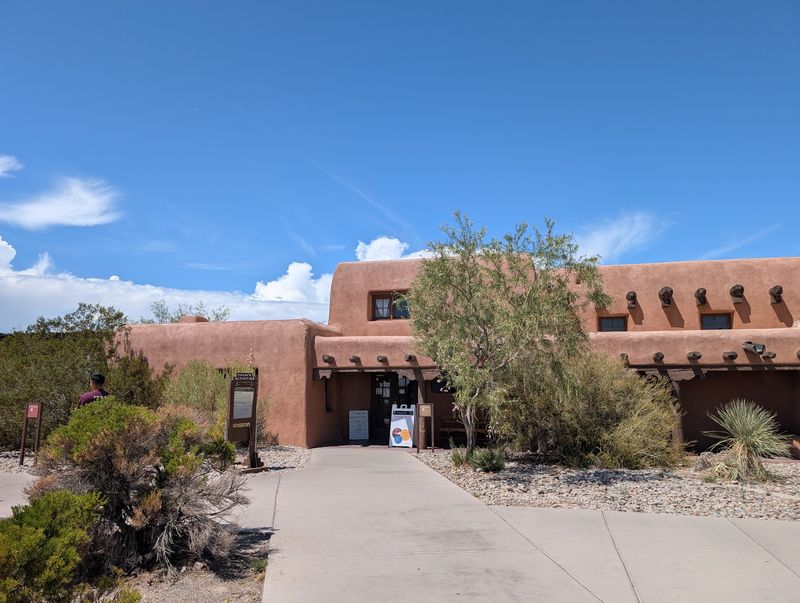
The visitor center stands at 19955 Highway 70 W, Alamogordo. Your camera roll will look photoshopped, and nobody will believe you.
5. Blue Hole, Santa Rosa
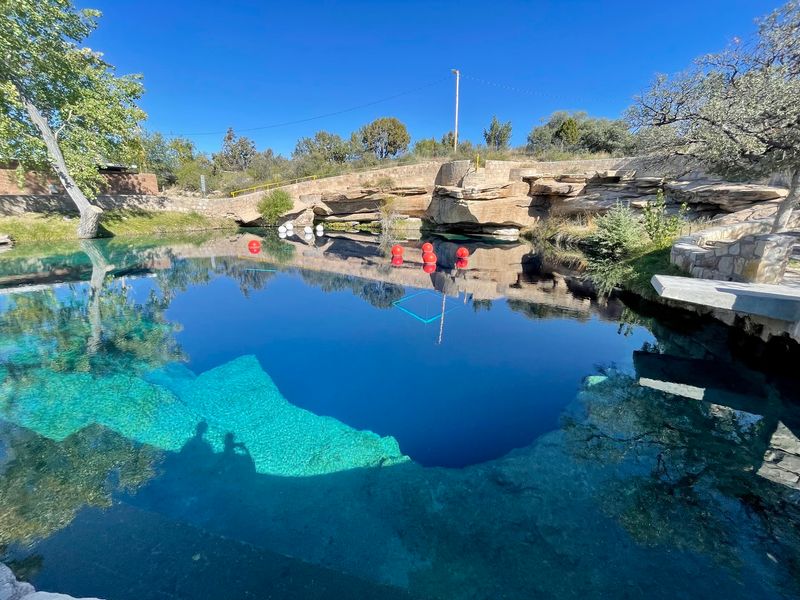
Blue Hole sits in Santa Rosa like a sapphire dropped into dry desert ground.
Geologists call it a karst sinkhole, carved slowly as groundwater dissolved limestone underground. The pool holds a nearly perfect circular shape.
Blue Hole is about 80 to 81 feet deep, and its water stays at a constant 62 degrees Fahrenheit. That chill hits hard on the first jump, then feels wonderful.
Swimming, snorkeling, and cliff jumping are permitted, although visitors enter the water at their own risk because no lifeguard is guaranteed. Scuba divers travel here from across the country for clear inland practice water.
An artesian spring refills the pool constantly, pushing in about 3,000 gallons every minute. The entire body of water renews itself roughly every six hours.
Six sister sinkholes sit nearby, all linked by the same underground system. Together they form one of the strangest water networks in the Southwest.
Divers should use high-altitude dive tables because of Santa Rosa’s elevation. Scuba diving requires a current certification card and permit, although reservations are not required.
Pack towels, because everyone gets talked into jumping eventually.
6. International UFO Museum & Research Center, Roswell
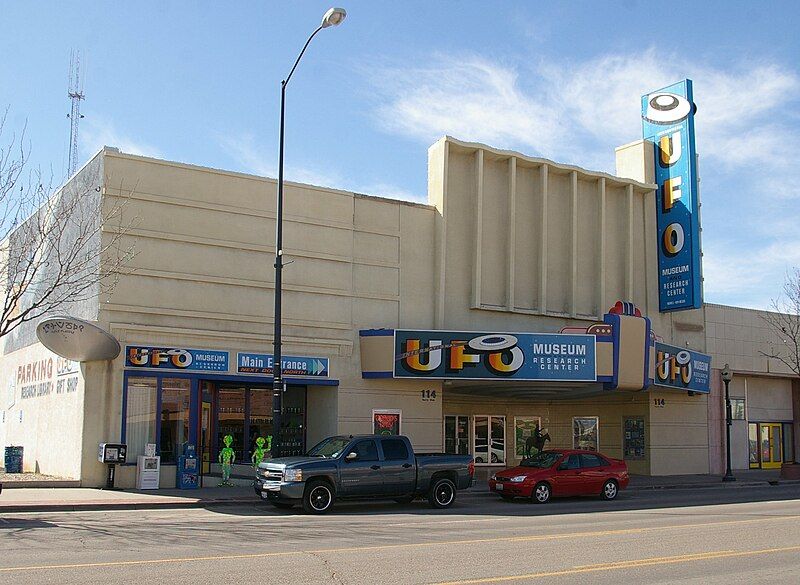
What if the 1947 headlines were right? The International UFO Museum and Research Center digs into that famous Roswell incident with genuine enthusiasm.
The building itself was once a 1930s movie theater, which adds a fun retro feel. Glenn Dennis founded the museum in 1991 with Walter Haut and Max Littell.
Exhibits walk you through the mysterious debris a rancher discovered outside town. Military statements, witness sketches, and testimonials sit side by side for comparison.
The exhibits present documents, accounts, and other material connected to the Roswell Incident and broader UFO research. Visitors can compare those materials and draw their own conclusions.
A research library holds files, books, and documents for anyone who wants to go deeper. The museum also maintains research material in written, audio, and visual formats related to UFO history and unexplained phenomena.
Photo opportunities are everywhere, including alien figures perfect for group pictures. Expect plenty of green glowing lights and saucer models.
Roswell’s 2026 UFO Festival ran July 2 through July 4, with additional museum programming continuing through July 5.
The museum sits at 114 N Main St, Roswell. Walk out convinced, skeptical, or somewhere delightfully in between.
7. Carlsbad Caverns National Park Visitor Center
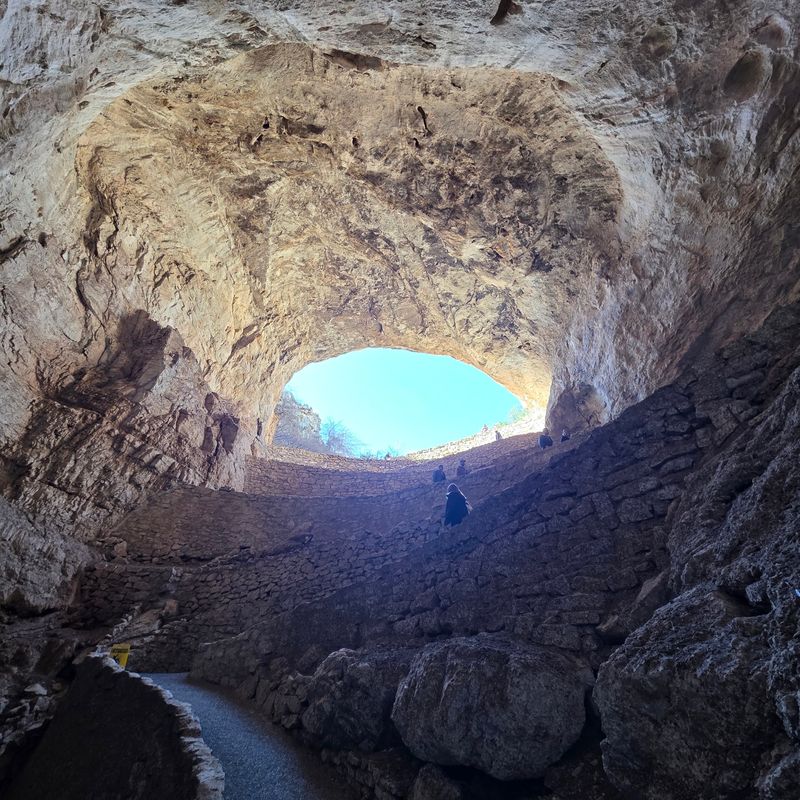
I am still trying to wrap my head around a room this enormous.
Carlsbad Caverns National Park currently contains 120 known caves beneath its Chihuahuan Desert landscape.
The Big Room is the largest single cave chamber by volume in North America. NPS describes it as the largest readily accessible cave chamber on the continent.
The chamber extends about 4,000 feet long and reaches roughly 625 feet across, with its greatest ceiling height reported at about 255 feet. A paved self-guided trail loops through the whole thing.
Two ways lead down. The Natural Entrance drops 1.25 miles on a steep switchback path, or an elevator delivers you straight from the visitor center.
Formations fill every direction, including stalactites, columns, draperies, soda straws, and clusters of cave popcorn. Lighting highlights shapes without ruining the mood.
Ranger-led options currently include King’s Palace and Lower Cave, but availability differs by tour and staffing. Lower Cave requires reservations, while King’s Palace may be sold as a same-day walk-up when staffing allows.
The free Bat Flight Program currently runs from April through October at the Natural Entrance amphitheater. Several hundred thousand Brazilian free-tailed bats may emerge during the seasonal outflight.
Temperatures underground stay cool year-round, so grab a light layer. The visitor center is at 727 Carlsbad Caverns Hwy, Carlsbad.
8. Jemez Springs Bath House, Jemez Springs
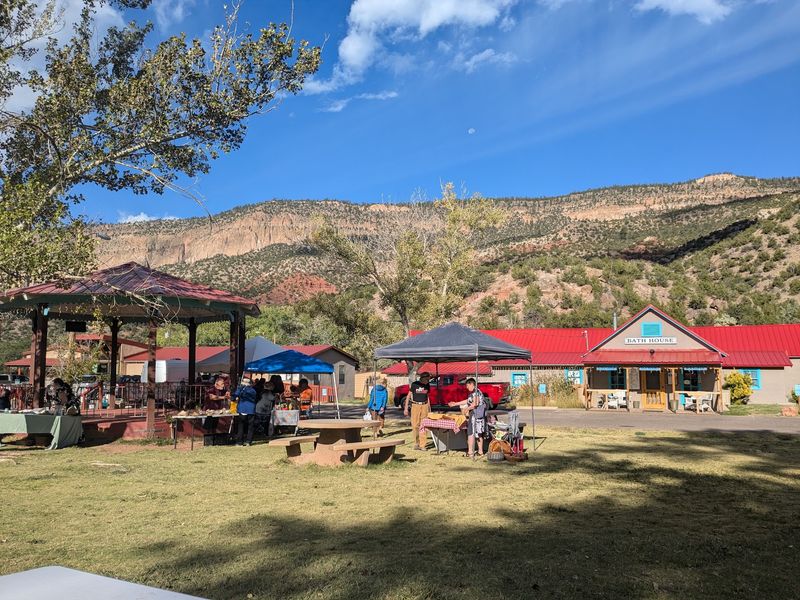
Let me be real for a second, tired shoulders deserve better than a hotel shower.
The Jemez Springs Bath House has been easing sore muscles since 1876.
Owned and operated by the village, this non-profit bathhouse carries New Mexico State Historical Site status. History practically soaks into the walls.
Inside sit eight oversized private cement tubs filled with 100 percent natural mineral water. Each tub gives your group privacy without losing that old-fashioned charm.
The spring source runs between 159 and 189 degrees Fahrenheit. Staff cool the water overnight, then you mix hot and cool yourself until it feels right.
Minerals in the water include acid carbonate, aluminum, calcium, and magnesium. The bathhouse promotes the mineral soaks as part of its relaxation and wellness experience.
Massages and body wraps are available too, including herbal and blanket options. Booking ahead is smart because slots fill fast on weekends.
The spring erupted around 1860 and was enclosed soon afterward, while the present well structure dates to later work in the twentieth century.
The red rock canyon drive alone justifies the trip. Look for it at 62 Jemez Springs Plaza, Jemez Springs, and arrive ready to slow down.
9. Los Poblanos Historic Inn & Organic Farm, Los Ranchos De Albuquerque
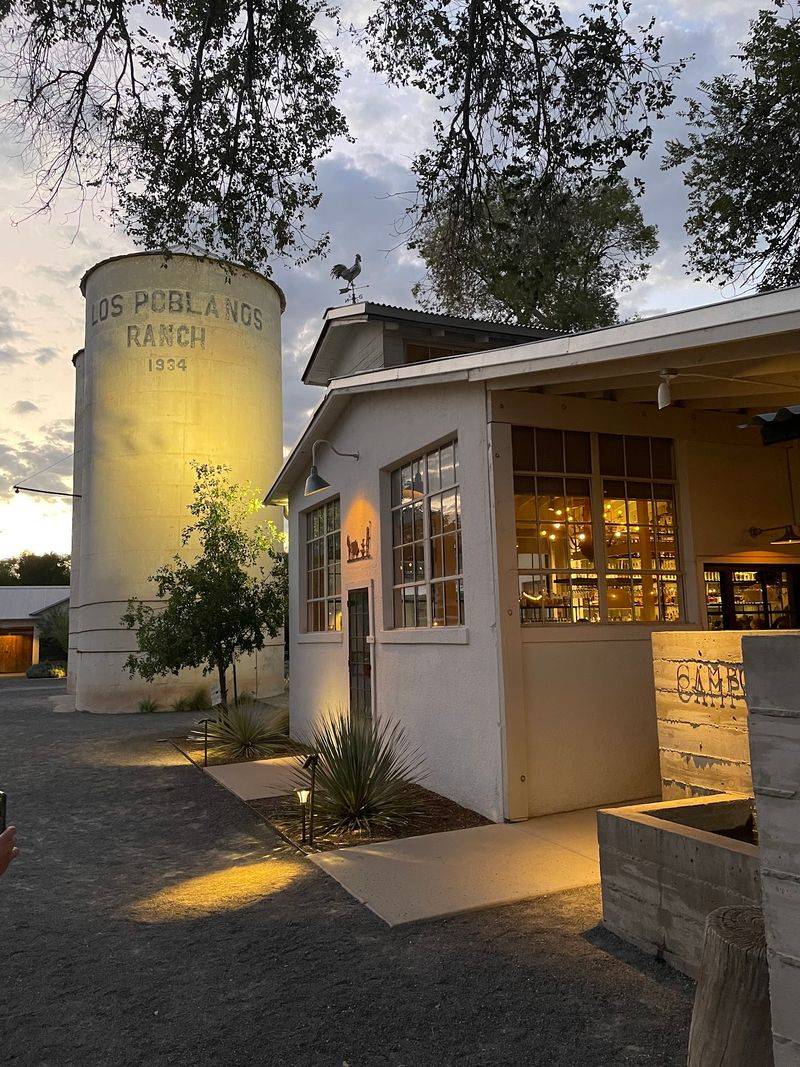
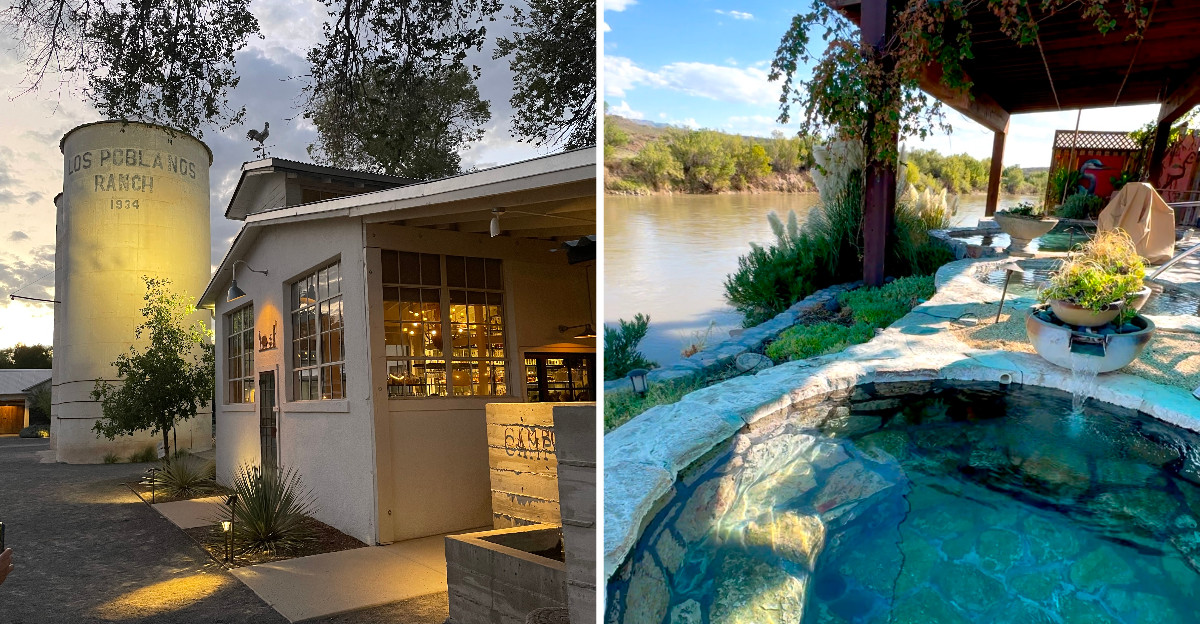
Purple fields and peacocks make an unbeatable combination. Los Poblanos Historic Inn and Organic Farm spreads across the fertile Rio Grande Valley.
The 25-acre property combines organic lavender fields with cottonwoods, vegetable plots, and formal gardens.
John Gaw Meem, often called the Father of Santa Fe Style, designed the property in 1932. Thick adobe walls and hand-carved details still look stunning.
Campo restaurant serves farm-to-fork meals that shift with each harvest. Menus change often, so your group never gets the same plate twice.
Public visitors can explore designated farm areas, while the regular historic-property walking tour is currently reserved for lodging guests. Yoga and meditation classes happen in a peaceful yurt for anyone wanting quiet time.
Lavender begins budding in June and typically blooms and is harvested in July, with exact timing changing from year to year. Live distillation demonstrations are offered on selected dates rather than throughout the entire bloom period.
Cruiser bicycles are available for exploring the surrounding North Valley. Nearby routes offer additional riding options beyond the farm property.
Alpacas, peacocks, Churro sheep, chickens, and other farm animals live on the property. Find this New Mexico retreat at 4803 Rio Grande Blvd NW, Los Ranchos de Albuquerque.
10. Riverbend Hot Springs, Truth Or Consequences
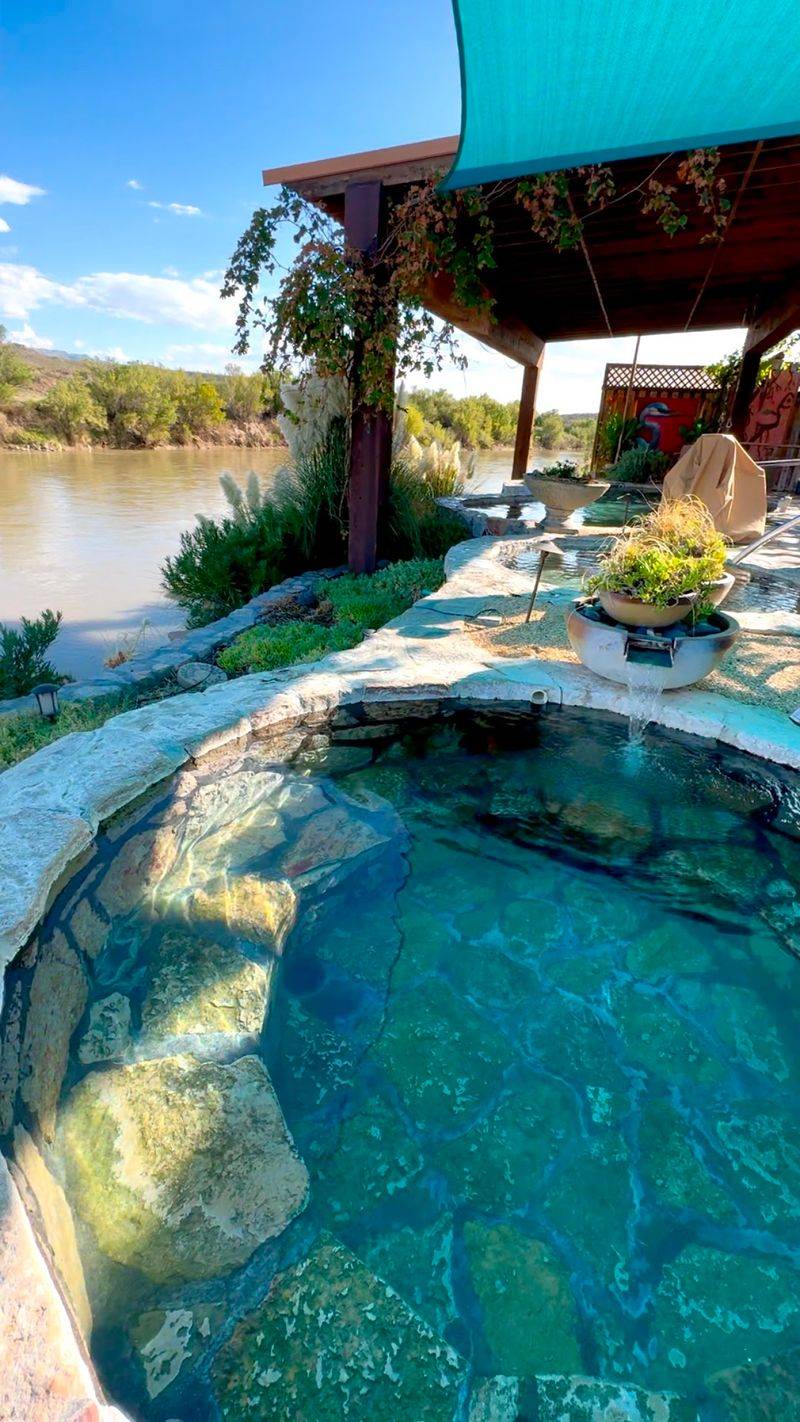
It would makes two of us if you’re someone who dreams about soaking beside a river.
Riverbend Hot Springs sits directly on the banks of the Rio Grande in Truth or Consequences.
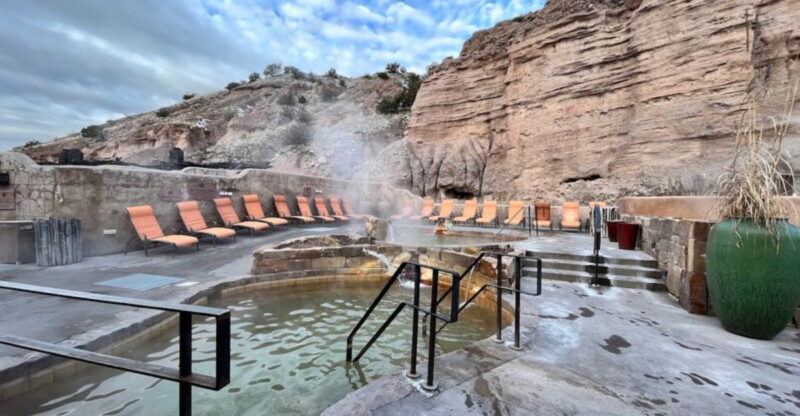
Geothermal mineral water arrives odorless, ranging between 95 and 108 degrees Fahrenheit. No sulfur smell means you can relax without wrinkling your nose.
Eight common pools and several private soaking pools line the Rio Grande property. Turtleback Mountain rises across the water, giving every soak a proper backdrop.
Common pools provide the more social soaking option while still requiring respectful volume. Private pools are whisper zones and accommodate no more than two people each.
Water comes from a deep aquifer known for purity and soothing minerals. The resort promotes the mineral water primarily as a relaxation and wellness experience.
Quiet policies limit music, phone calls, and disruptive behavior around the pools. Private soaking areas have an even stricter whisper policy.
A large shaded riverside patio provides loungers, hammocks, seating, and seasonal climate features between soaks. The river pier adds another place to sit beside the Rio Grande.
Most of the property is wheelchair accessible, and the Sierra common pool has an ADA-accessible pool lift. Reservations are currently required for both Property Pass access to the common pools and private soaking sessions.
Head to 100 Austin St, Truth or Consequences in New Mexico and let the river do the talking.