New York Is Hiding A Train Museum Every Railroad Fan Needs To See
Tell me a train museum sounds boring. Go ahead.
I thought the exact same thing right up until I parked outside this one on a whim. No flashy sign, no crowd, nothing promising a good time.
Then I stepped inside and ate my words.
The locomotives sit close enough to make you feel small. The old timetables read like postcards from another century.
Every polished engine carries a story about how the rails built this state piece by piece. I am not even a die-hard rail fan, and I still lost track of time completely.
I walked out already plotting a return trip with a friend. Some places quietly outperform every expectation you bring.
This one in New York is one of them.
If trains stir anything in you, clear an afternoon.
A Building That Means Business From The Outside In
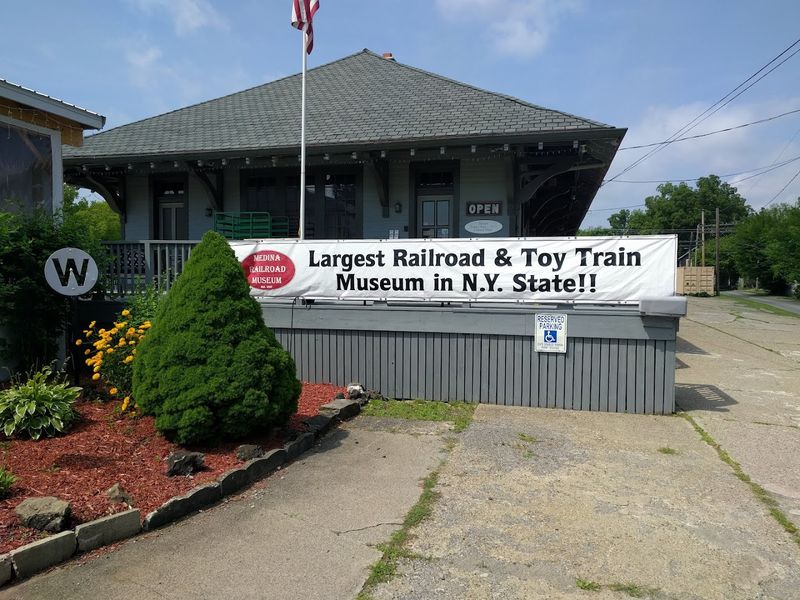
The museum occupies a remarkably long wooden freight depot completed by the New York Central in 1905.
Measuring roughly 301 feet from end to end, the building originally handled goods for Medina’s growing manufacturers and remains an important artifact in its own right.
Walking up to it, you get the sense that this place was designed for serious work, not tourism. That contrast is exactly what makes it so interesting.
It was not built to impress visitors.
It was built to move freight, and now it moves people in a completely different way.
The structure itself dates back to the early twentieth century, and the Orleans County region surrounding it has deep railroad roots. Medina sits along what was once a critical rail corridor in western New York.
The building survived because it had real bones. Now it holds something worth protecting: a collection that tells the full story of American railroading with remarkable honesty and detail.
The Scale Model Layout That Stops Everyone Cold
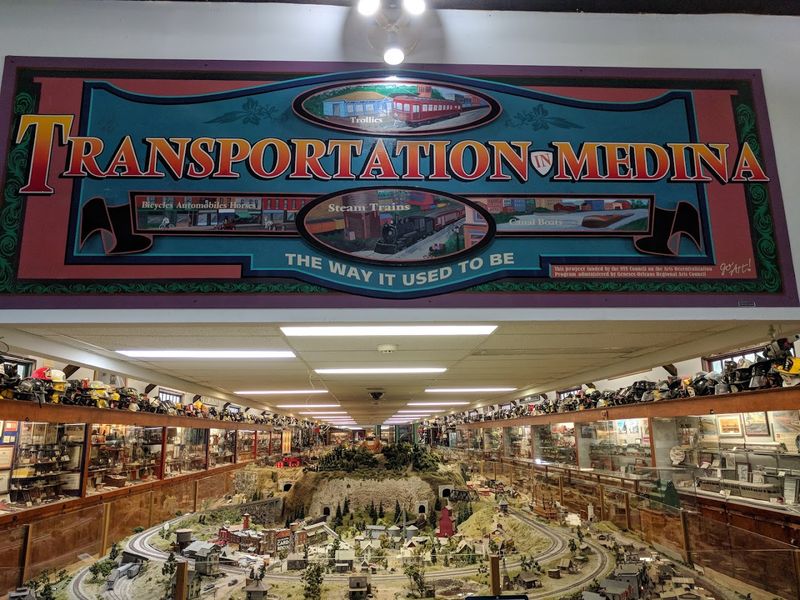
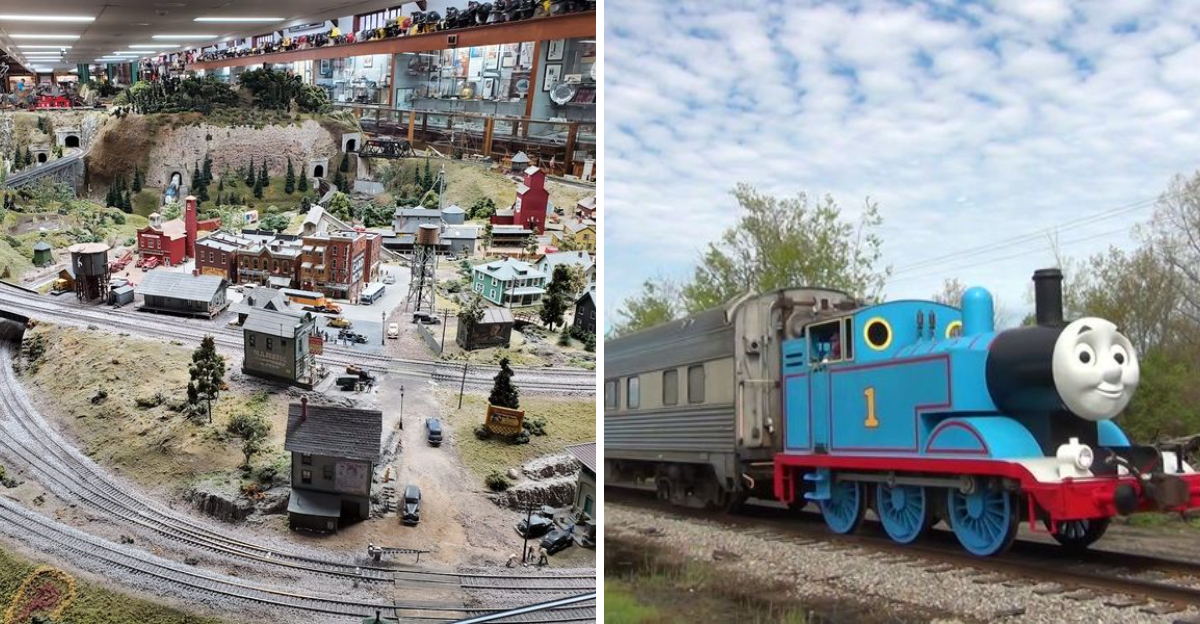
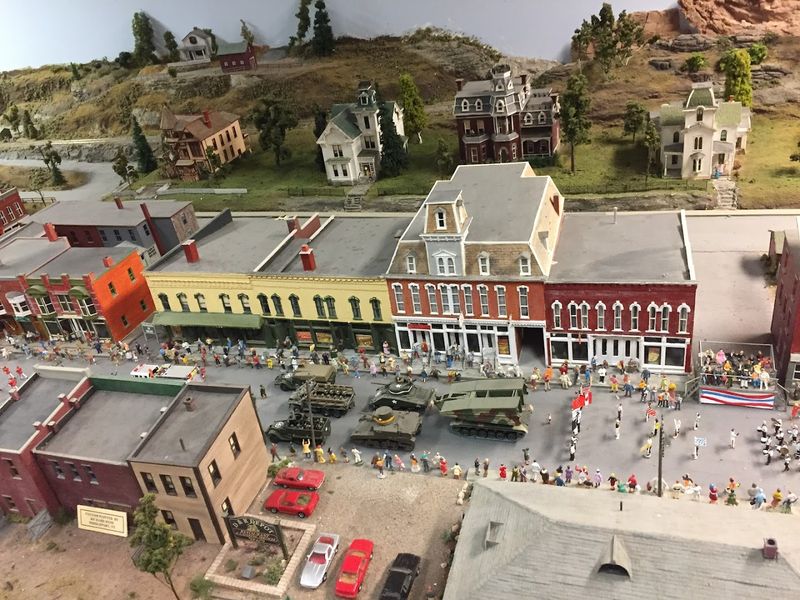
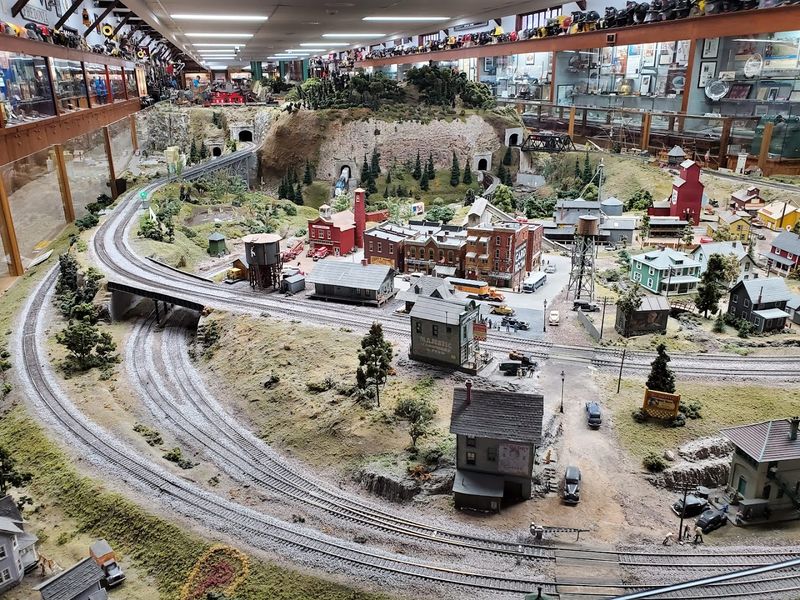
Nothing prepares you for the scale model layout inside this museum. It is one of the largest HO scale model train layouts in the entire northeastern United States, and that is not a casual claim.
The thing stretches across a room in a way that makes your brain do a small recalibration.
Every detail has been thought through. Miniature towns, tiny figures going about their miniature lives, bridges spanning little rivers, and trains actually running through all of it.
Kids press their faces close to the glass. Adults do the same thing, just slightly less obviously.
The layout at 530 West Ave, Medina, New York, represents the kind of American landscape that railroads once connected: small cities, farmland, industrial yards, and mountain passes.
It is educational without feeling like homework.
You find yourself leaning in to spot something new every time your eyes move across the scene.
Volunteers and staff maintain it with clear pride, and that care shows in every working signal light and every carefully placed tree.
If this layout were the only thing in the museum, it would still be worth the trip to Medina.
Full-Size Freight Cars That You Can Get Inside
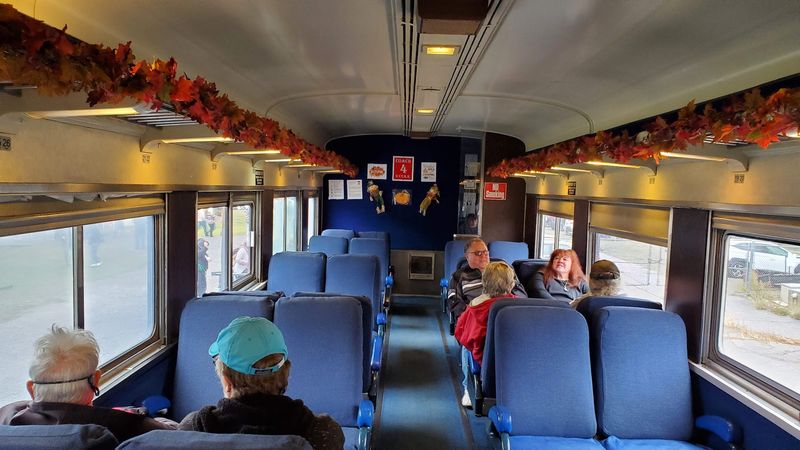
Most museums put things behind glass and ask you not to touch. The Medina Railroad Museum takes a different approach with its full-size rolling stock collection.
You can actually board and walk through several of the historic freight cars on display, which changes the experience entirely.
Standing inside a real boxcar, with the original hardware still on the walls and the floor worn down by decades of cargo, gives you a physical sense of history that no photograph or placard can replicate.
The smell, the scale, the weight of the doors. It all lands differently when you are inside it.
The collection includes a variety of car types, giving visitors a clear picture of how rail freight operations worked at their peak. Tank cars, gondolas, and specialty cars fill the space alongside the boxcars.
Each one has a story attached to it, and the museum does a solid job of telling those stories through signage that is informative without being overwhelming.
For anyone who has ever watched a freight train roll by and wondered what goes on inside those cars, this is the most satisfying possible answer.
The Photography Collection That Reframes Everything
Photographs can do things that objects alone cannot. They catch a moment, freeze a face, and hold a specific slice of time that would otherwise disappear completely.
The photography collection at the Medina Railroad Museum does exactly that for American railroad history.
The images span decades of railroading in the northeastern United States and beyond. You see workers, engineers, locomotives mid-journey, and stations full of people who had somewhere important to be.
The black and white prints carry a weight that color somehow softens. These are real people who built and ran a system that shaped the country.
What makes the collection particularly effective is how it humanizes an industry that can feel mechanical and distant when described only through statistics and technical specs.
Seeing a crew standing proudly in front of their locomotive, or a platform crowded with passengers, reminds you that railroads were not just infrastructure.
They were the connective tissue of daily American life for generations. The museum curates these images thoughtfully, and spending time with them adds real emotional depth to everything else you see in the building.
Artifacts That Tell The Everyday Story Of Rail Life
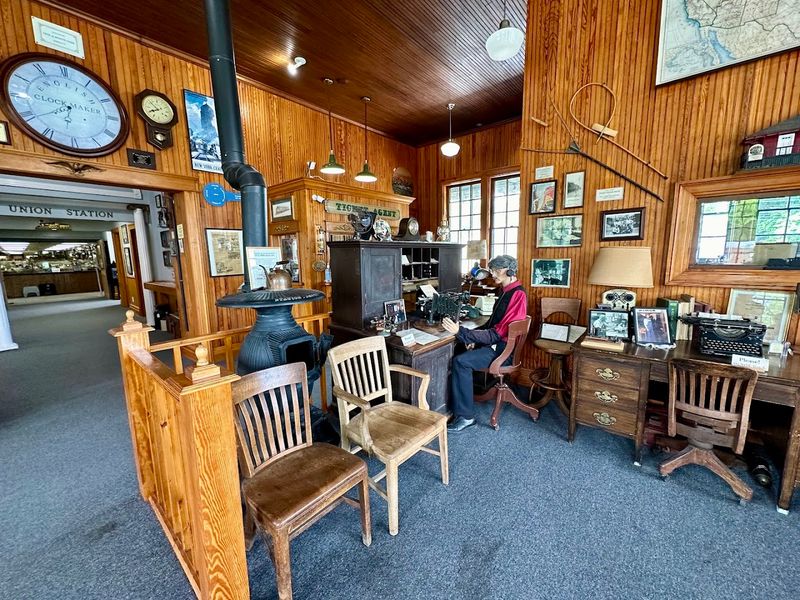
There is something quietly fascinating about the objects that made a massive industry function on a daily basis.
The artifact collection at the Medina Railroad Museum focuses on exactly that kind of everyday material: lanterns, tools, uniforms, timetables, tickets, and the hardware that kept trains running on schedule across a continent.
A conductor’s lantern looks simple until you realize it was the primary communication tool on a moving train at night.
A uniform tells you about rank, pride, and the culture of an industry that took its own identity seriously. These are not glamorous objects, but they carry genuine weight when you understand their context.
The museum arranges these artifacts in a way that builds a narrative rather than just displaying a collection.
Each case connects to the next, and by the time you reach the far end of the exhibit, you have absorbed a surprisingly complete picture of what it meant to work on the railroad.
The staff clearly knows this material well and is happy to add context if you ask.
That kind of knowledgeable enthusiasm is not something every museum manages to maintain, and it makes a real difference here.
The Firefighting Collection Adds An Unexpected Twist
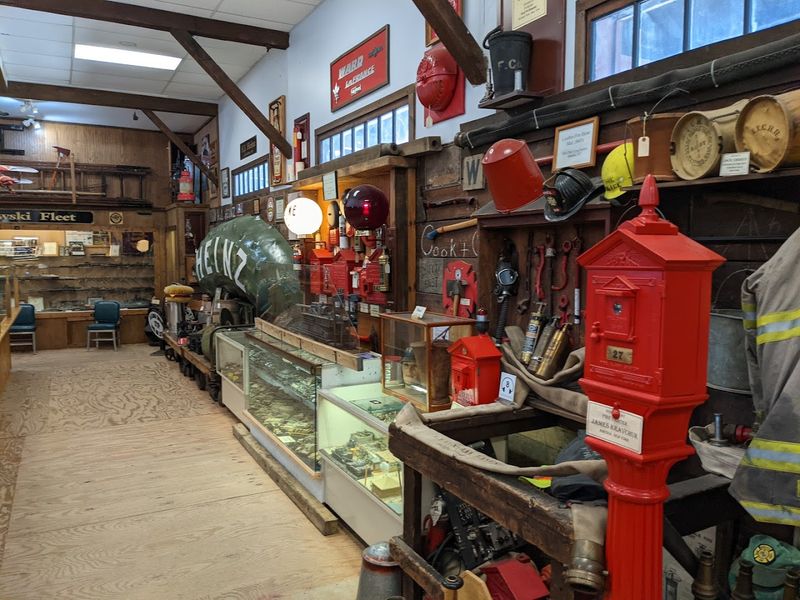
Railroad history may be the main attraction at Medina Railroad Museum, but a collection of vintage firefighting equipment adds an unexpected layer to the visit.
Museum founder Marty Phelps spent 25 years working as a firefighter in nearby Batavia, and that part of his life helped shape several displays inside the former freight depot.
Visitors can see historic hose and ladder carts, early fire extinguishers, gas masks, protective clothing, and other equipment once used by firefighters responding to emergencies with far fewer technological advantages than crews have today.
The objects offer a practical look at how firefighting methods, safety gear, and emergency response changed over time.
They also fit naturally into the museum’s broader focus on transportation, industry, and working life in Western New York.
Railroads and fire departments often shared close connections, especially in communities where steam locomotives, factories, freight depots, and wooden buildings created serious fire risks.
The collection is not presented as a dramatic attraction designed to compete with the model trains. Instead, it provides a thoughtful detour into another demanding profession shaped by teamwork, equipment, and public service.
That unexpected connection makes the museum feel broader and more personal than a standard railroad display.
Why It Was A Railroad Town Worth Knowing About
Not every small town in New York has a railroad story worth telling. Medina genuinely does, and the museum contextualizes it well.
Sitting along the old New York Central rail corridor, Medina was a legitimate stop in a network that connected the Great Lakes region to the eastern seaboard.
The town grew partly because of that rail access. Goods moved through here.
People moved through here.
The economy of the surrounding Orleans County region was shaped by what the railroad made possible in terms of commerce and mobility. That is not a minor footnote.
That is foundational local history.
The museum dedicates real exhibit space to explaining Medina’s specific place in this larger story, which gives the whole experience a grounded, local flavor that bigger railroad museums sometimes lack.
You are not just learning about railroads in the abstract. You are learning about this corridor, these tracks, and why this particular stretch of western New York mattered to the people who depended on it.
That specificity makes the information stick in a way that general overviews rarely do. It is history with an address, and that makes it personal.
Practical Details That Make The Visit Worth Planning
Good museums deserve visitors who show up prepared. The admission price is reasonable, making it accessible for families, solo travelers, and school groups alike.
The museum is run with genuine care by people who are clearly invested in the subject matter. That shows in the quality of the exhibits and in the willingness of staff to answer questions and share extra context.
It is the kind of place where you can spend two hours and not feel like you rushed through anything.
There is also a gift shop with railroad-themed items that lean toward the tasteful end of the souvenir spectrum, which is always appreciated.
If you are planning a day trip in western New York, this museum pairs well with the surrounding area.
The Erie Canal runs through this part of the state, and the combination of canal and railroad history in one afternoon makes for a genuinely rich experience.
Check the museum website or call ahead to confirm current hours before you make the drive. It is absolutely worth it.