New York’s New Japanese Food Destination Is Bringing Several Dining Experiences Under One Roof
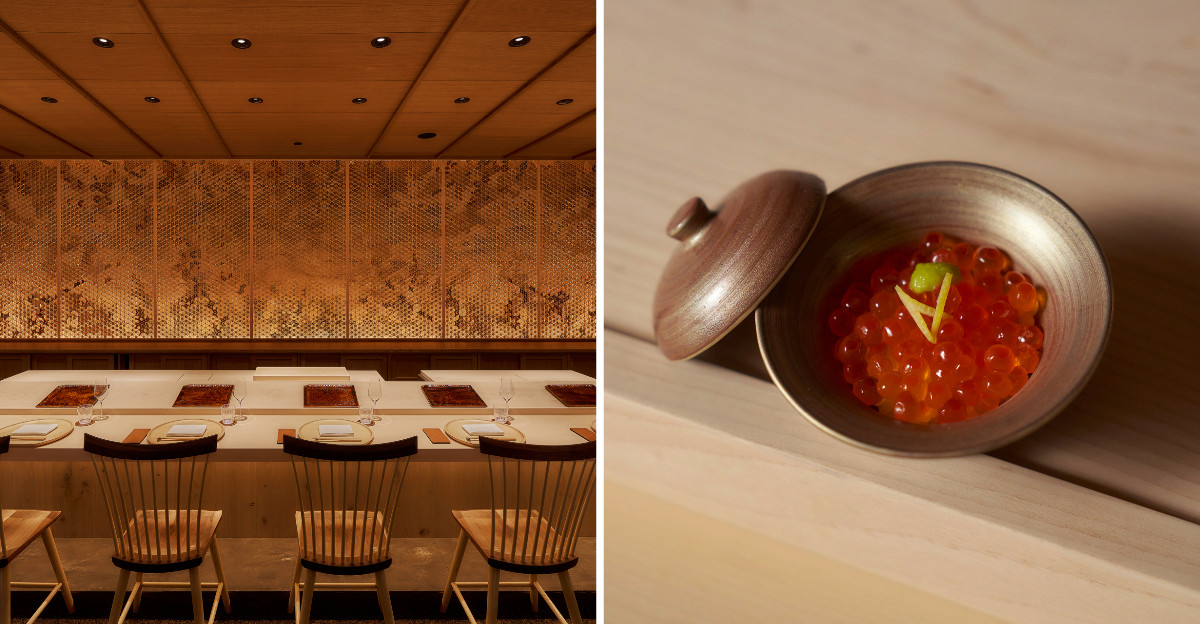
Your sushi chef works just inches from your hands here, across a clean counter of pale white maple.
Some folks love that front-row closeness, since every slice and press of rice turns into part of the show. That’s a perfectly fair way to enjoy dinner.
There’s another angle, though.
This counter sits inside a brand-new Japanese dining space in Midtown Manhattan, New York, covering about 10,000 square feet.
That one space holds three separate restaurants, each with its own chef, its own personality, and its own reservations.
You could treat it as one focused sushi night. Or you could see it as the first stop in a building worth exploring over several visits.
Which door you open first, I’ll leave that part up to you.
Three Restaurants Share One Address, And You Get To Pick
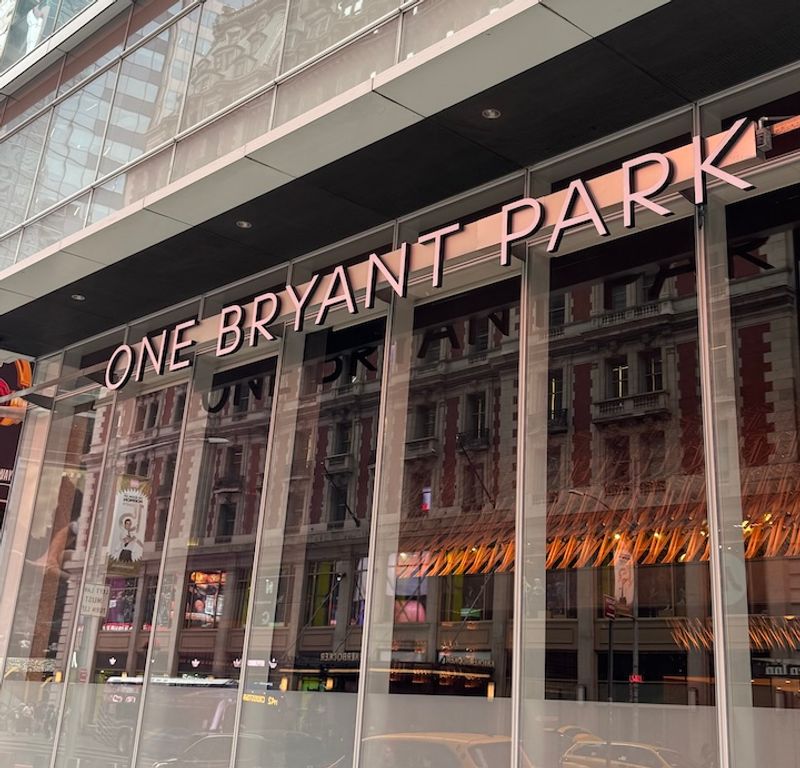
Most buildings give you one restaurant and call it a day. The new Japanese dining destination at One Bryant Park went a different route and brought three concepts into roughly 10,000 square feet.
Kumiko Room is the sushi-focused member of that trio. It’s an intimate Edomae omakase restaurant led by an experienced chef whose previous work earned Michelin recognition.
The other two concepts offer completely different experiences. One Bryant Park is the flagship restaurant, serving contemporary Japanese cuisine influenced by traditional kaiseki cooking.
Then there’s Kappo Sono, an intimate chef’s counter scheduled to open in its new location on November 18, 2026. The flagship and Kumiko Room began welcoming diners on October 15.
Each restaurant maintains its own identity, menu, and reservation system. Booking one doesn’t automatically reserve a seat at another, even though they share the same entrance.
The space occupies two levels of the Bank of America Tower, where a previous fine-dining restaurant operated for years.
Why does this matter for you? It turns a single Midtown address into a small tour of Japanese cooking styles.
Four Decades Of Sushi Know-How Stand Behind This Counter
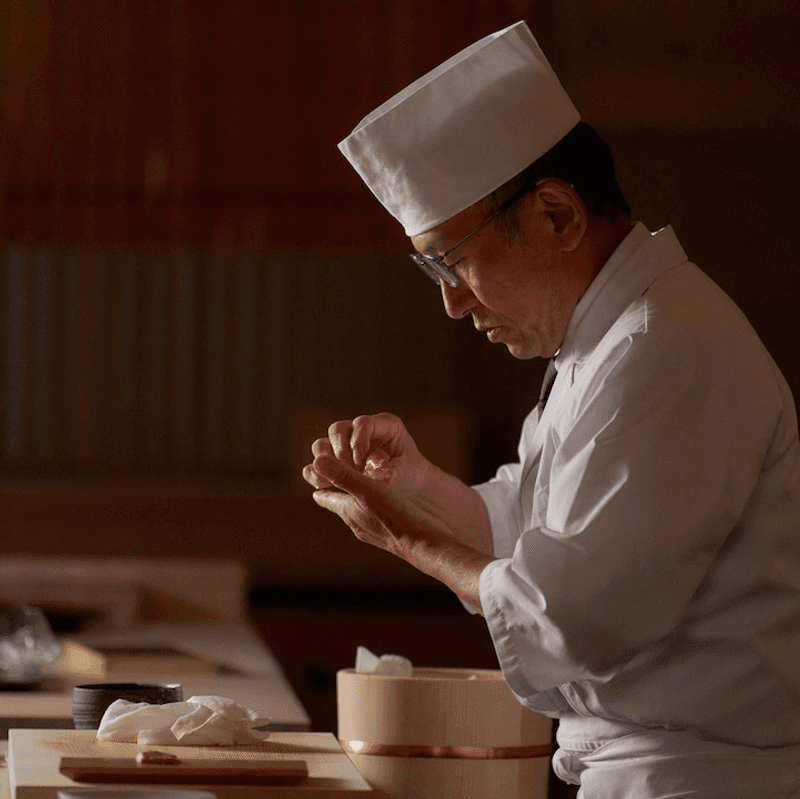
Forty-plus years is a long time to practice anything. Chef Yoshihiko Kousaka has spent more than four decades devoted to Edomae sushi, and he now leads the counter at Kumiko Room.
His career includes eleven years as head sushi chef at Jewel Bako before opening Kosaka, which earned a Michelin star.
Still, his approach isn’t about flash or gimmicks.
Kousaka focuses on fundamentals. Think exceptional seasonal ingredients, careful technique, and close attention to temperature and timing for each piece of nigiri.
That might sound simple on paper. In practice, those small choices are exactly what separate a good bite from a memorable one.
The chef arrived in Manhattan in 1985 and built his career around traditional sushi preparation.
His new restaurant gives him a 14-seat counter where he can work directly in front of diners, along with additional seats at nearby tables.
The experience centers on the relationship between fish, rice, and the person preparing each course.
There’s no need to memorize a menu before arriving. Omakase means the chef guides the meal, selecting dishes according to seasonal availability.
Not A Single Nail Inspired The Restaurant’s Name
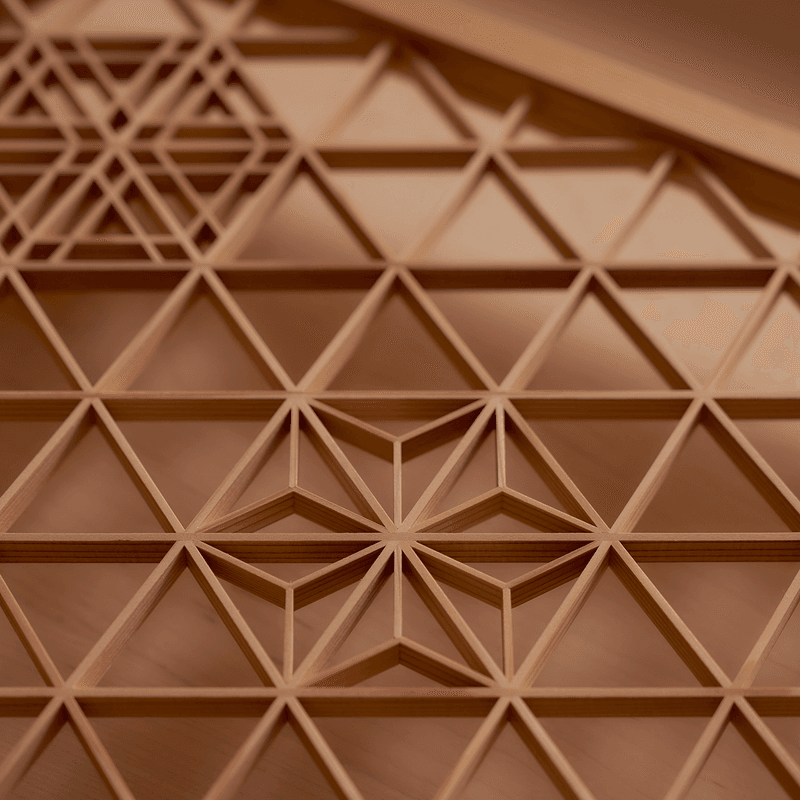
Japanese woodworkers figured out something clever centuries ago. Kumiko is a traditional technique where tiny wooden pieces lock together into detailed lattices, all without using nails.
That craft gave Kumiko Room its name. It also sets the tone for everything inside, from precision to harmony to quiet beauty.
Studio Canall, a design firm based in Brooklyn, created a custom kumiko pattern just for this restaurant. They used three types of Japanese wood: hinoki, sugi, and jindai sugi.
Each wood brings a slightly different color and tone. Together, they create gentle shifts across the pattern instead of one flat shade.
The design has a sweet backstory. It’s meant to feel like lying in a park and looking up through a canopy of leaves and branches.
That’s a fitting idea, considering the building faces Bryant Park. Somebody clearly thought about the neighborhood before picking up a single piece of wood.
The interior combines traditional Japanese craftsmanship with contemporary architectural details.
Its geometric wooden screens provide decoration while helping create a sense of separation from the busy surroundings.
Sunlight Through Leaves Becomes A Lighting Plan
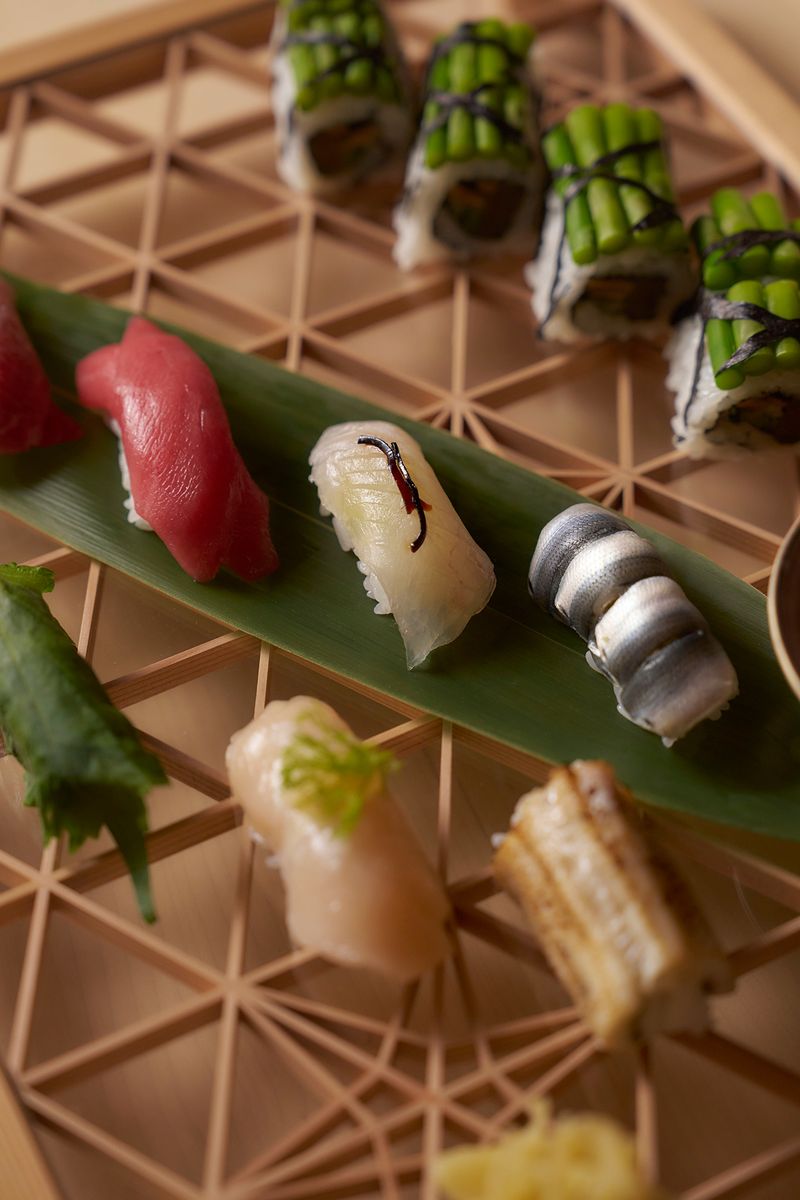
There’s a Japanese word for that soft, dappled glow you see under trees. It’s komorebi, and it describes sunlight filtering through leaves.
The design at Kumiko Room borrows that idea in a smart way. Behind the custom kumiko screen sits an earthen plaster wall with hidden lighting.
The light passes through the wooden pattern instead of shining directly into the room. The result is a layered, delicate glow that feels calm rather than showy.
It’s basically a forest canopy, minus the bugs and surprise rain. Pretty good trade for a Tuesday night in Midtown.
Then there’s the sushi counter itself. It’s crafted from white maple, giving the chef a clean and elegant stage to work on.
The wider One Bryant Park design uses similar ideas, with curved oak slats and carefully arranged lighting throughout the main dining area.
Different surfaces respond to the light in different ways, making the rooms feel connected without looking identical.
Counter Or Table? Both Seats Follow The Seasons
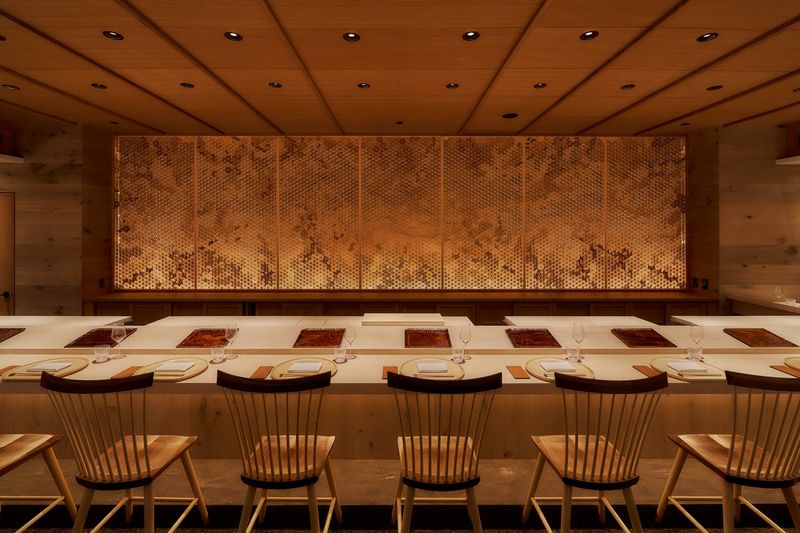
Omakase roughly means leaving the choices to the chef. At Kumiko Room, that idea guides the dining experience, with seasonal ingredients determining much of the menu.
You do get one important decision, though. Guests can choose between the sushi counter and dining tables.
The counter puts you closest to the action. You get to watch each piece take shape just inches away, which feels a bit like a cooking class you don’t have to pass.
Fourteen seats line the sushi counter, while approximately 20 additional seats are available at nearby tables. The counter experience features a longer sequence of courses, including small opening dishes, nigiri, soup, and dessert.
Table dining follows the same seasonal philosophy but offers shorter tasting-menu formats, giving guests another way to enjoy the restaurant.
Reservations are essential for planning a visit, and guests should select their preferred seating experience when booking.
For anyone exploring New York’s Japanese dining scene, the distinction between counter and table is worth understanding before making plans.
Temperature And Timing Do Quiet Heavy Lifting Here
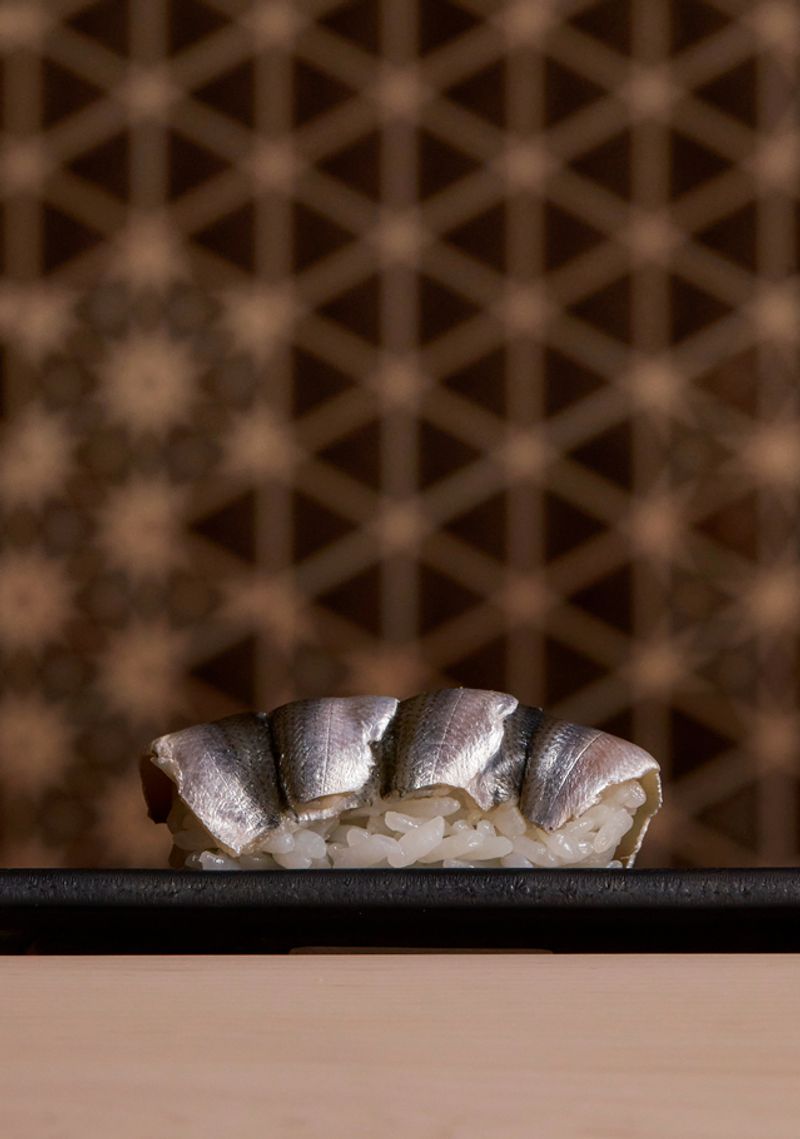
Edomae sushi traces its roots to old Tokyo, once called Edo. The style values technique, restraint, and careful handling of seafood, and Kumiko Room leans right into it.
The chef’s philosophy is about returning to the basics. That sounds humble, but fundamentals practiced over several decades can produce extraordinary results.
Two details carry a lot of weight in his approach. Temperature and timing both get careful attention, piece by piece.
Why should you care? Because a nigiri served at the right moment can taste completely different from one that has been sitting for several minutes.
Traditional Edomae techniques may include curing, marinating, or gently preparing seafood to bring out its natural character.
At Kumiko Room, seasonal fish remains the focus, with the counter menu featuring a carefully paced progression of nigiri.
Preparations have included striped jack and bluefin tuna, demonstrating how different fish and techniques create distinct flavors.
The rice matters just as much as the seafood. Its texture, seasoning, and temperature help determine how each piece comes together.
Save Room, Because Paris Meets Japan For Dessert
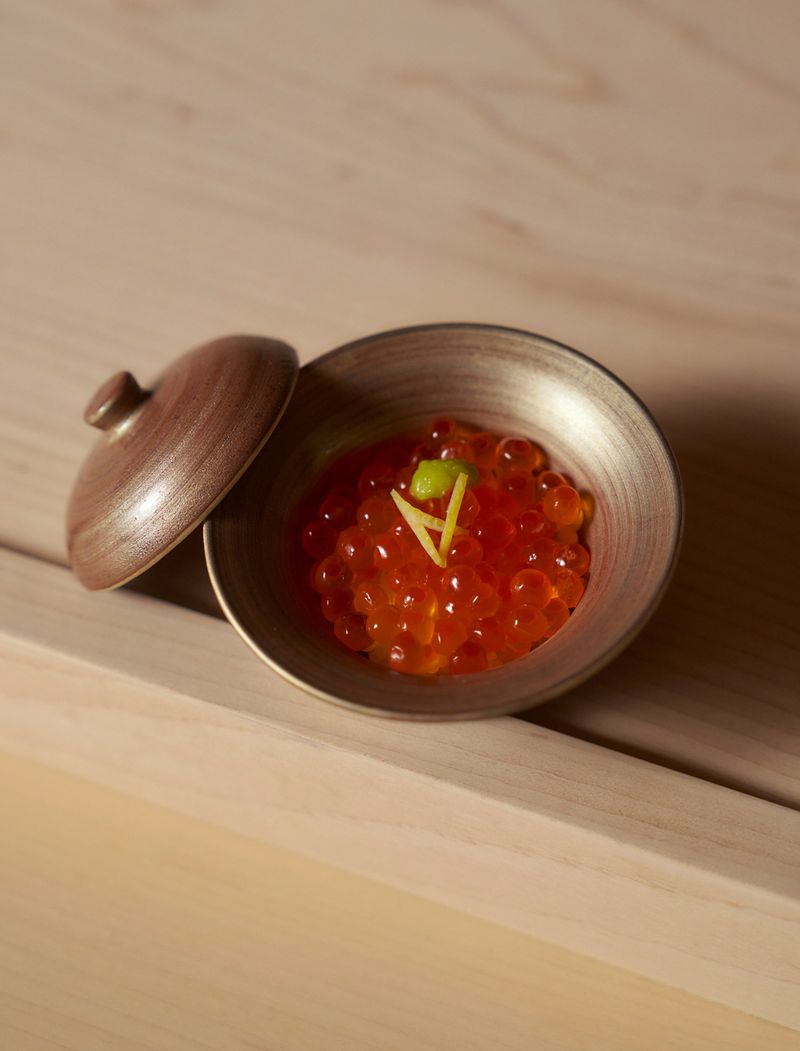
Sushi usually steals every headline. At Kumiko Room, the final course gets its own spotlight thanks to a pastry program with a creative twist.
Desserts here blend French pastry techniques with traditional Japanese flavors. It’s a pairing that makes sense once you think about how much both traditions care about precision.
The pastry program is overseen by a Japanese-trained chef with extensive experience in the Manhattan dining scene.
Her background includes professional training in Tokyo and work in both Japanese restaurants and French-inspired pastry kitchens. That combination brings a different perspective to the ending of a traditional sushi meal.
French pastry techniques often emphasize careful textures, layered components, and elegant presentation.
Japanese ingredients introduce their own character, creating desserts that complement the lighter, seasonal approach of the preceding courses.
After a progression of carefully timed nigiri, a thoughtfully prepared dessert feels like a fitting closing line.
Since the restaurant follows seasonal menus, the exact dessert can change. That gives the pastry team room to highlight different ingredients throughout the year.
A Wooden Arch On 42nd Street Marks Your Way In
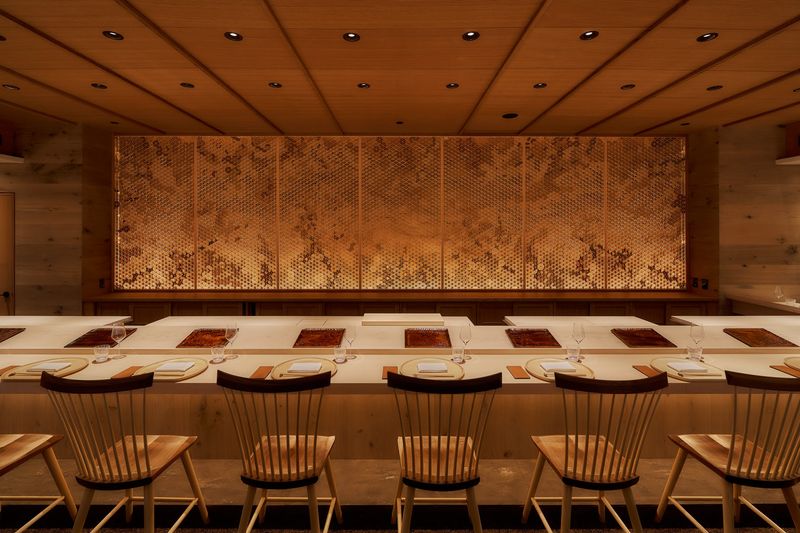
Oak slats bend into a large arch at the entrance of this destination. From the street, the curve echoes traditional Japanese architecture, while inside it reads as a modern Western arch.
That clever double look suits Kumiko Room perfectly.
You’ll find the restaurant at 135 W 42nd St, New York, NY 10036, inside the Bank of America Tower, also known as One Bryant Park.
The building sits between Sixth Avenue and Broadway. That places you right in Midtown Manhattan, with Bryant Park just across the way.
Outside, the streets hum along at full volume. Inside, the design works hard to create a calm retreat from all that city energy.
The restaurant occupies space previously used by a well-known fine-dining establishment, giving this stretch of 42nd Street a fresh culinary identity.
Timing your visit takes a little planning. Kumiko Room serves dinner Tuesday through Saturday, with evening service beginning at 5 p.m. Sundays and Mondays are closed.
The flagship restaurant has its own dinner schedule, so it’s important to choose the correct dining experience when arranging a reservation.