10 New York Stops Between Albany And Syracuse That Are Worth Pulling Over For
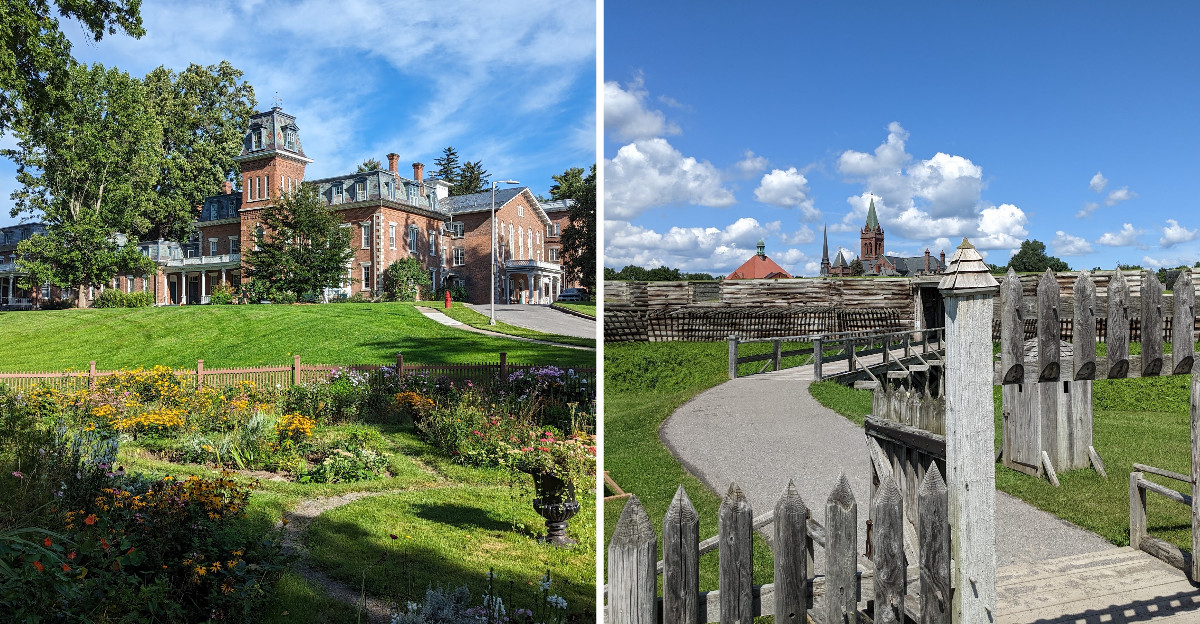
A boat ride 156 feet underground is a real option on a drive across upstate New York.
The air down there stays around 52 degrees all year. Talk about a pit stop with a twist.
Spoiler alert, the surprises keep stacking up!
One stop lets you crack open rocks to hunt for quartz crystals known as diamonds. Another serves dinner inside an ivy-covered stone manor from around 1860.
A wooden fort, a utopian community’s mansion, and a cider mill all sit within reach of the same drive.
Honestly, the hardest part of this trip might be keeping your foot on the gas.
1. Howe Caverns
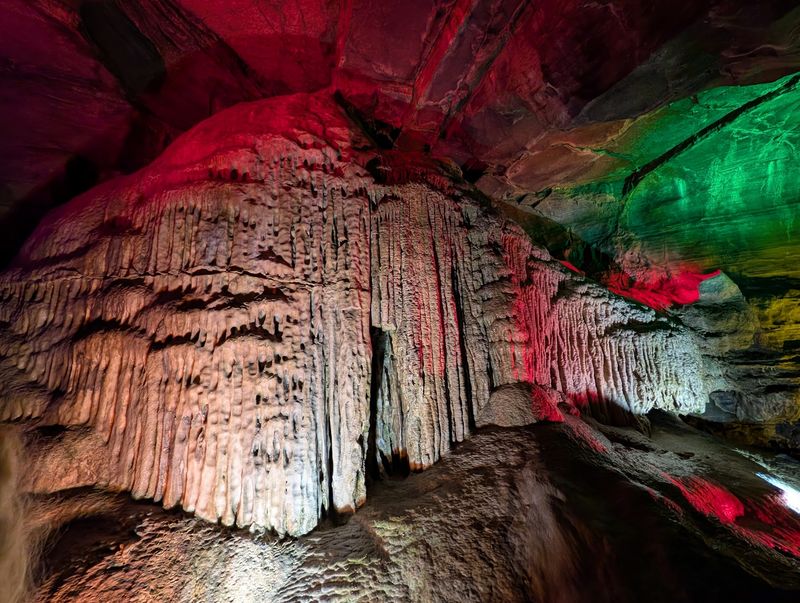
Lester Howe discovered this cave back in 1842, and people have been heading underground ever since. Today you get to follow his lead with electric lighting, a guide, and a boat waiting below the hills.
The traditional tour starts with an elevator descent of 156 feet. From there, limestone corridors lead into spacious chambers, past unusual rock formations, and finally toward an underground waterway.
The experience includes approximately 1.25 miles of walking and a quarter-mile boat ride. It takes around 90 minutes, with 139 steps along the route, so comfortable, closed-toe shoes are essential.
The temperature stays close to 52 degrees throughout the year. That steady chill makes a light jacket useful even when the parking lot feels like summer. Be ready for an actual walking tour rather than a quick elevator trip and photo stop.
Above ground, the gift shop offers rocks and souvenirs, while the cafe operates on a seasonal schedule.
An on-site motel can turn the detour into an overnight excursion. The cave entrance is at 255 Discovery Dr, Howes Cave, NY 12092, southwest of Albany.
Traditional tour tickets must be booked online in advance, with arrival recommended before the reserved time.
Bring your curiosity and a warm layer. Even the elevator ride feels like an adventure. Floating quietly beneath the hillside is much more memorable than another highway rest stop.
2. Schoharie Crossing State Historic Site
Old canal stones make surprisingly good company on a road trip.
At Schoharie Crossing, the remains of the Erie Canal spread across an inviting landscape where Schoharie Creek meets the Mohawk River.
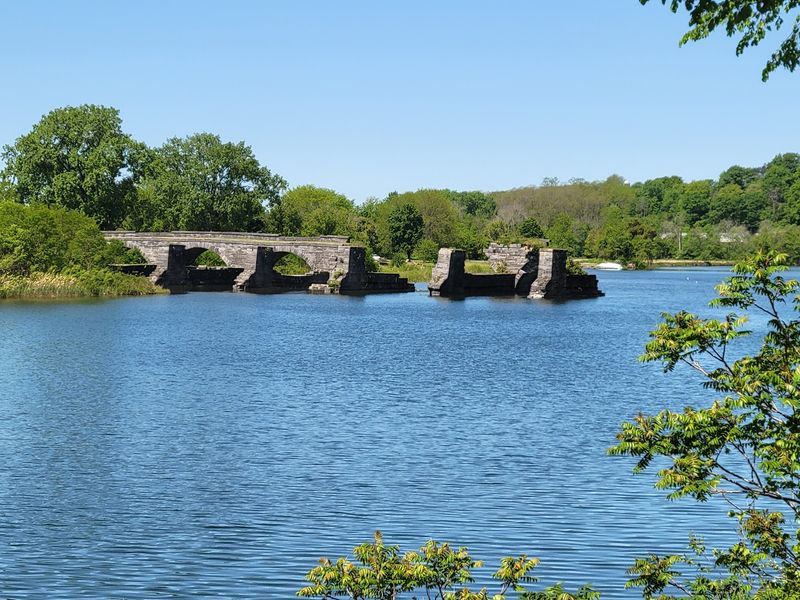
The outstanding sight is the Schoharie Creek Aqueduct, built in the nineteenth century to carry canal boats high above the water below.
Six stone arches remain from the original fourteen, making the structure an impressive reminder of the canal’s engineering.
The remains stand on the western side of Schoharie Creek, separate from the main visitor center, so plan time to reach the aqueduct viewing area.
You can also explore old canal locks, interpretive signs, and walking paths. Yankee Hill Lock has picnic space and a historic canal store building.
Together, these features explain how waterways shaped travel and commerce across New York long before today’s interstate highways.
For the indoor museum, head to 129 Schoharie St, Fort Hunter, NY 12069. Its 2026 season continues through October 31, with hours Wednesday through Saturday from 10 a.m. to 5 p.m. and Sunday from 1 to 5 p.m.
The outdoor grounds remain open daily from sunrise to sunset, throughout the year. This is a particularly pleasant stop if everyone needs a gentle walk and a chance to look across the river.
3. Arkell Museum And Canajoharie Library
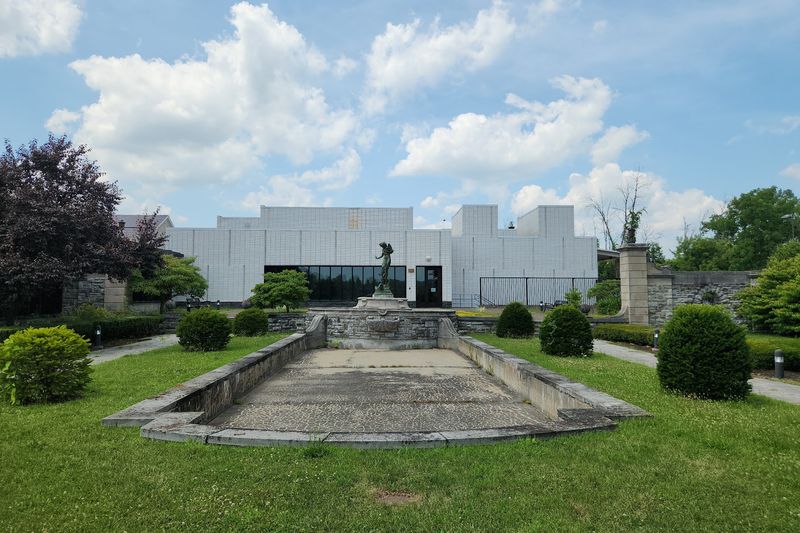
Winslow Homer paintings in a small Mohawk Valley village? Yep, and you can reach them right off Thruway Exit 29.
The Arkell Museum combines American art with a surprisingly personal story about the community around it.
Bartlett Arkell, the first president of the Beech-Nut Packing Company, began assembling paintings to share with Canajoharie.
His original gallery opened to the public in 1929. Today’s collection includes seven Homer oil paintings and works by John Singer Sargent, Thomas Hart Benton, and other celebrated American artists.
A full-scale copy of Rembrandt’s The Night Watch adds another unexpected sight.
The museum connects with the Canajoharie Library, joining older gallery rooms to a modern addition completed in 2007. Exhibits also explore Mohawk Valley history and the company’s colorful advertising.
During 2026, a Beech-Nut-themed exhibition includes historic packages, displays, and illustrations that reveal how everyday products were marketed in earlier generations.
The combined destination sits at 2 Erie Blvd, Canajoharie, NY 13317. Museum hours are 10 a.m. to 5 p.m. Tuesday and Wednesday, until 7 p.m.
Thursday and Friday, and noon to 5 p.m. on weekends. Monday is its regular closing day.
4. Beardslee Castle
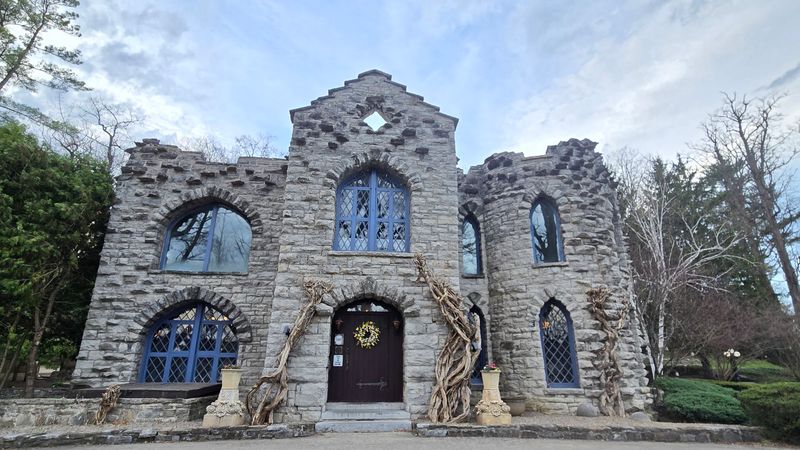
Dinner in a castle sounds like a fairy tale, but this one comes with a reservation. Beardslee Castle is an ivy-covered limestone manor constructed around 1860 in the style of an Irish castle.
The historic building was built using the skills of Irish and Swiss masons. Inside, thick stone walls, oak-paneled ceilings, and a broad fireplace create an inviting atmosphere.
The gardens outside add another reason to slow down before dinner. This isn’t a theme-park imitation; its nineteenth-century stonework provides the setting for the entire meal.
The kitchen specializes in seasonal American dishes, drawing on local vegetables, herbs, mushrooms, and other ingredients.
Some produce comes directly from the property’s gardens, which grow tomatoes, squash, leafy greens, peppers, and numerous culinary herbs.
The menu changes frequently, so a particular entree might be different from one visit to the next. There are creative vegetable preparations alongside more substantial main courses.
For directions, use 123 Old State Rd, Little Falls, NY 13365. Dining-room seating is offered Friday and Saturday evenings starting at 5 p.m., and Sunday beginning at 4 p.m.
Reservations are suggested, especially when making a dinner stop during a longer journey.
Give yourself time to appreciate the building before sitting down. Stone architecture, garden produce, and an intimate dining room make a particularly memorable alternative to another meal beside the highway.
5. Herkimer Diamond Mines
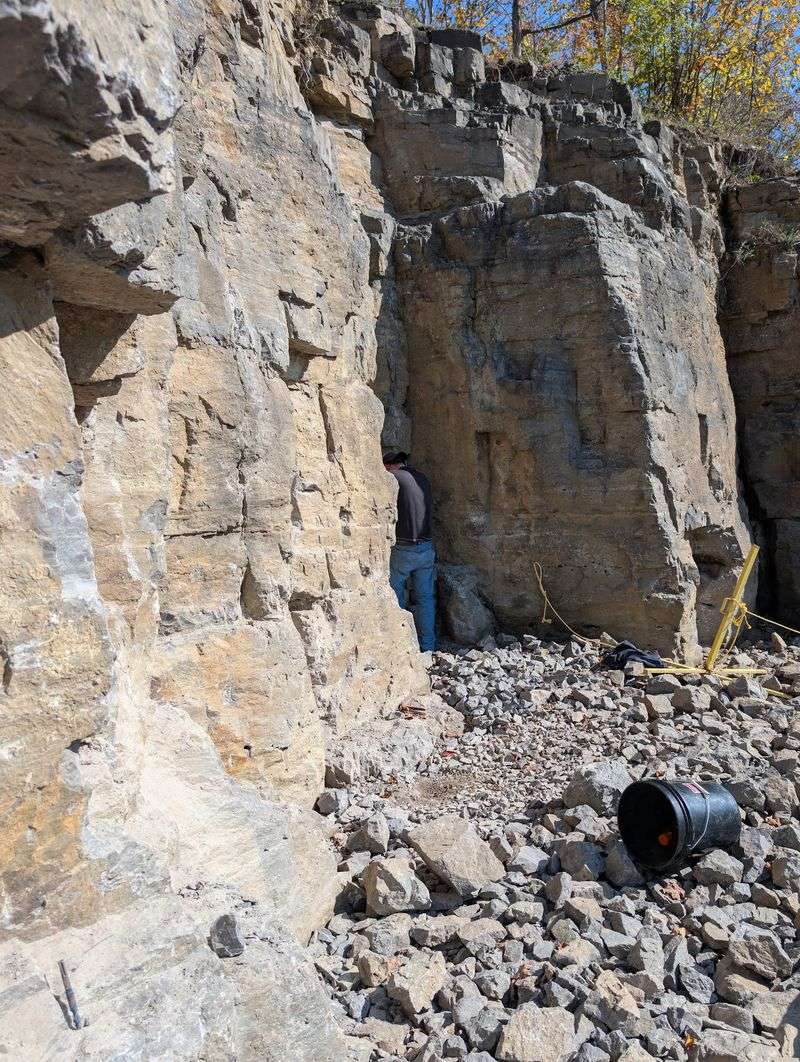
Spoiler, these diamonds aren’t the gemstones used in traditional diamond rings. Herkimer diamonds are naturally double-terminated quartz crystals, and their sharp faces can sparkle beautifully in sunlight.
The attraction lets visitors search for them in aboveground rock exposures. Once you’ve registered, you can use a provided hammer and collection bag to explore the rocks and keep the crystals you find.
Some pieces emerge from small cavities, while others require patience and careful searching. Wear sturdy shoes, eye protection, and clothing suited to an outdoor activity involving stone and dust.
Younger explorers can try the sluice station instead, washing material from prepared bags to uncover colorful minerals and fossils.
The artisan center offers another option: turn a collected crystal into a piece of jewelry. It’s a satisfying progression from searching to making something you can carry home.
The mines operate daily from 9 a.m. to 5 p.m. during their 2026 season, April 12 through October 31.
No advance reservation is required for ordinary mining admission, although weather can affect access. You’ll find the entrance at 4626 NY-28, Herkimer, NY 13350.
This detour rewards a slower pace. You might leave with a pocketful of modest quartz pieces or one especially brilliant find.
Each promising rock adds a little anticipation. Either way, a souvenir you uncovered yourself feels different from one selected off a shop shelf.
6. Fly Creek Cider Mill & Orchard
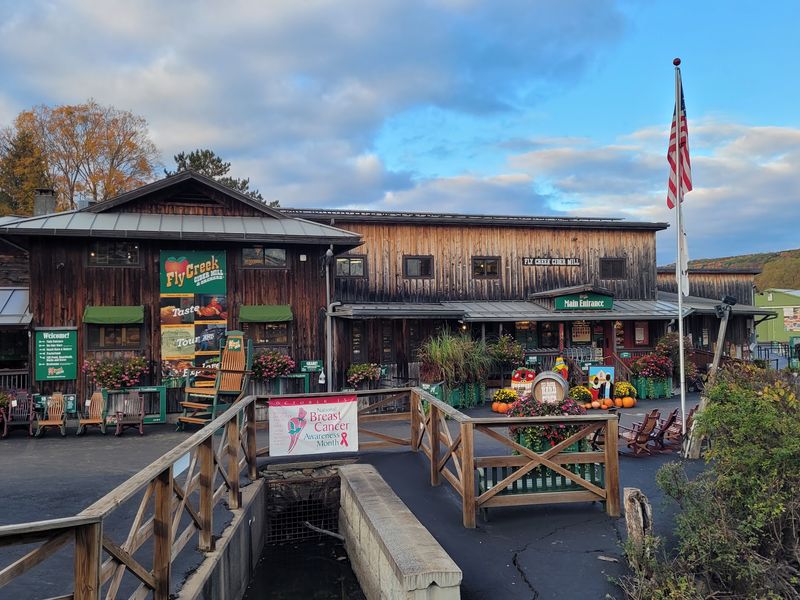
Apple lovers, this detour is your reward for being patient through miles of highway.
Fly Creek Cider Mill sits among the rolling hills near Cooperstown, where an old-fashioned water-powered press still turns apples into sweet cider.
The mill has been part of the hamlet for more than 170 years. During the autumn pressing season, visitors can watch apples being prepared and layered into racks before the historic machinery squeezes out the juice.
The cider gallery and learning center provide a view of the process, adding a wonderfully mechanical twist to an orchard outing. The actual pressing schedule depends on the harvest and production needs.
Inside the market, shelves hold apple and corn salsas, preserved foods, local cheese, fudge, and other treats.
A temperature-controlled apple area allows visitors to select fruit to take home. The Snack Barn and Bakery offers a convenient break if your drive calls for something more substantial than a bag of apples.
This detour heads south of the main route. The address is 288 Goose St, Fly Creek, NY 13337, only a short drive from Cooperstown. It opens daily from 9 a.m. to 6 p.m. through December 20, 2026.
A fresh cider stop feels especially appropriate in autumn New York. Pick a snack, watch the old press if it’s running, and take a little orchard flavor back to the car.
7. Munson
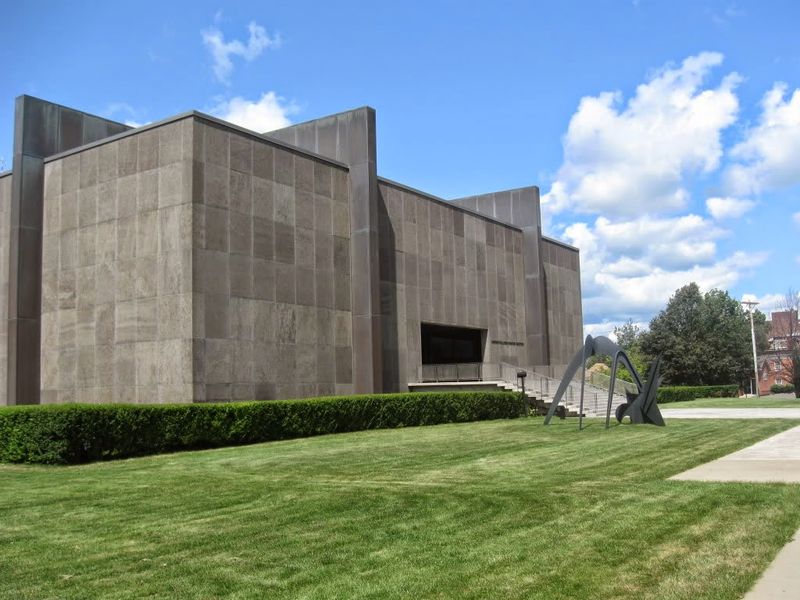
Utica holds a surprise for art fans, and it sits right on Genesee Street.
Munson brings American painting, modern architecture, and live arts programming together in a downtown cultural campus.
The museum’s striking main building was designed by architect Philip Johnson. Its galleries contain American and European works, with both permanent displays and rotating exhibitions.
Even before you focus on a particular painting, the distinctive geometry of the building is part of the experience.
Depending on the exhibition schedule, your visit might include historic landscapes, contemporary installations, or a closer look at artists connected to the region.
Munson also supports performances, community classes, and arts education, giving the destination a much broader purpose than displaying paintings alone.
The museum offers self-guided visits as well as tours for groups, and free general admission to the Museum of Art makes a spontaneous stop easy. Some special exhibitions or events have separate admission arrangements.
Visit 310 Genesee St, Utica, NY 13502, where parking is available behind the museum from State Street. Gallery hours are Tuesday through Saturday from 10 a.m. to 5 p.m. and Sunday from noon to 5 p.m.; Monday is closed.
This is a chance to enjoy a slice of New York culture without committing an entire day. Spend a little time with the galleries, admire the architecture, and return to the road feeling thoroughly refreshed.
8. Utica Zoo

A coral reef in the middle of Utica? That’s the newest reason to stop at the Utica Zoo, where tropical fish and colorful corals have joined the lions, red pandas, and other residents.
Bull Reef opened in June 2026 inside a renovated indoor space near the Scales & Tails Wildlife Hall.
Two large saltwater displays hold living corals and an assortment of marine creatures, including colorful fish, shrimp, and an eel.
Interpretive information explains how reef habitats work, making it an unexpected underwater detour during a road journey through the Mohawk Valley.
Outside, animal areas include African Ridge, Forever Forests, and Backyards & Barnyards. Red pandas climb among branches, while gibbons, lions, farm animals, and other species offer different things to discover.
Children can compare the habitats and make a game of spotting the animals most active that day. Exact visibility varies with weather and animal routines.
The zoo is at 1 Utica Zoo Way, Utica, NY 13501, with parking beside the grounds. It opens daily from 10 a.m. to 4:30 p.m. through most of the year, except Thanksgiving and Christmas Day. Reservations aren’t normally required for general visits.
The outdoor paths give everyone a chance to walk after hours in the car. Save the new reef for a colorful indoor finale, then choose a favorite animal before continuing toward Syracuse.
9. Fort Stanwix National Monument
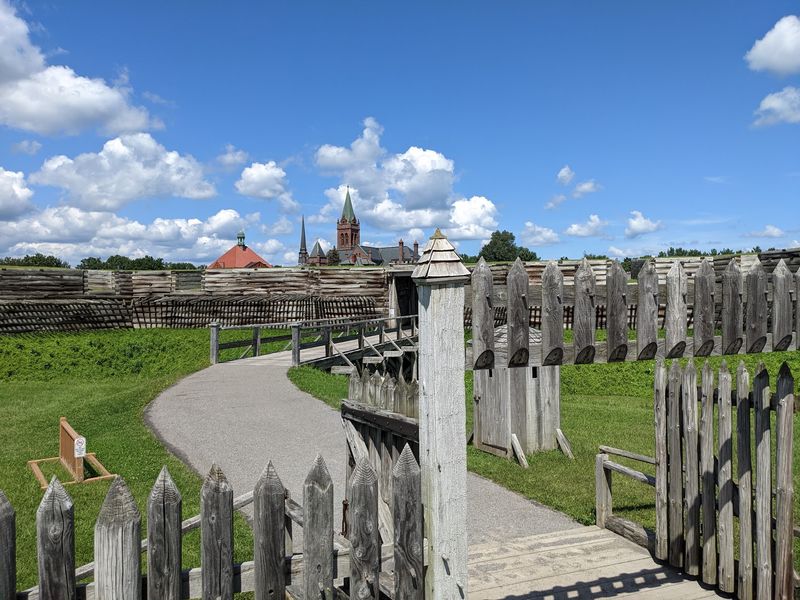
Right in downtown Rome sits a wooden fort that looks ready for 1777.
Talk about a surprising neighbor for ordinary city streets, especially when you first see its towering timber walls.
The original structure was built in 1758 beside the Oneida Carry, a historic route connecting the Mohawk River with Wood Creek.
Travelers once carried goods between waterways here, making the location an important crossroads for trade and transportation.
Today’s fort is a carefully researched reconstruction that opened in 1976, using historic drawings and archaeological discoveries to recreate the eighteenth-century layout.
Inside the timber walls, you can explore courtyards, quarters, and rooms furnished to reflect everyday life centuries ago. Interpretive programs help explain how people lived, traveled, and worked around the Oneida Carry.
The Marinus Willett Visitor Center provides exhibits and an introduction to the site’s longer story, including the region’s Indigenous heritage. Use 100 N James St, Rome, NY 13440 as your destination.
In the current fall season, the visitor center operates Tuesday through Saturday from 9 a.m. to 5 p.m., while access to the fort normally runs from 9:30 a.m. until 4 p.m., depending on staffing and weather.
The landscaped grounds remain open during daylight hours. It’s an easy place to spend an hour or two, especially when you begin with the exhibits before exploring the restored wooden structures.
10. Oneida Community Mansion House
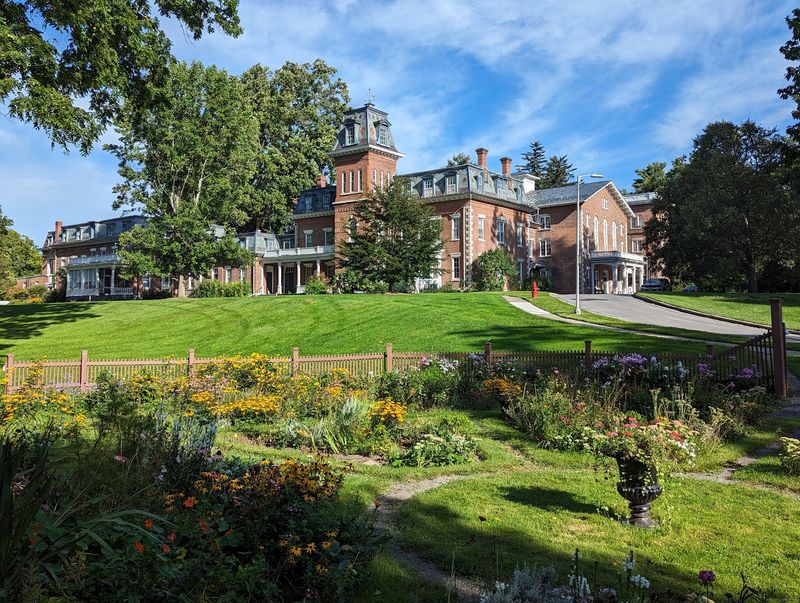
A group of people once tried to build a perfect society under one giant roof, and that roof still stands.
The Oneida Community Mansion House preserves the unusual living arrangements of a nineteenth-century communal experiment.
The Oneida Community began in 1848, with members sharing property and organizing everyday responsibilities collectively.
Their residence grew through several building phases, eventually creating a sprawling complex with shared rooms, gathering areas, and private accommodations.
Today the 93,000-square-foot Mansion House holds museum exhibitions that explore the community’s ideas, daily routines, and lasting influence.
Its manufacturing enterprises also helped establish the Oneida name later associated with tableware.
The architecture alone gives you plenty to study. Long corridors lead toward preserved rooms, with woodwork and furnishings that recall the building’s earlier use.
Beyond the museum, gardens and grounds provide space to walk. A small inn allows overnight stays within the historic property for those planning a longer visit.
Find it at 170 Kenwood Ave, Oneida, NY 13421, a short drive from Thruway Exit 33. Self-guided museum visits are available daily from 10 a.m. to 5 p.m.
Scheduled guided tours normally run Wednesday mornings and twice on Saturdays, with additional times available by arrangement.
Some exterior preservation work continues during daytime hours. Inside, the preserved rooms offer a fascinating final stop before reaching Syracuse, connecting architecture with one of New York’s most distinctive social experiments.