8 North Carolina Crystal Coast Fishing Villages That Peak In September When The Tourists Leave And The Locals Exhale
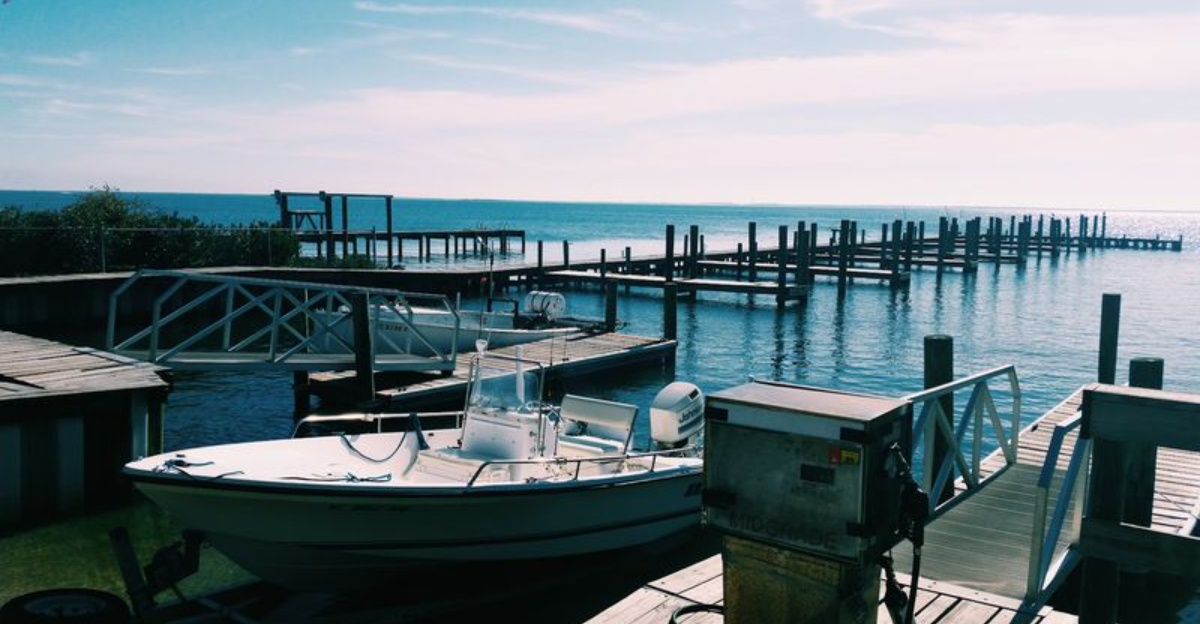
September gives the Crystal Coast the kind of reset button summer desperately needed.
After months of crowded lots, busy beaches, and towns moving at full visitor speed, the shoreline finally starts to breathe again.
North Carolina’s coast feels different in this softer season.
The air stays warm, the water still sparkles, and the whole place loses that frantic vacation-race feeling.
Fishing villages seem more like themselves again. Streets slow down.
Beach walks feel easier. Even the views look calmer, as if the coast has been waiting all summer to relax.
That is the quiet magic of coming after the rush.
September does not drain the charm from the shore. It gives it back.
1. Salter Path
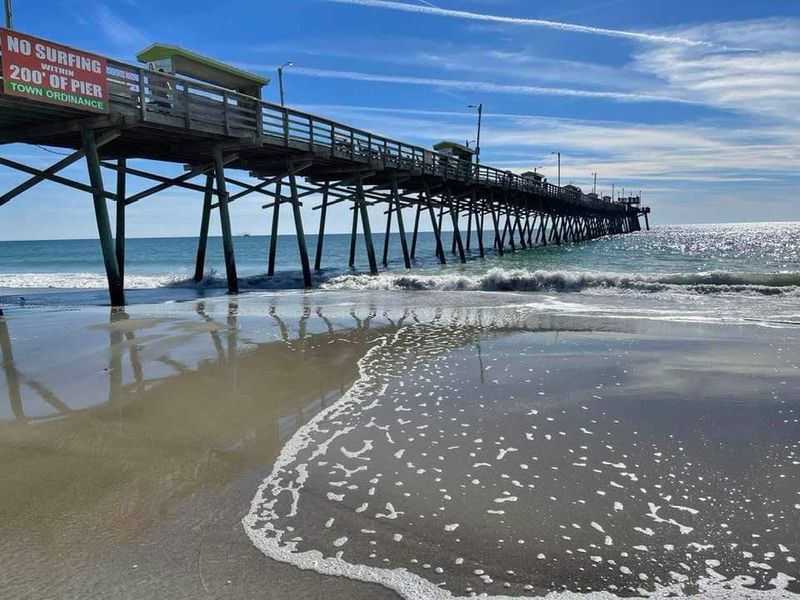
Salter Path does not need much effort to feel different from the busier beach towns around it.
Crystal Coast tourism describes it as a place where some of Bogue Banks’s original families still make their living from the sea, delivering catch directly to local fish house markets. This working-waterfront tradition gives the village more staying power than a typical resort strip.
Set in the middle of Bogue Banks at its narrowest point, Salter Path offers easy access to both beach and sound, which helps explain why fishing and water life still feel close at hand.
September is when that identity comes through most clearly. Summer noise drops away, and what remains feels slower, saltier, and more grounded.
Crystal Coast area guides still describe Salter Path as a historic fishing village, which fits the mood once the seasonal rush fades and the village starts feeling more local than transitional.
Nothing here depends on a big attraction list. Salter Path works because it feels lived in.
A stretch of sand, a road lined with seafood spots and cottages, and a long habit of sea-based work are enough.
North Carolina’s coast has plenty of places built to entertain visitors, but Salter Path feels more compelling in September because it is not really performing for anyone.
It is simply settling back into its own pace.
2. Harkers Island
Cape Lookout may be the image most travelers bring to Harkers Island, but the island’s deeper identity reaches well beyond a lighthouse view.
Crystal Coast tourism highlights marinas, boat launches, and ferry access to Cape Lookout National Seashore. The National Park Service confirms that the Harkers Island Visitor Center is the ferry ticket point and one of the park’s main visitor centers.
All of that makes the island important as a gateway, yet Harkers Island feels more lasting because it carries a stronger maritime story beneath the travel logistics.
Wooden boatbuilding remains one of the island’s defining threads, and that legacy continues to shape how the place is understood.
Even when visitors arrive focused on ferries, wild horses, or the seashore, the community around them still reads as a place built by people who knew how to work coastal water rather than simply admire it.
Once the summer rush eases, those details stop feeling like background texture and start feeling like the point. Docks appear less crowded, conversations seem less hurried, and the island’s Core Sound setting becomes more meditative than logistical.
North Carolina’s coast has plenty of beautiful addresses, but Harkers Island carries a kind of maritime seriousness that does not depend on polished charm.
By early fall, it becomes easier to notice how thoroughly this place still belongs to ferries, boats, family memory, and the long practical relationship between local people and the water in front of them.
3. Cedar Island
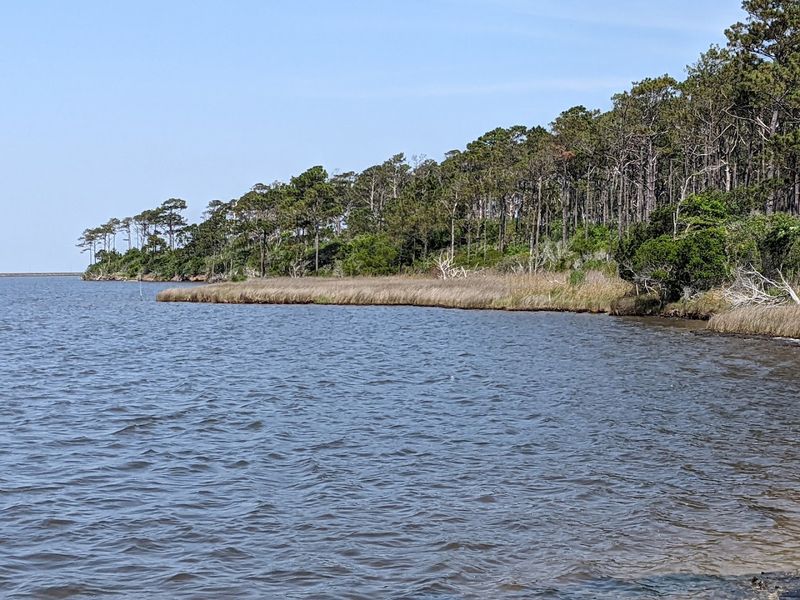
Remoteness is part of Cedar Island’s appeal, and September sharpens it rather than softening it.
NCDOT describes Cedar Island as a gateway to Ocracoke and the Crystal Coast ferry network. The U.S. Fish and Wildlife Service also notes Cedar Island National Wildlife Refuge sits at the end of a peninsula marking the southern edge of Pamlico Sound.
Geography does a lot of work here before the village even comes into view.
Down East heritage sources go further, calling Cedar Island “probably Down East’s most viable fishing community.”
That description fits the image they paint of people mending nets, cleaning crab pots, and gathering at the harbor to watch boats unload catch. Nothing about that feels staged for visitors.
It feels like a village still defined by work coming from the water.
Birding and wildlife observation also become stronger reasons to linger once early fall arrives. Refuge materials emphasize boating, fishing, wildlife observation, photography, and trails, and the area’s marsh-heavy landscape feels especially alive in September as the high-summer press recedes.
North Carolina has very few coastal communities that feel this open, this quiet, and this structurally tied to both commercial fishing and large protected habitat.
Cedar Island works best when it stops being treated as merely a ferry point. September makes that easier.
Once the rush eases, the village starts to feel like a destination in its own right, with a harbor culture and marsh-edge atmosphere that reward anyone willing to slow down and look beyond the terminal.
4. Marshallberg
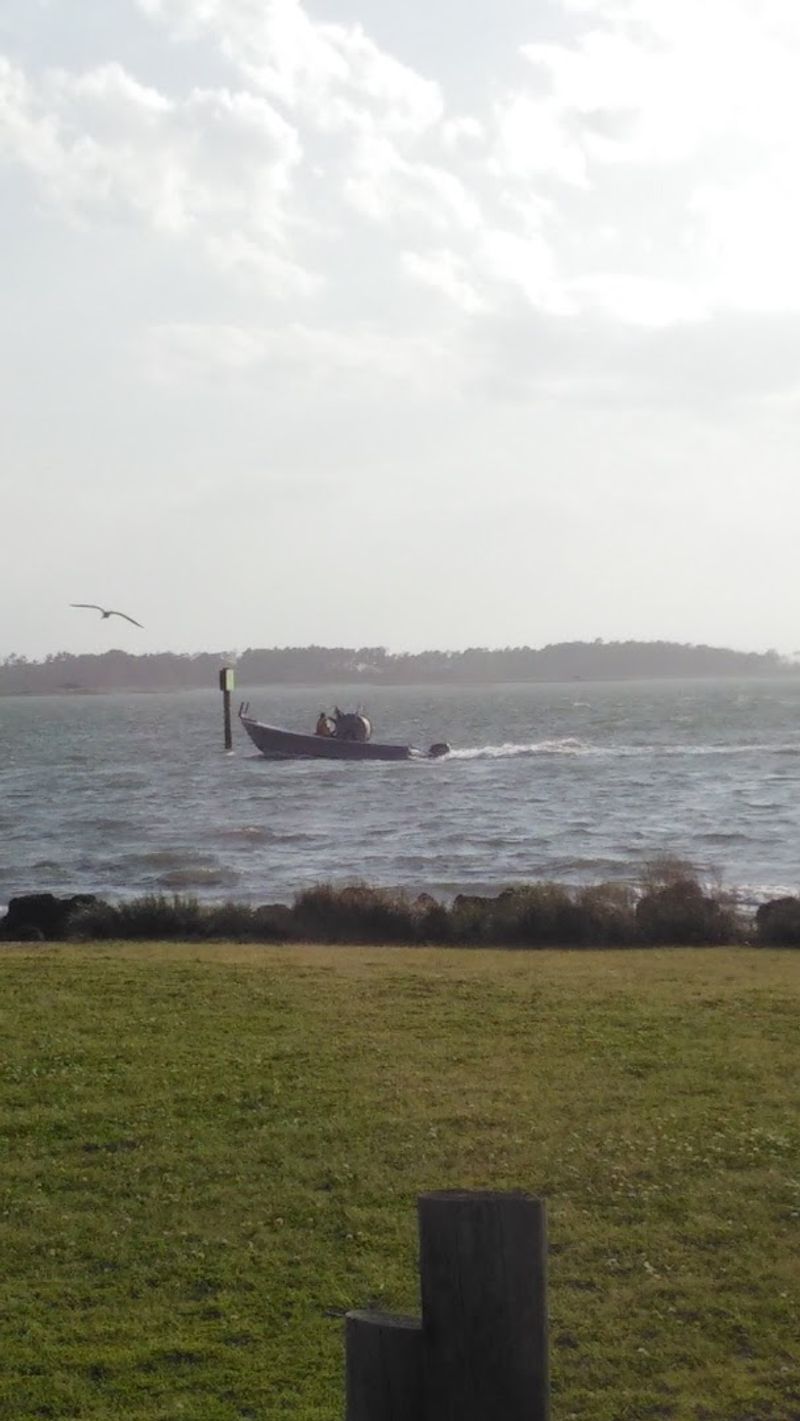
Nothing about Marshallberg tries to seize your attention quickly, which is one reason it stays in the mind longer than expected.
Core Sound and the surrounding creeks shape the village’s scale, and the place has long been associated with crabbing, boat work, and other forms of coastal labor rather than overt tourism.
Down East community history describes Marshallberg as a waterfront settlement tied to commercial fishing, boatbuilding, farming, and family continuity, which fits the place better than any polished travel description could.
A quieter calendar only improves what is already here. Roads feel calmer, views across the water look less interrupted, and the village’s modest built landscape starts to register with more force.
Marshallberg works best when nothing is competing with it. There are no major attractions demanding attention, no big tourism framework telling you how to feel, and no urgent need to package the village as more than it is.
North Carolina’s Down East communities are often described as preserving an older coastal rhythm, and Marshallberg is one of the clearest examples because it still feels structured by habitation rather than presentation. Early fall sharpens that impression.
The place becomes easier to read once visitors are fewer and the community’s actual proportions come back into focus.
What lingers is not a single landmark but a combination of still water, practical waterfront history, small-house intimacy, and a feeling that the village is continuing its own life whether anyone comes to admire it or not.
5. Davis
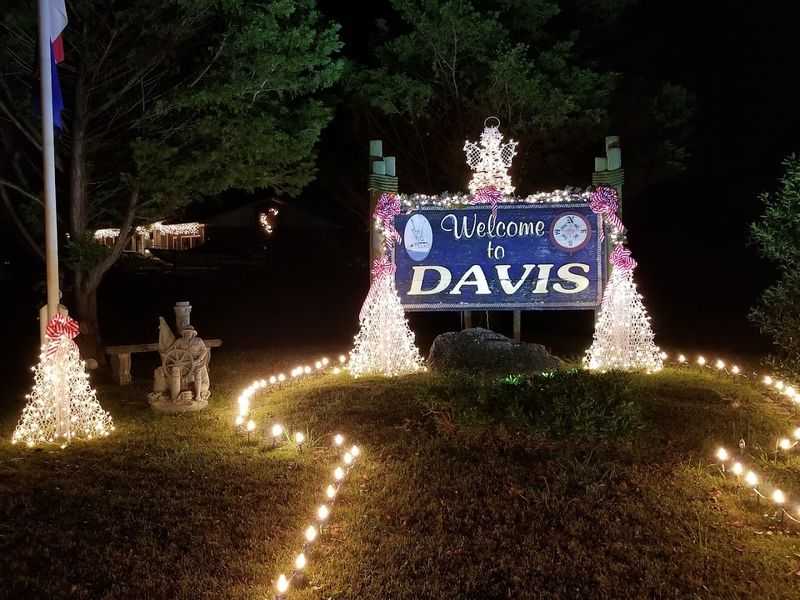
Movement has always mattered in Davis. Down East heritage sources describe the village as a long-running departure point for Cape Lookout’s Great Island Camp, with ferry service historically linking the mainland community to the outer shore.
Those same sources note that Davis once had more hunting and guiding activity than any other Down East village. This history gives it a different character from communities whose stories are more centered on house-lined waterfronts.
Davis reads as a village shaped by knowing where to go, how to get there, and what the water is doing on the way.
Once the busier visitor season eases, that identity becomes much easier to feel. Davis does not flatten into inactivity after summer.
Instead, it seems to regain coherence. Ferry logic, guide culture, open sound views, and an everyday relationship with the coast start to connect into one legible story.
North Carolina’s Down East region still preserves places where local expertise was never a side note but the whole economic model, and Davis fits that tradition especially well. Its appeal is not about spectacle.
It is about function, memory, and the satisfying sense that the village still understands exactly why it exists. In early fall, fewer interruptions make that easier to see.
The atmosphere grows quieter without going empty, and the whole place begins to feel less like a scenic edge and more like a community that has long worked as a threshold between mainland life and the wilder reach of Cape Lookout beyond it.
6. Atlantic
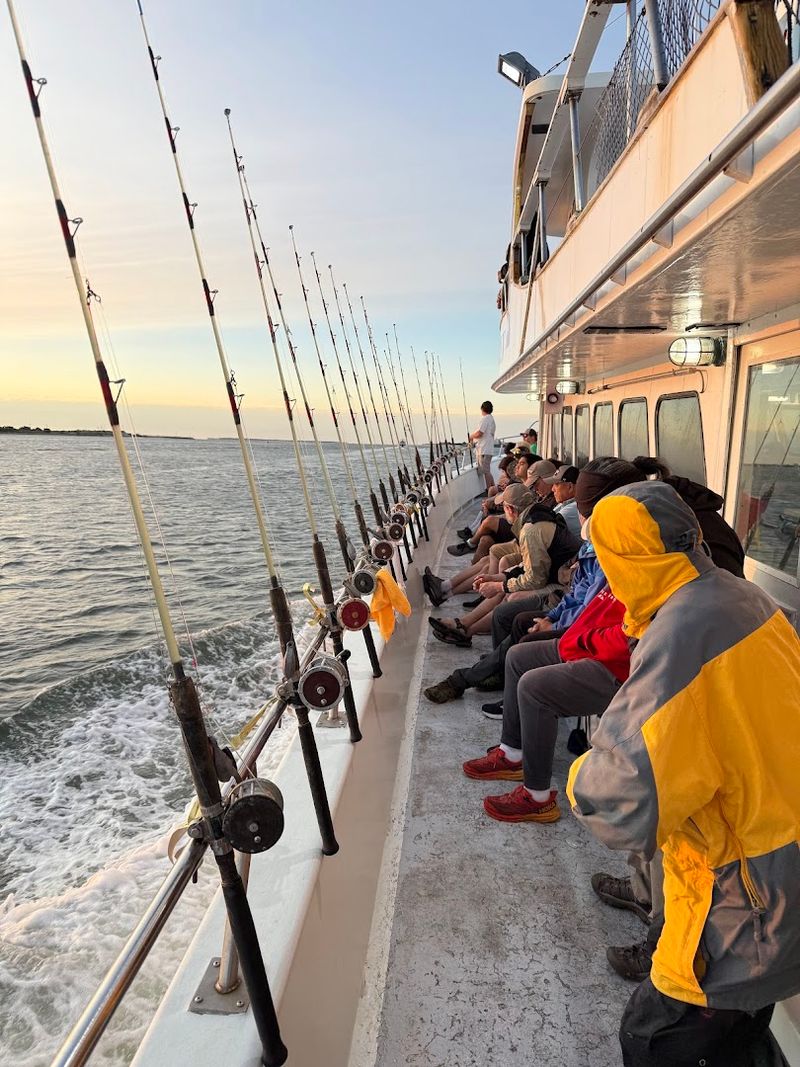
Harbor language runs through Atlantic from the start. Down East community history describes it as a Core Sound village with a working harbor, older homes, and shaded lanes. It also preserves the welcome-sign phrase “Living from the Sea.”
Few coastal mottos are more direct, and almost none fit their setting better.
Atlantic does not feel like a place that needs to explain its priorities. They are already visible in the harbor setting and in the community memory built around it.
Commercial marine work remains a major part of that memory. Historical material tied to Atlantic points to fishing, fish-house activity, and netmaking as long-standing occupations, which helps distinguish the village from more visitor-facing stretches of the Crystal Coast.
North Carolina has plenty of attractive shoreline, but Atlantic’s appeal is more structural than scenic. It lies in the sense that the harbor still means something beyond postcard value.
When the busiest summer flow subsides, that becomes easier to notice. The village looks more proportionate, less crowded, and more connected to its own pace.
Shaded roads, weathered edges, and the harbor’s practical beauty all have more room to register. Early fall does not transform Atlantic into something it was not before.
It simply restores enough quiet for the old village logic to come back into view.
For travelers who want a community where the working-waterfront identity still feels central rather than symbolic, Atlantic becomes one of the strongest Down East stops on the whole coast.
7. Sea Level
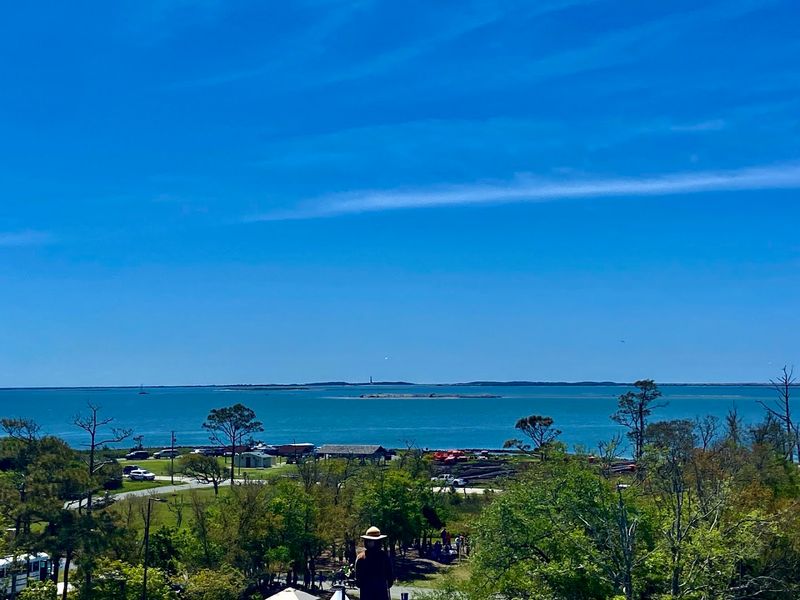
Sea Level lives up to its name in the most literal and poetic sense.
Flat, open, and surrounded by the shimmering expanse of Core Sound, this Down East village sits so close to the water that the horizon feels like it begins right at the edge of the road.
September here strips everything down to essentials, water, sky, wind, and the comforting smell of a working coast.
The community has historic ties to fishing and the sea that stretch back many generations. A former hospital once served the Down East communities from Sea Level, a reminder that this village was once a hub of activity for the entire region.
The Sea Level Post Office at 751 Highway 70, Sea Level, NC 28577 anchors the community along the main road, and the drive through town takes only a few minutes but leaves a lasting impression.
Sea Level’s surrounding sound waters remain closely tied to fishing and boating, especially once the pace of late summer begins to ease.
Kayakers and small boaters find the surrounding creeks and coves ideal for slow, exploratory paddling through pristine marsh habitat.
The wildlife viewing here is genuinely exceptional, with wading birds, shorebirds, and occasional river otters making appearances along the waterways.
Evenings in Sea Level feel like a deep exhale after a long week. The light fades slowly over the sound, turning the water from silver to copper to deep purple.
North Carolina has no shortage of beautiful coastline, but Sea Level offers a version of it that feels entirely unscripted and completely real.
8. Gloucester
Gloucester’s story is tied less to spectacle than to connection. Down East heritage sources describe it as an important transportation and business link, especially before the Harkers Island bridge opened in 1941, when ferries from Gloucester helped connect travelers and residents to the island.
That history matters because it places the village inside a network of working coastal movement rather than treating it as an isolated curiosity.
Gloucester mattered because it linked places, people, and shoreline economies that depended on one another.
Today, the village still feels shaped by that quieter kind of usefulness. It does not market itself loudly, and that restraint works in its favor once the high season begins to empty out.
Marsh edges, creek access, and road patterns start to feel more important than visitor amenities, which makes Gloucester especially satisfying for people who like the Down East coast precisely because it can still feel underinterpreted.
North Carolina’s tourism conversation often gravitates toward the better-known towns, yet communities like Gloucester help preserve the deeper tone of the region.
By early fall, the village seems to exhale back into itself. Light across the marsh changes, traffic drops, and the place feels more like a local landscape again.
What remains is not a checklist of attractions but a slow, coherent sense of a coastal community that has long understood its place in the wider geometry of Carteret County water, work, and movement.