8 North Carolina Places That Tell The Story Of The State’s Native American Past
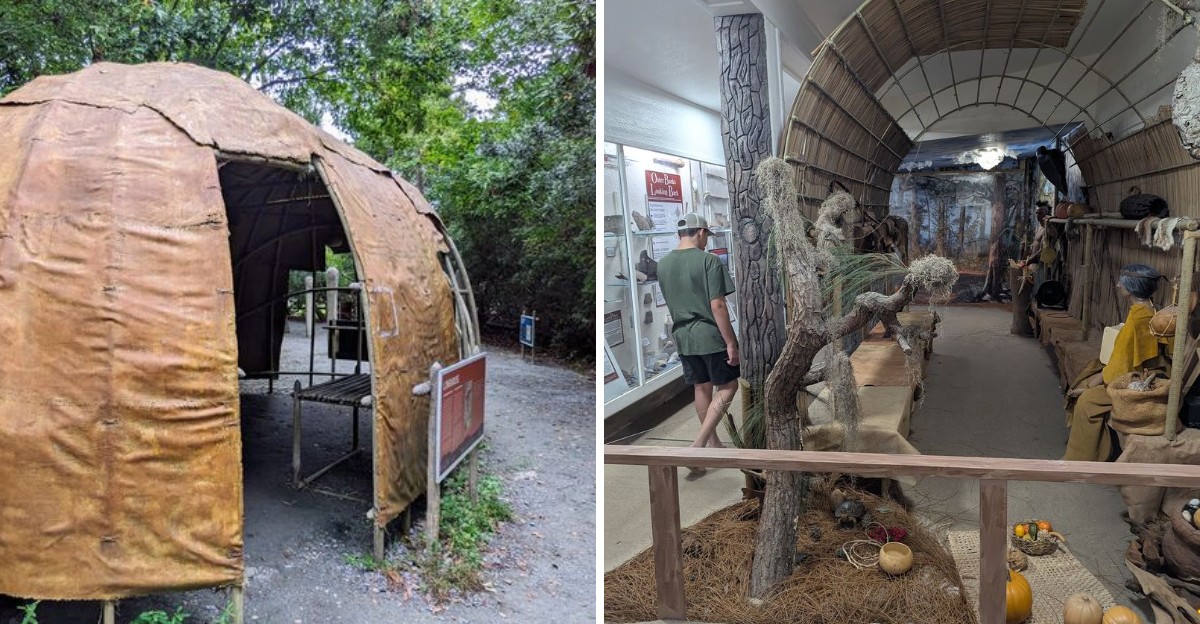
The landscape starts looking different once you know whose stories are woven into it.
Across North Carolina, Native history is not something locked away in the distant past.
It continues through living communities whose traditions, art, and voices still shape the state today.
That makes these stops feel more powerful than a simple history lesson.
A familiar road or mountain view can suddenly carry meaning you never noticed before.
The deeper you look, the more the map begins to change. What seemed like scenery becomes homeland.
What looked old becomes ongoing.
By the end, you may realize the most important part of the journey is learning to see what was there all along.
8. Museum Of The Cherokee People
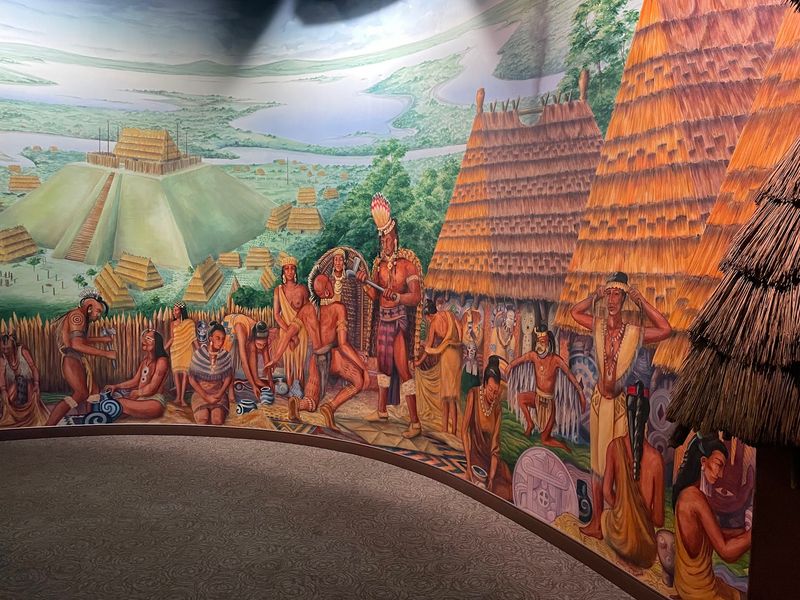
Art can make a long history feel close enough to touch, even when the objects stay safely behind glass.
In Cherokee, colorful work by living artists shares space with objects that speak to earlier generations.
The result is a visit that looks toward the future as well as the past.
The Museum of the Cherokee People presents history through a Cherokee point of view on the Qualla Boundary, the homeland of the Eastern Band of Cherokee Indians.
Its galleries use objects, artwork, and stories to show how Cherokee people have lived, adapted, and kept their culture strong.
Give yourself time to read the words beside each display.
A small detail in a piece of pottery or a woven basket may tell you more than a quick walk through the rooms.
Ask about current exhibitions, too, since special displays can bring the work of present-day artists into sharper focus.
Children can choose one object to remember and share what they learned about it afterward.
This is a helpful first stop for a mountain trip because it gives context to the places you will see outside.
The museum normally opens daily from 9 a.m. to 5 p.m., but it is temporarily closed on October 1, 2026, for construction next door and is scheduled to reopen Friday.
Afterward, take a quiet moment outdoors and think about whose stories shape the scenery around you.
The people represented here are not simply figures from a distant time.
They are neighbors, artists, families, and guides whose voices continue to tell their own story across North Carolina today.
Plan your visit at 589 Tsali Blvd, Cherokee.
7. Oconaluftee Indian Village, Cherokee
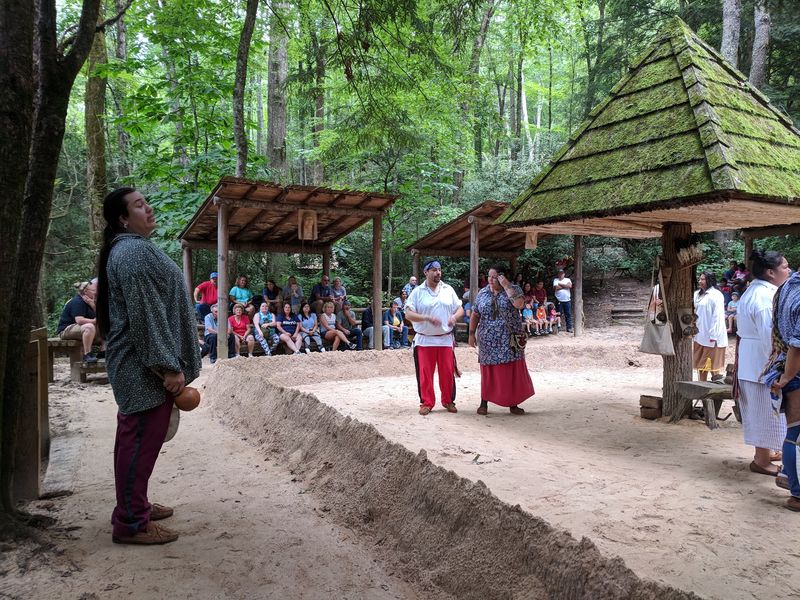
The steady movement of hands can teach a lesson that a display case cannot.
Watch a basket take shape, and you begin to notice how much care goes into choosing materials and learning each step.
At this open-air attraction, Cherokee guides and artisans make room for those close observations.
Oconaluftee Indian Village recreates a Cherokee community from the 18th century, with paths connecting buildings and craft areas.
Demonstrations may include basket weaving, canoe work, and other skills, giving visitors a chance to hear how techniques were passed along. Start at 288 Drama Rd, Cherokee.
A guided tour is a good way to understand what you are seeing before you explore further.
Notice the different purposes of the buildings and the spaces around them rather than treating the village as one big picture.
If a demonstration is underway, leave room for others to watch and listen.
Questions asked with care can lead to a better understanding of the work in front of you.
Plan for an outdoor visit, so comfortable shoes and water will make the experience easier.
The 2026 season runs through October 31, but schedules can change, and checking ahead helps you make the most of the day.
Families may enjoy talking afterward about which skill would take the longest to learn and why.
Though the setting represents an earlier time, the people sharing its traditions live in the present.
That connection is what turns an interesting walk through the trees into a fuller story of Cherokee knowledge.
6. Judaculla Rock
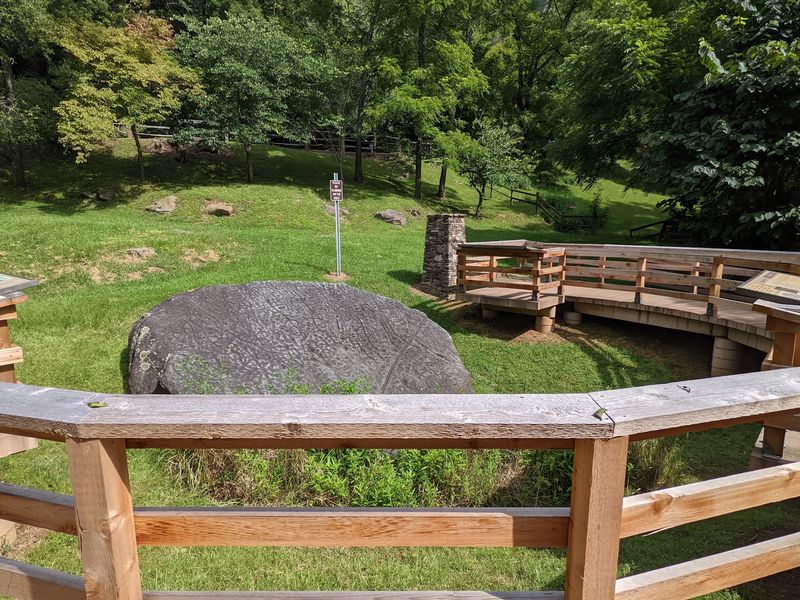
At first glance, the marks on a broad stone can look like a puzzle with missing pieces.
Look longer, and you may notice circles, lines, and other shapes spread across its surface.
No one can read every mark with certainty, which is one reason to approach this place with patience and respect.
Judaculla Rock is a soapstone boulder near Cullowhee with more than 1,500 identified carvings. It remains a sacred Cherokee cultural site, not simply an unusual stop for photographs.
You can find it at 552 Judaculla Rock Rd, Cullowhee.
Walk around the viewing area and let the light help you pick out different patterns.
Stay behind the barrier, and never touch, trace, or climb on the stone; even careful hands can add to wear over time.
Admission is free, making a short, thoughtful visit easy to add to a mountain drive.
Since the site is outdoors, choose a dry day and bring shoes suited to the path.
The rock also offers a lesson about the limits of what visitors know.
Cherokee traditions give it meaning, while researchers continue to study its carvings, and a quick guess should not replace either perspective. Before leaving, take one last look at the whole surface rather than hunting for a single famous shape.
Among North Carolina places that hold traces of earlier lives, this one asks for something simple: give it space.
The quiet around the stone makes that request easy to understand.
5. Museum Of The Southeast American Indian
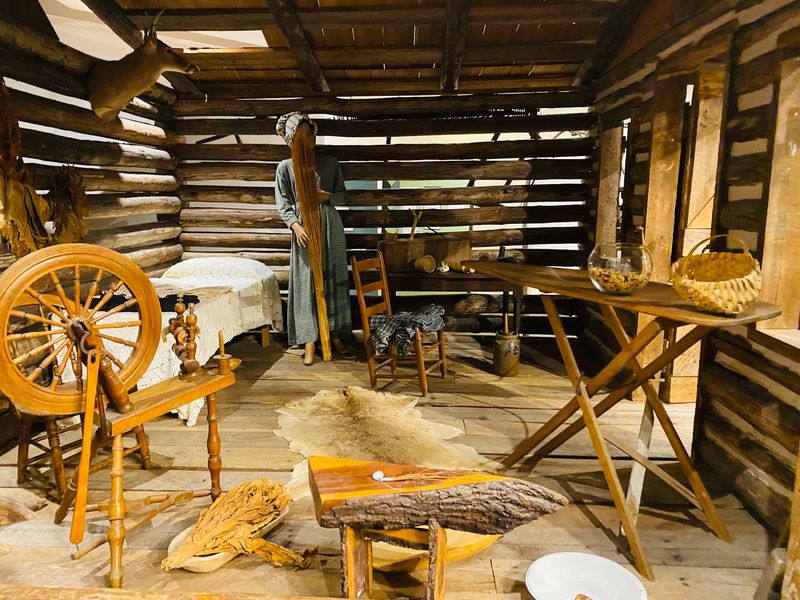
A campus building may not be the first place you expect to find a story that reaches across centuries.
In Pembroke, however, a visit to historic Old Main opens a window onto the Native communities of Robeson County and the wider Southeast.
The Lumbee story has an important place here.
The Museum of the Southeast American Indian, at the University of North Carolina at Pembroke, shares art, objects, and changing exhibitions.
Some displays invite you to consider daily life, while others show how artists and communities express their identities now. Admission is free, so there is no need to hurry through the galleries to feel you have made the most of a ticket.
Read exhibit labels closely, especially when an artist or community explains the meaning of a piece in their own words.
If you are visiting with children, ask them to find two objects made from different materials.
Comparing them can spark a conversation about skill, purpose, and creativity without turning the visit into a test.
Because exhibitions rotate, a return trip may show you a different side of the region.
Check current hours before setting out, and allow time to walk around the campus as well.
The museum is a reminder that Native history belongs in classrooms and public spaces, but it does not end there. It continues through families, art, and community work.
Leave with a name or idea you want to learn more about, and the visit will keep giving long after you step outside.
Head to 1369 Old Main Rd, Pembroke.
4. Town Creek Indian Mound
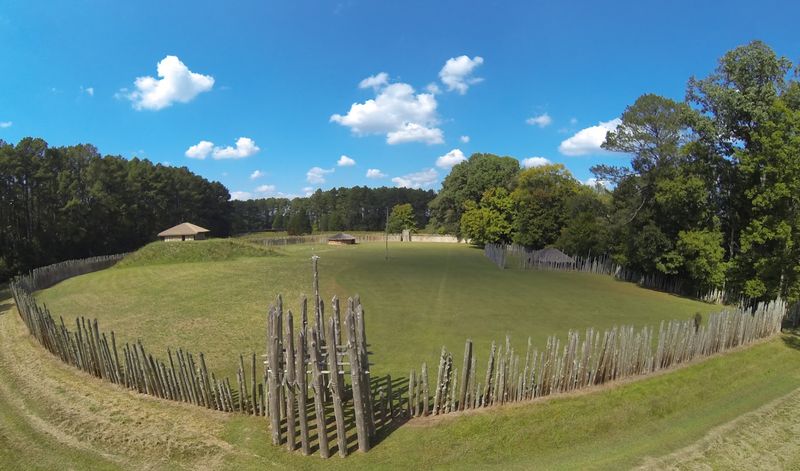
Open ground and reconstructed buildings make it easier to picture how a gathering place might have worked long ago.
At Town Creek, the shapes of the mound and nearby structures give visitors more to study than a flat field could. Slow down here; the space itself is part of the lesson.
Town Creek Indian Mound is a state historic site near Mount Gilead that interprets the Pee Dee culture, whose community used this place centuries ago.
It is North Carolina’s only state historic site specifically dedicated to American Indian heritage.
Follow the self-guided route and look at how the reconstructed ceremonial structures relate to the mound.
Signs can help you tell what comes from archaeological study and what has been rebuilt to help visitors understand the site.
Give children a simple job, such as spotting where people might have gathered, then compare their ideas with the interpretation provided. On a sunny day, a hat and water are sensible additions to your visit.
For 2026 planning, note that the mound and village grounds remain open for self-guided tours while the visitor center and gift shop are closed.
Check the site’s current schedule before making a long drive, since access may change.
The visit does not need a busy indoor exhibit to leave an impression.
Standing outdoors, you can see the care involved in preserving a place that held meaning to a community over many years. It is a quiet stop with a great deal to say.
Begin at 509 Town Creek Mound Rd, Mount Gilead.
3. Pettigrew State Park
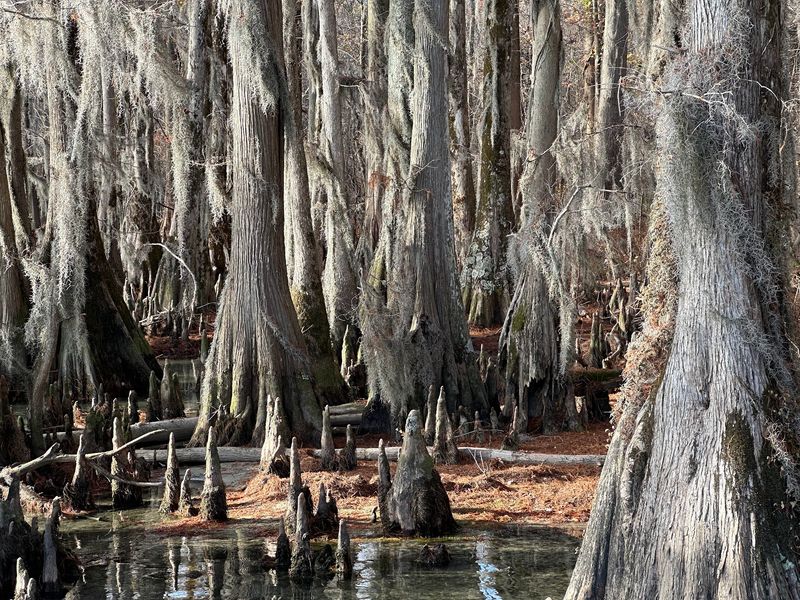
Still water can hide a remarkable amount of history.
Along Lake Phelps, ancient dugout canoes were found beneath the surface, evidence that Native people used these waters thousands of years ago.
The discovery changes an ordinary lakeside view into a scene full of questions.
Pettigrew State Park protects land beside Lake Phelps near Creswell, where at least 30 ancient dugout canoes have been discovered.
Some of the discoveries are at least 4,000 years old, offering a rare, direct link to long-ago travel on the lake.
Because the park office is closed for renovations through 2026, check current park information before expecting access to indoor exhibits and focus your visit on the open day-use areas around Lake Phelps.
Imagine the time and skill needed to shape a log into a boat that could move across such a wide lake. Keep an eye out for cypress trees along the shore, too.
Their trunks and roots add texture to the landscape, and their presence helps you picture the materials people could use nearby.
A park trip offers room to learn without spending the whole day indoors.
Pack water, check trail conditions, and follow posted guidance around the shoreline.
Birdwatching and a gentle walk can fit naturally around a stop to see the archaeological finds.
For families, the simplest question may be the best one: what would you need to know before setting out across the lake?
The answer brings food, weather, craft, and community into the story.
By the time you leave, the quiet water may seem far less empty than it did on arrival.
Make your way to 2252 Lake Shore Rd, Creswell.
2. American Indian Town At Roanoke Island Festival Park
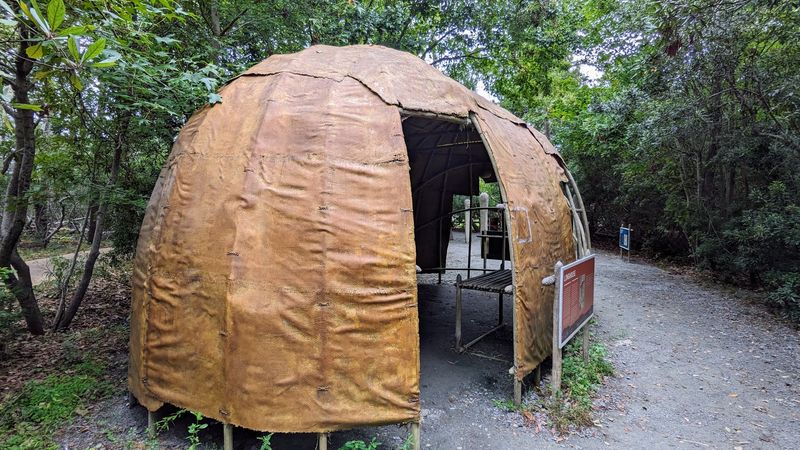
Step between a garden plot and a longhouse, and the daily work of a coastal community becomes easier to picture.
Food did not simply appear at a table, and boats did not build themselves.
This outdoor exhibit gives visitors a closer look at the knowledge behind both.
American Indian Town at Roanoke Island Festival Park explores Coastal Algonquian life around the time English expeditions reached the region in the 1500s.
Recreated spaces include longhouses and areas connected to growing food and building boats. Visit at 1 Festival Park, Manteo.
Take time to notice how each part of the town serves a purpose.
A garden can prompt a conversation about planting and seasons, while a boat display shows how travel shaped life near the water.
Hands-on activities may be available, so ask staff what you can try rather than assuming every object is meant to be handled.
Children may enjoy comparing the materials used for different tasks and guessing why each was chosen. The exhibit is listed as open through December 31, 2026, but confirm park hours before your trip.
Because parts of the experience are outdoors, bring water and plan for the weather.
If you have time afterward, look out across the surrounding waterways and consider how closely land and water worked together for the people who lived here.
The park interprets one chapter of North Carolina history, not the full story of every coastal Native community.
Let it be a starting point for learning more, especially about the people whose ties to this coast continue today.
1. Frisco Native American Museum & Natural History Center
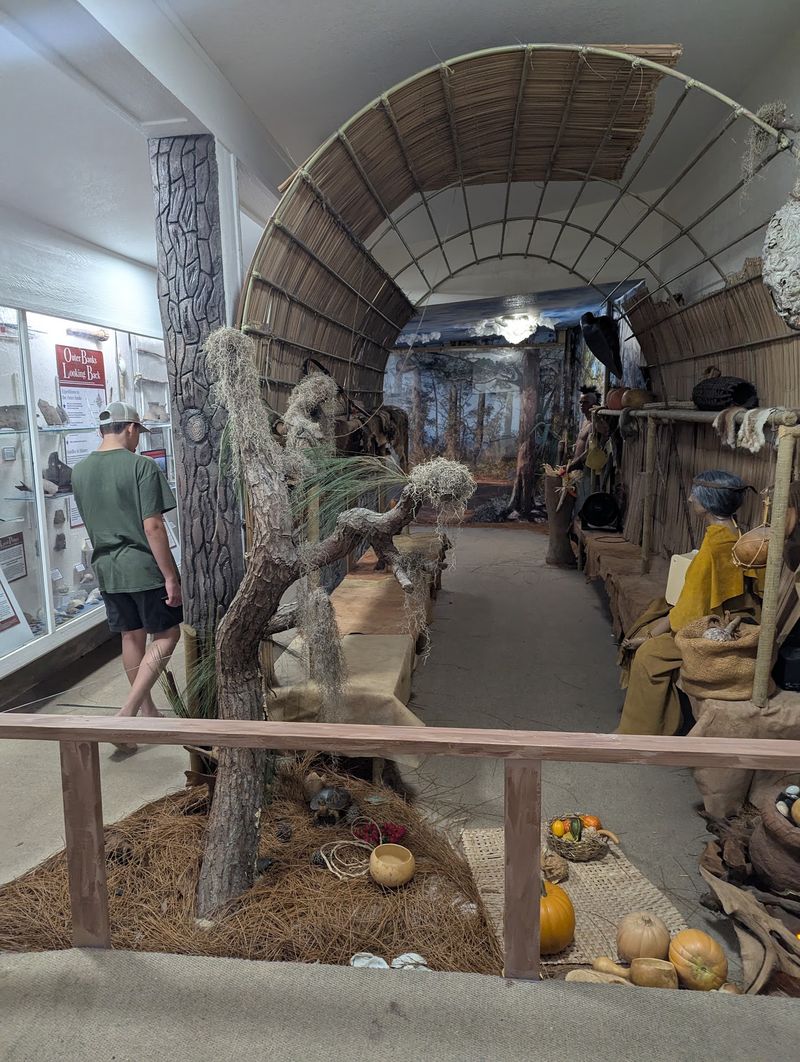
Salt air and coastal trees set a different pace for the final stop.
On Hatteras Island, museum galleries and an outdoor walk offer two ways to think about Native life: through carefully kept objects and through the landscape people knew.
Give both parts of the visit time.
The Frisco Native American Museum & Natural History Center includes a display about the Roanoac, Hatterask, Croatoan, and other Indigenous peoples of the Outer Banks. Its wider collection also brings together Native art and artifacts from beyond the coast.
Begin with the regional exhibits to understand the stories closest to the island beneath your feet.
Then explore the broader galleries, keeping in mind that different Native nations have their own histories and traditions.
Outside, the nature trails pass through maritime forest.
Look for signs that explain plants and trees, and listen for how the setting changes once you leave the road behind.
A short walk can make the indoor displays feel more connected to a real place.
The museum currently follows a spring-through-fall schedule, so check its opening days before driving down the island.
Comfortable walking shoes help if you plan to use the trails, and taking your time is better than trying to see every object at once. Choose one coastal story that surprised you and carry it into the rest of your trip.
When the sea breeze reaches the trees, it becomes easier to remember that this shore has been home to people with deep knowledge of it for many generations.
Find the museum at 53536 NC-12, Frisco.