14 North Carolina Short Walks That End With Views Worth Pausing For
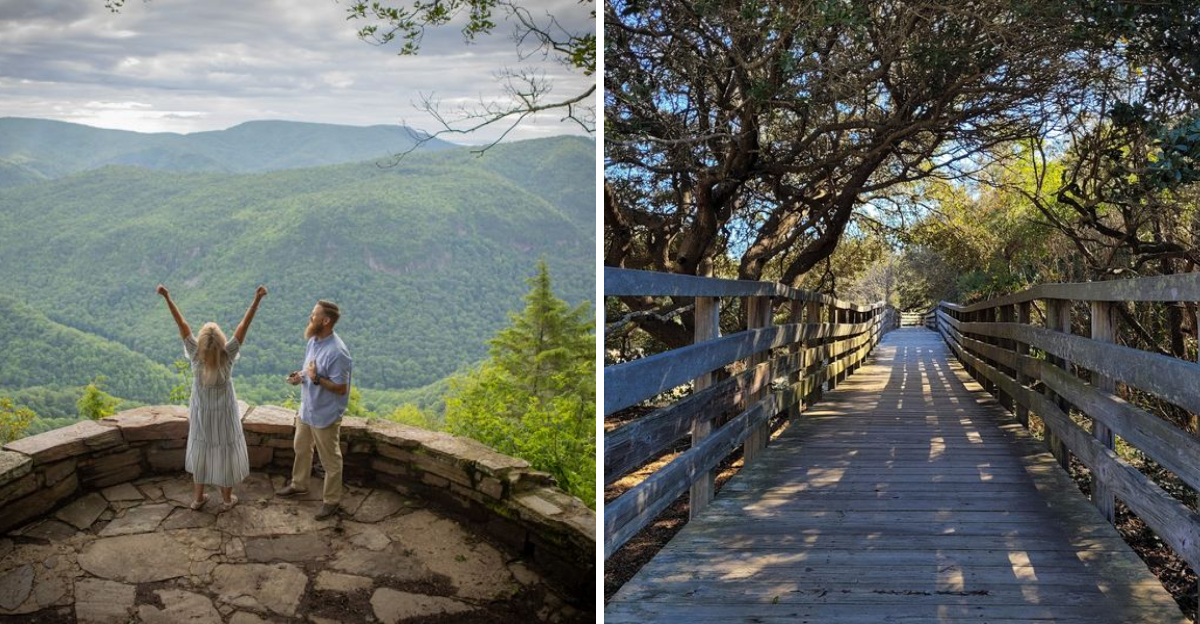
North Carolina has a funny way of making a short walk feel suspiciously overqualified.
You start out thinking, “Fine, I’ll stretch my legs for a few minutes,” and then suddenly the trail hands you a view big enough to make everyone go quiet.
No dramatic expedition required. No heroic hiking story needed.
Just a path and a little curiosity, followed by the very real chance your phone storage starts panicking.
Across the state, quick trails can end with overlooks that make a tiny effort feel wildly rewarded.
A few walks are so short they almost feel like nature is showing off on purpose.
Anyone chasing that “wait, this was only a short walk?” feeling will find plenty of wow waiting at the end in North Carolina.
1. Little Pinnacle Overlook Trail
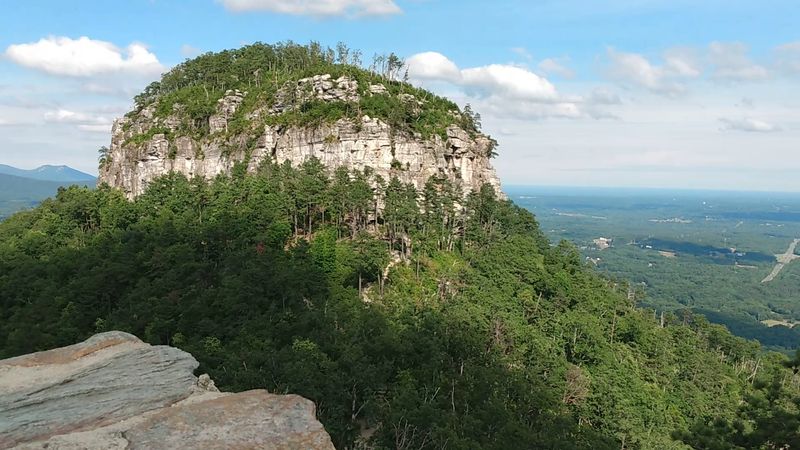
Pilot Mountain makes a huge impression with almost no mileage required, which is exactly why Little Pinnacle Overlook belongs near the top of this list.
Within the mountain section of Pilot Mountain State Park, the trail leads visitors to Little Pinnacle Overlook. North Carolina State Parks lists it as an easy 0.1-mile one-way path featuring a natural surface, roots, rocks, and stone steps along the route.
That short distance delivers a clear view of Big Pinnacle, the ancient quartzite knob that gives the park its unforgettable profile.
The official park address for the mountain section is 1792 Pilot Knob Park Road, Pinnacle, NC 27043, making the stop easy to plan for travelers moving through the northwestern Piedmont.
Morning light can make the surrounding hills feel soft and layered, while late afternoon gives the rock a stronger, more dramatic shape. This is not a long hike pretending to be short.
It is a true quick walk with a real payoff, especially for families, casual visitors, or anyone who wants a mountain-view moment without spending half the day on a trail. Bring a camera, but give yourself time to simply stand there too, because Big Pinnacle has a way of making people pause naturally.
2. Hickory Nut Falls Trail
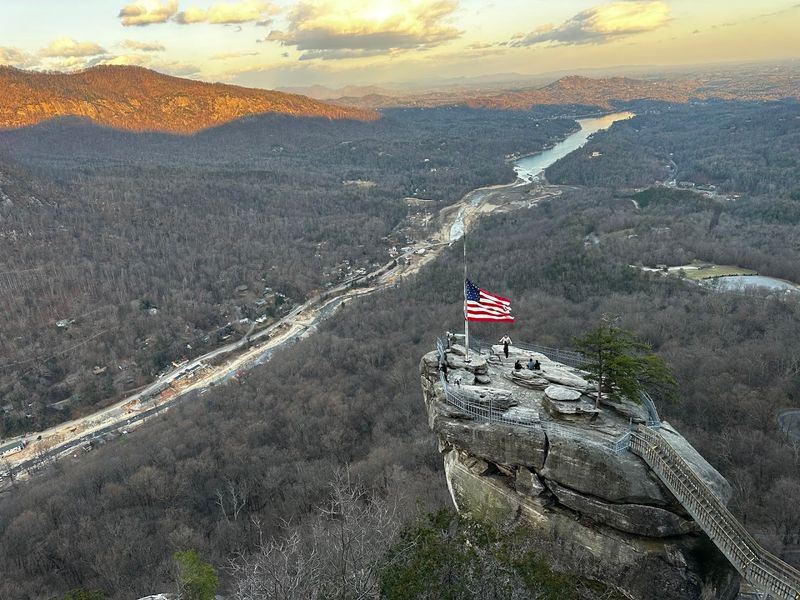
Mist, rock walls, and a 404-foot waterfall make Hickory Nut Falls Trail feel much bigger than its mileage suggests.
Listed by Chimney Rock at Chimney Rock State Park as a 1.4-mile round-trip out-and-back hike, the trail typically takes 45 minutes to an hour. The route features a gently rolling path, some moderate uphill sections, rocky terrain, and a small set of stairs near the base of the falls.
The park entrance is at 431 Main St., Chimney Rock, NC 28720, and visitors should remember that Chimney Rock is a fee area with its own current admission and hours.
The reward comes at the base of one of the tallest waterfalls in the eastern United States, where water drops dramatically down the cliff face and often sends a cool mist through the gorge air.
Families often like this route because it feels adventurous without becoming a rugged backcountry hike, although strollers and wheelchairs are not recommended by the park.
Shaded forest keeps the walk pleasant in warmer months, and the sound of water builds anticipation as the trail nears the viewing area.
Good traction helps near damp rock and stairs. For a short waterfall hike with a real “wow” ending, this one delivers.
3. Raven Rock Loop Overlook
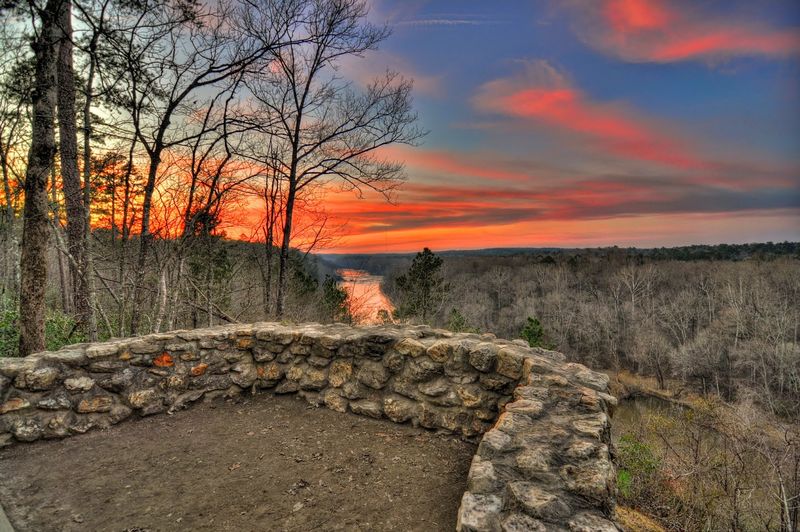
River bluffs give Raven Rock State Park one of central North Carolina’s most surprising short-view payoffs, even though the full loop is longer than a quick stroll.
North Carolina State Parks describes Raven Rock as a 150-foot crystalline structure overlooking the Cape Fear River. Friends of Raven Rock notes the Raven Rock Loop Trail as a 2.6-mile route that leads to the park’s signature outcropping.
That means this walk is not under a mile, but it still fits travelers who want a manageable outing with a memorable overlook instead of an all-day hike. The park is at 3009 Raven Rock Road, Lillington, NC 27546, about 40 miles southwest of Raleigh, making it a strong Piedmont day-trip choice.
Forested stretches give the route a quiet buildup before the view opens over the Cape Fear River corridor. From the bluff area, the river curves below the rock face, and the drop makes the landscape feel more dramatic than many visitors expect from this part of the state.
Spring wildflowers and mountain laurel add extra charm, while cooler months bring clearer sightlines through the trees. Pack water, leave time for the stairs and uneven terrain, and plan to linger at the overlook once the forest finally gives way.
4. Jockey’s Ridge Boardwalk
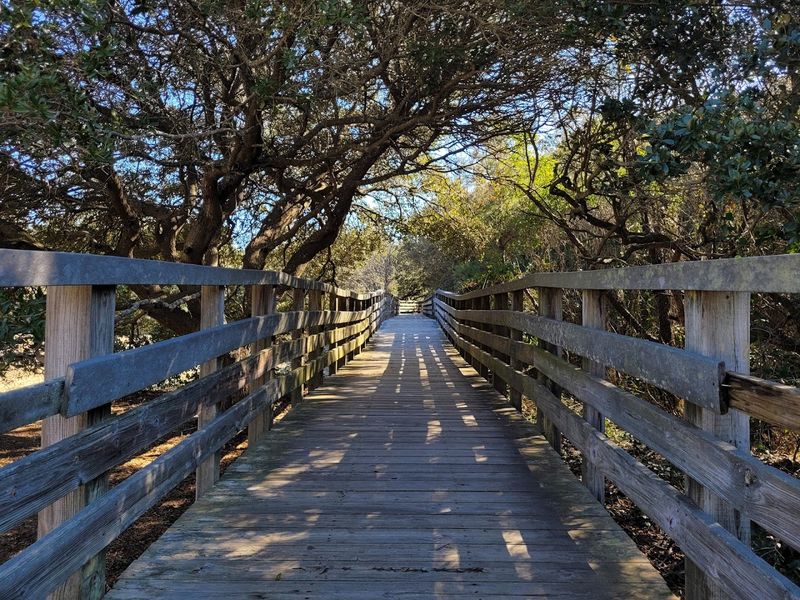
Sand makes the view feel almost unreal at Jockey’s Ridge State Park, where a short boardwalk leads visitors toward the tallest living sand dune system on the Atlantic coast.
North Carolina State Parks identifies Jockey’s Ridge as home to a landmark dune system. Outer Banks tourism also highlights a visitor center featuring a museum and a 360-foot boardwalk with exhibits that explain the dune’s ecology.
The park is at 300 W. Carolista Drive, Nags Head, NC 27959, and it remains one of the easiest places on the Outer Banks to get a huge view with very little formal hiking.
The boardwalk itself is simple, but many visitors continue onto the sand for the broader dune experience. That part can feel more strenuous than the distance suggests because soft sand makes every step work harder.
The payoff is big: Roanoke Sound lies to one side, the Atlantic side of the Outer Banks sits nearby, and the open sky makes sunset feel like an event. Shoes, sunscreen, and wind awareness matter because the dune field offers little shade and conditions can shift quickly.
Jockey’s Ridge works because it turns a short walk into a landscape that feels far larger, stranger, and more memorable than the effort required.
5. Fort Fisher Basin Trail
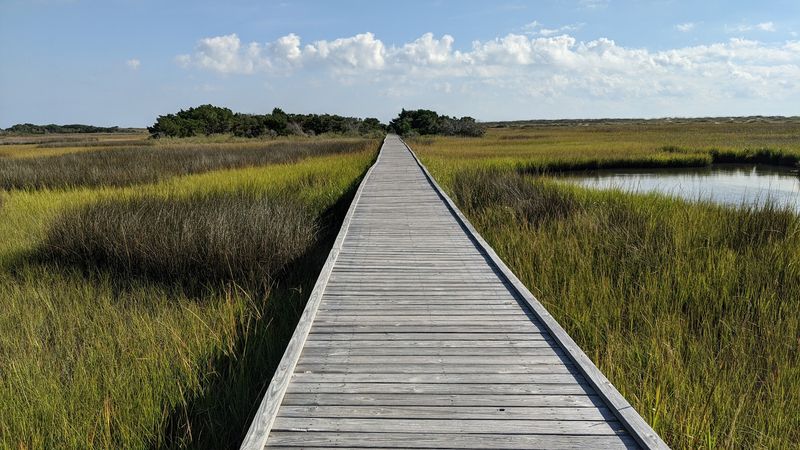
Coastal quiet takes over on the Basin Trail at Fort Fisher State Recreation Area, where the view comes from marsh, water, birds, and open sky rather than elevation.
A salt marsh trail runs through the area and finishes at an observation deck overlooking Zeke’s Island and the Cape Fear River, according to North Carolina State Parks. The Basin Trail is also highlighted by the park’s trail page for its wildlife-rich marsh and soundside scenery.
The recreation area is 18 miles south of Wilmington in New Hanover County, with the main access at 1000 Loggerhead Road, Kure Beach, NC 28449. This route is often described as about 2 miles round trip, so it is still easy by most hiking standards, but visitors should not expect a tiny boardwalk loop.
The terrain stays flat, and the scenery feels wide, layered, and peaceful. Egrets, pelicans, marsh grasses, tidal water, and distant barrier-island views give the walk its reward.
Early mornings can be especially beautiful, with softer light and more wildlife activity before the heat builds. Shade is limited in exposed sections, so water and sun protection matter more than the mileage suggests.
For a short coastal walk that ends with an actual observation-deck pause, Fort Fisher gives the shoreline a quieter, more ecological kind of beauty.
6. Occoneechee Mountain Overlook Trail
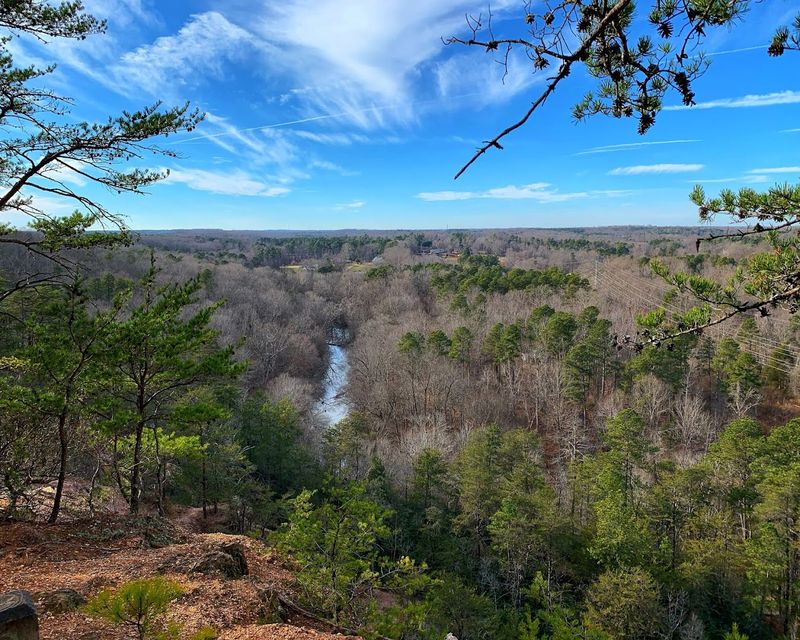
Orange County’s highest ground gives Occoneechee Mountain State Natural Area a view that feels unexpectedly rugged for the central part of the state.
Rising 15 miles northwest of downtown Durham, the natural area features trails winding through mountain laurel and rhododendron. A summit overlook rewards the climb with a wide sunset view across the landscape.
The main access is at 625 Virginia Cates Road, Hillsborough, NC 27278, where visitors can piece together a short route to the overlook or take a longer loop through the park.
This is a good reminder that “short” depends on the route chosen, because the overlook itself can be reached without committing to an all-day hike, but some loop options stretch farther.
The reward is a rocky Piedmont view toward Hillsborough, the Eno River area, and surrounding treetops. Autumn gives the overlook extra color, while spring brings wildflowers and active birdlife along the trail.
Trail surfaces can include packed dirt, roots, and rocky sections near higher ground, so shoes with decent grip are still helpful.
Occoneechee works because it gives the Triangle region something many visitors do not expect: a hilltop pause with real natural character, geology, forest, and a sunset-friendly viewpoint close to town.
7. Rough Ridge Boardwalk
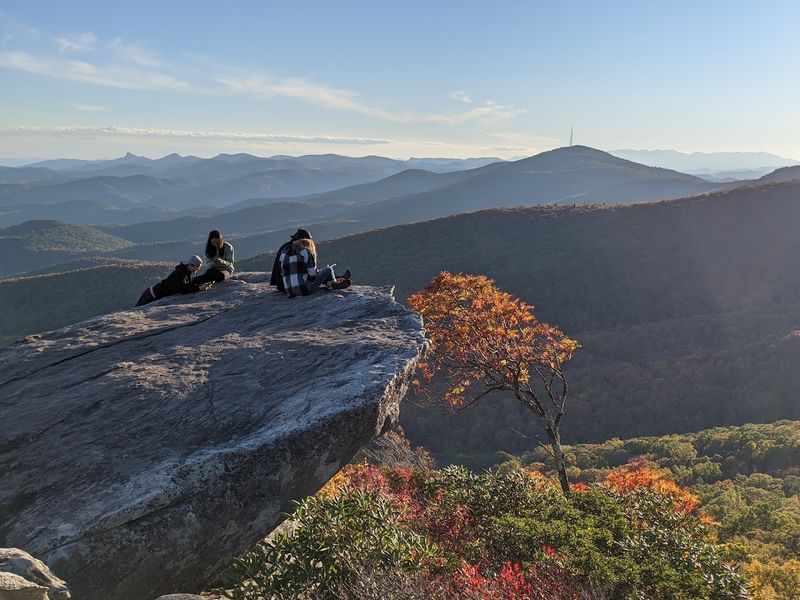
High-country drama arrives fast at Rough Ridge, one of the Blue Ridge Parkway’s most rewarding short walks.
Romantic Asheville explains that the boardwalk is reached after roughly a one-third-mile uphill hike from the parking area at Milepost 302.8. From the top, sweeping views stretch across Grandfather Mountain, the Linn Cove Viaduct, and the distant Piedmont landscape.
Explore Boone also points travelers to the Rough Ridge Overlook start on the Grandfather Mountain portion of the Parkway for big mountain views. The first part of the walk is short, but it climbs, and the rock-and-boardwalk terrain can feel more demanding than the mileage suggests.
That effort is worth it because the scenery opens quickly into classic Blue Ridge layers. Exposed rock, wind-shaped vegetation, and long ridgelines make the view feel wild without requiring a long backcountry approach.
The boardwalk protects fragile high-elevation plants, so staying on the path is important even when photo angles look tempting. Fall foliage can make the area extremely busy, and parking may fill early during peak weekends.
Morning fog sometimes sits in the valleys below, creating a view that feels almost unreal from the ridge. Rough Ridge is short enough for a spontaneous Parkway stop, but the payoff feels like a major mountain overlook.
8. Lake Junaluska Rose Walk
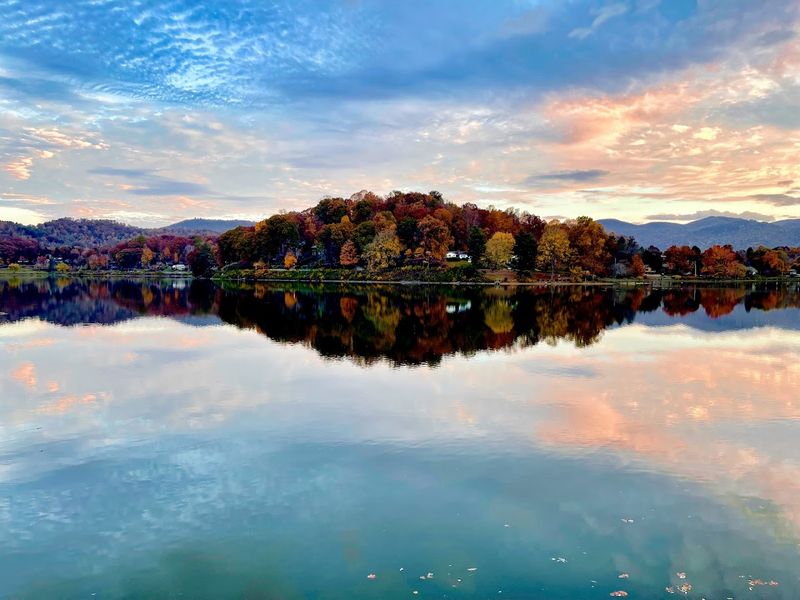
Lake Junaluska proves a scenic walk does not need a summit, a cliff, or a waterfall to feel worth pausing for. The official Lake Junaluska walking trail page lists a 2.3-mile shorter loop and a 3.8-mile longer loop, with a mostly flat, paved route around the lake and historic grounds.
The walking trail guide identifies the Bethea Welcome Center at 91 N. Lakeshore Drive, Lake Junaluska, NC 28745, as a key information point and notes that the Rose Walk features more than 200 hybrid tea roses.
That makes this entry longer than a quick overlook stroll, but the gentle terrain and frequent benches help it feel relaxed rather than strenuous. Views shift between lake water, gardens, footbridges, mountains, and quiet lakeside architecture.
The Rose Walk adds fragrance and color when blooms are active, while the water and ridgelines keep the route scenic even outside peak flower moments. Birdwatchers may enjoy the lake’s calmer edges, and families can shorten the walk by choosing the inner loop.
This is a good choice for travelers who want beauty without rugged footing or a steep climb. Lake Junaluska’s reward is not a single dramatic reveal.
It is the steady pleasure of water, roses, benches, and mountain reflections inviting one pause after another.
9. Morrow Mountain Overlook / Mountain Loop Trail
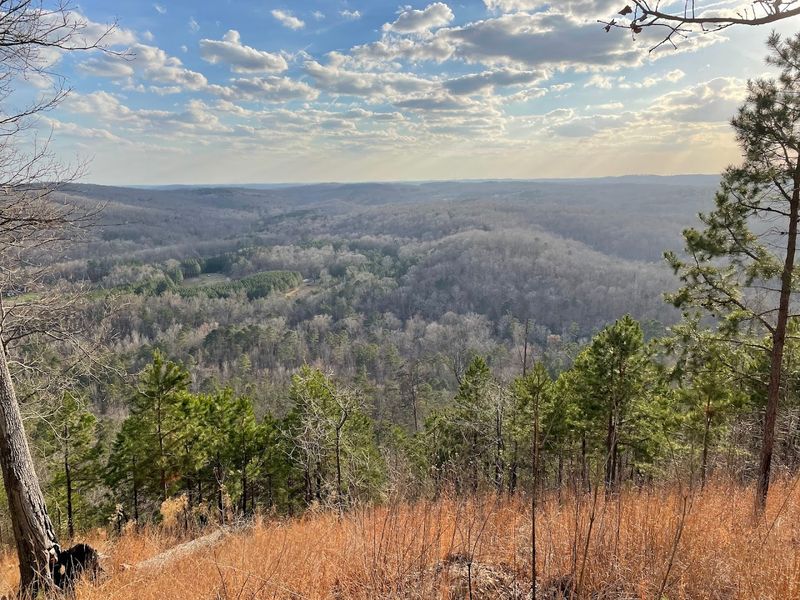
Ancient Uwharrie scenery gives Morrow Mountain State Park a viewpoint with more history than its gentle profile suggests. North Carolina State Parks lists the Mountain Loop Trail as an easy 0.8-mile hiking-only trail, while the broader park address is 49104 Morrow Mountain Road, Albemarle, NC 28001.
This short loop circles the top of Morrow Mountain and gives visitors a simple way to enjoy the summit area without committing to the longer Morrow Mountain Trail that climbs from lower elevations.
The view looks across rolling, worn-down ridges that belong to one of the oldest mountain landscapes in North America, making the overlook feel more subtle than dramatic but deeply satisfying.
Instead of sharp alpine peaks, visitors see rounded hills, forested slopes, and a sense of geologic age that rewards slow looking. The summit area also makes the walk practical for families or travelers who want a scenic stop without a long climb.
Spring wildflowers, summer shade, and fall color each give the trail a different mood. The route is easy, but weather, roots, and uneven surfaces can still affect footing.
Morrow Mountain works because the payoff is not just a view. It is perspective: a short walk across a very old landscape that has been slowly shaped down into quiet beauty.
10. Chestoa View Loop Trail
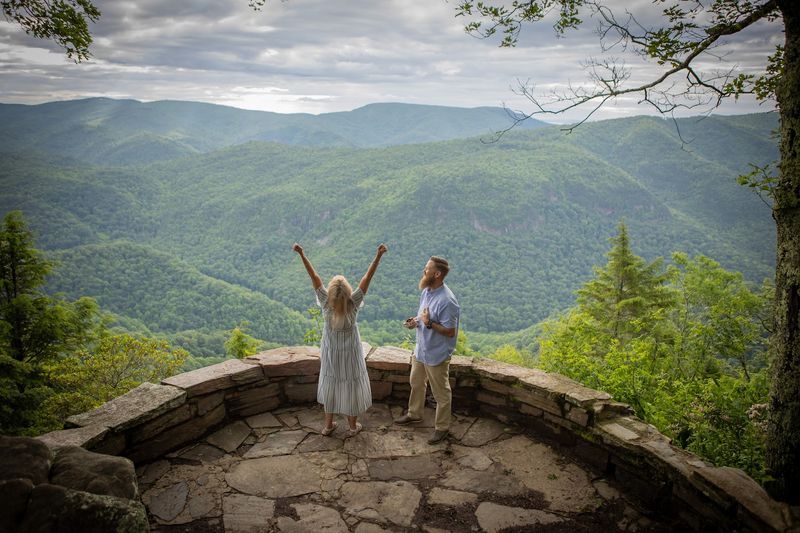
Blue Ridge Parkway travelers who only have half an hour can still get a huge mountain reward at Chestoa View.
At Milepost 320.8, the Blue Ridge Parkway Association describes the Chestoa View Trail as an easy 0.63-mile loop leading to a scenic overlook. Romantic Asheville also characterizes it as a gentle 0.6-mile forest stroll offering views that may include Table Rock and Grandfather Mountain.
The trail sits near Linville Falls and works beautifully as a leg-stretcher between longer Parkway drives. Rhododendron, hardwood forest, and mountain air create a quiet approach before the view opens toward the gorge country.
Because the trail is short, visitors sometimes underestimate it and rush through, but the overlook deserves more time than the mileage suggests. Layers are smart because elevation and wind can make temperatures feel different from nearby towns.
Fall color usually makes this section especially popular, and the views across ridges and valleys can feel almost painted when the leaves are turning. The loop’s length also makes it a good choice for travelers who want a scenic walk without committing to the more demanding Linville Gorge trails nearby.
Chestoa View is proof that the Parkway still has small surprises between its famous overlooks.
11. Tom’s Creek Falls Trail
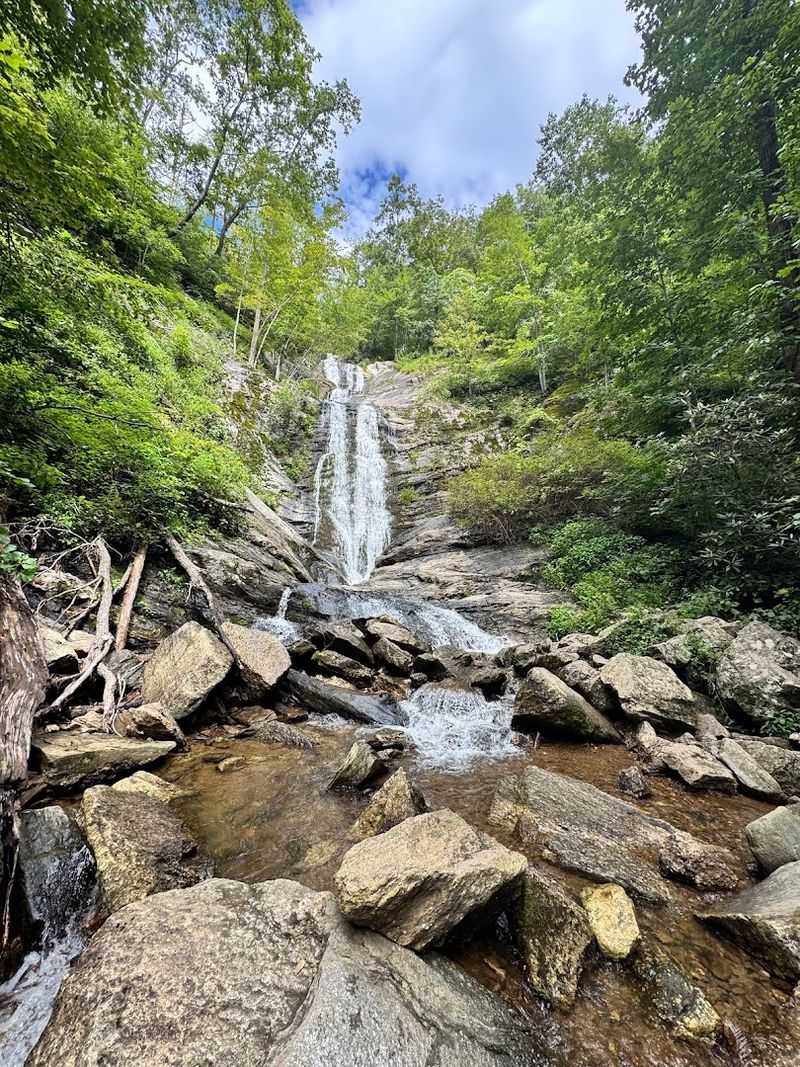
Soft forest light and an 80-foot waterfall make Tom’s Creek Falls one of the most satisfying short waterfall walks near Marion.
Romantic Asheville describes Tom’s Creek Falls as an 80-foot multi-cascade waterfall in Pisgah National Forest reached by an easy one-mile round-trip hike, with the trailhead about 1.2 miles from U.S.
Highway 221. McDowell Trails provides directions using Huskins Branch Road from the Marion area, which is helpful because the access feels more hidden away than some better-known waterfall stops.
The trail follows a shaded forest corridor toward the falls, making the walk feel peaceful before the water comes fully into view. At the end, the cascade drops over layered rock into a small area that feels intimate rather than overwhelming.
An observation deck makes the view easier to enjoy, especially for visitors who want a waterfall experience without a long scramble. This is also a good option for families or travelers who cannot manage longer mountain hikes but still want a real Pisgah National Forest payoff.
The trail can be damp, and waterfall areas are often slick, so steady shoes remain important. Tom’s Creek Falls works because it does not need massive scale to be memorable.
It gives visitors a quiet walk, a clear destination, and a waterfall view that feels wonderfully calm.
12. New Hope Overlook Trail
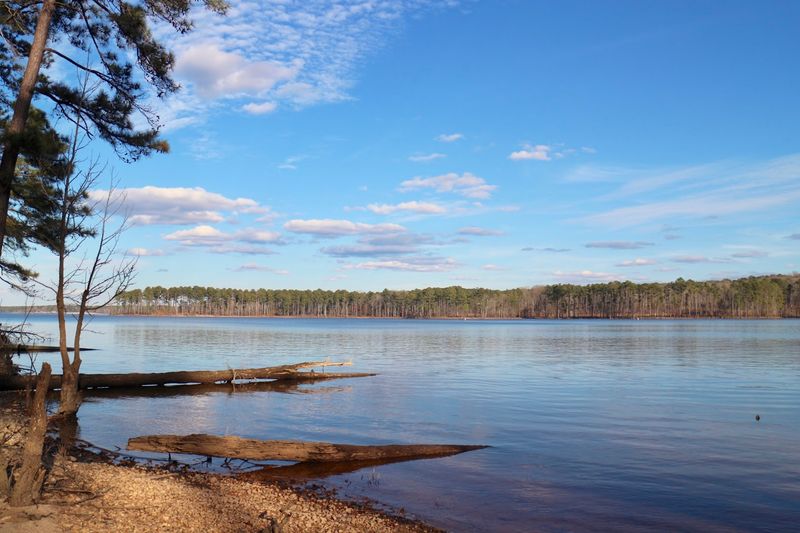
Jordan Lake brings big-water views, but this entry needs a factual adjustment: the marked New Hope Trail is not a quick half-mile stroll.
North Carolina State Parks identifies the New Hope Trail at Jordan Lake State Recreation Area as a 5.4-mile moderate loop. The New Hope Overlook access map also shows a Blue Trail measuring 2.7 miles and a Red Trail extending 5.4 miles from 339 W.H. Jones Road, New Hill, NC 27562.
Even so, the area remains worthwhile for lake views and scenery. Visitors should not expect a compact overlook path unless they plan a very short walk near the access point instead of the full marked trail.
The peninsula setting gives the route strong scenery, with woods, shoreline glimpses, coves, and open water depending on the section chosen. Birdwatchers may enjoy watching for osprey, bald eagles, and other lake species, especially around quieter hours.
The lake can look almost coastal on windy days, with broad water and wide sky replacing the mountain drama found elsewhere on this list. Because the full trail is moderate and longer than the title suggests, water, insect repellent, and realistic timing matter.
New Hope Overlook belongs here only if framed honestly: it is a rewarding lake-view walk, but not one of the shortest options.
13. Clingmans Dome / Kuwohi Observation Tower Trail
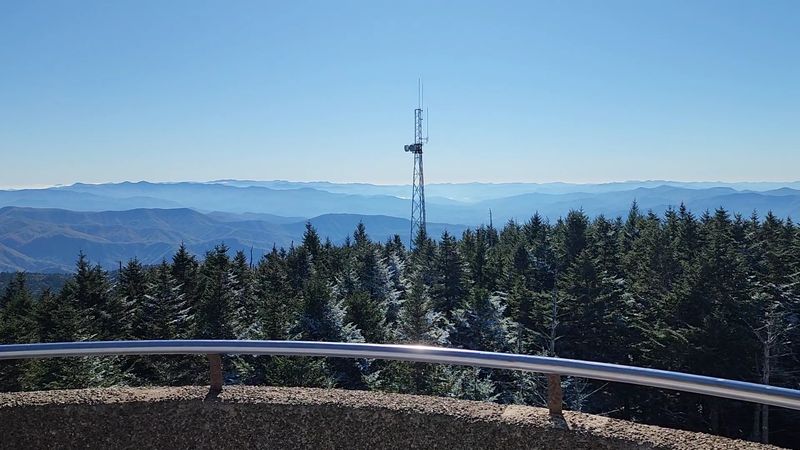
Kuwohi gives North Carolina and Tennessee visitors one of the most famous short-but-steep walks in the Smokies.
Rising to 6,643 feet, the summit formerly known as Clingmans Dome is the highest point in Great Smoky Mountains National Park. A paved half-mile trail leads from the parking area to the observation tower.
Gatlinburg tourism notes that the tower offers 360-degree views of the Smokies and surrounding landscape for those who complete the steep half-mile climb. Great Smokies visitor information also states that pets and bicycles are not allowed on the trail.
The walk is short on paper, but the grade and elevation make it genuinely demanding for many visitors.
Taking breaks is normal, and rushing only makes the climb less enjoyable. At the top, the spiral tower rises above the spruce-fir forest canopy, creating layered mountain views that can stretch for many miles on clear days.
Clouds, fog, and fast-changing weather are common at this elevation, so the view is never fully guaranteed. That uncertainty is part of the mountain experience.
A clear day feels like winning something. A misty day can still feel atmospheric and memorable.
Kuwohi earns its place because the distance is brief, the climb is serious, and the final view can be breathtaking.
14. Dogwood Trail
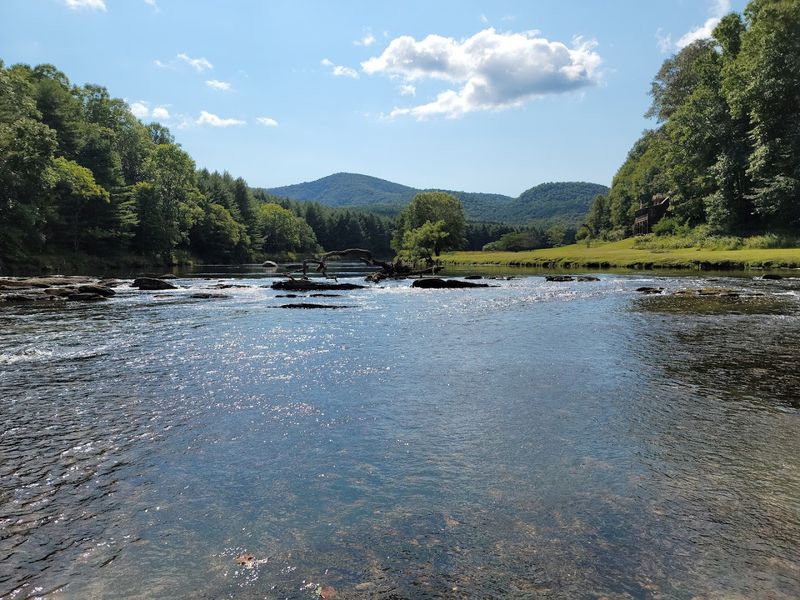
New River State Park’s Dogwood Trail is the shortest walk on this list, so it works best as a gentle river-area pause rather than a dramatic overlook hike.
North Carolina State Parks lists the Dogwood Trail at the U.S. 221 Access as an easy 0.2-mile one-way hiking trail, with the park’s main U.S. 221 access at 358 New River State Park Road, Laurel Springs, NC 28644.
Because the trail itself is so brief, visitors who want more scenery can pair it with nearby U.S. 221 Access trails, picnic areas, and river views.
The park preserves stretches of the New River, a waterway often described as one of the oldest river systems in North America. At the U.S. 221 Access area, visitors will find the main office, visitor center, picnic area, boat launch, and hiking trails.
Dogwood blossoms can make spring especially pretty, while the river corridor stays peaceful in warmer months with trees, birds, and calm water nearby. This is not a big summit moment or a dramatic waterfall finale.
Its reward is quieter: a simple walk, easy footing, access to one of the state’s most beloved river landscapes, and a chance to slow down beside moving water. For visitors who want a truly short nature break, Dogwood Trail fits the bill.