North Carolina’s Most Scenic Hikes You Can Finish In A Day
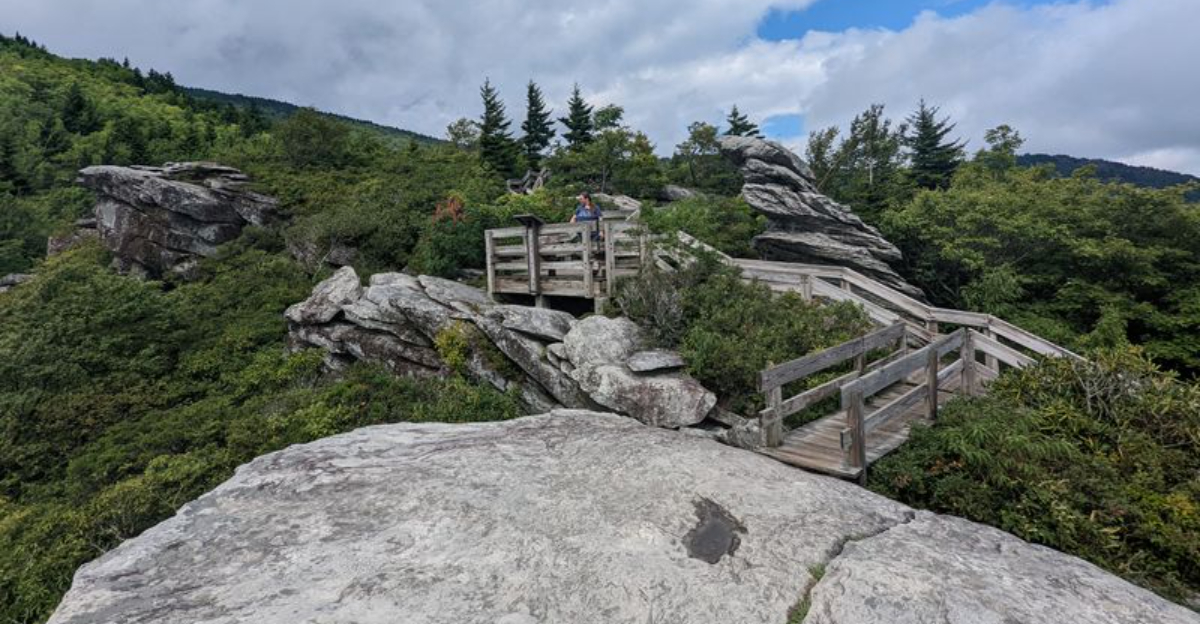
North Carolina’s mountains and coastlines team up to create some of the most breathtaking hiking experiences on the East Coast, and you don’t need to trek for miles to enjoy them.
From waterfalls that feel straight out of a fairytale to granite peaks and sweeping valley views that stop you in your tracks, the Tar Heel State knows how to deliver big scenery in small doses. Whether you’re squeezing in a spontaneous afternoon hike or planning a full day of outdoor fun, these trails reward every step without the need for overnight gear or expert-level stamina.
These hikes pack unforgettable views, fresh air, and just the right amount of adventure, leaving you back at the trailhead with tired legs, a full camera roll, and plenty of daylight to spare.
1. Looking Glass Rock Trail
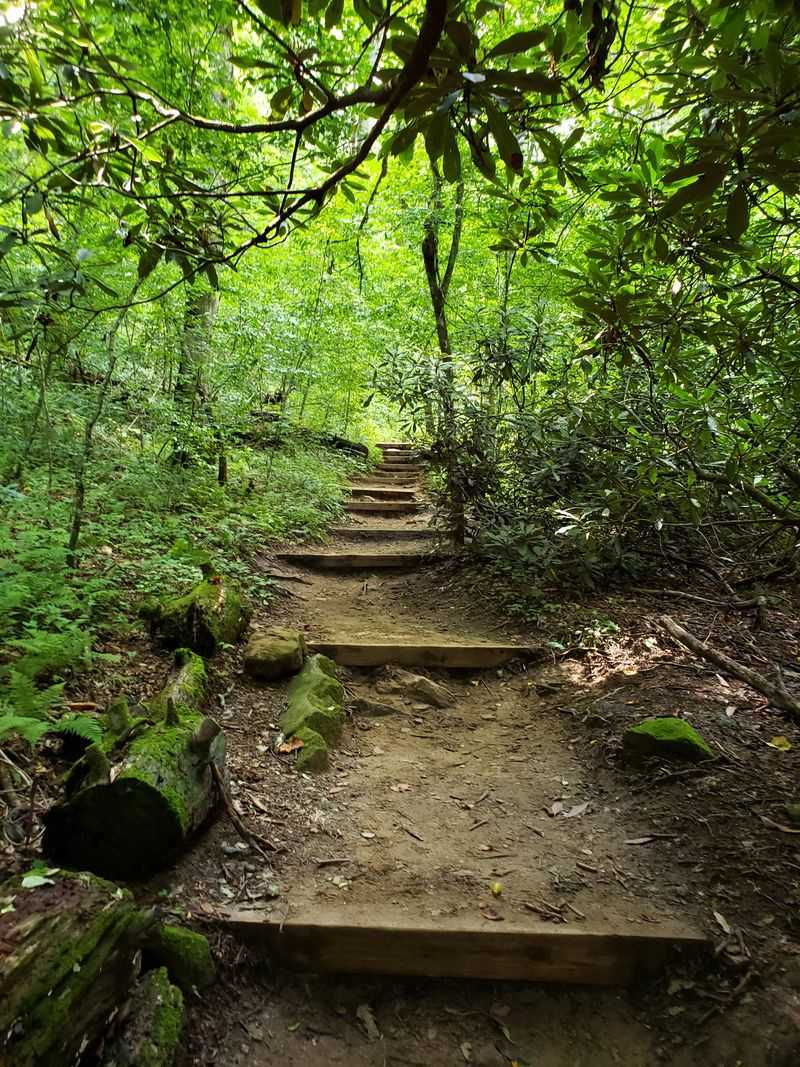
Massive granite faces don’t just appear in national parks out west. This 6.2-mile round-trip at Forest Service Road 475 (off US Highway 276) in the Pisgah National Forest near Pisgah Forest proves North Carolina has its own jaw-dropping geological wonders. Looking Glass Rock rises like a natural skyscraper, its sheer cliff face catching sunlight in ways that make photographers giddy.
The trail climbs steadily through hardwood forests that smell like earth and moss, especially after rain. Rhododendron tunnels create natural archways overhead, their twisted branches forming living sculptures. Intermediate hikers find the elevation gain challenging but manageable, with plenty of switchbacks to ease the burn.
Reaching the summit feels like stepping onto a stage with the Blue Ridge Mountains as your audience. Panoramic views stretch for miles, revealing layer upon layer of misty peaks. On clear days, you can spot landmarks across multiple counties.
The granite dome itself is smooth and warm underfoot, inviting hikers to sit and soak in the accomplishment. Bring extra water and snacks, you’ll want to linger up there. The descent offers different perspectives on the same forest, making the return journey feel fresh rather than repetitive.
2. Linville Falls Trail
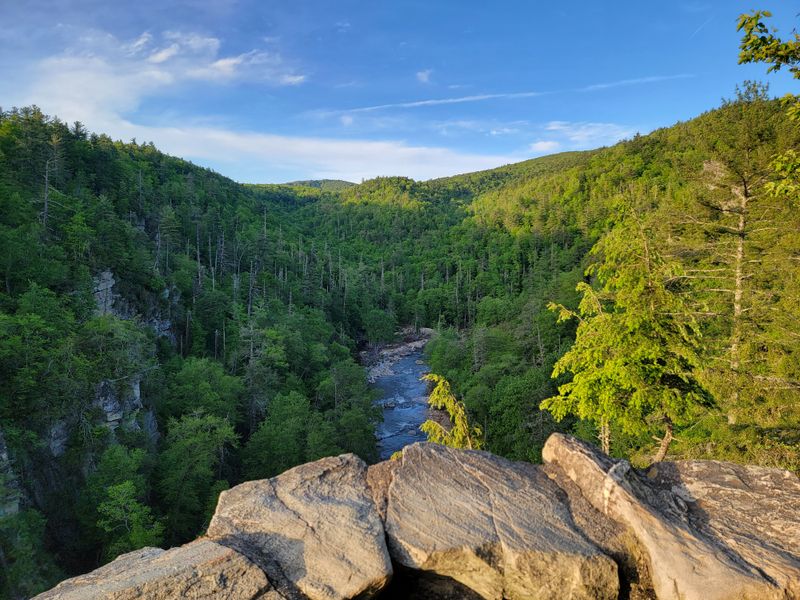
Waterfalls have a way of making everything else fade into the background. Multiple overlooks along this trail showcase Linville Falls from angles that reveal its raw power and beauty. It’s located at Linville Falls Road (near Milepost 316.5 on the Blue Ridge Parkway), in Newland.
The Linville Gorge Wilderness provides a rugged Appalachian backdrop that feels untouched by time.
Pine forests perfume the air with their sharp, clean scent as you navigate relatively easy terrain. Rugged cliffs frame the falls, their rocky faces striped with moss and lichen. Each viewpoint offers something different; some emphasize the falls’ height, others capture the gorge’s dramatic depth.
Accessibility makes this trail perfect for families or anyone seeking beauty without brutal climbs. Wooden overlooks provide safe vantage points for photos and contemplation. The sound of rushing water grows louder as you approach, building anticipation with each step.
Seasonal changes transform the experience entirely, autumn brings fiery foliage, winter adds ice sculptures, and spring swells the water volume. Mist from the falls creates rainbows on sunny afternoons, a natural light show worth timing your visit around. Pack a picnic and claim a spot near one of the overlooks for an unforgettable lunch setting.
3. Stone Mountain Loop Trail
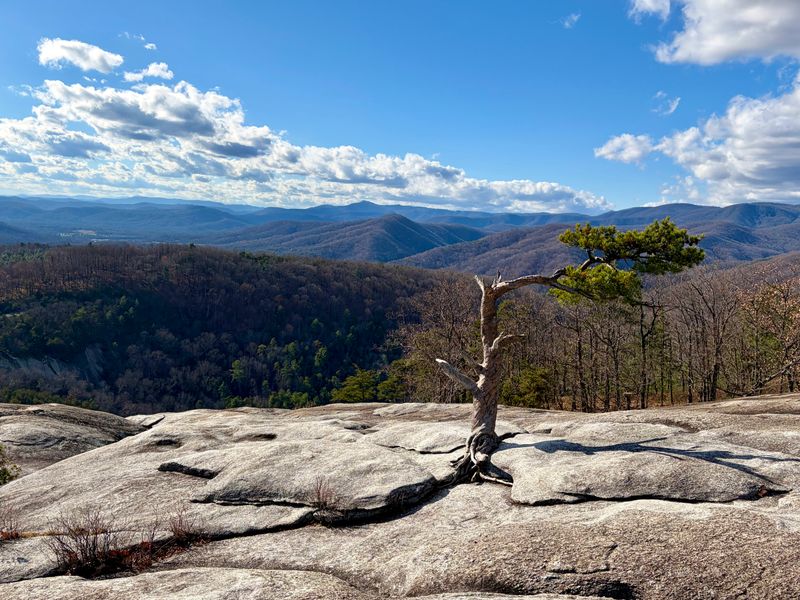
Granite domes seem to have a magnetic pull for adventurous souls. This 4.5-mile loop circles and ascends a massive rock formation that dominates the landscape like a sleeping giant. It’s located within Stone Mountain State Park at 3042 Frank Pkwy, Roaring Gap.
Panoramic views from the summit make every upward step worthwhile, revealing countryside that rolls endlessly toward distant horizons.
Waterfalls punctuate the journey, their cascades providing natural rest stops where you can refill bottles and cool down. Meadows burst with wildflowers during spring and summer, painting the trail edges in purples, yellows, and whites. Historic farm buildings scattered along the route whisper stories of families who carved lives from this challenging terrain.
The variety packed into one loop makes this trail feel like several hikes combined. You’ll traverse forests, cross streams, climb exposed rock faces, and wander through pastoral clearings. Each ecosystem shift brings different birds, plants, and photo opportunities.
Stone Mountain’s smooth granite invites barefoot walking at the summit, just watch for hot surfaces on summer days. The well-rounded nature of this trail means you’re never bored, never stuck with monotonous scenery. It’s a greatest-hits compilation of North Carolina’s natural beauty.
4. Mount Mitchell Trail
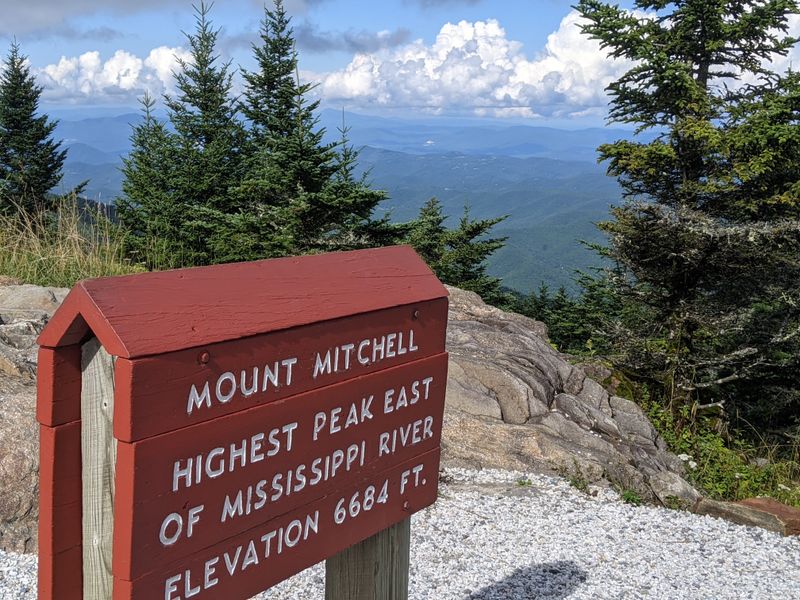
Standing atop the highest peak east of the Mississippi River carries a certain bragging-rights appeal. Mount Mitchell’s summit, at Black Mountain Campground, S Toe River Rd, Burnsville, reaches 6,684 feet, where the air feels thinner, and the temperature drops noticeably. This strenuous trail demands respect but rewards determination with views that justify every labored breath.
Spruce-fir forests create an alpine atmosphere unusual for southern states. The cool climate supports plant communities more commonly found hundreds of miles north. Moss-covered rocks and twisted evergreens give the landscape an almost mystical quality, especially when fog rolls through.
The trail’s difficulty level filters out casual walkers, meaning you’ll share the summit with fellow serious hikers. Incredible views stretch across multiple states on clear days, a perspective that makes you feel on top of the world, literally. The observation tower adds extra elevation for those wanting even more expansive vistas.
Weather changes rapidly at this altitude, so pack layers even if it’s warm at the trailhead. The unique ecosystem includes rare Fraser firs fighting against invasive pests, a conservation story unfolding in real time. Reaching this summit feels like a genuine mountaineering achievement without requiring technical climbing skills.
5. Glen Burney Trail
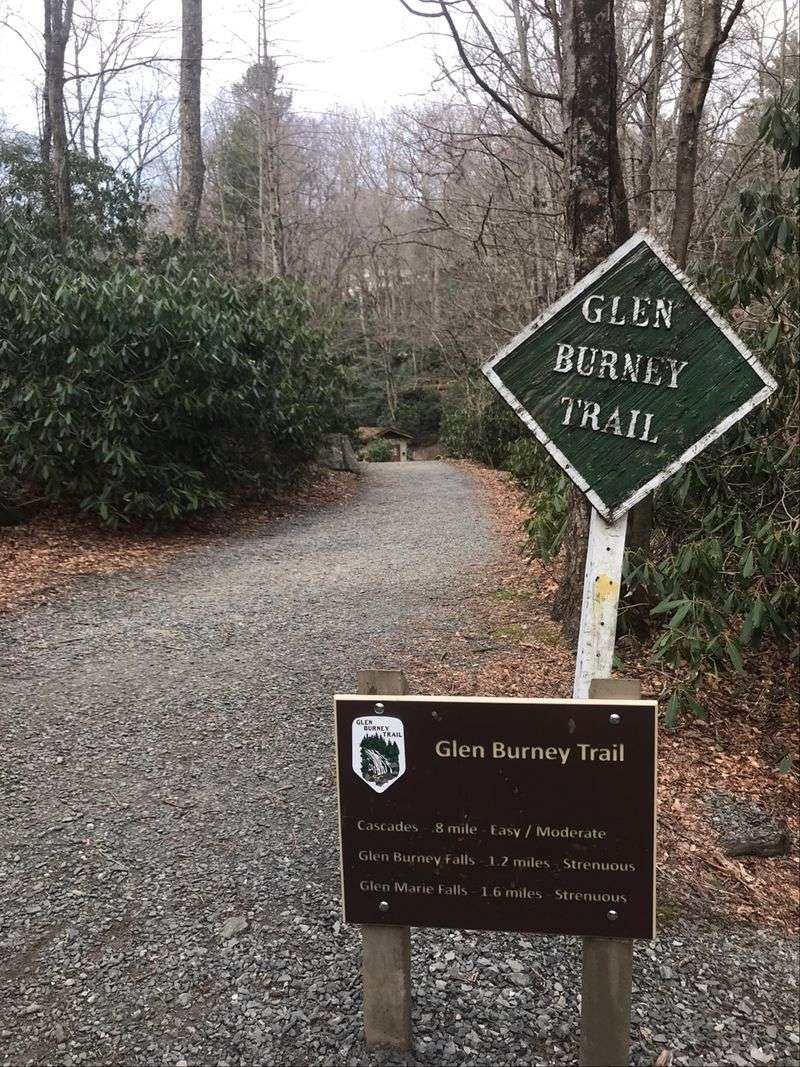
Three waterfalls on a single 2.2-mile trail sounds almost too good to be true. Blowing Rock’s Glen Burney Trail, at 229 Laurel Lane, Blowing Rock, delivers this triple feature with style, each cascade offering distinct character and beauty. Glen Marie Falls greets you first, a graceful introduction to what’s coming.
The steep descent means your knees will remember this hike, but gravity works in your favor on the way down. Glen Burney Falls, the trail’s namesake, crashes over rocks with impressive force, creating a misty microclimate around its base. The Cascades complete the trio with a series of smaller drops that create a staircase of water.
History seeps from the trail’s edges, this area has drawn visitors for generations seeking natural beauty and cool mountain air. The path winds through dense forest that provides welcome shade during the summer months. Wooden bridges and stone steps show thoughtful trail maintenance that enhances rather than detracts from the wild setting.
Remember that what goes down must come up, the return climb gains all that elevation back. Take your time, pause at each waterfall, and let the sound of rushing water wash away stress. This trail packs maximum scenic value into minimal mileage, perfect for mornings or afternoons.
6. Grandfather Mountain Profile Trail
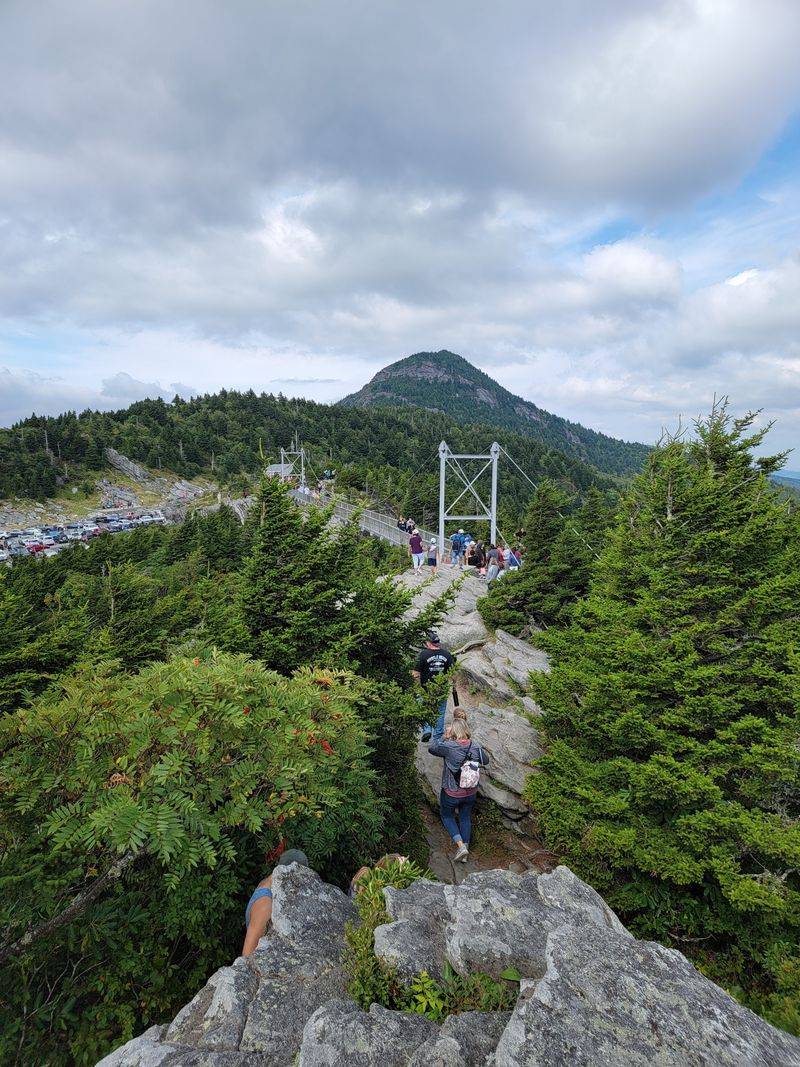
Iconic peaks earn their fame through distinctive shapes that capture imaginations. Grandfather Mountain’s profile resembles a sleeping elder’s face when viewed from certain angles, giving this trail its memorable name. It’s located off N.C.
Highway 105 in Banner Elk. The challenging terrain separates daydreamers from serious hikers, with rocky scrambles and cable-assisted climbs.
Exposed sections demand attention and respect, this isn’t a trail for distracted phone-scrolling. Weather can turn quickly at higher elevations, transforming a sunny hike into a wind-whipped adventure. Views from Calloway Peak reward the effort with 360-degree panoramas that make your heart race for reasons beyond exertion.
Alpine ecosystems thrive in this harsh environment, showcasing plants adapted to cold and wind. The sense of accomplishment upon reaching the summit creates memories that outlast sore muscles. Hikers often describe this trail as one of North Carolina’s most challenging yet satisfying day hikes.
Proper footwear makes a crucial difference on the rocky, uneven terrain, leave the worn-out sneakers at home. The trail’s reputation attracts experienced hikers seeking genuine mountain challenges without multi-day commitments. Clouds sometimes obscure views, but hiking through mist adds dramatic atmosphere that photographs beautifully, even if distant vistas disappear.
7. Craggy Gardens Trail
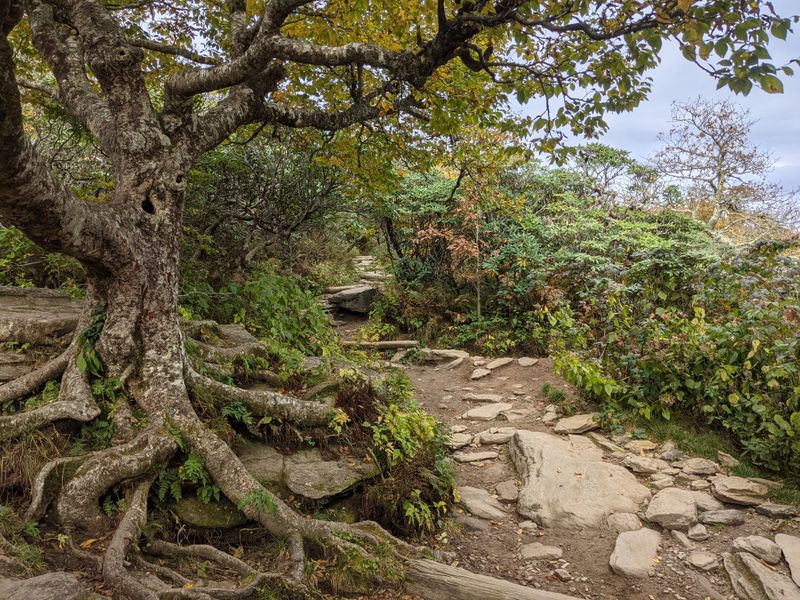
Purple rhododendron blooms transform mountainsides into floral fantasies each June. Craggy Gardens Trail, at Milepost 364.4 on the Blue Ridge Parkway, near Ivy, times its peak beauty with these spectacular displays, creating scenes worthy of fantasy novels. Even without blooms, the trail offers exceptional views along the Blue Ridge Parkway’s most scenic stretches.
The relatively short distance, about 1.4 miles round-trip, makes this accessible to various fitness levels. Grassy balds provide open spaces where you can spread out and enjoy 360-degree mountain views. On clear days, the visibility extends for miles, revealing the folded landscape’s complex geography.
Sunrise and sunset hikes here become almost spiritual experiences, with changing light painting the mountains in ever-shifting colors. The high-elevation location means cooler temperatures even during summer, offering relief from lowland heat. Wildflowers beyond rhododendrons add pops of color throughout the growing season.
Parking fills quickly during peak bloom periods, so early arrival prevents disappointment. The trail’s popularity stems from its accessibility combined with genuinely stunning scenery, a rare combination. Photographers particularly love the foreground-background opportunities created by flowers framing distant peaks.
Pack layers regardless of season, as wind and weather patterns shift rapidly at this elevation, keeping conditions interesting and occasionally challenging.
8. Jockey’s Ridge State Park Dunes Trail
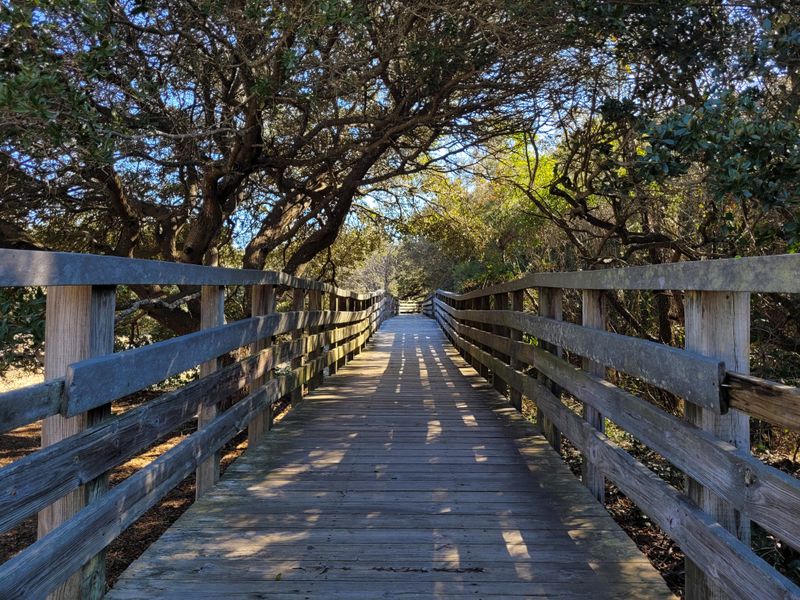
Sand dunes rising 100 feet above sea level create North Carolina’s most unexpected hiking experience. Jockey’s Ridge State Park at 300 W Carolista Dr, Nags Head, protects the East Coast’s tallest natural sand dunes, a landscape more reminiscent of deserts than coastal regions. Walking barefoot across these shifting sands feels like stepping onto another planet, one where ocean breezes sculpt the terrain constantly.
The Tracks in the Sand Trail covers about 1.2 miles through various dune ecosystems. Climbing to the summit requires effort, and sand gives way underfoot, making each step a mini-workout. Views from the top reveal both the Atlantic Ocean and Roanoke Sound simultaneously, showcasing the Outer Banks’ narrow geography.
Kite flyers dot the dunes on breezy days, their colorful creations dancing against blue skies. The wind that shaped these dunes provides perfect conditions for flying, making this a favorite spot for enthusiasts. Hang gliding lessons launch from these slopes, adding aerial excitement to the scenery.
Sunrise and sunset transform the dunes into golden waves frozen mid-motion. The park’s free admission makes it accessible to everyone seeking unusual hiking adventures. Sand gets everywhere, embrace it as part of the experience rather than fighting the inevitable.
9. Black Balsam Knob Trail
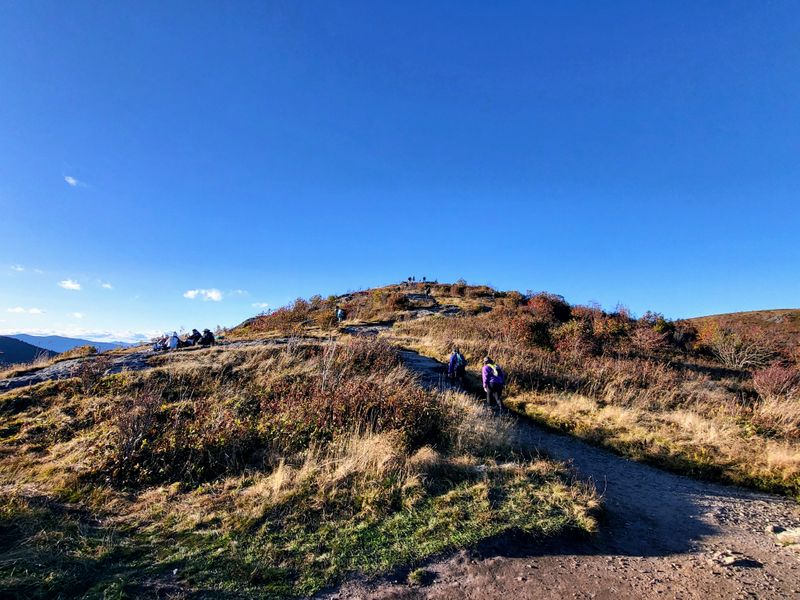
Grassy balds atop mountains create landscapes that feel imported from the Scottish highlands. Black Balsam Knob Trail is located off the Blue Ridge Parkway near milepost 420 (Black Balsam Knob Road/Forest Road 816) in Canton, and accesses some of North Carolina’s finest high-elevation meadows, where trees give way to sweeping grasslands. The relatively easy terrain makes these spectacular views accessible to hikers of varying abilities.
Wildflowers carpet the balds during the summer months, creating natural gardens at 6,000 feet elevation. The 360-degree views encompass layers of mountain ridges fading into blue-gray distance. Sunrise hikes here reveal clouds filling valleys below, making you feel like you’re standing on islands in a white sea.
The trailhead sits along the Blue Ridge Parkway, eliminating long access roads and complicated directions. Short distance, roughly 1.6 miles round-trip, means you can enjoy summit views without a full-day commitment. The exposed nature of balds means weather impacts are immediate and intense, so check forecasts carefully.
Photographers love the ever-changing light and dramatic cloud formations common at this elevation. The trail’s popularity never quite overwhelms the space, balds offer room for everyone to find their own peaceful spot. Winter transforms the landscape into a snow-covered wonderland, though ice and wind require extra caution and preparation during cold months.
10. Pilot Mountain Summit Trail
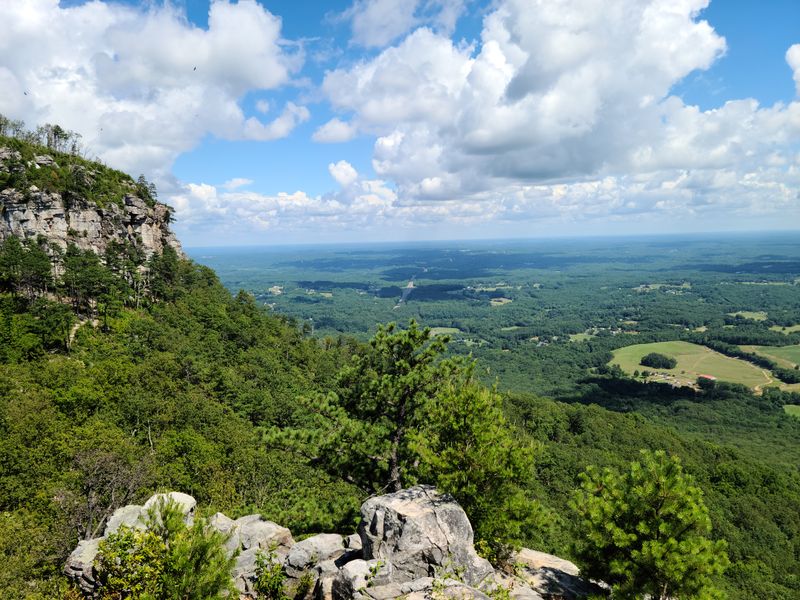
Distinctive peaks become landmarks visible for miles around. Pilot Mountain’s knob rises abruptly from surrounding piedmont landscape, its quartzite pinnacle serving as a natural navigation point for centuries. The summit trail circles this dramatic formation, offering views that justify its landmark status.
The access point for the summit area is the Summit Parking Lot, located at 432 Pilot Knob Park Rd, Pinnacle.
The 0.6-mile Jomeokee Trail loops around the peak’s base, providing accessible hiking with maximum scenic payoff. Rock formations create natural sculptures that photographers and climbers admire from different perspectives. The contrast between the mountain’s rocky summit and the surrounding rolling farmland emphasizes its geological uniqueness.
Longer trail options extend the hiking experience for those wanting more mileage and solitude. The Corridor Trail connects to nearby Hanging Rock State Park, creating opportunities for extended adventures. Educational signs explain the mountain’s formation and ecological significance, adding learning to the scenic experience.
Fall colors transform the surrounding forests into a patchwork quilt of reds, oranges, and yellows. The mountain’s isolation makes it a prominent feature in photographs, standing alone rather than blending into ranges. Sunset views from the summit area create memorable moments, with the sinking sun illuminating the piedmont’s agricultural patchwork.
Families appreciate the short distances combined with impressive natural features that keep children engaged and excited throughout the hike.
11. Rough Ridge Trail
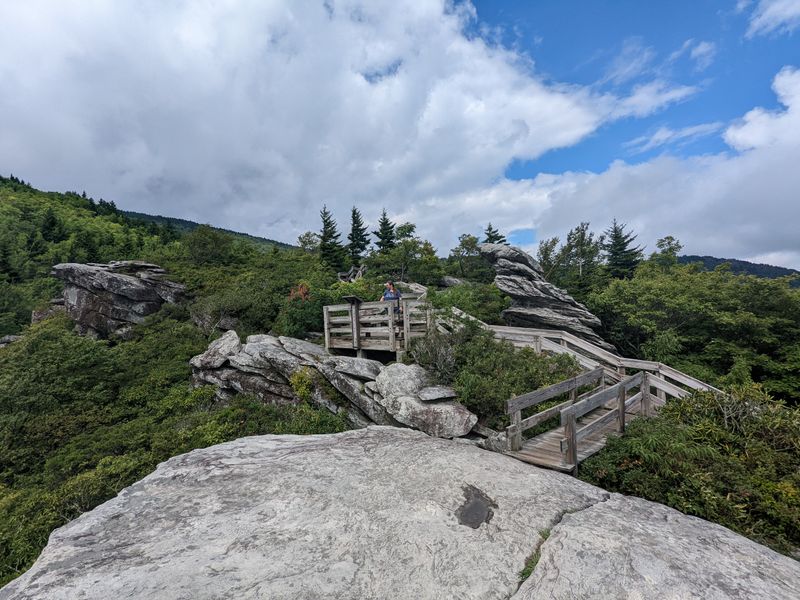
Boardwalks protecting fragile alpine ecosystems make scenic summits accessible to almost everyone. Rough Ridge Trail, at Milepost 302.8 on the Blue Ridge Parkway near Blowing Rock and Linville, features a wooden walkway that climbs to stunning overlooks without the knee-punishing scrambles of many mountain trails. Accessibility meets beauty in this thoughtfully designed hiking experience.
The short 1-mile round-trip distance packs remarkable views into minimal time and effort. Wooden platforms provide safe viewing spots where families can gather for photos and snacks. The trail’s design protects rare plant communities while allowing visitors to experience high-elevation environments.
Views encompass Grandfather Mountain, the Linn Cove Viaduct, and countless ridges marching toward distant horizons. The viaduct’s engineering marvel becomes art when seen from above, its curved concrete ribbon following the mountain’s contours. Sunrise and sunset create optimal lighting for photography, with alpenglow painting the peaks in warm hues.
Wildflowers bloom in protected areas alongside the boardwalk, showcasing species adapted to harsh mountain conditions. The relatively easy access means this trail gets crowded during peak seasons and weekends. Midweek visits or early morning hikes offer more solitude and parking availability.
Despite its popularity, the trail maintains its natural beauty, proving that accessibility and conservation can coexist successfully when trails are designed thoughtfully.