Once-Beloved California Foods Locals Say Are Nearly Impossible To Find Now
California has always been a place where food trends are born and flavors run wild.
But not every beloved snack survives the test of time.
Some of the Golden State’s most cherished treats have quietly disappeared from shelves, leaving behind only memories and empty pantry spaces where magic once lived.
Mother’s Circus Animal Cookies with Red Frosting
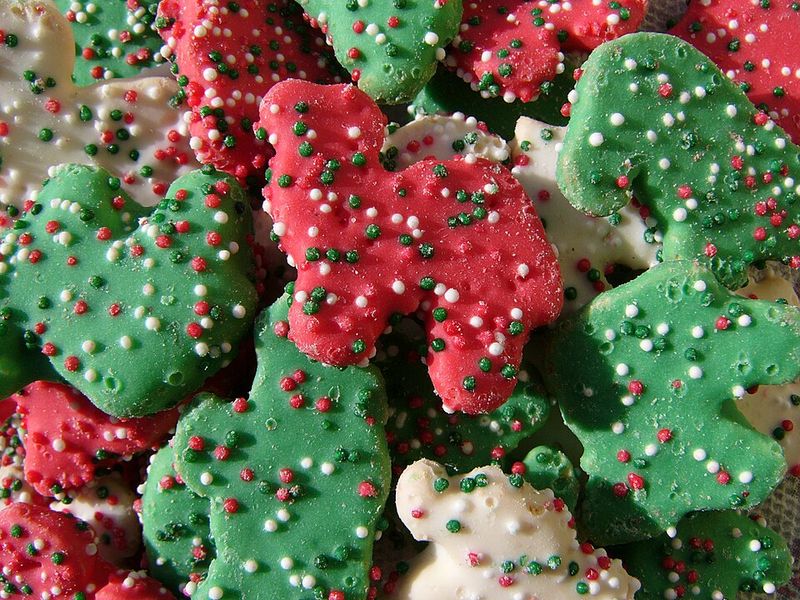
This wasn’t just another cookie, it was a childhood ritual wrapped in pink and red frosting.
Mother’s Circus Animal Cookies with Red Frosting were the snack you’d beg your parents for at the grocery store, the ones you’d eat while watching Saturday morning cartoons.
The red-frosted version had this subtle cherry hint that made it taste different from the plain pink ones, almost like it had a secret ingredient only kids could detect.
But sometime in the late 1990s, those red beauties vanished without warning, leaving shelves stocked only with their pink siblings.
Now you’ll find old-timers wandering supermarket aisles, scanning for that distinctive red frosting that never shows up.
It’s-It Ice Cream Sandwiches (Original Flavor)
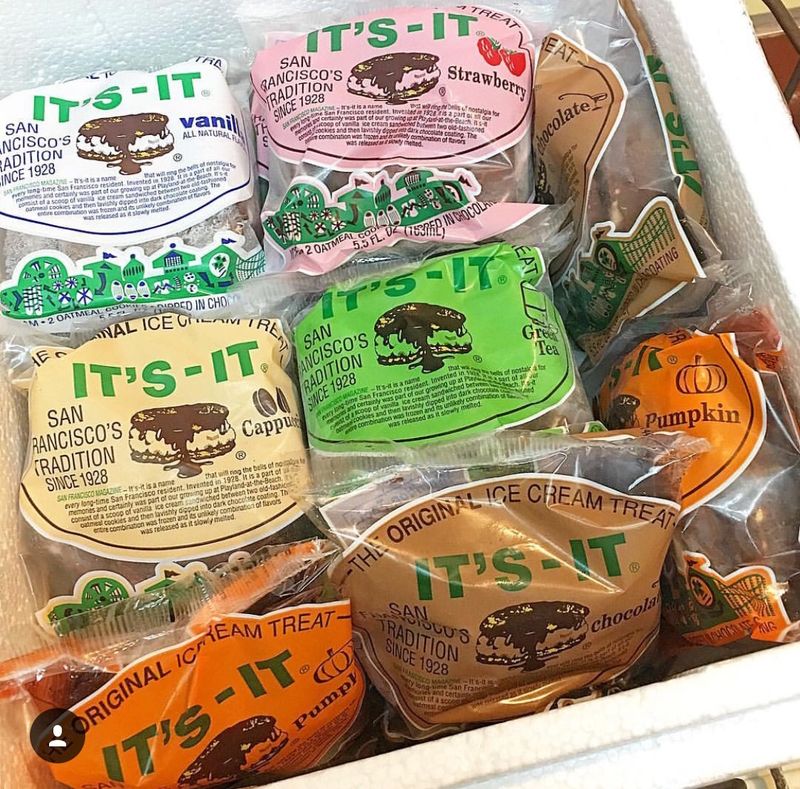
When George Whitney invented these at Playland-at-the-Beach in 1928, he created something revolutionary.
It’s-It Ice Cream Sandwiches with their chocolate-dipped oatmeal cookies and vanilla ice cream became a San Francisco institution.
But locals swear the original formula, made with local dairy that gave it a fresher, creamier taste, has changed over the decades.
The company still exists and sells various flavors, but purists claim that authentic Playland magic, that specific texture and dairy richness, disappeared when production scaled up.
Finding one that tastes like the boardwalk original feels impossible now, even if the brand survives.
Hangtown Fry
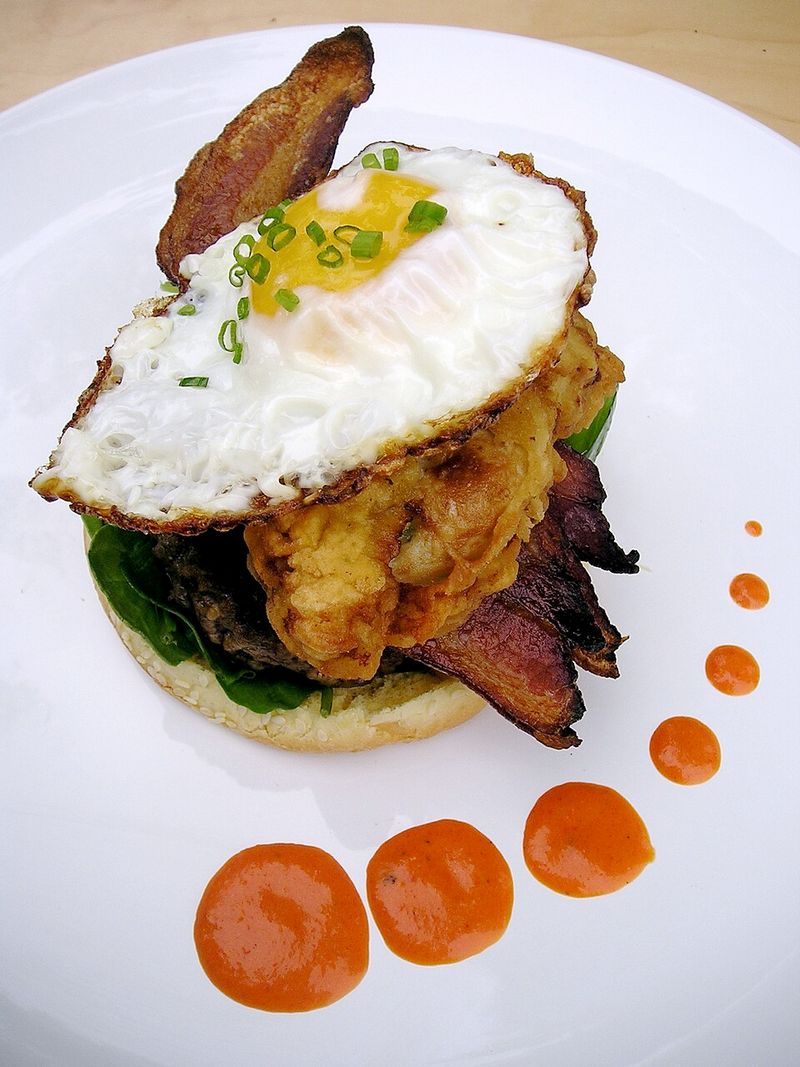
This dish punched me awake like a fistful of gold dust from California’s frontier.
Hangtown Fry is a legendary scramble of oysters, eggs, and bacon that once defined Gold Rush indulgence.
Walking into a diner that still offers Hangtown Fry feels like stepping into a dusty saloon where the menu is etched in saloon‑wood grain and reputation.
I ordered one just to see if history could still hit my taste buds as hard as the miners swung their picks.
The oysters arrived plump and briny, sizzling beside crisp bacon that snapped under my fork like old photographs cracking under the weight of memory.
Every bite of Hangtown Fry carried the stubbornness of a miner refusing to leave a claim, salty sea, smoky pork, and soft egg yolk colliding in a flavor explosion.
At one point I paused mid‑chew, stared down at the plate, and wondered whether I was tasting breakfast or a time machine.
It’s messy, loud, and unashamed, the kind of food that challenges your manners and wins.
I smirked at the idea of polite dining as I mopped yolk from my chin, realizing Hangtown Fry isn’t about decorum.
It’s raw energy, frontier spirit, and a culinary kick in the pants.
By the time I pushed the plate away, I felt like I had earned a gold nugget, or at least the breakfast equivalent.
Crab Louie Salad
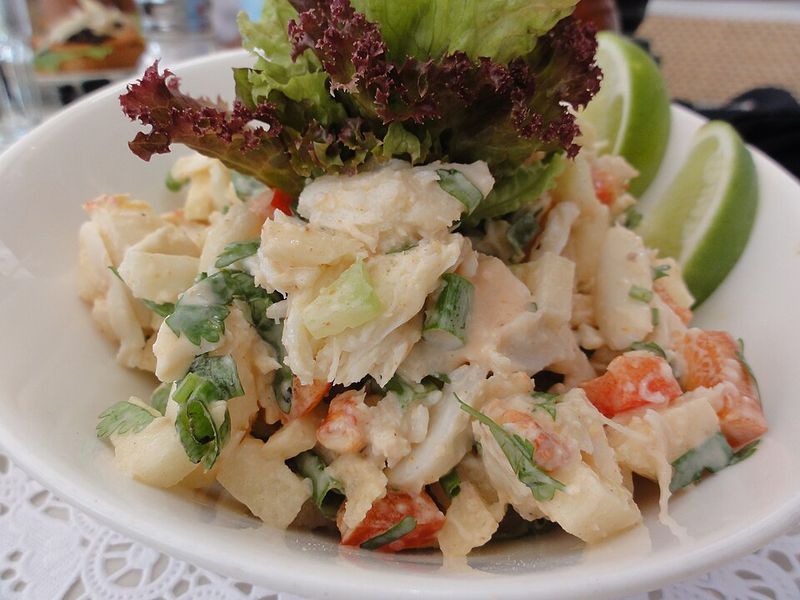
When mid‑century Californians wanted to show off status, they ordered this classy coastal concoction.
Crab Louie Salad was once the go‑to for anyone aiming to taste the Pacific breeze on a plate.
I stumbled onto one during a nostalgic late lunch, drawn by a faded sign promising “Crab Louie Since 1947.”
The crab meat flaked apart under my fork like delicate sea clouds, mingling with crisp lettuce, hard‑boiled eggs, and tangy dressing that smelled of salt air and summer afternoons.
Every forkful of Crab Louie Salad felt like dining on a postcard sent from the harbor, light, briny, and a little wistful.
The dressing pooled softly under the greens, offering a whisper of acidity that made the crab shine instead of hiding it.
I watched seasoned diners nod approvingly nearby, they knew Crab Louie Salad wasn’t a salad.
It was a declaration: bright seafood freshness, unpretentious decadence, and a fading slice of coastal California glamour.
I couldn’t help but compare it to modern salads drowning in kale and quinoa.
Crab Louie Salad made me pine for unapologetic flavors that don’t hide behind health trends.
I finished every shred of crab, half a glance out the window, and a secret wish I’d discovered it earlier.
That salad left me longing not for dessert, but for the sea.
Olallieberry Pie
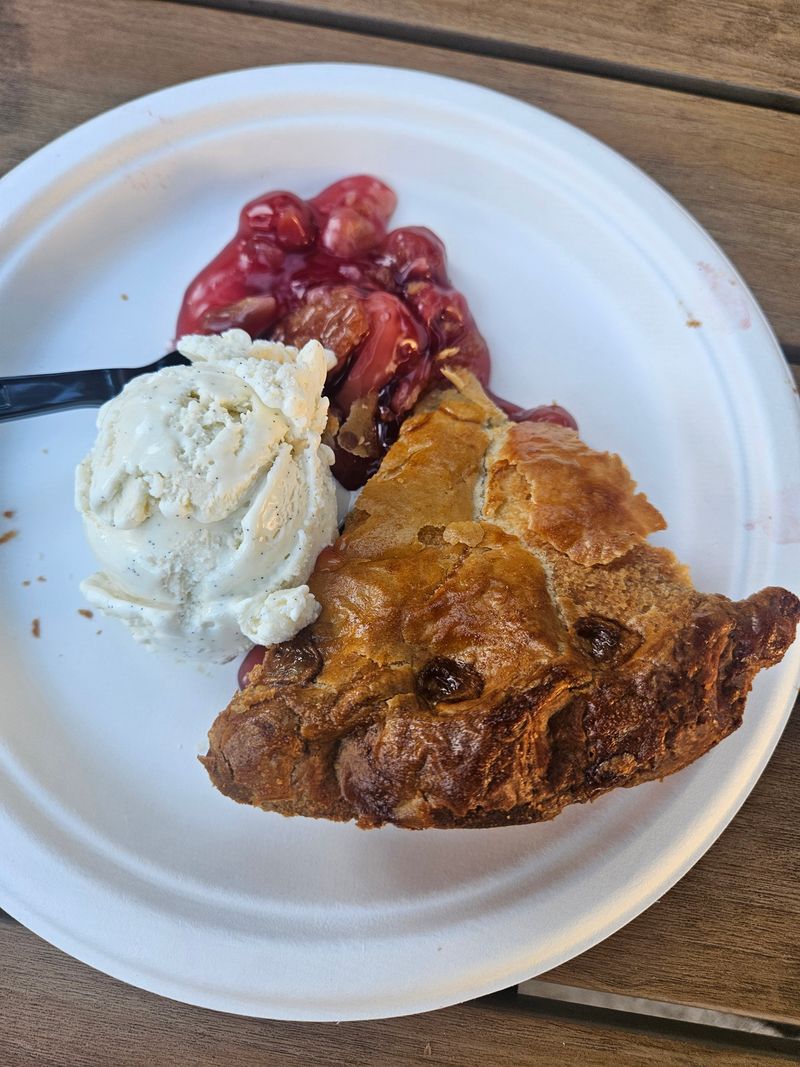
However, not all lost flavors come from grand seafood platters, some hide in humble fruit‑filled slices.
Olallieberry Pie hits the nostalgia nerve like a sunrise over a Santa Cruz orchard.
I found a dusty chalkboard sign at a roadside cafe reading “Olallieberry Pie, today only.”
That name alone made me sprint inside, the scent of warm crust and tangy berry perfume chasing me through the door.
The filling bubbled thick and dark, each olallieberry bursting like a miniature firework of sweet‑tart juice against my tongue.
The crust held firm with a gentle crunch before surrendering to velvety fruit beneath.
With the first bite of Olallieberry Pie, I remembered summers spent chasing farm‑stand berries under sun‑blasted skies.
No other pie felt quite as rebellious, not apple, not cherry, not blueberry.
Olallieberry Pie carried California’s scattered memories in each slice.
It tasted of dusty fields turned ripe overnight, of hands stained purple and smiles sticky with juice.
I savored the contrast: sugar balanced by tartness, crust firm but yielding, berries alive.
By the time I licked the last smear off the plate, I felt like I’d swallowed a piece of fading heritage, and I didn’t regret it.
Santa Maria–Style Barbecue
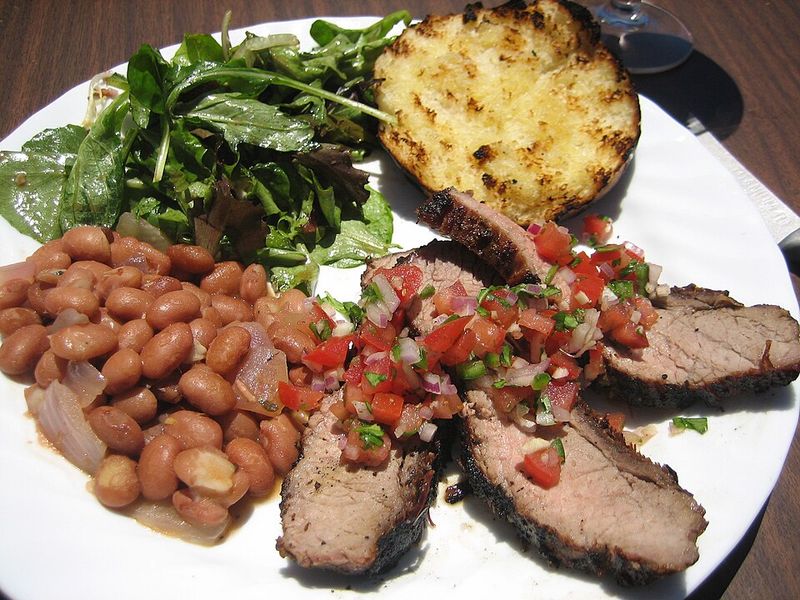
When barbecue gets serious, it means Santa Maria–style.
This Central Coast classic combines oak‑smoked tri‑tip, pinquito beans, and grilled bread into a symphony of smoky perfection.
I stumbled upon a roadside joint at 123 Main St in Santa Maria, lured by the scent of wood smoke that hit harder than a drum solo.
The tri‑tip arrived thinly sliced, edges caramelized, tender meat practically begging me to eat faster than manners allowed.
Pinquito beans sat alongside like loyal sidekicks, their earthy, nutty flavor grounding the smoky meat.
Grilled bread soaked up juices like a sponge in slow motion, each bite messy and divine.
Every forkful screamed heritage and unapologetic flavor, the kind of meal that makes you reconsider every sad backyard grill you’ve ever witnessed.
I wiped sauce from my fingers and grinned, fully aware I’d just experienced barbecue mastery without needing a passport.
Santa Maria–style barbecue is loud, proud, and relentless in the best way possible.
It’s tradition served on a plate, daring you to show up and keep pace with its smoky swagger.
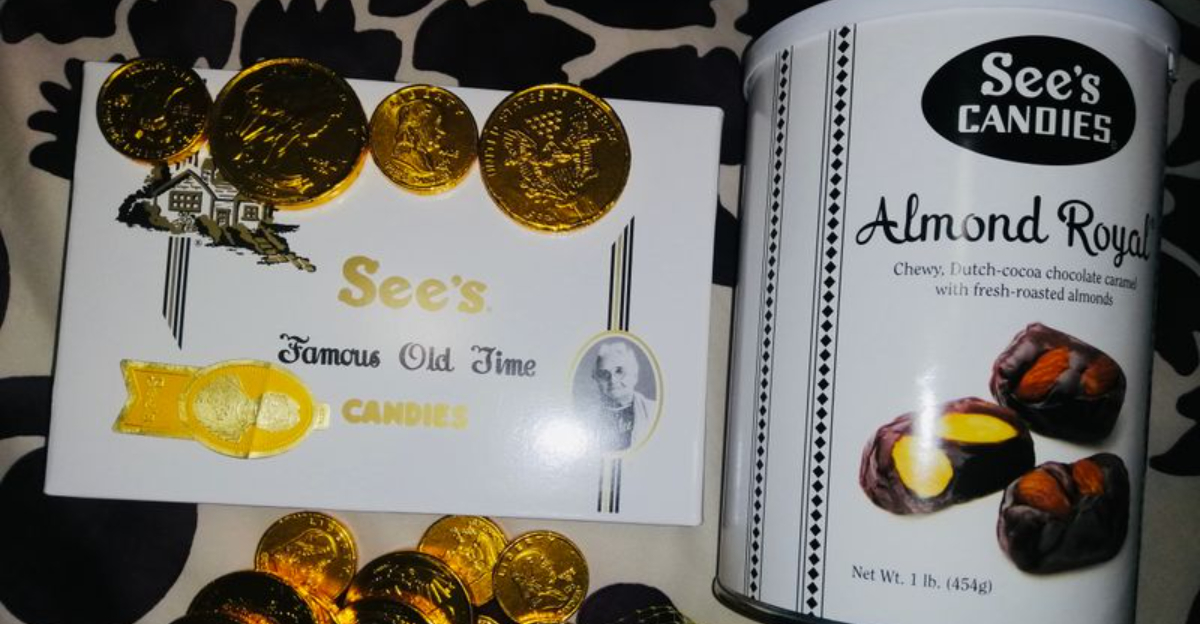
See’s Candies Almond Royal (Original Size)
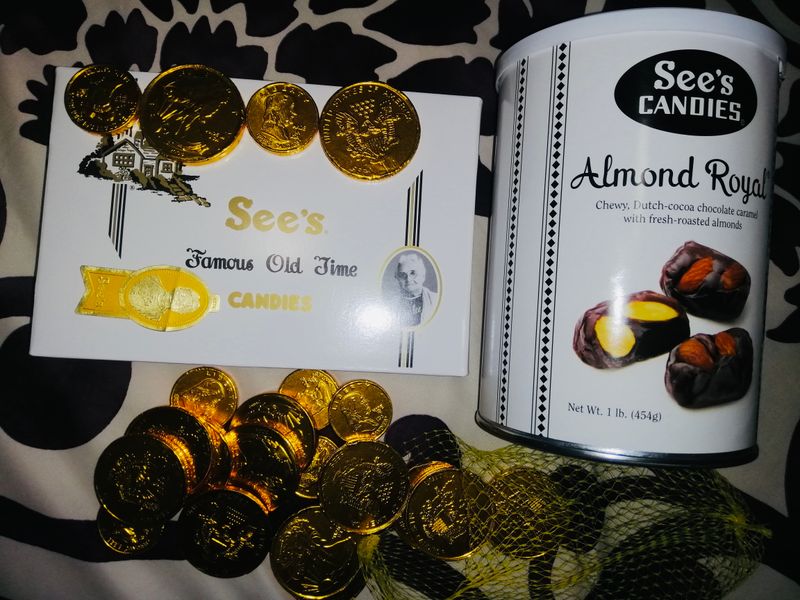
Mary See started her candy empire in 1921, and the Almond Royal became one of her signature creations.
See’s Candies Almond Royal combined milk chocolate, almonds, and buttery toffee in chunks that used to be significantly larger than what you find today.
Over decades of production adjustments, the pieces have gradually shrunk, and some customers swear the chocolate blend has changed too.
While See’s remains a California institution with shops throughout the state, hunting down those generous original-sized Almond Royals from decades past is impossible.
The flavor’s still good, but the experience just isn’t as decadent as it once was.
Foster Freeze Original Soft Serve Formula
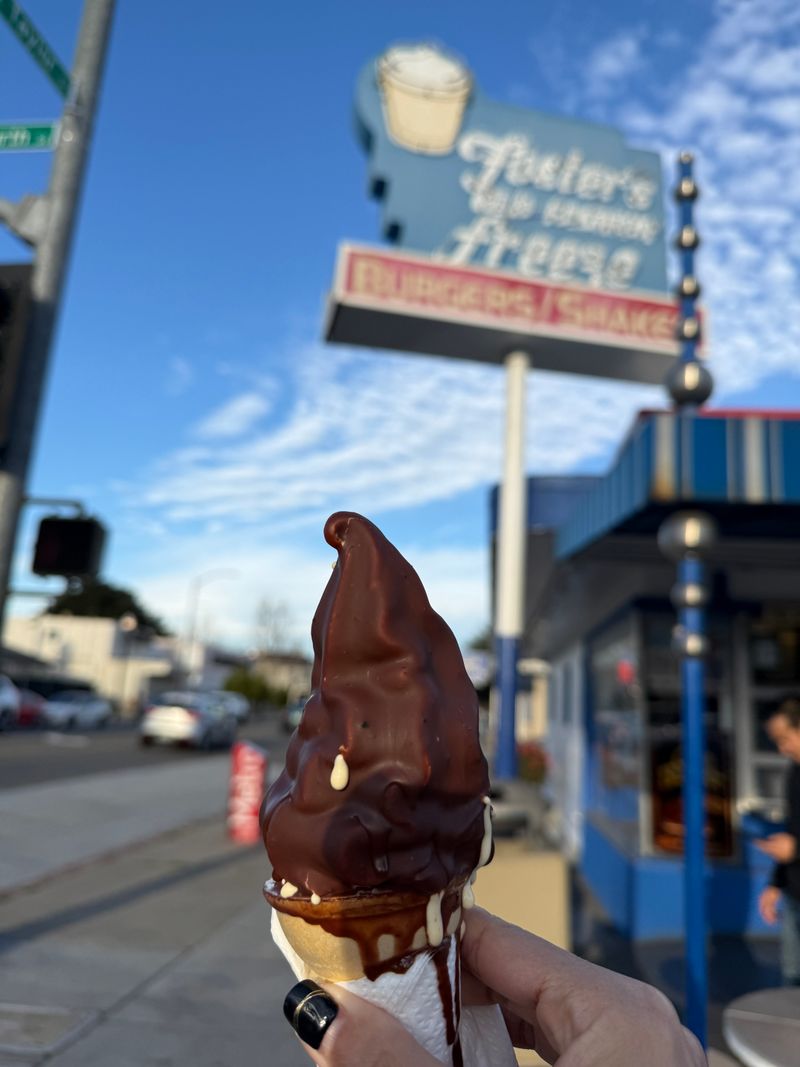
George Foster invented a revolutionary soft-serve machine in 1946 and launched Foster Freeze across California.
Foster Freeze Original Soft Serve Formula had a distinctive texture, denser and creamier than modern soft serve, with a vanilla flavor that wasn’t too sweet.
The original formula used specific dairy ratios and freezing techniques that made it melt slower and taste richer than competitors.
As franchises changed hands and supply chains modernized, that exact formula got lost in the shuffle of corporate standardization.
Some locations remain open, but tracking down one that still uses the authentic 1940s recipe is nearly impossible now.
Original Tommy’s Chili (Pre-Expansion Recipe)
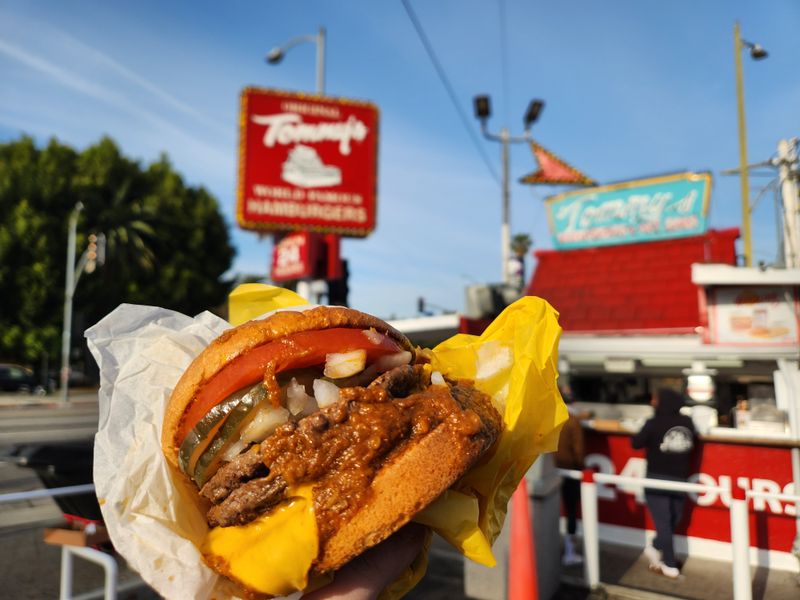
Tommy Koulax opened his tiny hamburger stand in 1946 at Beverly and Rampart in Los Angeles.
Original Tommy’s Chili became legendary, thick, meaty, slightly spicy, with a flavor complexity that made people drive across the city for a chili burger.
When Tommy’s expanded into a chain, some devoted fans noticed subtle differences in the chili’s consistency and spice level between locations.
The original stand still operates at 2575 Beverly Boulevard in Los Angeles, but even there, long-time customers debate whether the recipe has shifted slightly over seven decades.
Finding that exact 1946 formula, unchanged by time and expansion, remains a quest for chili purists.
Knudsen’s Cottage Cheese (Small Curd Original)
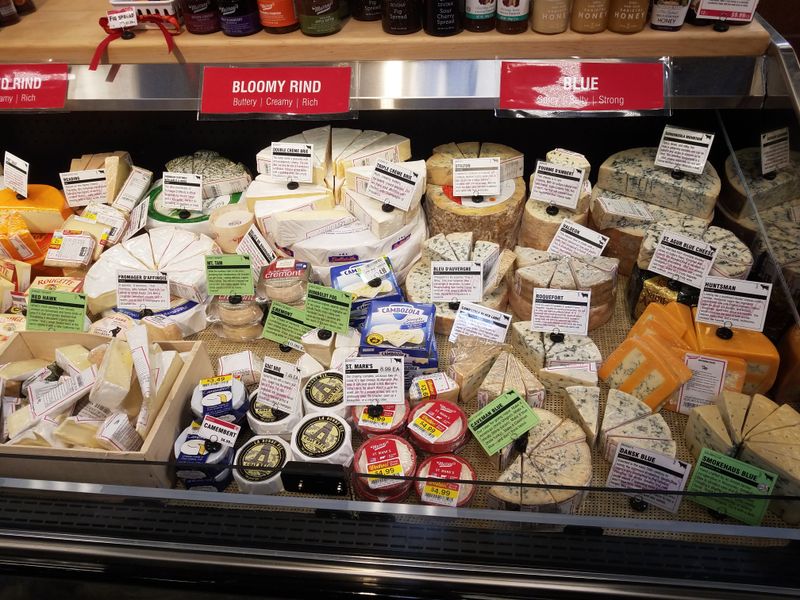
Before Greek yogurt took over, cottage cheese was California’s healthy dairy obsession.
Knudsen’s Cottage Cheese in its small curd original version had a creamy consistency and mild tang that made it perfect for fruit salads and late-night snacking.
The Knudsen family started their dairy in 1929, building a reputation for quality that made their cottage cheese a staple in California refrigerators.
After corporate acquisitions and production changes, the texture and flavor profile shifted, becoming blander and less distinctive.
Finding that authentic small curd texture with the original tangy richness feels impossible in today’s mass-produced dairy aisle.
Helm’s Bakery Truck Goods
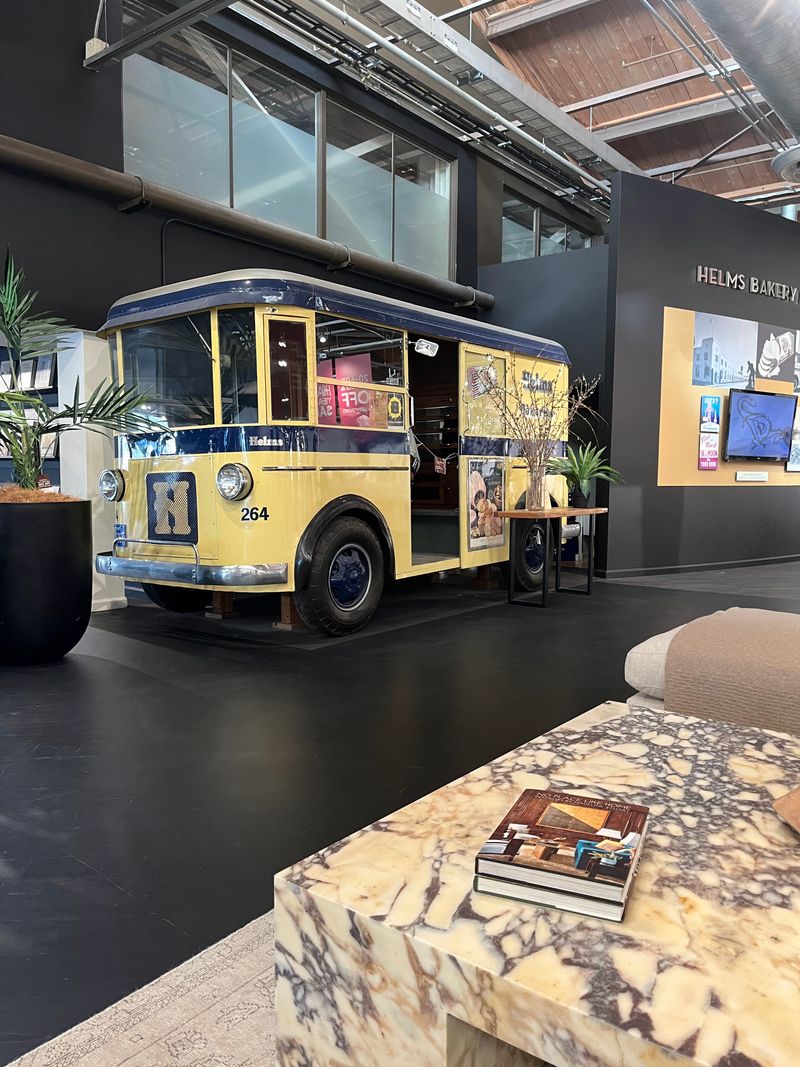
From 1931 to 1969, the Helm’s Bakery trucks were a magical daily presence in Southern California neighborhoods.
Helm’s Bakery Truck Goods included fresh bread, donuts, and pastries delivered right to your door, with that just-baked warmth still radiating from the wooden drawers.
The distinctive whistle would send kids running from their yards, clutching coins for a treat that tasted infinitely better than anything store-bought.
When Helm’s closed in 1969, an entire generation lost their direct connection to fresh-baked perfection, and no modern bakery delivery service has captured that same magic.
Those flavors exist only in memory now, impossible to recreate or find.
Cioppino
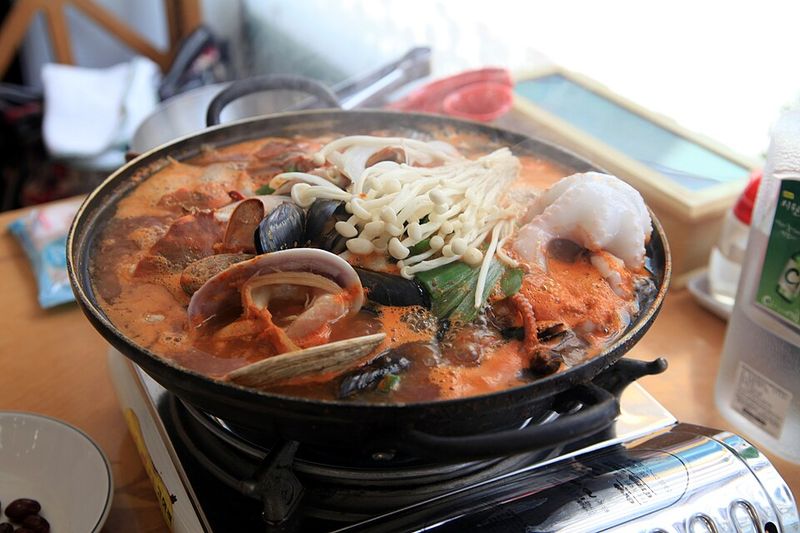
Did any stew carry more salty swagger from San Francisco’s old fisherman docks than this one?
Cioppino is a seafood stew born where immigrant hands met ocean bounty in crowded wharfs and crowded hearts.
I tracked down a tiny coastal tavern claiming “Cioppino since 1906”, the smell hitting me even before I crossed the threshold.
Steam rose from the bowl in lazy curls as I dug in, revealing shrimp, crab, clams, and fish chunks lounging in a tomato‑wine broth that tasted like salt wind and long talk after tide calls.
Every spoonful of Cioppino slapped me awake: briny water, rich tomato, garlic heat, a chorus of sea creatures singing in unison.
The seafood came tender but resilient, each bite distinct, not mashed into anonymity under heavy sauces.
Cioppino felt like a conversation between ocean and kitchen, with each ingredient contributing its own accent.
I closed my eyes mid‑sip and could almost hear the gulls above the waterfront, the gulls that watched generations haul nets and dreams from the Pacific.
This wasn’t fusion. This was heritage simmered slow, served loud.
I left that bowl empty, fingers tinged with broth, senses buzzing with salt and memory.
Walking back onto the street, I carried a taste of disappearing San Francisco, bound in tomato, garlic, and seafood grit.