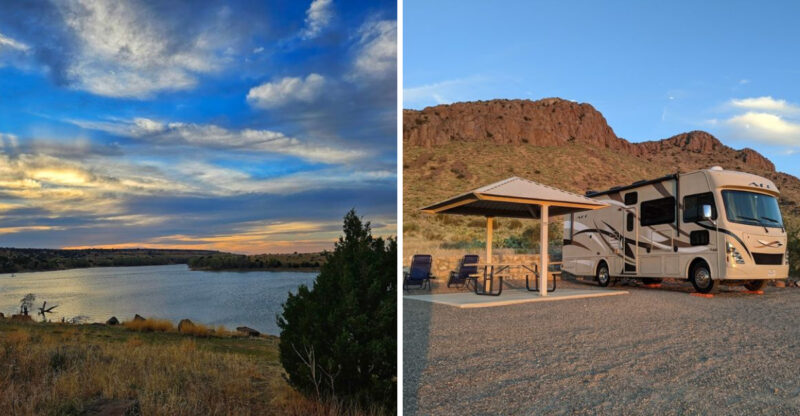
One Lost New Mexico Town Still Holds The Echoes Of A Forgotten Past
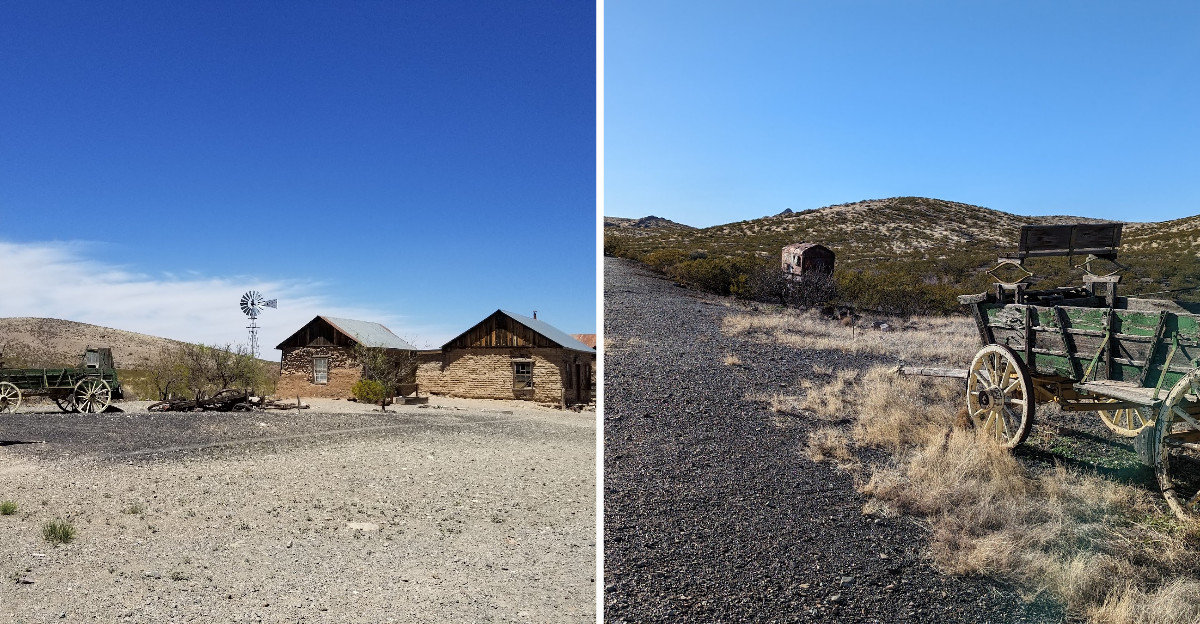
I thought this New Mexico ghost town would be a quick stop for a few old buildings and dusty photos. Then the stories started getting ridiculous.
The town changed names four times, chased silver riches, survived a famous diamond hoax, and welcomed stagecoaches through the desert.
Billy the Kid may even have worked here for a short time. That history made me slow down and look at everything differently.
The buildings still feel rough around the edges, and a family continues to care for the property today.
I came expecting an abandoned town. I left wondering how one tiny place managed to collect this much drama.
A Town With Many Names
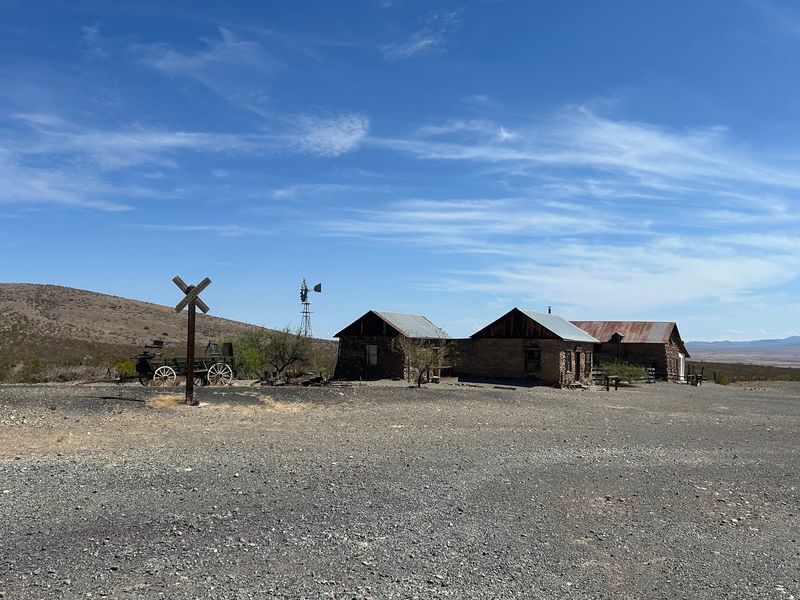
Some towns keep one name forever, but this one tried on several. The spring and stage stop were known as Mexican Spring by the 1850s, and the settlement later became known as Grant.
A federal mail relay building was established around 1856 on the route between Fort Thorn and Fort Buchanan.
The spring also served travelers on the San Antonio and San Diego mail line, while the earliest Butterfield coaches initially followed a different route.
Silver discoveries in the surrounding hills brought new attention in 1869 and 1870. Investors tied to San Francisco financier William Ralston backed mining activity, and the camp soon took his name.
The silver excitement did not last as long as promoters hoped. A widely publicized diamond scheme also became tangled with Ralston City’s reputation before being exposed in 1872.
In 1879, mining promoter William G. Boyle acquired major claims and renamed the settlement Shakespeare as a fresh start for a new mining company.
The site sits along NM Highway 494 about 2.5 miles southwest of Lordsburg, giving travelers in southwestern New Mexico a direct route into a layered piece of regional history.
Famous Names And Old Stories
Shakespeare’s reputation is full of stories that mix documentation with local tradition, so the most colorful details deserve a little caution.
One of the best-known tales says a young Billy the Kid briefly washed dishes at the Stratford Hotel.
The story appears in the site’s historical material, but it is difficult to verify as firmly as the mining and stage-route history.
Other well-known figures of the nineteenth-century Southwest are connected with the settlement through family accounts and regional histories. That helps explain why guided tours spend time on people as well as buildings.
The Stratford Hotel is central to many of those stories. The surviving structure is associated with travelers, political figures, workers, and stage-route activity from different periods.
The Grant House carries another layer of transportation history because its rear section incorporates an early stage station.
The assay office reflects the years when ore samples were tested as mining companies evaluated the surrounding hills.
Not every old story can be proven to the same standard, but the surviving structures give visitors something tangible to connect with each era.
Adobe Walls And Yucca Ceilings
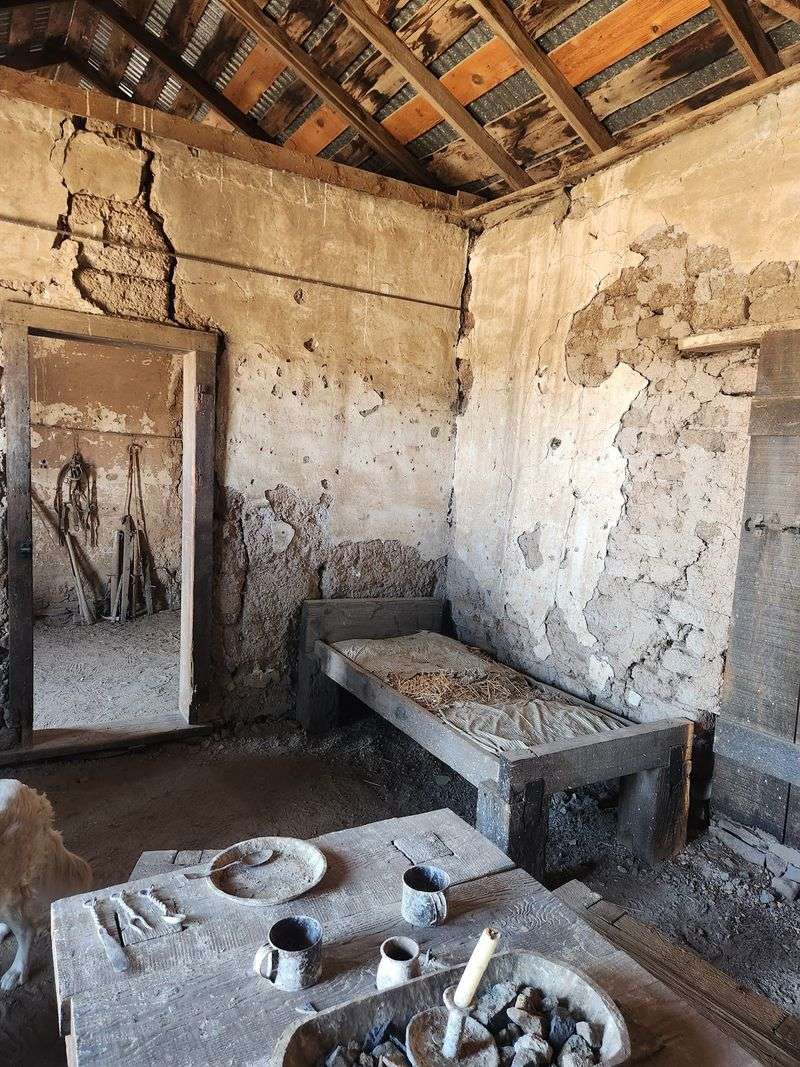
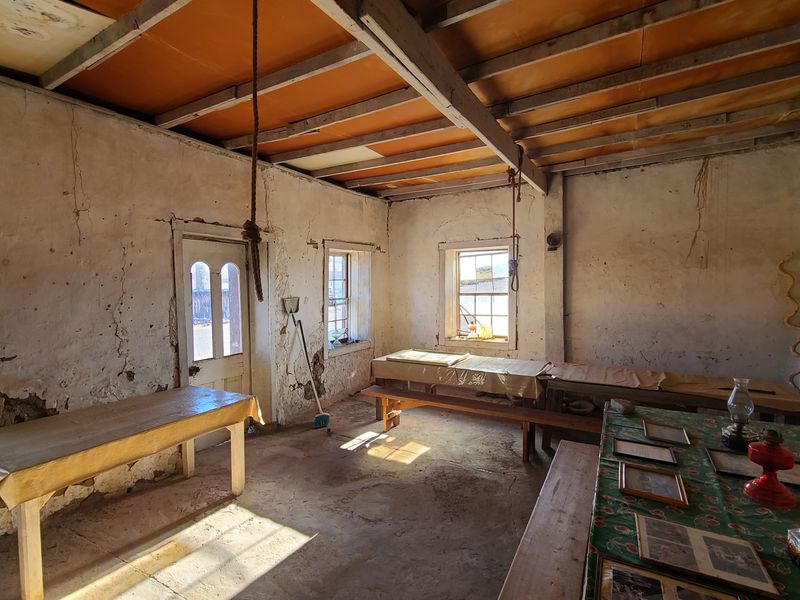
Look up inside the old mail station, and you will spot something rare. The ceiling uses yucca stalks as latias, an old Mexican building method.
This style is extremely unusual, and it may be the only example in New Mexico. I stood there staring at it longer than I care to admit.
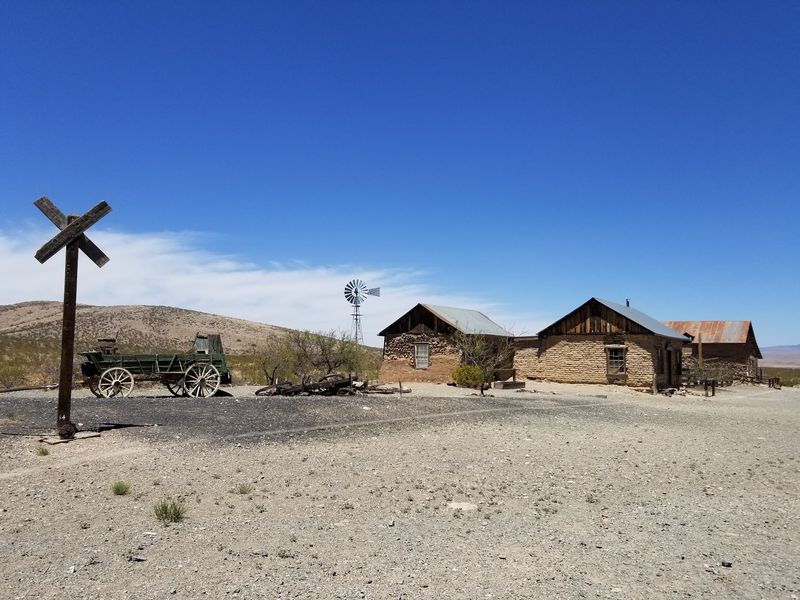
The town still has several original buildings, plus a couple of careful rebuilds. That makes it far more complete than many other ghost towns.
Highlights include the general merchandise store and the assay office. Miners once carried ore samples to that office to learn their value.
The Stratford Hotel and the Grant House also stand proudly. The Grant House once served hungry travelers in its dining room.
Many buildings share a simple style, inspired by Mexican village design. That gives the whole site a neat, matching look.
Keep an eye out for puddled adobe walls too. Builders rarely used this method during that period.
Outside, dozens of old foundation outlines hide among the brush. They hint at how big the town once was.
Bring a camera with a good zoom for ceiling details. Small features here tell big stories about clever builders.
Desert Spring And Rugged Hills
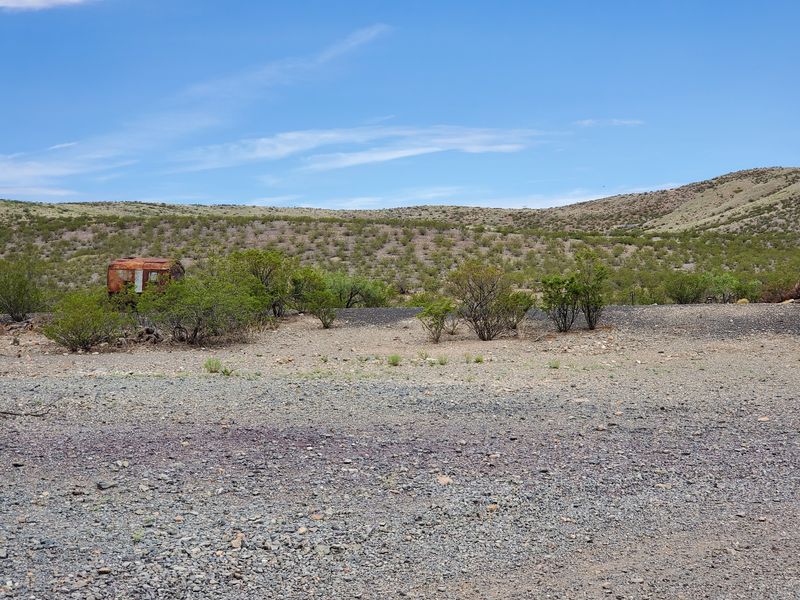
Water came before mining. A small, dependable spring in the arroyo west of the settlement made this dry landscape useful long before prospectors arrived.
Metates found around the spring point to Indigenous use of the area, while later travelers heading west also relied on water here. The transportation story grew directly from that resource.
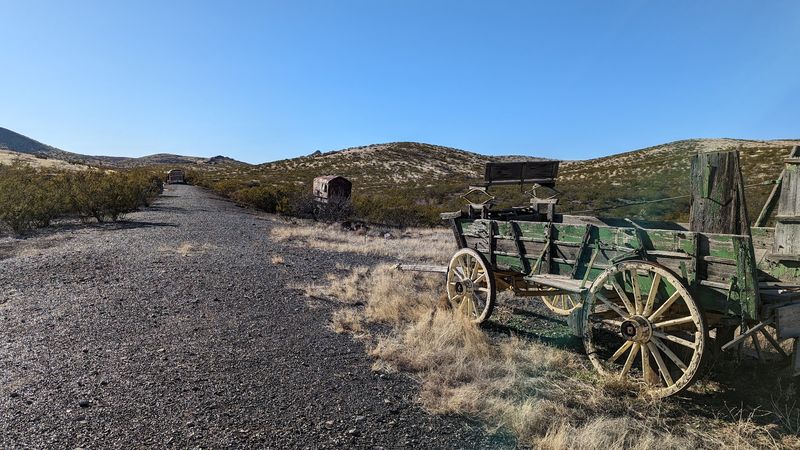
The settlement sits in open country southwest of Lordsburg, with broad desert terrain shaping the view. Sparse vegetation makes the historic buildings and old street alignments easy to read from a distance.
Summer temperatures can be intense, shade is limited, and dry conditions can create serious visibility problems on Interstate 10.
Checking road conditions during windy weather is sensible. Water, sun protection, and sturdy footwear also make the guided walk more comfortable.
This part of New Mexico looks simple from the highway, but the ground around Shakespeare holds traces of stage travel, mining, ranching, and earlier use around the spring.
One Family’s Long Preservation Effort
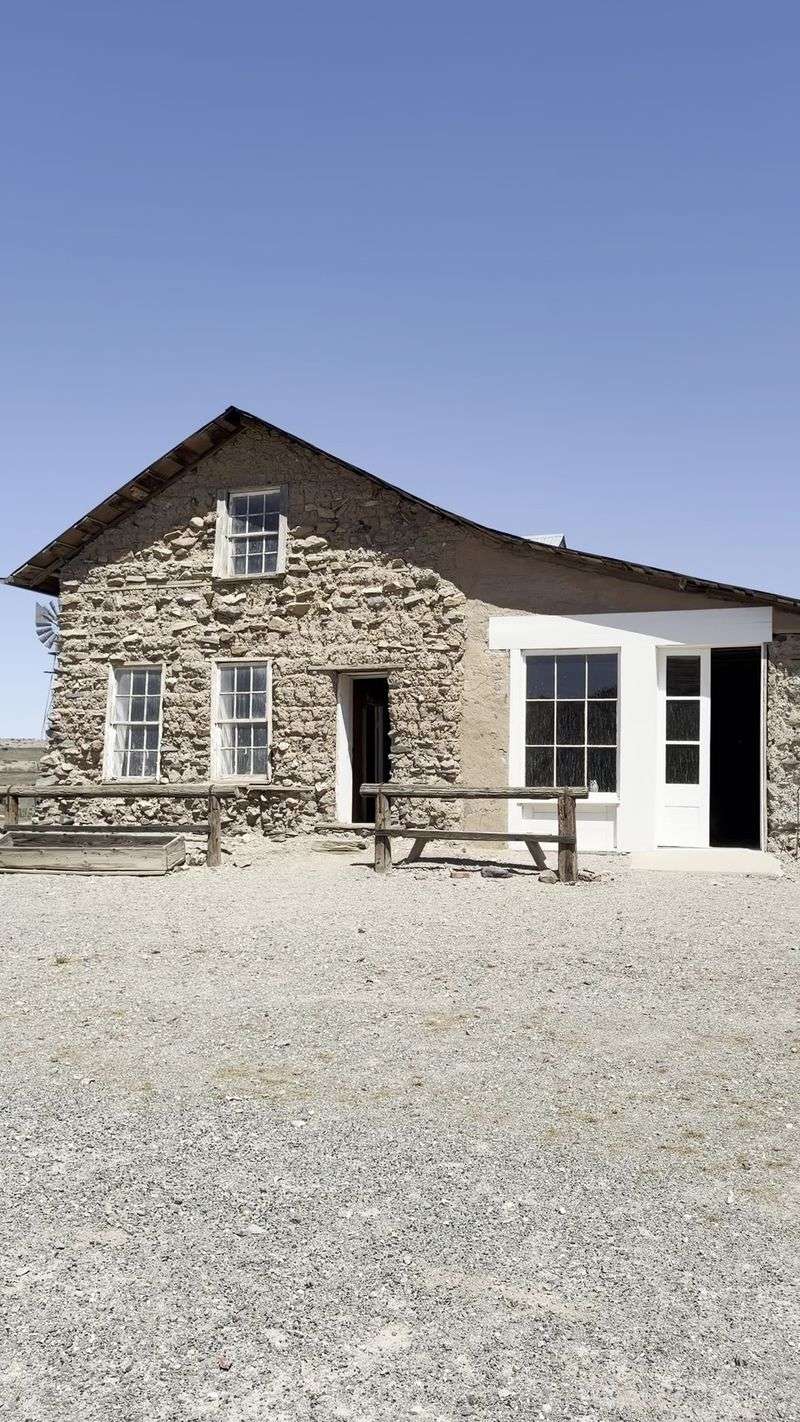
The town might look very different today without the family that purchased it as part of a ranch in 1935.
Over the following decades, the Hill family documented local history, stabilized buildings, welcomed visitors, and kept the site from losing its remaining character. Three generations of women became especially important to that preservation story.
Shakespeare entered the New Mexico State Register of Cultural Properties in 1969 and the National Register of Historic Places in 1973.
Preservation has continued through later repairs and restoration projects. Some buildings required substantial work, while other parts of the old town survive mainly as foundations.
The property remains privately held rather than operating as an open public park. The Shakespeare Foundation continues preservation work, and access is controlled so visitors see the site with a guide.
Guests hear how the buildings were used, which parts are original, and where later preservation changed what survives today.
The result is not a polished reconstruction. It is a historic district whose uneven layers are part of the story.
Planning Your Guided Tour
Showing up and walking through on your own is not an option. All public visits are guided, and advance contact is the safest way to make sure a tour is available.
The current schedule lists tours at 10 a.m., noon, and 3 p.m. Mountain Time when a guide is available. Calling ahead is useful because unescorted access is not permitted.
Tours generally last between one and two hours. They include several building interiors, part of the old Butterfield route, and interpretation of the stage, mining, ranching, and preservation eras.
Wear sturdy shoes for the uneven outdoor surfaces and bring enough water for the conditions. The town remains deliberately uncommercialized, so traveler services are concentrated in nearby Lordsburg.
From Interstate 10, the route follows the Main Street exit and then NM Highway 494, also signed as Ghost Town Road, for about 2.5 miles.
A visit works best when there is enough time to listen rather than rush. Many useful details come from how one building relates to another.
Workshops And Everyday Artifacts
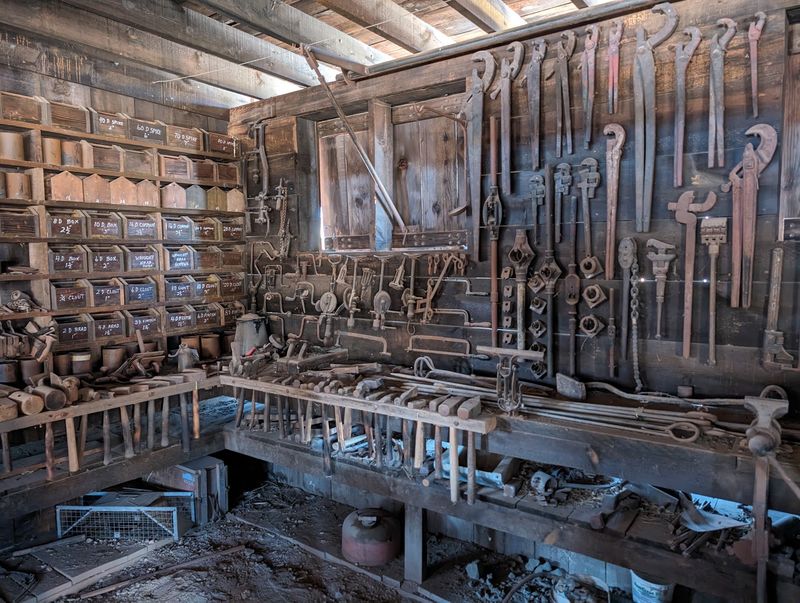
The blacksmith shop gives the tour a practical side. It once served a cross-country transportation company and continued to be used during later nineteenth-century activity around the settlement.
Tools and work spaces help explain how much maintenance a remote stage and mining community required.
Metalwork, transport equipment, household objects, and ranching gear add context that architecture alone cannot provide.
The assay office tells a different story. Built during the mining era and rebuilt during the 1879 revival, it was used to test ore for the Shakespeare Gold and Silver Mining and Milling Company.
A secured Western collection adds saddles, tack, and other period material to the tour.
Some pieces are historic while others are representative examples, so they work best as interpretive objects rather than proof that every item belonged to the town.
The former general merchandise building no longer stands, but its foundation remains. More foundation outlines across the property reveal the settlement’s wider footprint.
A wall technique, a tool, an old floor plan, or a line of foundations can explain daily life more clearly than a dramatic legend.
Special Events And A Quiet Base Near Lordsburg
Shakespeare occasionally adds special tours and events to its regular guided schedule. Dates can change, so the current calendar is the best place to see what is planned around a particular trip.
Travelers who want an overnight base can use lodging and RV facilities in Lordsburg, only about 2.5 miles away. That setup makes it easy to pair the historic site with other stops in Hidalgo County.
The railroad’s decision to favor nearby Lordsburg in the early 1880s changed Shakespeare’s future. Businesses gradually shifted toward the new transportation link, while later mining activity brought shorter periods of use back to the old buildings.
By the 1930s, ranching and preservation had become the site’s defining roles. Those later chapters help explain why so much remains available to see.
A morning or afternoon here offers something different from a reconstructed attraction. Original structures, preserved foundations, desert terrain, and family stewardship overlap in the same place.
That is what gives Shakespeare its staying power. The town changed purpose again and again, leaving enough behind for visitors to trace the story one layer at a time.