One Of America’s Grandest Romanesque Masterpieces Is This Missouri Cathedral
Photos cannot prepare you for this place. Some buildings simply stop you the moment you look up.
Missouri holds a cathedral with the world’s largest mosaic collection. Tens of thousands of square feet shimmer with hand-placed glass.
I visited on a quiet weekday and lost my breath. Nothing I had read came close to the real thing. The detail overhead feels almost impossible to believe.
You crane your neck and forget the time entirely. This is architecture as pure wonder. People travel far just to stand inside it. Light pours through the colored glass.
You whisper without meaning to. Go see it in person!
A Cathedral Born From Big Ambitions
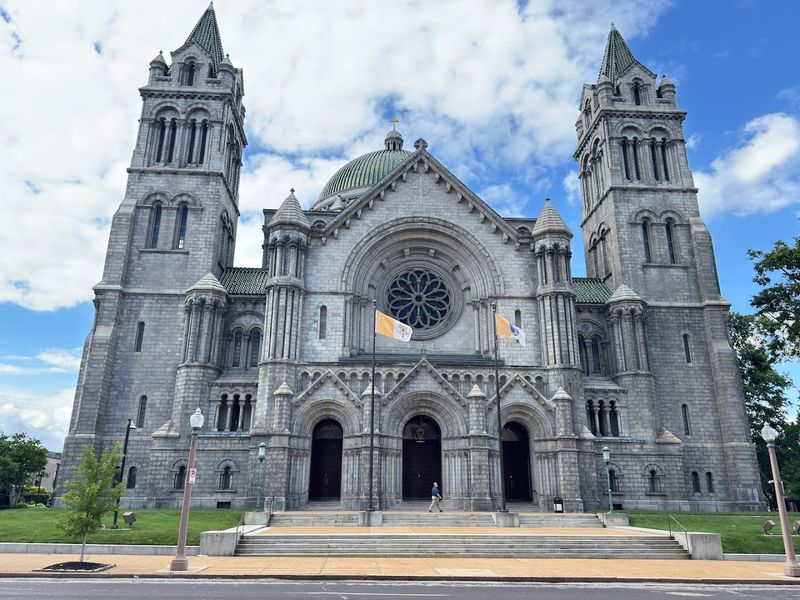
Construction on this magnificent structure began on May 1, 1907, driven by a growing Catholic population that had outgrown its earlier home downtown.
The cornerstone was laid on October 18, 1908, marking the official start of what would become one of Missouri’s most ambitious building projects. The first Mass was celebrated inside in 1914, just seven years after ground was broken.
The building was designed by the firm of Barnett, Haynes and Barnett, with Thomas P. Barnett leading the creative vision.
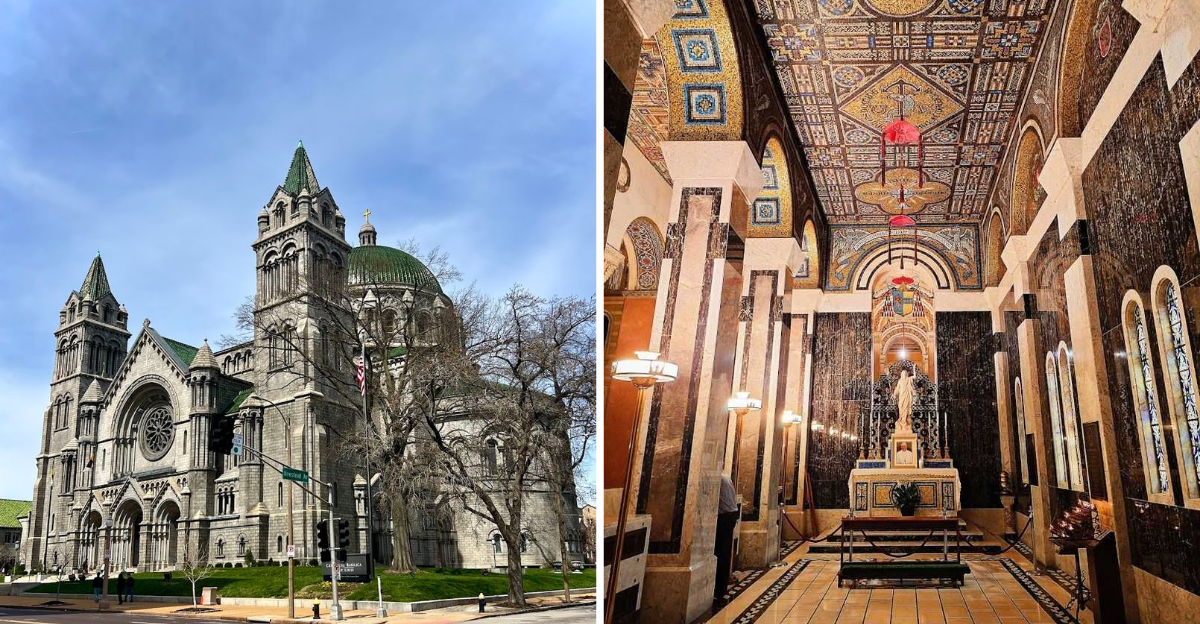
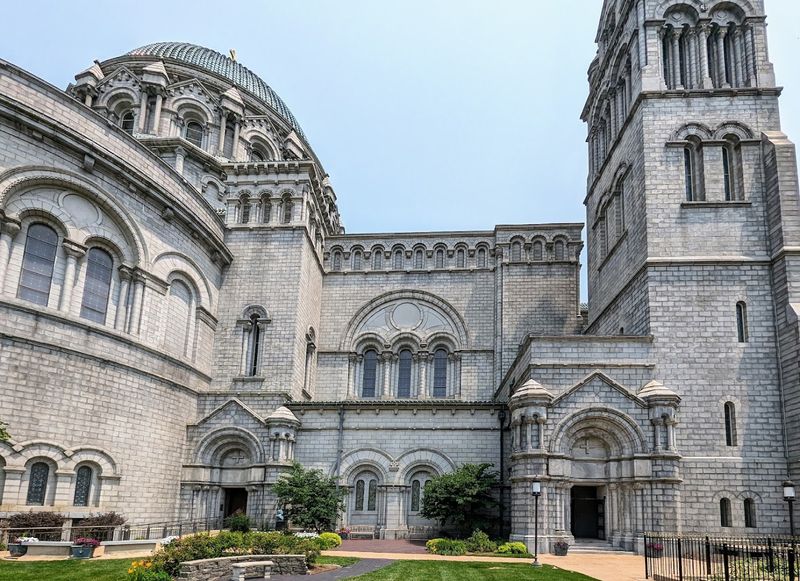
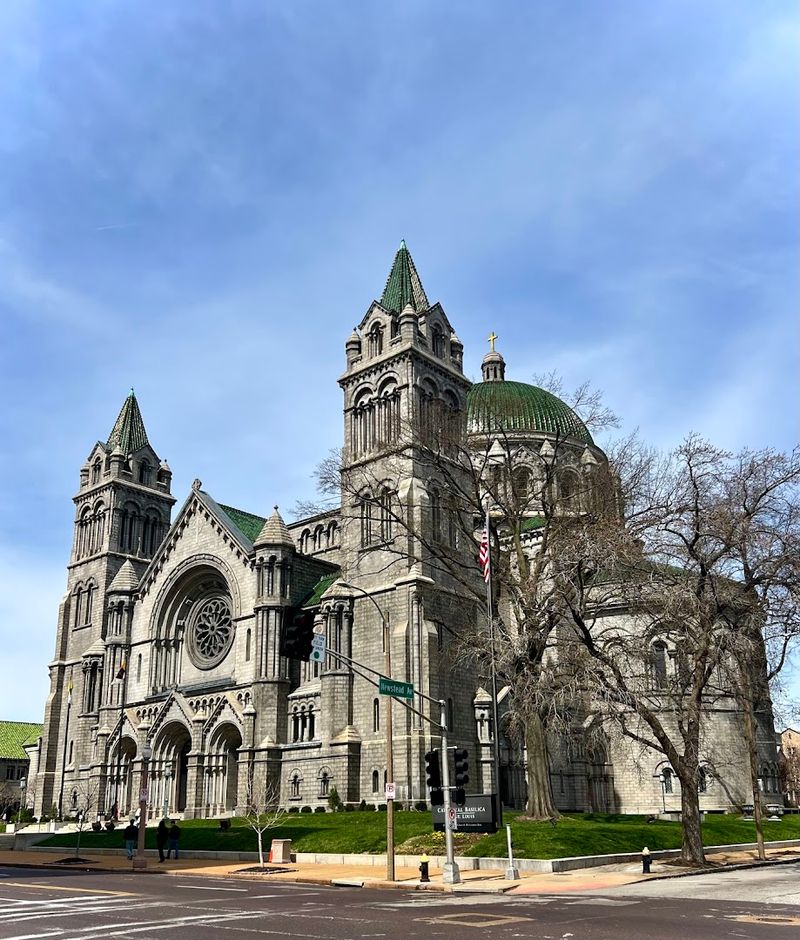
Its architectural style blends Neo-Byzantine and Romanesque Revival influences in a way that feels both powerful and surprisingly graceful. The exterior is clad in granite, giving it a solid, timeless presence on Lindell Boulevard.
Pope John Paul II elevated the cathedral to a minor basilica on April 4, 1997, which is why it now carries the full title of the Cathedral Basilica of St. Louis. You can find it at 4431 Lindell Blvd in St. Louis.
Mosaics That Redefine Breathtaking
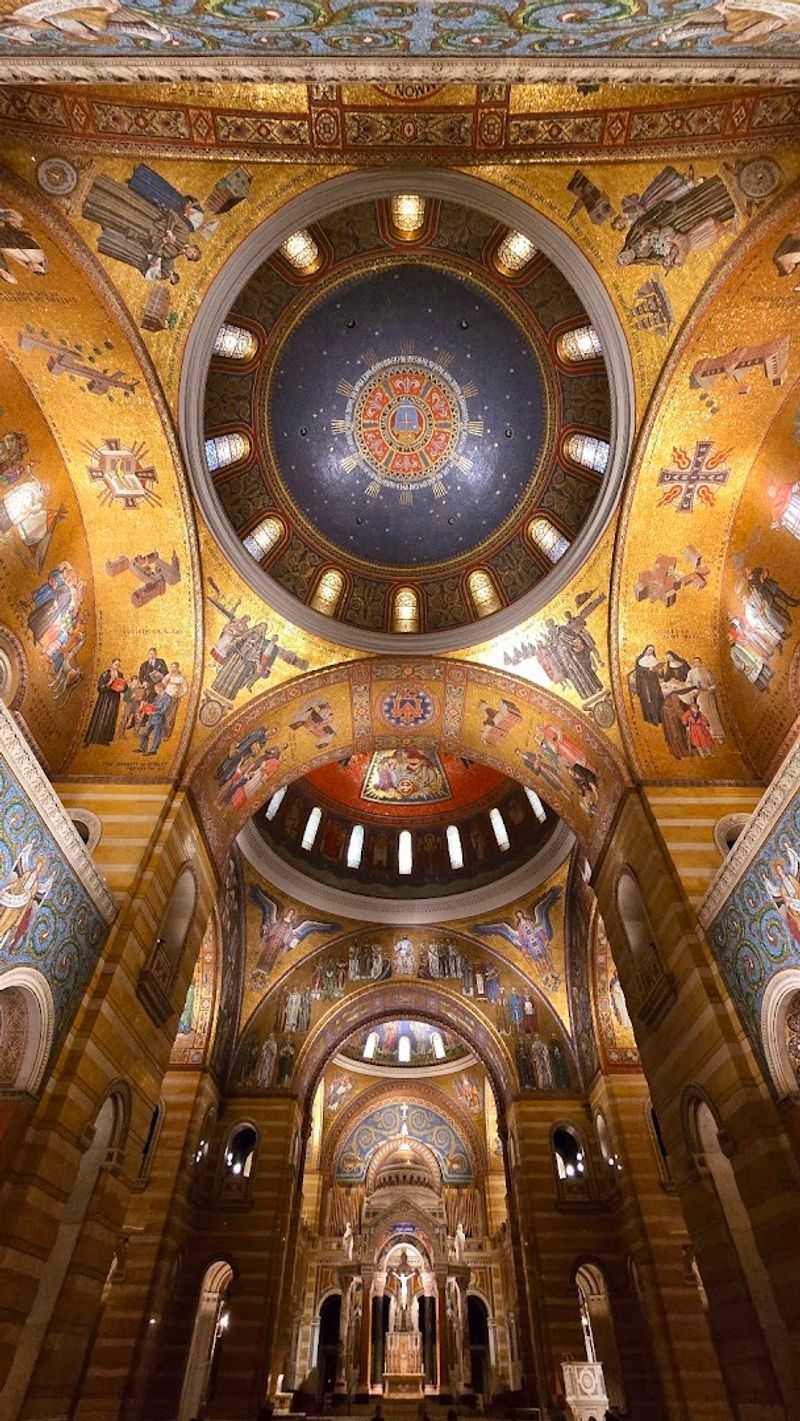
Forget painted walls and printed murals.
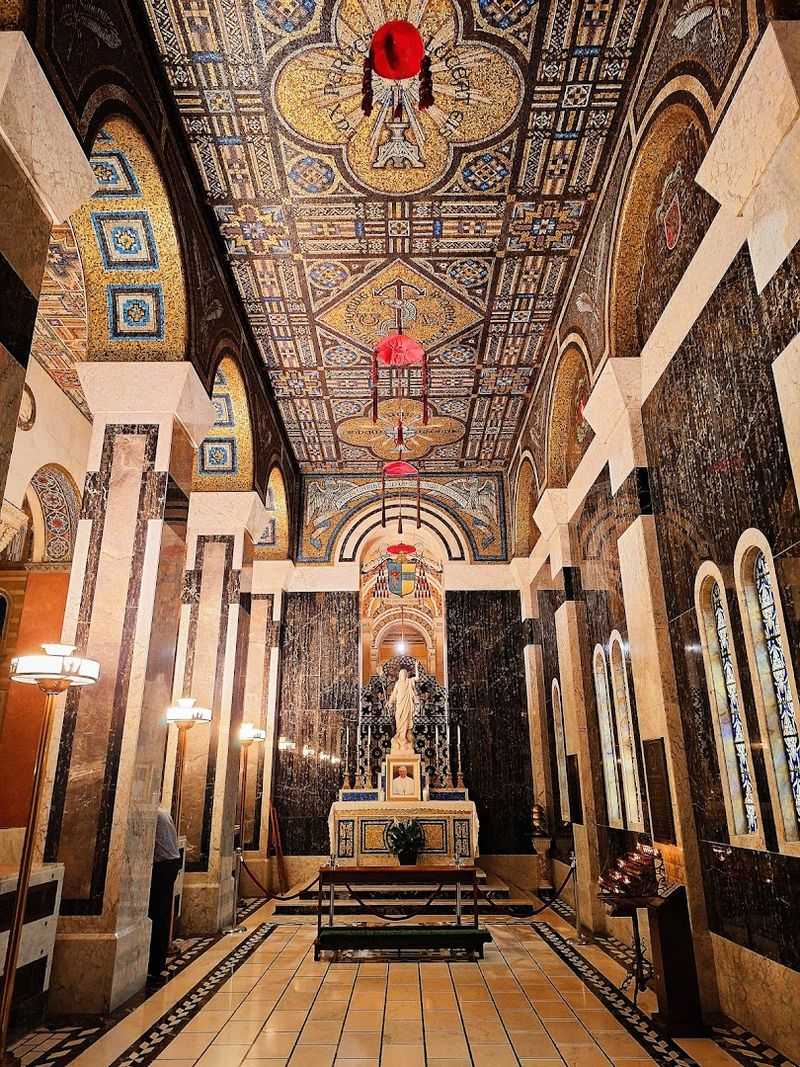
Every single inch of color inside the Cathedral Basilica of St. Louis comes from hand-placed glass tiles called tesserae, and the total count is a staggering 41.5 million individual pieces.
That number is almost impossible to picture, but standing beneath the glittering ceiling makes it feel very real. Not one drop of paint was used to create any of this color.
The mosaics cover 83,000 square feet of interior surface and use more than 7,000 distinct shades of glass. Installation began in 1912 and was not completed until 1988, meaning multiple generations of artists contributed to what you see today.
Various studios contributed, including Tiffany Studios, which created the two west-side chapels, while the German-founded Ravenna Mosaic Company installed the majority of the interior over the decades.
The scenes depicted range from Biblical narratives to moments in the life of King Louis IX of France, the city’s namesake. Important events in archdiocesan history are also woven into the artwork throughout the space.
The Record Nobody Talks About Enough
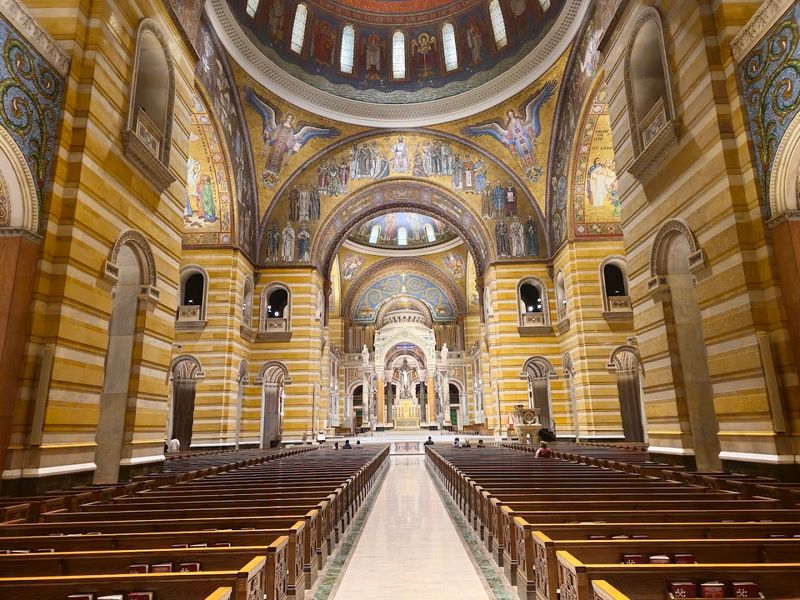
Here is a fact that tends to stop people mid-sentence: the Cathedral Basilica of St. Louis holds one of the largest collections of mosaics in the world, and the largest in the Western Hemisphere.
That is not a local boast or a regional claim. It is a documented distinction that places this Missouri church in a category shared by very few structures on the planet.
For context, 83,000 square feet of mosaic art is roughly the size of a large shopping mall’s ground floor.
Spread that across ceilings, arches, walls, and domes, and you begin to understand why first-time visitors often just stand still and look upward for several minutes without saying a word.
A church in St. Petersburg, Russia, has been mentioned as a potential rival for the title, but that claim has never been officially verified. So until further notice, Missouri holds the crown.
I found myself wondering how many people drive through St. Louis every year without realizing that one of the world’s most remarkable artistic achievements is sitting right there on a busy boulevard, open to visitors every single day of the week.
Architecture Worth Staring At
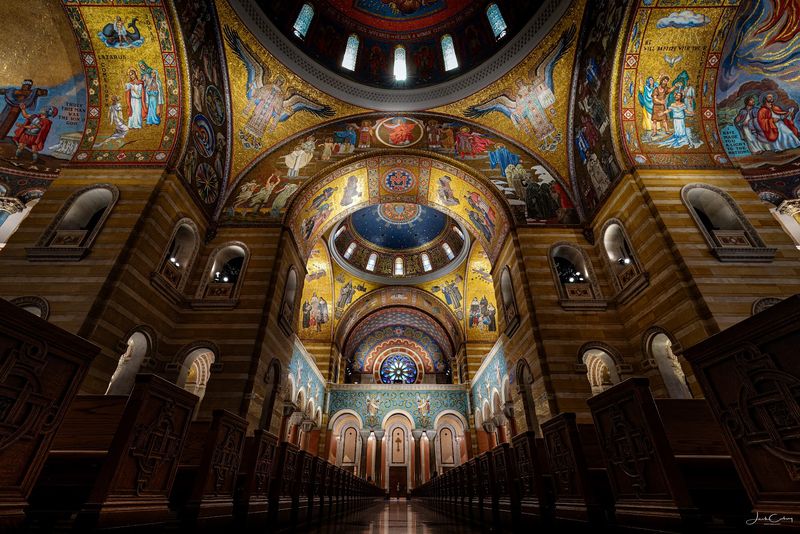
Before you even focus on the mosaics, the structure itself commands serious attention.
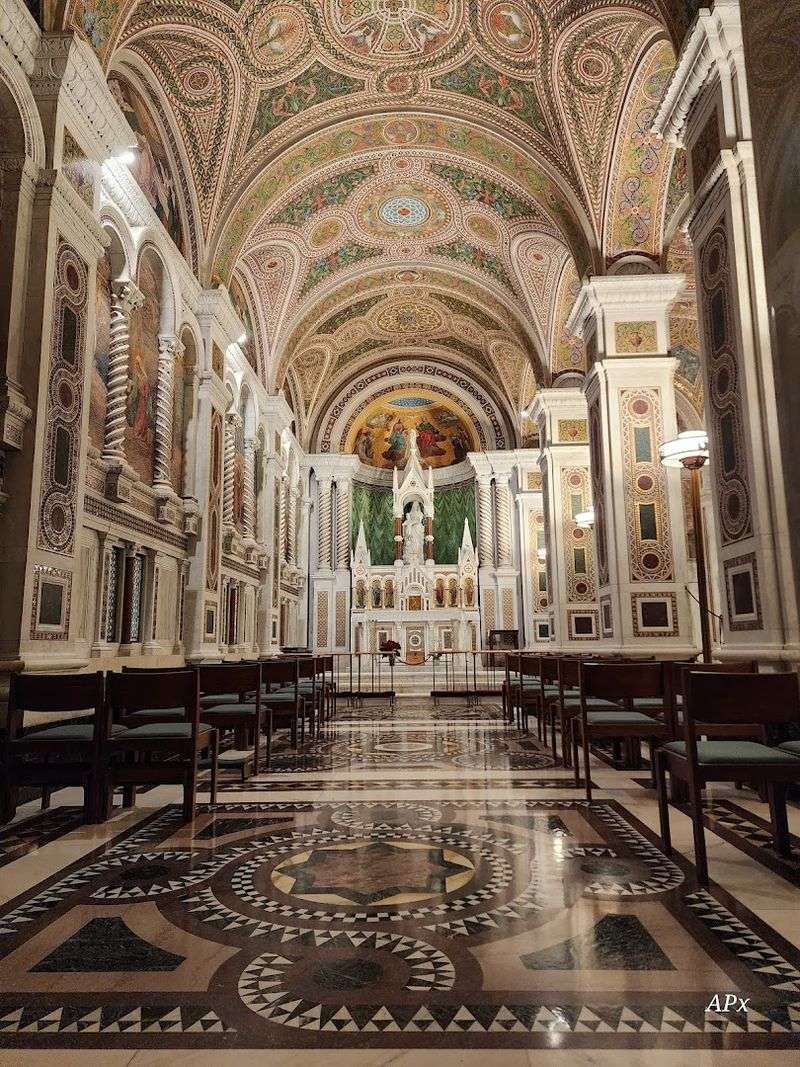
The interior combines brick, marble, and mosaic tiles in a way that feels intentional and deeply considered at every turn.
The arches soar overhead, and the columns that line the nave give the space a rhythm that pulls you forward naturally toward the altar.
The green-tiled dome is one of the most recognizable features of the St. Louis skyline from certain angles. From inside, looking up into the dome creates a sense of vertical space that is hard to describe without sounding dramatic.
The proportions of the building are simply generous, and every corner seems designed to make you feel the weight of what surrounds you.
The organ deserves a mention here because its sound fills the entire space in a way that seems to come from every direction at once.
Attending a Mass here means experiencing that sound fully, as it echoes off marble, stone, and mosaic surfaces simultaneously.
Guided Tours Unlock Hidden Details
Tours are available upon request, and they typically run around 50 minutes.
Guides are knowledgeable and genuinely enthusiastic about what they are sharing, which makes even the more technical details easy to follow and interesting to absorb.
During a tour, you learn which studios created specific mosaic panels and why certain artistic choices were made in each section of the building.
The symbolism embedded in many of the scenes is not always obvious at first glance, and having someone walk you through the layers of meaning adds real depth to what you are looking at. Late arrivals are typically welcomed mid-tour without any fuss.
Downstairs, there is a mosaic museum that provides additional historical context about the construction process and the artists involved.
It is easy to overlook if you do not know it is there, which is one more reason to take the guided option rather than going solo.
Between the main floor and the museum below, I spent nearly two hours inside and still felt like there were corners I had not fully explored by the time I stepped back outside into the Missouri sunshine.
Planning Your Visit Practically
The cathedral is open every day of the week from 7 AM to 5 PM, which gives visitors plenty of flexibility regardless of travel schedules.
There is a parking lot located directly behind the building, which makes arrival straightforward for those driving in. Street parking is also available nearby if the lot happens to be full during busier periods.
Admission to walk through the cathedral is free, which feels almost surprising given the scale of what you are experiencing. The mosaic museum downstairs is included in that same visit at no extra charge.
For a city full of worthwhile attractions, this one offers an unusually generous return for the time you invest in getting there.
Mass is celebrated regularly throughout the week, and the schedule is worth checking ahead of time if you want to experience the space during a service.
The cathedral welcomes everyone regardless of religious background, and the atmosphere is consistently described as peaceful and warm.
I would suggest arriving early on weekends to avoid the larger crowds, and weekday mornings in Missouri tend to offer the quietest and most contemplative experience inside this stunning building.
The Old Cathedral Connection Downtown
To fully appreciate why the Cathedral Basilica of St. Louis was built, it helps to know a little about what came before it.
The original cathedral, known informally as the Old Cathedral, stands downtown near the Gateway Arch. Founded in 1834, it holds the distinction of being the first church built west of the Mississippi River, which is a remarkable historical fact on its own.
By the early 1900s, St. Louis had grown rapidly, and the Catholic population had outpaced what the Old Cathedral could comfortably accommodate.
The decision was made to construct an entirely new building rather than expand the existing one.
That choice gave Missouri one of its most architecturally significant structures and gave the city a second extraordinary cathedral worth visiting in its own right.
The Old Cathedral still stands and operates today, preserved within the grounds of Gateway Arch National Park. Visiting both during a single trip to St. Louis creates a genuinely interesting contrast between two eras of Catholic architecture in the same city.
One is intimate and historically significant. The other is vast and visually overwhelming.
Together, they tell a compelling story about how a city and its community can grow and change while still honoring what came before.
Why This Cathedral Stays With You
There are places you visit and forget within a week, and then there are places that stick to your memory like those 41.5 million mosaic tiles stick to the walls.
The Cathedral Basilica of St. Louis falls firmly into the second category, and I say that having visited a lot of churches across the United States and Europe.
What makes it linger is not just the visual spectacle, though that is considerable. It is the combination of scale, craftsmanship, history, and atmosphere working together in a single space.
The cathedral manages to feel both monumental and quietly personal at the same time, which is a balance that very few buildings of any kind manage to achieve.
Missouri has plenty of reasons to draw travelers, but this one sits at the top of any honest list.
If you are deeply religious, casually curious about architecture, or simply someone who appreciates things made with extraordinary care and patience, the Cathedral Basilica of St. Louis delivers something that photographs cannot fully communicate.