One Short California Trail Leads To An Incredible Sierra Nevada View
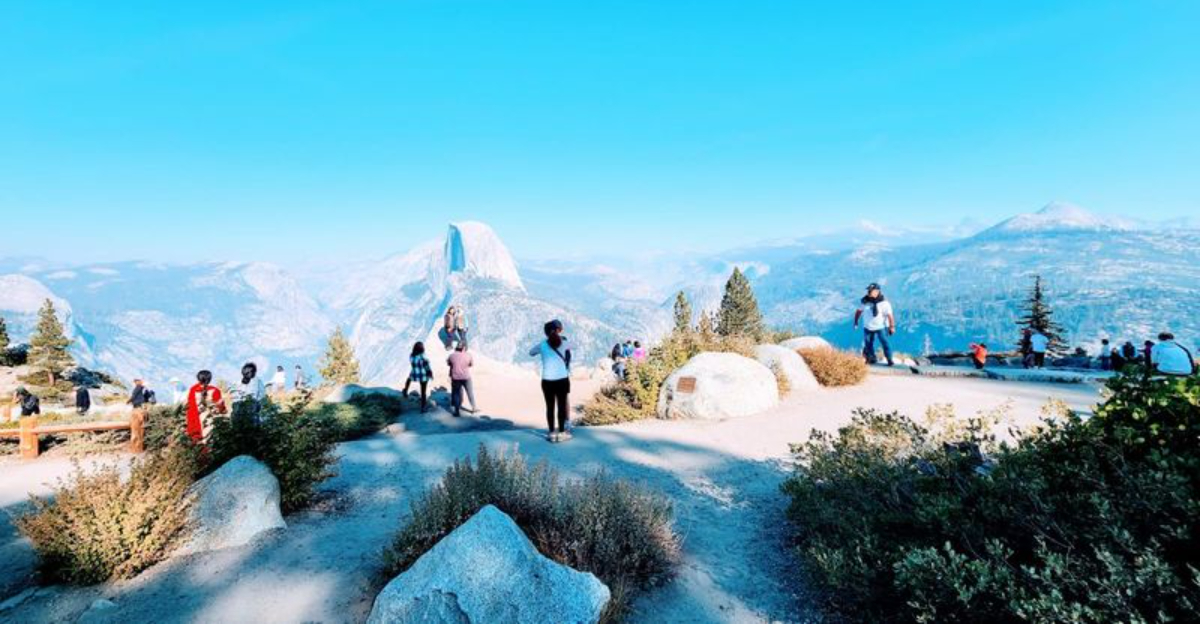
You take a few steps and the scale doesn’t quite register at first. Then it hits all at once. The valley drops away, the cliffs rise higher than expected, and the view stretches farther than seems possible.
Moments like this are what define California’s Sierra Nevada, where a short walk can lead to something that feels almost unreal.
The shift happens quickly here, moving from parking area to overlook in just minutes, yet the payoff feels anything but small.
There’s a pause that naturally follows. Conversations quiet down, cameras come out, and attention drifts outward toward the layers of granite, forest, and distant waterfalls that fill the horizon. It’s the kind of place where time slows without effort.
Glacier Point doesn’t build up to the view. It delivers it almost immediately, in a way that stays with you long after leaving Yosemite.
An Elevation That Changes Everything
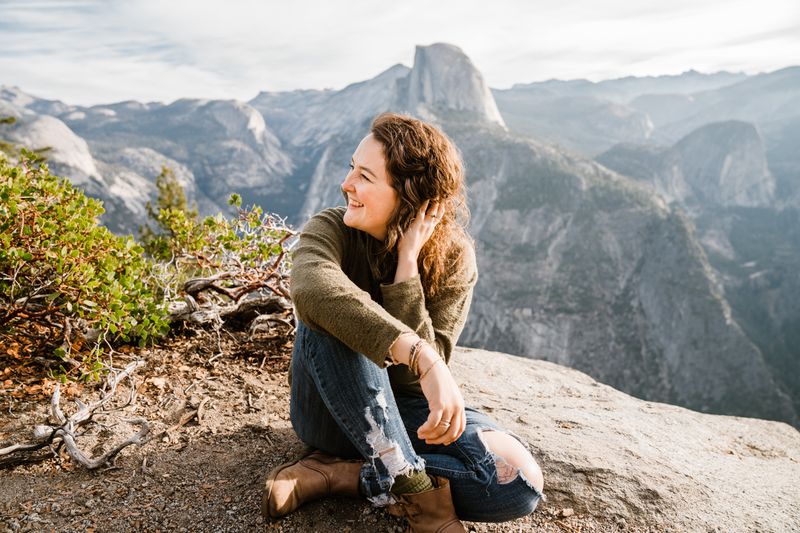
Standing at 7,214 feet above sea level, the view from Glacier Point hits differently than most overlooks in the country.
The sheer height of this vantage point places visitors roughly 3,200 feet directly above Curry Village in Yosemite Valley below.
That kind of vertical drop creates a perspective that photos struggle to fully capture.
The altitude also means cooler temperatures compared to the valley floor, so bringing an extra layer is a smart move even during summer months.
Morning light tends to cast a soft golden tone across the granite faces of Half Dome and the surrounding peaks, making early arrivals especially rewarding.
The air feels noticeably thinner and crisper up here, which adds to the sense that something extraordinary is happening.
Visitors who are sensitive to elevation changes may want to take it slow when first stepping out of the car. Hydration matters more at this height than many people expect.
The elevation alone makes Glacier Point Trail CA one of the most unique short walks in the entire national park system.
A Paved Trail Built For Everyone
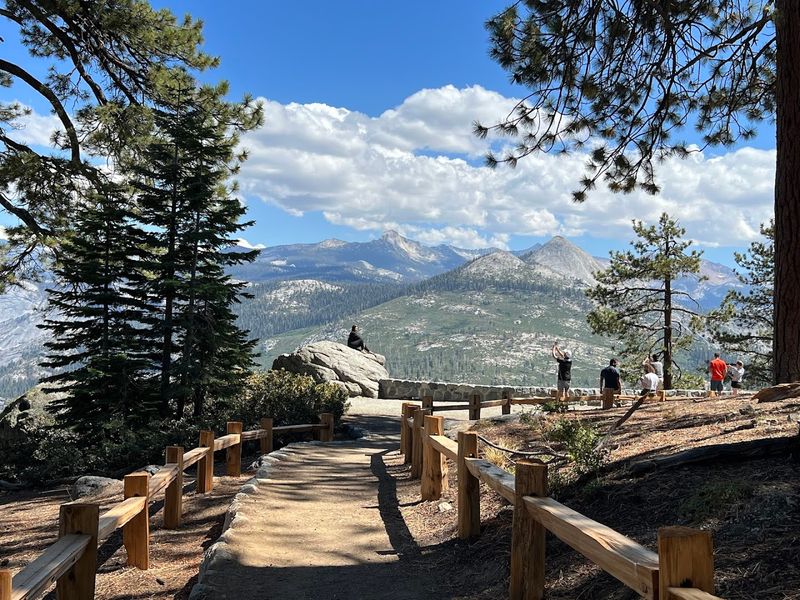
Accessibility at national parks can be hit or miss, but Glacier Point Trail delivers in a way that stands out.
The path from the parking area to the overlook is paved and relatively flat, making it navigable for wheelchair users, families with strollers, and visitors who may not be up for a strenuous hike.
That kind of inclusivity is genuinely refreshing in a landscape known for rugged terrain.
The walk itself takes roughly 10 to 20 minutes at a relaxed pace, covering a short distance that rewards with maximum payoff.
Railings and designated viewing areas are in place near the overlook edge, offering a sense of safety while still allowing for unobstructed sightlines.
The surface stays in reasonably good condition throughout the open season, though it can get slick after rain.
Families with young children often find this trail to be one of the most manageable experiences in Yosemite National Park.
The combination of easy footing and spectacular reward makes it a go-to recommendation for mixed-ability groups.
Glacier Point Trail CA essentially removes the barrier between casual visitors and world-class scenery.
Half Dome Front And Center
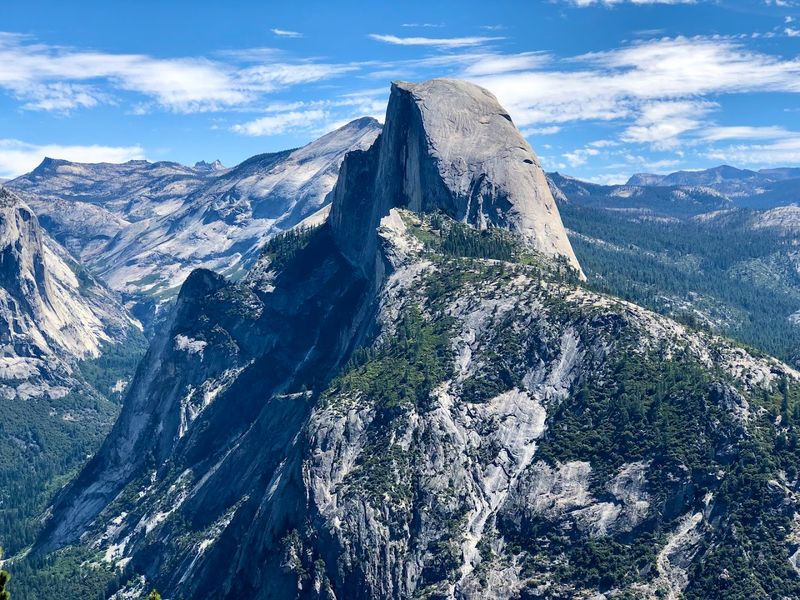
Few natural landmarks in North America carry the same visual weight as Half Dome, and from Glacier Point the view of it is almost uncomfortably close.
The sheer granite face rises dramatically from the valley floor, and standing at the overlook places visitors nearly at eye level with its upper reaches.
The sense of scale is genuinely hard to process the first time it registers.
Half Dome sits roughly 4,800 feet above the valley floor and its rounded cap is visible from many points in the park, but no angle compares to the one from Glacier Point.
The late afternoon light catches the dome’s west face and turns it a warm amber color that photographers tend to chase specifically.
Clear days allow for sharp definition along every ridge and crack in the granite surface. Seasonal changes also affect how Half Dome looks from this viewpoint.
Snow clings to its shadowed sides well into spring, creating a striking contrast against the surrounding blue sky.
Glacier Point Trail CA puts this iconic formation directly in front of visitors in a way that feels almost theatrical in its presentation.
Theodore Roosevelt Walked Here In 1903
History has a way of adding weight to a place, and Glacier Point carries more than its share of it.
Back in 1903, President Theodore Roosevelt visited the overlook alongside naturalist John Muir during a camping trip through Yosemite.
That meeting is widely credited with shaping Roosevelt’s conservation policies and influencing the expansion of the national park system across the United States.
The two men reportedly camped near the area for several nights, waking to snowfall and the kind of wilderness silence that no longer exists in most of the country.
Their conversations during that trip helped lay the groundwork for protecting millions of acres of American land.
Standing at the same overlook where that exchange took place adds a layer of meaning that goes well beyond the scenery.
Knowing that one of the most consequential conservation decisions in American history was influenced by a view from this exact spot makes the walk feel like more than a casual outing.
Glacier Point Trail CA connects visitors not just to nature but to a pivotal chapter in the story of how wild places in the United States came to be protected.
Multiple Waterfalls Visible From One Spot
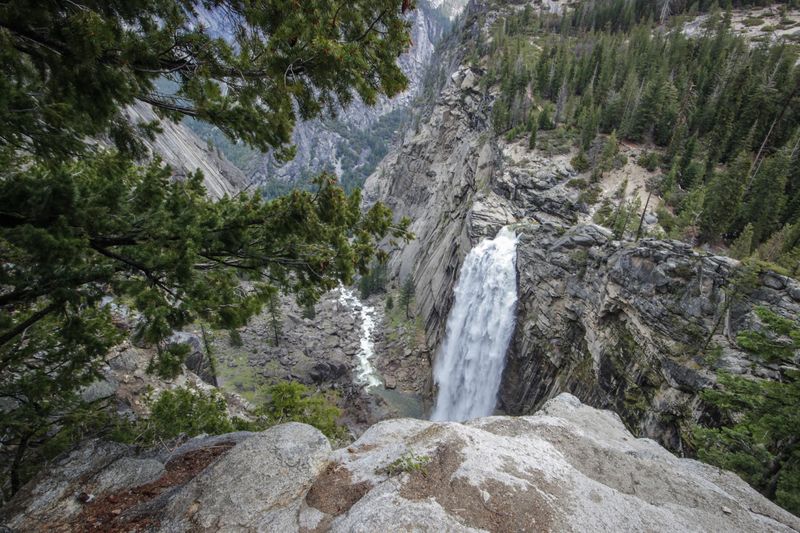
Most overlooks offer one strong focal point, but Glacier Point stacks them up generously.
From the viewing area, visitors can spot Yosemite Falls, Vernal Fall, and Nevada Fall all within the same sweeping glance.
Each waterfall sits at a different distance and elevation, creating a layered visual effect that feels almost like looking at a painting.
Yosemite Falls drops a combined 2,425 feet in two tiers and appears as a white thread against the dark granite wall on the north side of the valley.
Vernal Fall and Nevada Fall cascade down the Merced River canyon in the opposite direction, visible as bright ribbons cutting through the forested slopes.
Spring snowmelt typically produces the strongest flow for all three, making late May and early June particularly rewarding for waterfall viewing.
By late summer, some of these falls reduce to a trickle or dry up entirely depending on the snowpack from the previous winter.
Checking current conditions before visiting helps set realistic expectations.
Still, even at reduced flow, the overall panorama from Glacier Point Trail CA remains one of the most layered and visually complex views available anywhere in the Sierra Nevada.
Glacier Point Road Opens Seasonally
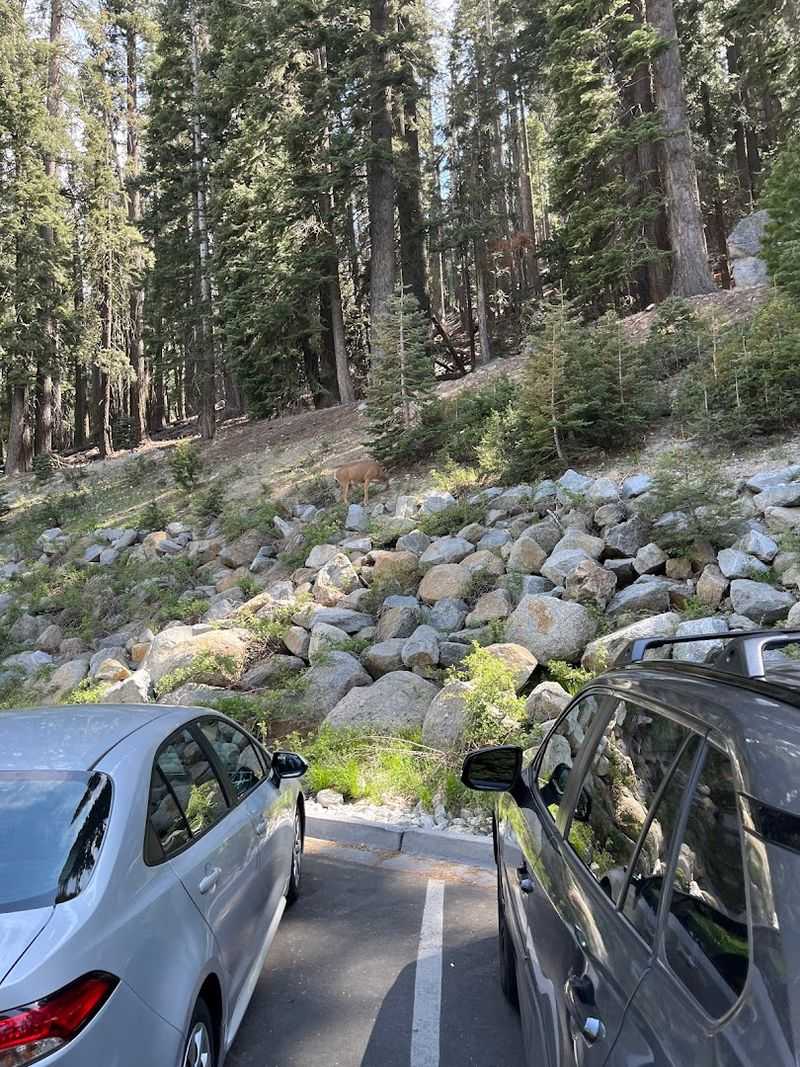
Getting to the trailhead requires driving Glacier Point Road, which does not stay open year-round.
The road typically opens to vehicles sometime in late May and closes again in October or November depending on snow conditions.
Planning around this window is essential since there is no alternative vehicle route to the overlook during the closed season.
The drive itself covers about 16 miles from the Chinquapin junction off Wawona Road and takes roughly 30 to 45 minutes depending on traffic.
Several pullouts along the way offer previews of the views to come, and it can be tempting to stop multiple times before even reaching the main trailhead.
The road is paved and well-maintained during the open season, though it can get congested on weekends and holidays.
During winter, Glacier Point Road transforms into a cross-country ski and snowshoe route, drawing a different crowd entirely.
The road closure dates can shift from year to year, so checking the National Park Service website before any visit is strongly recommended.
Glacier Point Trail CA is worth the planning effort, but the seasonal access window is a non-negotiable part of the experience.
The Four Mile Trail Starts Here Too
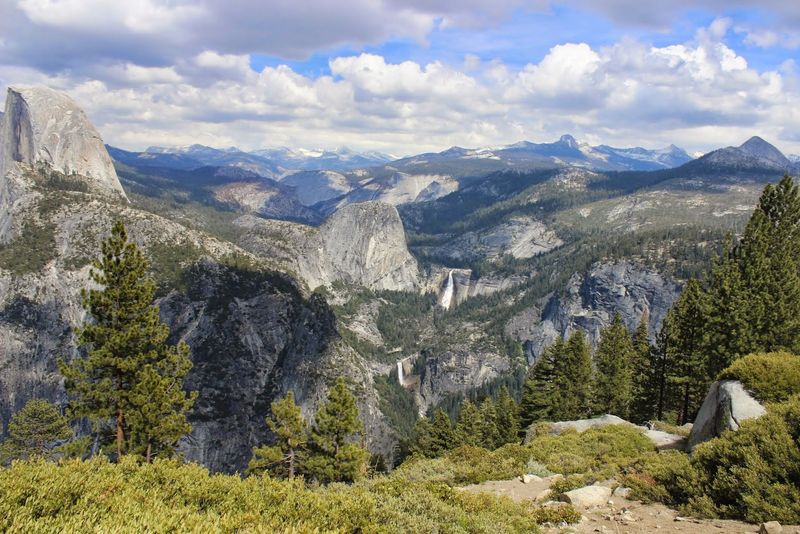
For visitors who want more than a short stroll to the overlook, the Four Mile Trail offers a dramatically different kind of adventure.
Despite its name, the trail actually covers closer to 4.8 miles from Glacier Point down to the valley floor, with an elevation change of about 3,200 feet.
It is a physically demanding route that rewards effort with constantly shifting views of the valley throughout the descent.
The trail switchbacks down the southern wall of Yosemite Valley through mixed conifer forest and open granite slabs.
Wildflowers appear along the route during spring and early summer, adding color to the otherwise grey and green landscape.
The lower sections can get hot and exposed during afternoon hours, especially in July and August when full sun beats down on the open rock faces.
Many hikers choose to go one-way by catching a shuttle or arranging a car shuttle between the valley floor trailhead and the Glacier Point parking area.
Starting early in the morning from the valley and hiking up to catch the midday view at the top is another popular strategy.
Glacier Point Trail CA serves as both a destination and a launchpad for more ambitious days in the park.
Clouds Rest Is Visible On Clear Days
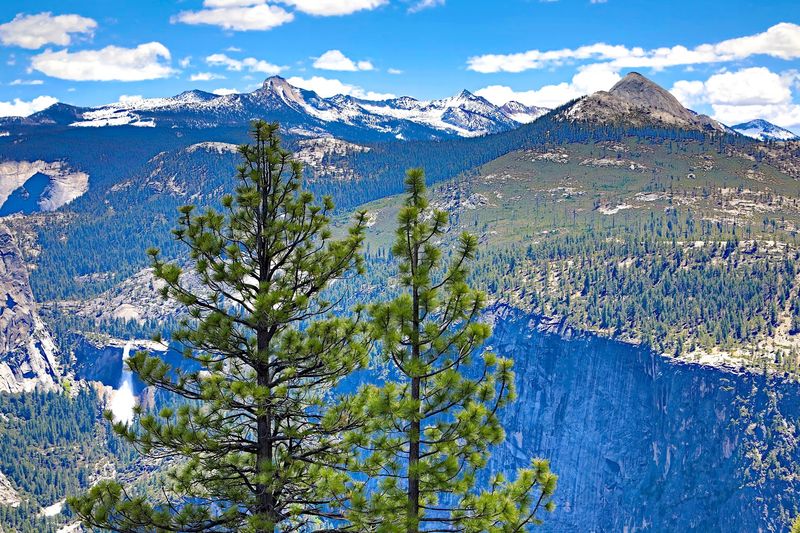
Clouds Rest is one of those landmarks that many Yosemite visitors overlook, but from Glacier Point it commands serious attention on a clear day.
Rising to 9,926 feet, it is actually higher than Half Dome and stretches along a dramatic ridge that runs roughly east to west above the valley.
Spotting it from the overlook adds a sense of geographic depth to the already expansive view.
The ridge of Clouds Rest appears as a long granite spine cutting across the horizon, framed by the surrounding high country peaks.
Its name comes from the way clouds tend to gather and linger around its summit, creating a dynamic sky that shifts constantly throughout the day.
Early morning visits often catch a thin layer of mist clinging to the upper ridge before the sun burns it off.
A bronze tactile relief map available at the Glacier Point overlook area helps visitors identify Clouds Rest and other distant landmarks by name.
That kind of interpretive tool makes a real difference for first-time visitors trying to orient themselves within the vast Sierra Nevada landscape.
Glacier Point Trail CA essentially turns a short walk into a geography lesson delivered at 7,000 feet.
Stargazing At High Altitude
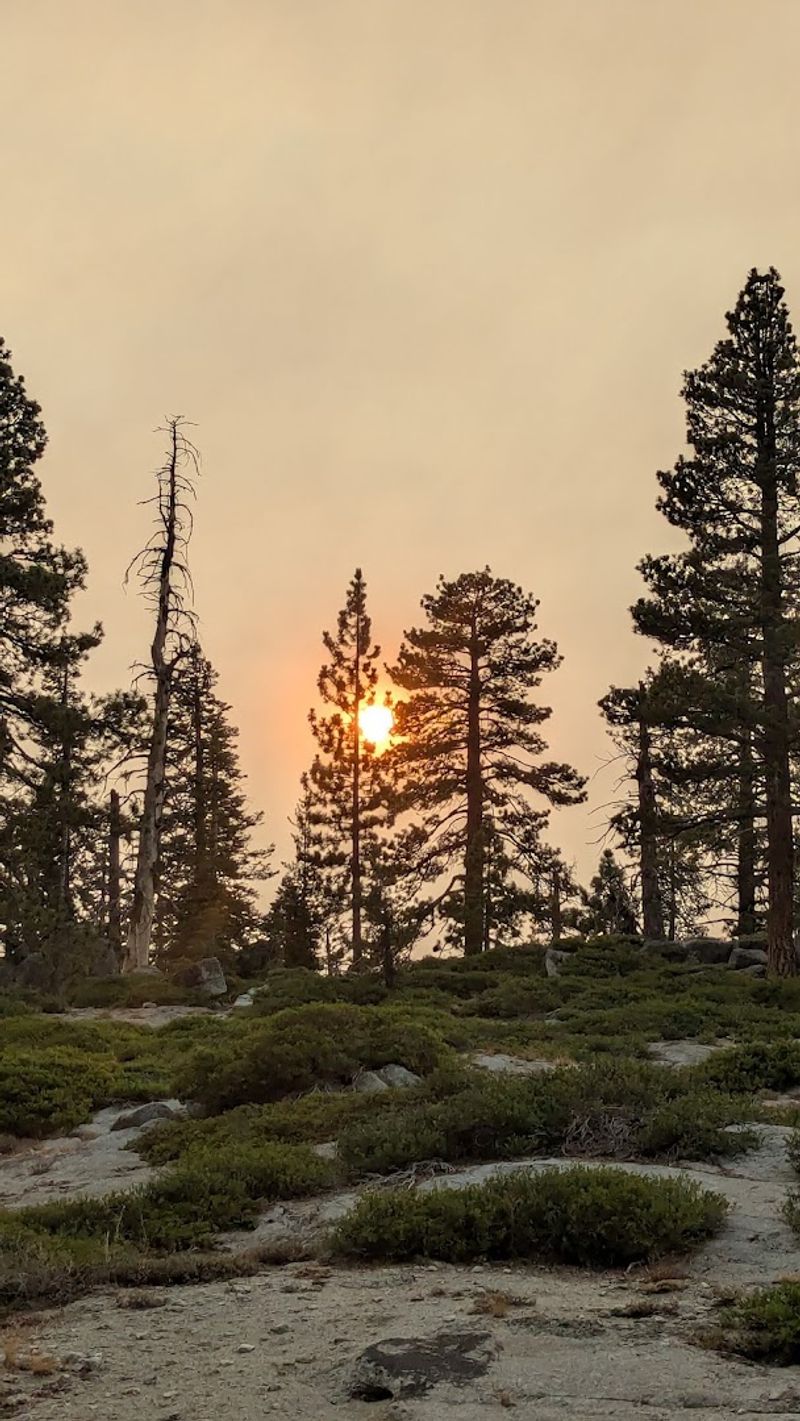
After the day crowds thin out, Glacier Point shifts into something quieter and more magical.
The high elevation and distance from major light pollution sources make it one of the better stargazing locations accessible by car in the Sierra Nevada.
On moonless nights the Milky Way stretches across the sky in a way that feels almost overwhelming if city living has become the default.
The open viewing area at the overlook provides an unobstructed look at the sky in multiple directions, which matters for tracking constellations and spotting satellites.
Summer nights bring warm enough temperatures to sit comfortably outside for extended periods, though temperatures can drop sharply after midnight even in July.
Bringing a warm layer and a blanket makes the experience considerably more enjoyable.
Yosemite National Park has taken steps to reduce light pollution within its boundaries, which directly benefits the quality of night sky viewing at elevated locations like Glacier Point.
Astronomy programs have been held at the site in past seasons, though availability changes from year to year.
Glacier Point Trail CA after dark offers a completely different kind of reward than the daytime view, one that is quieter, slower, and surprisingly moving.
Visitor Amenities During Open Season
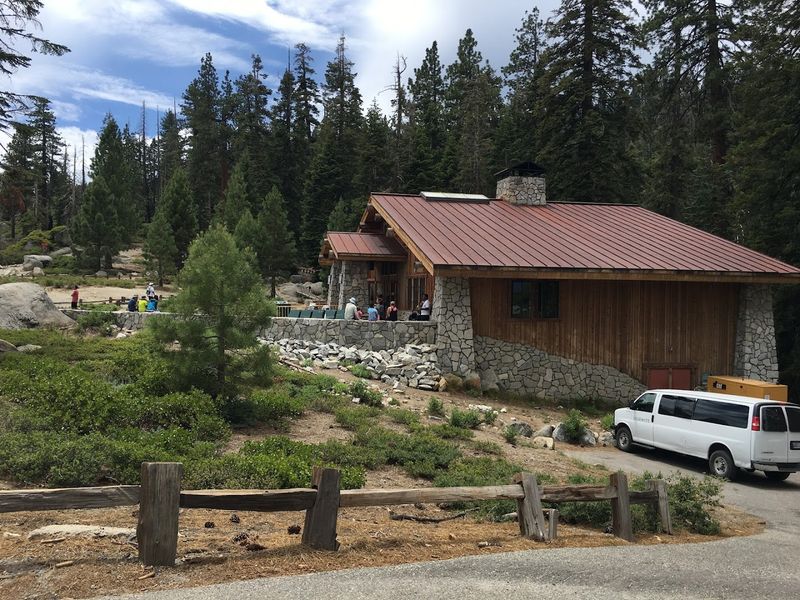
Spending time at a remote overlook does not usually come with creature comforts, but Glacier Point offers more than most visitors expect.
During the open season, the area includes public restrooms, a snack bar, and a gift shop that carries park-related merchandise and basic supplies.
Having those options nearby makes it easier to spend a longer stretch of time at the overlook without feeling rushed.
The snack bar keeps limited hours and offers a small selection of food and drinks, which can be a welcome find after a long drive or a hike up the Four Mile Trail.
The gift shop carries maps, guidebooks, and keepsakes that serve as practical reminders of the visit.
Both facilities tend to get busier during peak summer weekends, so arriving earlier in the day generally means shorter lines.
Restrooms are available near the parking area and are typically well-maintained during the busy season, though conditions can vary.
A bronze tactile relief model near the overlook identifies the surrounding peaks and geological features for visitors who want a more informative experience.
Glacier Point Trail CA pairs natural grandeur with just enough practical infrastructure to support a comfortable half-day visit.
Glacial History Carved Into The Landscape
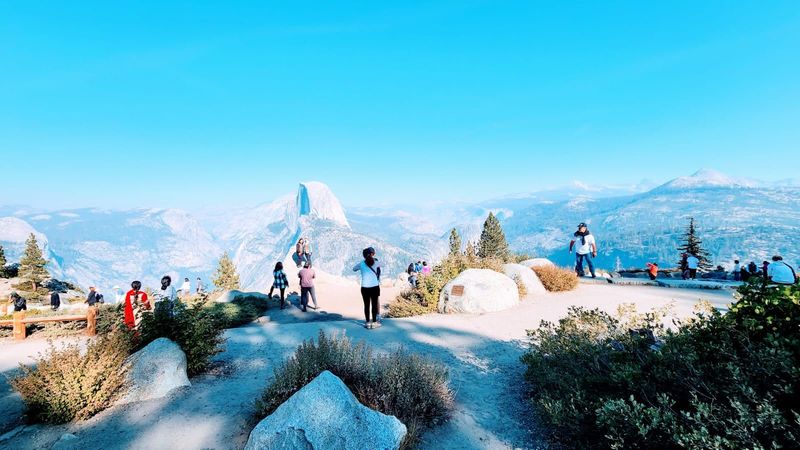
The name Glacier Point is not just poetic, it is geologically accurate.
The area shows clear evidence of ancient glacial activity, with rounded boulders, polished granite surfaces, and glacial deposits scattered across the terrain.
These materials were carried here by massive glaciers that moved through the Sierra Nevada thousands of years ago and left behind a landscape shaped entirely by ice.
Geologists have identified three distinct types of glacially deposited rock at Glacier Point.
The most common are rounded boulders of Half Dome quartz monzonite, the same light-colored granite that makes up Half Dome itself.
Less common are boulders traced back to Mount Clark, a peak roughly 8 miles away, which tells a story about how far ancient glaciers actually traveled while reshaping the land.
Fragments of yellowish quartzite and gray schist have also been found at the site, with their origins traced to a ridge extending from Mount Clark.
Each type of rock functions like a chapter in a slow, frozen story that unfolded over millennia.
Glacier Point Trail CA gives visitors a front-row seat to one of the most readable glacial records anywhere in the Sierra Nevada range.
Sunrise And Sunset Paint The Valley
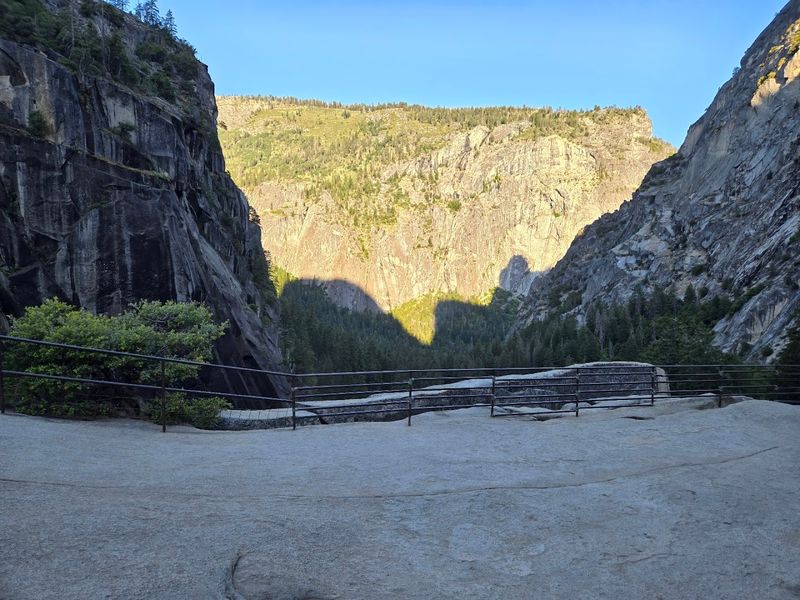
Timing a visit to Glacier Point around sunrise or sunset transforms an already impressive view into something genuinely hard to forget.
The low-angle light during these hours catches the granite faces of Half Dome, El Capitan, and the valley walls at a sharp angle, bringing out textures and shadows that midday light tends to flatten.
Warm tones of amber, rose, and gold spread across the rock surfaces in ways that shift minute by minute.
Sunset tends to draw larger crowds since it requires no early alarm, but sunrise offers a quieter and often more atmospheric experience.
Arriving before first light means watching the sky transition from deep blue to pale yellow while the valley below slowly becomes visible.
The stillness of early morning at this elevation adds a meditative quality that the busier afternoon hours rarely match.
Parking fills quickly during peak season on both ends of the day, so arriving well before the target time is a practical necessity rather than just a suggestion.
Temperatures drop noticeably after sunset, so planning for a layer change is worth the extra effort.
Glacier Point Trail CA at golden hour is the kind of experience that tends to come up in conversation for years afterward.