Oregon Has A Museum Where You Can Discover The Stories Of Three Native Tribes
This is the kind of museum idea I find much more convincing than another room full of objects behind glass.
In Oregon, the stories of three Native tribes are presented with a strong connection between past, present, and future. That matters, since culture feels very different when it is treated as living rather than finished.
I would want to spend time here for that reason alone.
The exhibits can cover history, identity, land, resilience, and modern community life without pretending the story ended generations ago.
For me, that makes the visit feel more relevant, more respectful, and much harder to rush through.
Ten Thousand Years Before The Wagons
Long before wagon wheels carved ruts across the Plateau, this land belonged to people who knew every root and riverbend.
The opening gallery, called We Were, drops you into that world immediately.
Exhibits show the Cayuse, Umatilla, and Walla Walla tribes thriving here for more than 10,000 years.
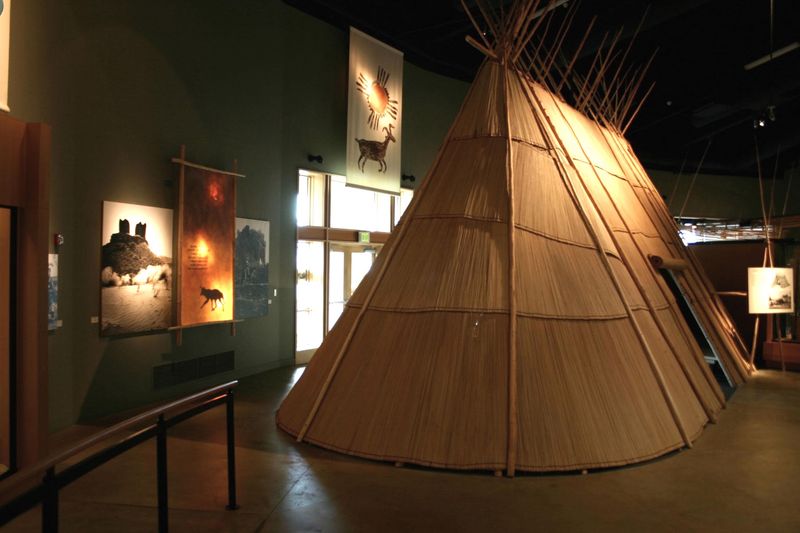
You see the seasonal food cycle, the traditional longhouse, and the arrival of the horse, which changed travel forever. Everything is arranged so the story builds naturally instead of scattering into random display cases.
The museum also explains how the tribes welcomed and assisted the Lewis and Clark Expedition between 1804 and 1806, with those contacts documented in expedition records.
Then the tone shifts. The Oregon Trail cut straight through ancestral homelands, and the museum lets you see westward expansion through native eyes instead of pioneer diaries.
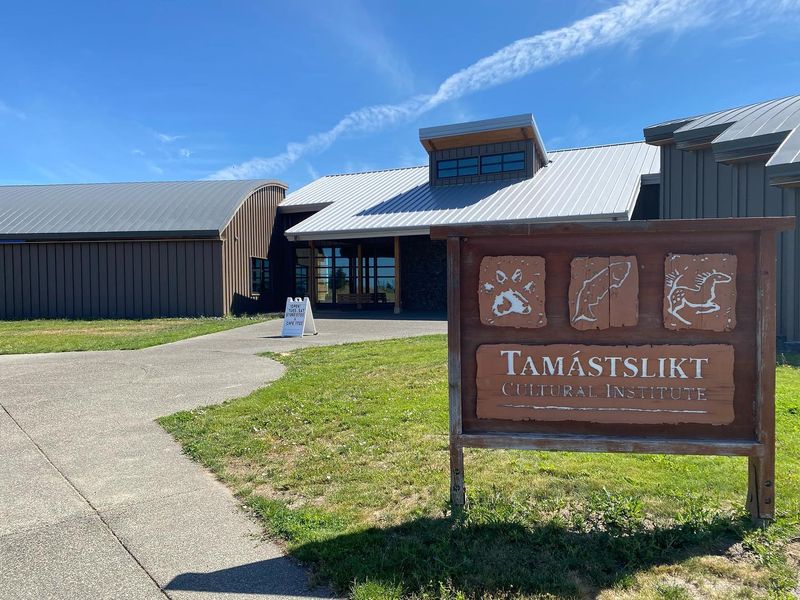
Plan on spending a solid chunk of time in this first section alone. You will find the Tamastslikt Cultural Institute at 47106 Wildhorse Blvd, Pendleton, just behind the Wildhorse property off Interstate 84.
A Culture Still Standing Strong
Plenty of museums stop the clock somewhere around 1900. Not this one.
The We Are gallery presents the tribes as active contemporary communities, balancing longstanding traditions with participation in government, the regional economy, and salmon recovery.
Environmental work takes center stage. The Confederated Tribes lead salmon habitat restoration across the region, guided by the ancient Law of the Salmon and its teaching about sacred responsibility to water and land.
A major achievement has been the restoration of salmon to the Umatilla River after an absence of about 70 years, with spring Chinook reintroduction efforts beginning in the 1980s.
The Confederated Tribes currently have more than 3,100 enrolled members, with nearly half living on or near the Umatilla Indian Reservation.
The gallery highlights contemporary tribal life through government, the regional economy, salmon recovery, military service, and the continuation of cultural traditions.
That framing changes the mood of the whole visit. You walk out of the first gallery thinking about history and into this one thinking about the present.
The transition from We Were to We Are deliberately connects tribal history with contemporary life.
Cháwna Mun Na’ámta: We Will Never Fade
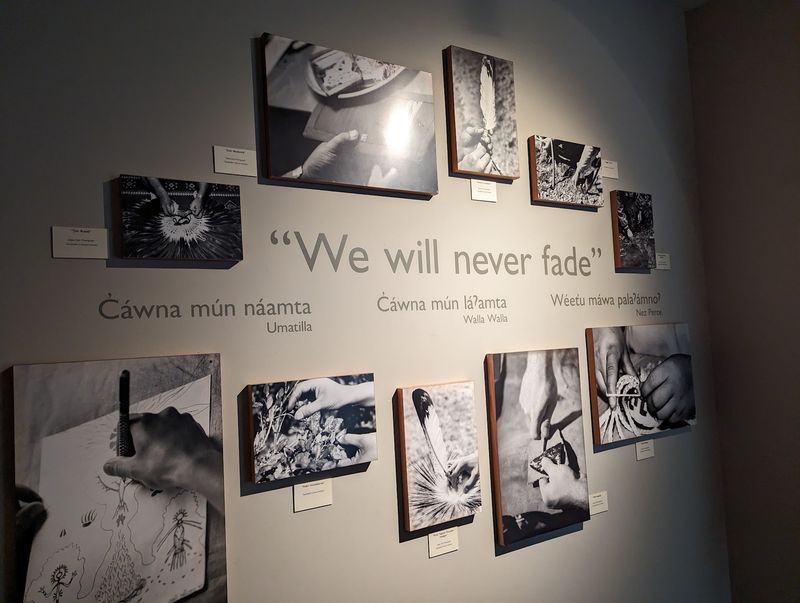
Three simple words carry the final gallery: Cháwna mun na’ámta, meaning we will never fade. The phrase sums up everything the We Will Be exhibit sets out to say.
Rather than closing the story, this section opens it wider. The We Will Be gallery presents achievements, aspirations, and concerns voiced by the tribal community while looking toward the tribes’ future.
The gallery emphasizes the continuation of tribal culture while addressing the priorities and concerns of future generations.
Community programs get attention too, along with the careful balance of living in modern society while honoring traditions thousands of years old. Nothing here feels sentimental or vague.
Culture, the gallery argues, is never a fixed object. It bends, grows, and keeps moving forward, which is precisely why it survives.
The gallery presents ongoing concerns alongside achievements and hopes for the future rather than treating tribal history as finished.
The final gallery deliberately shifts the museum’s focus toward the future of the Cayuse, Umatilla, and Walla Walla Tribes.
Films, Voices And Coyote Theater
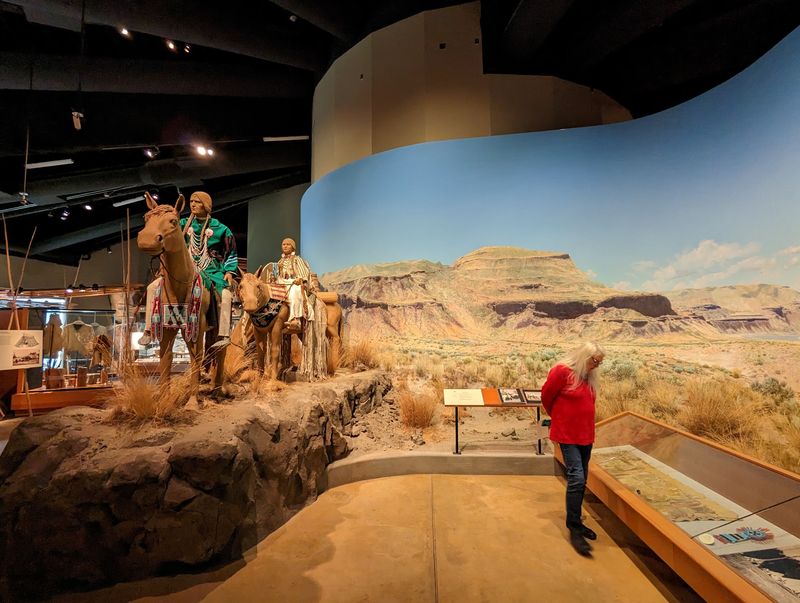
Fourteen thousand square feet of exhibit space could easily feel overwhelming. Smart design keeps it from happening.
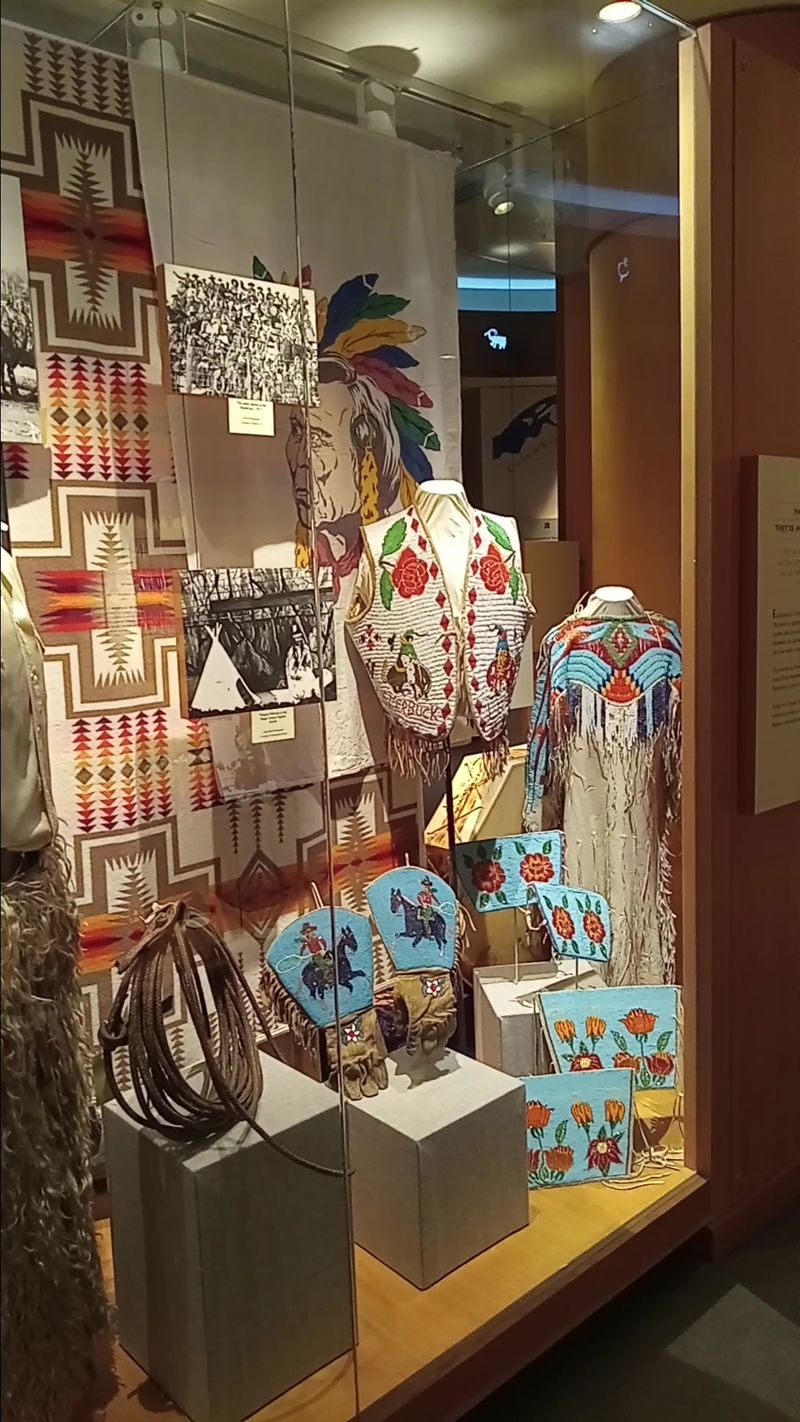
Artifacts, historic photography, video screens, and multimedia installations work together rather than competing for attention. Multimedia, historic photography, artifacts, audio, and interactive displays are used throughout the permanent exhibits.
Start at the Coyote Theater. A ten-minute film introduces the museum’s themes and honors the oral storytelling tradition that carried knowledge across generations.
The room is intimate, which suits the material. Sitting there first makes everything you see afterward land with more weight.
Beyond the theater, interactive stations invite hands-on exploration. Video and audio presentations throughout the permanent exhibits allow tribal perspectives to remain central to the story.
The permanent wing is organized in three parts: We Were, We Are, and We Will Be, so the galleries move from ancestral history through the present and into the Tribes’ own account of their future.
Historic images, artifacts, audio, and multimedia installations are integrated throughout the permanent galleries.
This Oregon museum is open from 10 a.m. to 5 p.m. Tuesday through Saturday, giving visitors several hours to explore the permanent and temporary exhibits.
Pitch A Teepee, Throw An Atlatl
Summer unlocks a whole extra layer of this place. Out behind the main building, the Living Culture Village opens seasonally with demonstrations you can actually join.
During the summer Living Culture Village program, visitors can learn how traditional lodges are assembled and explore other hands-on cultural activities.
Then there is the atlatl. The summer program also introduces visitors to the atlatl, a traditional spear-throwing tool.
The Living Culture Village adds participatory activities to the museum’s indoor interpretation during the summer season.
Youth and elders from the Tribes lead many of the demonstrations, presenting traditional practices and lifeways themselves rather than through an interpreter.
Because the schedule shifts from season to season, checking the institute’s calendar before a spring or summer visit is worth the minute it takes.
The Living Culture Village operates seasonally during the summer months and demonstrates cultural practices alongside the permanent indoor exhibits.
The property also includes outdoor areas and a community trail beyond the museum galleries.
Stone, Timber And Mountain Views
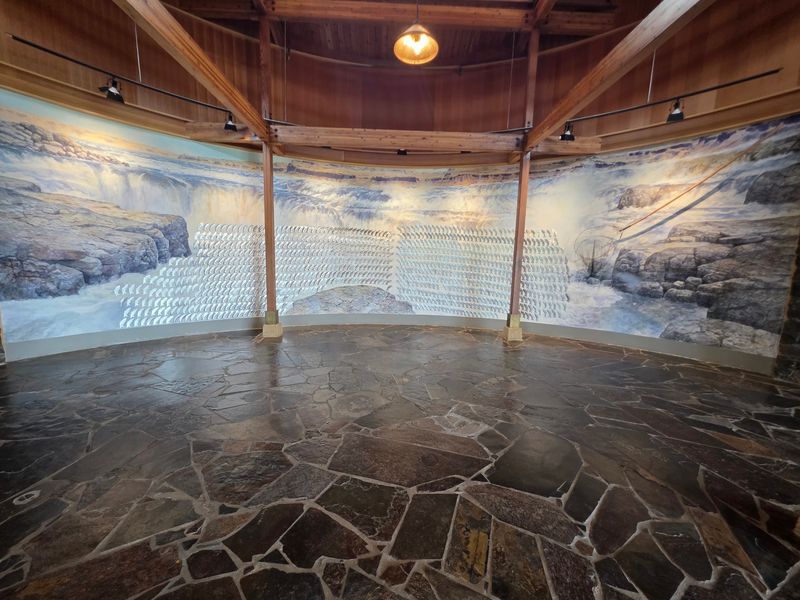
Architecture usually plays supporting actor at a museum. Here it belongs in the main cast.
The building stretches across 45,000 square feet, built from native stone and wood that settle it comfortably into the reservation landscape. Nothing about it shouts, and that restraint is the point.
Look at the rounded wing. The rounded wing was designed to evoke a circle, while the permanent exhibits move in a counter-clockwise direction through the tribal story.
Galleries are arranged so you move counter-clockwise, following that circular logic without really noticing. The layout guides your feet while the exhibits guide your thinking.
Tall east-facing windows deliver wide views of the Blue Mountains. Large east-facing windows connect the building visually with the Blue Mountains and surrounding landscape.
The museum’s 45,000-square-foot building includes exhibit areas, archives, a research library, meeting spaces, and climate-controlled collections facilities. Air conditioning keeps summer visits comfortable, and the restrooms are spotless.
Two solar carports in the parking area support a 432-panel solar array installed as part of the museum’s energy-efficiency work.
Fry Bread, Books And Blankets
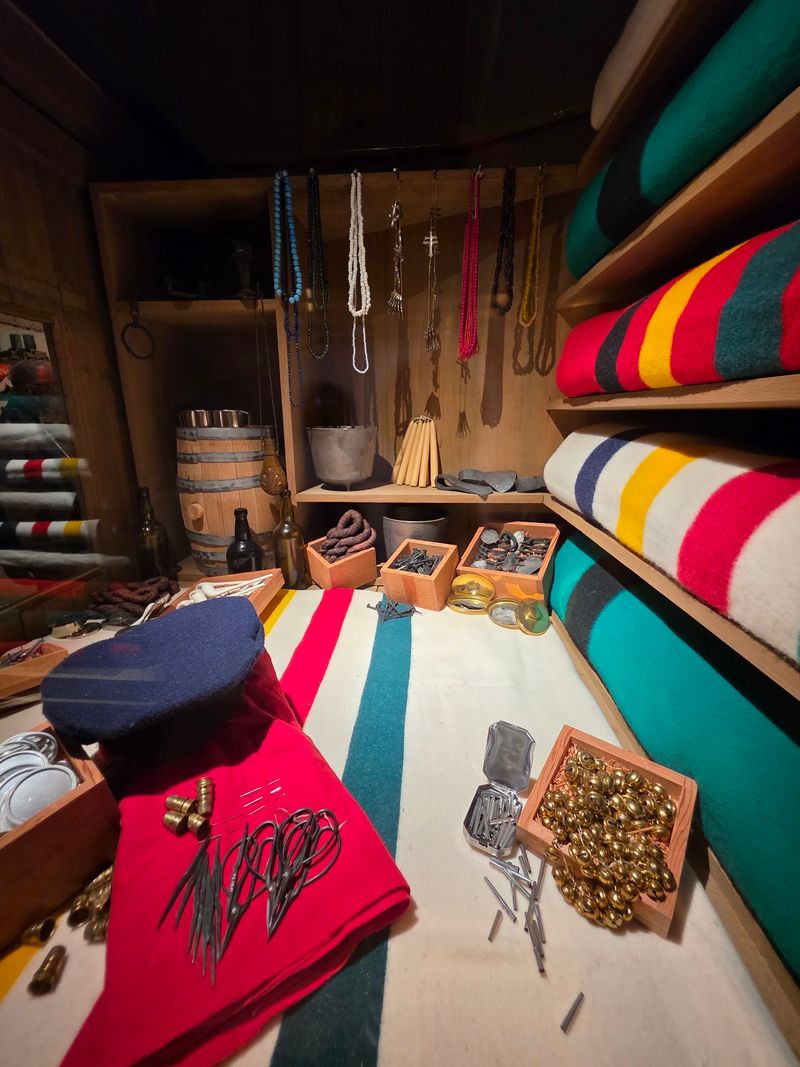
Hungry travelers, take note. Kinship Cafe serves lunch and huckleberry treats from 11 a.m. to 2 p.m. Tuesday through Saturday.
Current café offerings can include frybread, smoked salmon corn chowder, stews, and huckleberry treats, with service from 11 a.m. to 2 p.m. Tuesday through Saturday.
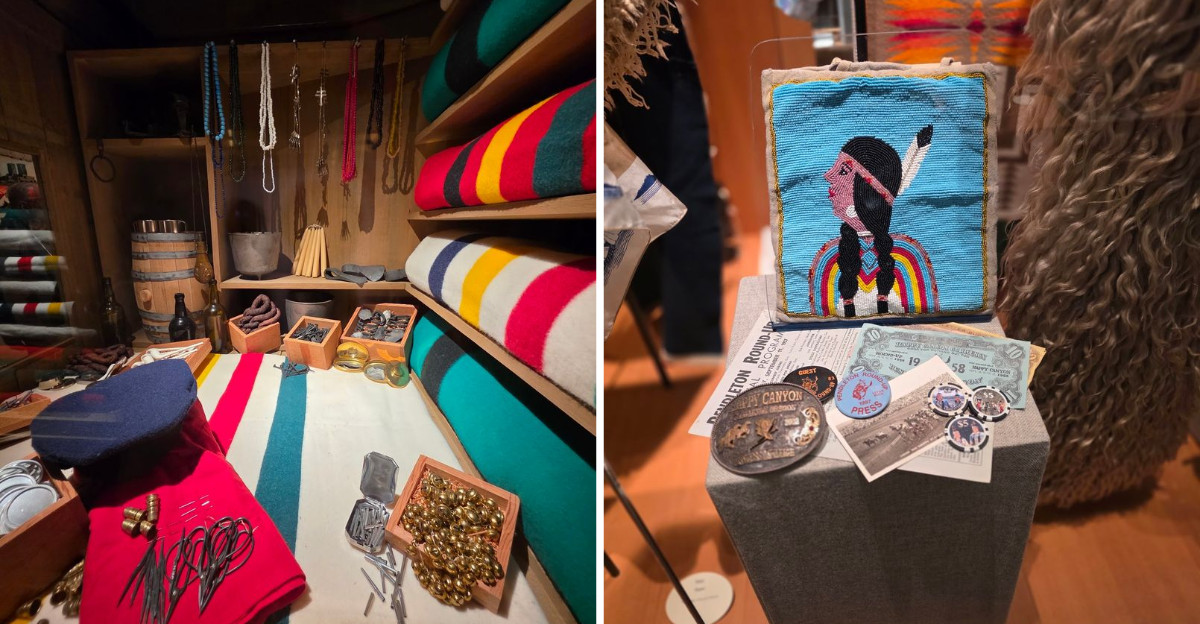
The Museum Store carries books, Pendleton Wool blankets and apparel, handcrafted jewelry and art, toys, and other items connected with the region and tribal cultures.
The store carries Pendleton Woolen Mills products, including exclusive Tamástslikt blanket designs.
The store also carries tribe-focused books, including language resources, cultural histories, and a place-names atlas.
Behind the public areas sit archive vaults and a Research Library. Those facilities support serious preservation work and scholarly study of tribal history.
Current admission is $13 for adults, $11 for adults 55 and older, and $6 for students. AAA members receive $1 off admission, and admission is free for everyone on the first Friday of each month.
Solar Panels And Community Gatherings
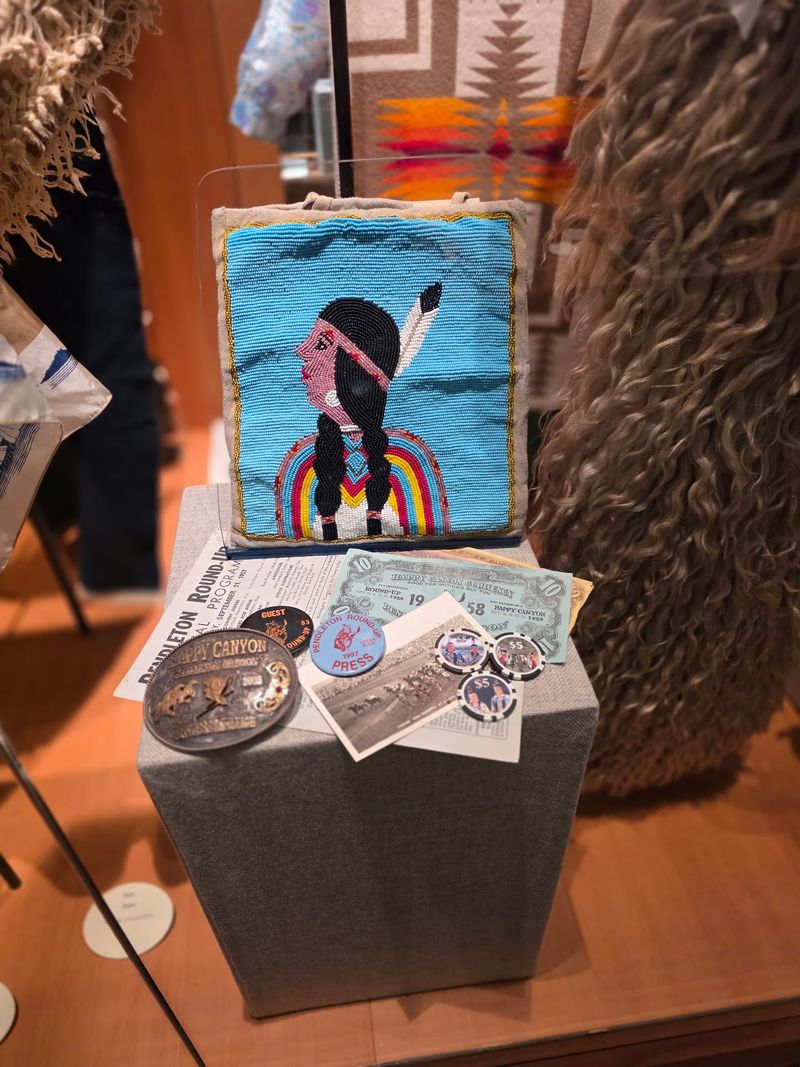
The museum is working toward net-zero energy consumption, with a wind turbine installed in 2014 and solar generation added in 2016.
The 432-panel solar installation produces about 140,000 kilowatt-hours annually, roughly enough electricity for 13 average Northwest homes. Some of those panels do double duty as shade structures over parking spaces.
Green infrastructure fits the message perfectly. Caring for land and water is not a modern add-on for these tribes; it is a principle thousands of years old.
The building also functions as a gathering place. The building includes a multipurpose theater, classrooms, meeting areas, and other spaces used for educational and community programming.
The visitor services wing also holds a museum store stocked with tribal art and handcrafts along with exclusive Pendleton blanket designs, and the Kinship Cafe serves a Native-inspired lunch menu daily.
Staff-led interpretive tours are part of the institute’s educational programming.
Practical details worth noting: doors open Tuesday through Saturday from 10 AM to 5 PM, with Sunday and Monday closed.
The museum combines permanent and temporary exhibits, educational programming, cultural preservation, and ongoing energy-efficiency projects within its 45,000-square-foot facility.