Over Two Hundred Feet Of Rock Walls Line This Florida State Park’s Shady Limestone Trail
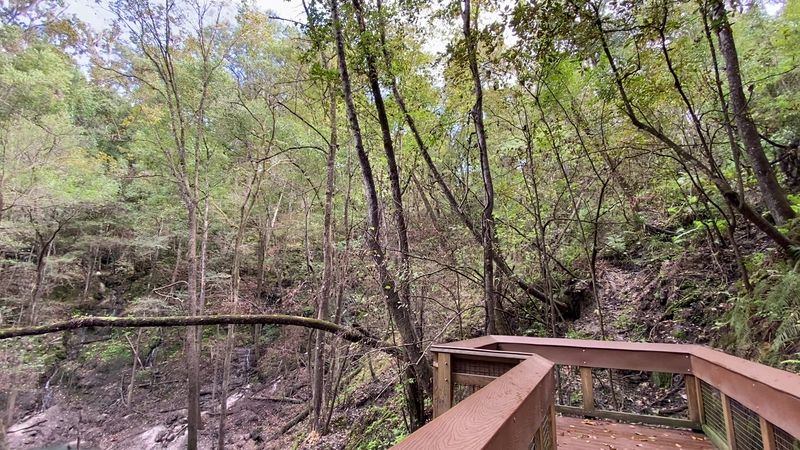
I expected a quick stretch of my legs and maybe a decent photo, nothing more. Florida is supposed to be flat, so a giant hole in the ground hiding a cool, dripping forest at the bottom caught me completely off guard.
Millions of years of rock, tiny waterfalls, and a staircase that tests your calves are all packed into one small state park. Bring good shoes, bring water, and leave a little extra time, because this place has a way of slowing you down.
A Giant Bowl on the Edge of Gainesville
From the road, the entrance looks like any quiet neighborhood park. A small lot, a few picnic tables, some grills under the trees, and a tidy ranger station are about all you see at first.
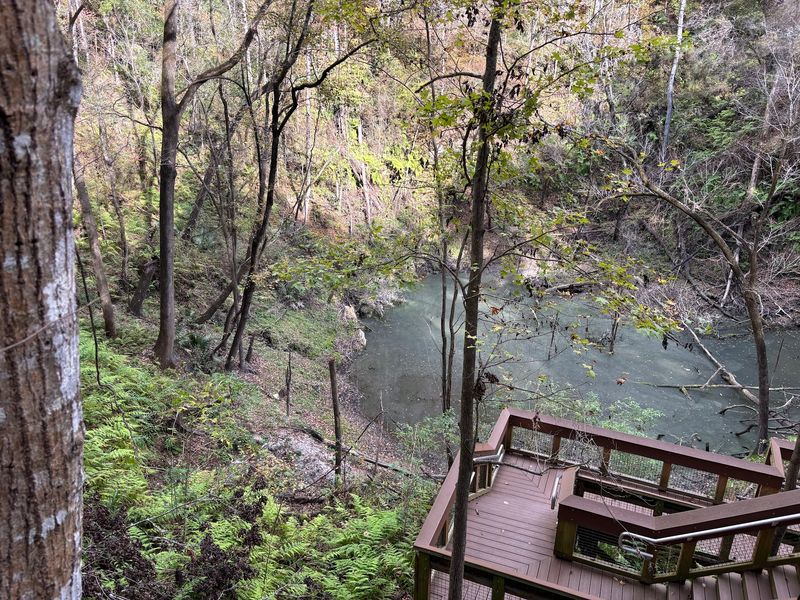
Walk a few minutes past those trees, though, and the ground simply drops away. Devil’s Millhopper Geological State Park protects a massive bowl-shaped sinkhole roughly 120 feet deep and about 500 feet across, sitting on the northwest side of Gainesville.
It is one of the most surprising natural landmarks in north central Florida, and it hides in plain sight among ordinary homes and roads.
Getting there is simple. Gainesville sits right along I-75, and the park is a short drive from downtown and the University of Florida campus, which makes it an easy add-on for anyone passing through north Florida.
From Ocala it is under an hour, and from Jacksonville or Orlando it works as a comfortable day trip.
The park is small, and that is part of its appeal. You can see the highlights in under an hour, yet the scenery feels much bigger than the acreage suggests.
The park sits at 4732 Millhopper Road, Gainesville, Florida 32653.
How Rainwater Carved a Hole in the Earth
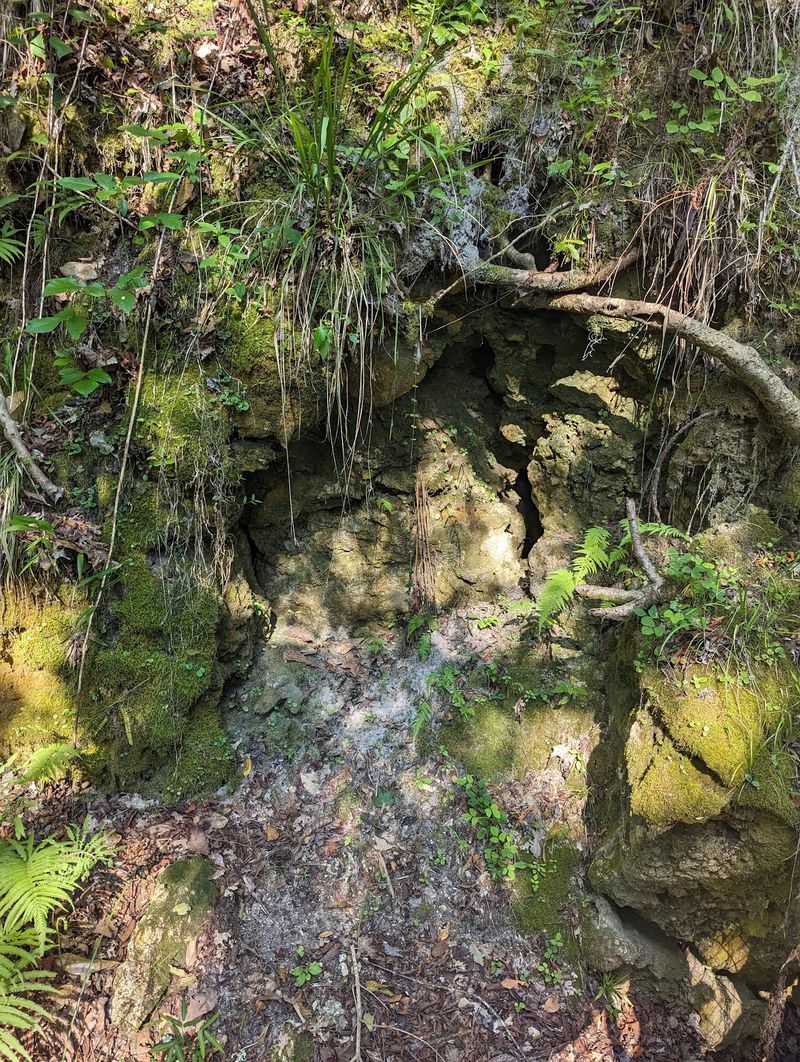
Rain did all of this. Not a meteor, not an earthquake, just ordinary rain falling for an unimaginably long time.
Here is how it works. Rainwater picks up a little natural acid as it soaks through soil, and that weak acid slowly dissolves the limestone that lies under much of Florida.
Over countless years, the dissolving rock left behind hollow spaces and caverns underground. Eventually the ground above one of those empty pockets could no longer hold itself up, and it collapsed inward, leaving the steep bowl you see today.
Picture a sandcastle with its base scooped out. Sooner or later, the top caves in.
The millhopper is basically a giant, ancient version of that, only made of rock and soil instead of beach sand.
Florida has thousands of sinkholes, but most are small, filled with water, or hidden by plants. What makes this one special is how open and deep it is, letting you look straight into the layers that shaped the state.
Interpretive posts along the staircase explain the process step by step, so even kids can follow the science while they climb down into it.
Where That Spooky Name Came From
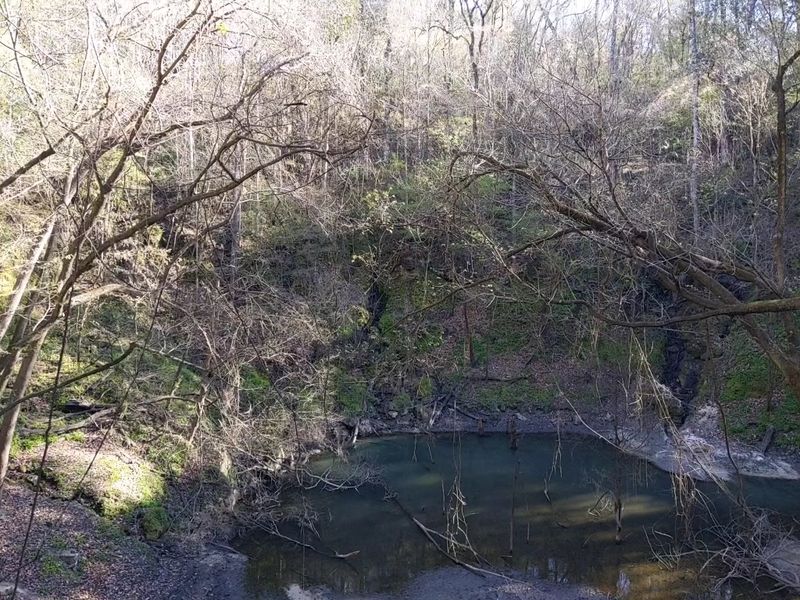
Ever wonder why a peaceful green park carries the word devil in its name? The answer goes back to farm life in the 1800s.
Early homesteaders noticed that the sinkhole had a funnel shape, much like the hopper on a grist mill. A mill hopper was the wooden funnel that fed grain down into the grinding stones.
Settlers added a dash of local lore to the comparison, because old animal bones and fossils turned up at the bottom. Put those pieces together and you get a name that sounds far scarier than the place feels.
One tale imagined the hole as a funnel feeding the underworld. Today the only things tumbling downward are trickles of spring water and the occasional falling leaf.
The name stuck, and over time the site drew attention for its geology and plant life instead of its legends. The state of Florida acquired the property in 1974, and in 1976 it was named a National Natural Landmark.
That federal recognition places it among the country’s most notable natural sites, which is quite a promotion for a hole that farmers once eyed with suspicion.
Stone Walls Holding Millions of Years
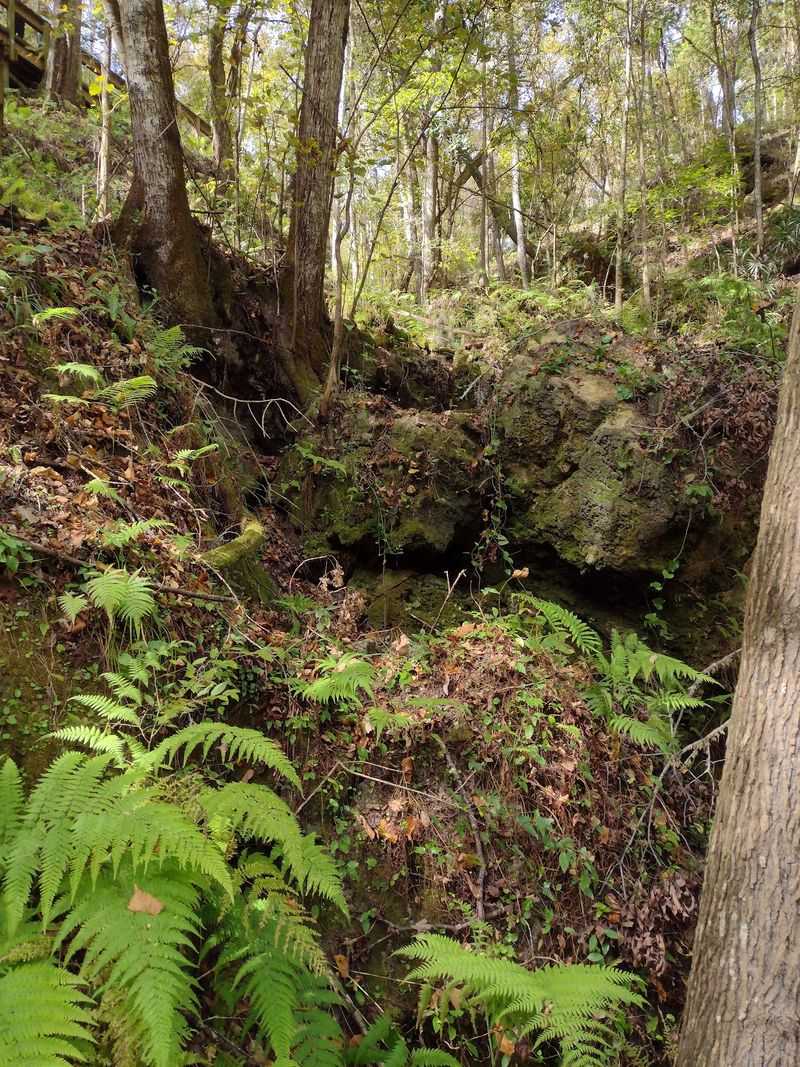
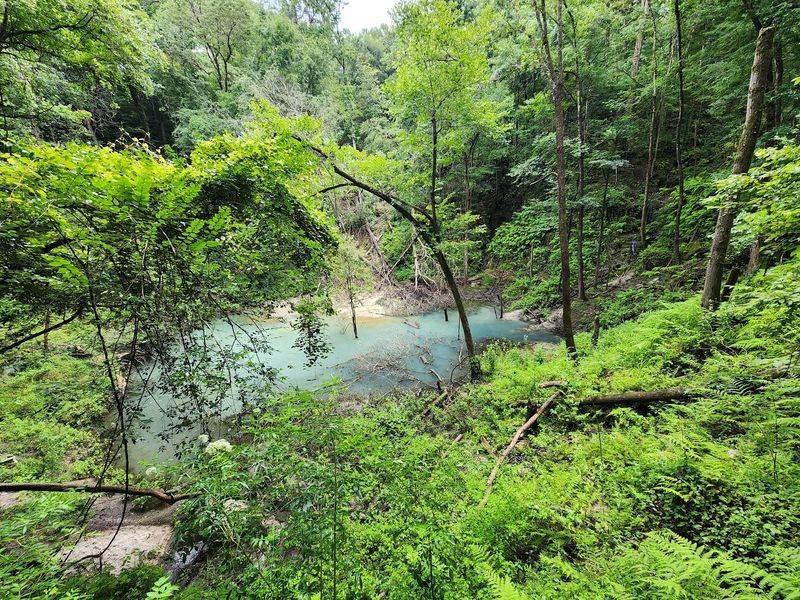
Cool, damp rock rises on every side once you are partway down. Moss coats some faces, ferns sprout from cracks, and the stone itself shows faint bands like the pages of a closed book.
Those bands are the real treasure. The sinkhole walls expose more than 100 feet of rock layers, mostly limestone, giving a rare look at Florida’s history from the inside.
The layers range from about 5 million to 34 million years old. Deep toward the bottom sits the Ocala Limestone, which dates back more than 34 million years, to a time when this part of Florida was covered by warm, shallow sea.
In a state where most land sits barely above sea level, seeing that much exposed rock in one spot feels almost unreal. The trail and stairs let you move past these layers slowly, which turns the descent into a walk backward through time measured in stone instead of years.
Look closely and you may notice changes in color and texture from one level to the next. Each shift marks a different chapter, when sea levels rose, fell, and left behind new deposits.
Shark Teeth and Seashells Far From the Beach
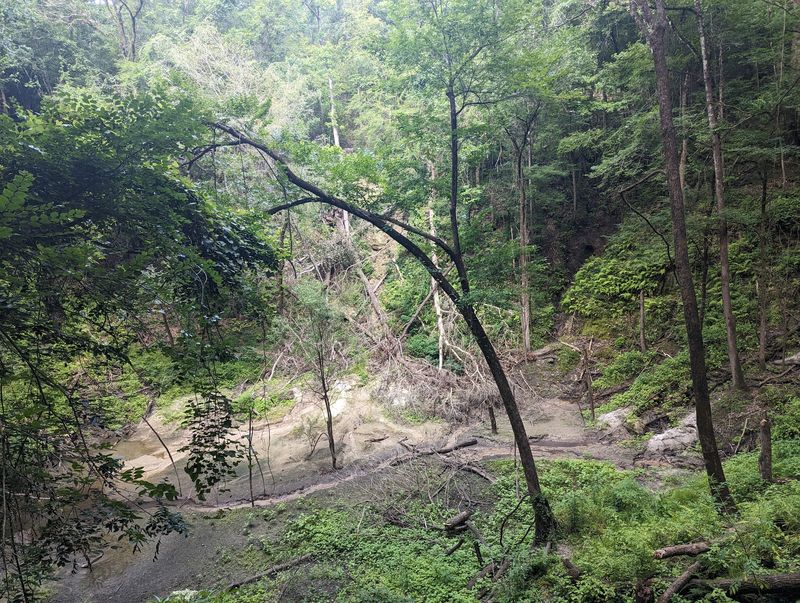
Shark teeth in the middle of north central Florida, miles from any ocean. That is the kind of clue that makes scientists lean in close.
Researchers have learned a great deal from what the sinkhole has turned up over the years. Fossil shark teeth, marine shells, and remains of extinct land animals have all been found here.
The sea creatures prove that ocean water once covered this ground, while the land animals show what roamed the area much later, after the waters pulled back.
Together, the fossils tell a layered story. First came the sea, depositing shells and sediment that hardened into limestone.
Then came dry land, forests, and animals, some of whose bones washed into the bowl after it formed.
For a curious kid, this turns a nature walk into a detective game. Remind young explorers that collecting is not allowed in Florida state parks, so the fun lies in spotting and learning rather than pocketing souvenirs.
The displays at the visitor center help connect the dots, showing examples of the kinds of fossils linked to the site and explaining how they ended up here.
The 132-Step Staircase Into the Shade
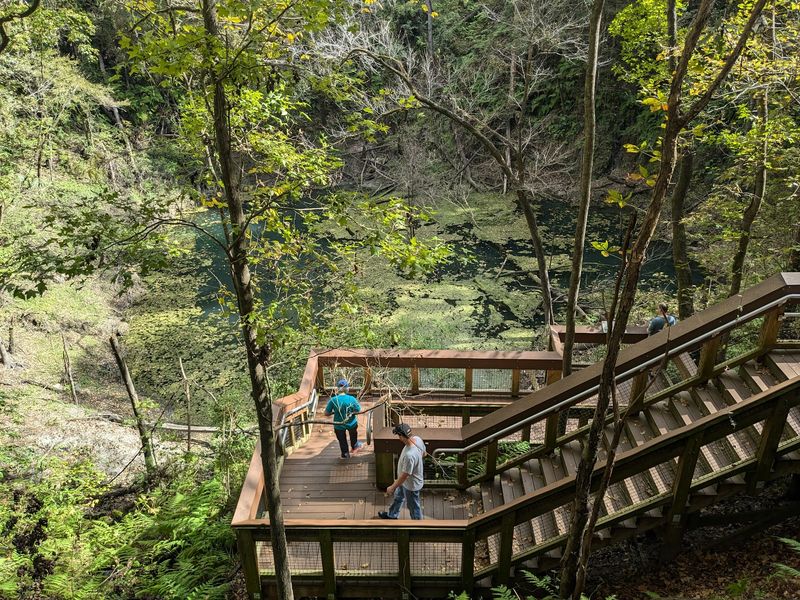
My legs started talking to me around step one hundred on the way back up. Nobody warned me, so consider this your warning.
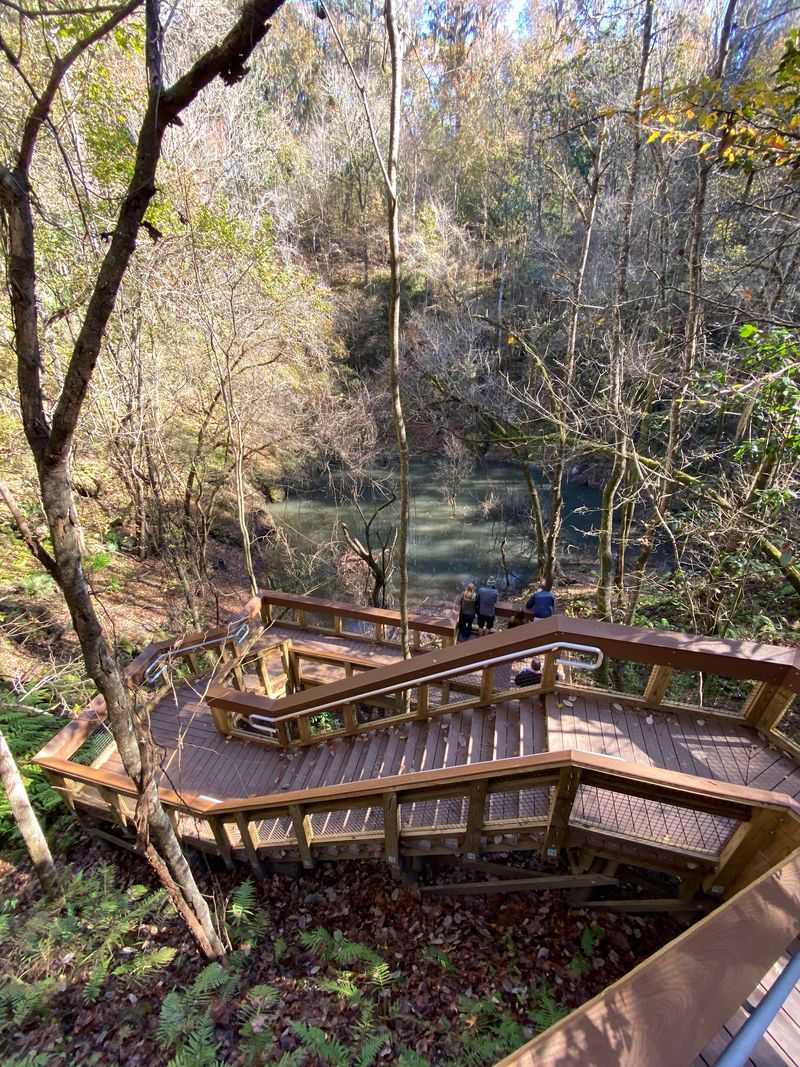
The wooden staircase drops 132 steps into the sinkhole, which means 264 steps for the full round trip. It ends at an observation deck near the bottom rather than on the floor itself, so you get close views without trampling the fragile plants below.
Landings and resting spots appear along the way, which helps anyone who needs to pause and catch their breath.
The current structure has a story of its own. The original staircase went in back in 1976.
After Hurricane Irma damaged it, a new 132-step system reopened in 2019, with a freshly built boardwalk and stairs that are in excellent shape.
A few tactics help. Take the descent slowly and read the history posts on the way down, since that saves energy for the climb.
Wear closed-toe shoes with grip, because the boards can get slick after rain.
Not up for all those stairs? An observation deck at the top still offers a solid look into the bowl.
A Pocket Rainforest Below Florida’s Flatlands
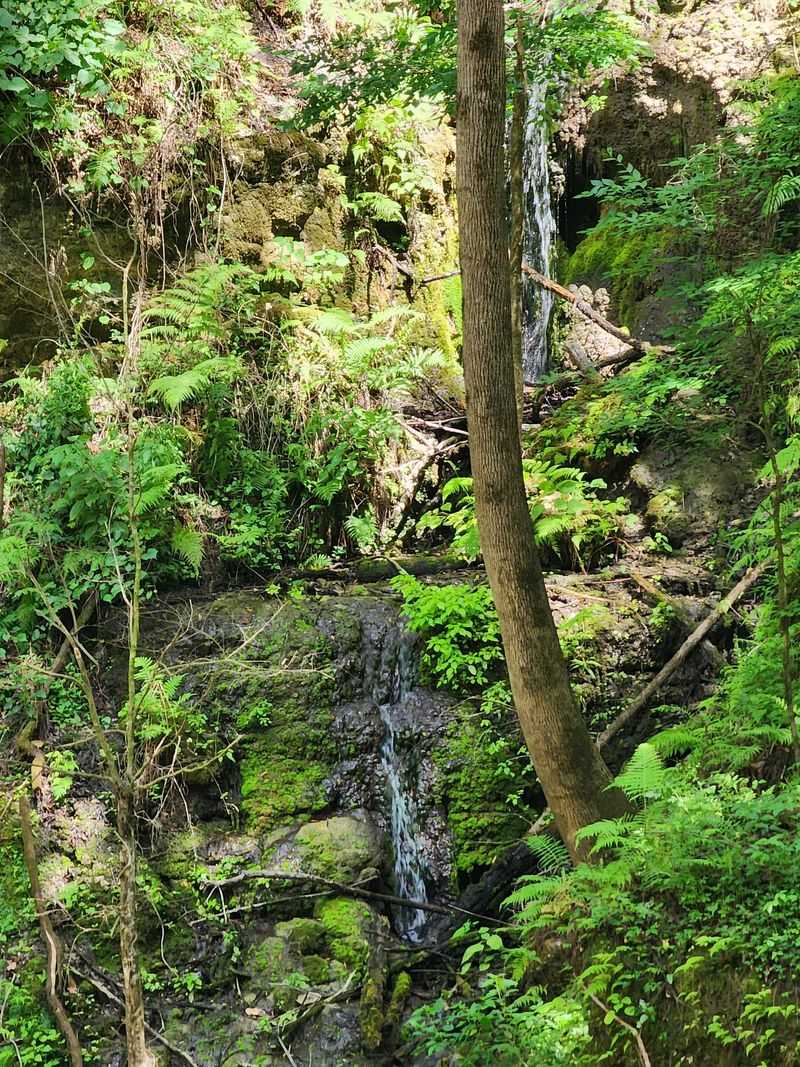
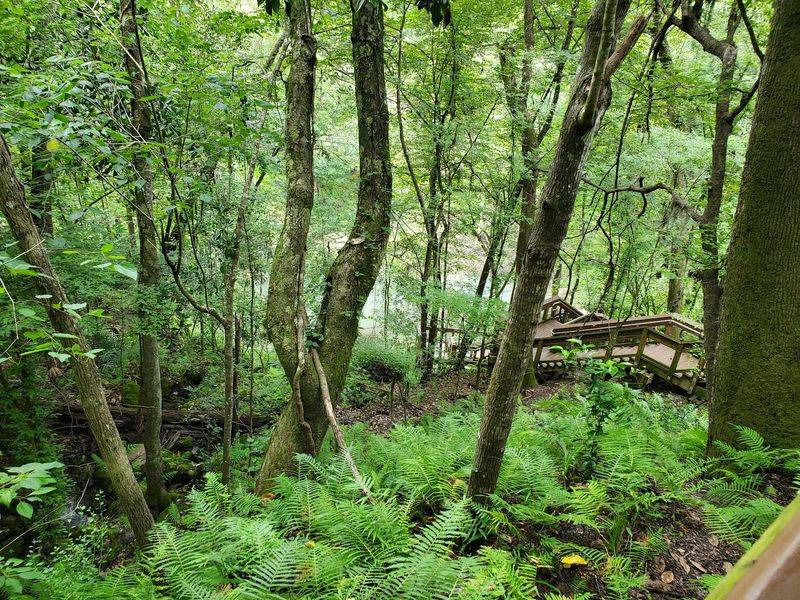
Halfway down, the temperature shifts. The air grows cooler and heavier with moisture, and the sounds of the city above simply fade out.
That change creates something rare: a miniature rainforest. Thick tree cover filters the sunlight, keeping the bowl shaded for most of the day.
Moisture lingers on the steep walls, and plants that normally grow much farther north or in cooler climates find a home here. Ferns spill over ledges, mosses carpet the stone, needle palms crowd the slopes, and delicate orchids appear in damp corners.
Compared to the sunny pine woods along the rim, the bottom feels like another world entirely. It is a striking contrast within just a few minutes of walking, and it shows how depth, shade, and water can shape a completely different habitat.
Summer heat in Florida can be brutal, so this shade matters. Even on a sweltering afternoon, the walk feels manageable thanks to the canopy overhead.
Plant fans should bring a camera with good low-light settings. The lush greens look beautiful, but the dim light can trick a phone into blurry shots, so hold steady at each landing.
Waterfalls That Rise and Fall With the Rain
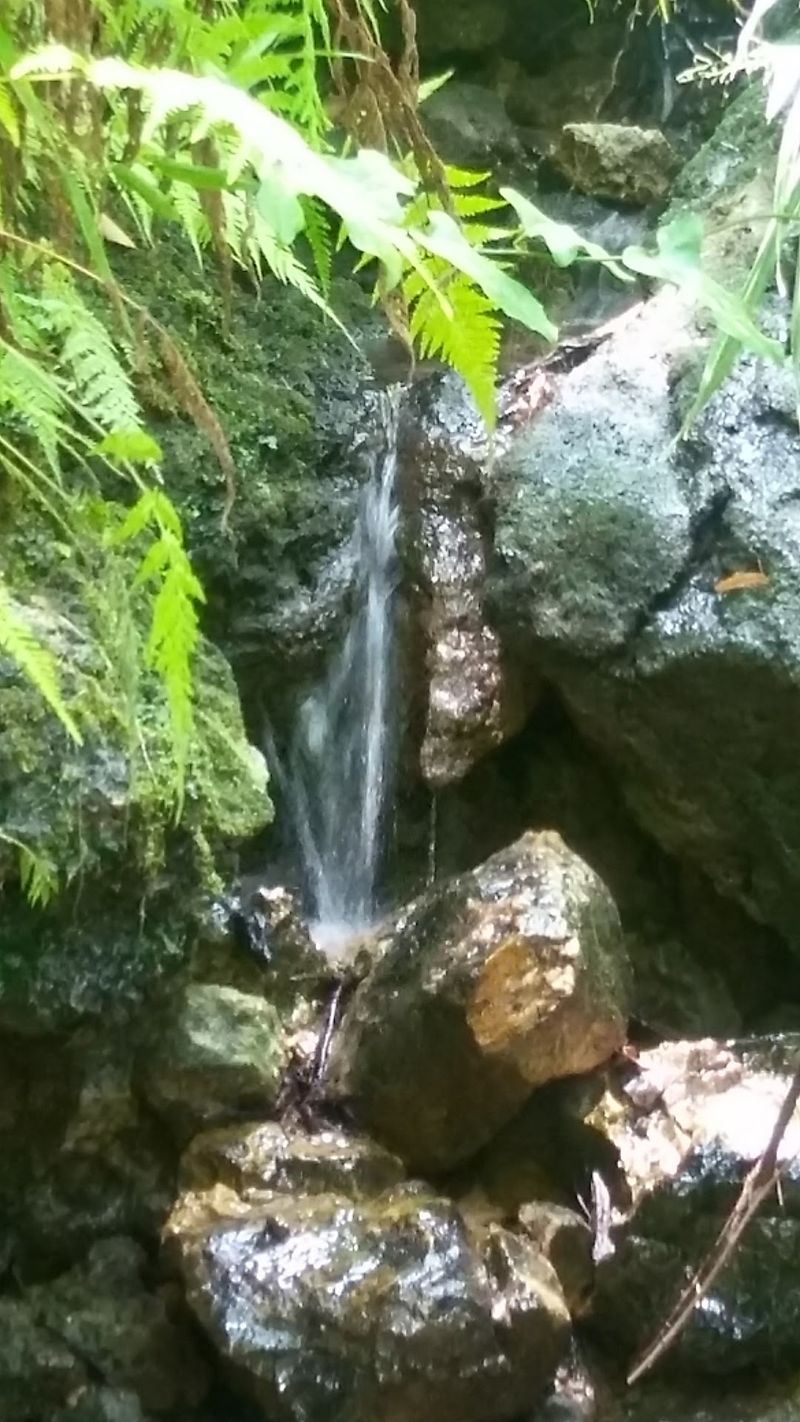
Listen before you look. A soft trickle, then a steady splash, echoes off the rock walls long before the water comes into view.
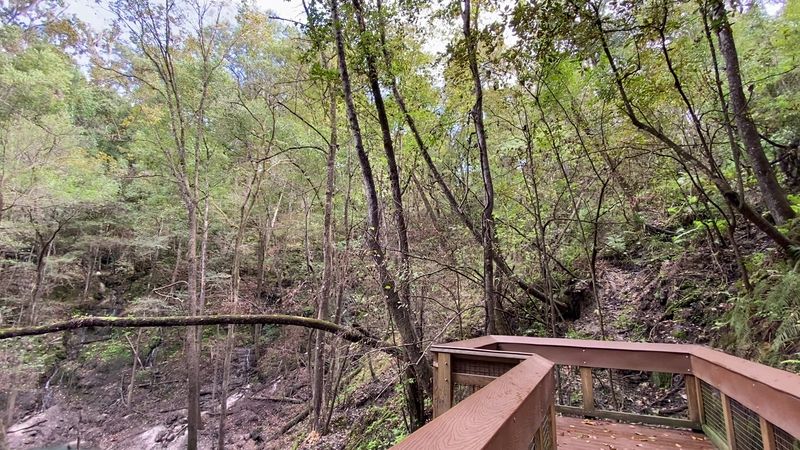
Small streams run down the steep slopes and form tiny waterfalls, some of them fed by a constant flow from springs. The water slips over ledges, disappears into crevices, and in wetter times collects in a pool near the base of the stairs.
That gentle sound, bouncing around the bowl, gives the whole place a calm, almost hushed mood.
Timing makes a big difference. After heavy rain, and especially toward the end of the summer rainy season, the falls run strong and the vegetation looks its most lush.
During dry spells and droughts, the flow can shrink to a thin trickle and the bottom may look nearly dry. It still looks lovely, just quieter.
So when should you go for the best show? Aim for a day or two after a solid Florida downpour.
Late summer and early fall thunderstorms usually deliver, though during hurricane season it is smart to check park conditions before driving out, since storms can affect trails and access.
Half a Mile Around the Rim
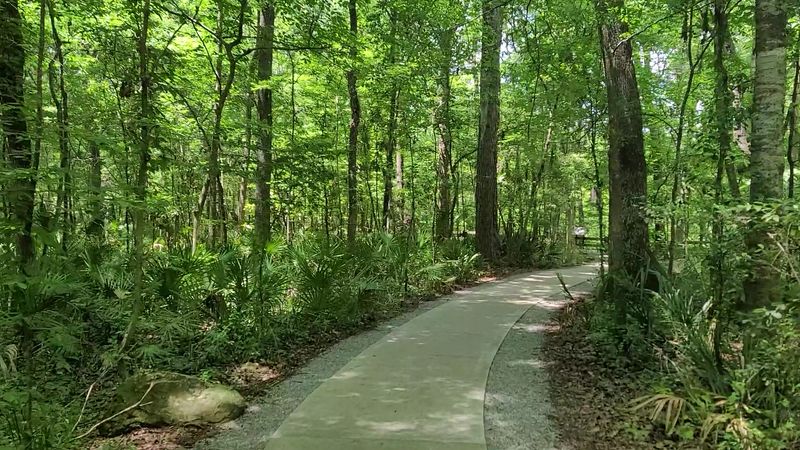
Short, shady, and surprisingly peaceful, the rim loop is the easygoing partner to the staircase workout.
The nature trail circles the top of the sinkhole for about half a mile. It winds through upland pine forest and scrubby flatwoods, giving different views down into the bowl from above.
Small bridges, wildflowers, and plenty of plants line the path, and benches appear along the route for anyone who wants to sit and enjoy the stillness.
There is no road noise back here, which is impressive considering how close the park sits to town. The path is easy walking, though tree roots poke up in spots, so keep an eye on your feet.
Many people combine the rim loop with the staircase for a full visit. Done together, the whole experience, including a restroom stop, photos, and both walks, can take around 40 minutes at a relaxed pace.
Linger longer if the birds are active.
A hiker hoping for miles of backcountry will find the trail system limited. For a morning stroll, a lunch-break escape, or a gentle outing with grandparents, the size fits nicely.
Owls, Songbirds, and Rustling Leaves
Who cooks for you? That rhythmic call, belonging to the barred owl, drifts through the trees here more often than you might expect.
Wildlife adds a lively soundtrack to the park. More than 100 bird species have been documented on the grounds, from woodpeckers tapping on pines to songbirds flitting through the understory.
Barred owls are a highlight, sometimes calling back and forth during daylight hours, which makes for a fun moment if you hold still long enough to hear the reply.
Smaller creatures show up too. Squirrels scramble across branches, lizards dart along railings, and butterflies drift through sunny patches near the rim.
None of it is dramatic safari material, but these small encounters reward patience.
Bird watchers should come early in the morning, when activity peaks and the trail is quieter. Binoculars help along the rim, where you can scan treetops and the slopes below at the same time.
The park also sits along the Great Florida Birding and Wildlife Trail network, which links notable viewing spots across the state. Pair this stop with a few other north Florida birding sites to build a full day around feathered neighbors.
Rangers, Exhibits, and a Saturday Stroll
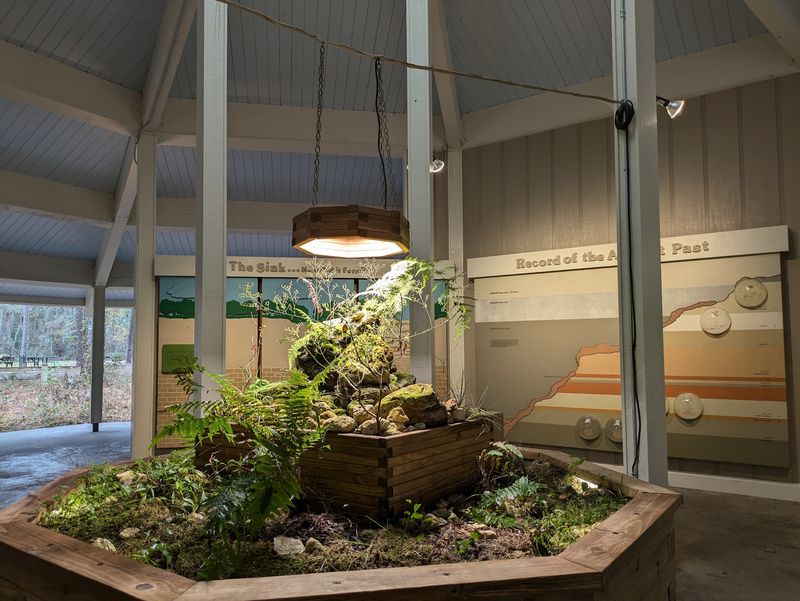
Spend ten minutes inside before heading to the stairs, and the whole sinkhole makes more sense.
The visitor center offers interpretive displays explaining how the sinkhole formed, why its plant life is so unusual, and what the fossils reveal about ancient Florida. The exhibits are clear and well designed, making it easy for kids and adults alike to grasp the big ideas quickly.
Large, clean, unisex restrooms are available here as well, a welcome detail before the stair climb.
On Saturday mornings, park rangers lead guided walks. A ranger can point out plants you might overlook, share stories about the site’s history, and answer the questions that pop up halfway down the stairs.
Prefer exploring solo? The signs along the boardwalk handle that job nicely, with history and science posted at stops along the way.
Teachers take note. The mix of geology, ecology, and history packed into such a compact space makes the park an excellent field trip destination.
Students get to see science in action rather than reading about it in a textbook, and the short trail keeps young attention spans in check.
Perfect Fit for Curious Minds and Busy Schedules
Students between classes, retirees on a morning walk, and families killing time before a game all fit comfortably here. The park suits almost anyone with an hour and a little curiosity.
Nature lovers get shade, ferns, and birdsong. History buffs get pioneer stories and a landmark designation.
Hikers get a stair climb that counts as real exercise, while casual walkers can stick to the flat-ish rim loop. Leashed pets are allowed on the nature trail and picnic areas, though not on the staircase into the sinkhole.
Accessibility deserves a mention. The visitor area and parts of the grounds are handicapped accessible, and the overlook at the top lets anyone peer into the bowl without tackling the steps.
Anyone with knee or heart concerns can enjoy plenty here without the full descent.
Out-of-state travelers expecting a sprawling wilderness may find it brief. Think of it as a satisfying side trip rather than an all-day destination, especially if Gainesville is already on your route.
Picnic tables and grills near the parking area make lunch easy. Pack sandwiches, grab a shady table, and let the kids burn off energy afterward.
Smart Planning for Your Florida Sinkhole Day
Opening time is early, so a morning visit is easy to pull off before the afternoon heat and thunderstorms roll in. The park stays open into the evening daily, but check the official Florida State Parks page for current hours before you go.
Admission is a small per-vehicle fee, typical of Florida state parks, with a slightly different rate for walk-ins and cyclists. Payment happens by phone through a QR code at the entrance, so bring a charged phone.
Annual state park pass holders get in without paying the daily fee.
Parking is plentiful, even on pleasant winter weekends. Restrooms are near the entrance, and benches along the trail give you places to rest.
Season matters. October through April brings the most comfortable temperatures for climbing all those steps.
Late summer brings fuller waterfalls and greener plants, along with sticky humidity and the chance of storms. From June through November, hurricane season can affect conditions, so a quick check before driving out is wise.
Pack water, wear sturdy shoes, and bring bug spray in warm months. Then build a fuller day nearby with the Florida Museum of Natural History or Kanapaha Botanical Gardens.
Small Footprint, Deep Story
Standing at the rim one last time, I realized how easy it would be to drive right past this place. A plain sign, a modest lot, a ranger station.
Nothing about the entrance hints at what waits below.
That surprise is the best part. In a state famous for beaches and theme parks, Devil’s Millhopper offers something quieter: a cool, green bowl carved by patient rain, walls holding millions of years of history, and the steady music of falling water.
It packs geology, botany, and pioneer folklore into a visit short enough for a lunch break.
Expectations matter. This is a compact park with one main trail and one big staircase, not a sprawling wilderness.
Its charm comes from depth, both literal and historical, rather than size.
So go after a good rain if you can. Take the stairs slowly, read the signs, and pause at the bottom long enough to hear an owl or two.
Then climb back up, catch your breath, and appreciate that Florida, flat as it seems, still has a few dramatic secrets carved into its bones.