9 Overhyped North Carolina Summer Towns That Get Way Too Crowded
Some North Carolina towns seem to have two completely different personalities.
For much of the year, you can wander around without thinking too hard about where to eat, when to arrive, or how long you want to stay. Then summer shows up and suddenly everyone else appears to have received the same travel recommendation.
That change can be dramatic.
Places known for easygoing streets and relaxed scenery start operating at an entirely different pace once vacation season gets moving. The town itself has not changed, but the experience certainly has.
And that is where expectations matter.
These nine destinations are popular for good reason, yet summer can reveal a side of them that glossy vacation photos rarely capture.
You may still love them.
Just do not expect to have them to yourself.
1. Wrightsville Beach
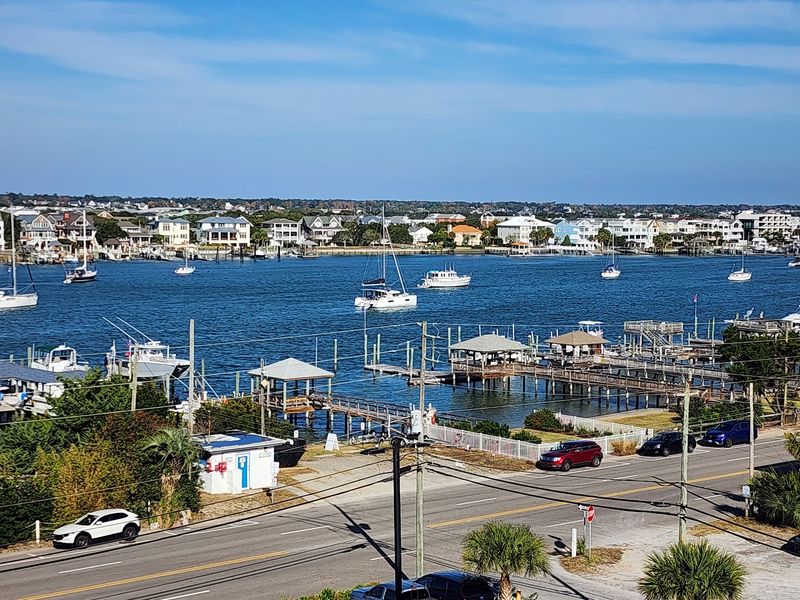
Narrow island geography makes summer demand impossible to ignore at Wrightsville Beach. The beach, sound, restaurants, marinas, and popular walking areas all compete for space on a narrow island, and the town manages that pressure with an extensive paid-parking program.
In 2026, paid parking runs daily from March 1 through October 31. Premium spaces cost $6 per hour, while most non-premium areas cost $5 per hour, with daily caps of $30 and $25 respectively.
The town also introduced real-time parking information this year, a useful sign of how important space management has become. None of that makes Wrightsville Beach a bad destination.
The oceanfront, watersports, Loop, and proximity to Wilmington explain why people keep coming. The issue is timing.
A spontaneous midday arrival on a sunny Saturday can feel very different from an early weekday visit. Beach access areas, restaurants, and roads naturally concentrate visitors into a relatively small footprint.
If you want the version of Wrightsville Beach that feels breezier and less transactional, arrive before the main beach rush, use the town’s parking tools, and avoid assuming that an open stretch of sand means an easy parking spot nearby before committing to the full day in peak season too.
2. Carolina Beach
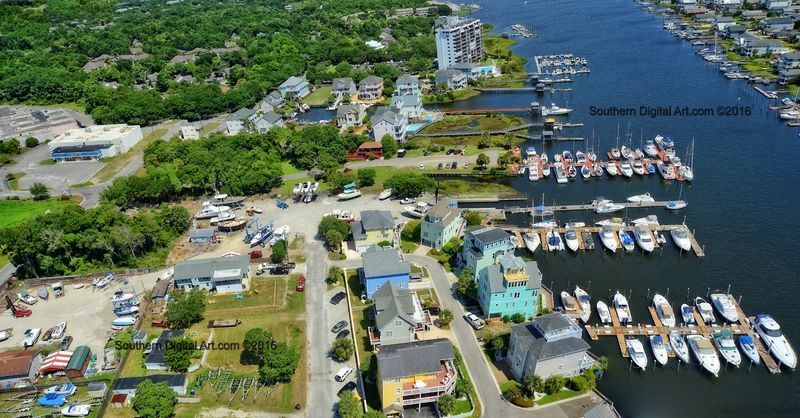
Boardwalk energy is part of the appeal in Carolina Beach, but summer popularity can make the area much busier than first-time visitors expect.
The town operates paid parking from March 1 through October 31, generally from 9 a.m. to 8 p.m., with premium lots charging up to $7 per hour and standard lots up to $6.
Those rates are not proof of overcrowding by themselves, but they show how carefully the town manages limited space during the visitor season.
The Boardwalk, beach access points, Carolina Beach Lake, restaurants, shops, and seasonal events all draw people into a compact part of Pleasure Island.
Summer weekends can therefore feel energetic rather than quiet, especially around dinner and evening entertainment. The best strategy is not to avoid town, but to decide what kind of visit you want.
Early mornings work well for the beach and Boardwalk before the busiest hours, while weekdays reduce the pressure around parking and dining. Carolina Beach State Park offers a different pace nearby; however, its own popular trails and marina can also become busy.
Treat the town as a summer destination, not a secluded beach escape, and the crowds become much easier to manage that day.
3. Nags Head
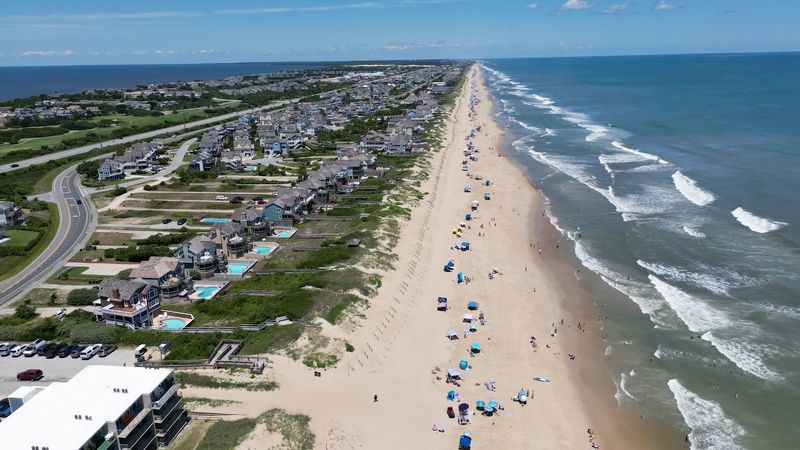
Saturday turnover traffic makes the Outer Banks summer rush especially visible around Nags Head.
The Dare County tourism authority specifically warns travelers about heavy Saturday traffic between roughly 9 a.m. and 6 p.m., when many weekly rental guests arrive and depart at the same time.
It recommends considering another travel day because Friday or Sunday arrivals can mean substantially less traffic.
Nags Head itself offers numerous public beach accesses, which makes the ocean easier to reach than in some northern Outer Banks communities.
In 2026, however, beach nourishment work also affected several access points into July, with temporary closures or parking restrictions around Gulfstream Way, Juncos Street, and other staging areas as equipment was removed. That makes this summer slightly more complicated than usual.
Once you are settled, the town still delivers the broad beaches, Jockey’s Ridge, piers, restaurants, and soundside sunsets that explain its enduring appeal. The frustration usually comes from arrival timing and moving around at peak hours, not from a lack of things to enjoy.
Travel outside the Saturday turnover rush, confirm current beach-access conditions, and Nags Head feels far more manageable during a busy August vacation week overall.
4. Duck
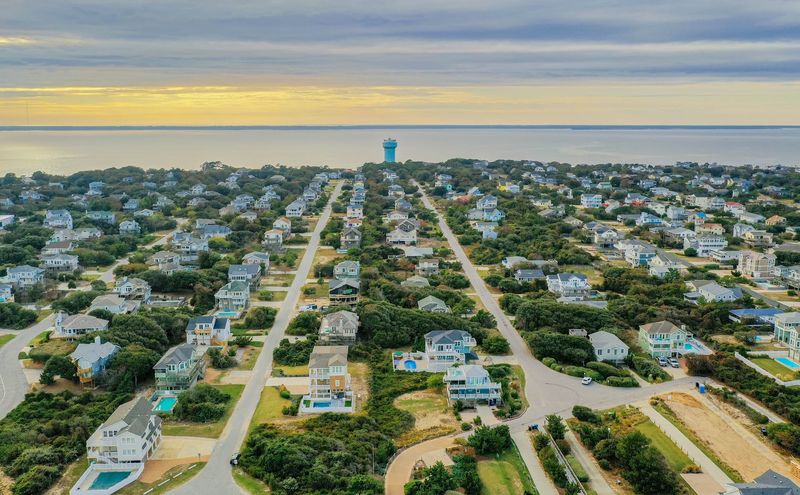
One road carries nearly everything through Duck, and summer traffic can make this small village feel much busier than its map suggests.
The town’s own planning documents identify NC 12, known locally as Duck Road, as the primary north-south route and note that congestion is heaviest during tourist season.
There is no parallel public road network capable of absorbing the same volume, so through traffic heading farther north mixes with visitors stopping for shops, restaurants, rentals, and the Town Park. Parking requires planning too.
Duck has no municipally owned public beach accesses, and oceanside access is generally reserved for property owners, renters, and their guests through neighborhood access points. Public parking is concentrated around businesses, town facilities, and the park and boardwalk rather than beach lots.
That makes the village easier to enjoy on foot once you are parked, but less forgiving if you arrive expecting to drive from stop to stop. The nearly mile-long soundside boardwalk, shops, and park deserve their popularity.
Just approach Duck as a compact vacation community with limited road capacity rather than an undiscovered coastal hideaway. Midweek visits and walking between nearby stops can make the experience noticeably calmer in July.
5. Emerald Isle
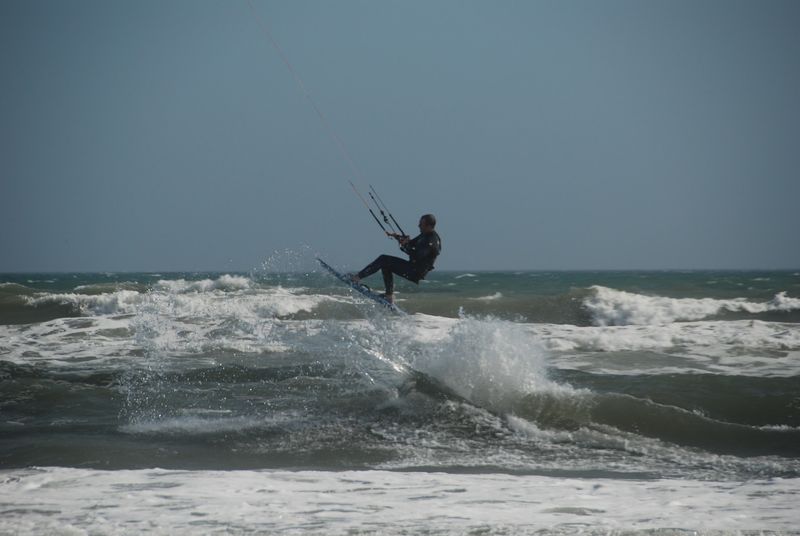
A slower reputation does not mean empty beach lots in Emerald Isle, where peak summer demand becomes obvious around the major public access points.
The town charges for parking at the Eastern and Western Ocean Regional Accesses from April 1 through September 30, seven days a week.
Current 2026 information lists parking at $5 per hour with a $25 daily maximum, and the spaces are first-come, first-served. The two regional accesses together provide hundreds of spaces, yet sunny weekends can still create competition because families, surfers, anglers, and day visitors are funneling toward the same facilities.
The town has also expanded its free summer trolley service on Friday and Saturday evenings through Labor Day, giving visitors a way to reach popular commercial areas without moving their cars again. That is a practical option when dinner traffic builds.
Emerald Isle remains appealing because the town combines a long oceanfront, Bogue Inlet Pier, bike paths, and family-oriented recreation without the density of a major resort city. The catch is that many other people are looking for exactly that balance.
Arrive early for regional beach parking, use the trolley when it fits, and avoid expecting a midsummer Saturday to feel deserted that morning.
6. Oak Island
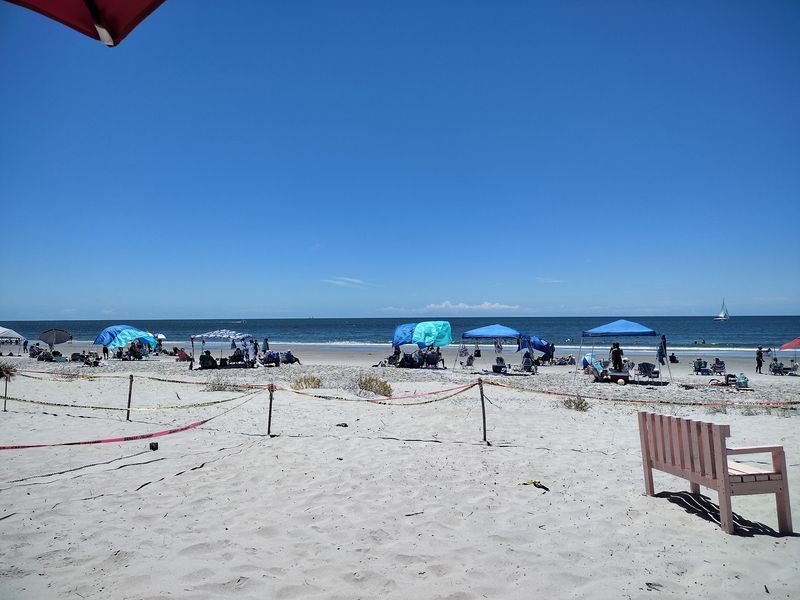
More public beach parking than many visitors expect helps Oak Island absorb summer demand, but the town still operates a seasonal paid-parking program.
For 2026, enforcement runs from April 1 through September 30, and the town reports 1,500 public spaces spread across 65 beach-access locations.
It even added 120 new spaces before this season, including an expansion near The Point. That is important context because claims that parking simply “disappears” everywhere would be exaggerated.
The more accurate picture is that popular accesses and major events can fill quickly while other sections remain easier to use. The town’s July Beach Day guidance, for example, included dedicated traffic instructions and warned drivers not to use side streets as shortcuts after the fireworks.
Oak Island’s long shoreline and numerous access points help distribute visitors better than in some smaller beach communities, but restaurants, piers, and central gathering areas still get busy.
If your goal is quiet, do not automatically aim for the most obvious access beside a major attraction.
Check the town’s parking map, consider less central sections, and remember that a sprawling beach town can feel crowded in one area while remaining surprisingly relaxed a few miles away on sunny weekends.
7. Boone
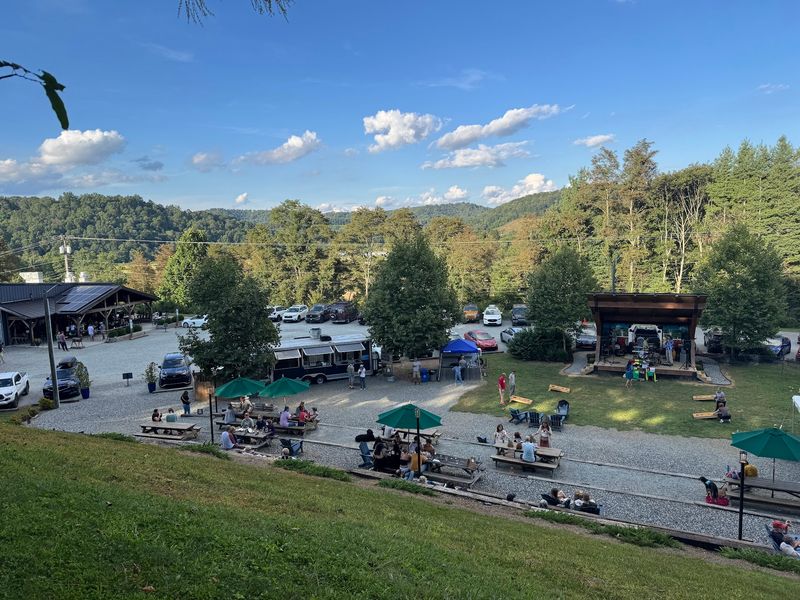
Cooler mountain air does not keep summer weekends quiet in Boone. King Street, Appalachian State University, nearby trailheads, Blue Ridge Parkway access, and the town’s role as a High Country base concentrate visitors into a downtown that remains compact.
The Town of Boone manages roughly 200 smart-meter spaces, 150 pre-pay spaces, and additional permitted parking downtown, which gives visitors options without guaranteeing that the closest spot will be open during the busiest hours.
Summer also brings festivals, day trippers, families escaping hotter lower elevations, and travelers moving between Boone, Blowing Rock, and surrounding mountain attractions.
The result can be slower traffic and fuller sidewalks even when the wider mountains feel spacious. That contrast is what surprises newcomers.
Boone is not a secluded mountain village; it is a university town, regional commercial center, and tourism hub sharing the same streets. The best version of a summer visit usually starts early, especially if breakfast, King Street shopping, or a popular nearby hike is part of the plan.
Park once when possible and walk downtown rather than circling repeatedly. A short drive away, the landscape opens quickly, which makes it easy to balance Boone’s energy with a quieter mountain afternoon elsewhere that day.
8. Blowing Rock
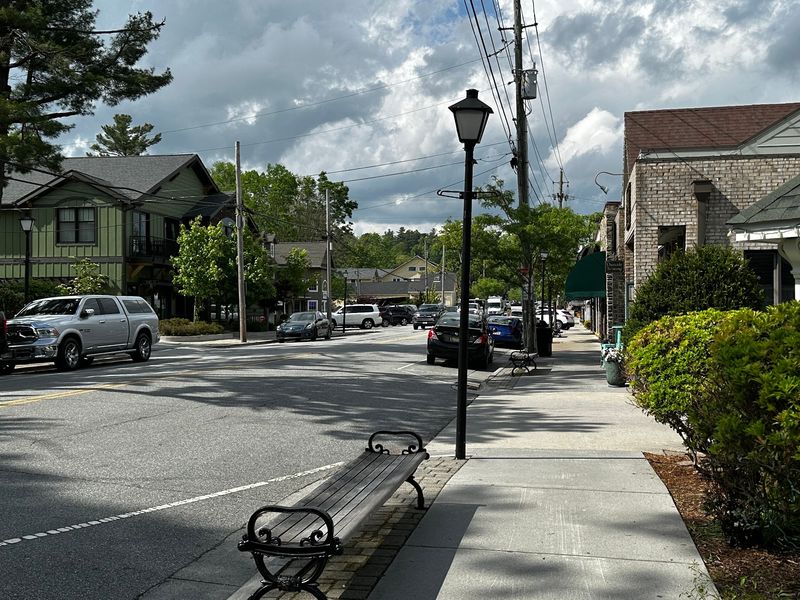
No guesswork is needed about Blowing Rock’s summer popularity because the town’s own tourism guidance says downtown gets busy.
Its parking page warns that downtown becomes busy on weekends, particularly in summer and fall, and recommends weekdays for easier parking and fewer crowds.
It also notes that spaces are easiest to find before 11 a.m. or after 5 p.m. Main Street’s compact scale explains why.
Shops, restaurants, parks, galleries, and pedestrians all gather along a small central corridor, while major attractions and Blue Ridge Parkway traffic bring additional visitors into the area. Public parking is free, which is welcome, but the most convenient Main Street spaces can fill quickly.
Event weekends add another layer, and the town operates free park-and-ride shuttles for selected dates including Art in the Park and the July Fourth weekend. Blowing Rock is popular because its downtown is attractive and easy to explore on foot, not because it secretly offers solitude.
Treat that popularity as part of the planning. Arrive early, use off-Main Street parking, or choose a weekday.
Once the car is settled, the town becomes more pleasant than it feels circling for a space at noon during the warmest weeks of summer.
9. Lake Lure
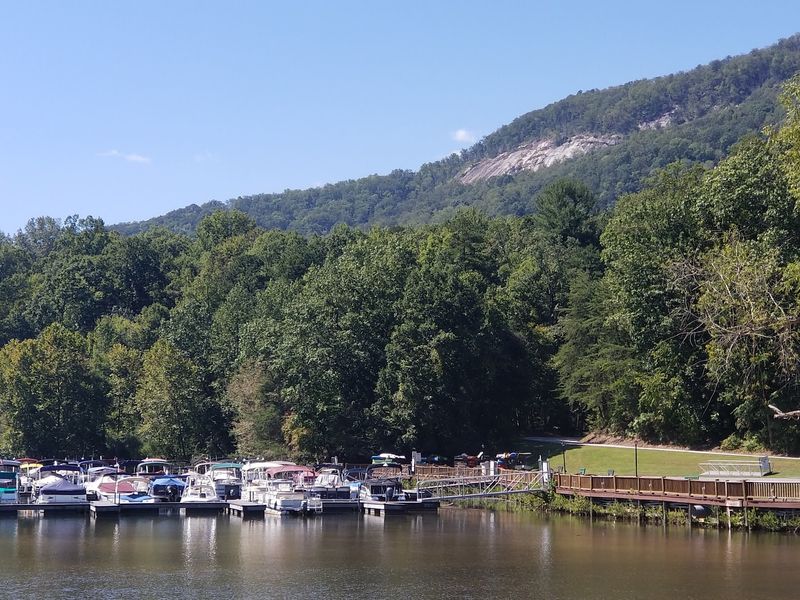
This summer comes with context at Lake Lure because 2026 is not an ordinary season. The lake reopened on May 15 after an extended closure and recovery following Hurricane Helene, and Lake Lure Beach reopened on May 23.
That return has brought visitors back quickly. Town reporting says hundreds came for the July Fourth period, including more than 700 people at the Lake Lure Inn’s Independence Day festivities.
The beach is open daily through early August before shifting to a weekend schedule through Labor Day, and the reopened area now includes an Aqua Park alongside the swimming beach.
Those details make Lake Lure a legitimate summer draw again, but calling it consistently overcrowded would ignore the unusual recovery timeline.
The better description is renewed popularity concentrated around limited waterfront attractions. Beach parking itself is marked for about 70 vehicles, so arriving late on a weekend can make access more complicated.
The lake, mountain scenery, Chimney Rock area, and reopening story naturally create strong interest this summer.
If you visit, confirm current operating information, arrive early for the beach, and remember that local businesses are welcoming visitors after a long interruption rather than simply dealing with routine tourism pressure now.