8 Places In Georgia Where Rattlesnakes Have Been Spotted
I used to think I knew every inch of Georgia’s backroads. Then a local ranger told me something that changed how I walk through tall grass forever.
Georgia is home to more rattlesnake encounters than most people realize, and they are not hiding where you would expect. Some show up near quiet hiking trails.
Others rest close to popular fishing spots, calm and camouflaged until the wrong step gets too close. I have talked to hikers who never saw one coming.
I have heard from campers who found one curled up just feet from their tent. The state keeps its wild side close, even in places that feel safe.
Danger and beauty often share the same ground here, and staying alert matters more than you think.
1. Fort Mountain State Park, Chatsworth
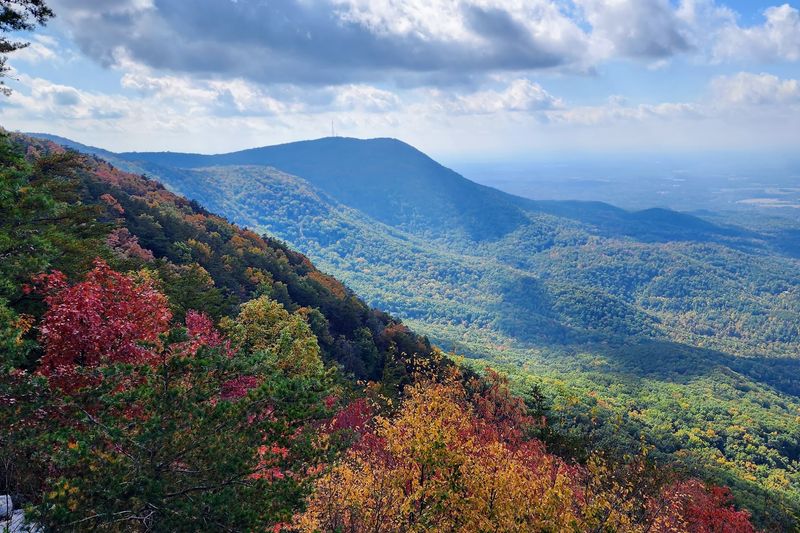
Rocky ridgelines and thick forest make this park one of the most dramatic in North Georgia. The elevation and rugged terrain create ideal conditions for timber rattlesnakes, and the landscape here feels wild in every direction.
Rock outcroppings, dense tree cover, and quiet ridgetop trails give these snakes exactly the kind of environment they favor.
Timber rattlesnakes prefer the cooler, shadowed spots beneath rock ledges and fallen logs. Their coloring blends so well with dry leaves and forest debris that many hikers walk right past one without noticing.
Several visitors have reported spotting them sunning near the rockier sections of trail, especially in the early morning or late afternoon.
These snakes are not aggressive by nature. They would rather stay still and unnoticed than confront anyone passing by.
Staying on marked trails, wearing thick boots, and watching the ground ahead are simple habits that make a real difference out here.
Beyond the snakes, the park offers camping, lake swimming, and horseback riding, giving visitors plenty of reasons to spend a full day exploring. Just keep your guard up during the warmer months, when snake activity peaks.
A rattlesnake sighting is rare, but it does happen, so scan the trail before every step.
Fort Mountain State Park, 181 Fort Mountain State Rd, Chatsworth, GA 30705.
2. Sweetwater Creek State Park, Lithia Springs
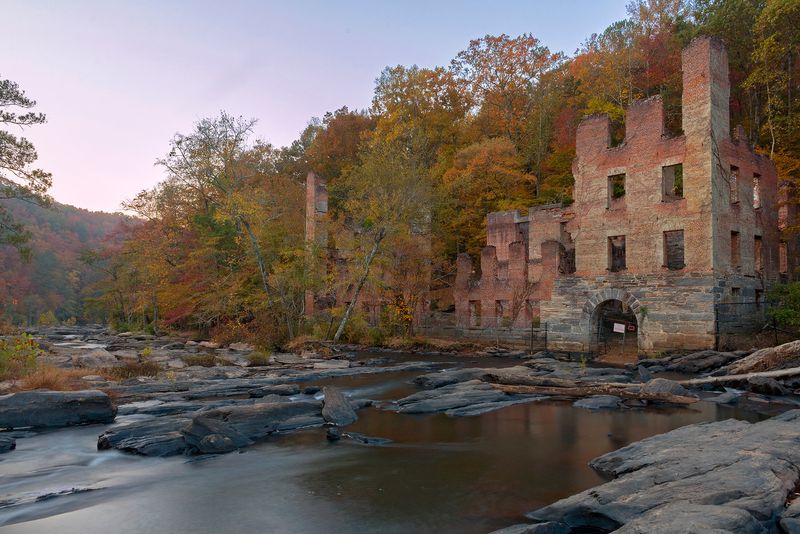
There is something magical about hiking along a rushing creek through ancient Georgia forest. Sweetwater Creek State Park, located at 1750 Mt Vernon Rd, Lithia Springs, GA 30122, is one of those places that feels both peaceful and wild at the same time.
That wildness includes timber rattlesnakes.
Visitors occasionally report rattlesnake sightings along the creek-side trails here. The rocky banks and dense undergrowth near the water provide ideal shelter for these snakes.
They are typically shy and prefer to avoid people, but encounters do happen, especially where the trail narrows close to the water.
The ruins of the New Manchester Manufacturing Company add a historical layer to this park, drawing visitors who want more than just a scenic walk. Between admiring 19th-century history and watching the creek rush past, it is easy to lose focus on the trail.
That is exactly when a surprise encounter becomes most likely.
Timber rattlesnakes are most active from spring through early fall, when warmer temperatures pull them out to bask on rocks and fallen logs. Morning hikes tend to bring more wildlife activity overall, so early visitors should stay especially alert.
Keep your eyes low when stepping over roots or logs, since snakes often rest in those exact spots without making a sound.
This park remains a favorite for nature lovers who want history, water, and forest all in one visit. Staying aware simply makes the experience richer and safer for everyone walking the trail, no matter the season.
3. Okefenokee National Wildlife Refuge, Folkston
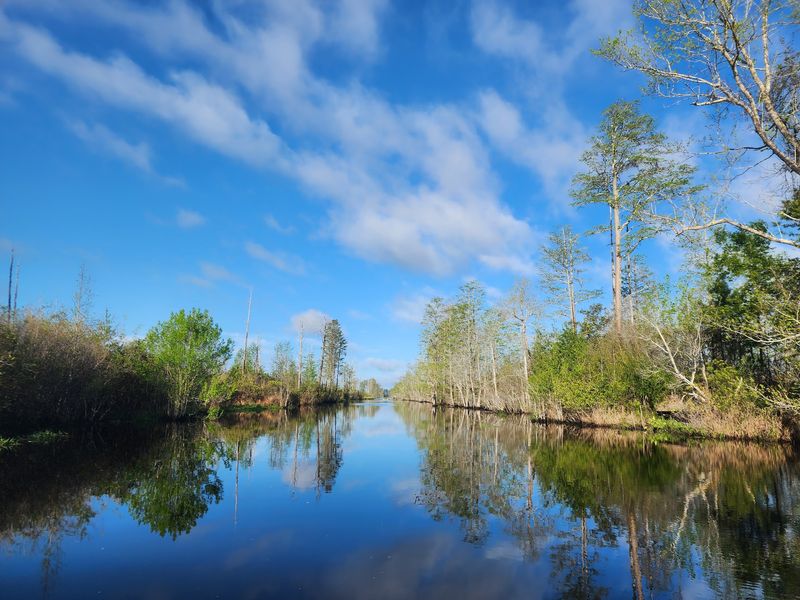
Few places in the American South feel as ancient and untouched as the Okefenokee Swamp. This massive refuge covers nearly 700 square miles of blackwater swamp and upland habitat, and it holds more rattlesnake diversity than almost anywhere else in the state.
Rattlesnakes here are not just one species, they are several.
Eastern diamondback rattlesnakes, timber (canebrake) rattlesnakes, and pygmy rattlesnakes all call this refuge home. The diamondback is the largest venomous snake in North America, and Okefenokee hosts some impressive specimens, with some individuals growing to remarkable lengths.
Upland areas around the swamp edges are especially active zones for snake activity, particularly where dry ground meets water.
Canoeing the refuge waterways is a popular and unforgettable experience. Snakes are sometimes spotted sunning on logs directly above the water, blending in until a paddle gets too close.
Paddlers are advised to keep hands inside the canoe and stay aware of overhanging branches, since snakes occasionally rest there too.
The refuge protects an extraordinary range of wildlife beyond snakes. Alligators, sandhill cranes, and black bears share this ecosystem, making every trip feel like a journey through untouched wilderness.
Visiting with a guided tour is a smart option for first-timers, as guides know the terrain well and can point out wildlife safely from a distance.
The sheer scale and biodiversity here make every visit feel like watching a nature documentary unfold in real time. Respect the wildlife, stay on designated paths, and you will come away with a truly unforgettable experience.
Okefenokee Swamp, 4155 Suwannee Canal Rd, Folkston, GA 31537.
4. Providence Canyon State Park, Lumpkin
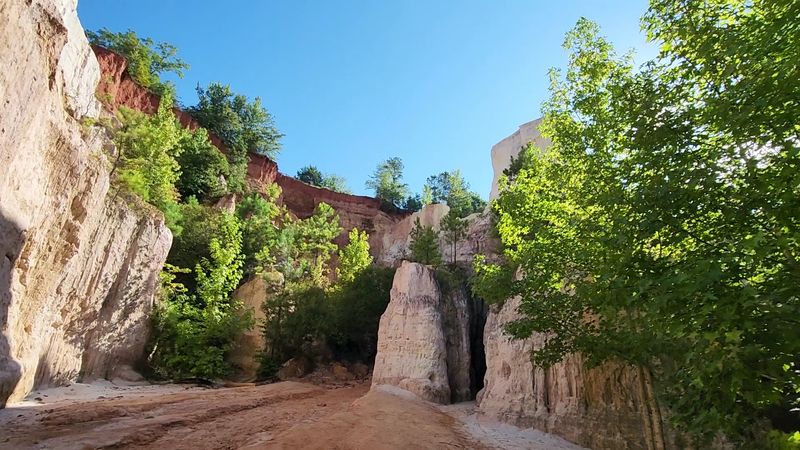
Sometimes called Georgia’s Little Grand Canyon, Providence Canyon is one of the most visually striking parks in the entire state. Located at 8930 Canyon Rd, Lumpkin, GA 31815, the park features dramatic, multicolored canyon walls carved by erosion over centuries.
The terrain here is as surprising as its wildlife.
Venomous snakes, including copperheads, are documented residents of this park. While specific rattlesnake sightings are less frequently reported here compared to other locations, the habitat is absolutely suitable for them.
Warm, sandy canyon floors and rocky ledges are classic rattlesnake territory.
The backcountry loop trail takes hikers deep into the canyon floor. That trail passes through dense vegetation and narrow passages where snakes can be easily overlooked.
Hikers should be especially careful around canyon walls where snakes may rest on sun-warmed rock surfaces.
Providence Canyon is a place where geology and nature combine in an almost surreal way. The colors of the canyon walls shift from white to pink to deep red depending on the light.
Photographers love this park, and it is easy to get so focused on the view that trail awareness slips. A quick scan of the ground before each step keeps the adventure both beautiful and smart.
This park rewards the careful and curious visitor every single time.
5. Cumberland Island National Seashore, St. Marys
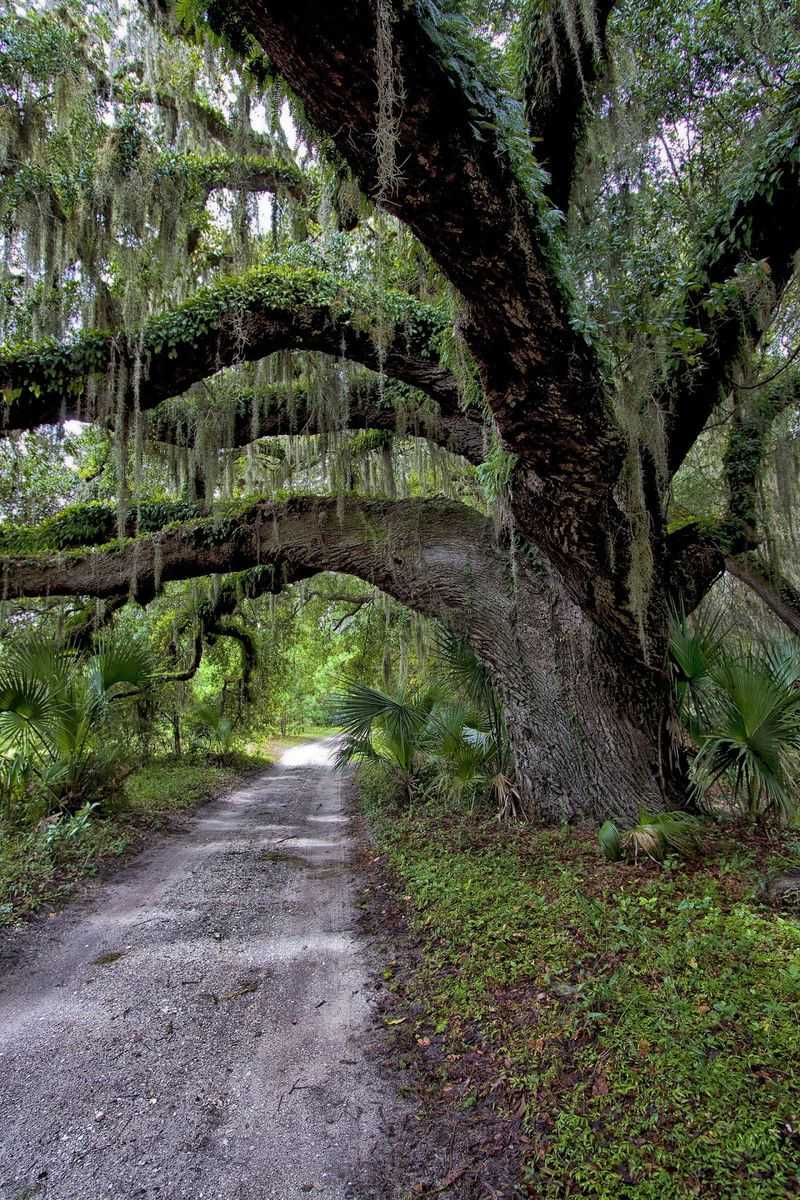
Reaching Cumberland Island already feels like an adventure, since you can only get there by ferry or private boat. The address for ferry access is Plum Orchard Dr, St Marys, GA 31558, and the crossing itself sets the tone for what lies ahead.
This island is raw, beautiful, and home to some serious wildlife.
Eastern diamondback rattlesnakes are found across all terrestrial habitats on the island. They are considered uncommon but are present throughout the maritime forest and scrub areas, often blending into the underbrush without notice.
Canebrake rattlesnakes have also been documented here, though they are rarely encountered by the average visitor.
The island has no paved roads and very limited development, which means wildlife has the run of the place. Wild horses roam freely alongside armadillos, deer, and various bird species, and the entire landscape feels shaped more by nature than by any human hand.
Snakes are simply part of the natural order here, and the island makes no apologies for that.
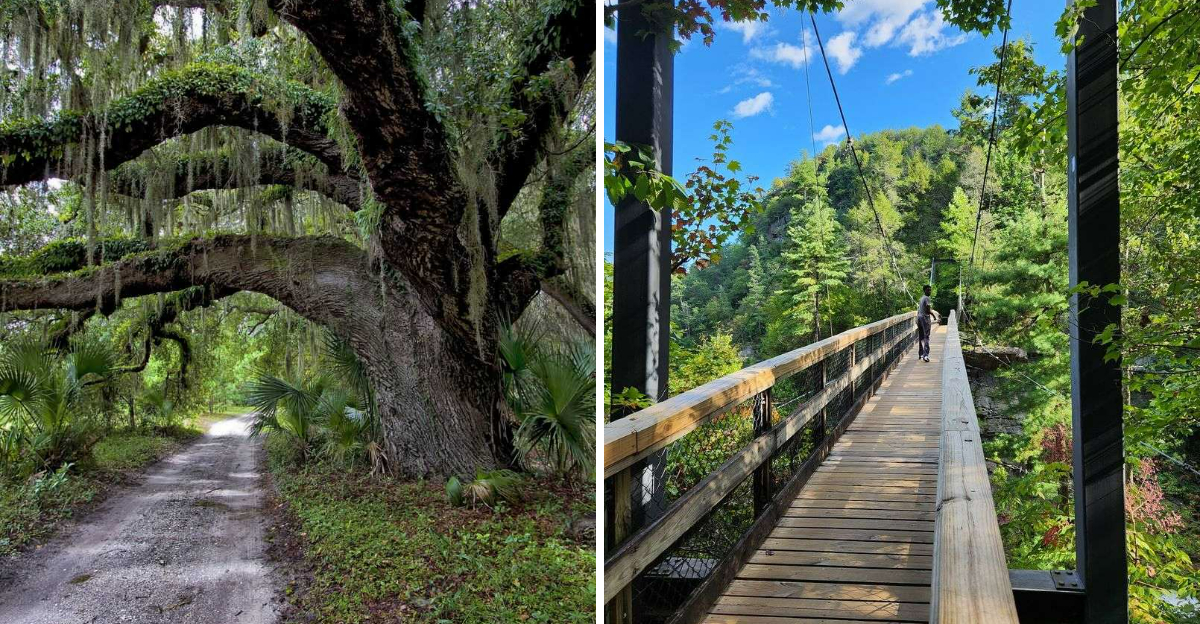
Hiking the interior trails takes you through dense palmetto thickets and ancient live oak groves draped in Spanish moss. Those palmetto-heavy areas are particularly worth watching carefully underfoot, since low visibility makes snakes harder to spot until you are close.
The reward for staying alert is an island experience that feels far removed from modern life.
Cumberland Island is one of the most unique national seashores in the country, and every walk through its forest is a reminder that nature here operates entirely on its own terms. Plan ahead, pack well, and stay observant.
6. Skidaway Island State Park, Savannah
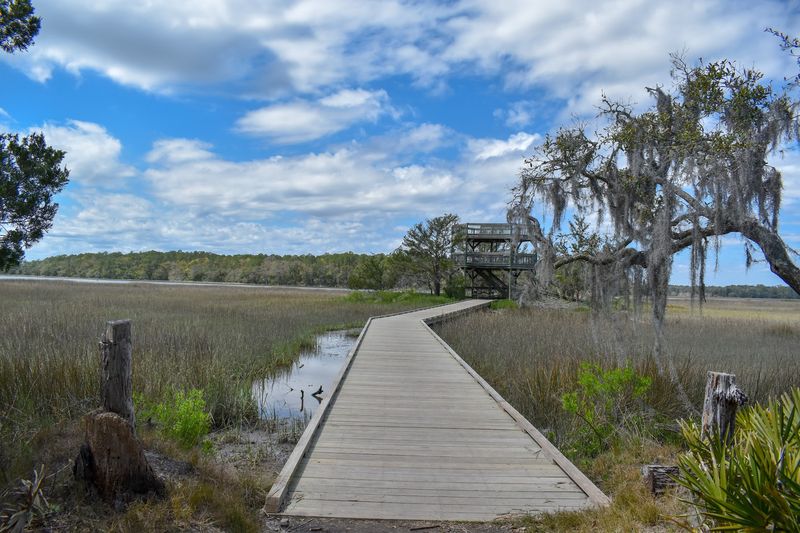
Spanish moss, salt air, and ancient live oaks define the atmosphere at Skidaway Island State Park. Located at 52 Diamond Causeway, Savannah, GA 31411, this park sits just outside one of the most beautiful cities in the country.
The coastal setting brings a specific mix of wildlife that includes some notably venomous snakes.
Eastern diamondback rattlesnakes are documented residents of this park. Pygmy rattlesnakes are also found throughout coastal Georgia, and Skidaway Island falls squarely within their range.
Copperheads round out the venomous snake lineup here.
The park features several well-maintained trails that wind through maritime forest and salt marsh edges. Those marsh-forest transition zones are particularly attractive to snakes looking for warmth and prey.
Early morning hikers should pay extra attention, since snakes often move onto trails to absorb the morning sun.
Skidaway Island is a fantastic spot for birdwatching, with wading birds and songbirds in abundance. The combination of forest, marsh, and open meadow creates one of the most biodiverse environments in coastal Georgia.
Keeping your eyes moving between the canopy and the ground is genuinely rewarding here. The park is well worth visiting for its peaceful atmosphere and natural beauty.
Just remember that the wildlife here is genuine and wild, and a respectful distance from any snake you spot is always the right call.
7. Tallulah Gorge State Park, Tallulah Falls
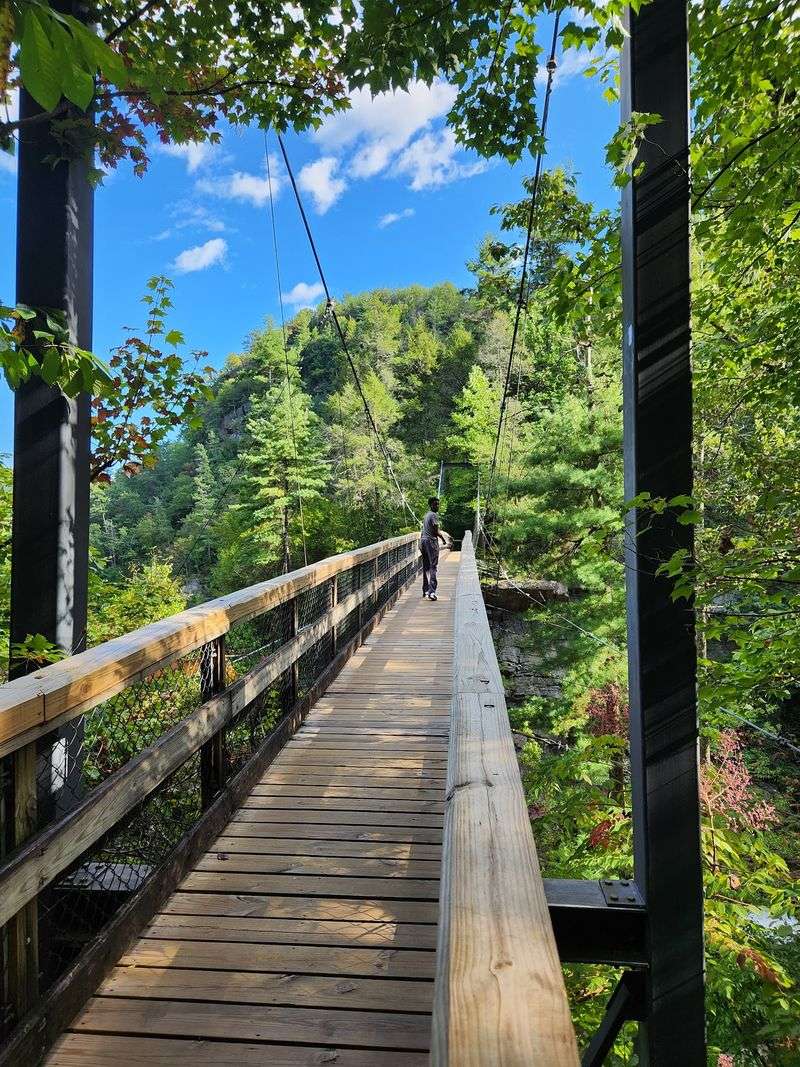
Standing at the rim of Tallulah Gorge for the first time is a genuinely jaw-dropping moment. Located at 338 Jane Hurt Yarn Rd, Tallulah Falls, GA 30573, this park features one of the deepest gorges in the eastern United States.
The dramatic cliffs and rocky terrain also happen to be prime rattlesnake habitat.
Timber rattlesnakes are among the venomous species commonly associated with North Georgia’s mountainous terrain, and Tallulah Gorge sits right in that zone. The rocky ledges along the gorge walls provide ideal basking spots for these snakes.
Hikers descending into the gorge on the floor trail should keep a sharp eye on rocky surfaces.
The suspension bridge over the gorge is one of the most popular features in the park. Permits are required to hike down to the gorge floor, which limits foot traffic and keeps the experience special.
That less-crowded gorge floor is exactly where wildlife, including snakes, feels most comfortable.
Tallulah Gorge is a genuinely thrilling place to explore. The waterfalls, rock formations, and forest views make it one of the most photogenic parks in the region.
Photographers and hikers alike should remember to watch the ground as much as the scenery. The gorge rewards careful, curious visitors with sights that feel almost prehistoric.
Respect the terrain, follow the trail markers, and the experience will be unforgettable.
8. Chattahoochee-Oconee National Forest, Gainesville
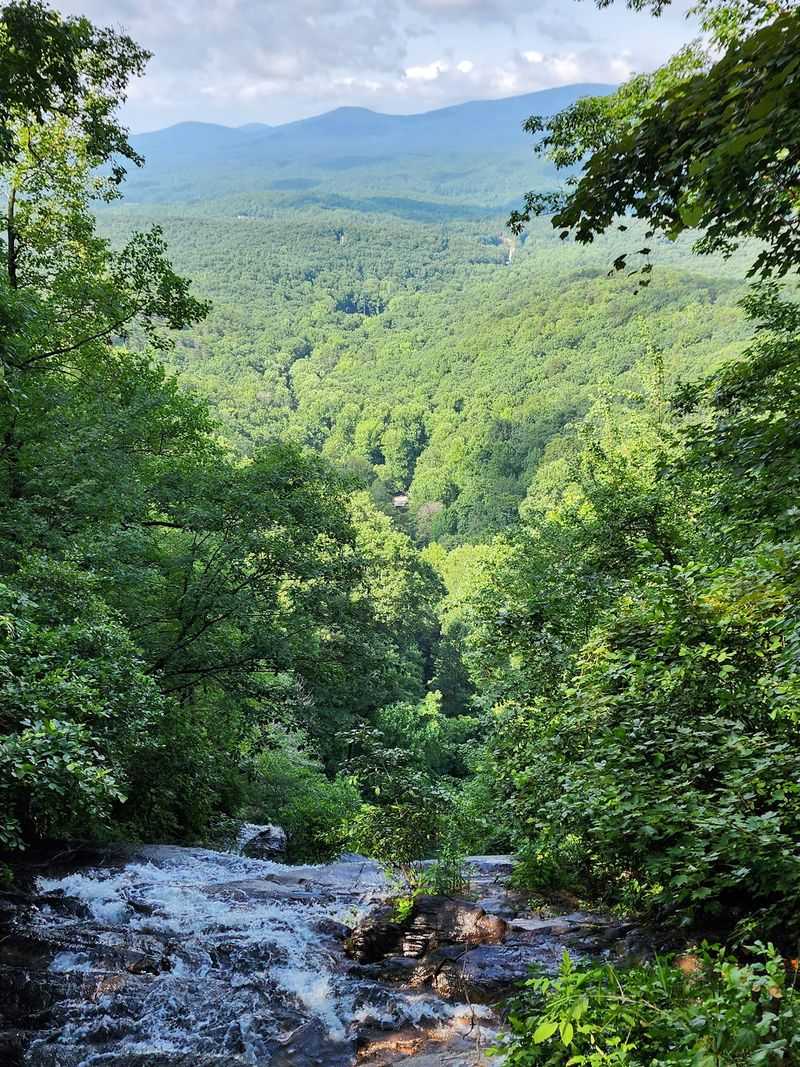
Hundreds of thousands of acres of forest spread across North Georgia, and the Chattahoochee-Oconee National Forest is the heart of it all. With access points throughout the region and a forest service area near Gainesville, GA 30572, this forest spans multiple counties and offers countless miles of trail.
Timber rattlesnakes are a well-documented part of this landscape.
The forest service officially lists rattlesnakes among the venomous species that visitors should be aware of. Timber rattlesnakes are the most prevalent venomous snake in Georgia’s mountain zones.
The mix of hardwood forest, rocky ridges, and stream corridors creates ideal conditions for these snakes year-round.
Trail users here range from casual day hikers to serious backpackers covering multi-day routes. The deeper you go into the backcountry, the more wildlife you are likely to encounter.
Camping in this forest means sharing space with the full range of native species, snakes included.
The forest is also home to waterfalls, swimming holes, and some of the best fall foliage in the Southeast. There is always something new to discover with each visit, regardless of the season.
Staying on established trails and making a bit of noise while hiking helps alert snakes to your presence before you get close. This forest is a treasure for outdoor enthusiasts, and a little awareness makes every trip through it both safer and more rewarding overall.