Pony Express Riders Changed Horses At This Restored Nebraska Station You Can Walk Through Today
Gravel roads in southeastern Nebraska have a way of ending somewhere more interesting than the map suggests. I came for a short walk and ended up standing in a shallow dip in the hillside, the kind you’d step over without thinking, until a sign explained that thousands of wagon wheels carved it.
Log cabins sit on the rise above it, furnished as if someone just stepped out to water the stock. For a place most people drive past, it holds an astonishing amount of American history in one quiet stretch of prairie.
A Prairie Park Northeast of Endicott
Rolling hilltops, timbered creek bottoms, and ravines cut deep enough to hide a wagon make up the roughly 350 acres of Rock Creek Station State Historical Park. It sits in Jefferson County in southeastern Nebraska, northeast of the small town of Endicott and a short drive from Fairbury.
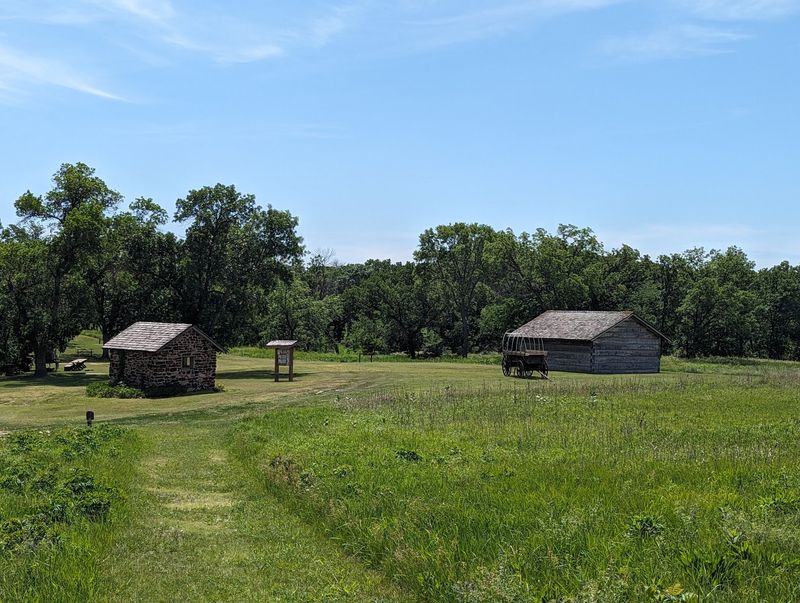
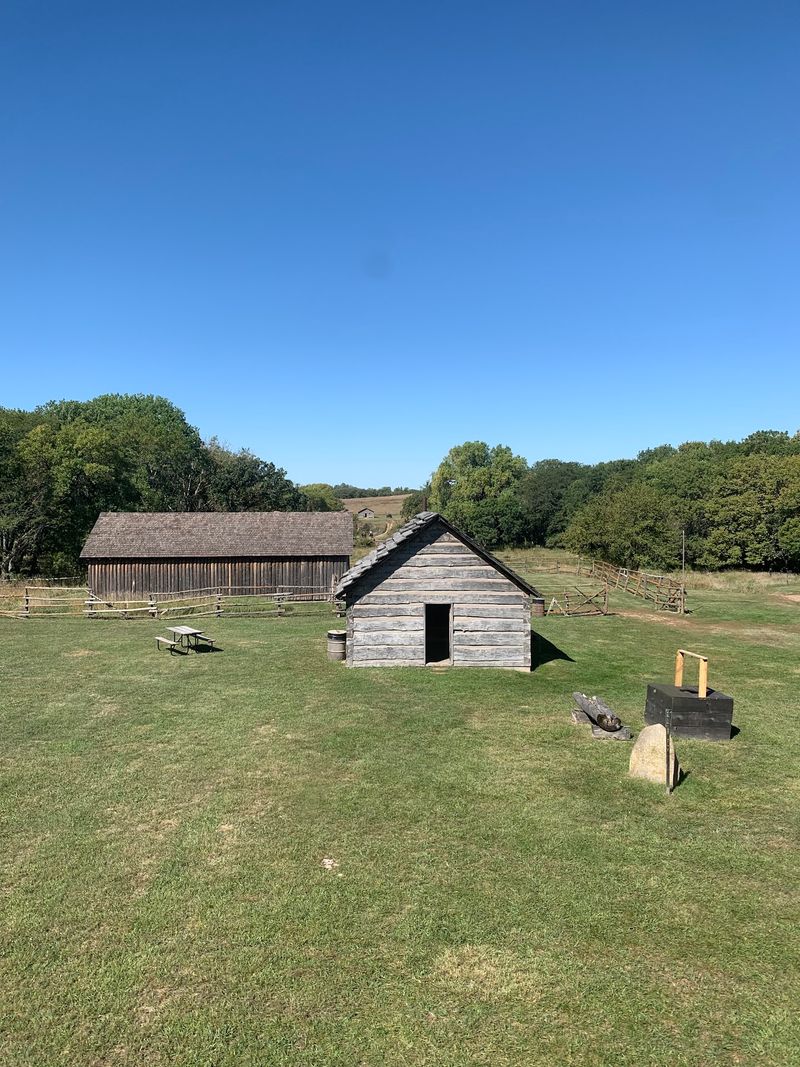
What stands here now is a reconstruction of a 19th-century road ranch, spread across two sites known as the East Ranch and the West Ranch. Cabins, outbuildings, and corrals mark the original footprint, so the scale of the place reads clearly as you walk between them.
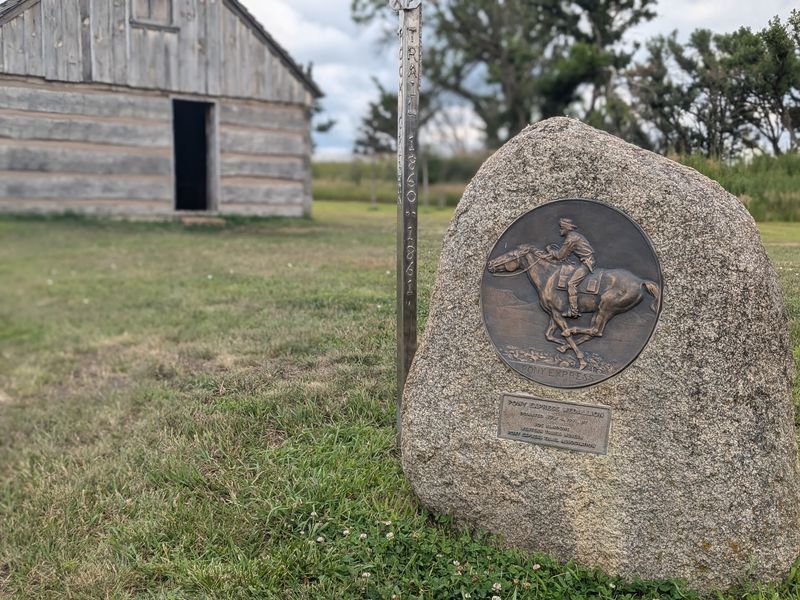
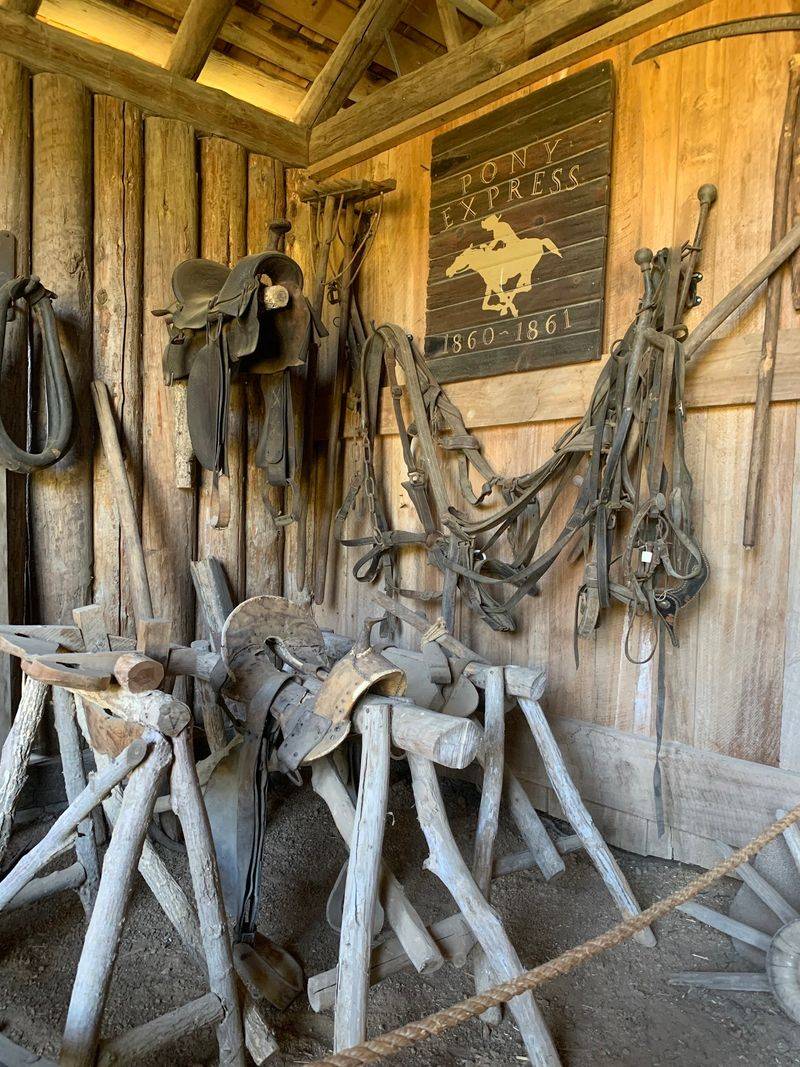
Pony Express riders swapped tired horses for fresh ones here in 1861. Before that, the station sold supplies to emigrants grinding west on the Oregon and California trails, and afterward it served the Overland Stage.
The Nebraska Game and Parks Commission manages the site today, which means it is maintained rather than merely marked. Mowed paths, interpretive signs, and a visitor center full of artifacts turn what could be an empty field into something you can actually read on foot.
Where the Road Ranch Began in 1857
Long before anyone rode through with a mail pouch, this spot was a business. Established in 1857 along the Oregon-California Trail corridor, Rock Creek Station operated as a road ranch, which was essentially a frontier general store and rest stop rolled into one.
Emigrants arrived with worn oxen, empty flour sacks, and broken axles. The station sold them what they needed, at prices that reflected how few options existed for hundreds of miles in either direction.
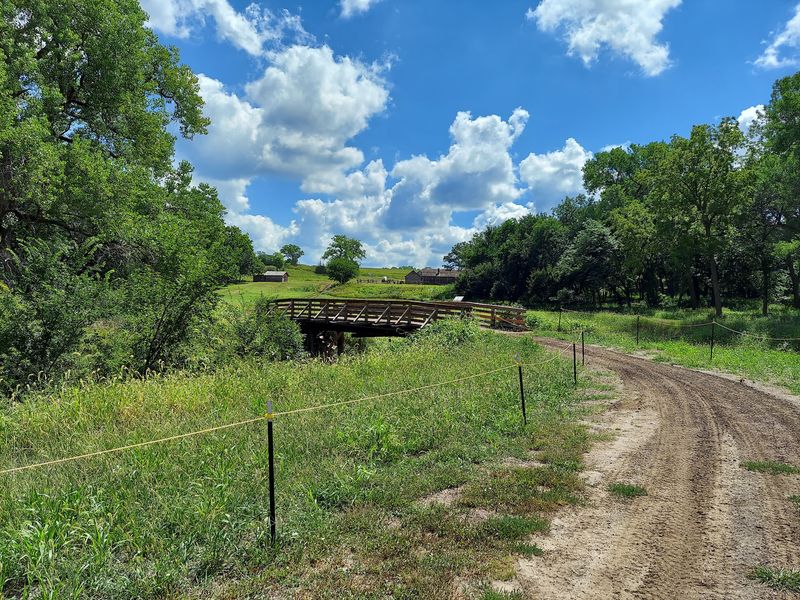
A toll bridge across Rock Creek added another revenue stream. Crossing the creek bottom was one of the harder maneuvers on this stretch of trail, and paying to roll across on planks beat risking a loaded wagon in the mud.
Understanding that commercial beginning changes how the park reads. The buildings were not built for romance or legend; they existed because thousands of people were moving through and someone recognized the opportunity.
By 1861, the same location had been folded into the Pony Express network and the Overland Stage route, layering three chapters of westward travel onto a single Nebraska creek crossing.
Ten Minutes to Change Horses
Speed was the whole point. The Pony Express moved mail across roughly 1,800 miles by keeping horses fresh, which meant relay stations spaced close enough that no animal ran itself out.
Rock Creek served as one of those relay stops, the second station out from St. Joseph, Missouri. A rider would come in hard, hand off or transfer his mochila of mail, get onto a rested horse, and be gone before the dust settled.
Stock tenders did the unglamorous work. Somebody had to have the replacement horse saddled, watered, and waiting, and somebody had to cool down the animal that just came in.
The service itself lasted only about eighteen months before the transcontinental telegraph made it obsolete. That short run is part of why physical Pony Express sites matter so much now; there simply were not many years in which to leave a mark.
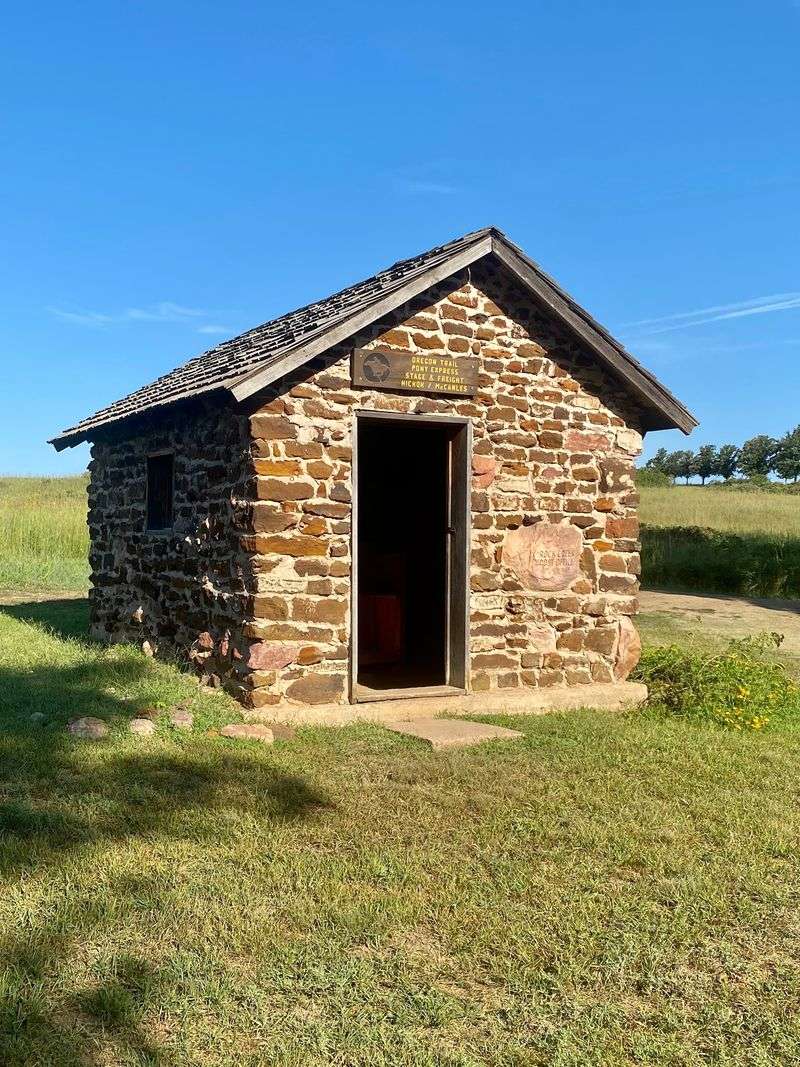
Standing beside the reconstructed relay station and corral, the geometry of the operation becomes obvious. Barn, water, fence, trail, and then open grass running west toward the next stop.
The Wagon Ruts Cut Into the Hillside
Grass has grown over them, but the shape is unmistakable: two parallel troughs pressed into the slope, running away from the creek and up the rise. Wagon ruts are the single most affecting thing at this park, and they are a short walk from the visitor center.
Some people call them swales. They were cut by the repeated passage of emigrant wagons, iron-rimmed wheels and thousands of hooves wearing the sod down until the prairie kept the record.
Nothing about them is dramatic at first glance. That is exactly what makes them land.
A dip in the ground, waist-deep in places, made entirely by people trying to get somewhere better.
You can walk along the trail alignment itself, which is rare. Many trail sites offer a plaque and a view; here the depression is underfoot.
Mention of the ruts comes up constantly among people who make the drive, and the interpretive signs nearby explain what you are seeing well enough that kids get it too. Morning or late-day light makes the grooves read best.
Wild Bill Hickok and the McCanles Incident
James Butler Hickok was nobody in particular in 1861. He was a young stock tender working at Rock Creek Station, handling horses for the stage and mail operations, years away from the reputation that would follow his nickname.
A dispute over an unpaid debt on the station property escalated into a confrontation involving local landowner David McCanles. The incident ended badly, and the story that circulated afterward was heavily embroidered by dime novels and magazine writers.
What the park does well is separate the documented record from the legend. Interpretive material lays out what is actually known about the property, the debt, and the people involved, rather than repeating the tall tales that turned Hickok into a frontier celebrity.
The East Ranch site marks where the original buildings associated with the event stood. Reconstructed cabins occupy the footprint, giving the story a physical setting instead of a vague gesture at a field.
Three original historic graves also remain on site, quiet markers that anchor the human side of a place better known for hoofbeats and mail pouches.
Digging Up a Nebraska Station
Reconstruction did not start from guesswork. Development of Rock Creek Station as a state historical park got underway in 1980, and archaeologists went in first to find out exactly what had stood where.
Excavations turned up foundation remnants of the original structures along with period artifacts: hardware, household items, the everyday debris of a working road ranch. Those findings shaped where the replica buildings went and what they looked like.
That sequence matters. Plenty of frontier sites got a commemorative cabin dropped somewhere convenient, but here the layout of the East and West ranches follows evidence pulled out of the ground.
Artifacts recovered during the work are displayed in the interpretive center, which turns the dig into something you can look at rather than just read about. Small objects do a lot of heavy lifting in a place this open.
The park’s transformation from ordinary farm ground into an interpreted historic landscape took years of coordinated effort. Nebraska Game and Parks has kept up the buildings, trails, and signage since, and the maintenance shows in how sharp the site still looks.
Inside the Interpretive Center
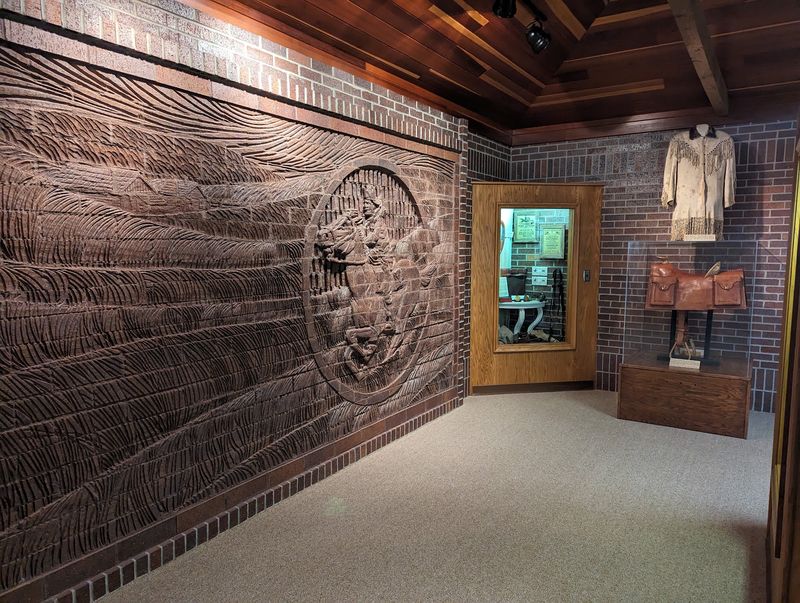
Out front sits a recreated covered wagon with an oxen team, which is where roughly every family photo at this park gets taken. Behind it, the interpretive center holds the collection that explains everything you are about to walk through.
Display cases carry artifacts tied to the station, the trails, and the Pony Express operation. The exhibits cover the road ranch business, the mail relay, and the Hickok episode without letting any one of them swallow the others.
Staff on duty know the site in detail and will happily talk through trail routes, the ruts, or which prairie wildflowers are blooming that week. That kind of help changes a walk into an education.
Hours are limited, and the building is not open every day of the week, so it’s smart to check the current schedule before driving out. The grounds and trails remain accessible even when the center itself is closed.
Give the exhibits twenty or thirty minutes before heading outside. The ruts and cabins mean considerably more once you know what happened on this ground.
Cabins, Corrals, and the Recreated Ranch Buildings
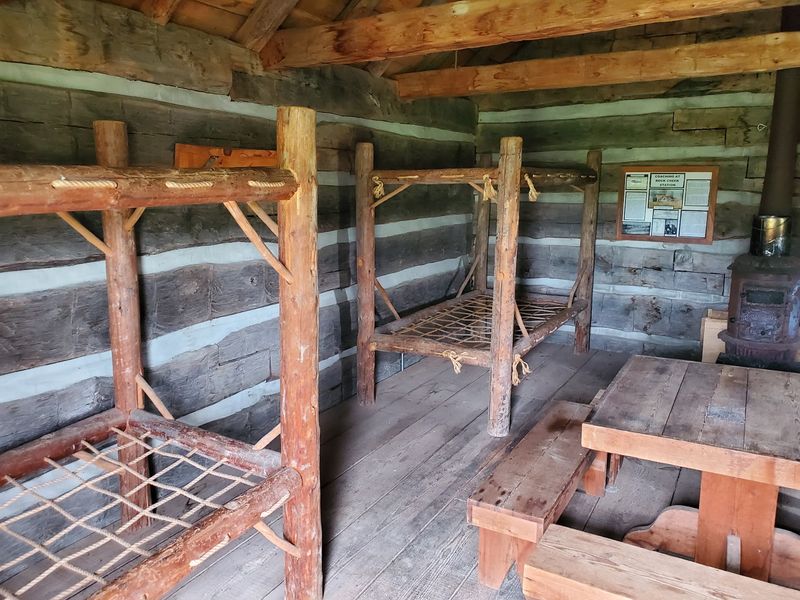
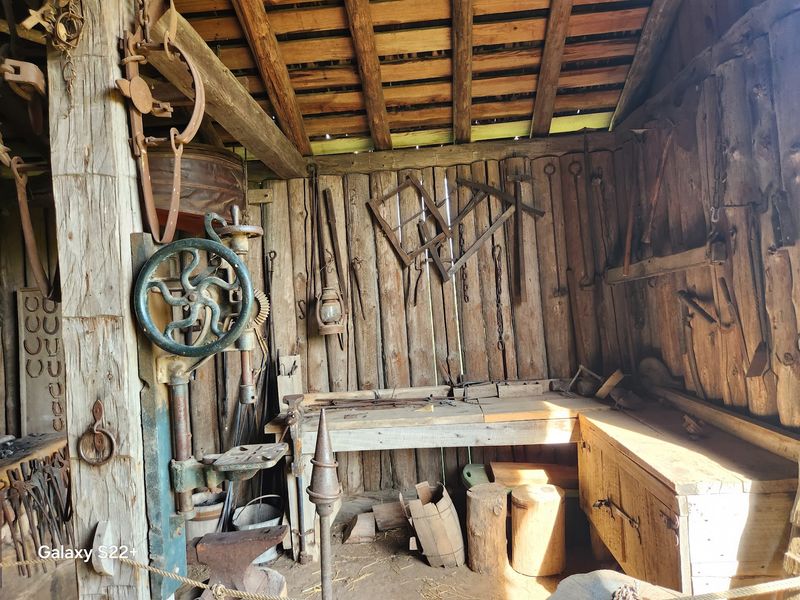
Step inside one of the log cabins and you find furniture. Rough tables, bedding, tools on the wall, arranged to show how a family or a station keeper actually lived in a one-room building on open prairie.
Both the East and West ranch sites carry reconstructed structures. A relay station, a post office building, cabins, and corral fencing stand in their original positions, so the distance between them tells you something about how the operation functioned.
Wooden rails, hand-hewn logs, and shingle roofs give the cluster a convincingly worked-in look rather than a museum-polish finish. Nothing feels staged for a gift shop.
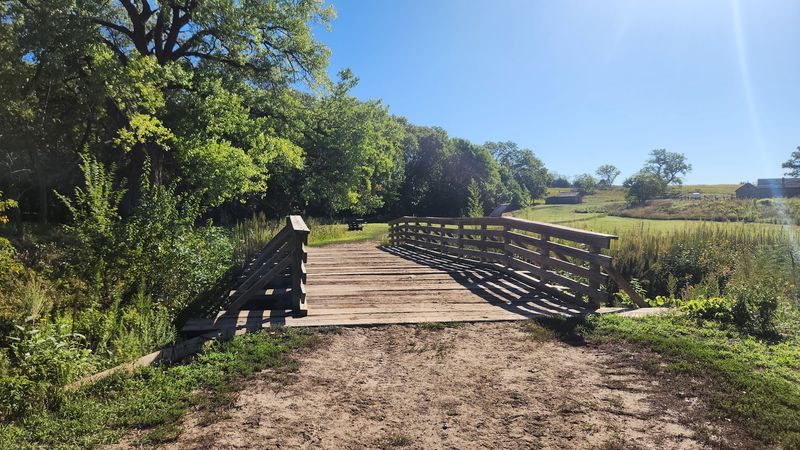
Walking between the two ranch sites takes you across the creek bottom where the toll bridge once charged wagons to cross. The terrain explains the toll immediately.
One practical note: wasps sometimes take up residence inside the buildings during warm months, so glance up before ducking through a doorway. It is a minor thing and easily managed, but worth knowing on a hot July afternoon in Jefferson County.
Trails Through Tallgrass and Timber
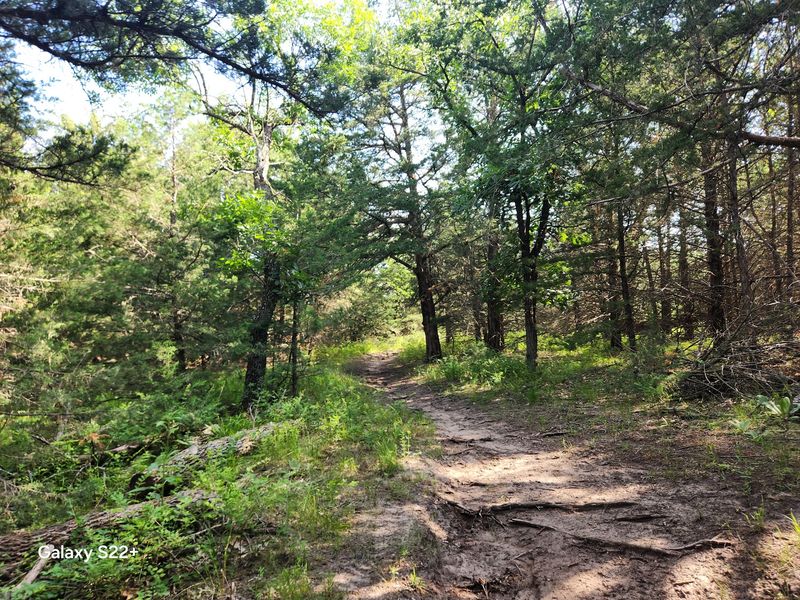
Seven miles is entirely possible here if you want it. The trail network loops through prairie hilltops, drops into the timbered Rock Creek bottom, and skirts the ravines that made this crossing difficult in the first place.
Most paths are mowed grass rather than gravel or pavement, kept wide and well marked. The prairie trail is the easier footing; routes near the creek get stony in stretches, so decent shoes help.
Wildflowers turn the grassland into something remarkable in late spring and summer. Big bluestem, coneflowers, and prairie natives fill in between the cabins, and the color shifts week to week through the growing season.
Shade is scarce once you leave the creek bottom. Water and sunscreen are not optional on a sunny day, and a hat makes the difference on the exposed hilltops.
Ticks are part of tallgrass country, particularly in spring and early summer before mowing catches up. A quick check after your walk handles it.
Fall brings cooler air, thinner grass, and some of the best walking conditions of the year.
Camping Beside the Creek
Electric hookups, potable water, and a dump station make the campground here practical for RVs, and clean shower facilities put it well ahead of a lot of small state park sites.
Quiet is the defining quality. Rock Creek Station does not draw crowds the way the bigger Nebraska parks do, which means evenings tend toward crickets and wind in the grass rather than generators and radios.
Covered picnic areas are a genuine asset in a state where afternoon weather can turn fast. Horse camping is also available, which fits the site’s history more neatly than most amenities ever do.
Early spring camping works surprisingly well if you don’t mind cold nights. The prairie is bare, sightlines open up, and you’ll likely have the loop mostly to yourself.
Tick awareness applies to campsites as much as trails, especially if you set up before the grass has been cut. Bringing repellent and doing a nightly check keeps it from being an issue.
Reservations and seasonal availability shift, so confirm current camping status with the park before loading up.
Quiet Ground and Who Enjoys It Most
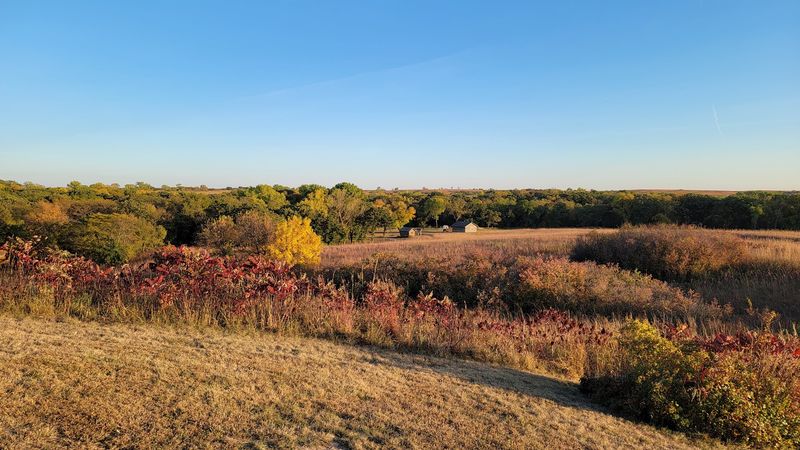
Wind across open grass is the loudest thing out here most days. Rock Creek Station is unhurried by design, a park where you set your own pace and nobody is moving you along.
History-minded travelers following the Oregon Trail across Kansas, Nebraska, and Wyoming often build this in as a stop, and it holds up alongside the bigger named sites. The layering of trail, mail route, and stage stop in one place is unusual.
Families do well here. Kids get cabins to explore, wagons to climb around, and a hillside dip that turns an abstract history lesson into something real.
Walkers and photographers get the most out of the trail system, particularly during wildflower season. The prairie sections photograph beautifully in early morning light.
What it is not is a quick roadside pull-off. Seeing the ruts, the cabins, and the interpretive center properly takes a couple of hours, and the walking is a real part of the experience.
Retirees and anyone wanting an affordable half-day outing in southeastern Nebraska will find it fits neatly.
Getting There and What to Know Before You Go
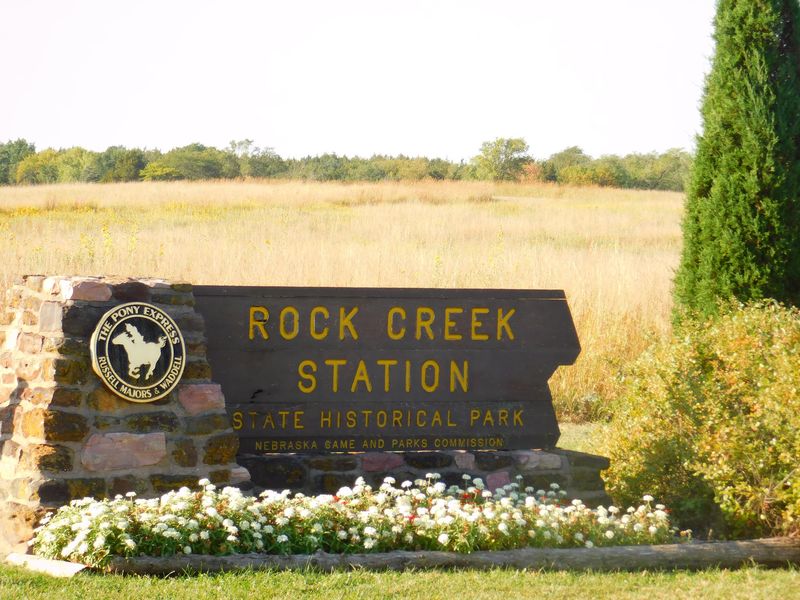
The address is 57426 710th Rd, Fairbury, NE 68352, sitting northeast of Endicott in Jefferson County. County roads get you there, and mapping apps handle the route without trouble despite the rural setting.
A Nebraska state park entry permit is required, either a daily pass or the annual sticker. If you already carry the yearly permit for Nebraska parks, this one comes at no extra cost, and either way the fee is modest.
Operating days and hours are limited, especially outside peak season, and the visitor center keeps a shorter schedule than the grounds. Checking the Nebraska Game and Parks information for the site before driving out saves disappointment.
Pack water, sunscreen, and closed shoes. The trails are grass, the sun is direct, and the creek-side sections can be uneven underfoot.
Fairbury is close enough for fuel and a meal afterward, which makes this an easy anchor for a day trip out of Lincoln or Beatrice. Fall drives through this corner of the state pair especially well with a couple of hours on these trails.
Why This Stretch of Prairie Sticks With You
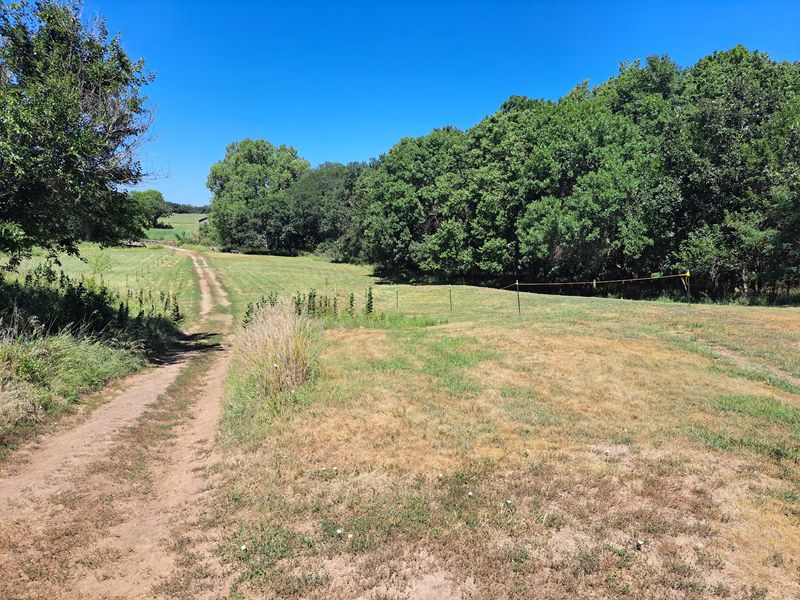
Few historic sites let you put your boots in the actual track. That is the thing that lingers about Rock Creek Station: not the cabins, impressive as they are, but the shallow grooves running up the hillside that tens of thousands of people wore into the sod on their way somewhere else.
Add the Pony Express relay, the stage stop, the toll bridge over the creek, and a young stock tender named Hickok, and one Jefferson County property ends up carrying more frontier history than places with far more publicity.
The park stays quieter than it deserves. That works in your favor, since you can walk the whole site without ever feeling rushed or crowded.
Bring a couple of hours, decent shoes, and some patience for gravel roads. What you get back is a clear-eyed look at how the West was crossed, on ground that still shows the wear.
For Nebraskans looking for a drive with an actual destination at the end, this one earns the gas money.