Put This Hidden North Carolina Lake On Your Radar Before Fall Colors Arrive
Fall has not arrived yet, which is exactly why this little North Carolina lake is worth remembering now.
Most drivers pass nearby without realizing what is hiding down the gravel road.
The reward is wonderfully low-key: still water framed by mountain ridges and enough quiet to make checking your phone feel oddly unnecessary. Mornings can be especially beautiful, when the surface turns glassy and the surrounding hills seem to double themselves in the reflection.
There is no admission booth waiting to collect a fee, either.
For the moment, this place still feels like the sort of discovery you mention carefully because you do not want the whole internet showing up next Saturday.
Give it a few weeks, though, and those green slopes will start changing color.
That is when keeping the secret may become considerably harder.
A Quiet Lake Day Before The Fall Crowds Start Looking For Color
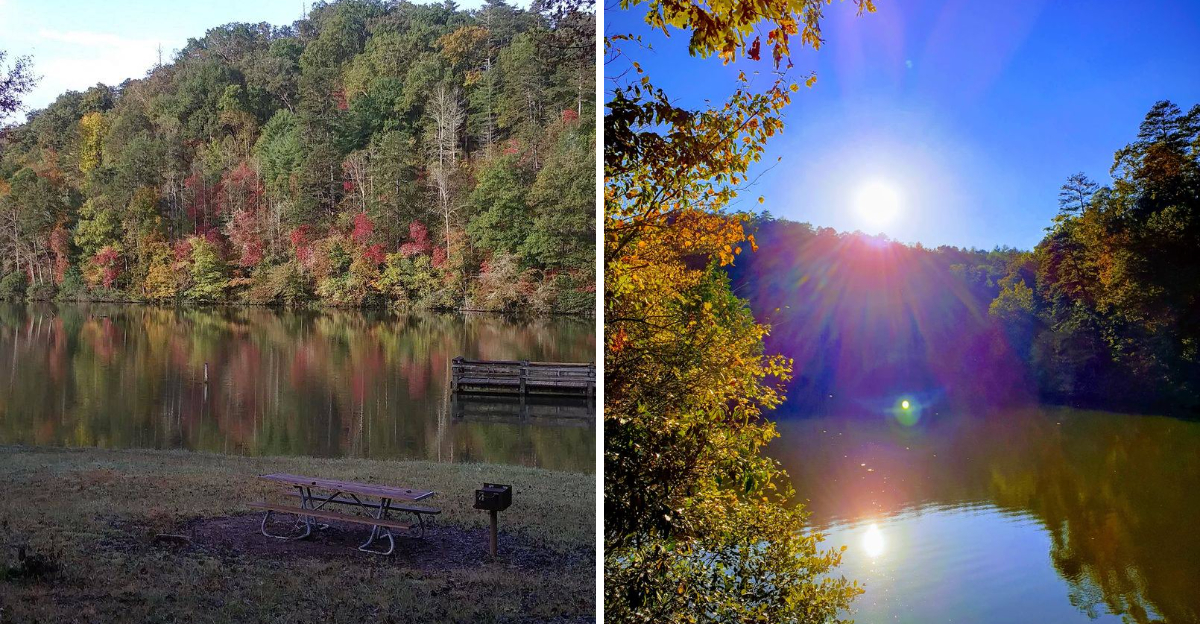
Late summer weekdays here feel almost private. The gravel access road winds past marshy edges before opening onto a tidy lawn with scattered tables, benches, and a low fishing dock that sits close to the water.
Sunrise to sunset access costs nothing, which makes a spontaneous stop easy on any budget. Sound travels differently at a small reservoir: you hear water lapping against the bank, a woodpecker somewhere in the hardwoods, maybe a car door closing two hundred feet away.
Arriving before ten in the morning gives you the best shot at having a table to yourself. Pack a cooler with sandwiches, sliced peaches, and cold sweet tea, then claim a shady spot and let the morning stretch.
Restrooms with flush toilets sit near the parking area, though drinking water is not available, so bring plenty. Once October arrives and leaf-peepers start filling the mountain roads, this pocket of shoreline gets busier.
Visiting during that quiet stretch between Labor Day and peak color means you get the scenery without sharing the bank with anybody.
Mountain Reflections Make The Shoreline Worth Lingering Around
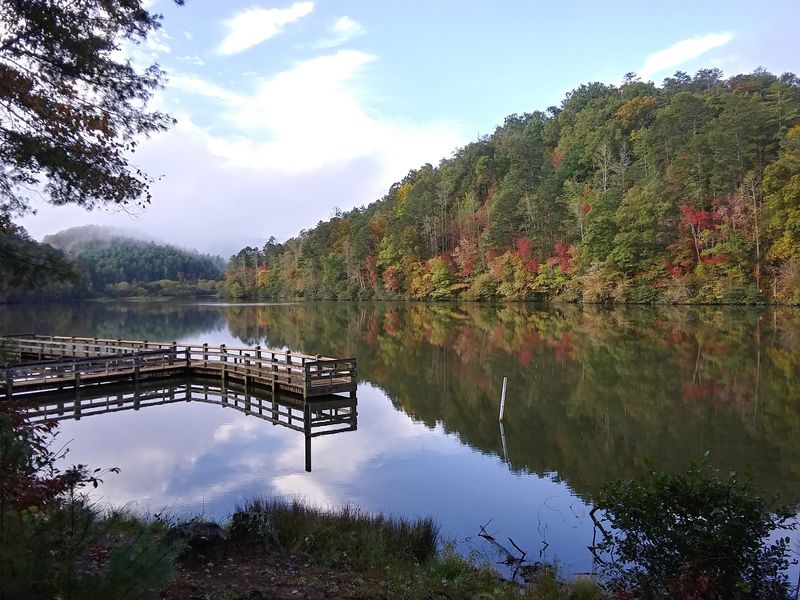
Glass. That is the word most people reach for when the wind drops here and the Appalachian ridges double themselves on the surface of the water.
Rolling hills wrapped in oak, hickory, and pine frame nearly the whole shoreline, so there is very little to break the illusion except the occasional ripple from a fish. Photographers love the hour just after dawn, when mist lifts off the surface in thin ribbons and the ridge lines sharpen against a pale sky.
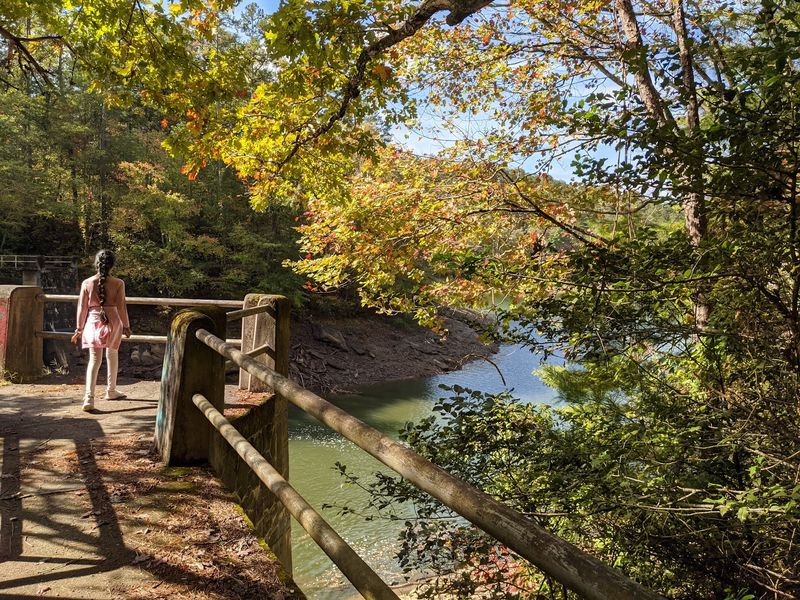
A short woods trail runs along the water’s edge toward the dam, roughly a third to a half mile of easy, mostly flat walking. Watch your footing on exposed roots and loose rocks, especially with younger walkers or a leashed dog along for the trip.
Benches appear at intervals, which makes it simple to stop, sit, and stare for a while without any real plan.
Bald eagles have been spotted circling above the water here, so keep your eyes on the treetops as well as the reflections below them.
Your Kayak Gets Some Of The Best Views From The Middle Of The Water
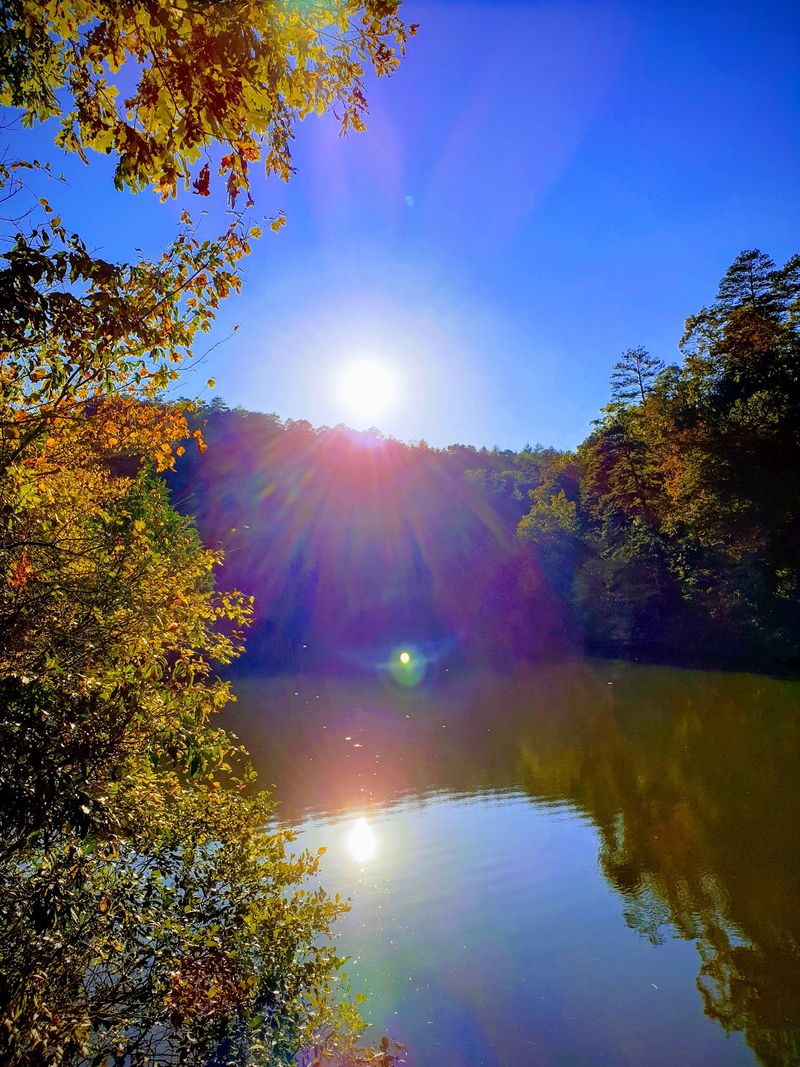
Paddlers get the view nobody on shore can reach. From the middle of this small roughly 20-acre lake, the forested shoreline feels close in every direction.
Launching works best near the dam area, and parking there fills quickly, so plan an early start if you are hauling a kayak or canoe. Motor traffic is minimal, which keeps the surface smooth and the paddling relaxed even for beginners.
Morning outings tend to reward you twice: once with mirror-flat water, and again with wildlife along the quiet coves. Herons stalk the shallows, turtles slide off half-sunken logs, and songbirds fill the tree line with noise.
Bring a dry bag, sunscreen, and a life jacket for everyone aboard, since there are no rental outfitters on site.
Curious paddlers eventually learn this water connects into a much larger system of impoundments in the region, so the small lake in front of you is really just one chapter of a much longer story.
Picnic Tables And Shady Banks Make It Easy To Stay Longer Than Planned
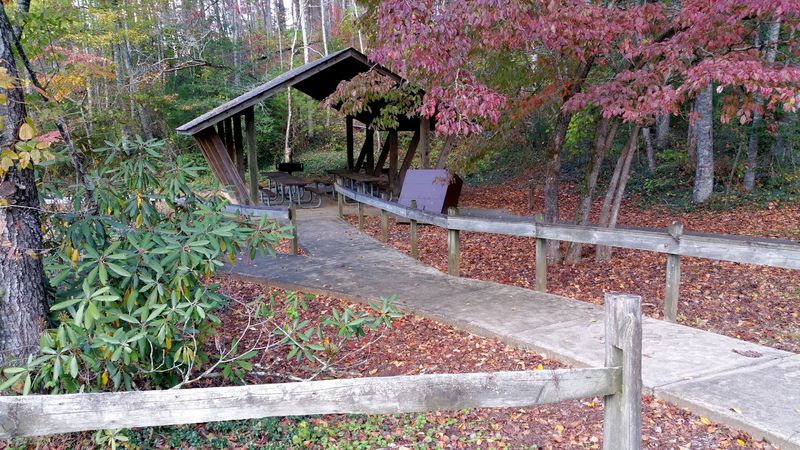
Somebody clearly thought about lunch when they built this park. Picnic tables sit scattered across the lawn, each with a grill nearby, and a covered pavilion offers shelter when a mountain shower rolls through.
Mature hardwoods throw generous shade across most of the grassy area, keeping midday meals comfortable even in warm weather. The fishing dock and pavilion are both wheelchair accessible, and a couple of paved accessible spots sit near the restrooms.
Grilled burgers, foil packets of corn, and a watermelon cut into wedges all taste noticeably better with lake air moving through the trees.
Plan ahead on supplies. Potable water is not available on site, so haul in a jug for drinking and cleanup, plus charcoal if you intend to cook.
Restrooms have flush toilets and sinks, and the grounds are kept impressively clean, with little to no litter along the paths.
The recreation area sits off an unnamed forest road in Murphy, NC 28906, reachable by a short gravel drive from town in about ten minutes.
The First Hints Of Autumn Show Up Here Earlier Than You Might Expect
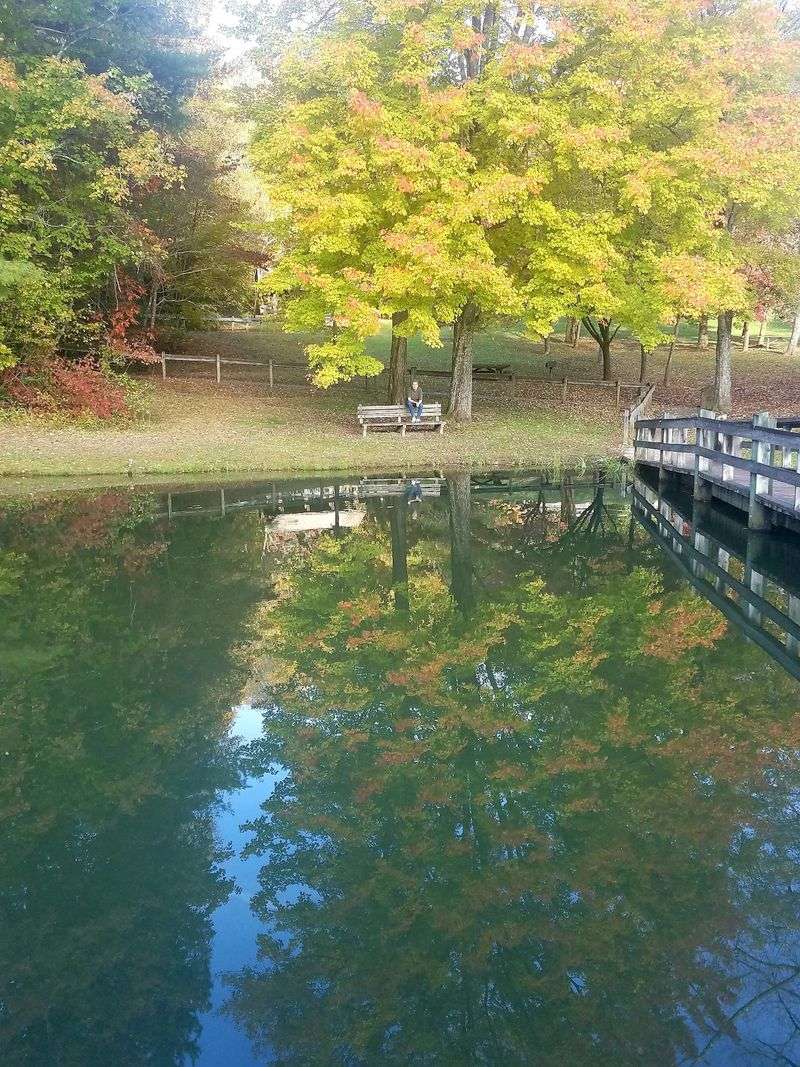
Elevation does funny things to the calendar. Up in these hills, a handful of maples and sourwoods start blushing red in late September while the rest of the forest is still stubbornly green.
Those early streaks of gold and crimson show up first along the exposed ridge tops and near the water, where cool air settles overnight. Morning temperatures can dip into the fifties even while afternoons stay warm enough for short sleeves, so layers make sense during any September visit.
Light changes too, slanting lower and warmer through the trees, which flatters photographs enormously.
Sourwood is often the first tree to turn in this corner of North Carolina, going deep scarlet weeks before the oaks even think about it. Black gum follows close behind, then hickories with their buttery yellow.
Visiting during this transition gives you a preview without the traffic that arrives later.
Bring a light jacket, a thermos of coffee, and give yourself an unhurried hour on the bank watching the season quietly begin.
Fishing Works Nicely When You Want The Afternoon To Move At Half Speed
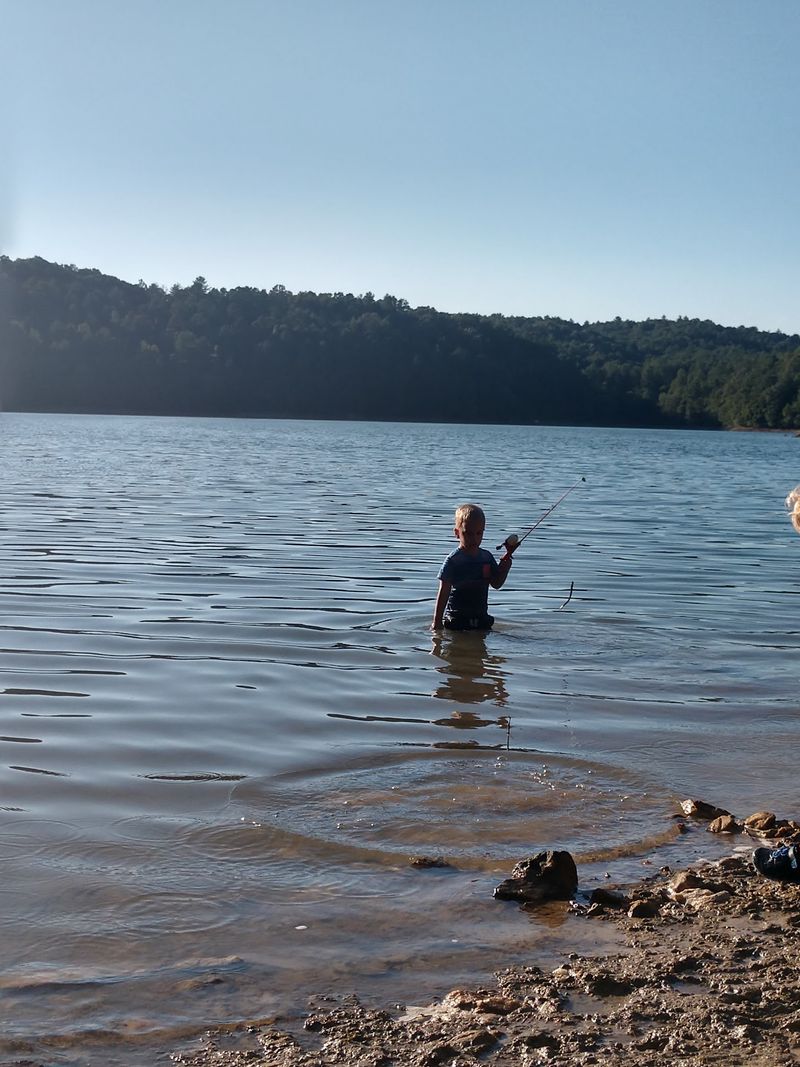
The pier here sits low and close to the water, built back in 1992, and it has a way of slowing people down. Anglers cast for bass, crappie, bluegill, catfish, and sunfish, and the gentle banks give kids and beginners plenty of room to try their luck.
Several good spots line the trail toward the dam if the dock is occupied.
A valid fishing license is required, and there are no bait shops nearby, so pick up worms, tackle, and anything else you need in town before heading out.
Half the appeal has nothing to do with catching anything. You sit, you watch the line, a breeze moves across the surface, and somewhere behind you a picnic table smells faintly of charcoal.
Families often stack the whole afternoon together: fish for an hour, eat, walk the loop, then fish again.
Ticks can be a nuisance in warm months along grassy edges, so wear long pants when you wander off the mown areas and check everyone before the drive home.
A Scenic Drive Through Far Western North Carolina Fits Perfectly Around The Stop
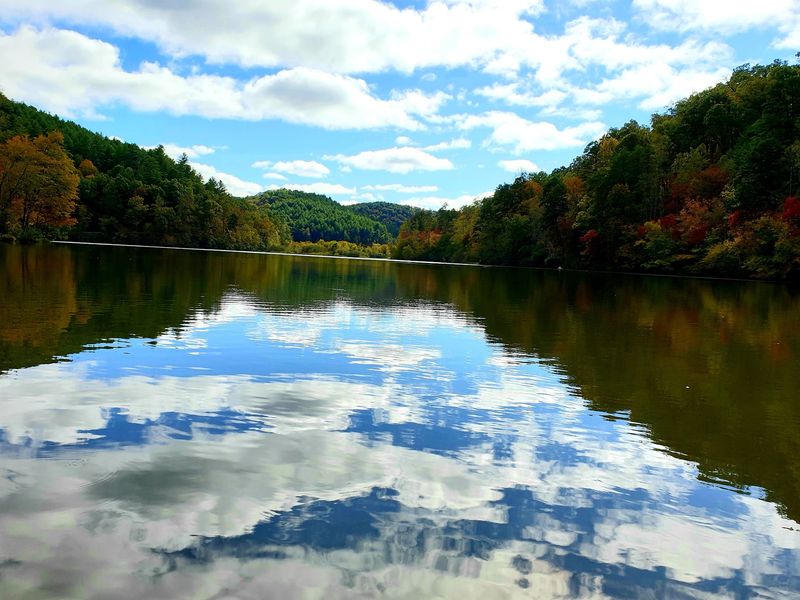
Getting there can be half the fun. Far western North Carolina is threaded with mountain highways that climb, curve, and open onto overlooks worth every mile of steering.
The Cherohala Skyway runs about 40 miles across both the Cherokee National Forest and the Nantahala National Forest, delivering wide ridge-top views the whole way. Pull-offs appear regularly, and the elevation shifts mean fall color arrives at different times along the route.
Another option, the Nantahala Byway, winds from Whittier through the steep-walled Nantahala Gorge before easing toward Murphy.
River rafts bob along below the road in places, and the canyon walls close in tight enough to shade the pavement at midday.
Build the lake into a loop rather than treating it as the only stop. Downtown Murphy sits close by with local cafes and bakeries for a mid-drive break, and the short gravel road to the recreation area takes only a few minutes from the main route.
Fill your gas tank before you start, since services thin out fast between mountain towns.
Once The Leaves Turn, The Whole Lake Takes On A Completely Different Mood
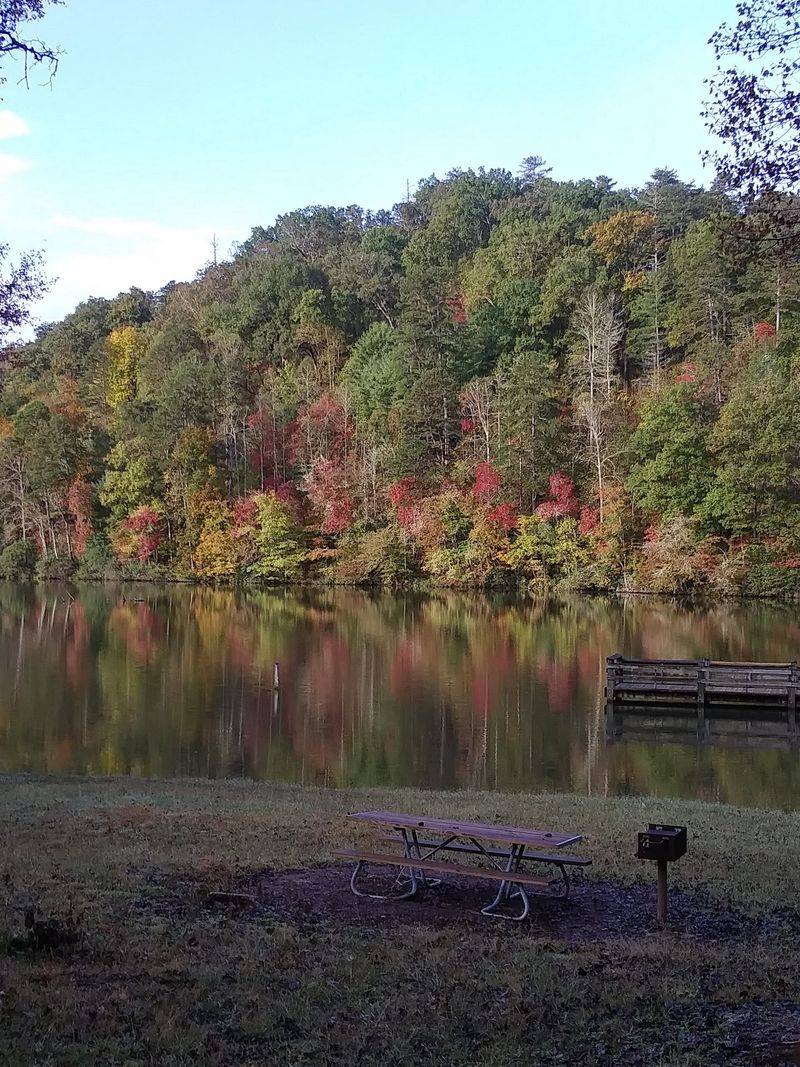
Peak color usually lands somewhere between late October and early November in this part of the mountains, and the change is dramatic. Hillsides that were solid green all summer break into scarlet, pumpkin orange, and deep gold, then repeat the whole performance upside down on the water.
Even the trail toward the dam feels different, with leaves crunching underfoot and more sky visible through thinning branches.
Afternoon light is the secret weapon during foliage season. Around three or four o’clock, the low sun sets the western bank glowing while the eastern side falls into cool shadow.
Bring a warmer layer, since mountain air turns crisp fast once the sun drops behind a ridge.
Access roads in the surrounding national forest can close seasonally, so check current conditions with the Tusquitee Ranger District before making the drive.
Photographers, families, and anyone who simply likes sitting still will find plenty here. A thermos of hot cider, a bench near the shore, and about twenty quiet minutes make the visit stick in your memory.