10 Quiet Hiking Trails In North Carolina Tourists Rarely Discover
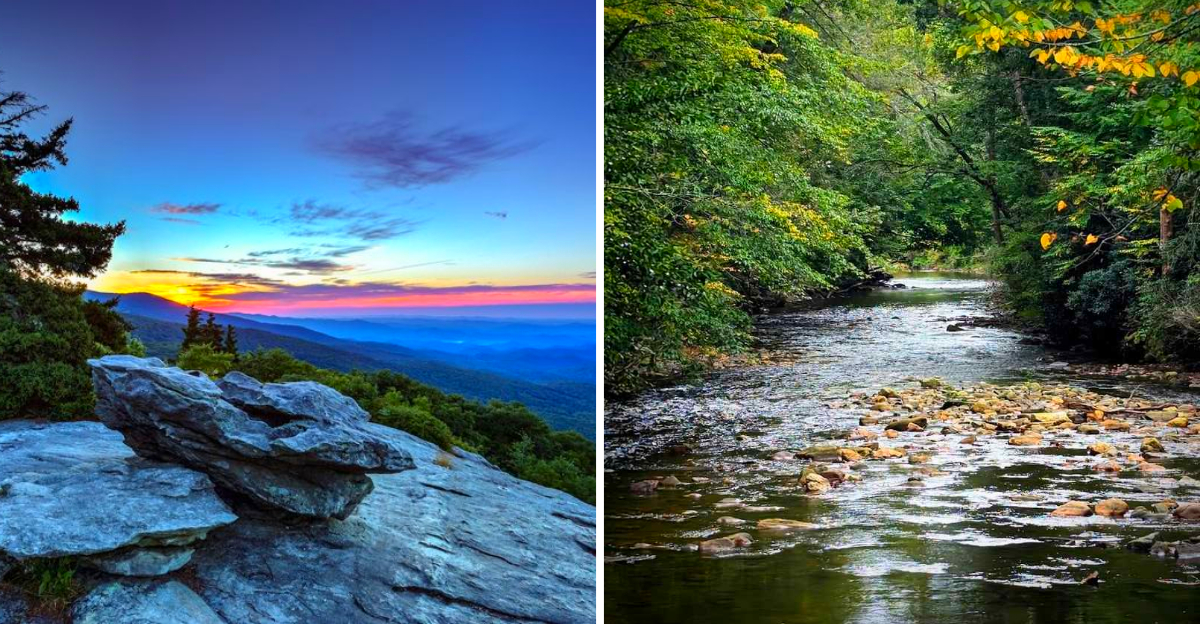
Some of North Carolina’s best hikes are the ones most people never hear about. No crowded parking lots. No lines at the trailhead.
Just quiet paths leading into forests that still feel untouched.
Across the state, there are trails tucked into ridgelines, river hollows, and coastal woods that sit far from the usual spotlight.
These are the routes where the noise fades quickly. A few steps in, and the sounds shift to wind moving through the trees and birds somewhere overhead.
North Carolina still has plenty of landscapes like this. The Appalachian high country offers misty ridges and deep forest trails that stretch for miles. Farther east, river valleys and coastal forests bring a completely different kind of scenery.
The hikes in this list stretch across the state, from mountain terrain to the pine-scented lowlands near the coast.
Each one offers something memorable, whether that is a sweeping ridge view, a hidden waterfall, or a stretch of forest that feels wonderfully remote.
For hikers ready to step away from the busiest trails, these paths reveal a quieter side of North Carolina worth exploring.
1. Black Mountain Crest Trail, Burnsville
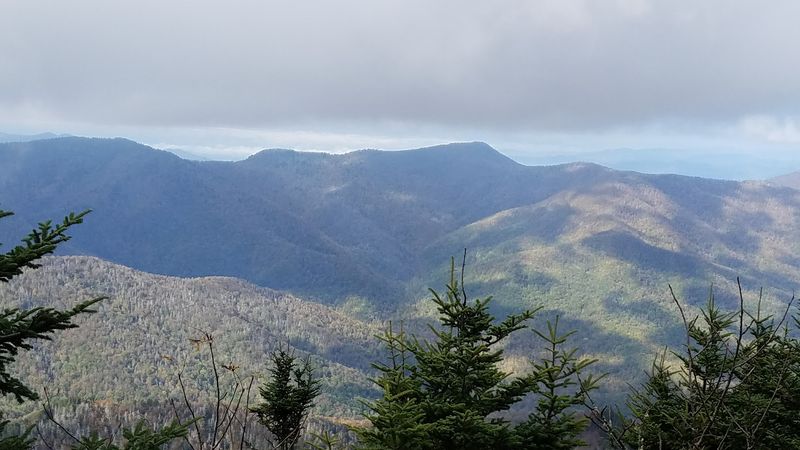
Few trails in the entire eastern United States can match the raw, wind-swept drama of the Black Mountain Crest Trail near Burnsville, North Carolina.
This challenging ridgeline route runs along some of the highest peaks east of the Mississippi River, including Mount Mitchell, which tops out at 6,684 feet. This trail is located at Black Mountain Crest Trail, Burnsville, NC 28714.
The trail is roughly 11 miles one way and is best suited for experienced hikers who are comfortable with steep, rocky terrain and rapidly changing weather conditions. Temperatures can drop significantly even in summer, so layering up is always a smart move.
Solitude is almost guaranteed here. Most visitors to Mount Mitchell State Park stick to the paved summit road, which means the crest trail itself sees relatively little foot traffic throughout the year.
Spruce and fir forests line much of the route, giving the hike a distinctly boreal feel that surprises many first-time visitors. The views from the open ridgeline sections stretch for dozens of miles on a clear day, making every hard-earned step feel completely worth it.
2. Big Lost Cove Cliffs Trail, Near Jonas Ridge
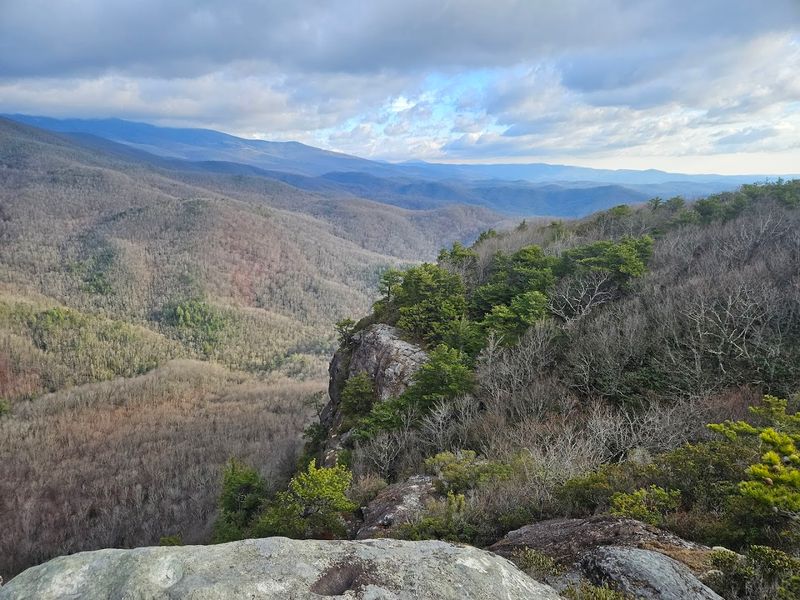
If you appreciate the solitary and quiet trails then this one is perfect for you. It’s very easy to fully immerse yourself in the beauty of your surroundings.
The payoff at the end is a series of open sandstone cliffs with views that stretch across the Wilson Creek Wild and Scenic River corridor.
The hike itself is moderate in difficulty, running about 2.5 miles round trip, which makes it accessible to a fairly wide range of hikers without feeling too tame. The trail passes through dense hardwood forest before opening up dramatically at the cliff edge.
Spring and fall are particularly stunning here, as the surrounding canopy erupts in color and the air carries a crispness that makes every breath feel refreshing.
Summer visits are quieter than you might expect, since the trail does not appear on most popular hiking apps.
This feels like the kind of spot a local hiker discovered years ago and quietly kept to themselves, sharing it only in hushed tones with trusted friends.
3. Secret Falls Trail, Highlands
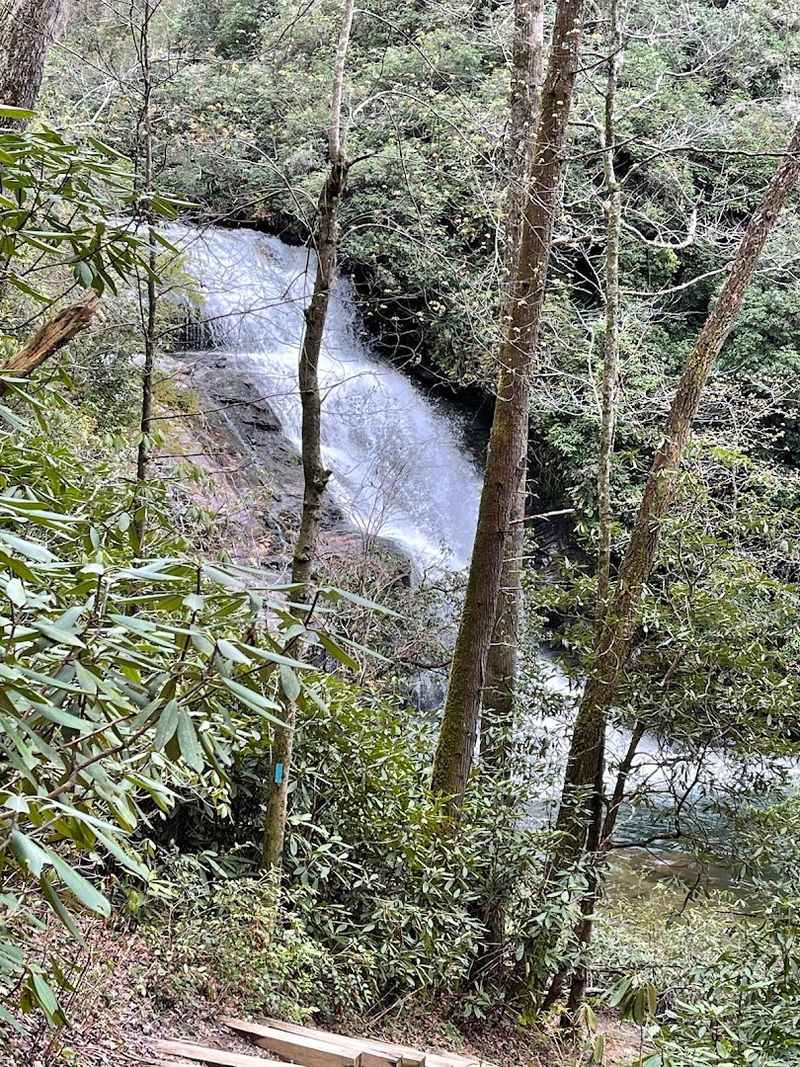
The name alone is enough to spark curiosity, and the Secret Falls Trail near Highlands, North Carolina, absolutely lives up to the intrigue.
The ever so aptly named Highlands sit at around 4,000 feet in the southern Blue Ridge Mountains. At that height you can expect a landscape that is lush and where you will have no issues finding a cool spot to rest.
The trail to Secret Falls is relatively short, making it a wonderful option for families or anyone looking for a rewarding hike without committing to a full-day adventure. You can check the trail out at Big Creek Rd, Highlands, NC 28741.
The falls themselves tumble into a small, mossy pool surrounded by old-growth hemlocks and rhododendron thickets.
What sets this trail apart from the more publicized waterfalls in the region is the genuine sense of discovery it offers. There are no large parking areas, no interpretive signs, and no gift shops nearby, just forest and falling water.
Imagine stepping into that clearing for the first time and feeling the cool mist rise up from the plunge pool. That kind of unscripted, unpolished moment is exactly what a quiet trail is supposed to deliver.
4. Little Bradley Falls Trail, Saluda
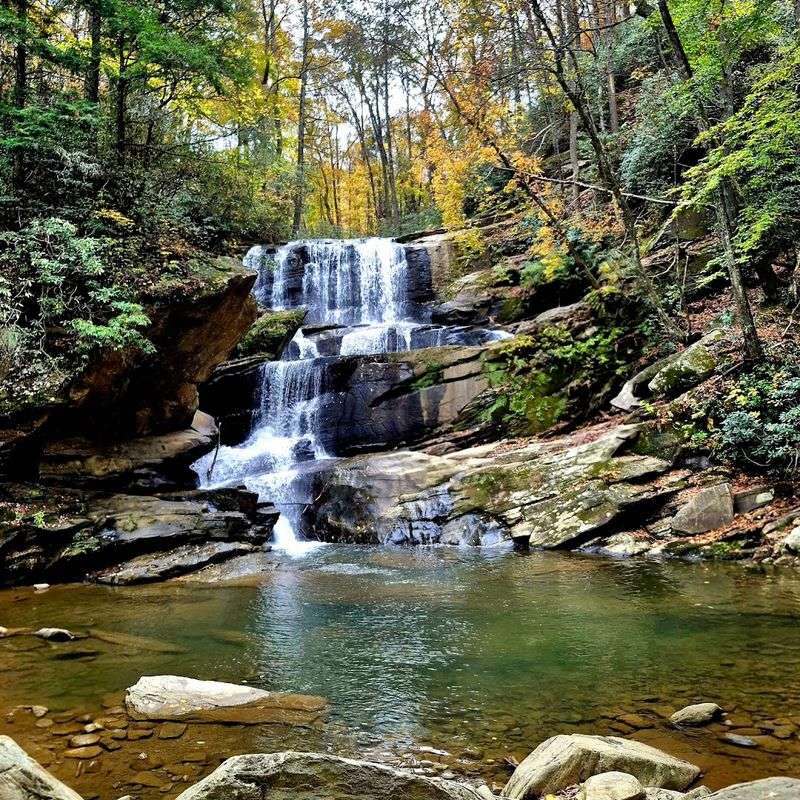
If you wish to enjoy a quiet hike where you can stop and cool down near a waterfall, then this is perfect for you. There is nothing better than the background noise being the sound of a waterfall.
The falls drop in two distinct tiers over a smooth rock face, creating a visual that feels far more dramatic than the modest trail length might suggest.
The hike is only about 1.5 miles round trip, but the descent to the falls is sharp, so trekking poles are a genuinely useful addition to your pack.
The creek that feeds the falls runs clear and cold year-round, and the surrounding hemlock forest gives the gorge a moody, cathedral-like atmosphere.
If you are intrigued you can find this trail at 5336 Holbert Cove Rd, Saluda, NC 28773.
Visitor numbers here stay low compared to better-known falls in the region, which means there is a good chance you will have the whole place to yourself on a weekday.
5. Forney Ridge Trail, Great Smoky Mountains National Park
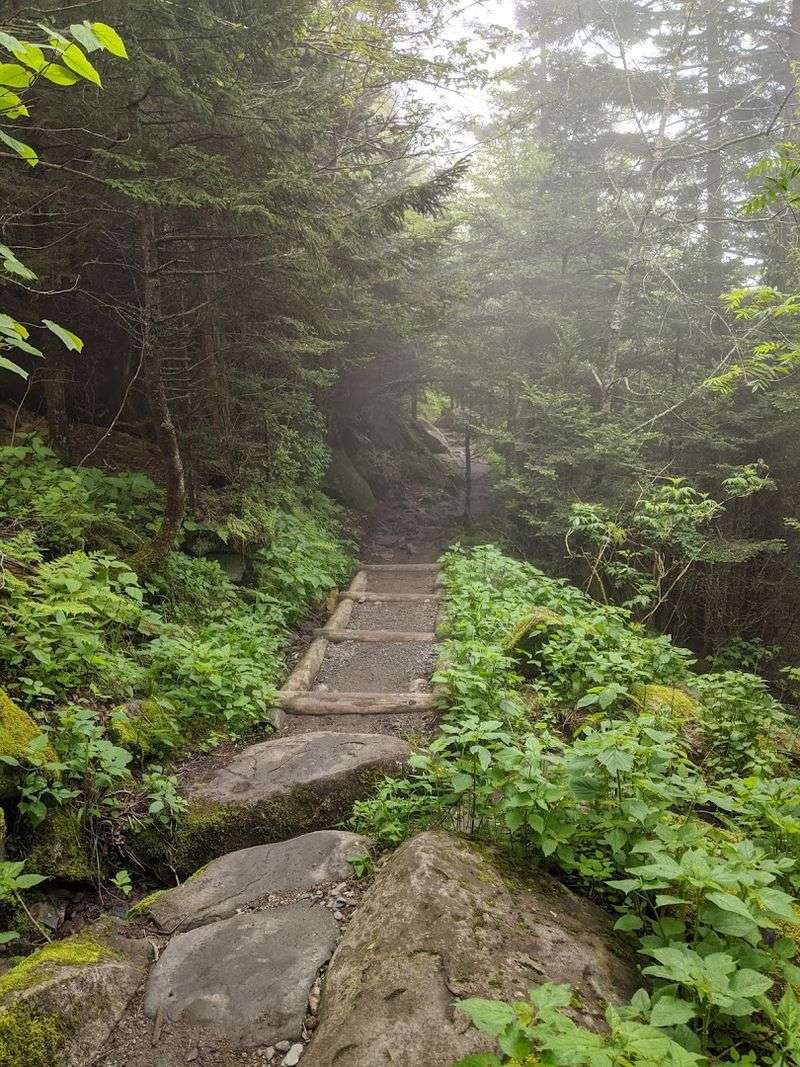
Great Smoky Mountains National Park attracts millions of visitors every year, but the vast majority of them never venture far from Clingmans Dome Road.
That means Forney Ridge Trail remains one of the park’s best-kept quiet corners. The trailhead sits near the summit of Kuwohi, formerly known as Clingmans Dome, at an elevation above 6,000 feet.
The trail descends through a spooky forest of Fraser firs. It is a somber beauty, but beauty nonetheless.
Further down the ridge, the trail passes Andrews Bald, one of the few grassy balds in the Smokies, which bursts with flame azalea and blueberries in early summer.
The bald offers open sky views that feel like a reward handed out specifically to those willing to walk past the crowds.
Round-trip distance to Andrews Bald is about 3.6 miles, which is entirely manageable for most hikers. The high elevation keeps temperatures cooler than the valleys below, making it a smart summer option when heat is a concern.
6. Farlow Gap Trail, Pisgah National Forest
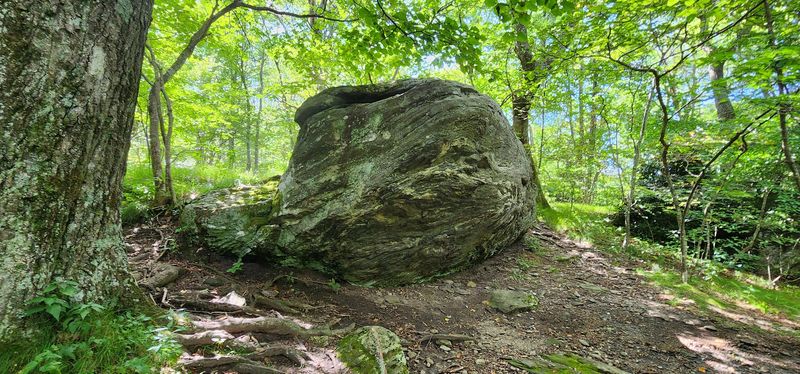
Most visitors usually swarm the better-known trails, that is why Farlow Gap feel like a personal secret to escape to for most people.
Deep within Pisgah National Forest, it stands out as one of western North Carolina’s most demanding hikes and one of the most rewarding once you commit to it.
The trail connects Cedar Rock Creek to Farlow Gap along a path that involves stream crossings, boulder scrambles, and some genuinely steep climbing.
The route is roughly 4 miles one way and is best experienced as part of a longer loop using connecting trails in the area. bthat makes the lower sections of the hike feel refreshing even on warm days.
What makes Farlow Gap particularly special is the variety it packs into a single outing. You move through open creek corridors, dense rhododendron tunnels, and rocky exposed gaps with views across the Davidson River valley, all in one trip.
Experienced hikers tend to return to this trail repeatedly because it changes dramatically with the seasons. Fall color here is extraordinary; the orange and red canopy reflects in the creek pools below. This trail has a loyal, quiet following for very good reasons.
7. Tanawha Trail (Beacon Heights Trailhead), Blue Ridge Parkway
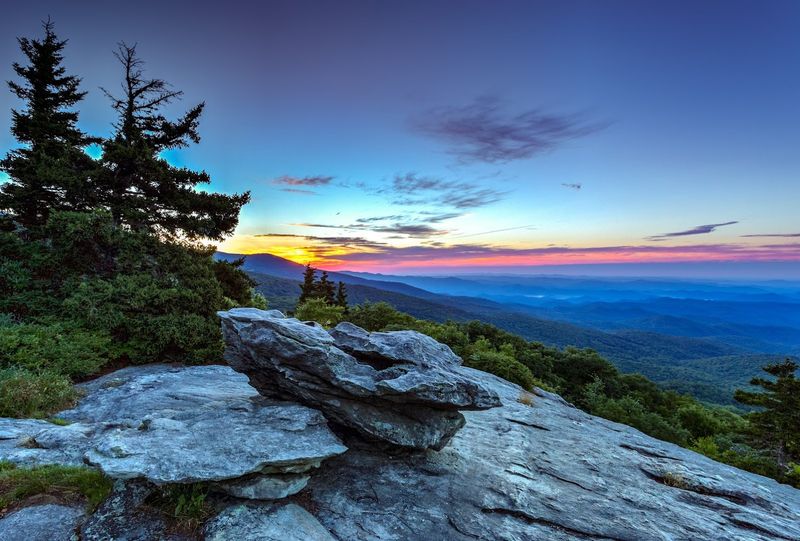
The Blue Ridge Parkway is one of the most visited scenic drives in the country. Somehow, the Tanawha Trail manages to fly under the radar even for people who have driven the parkway multiple times.
Starting from the Beacon Heights Trailhead near Linville, this section of the Tanawha offers some of the most varied and scenic terrain on the entire 13-mile route. The trail is located at Beacon Heights Trail, Linville, NC 28646.
Beacon Heights itself is a short, popular side trip, but continuing along the Tanawha beyond the crowds reveals a quieter world of exposed granite outcrops, bog crossings on wooden boardwalks, and sweeping views of Grandfather Mountain’s distinctive profile.
The trail is well-maintained and moderate in difficulty, making it a strong choice for hikers who want scenery without suffering.
Spring brings wildflowers to the forest floor, and the open rock faces heat up nicely in the autumn sun, making late October an especially pleasant time to visit.
Picture yourself sitting on those granite slabs, with the Blue Ridge below and spruce trees stirring behind you. That picture alone is reason enough to make the trip.
8. Sauratown Trail (Tory’s Den Trailhead), Hanging Rock State Park
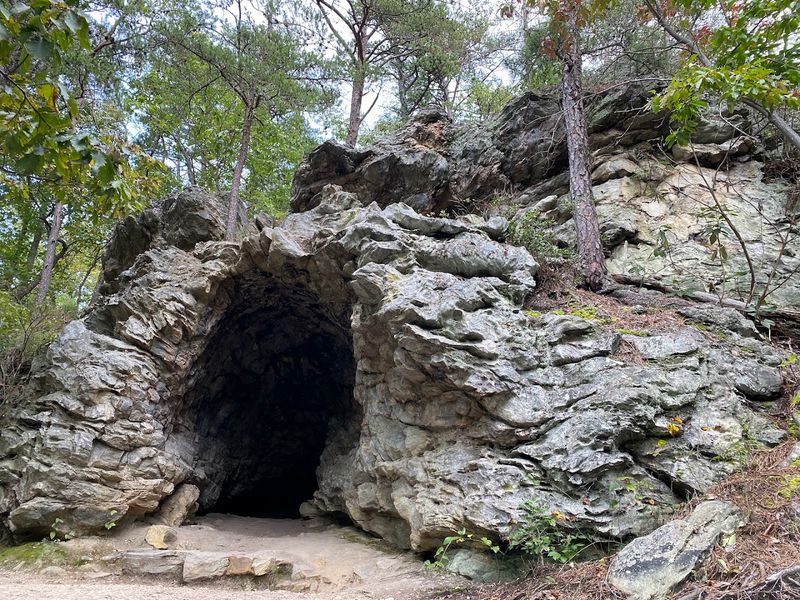
Hanging Rock State Park in Stokes County is one of the Piedmont’s most underappreciated destinations. It already feels quieter than many of North Carolina’s better-known outdoor spots.
Then there’s the Sauratown Trail, reached from the Tory’s Den Trailhead. That stretch feels like the park’s most atmospheric and least crowded corner.
Tory’s Den itself is a large rock shelter that reportedly served as a hideout during the Revolutionary War period, adding a layer of historical intrigue to an already interesting hike. It’s found at 1287-1299 Charlie Young Rd, Walnut Cove, NC 27052.
The trail winds through a mixed hardwood forest before reaching the den, where the overhanging quartzite rock creates a cool, shadowy space that feels tucked away from the modern world.
From there, connecting paths lead deeper into the Sauratown Mountains, a small isolated range that rises unexpectedly from the surrounding flat Piedmont landscape.
Hanging Rock State Park draws visitors to its main summit and waterfall areas, but the Tory’s Den section sees a fraction of that traffic, giving it a noticeably more peaceful character.
The Sauratown Mountains are geologically fascinating, standing alone as a monadnock range, and that geological quirk gives the whole park a personality that feels distinct from the better-known mountain parks further west.
9. Neusiok Trail (Pine Cliff Trailhead), Croatan National Forest
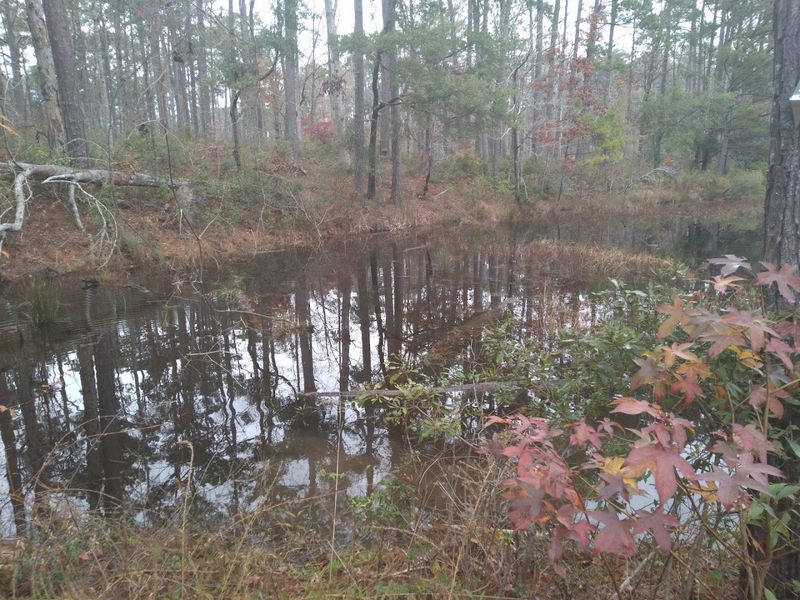
Most people think of mountains first when hiking in North Carolina. That’s exactly why the Neusiok Trail in Croatan National Forest near New Bern feels like such a surprise. It catches people off guard in the best way.
This trail runs through a landscape unlike anything in the western part of the state, crossing pocosins, longleaf pine savannas, and tannin-dark creek crossings in the coastal plain.
The Pine Cliff Trailhead is at Pine Cliff Rd, Havelock, NC 28532, and provides access to the southern portion of the trail. which winds through some of the most biologically rich and visually distinctive terrain in the region.
The full Neusiok Trail stretches about 20 miles between the Neuse River and Newport River, but shorter out-and-back sections from Pine Cliff are perfectly satisfying.
Birding along this trail is exceptional, with red-cockaded woodpeckers and various warblers making regular appearances.
To me, the Neusiok represents a side of North Carolina that deserves far more recognition than it currently gets. The coastal forest has its own quiet magic, and a slow walk through it feels genuinely restorative in a way that is hard to put into words.
10. Black Balsam Art Loeb South Trailhead, Brevard
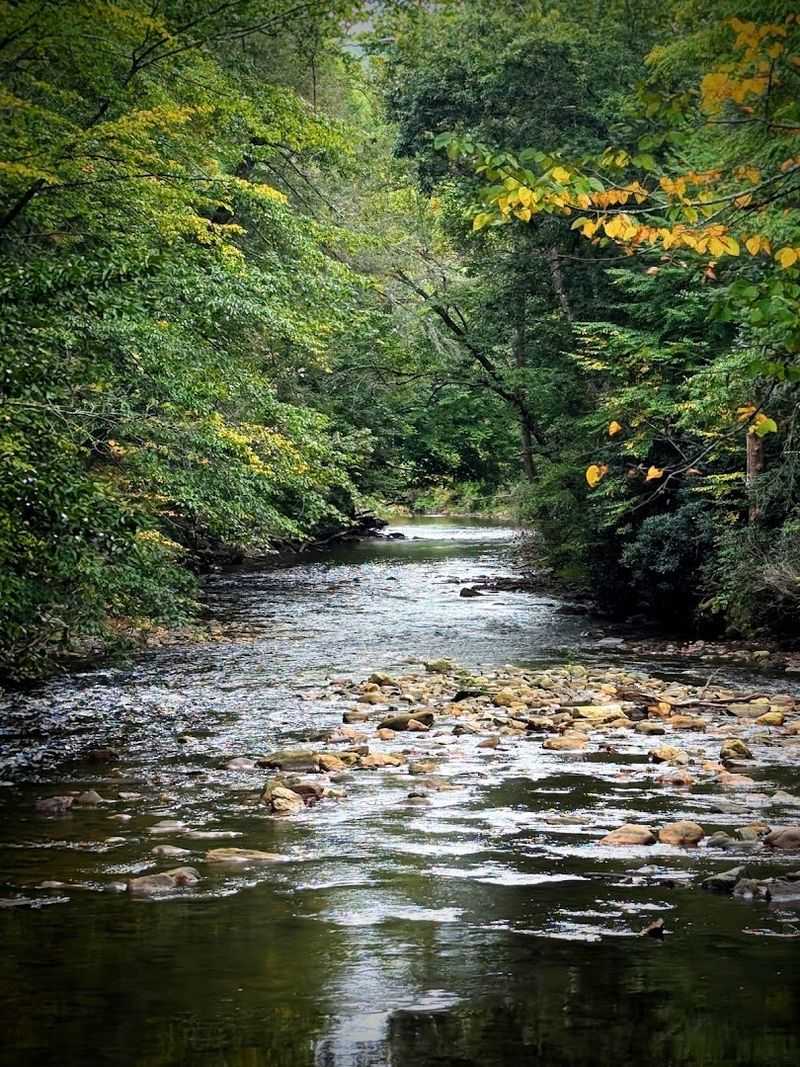
Named after a beloved Brevard hiking club leader, the Art Loeb Trail is one of western North Carolina’s longest backcountry routes.
It also covers an impressive range of terrain. Even with all that, it still stays noticeably less crowded than many comparable trails in the region.
Black Balsam Art Loeb South Trailhead in Brevard serves as the southern starting point, launching hikers into Pisgah National Forest along one of the most scenic river corridors in the mountains.
The lower section of the trail follows the Davidson River closely, offering the pleasant company of rushing water and the chance to spot brook trout holding in the current.
As the trail climbs away from the river, the terrain shifts to dense hardwood forest with occasional views opening up across surrounding ridges.
The full Art Loeb Trail runs about 30 miles to its northern terminus near the Blue Ridge Parkway, but even a day hike of 6 to 8 miles from the Davidson River end delivers an impressive variety of scenery and a satisfying sense of genuine wilderness.
Brevard itself is a lively small city with a strong arts scene and a famous music festival, making it an ideal base for exploring the trail over multiple days.