Raw Fish Is Becoming A Standout On Delaware Restaurant Menus
Raw fish is having a serious main-character moment, and Delaware is joining the party.
Crudo, tartare, chilled oysters, and other fresh seafood dishes are showing just how much flavor can happen without a grill getting involved.
Sounds simple? Wait until the plate arrives!
Bright colors, bold sauces, and constantly changing ingredients make each bite feel a little more adventurous.
The room can be lively and playful too, which keeps the whole thing from feeling overly precious.
If raw seafood once sounded intimidating, one good plate can change that fast.
Suddenly, the only question is: what are we ordering next?
An Old Building With New Flavor
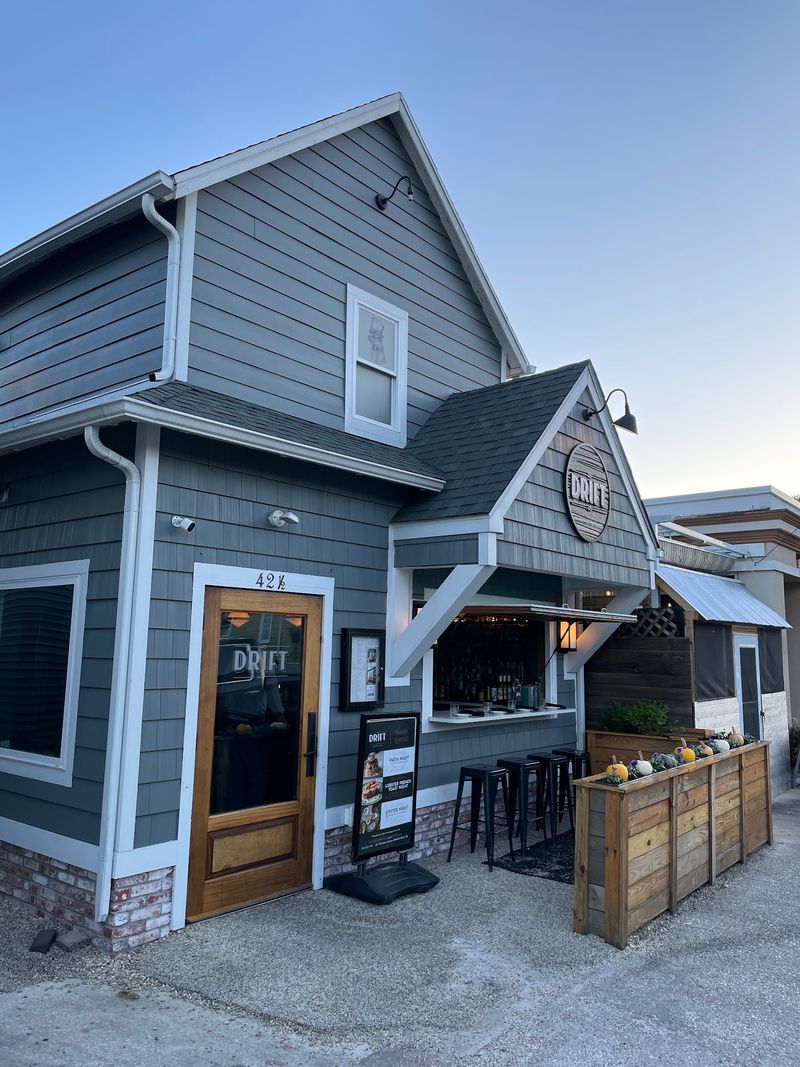
Some buildings whisper stories, and this one practically hums them. Drift Seafood & Raw Bar occupies a renovated former camp meeting cottage dating to around 1890.
The structure is one of the surviving links to Rehoboth Beach’s early years as a Methodist camp meeting community. It later served other purposes, including time as a bed-and-breakfast and the longtime home of another seafood restaurant.
A major renovation took more than a year before Drift opened in August 2022.
Rather than stripping away the building’s past, the work kept its narrow historic form while adapting the interior for modern restaurant use.
That history becomes part of the atmosphere before the first plate reaches the table. The building feels noticeably different from a purpose-built dining room.
Drift also marked the first completed restaurant project for Second Block Hospitality Group before the company expanded its presence elsewhere in downtown Rehoboth Beach.
Its central location makes the restaurant easy to combine with an evening around town.
You will find it at 42.5 Baltimore Ave in downtown Rehoboth Beach, surrounded by shops, restaurants, and other businesses within the walkable center.
Seasonal Sourcing Shapes The Menu
The ingredient list reaches across Delaware and the wider East Coast rather than coming from one single local source.
Current seafood suppliers stretch from Virginia and Maryland to Pennsylvania, Massachusetts, and Maine. Produce suppliers include farms and businesses in Delaware as well as neighboring states.
Several Delaware sources remain part of that network, including operations in Lewes, Camden, Frankford, Felton, and Rehoboth Beach.
Those relationships help explain why the menu does not stay fixed for long.
Availability changes with the season, and dishes can move on or off the menu as different seafood and produce become available.
That approach is especially visible at the raw bar, where oyster varieties and preparations can rotate.
The regional focus also extends naturally across the Delmarva Peninsula.
Delmarva gets its name from Delaware, Maryland, and Virginia, three states connected by the peninsula and its long relationship with farming and coastal seafood.
Instead of expecting one exact lineup every time, diners can expect the current menu to reflect what is available during that part of the year.
Oysters Take A Central Role
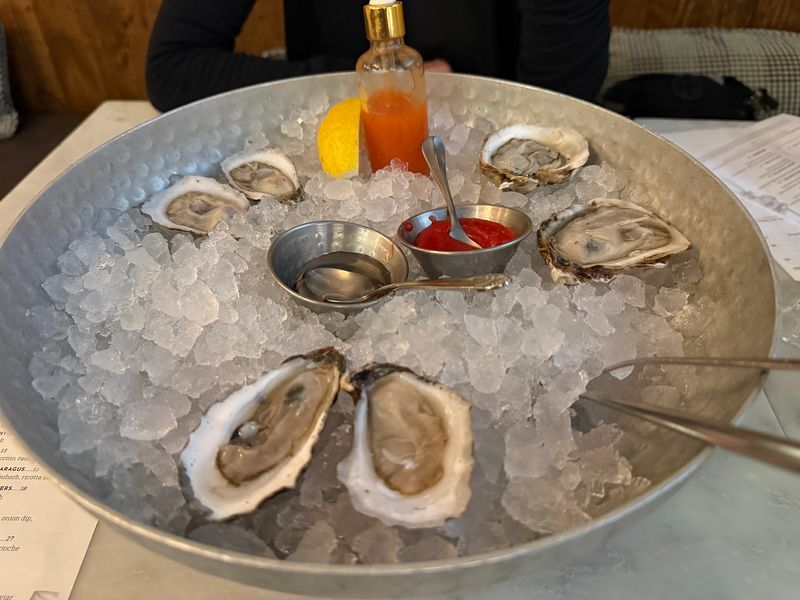
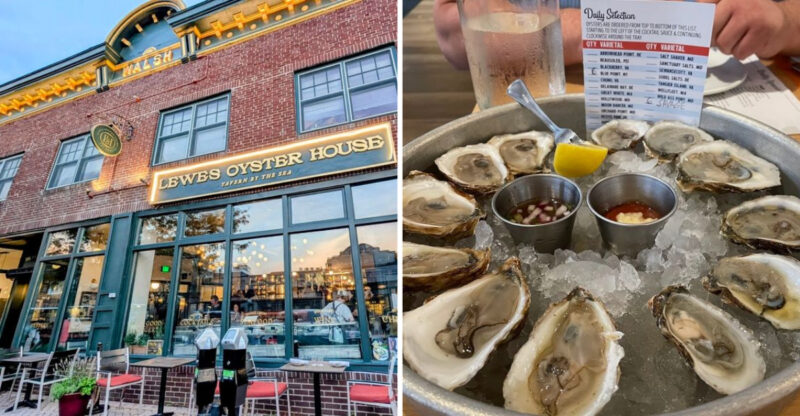
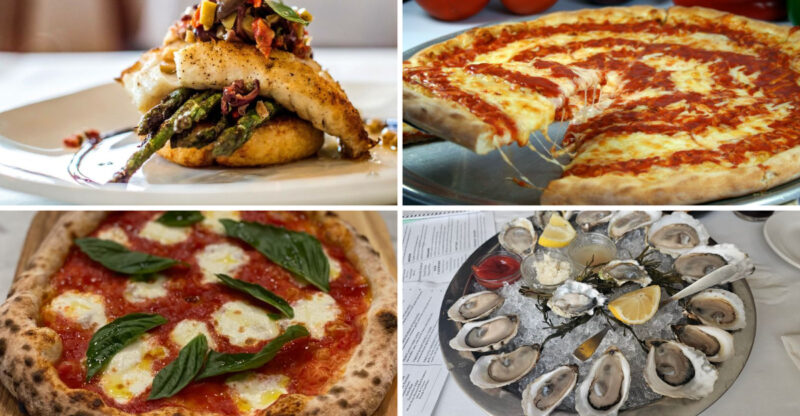
Oysters remain one of the clearest anchors of the raw bar.
The September 2026 menu includes Rehoboth Rose and Delaware Delicious oysters from Delaware alongside varieties from Maryland and New York.
Half-shell oysters come with a house mignonette and accompanying sauces, leaving the individual oyster varieties at the center of the plate. Dressed versions take a more layered approach.
Rehoboth Rose oysters currently appear with peach granita and orange tobiko, adding fruit and texture without covering the oyster completely.
Delaware Delicious oysters take another route with smoked trout roe and house-made chili crisp.
Those preparations also show why checking the latest menu matters. Earlier menus used completely different combinations, and the restaurant continues to change toppings as ingredients shift.
For anyone new to oysters, ordering more than one variety offers an easy comparison. Salinity, firmness, size, and finish can change noticeably from one oyster to another.
Cooked oysters are available too, including a buttermilk-fried preparation with remoulade and a vegetable relish, giving the menu another option beyond the half shell.
Crudo And Tartare Keep Changing
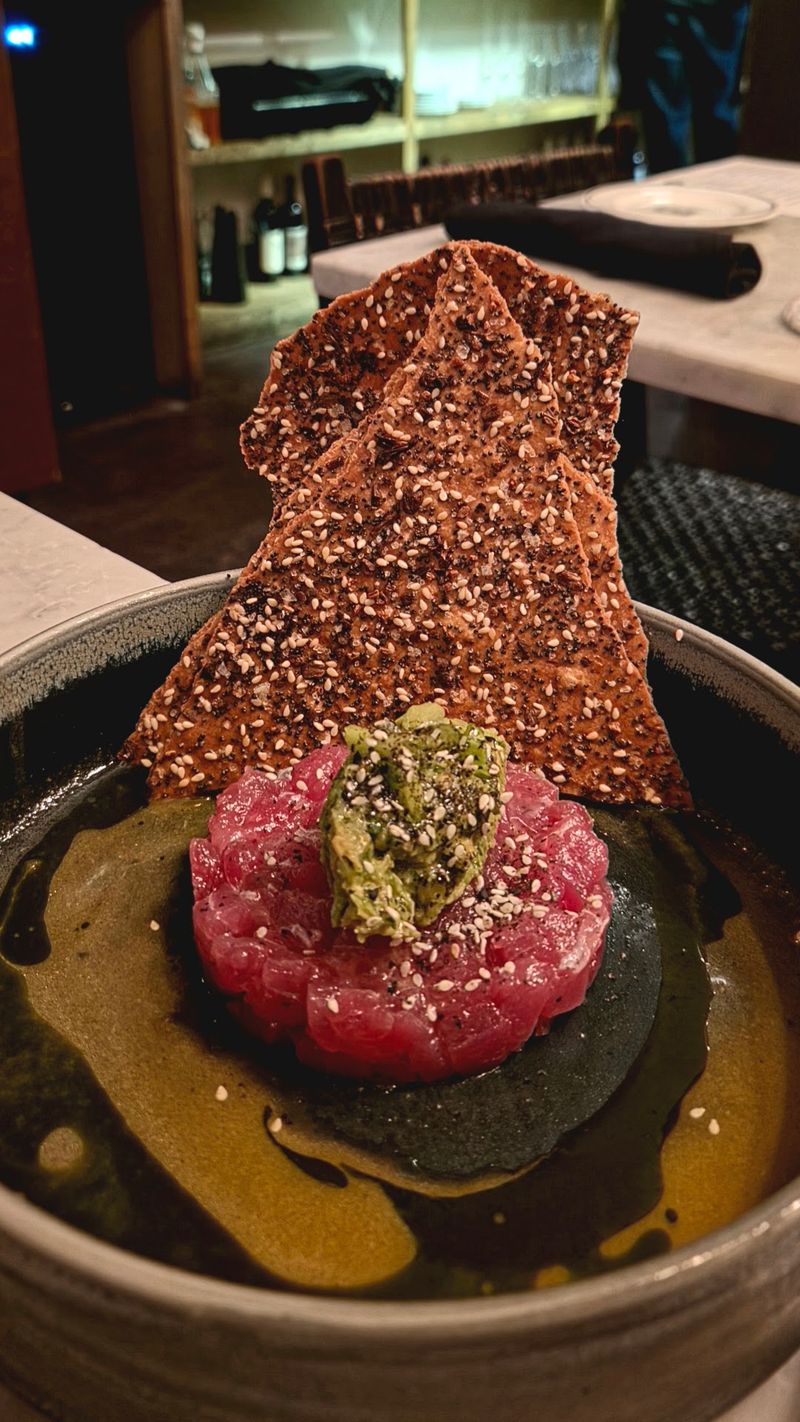
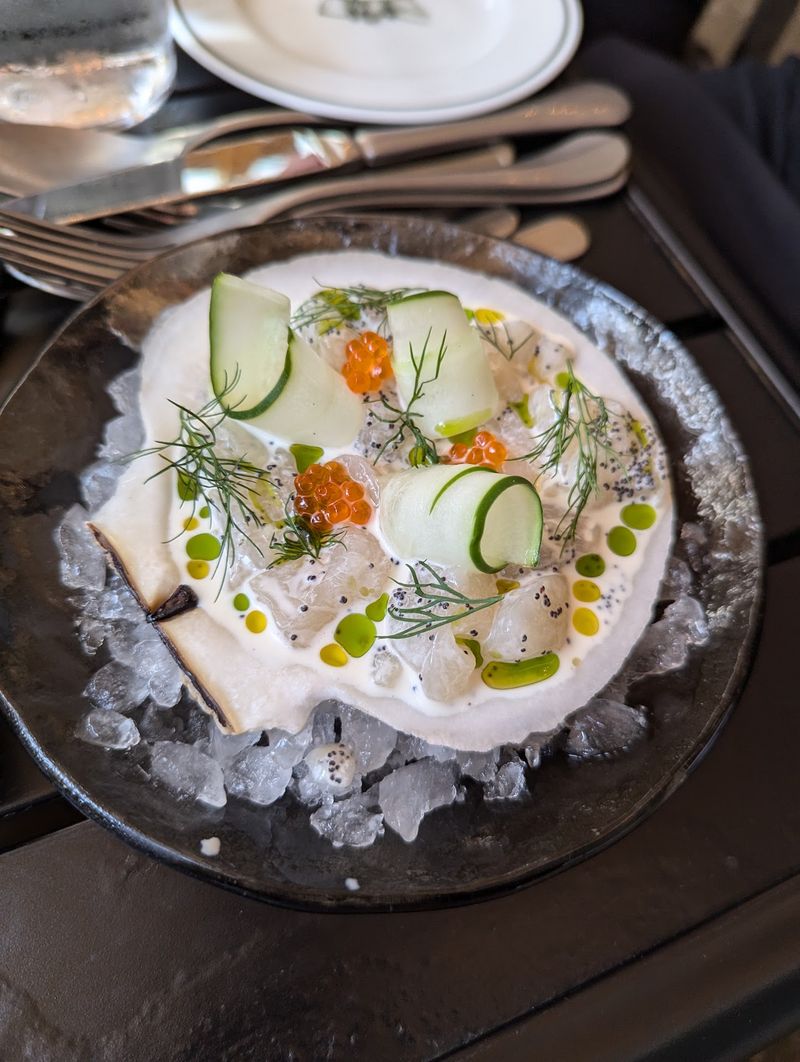
Raw fish can be handled in several ways, and the current menu makes those differences easy to see.
Bluefin tuna tartare is paired with ginger-lime vinaigrette, nori furikake, avocado, and seasoned crackers.
The ingredients add acidity, creaminess, and crunch around the finely prepared tuna without turning it into a heavy dish. Scallop tartare follows a different path.
Its current preparation combines mint-infused citrus vinaigrette, green apple, scallion, and seasoned crackers, giving the plate both brightness and texture.
Scallop crudo appears separately with coconut, lime, pickled red onion, and house-made chili crisp.
That distinction matters because crudo and tartare are not simply two names for the same preparation.
Crudo generally refers to raw seafood served in slices or pieces with light seasoning, while tartare is usually cut more finely and mixed or paired with additional ingredients.
A bluefin tuna nori wrap adds another raw option, combining tuna with ginger-lime vinaigrette and nori furikake.
Because the menu changes frequently, these current combinations may eventually make room for entirely different raw seafood preparations.
The Kitchen Pushes Beyond Familiar Pairings
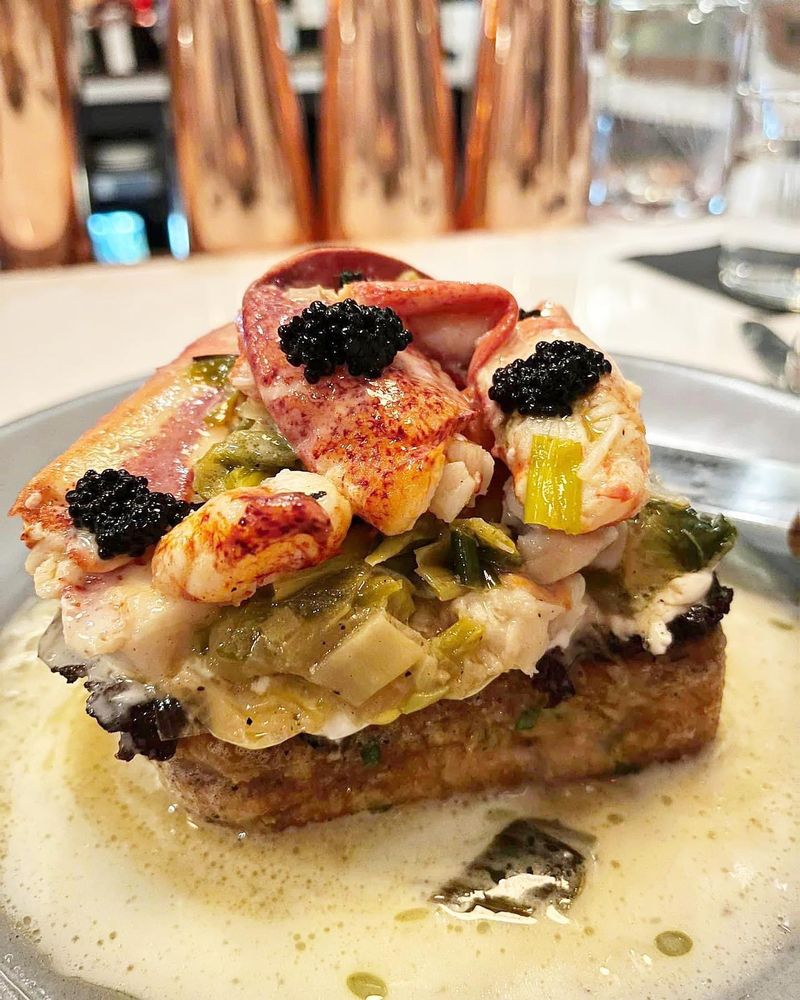
The raw bar may get plenty of attention, but the rest of the menu follows the same willingness to mix familiar seafood with less expected accompaniments.
Maine lobster French toast remains one of the more unusual combinations.
The current version pairs lobster with house brioche, braised leeks, and lemon cream, creating a savory interpretation of a familiar breakfast-style base.
House-crafted squid ink pasta appears in the lobster spaghettini, joined by miso butter, breadcrumbs, and chili flake.
Swordfish schnitzel moves in another direction with potato salad, dill, pickled cabbage, and grenobloise.
Ora King salmon comes with curried celeriac purée, grilled rainbow carrots, pea shoots, and watermelon radish.
New Bedford scallops currently arrive with spaghetti squash, pesto, and a garlic-based sauce. Those combinations make the cooking difficult to place into one narrow category.
Regional seafood remains central, but ingredients and techniques pull from several culinary traditions. That mix also explains why older menus can look quite different from the one available now.
Otters, Antiques, And Quirky Details
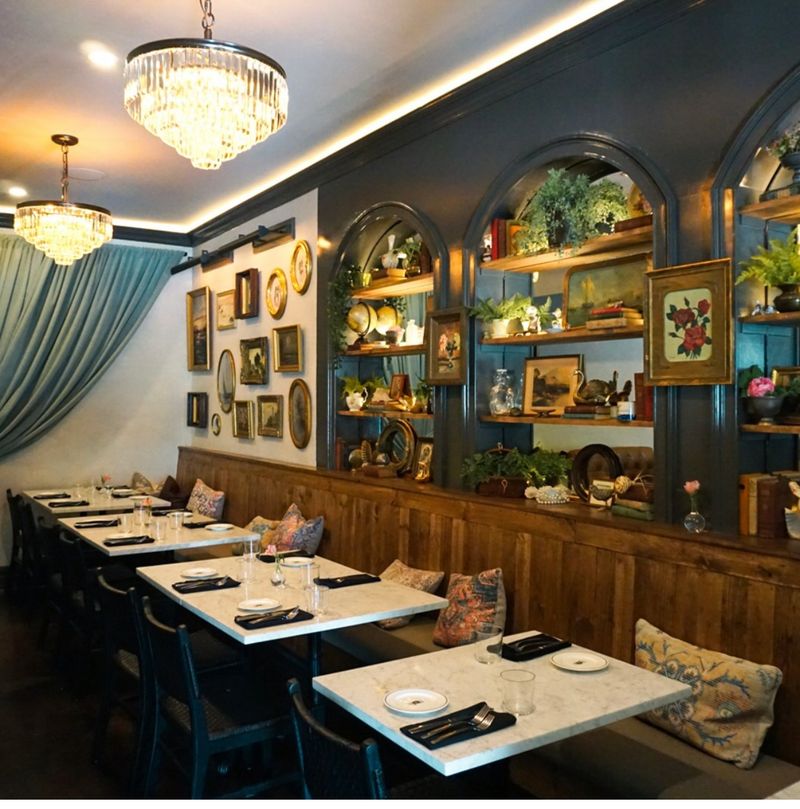
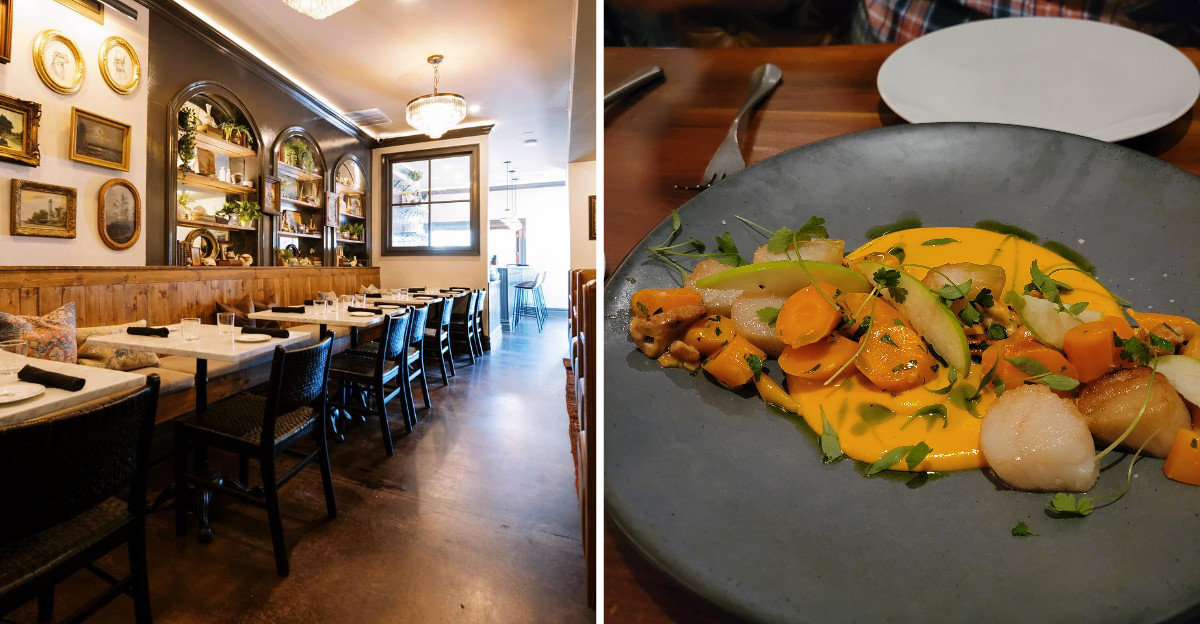
The dining room has its own personality before anything reaches the table.
Two otters became part of Drift’s visual identity when the restaurant was created, with branding inspired partly by vintage oyster tins.
That playful marine theme works alongside a much older building rather than trying to disguise its age.
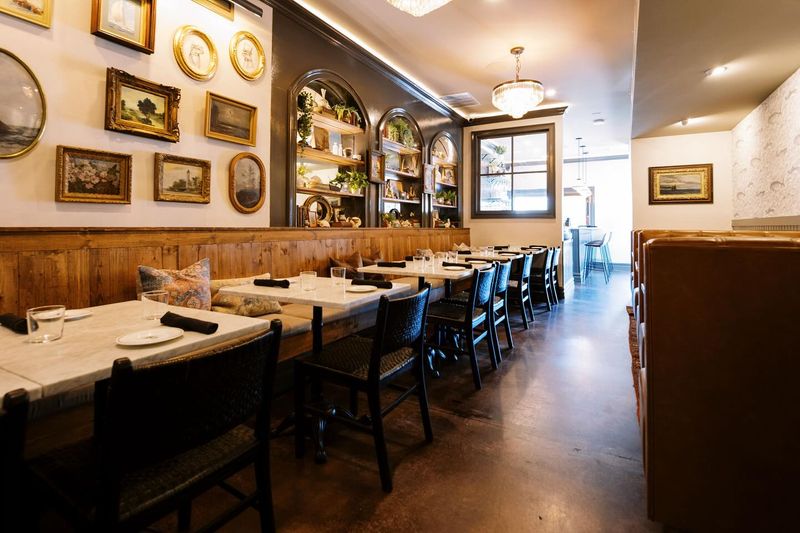
Inside, antique books, oyster plates, plants, and small oil paintings fill mirrored alcoves along the narrow dining room.
A banquette runs along one side, while leather booths provide seating on the other. The compact shape comes directly from the building’s original footprint.
Instead of opening the structure into one oversized room, the design uses smaller connected areas to make the narrow layout work. A rear patio adds another dining area when conditions allow.
The overall effect mixes coastal references, vintage pieces, and more polished contemporary details without requiring everything to match. That approach suits a restaurant built inside a nineteenth-century cottage.
Reservations are useful because the interior remains intimate rather than expansive, particularly when Rehoboth Beach is busy.
Beyond Raw Seafood
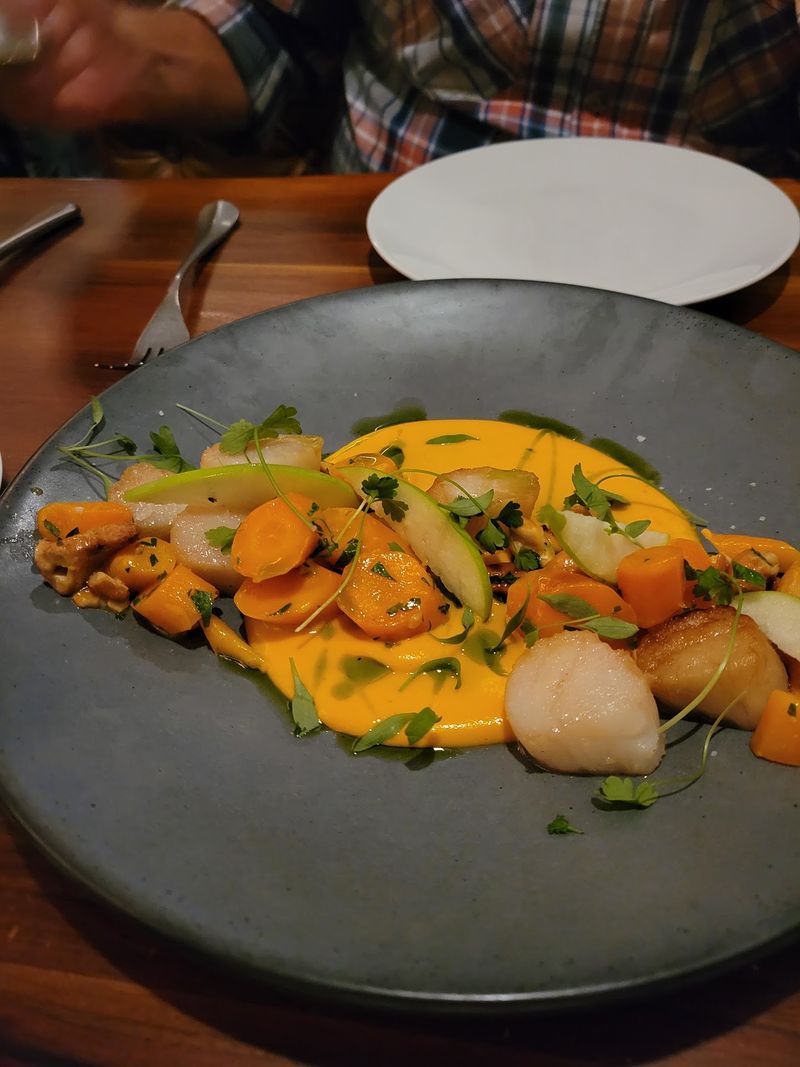
Not everyone at the table needs to order from the raw side of the menu.
House-made thyme focaccia currently starts things simply with kelp butter and sea salt.
The endive Caesar combines radicchio, pecorino, breadcrumbs, and crisp fish accents for a more substantial vegetable course.
Warm seafood choices include buttermilk-fried oysters and lobster French toast, while lobster salad wraps pair lobster with lemon aioli, dill, celery, and endive. The larger dishes broaden the selection considerably.
Along with scallops, salmon, swordfish, and lobster pasta, the menu currently includes crab ravioli and a beef entrée.
That variety makes it possible to mix raw and cooked dishes across the same meal rather than committing to one style. Dessert changes too.
The current 2026 dessert menu has moved beyond the Basque cheesecake seen on older menus.
Recent options include a s’mores-inspired budino with graham cracker crumble and house-made toasted marshmallow, along with coconut cream pie finished with toasted coconut and lime zest.
Like the dinner menu, the sweet side is worth treating as seasonal rather than permanent.
Planning Your Perfect Raw Night
A little planning helps because Drift keeps a relatively compact footprint.
Current dinner service begins at 5 p.m. Tuesday through Saturday.
Tuesday, Wednesday, and Thursday service runs until 9 p.m., while Friday and Saturday continue until 10 p.m. The restaurant is currently closed Sunday and Monday.
Reservations can be made in advance, and both indoor dining and outdoor patio seating are available.
The current menu also makes one point especially clear: dishes can change according to season and availability.
That means a raw preparation seen during one visit may have different seafood, garnishes, or accompaniments the next time around. The same applies to larger dishes and desserts.
Drift welcomes guests of different ages, although the small dining room is designed around an intimate dinner experience and does not have a dedicated children’s menu.
Its downtown location also makes it easy to pair dinner with time elsewhere in central Rehoboth Beach. For raw seafood, the strongest reason to visit is not one single permanent dish.
It is the changing combination of oysters, tartare, crudo, seasonal ingredients, and cooked seafood that keeps the menu moving throughout the year.