10 Reasons Why Kentucky Families Say It’s The Best Place To Raise Kids
Nobody moves to Kentucky for the bragging rights. You move here and then you quietly start bragging anyway.
The lists that rank states never quite capture it. They measure things you can put in a spreadsheet.
They do not measure the neighbor who watches your kids while you run errands. They do not measure a whole county showing up for a high school game.
Ask parents here what makes it work and they rarely mention statistics. They talk about space to run and grandparents twenty minutes away.
They talk about a pace that lets a childhood last a while. They talk about how far a paycheck goes when the mortgage is reasonable.
None of that shows up in a headline about the best states. Here is what Kentucky parents actually say when nobody is ranking them.
You will probably find yourself nodding along.
1. Nearly Everyone In Kentucky Has Health Insurance Now

Health coverage is not a glamorous topic. But ask any parent who has ever waited on a fever at 2 a.m., and it becomes the most interesting subject in the room.
Kentucky’s uninsured rate has fallen to among the lowest in the country. The state expanded Medicaid in 2014, and coverage numbers climbed fast after that.
For families, that shift shows up in ordinary ways. Well-child visits get scheduled instead of skipped, and ear infections get treated before they turn into bigger problems.
The state’s Medicaid program and KCHIP work together to cover children in low and middle income households. Many families qualify at incomes higher than they expect, which surprises plenty of first-time applicants.
Enrollment happens through kynect, the state benefits portal. Parents can apply online, by phone, or with help from a local kynector, which is a trained assistant who walks you through the paperwork for free.
Here is a practical tip worth remembering. Keep proof of income and household size handy, since those two details drive almost every eligibility decision.
Doctors in rural counties benefit too. When more patients carry coverage, small-town clinics stay open, and that matters when the nearest hospital sits thirty minutes down a two-lane road.
Peace of mind is hard to price. Kentucky parents will tell you it feels like one less weight in the backpack.
2. Kids Stay Covered Even When The Paychecks Go Up

Getting a raise should feel great. In some systems, it feels like a trapdoor, because a few extra dollars can knock a child off coverage.
Kentucky built KCHIP to soften that fall. The Kentucky Children’s Health Insurance Program covers kids in families who earn too much for standard Medicaid but not enough for pricey private plans.
Eligibility reaches well above the federal poverty level, so working parents often still qualify. A promotion or extra shifts do not automatically end a child’s coverage.
Benefits cover the things kids actually need. Doctor visits, immunizations, vision checks, dental cleanings, prescriptions, and hospital care all fall under the program.
Dental coverage deserves a special mention. Cavities are one of the most common childhood health problems, and routine cleanings prevent a lot of painful afternoons.
Applying uses the same kynect system as Medicaid, so one application can check several programs at once. Families with children under 19 should apply even if they are unsure about income limits.
One habit saves headaches later. Report income changes promptly, and renew on time, since missed renewal letters cause more coverage gaps than actual income changes do.
Parents describe the result simply. They can chase a better job without gambling on their child’s next checkup, and that freedom shapes real family decisions.
3. Housing Costs A Quarter Less Than The Rest Of The Country

Housing math decides a lot of family life. In Kentucky, that math tends to lean in your favor.
Housing costs in the state run roughly a quarter below the national average. That gap shows up in mortgage payments, rent checks, and the size of the yard you get for the money.
What does the savings actually buy? Often a bedroom for each kid, a driveway, and enough grass for a soccer goal that gets ignored by August.
Cities like Louisville and Lexington still cost more than small towns. Even so, both remain well below coastal metro prices, which stuns families relocating from bigger markets.
Smaller counties push the bargain further. Places like Owensboro, Bowling Green, and Elizabethtown offer sturdy older homes with real porches and mature shade trees.
A practical note for buyers. Older Kentucky homes often have basements, so budget for a good sump pump and a moisture check before closing.
Lower housing costs also change the calendar. Families with smaller mortgages can afford summer camp, music lessons, or one parent working fewer hours.
Renters feel it too, since a modest two-bedroom apartment eats less of the paycheck. That leaves room for savings, which is how first homes eventually happen.
The result is simple. More house, more breathing room, less stress about the first of the month.
4. Groceries, Utilities And Property Taxes All Run Below Average

Cheap rent means little if everything else gouges you. Kentucky keeps the rest of the bills reasonable too.
Groceries, utilities, and property taxes all sit below the national average in the state. Those three lines cover a huge share of a family budget.
Utility costs benefit from Kentucky’s historically low electricity rates. Heating and cooling a house here rarely produces the sticker shock that families report elsewhere.
Property taxes stay modest as well. Kentucky’s effective property tax rate ranks among the lower halves of the country, which softens the annual bill on a family home.
Grocery prices help in quieter ways. Local produce stands, farmers markets, and regional grocery chains keep competition healthy through the summer months.
Try this if you move here. Visit a county farmers market in July, when tomatoes, sweet corn, and peaches all overlap and prices drop.
Add the pieces together and the picture sharpens. A household earning an average wage often keeps more of it, month after month.
That leftover money becomes something real. Braces, savings accounts, a used car for a teenager, or a week at the lake in August.
Families who track spending notice the pattern fast. Kentucky does not make you rich, but it does make ordinary paychecks stretch further than expected.
5. A Free Book Arrives In The Mail Every Month Until Kindergarten

Mail is usually boring. For thousands of Kentucky toddlers, it includes a brand new book with their own name on the label.
Dolly Parton’s Imagination Library mails a free, age-appropriate book each month to enrolled children from birth until age five. Kentucky partners with the program statewide, and the mailing costs the family nothing.
Parton, who grew up in nearby Tennessee, launched the program in 1995 to honor her father, who could not read. It now sends millions of books each year.
Kentucky pushed hard to make coverage statewide. Local affiliates and state support mean children in every county can sign up, including tiny mountain towns.
The books arrive with real thought behind them. Board books for infants, rhyming stories for two-year-olds, and early readers as kindergarten approaches.
Registration takes about five minutes online. Parents need the child’s birth date and mailing address, then the first book usually shows up within eight to ten weeks.
Sixty books by kindergarten is a serious head start. Children who own books at home tend to read more often, and repetition builds vocabulary quietly.
Watching a three-year-old carry the mail inside is its own reward. The envelope gets torn open before anyone reaches the kitchen table.
Small program, large effect. Ask any Kentucky parent with a full bookshelf.
6. Report Cards Turn Into College Money Starting In Ninth Grade

Most teenagers ignore their report card. Kentucky found a way to make them care.
The Kentucky Educational Excellence Scholarship, known as KEES, awards money for each year of high school based on grade point average. Earn good grades in ninth grade, and the award starts stacking.
The program is funded through Kentucky Lottery proceeds. Students do not apply separately, since high schools report GPAs automatically to the state.
Bonus awards go to strong ACT or SAT scores. Advanced Placement and dual credit results can add more on top of that.
The money follows students to eligible Kentucky colleges, universities, and technical schools. Four years of solid grades can build an award worth thousands of dollars.
Here is the part parents love. A freshman with a 3.5 GPA already banked money before anyone mentioned the word college.
Keeping the award requires steady work in college too, since renewal depends on maintaining a minimum GPA. That rule teaches follow-through better than any lecture.
Students can check their balance anytime through the state’s higher education website. Watching the number grow each spring turns grades into something concrete.
Families use KEES alongside other aid, which shrinks loan amounts considerably. For a household with two or three teenagers, that difference reshapes the whole plan.
Grades with a paycheck attached. Motivation solved.
7. Every One Of The Forty Four State Parks Is Free To Walk Into
Weekend plans get expensive fast. Kentucky removed the first hurdle by charging nothing at the gate.
The state operates a park system with 44 parks and no admission fee at any of them. Trails, picnic shelters, playgrounds, and overlooks stay open to everyone.
Kentucky calls itself home to one of the nation’s finest state park systems. The lineup includes resort parks with lodges, historic sites, and recreation parks built around lakes.
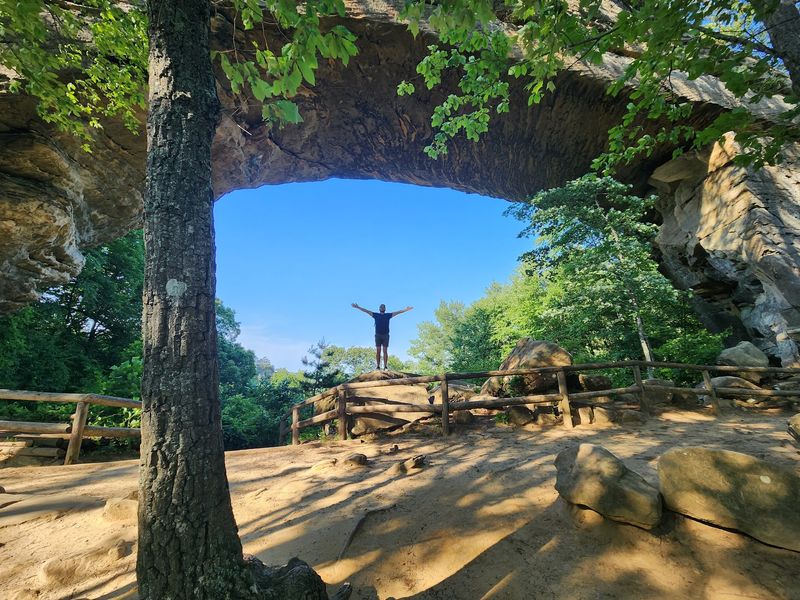
Natural Bridge State Resort Park draws big crowds for good reason. A sandstone arch sits at the top of a short, steep trail, and kids treat the climb like a personal victory.
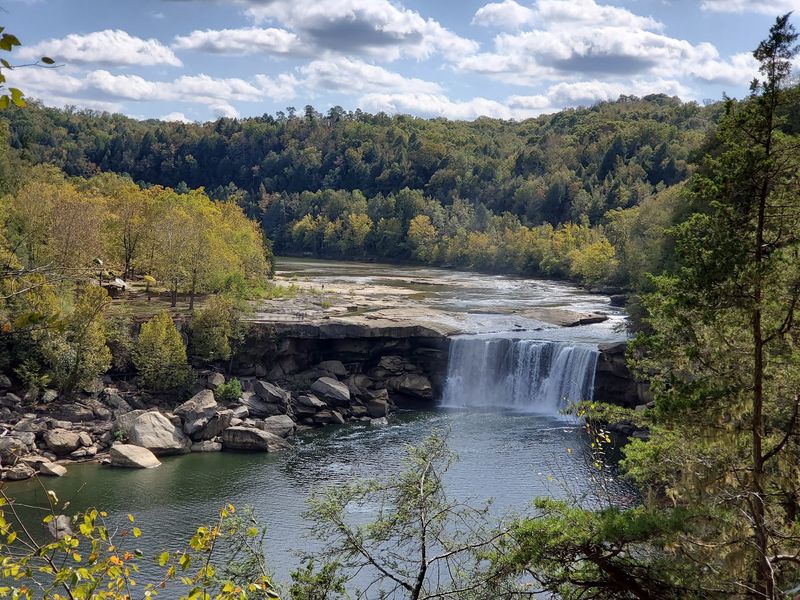
Cumberland Falls anchors the southeastern corner. The waterfall stretches wide across the river and roars loud enough to end conversation.
Lodges and cabins do cost money, and campsites carry nightly fees. Day trips, though, only cost gas and sandwiches.
Junior naturalist programs run at many parks during summer. Rangers lead hikes, pond studies, and evening talks aimed squarely at elementary schoolers.
A tip from experience. Arrive before ten on Saturday at popular parks, because the small lots fill quickly in October.
Free entry changes family habits. When a park costs nothing, you go on a random Tuesday evening instead of saving it for a special occasion.
8. The Only Predictable Moonbow In The Western Hemisphere Falls Here
Rainbows need sunlight. A moonbow needs a full moon, clear skies, and mist, which almost never line up on schedule.
Cumberland Falls produces one reliably. It is widely described as the only regularly occurring moonbow in the Western Hemisphere.
The falls sit inside Cumberland Falls State Resort Park in southeastern Kentucky. Water drops about 68 feet across a river roughly 125 feet wide.
Spray from that impact hangs in the air constantly. When a full moon rises clear, the mist bends the light into a pale white arc.
Timing matters enormously. The park publishes moonbow dates around each full moon, and cloudy nights simply cancel the show.
Bring flashlights and patience. Overlooks get busy, the path is dark, and children need a spot where they can actually see over the railing.
Color is subtle to the eye. Cameras with long exposures pick up faint bands that most viewers only sense.
My advice for families is practical. Feed everyone first, dress warm, and treat the whole evening as an adventure rather than a guaranteed sighting.
When it appears, nobody talks for a minute. A glowing band floating over a waterfall at midnight will do that to a group of ten-year-olds.
Few childhood memories compete with that.
9. The Longest Cave On Earth Is A Weekend Drive Away
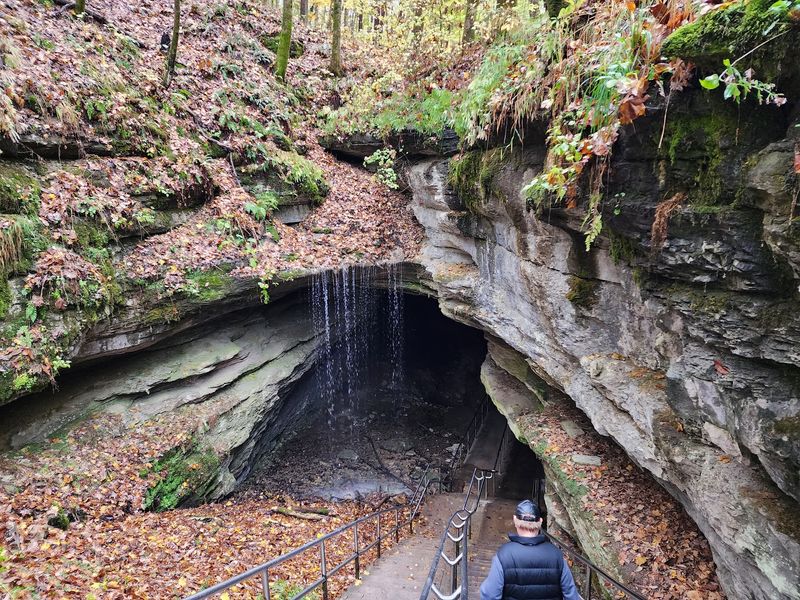
Underground field trips beat most theme parks. Kentucky happens to own the record holder.
Mammoth Cave National Park protects the longest known cave system on the planet. Surveyors have mapped more than 400 miles of passages, and crews keep finding more.
The park sits near Cave City in south central Kentucky, an easy drive from Louisville, Lexington, or Nashville. Rangers lead tours nearly every day of the year.
Tour options fit different ages and nerves. Some routes stay wide and level, while others involve stairs, tight passages, and a lot of ducking.
The Frozen Niagara tour is a strong pick for younger kids. It features dripstone formations and a shorter walking distance.
Reservations are strongly recommended, especially in summer. Popular tours sell out days ahead, and walk-up tickets disappear early.
Cave temperature holds around 54 degrees year-round. A light jacket and closed-toe shoes make the difference between fun and complaining.
Above ground, the park adds trails, the Green River, and camping. A weekend can easily fill with both cave time and daylight time.
Kids ask good questions down there. Why is it dark, what lives here, and how did anyone find this place with a lantern?
That curiosity follows them home. Science homework suddenly has a location attached.
10. The Biggest Elk Herd East Of The Rockies Lives In The Hills
Elk in Kentucky sounds like a mix-up. It is not.
Eastern Kentucky holds the largest free-roaming elk herd east of the Rocky Mountains. State wildlife officials estimate the population in the thousands.
The animals returned through a restoration effort that began in 1997. Kentucky Fish and Wildlife released elk onto reclaimed mine land, and the herd grew from there.
Sixteen counties make up the designated elk restoration zone. Rolling grasslands and forest edges give the animals plenty of open feeding ground.
Fall is prime viewing season. Bulls bugle during the rut, and that high, eerie call carries a long way across a valley.
Guided elk tours run out of areas near Hazard and the Hatfield McCoy region. Local guides know which ridges the herds favor at dawn and dusk.
Safety rules apply, obviously. Elk are enormous, so watch from vehicles or a real distance and keep kids close.
Bring binoculars and something warm to sit on. Viewing means waiting, and waiting in October means cold fingers.
Seeing a bull step out of the fog impresses even bored teenagers. Phones come out, then go back in the pocket.
Wildlife this big, this close to home, teaches something a screen cannot. Kentucky families take full advantage every autumn.