Ride One Of North Carolina’s Last Inland River Ferries At This Historic Cape Fear Crossing
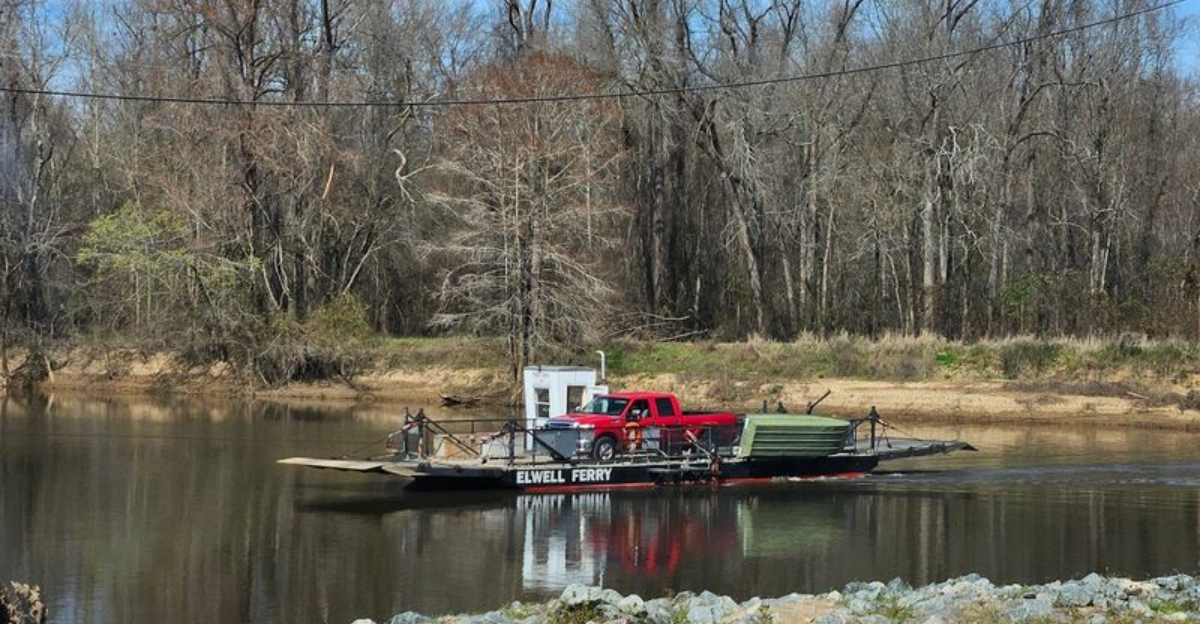
Clank goes the ramp, splash goes the river, and suddenly the road trip feels like it unlocked a secret level.
A small North Carolina ferry has crossed the Cape Fear River for more than a century, which gives the ride a stubborn charm no bridge can copy.
Cars roll aboard, the deck settles, and the whole world seems to lower its voice for a minute.
Nothing about it feels staged, and that is the best part.
The crossing is quick, but the history rides with you the entire way.
Most drivers miss it while chasing faster roads. Their loss.
This detour feels old-school, funny, peaceful, and absolutely worth the brag later.
A Tiny Ferry With More History Than Its Size Suggests
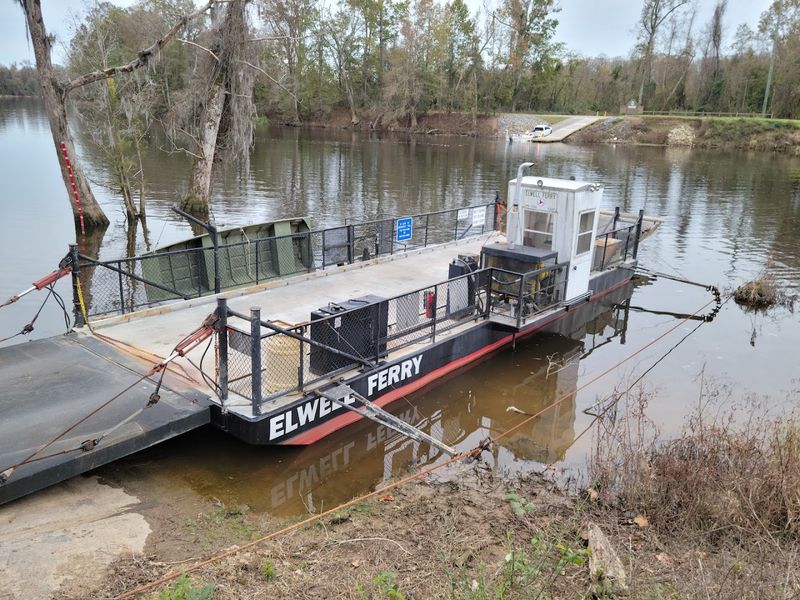
Generations of Bladen County travelers have used this small Cape Fear River crossing for practical reasons, but the experience now feels almost like a moving piece of local history. Elwell Ferry is not large, flashy, or built for big crowds, which is exactly why it stays so memorable.
A vehicle rolls down to the riverbank, waits its turn, and boards a flat ferry that still connects two sides of a rural road the old-fashioned way. The crossing began service in 1905, and that long timeline gives the ride a weight that no roadside sign could fully capture.
Bridges replaced most small inland ferries across North Carolina, yet this one kept going. That survival makes the ferry feel less like a novelty and more like a rare working remnant of how rural communities once stayed connected.
The surrounding quiet helps too. Trees frame the river, the deck feels simple, and the whole setup reminds riders that transportation did not always mean speeding over concrete.
A short ride here carries more personality than many longer road-trip stops, especially for travelers who appreciate places that still serve a real purpose while preserving a century-old rhythm.
A Two-Car Ride Makes The Trip Feel Like A Local Secret
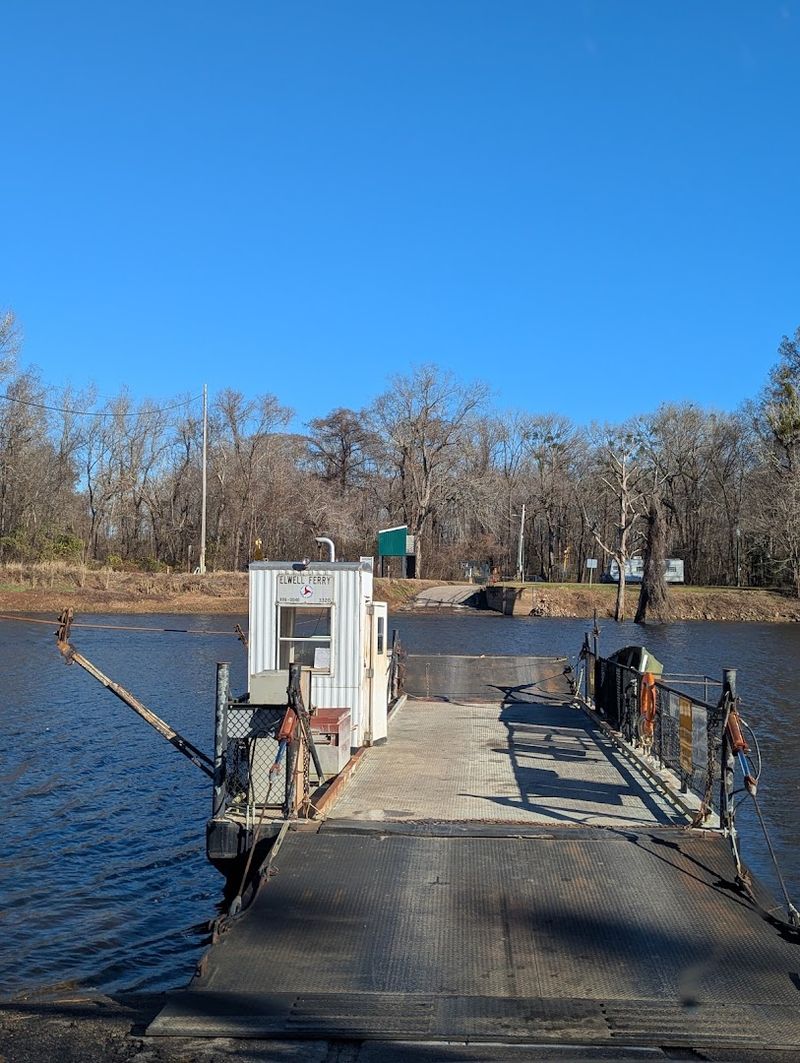
Small capacity gives Elwell Ferry much of its charm because the crossing feels personal almost immediately.
The ferry is known for carrying only two passenger vehicles at a time, or about four tons, which turns the ride into a compact, slow-moving moment rather than a busy transportation line.
That limit makes every crossing feel intimate. Drivers wait on the riverbank, watch the ferry glide closer, and then ease onto the deck with the sense that they have found something most people miss.
For anyone looking for the exact location, the ferry is commonly listed at 2700 Elwell Ferry Road, Kelly, NC 28448, near the Cape Fear River crossing between Kelly and Carvers Creek in Bladen County. The trip out there is part of the mood, with rural roads replacing the pace of larger highways.
Motorcyclists and back-road travelers often appreciate stops like this because the destination feels discovered rather than advertised. Waiting your turn is not a problem here.
It gives you time to hear the river, notice the trees, and realize the ferry’s small scale is the whole reason the experience feels so special.
The Cape Fear River Crossing Still Feels Wonderfully Old-School
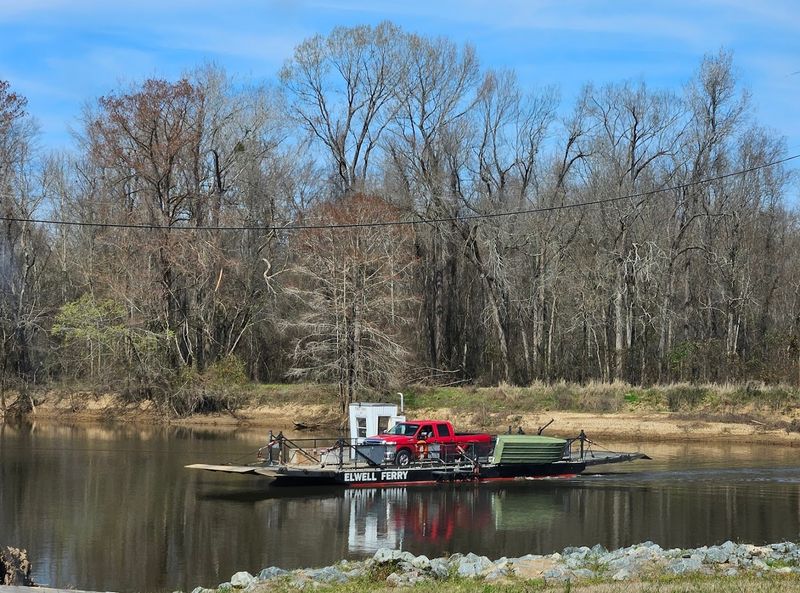
Crossing a river without a bridge changes the way a traveler pays attention. Instead of rolling over water at highway speed, riders on Elwell Ferry move with the river in view, close enough to notice the current, the banks, and the quiet around them.
The Cape Fear River feels like the main character for those few minutes, and the ferry gives passengers a rare chance to experience it at a slower, more human pace. This part of Bladen County has a rural stillness that suits the crossing perfectly.
There are no dramatic tourist trappings, no big ticket booth, and no attraction-style production. The appeal is the simple act of being carried across the water on a working ferry that still links local roads.
That plainness is refreshing. Modern travel often tries to make everything faster, smoother, and more predictable, but Elwell Ferry reminds visitors that a short delay can become the best part of the route.
Road-trippers may arrive expecting a quick crossing and leave remembering the sound of the water more than anything else. Few experiences this brief manage to feel so clearly tied to place, history, and the quieter side of North Carolina travel.
Service Dates Back To 1905
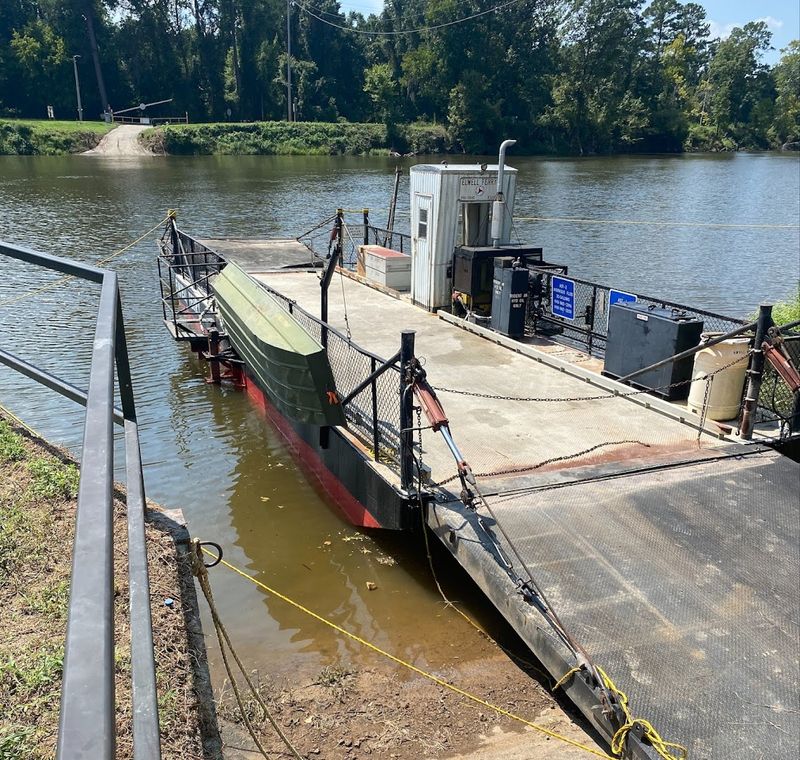
More than a century of operation gives Elwell Ferry a story that stretches far beyond a quick river crossing. Service began in 1905, when ferries were still practical lifelines for communities divided by waterways.
Before bridges and faster roads changed travel patterns, crossings like this helped farmers, families, workers, and neighbors move through the region with far less distance and difficulty. That long continuity is what makes the ferry feel so meaningful today.
Riders are not stepping onto a museum replica. They are using a route that still performs the job it was created to do.
The ferry has seen North Carolina change around it through new roads, new vehicles, storms, closures, repairs, and shifting travel habits, yet the basic purpose remains clear. One side of the river needs the other, and the ferry keeps that connection alive.
Thinking about everyone who crossed here before adds a quiet depth to the ride. A farmer with supplies, a family visiting relatives, a worker heading home, or a curious traveler with a camera all share the same brief passage across the Cape Fear.
Elwell Ferry carries vehicles, but it also carries a rare thread of community history that still moves.
The Cable Ferry Setup Keeps The Ride Unusually Simple
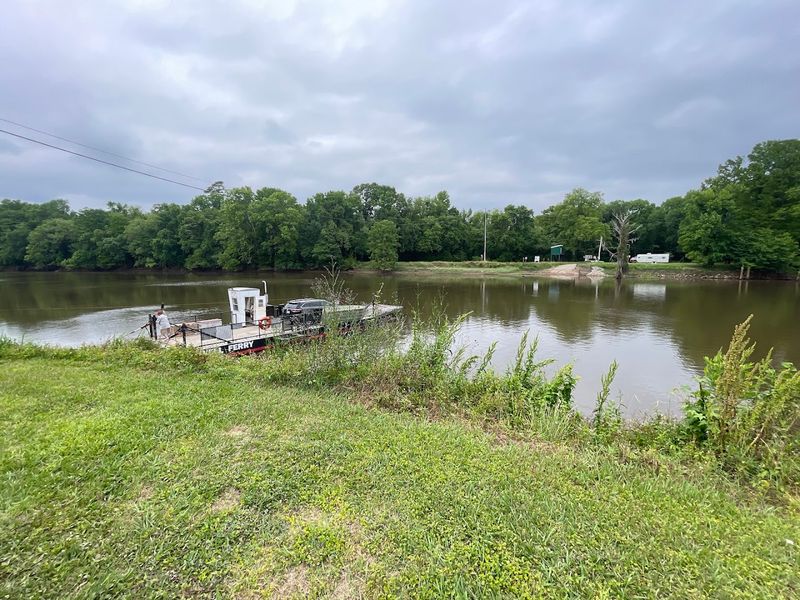
Engineering does not have to be complicated to be fascinating, and Elwell Ferry proves that with every crossing. The ferry operates as a cable ferry, guided across the Cape Fear River by a cable system that keeps the vessel aligned between the riverbanks.
That setup gives the ride its old-fashioned feel while still serving a practical transportation purpose. Watching the ferry move is part of the appeal because the mechanism is visible, direct, and easy to understand once riders see it in action.
The vessel does not behave like a typical tour boat turning freely on open water. Instead, it follows its crossing path with steady purpose, linking two ends of Elwell Ferry Road in a way that feels both modest and ingenious.
Rural ferry systems like this once made sense across waterways where bridges were expensive, distant, or unnecessary for the amount of traffic. Elwell’s continued operation shows how useful that older solution can still be in the right place.
The cable setup also reinforces the quiet rhythm of the ride. Nothing feels rushed or overly mechanized.
The ferry arrives, loads, crosses, unloads, and returns. That simplicity is not a weakness.
It is the reason the crossing feels so honest.
Kelly And Carvers Creek Stay Connected By Water
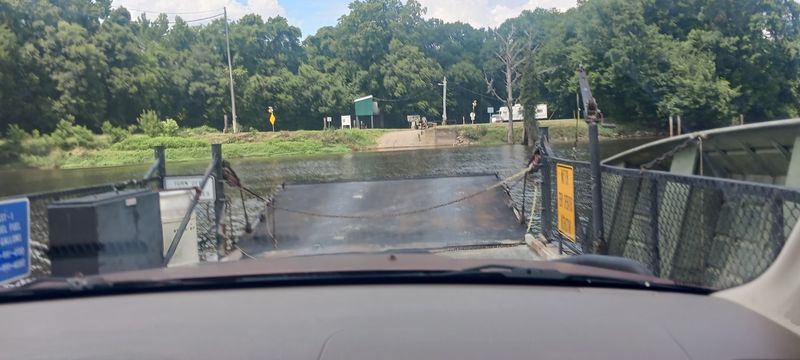
Rivers can separate communities just as easily as they connect them, and Elwell Ferry exists because this stretch of the Cape Fear River needed a practical link.
The crossing connects the Kelly side with the Carvers Creek side in Bladen County, giving local traffic a direct way across without turning a short trip into a much longer drive.
NCDOT-related reports note that the ferry typically runs seven days a week and moves vehicles across the Cape Fear River near Kelly, with no fare for vehicles. That practical value matters because the ferry is not only a charming road-trip stop.
It still serves people who live, work, and travel through the area. Visitors may treat the crossing as a hidden discovery, but locals understand its everyday usefulness.
That combination gives Elwell Ferry a rare kind of authenticity. It is interesting precisely because it was not built only to entertain.
It remains tied to the social geography of the region, where water shaped roads, routines, and relationships. A short ride across the river makes that history easy to feel.
For a few minutes, the route is not pavement or bridgework. It is a working connection between small communities that have depended on the crossing for generations.
The Short Crossing Turns Into The Whole Adventure
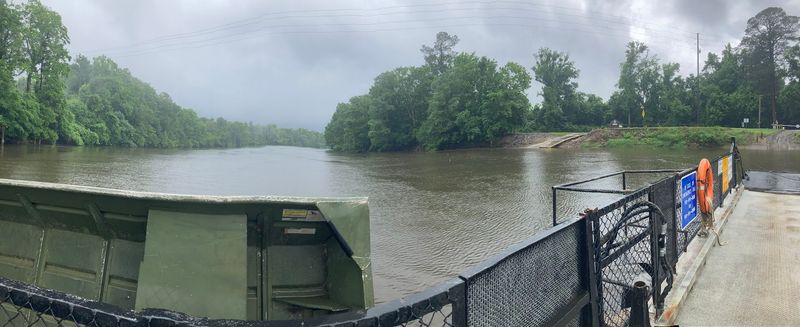
Measured by distance, Elwell Ferry is tiny. Measured by memory, it feels much bigger.
The ride across the Cape Fear River is often described as lasting only a few minutes, with Carolina Country calling it a two-minute ride that can send riders back in time. That quick timing is part of the surprise.
A person might detour to the ferry expecting a brief curiosity, then find that the short crossing becomes the highlight of the drive. The moment the deck starts moving, the pace changes.
Riders look upstream, glance back toward the bank, watch the cable guide the ferry, and notice how quiet the river feels compared with a regular road. Children tend to love the novelty because crossing water on a small ferry feels far more exciting than another bridge.
Adults enjoy it for a different reason. The ride creates a clean break from ordinary travel, a tiny pause where the journey itself matters more than the destination.
Photos help, but the real memory is the feeling of being carried slowly across a rural river on a ferry that has outlasted nearly every crossing like it.
High Water Can Still Decide The Schedule
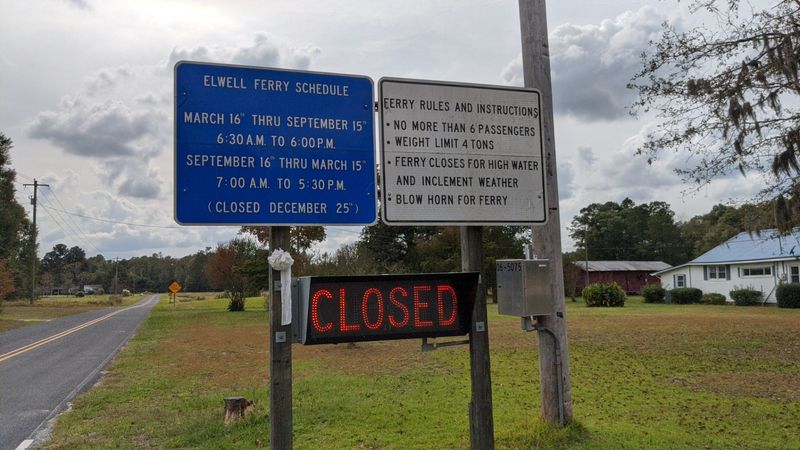
Nature still gets the final vote at Elwell Ferry, which makes planning ahead important. Heavy rain, high water, low water, mechanical issues, and river conditions can interrupt service, as recent local reports have noted during temporary pauses in operation.
That uncertainty is not a flaw so much as part of the reality of a small working ferry on a living river. Unlike a bridge, the ferry has to respond directly to the Cape Fear’s behavior.
A safe crossing depends on conditions, equipment, and operator judgment. Travelers hoping to ride should check current NCDOT travel information or local updates before making a special trip, especially after storms or extended rain.
Flexibility helps preserve the charm rather than turning the visit into a frustration. When the ferry is running, arriving at the riverbank feels like a small reward.
When it is not, the detour still offers a reminder that rural travel has always depended on weather, water, and patience. Elwell Ferry’s old-school character comes partly from that relationship with the river.
The crossing works on human scale and natural terms, which is exactly why it feels so different from the rest of the road.