Rockhounds Are Turning Up Prairie Agates, Nebraska’s State Rock, Across Toadstool Country Each Season
Nebraska’s official state rock didn’t even start out in Nebraska. Prairie agates formed in rock layers to the north and west, then ancient streams carried the pebbles into what is now the Panhandle.
I love that the stone breaks the usual agate rules. Plenty of prairie agates skip the neat stripes you expect, showing swirls, spots, and cloudy color instead.
Lawmakers named it the state rock in 1967, the same centennial year blue agate became the state gemstone.
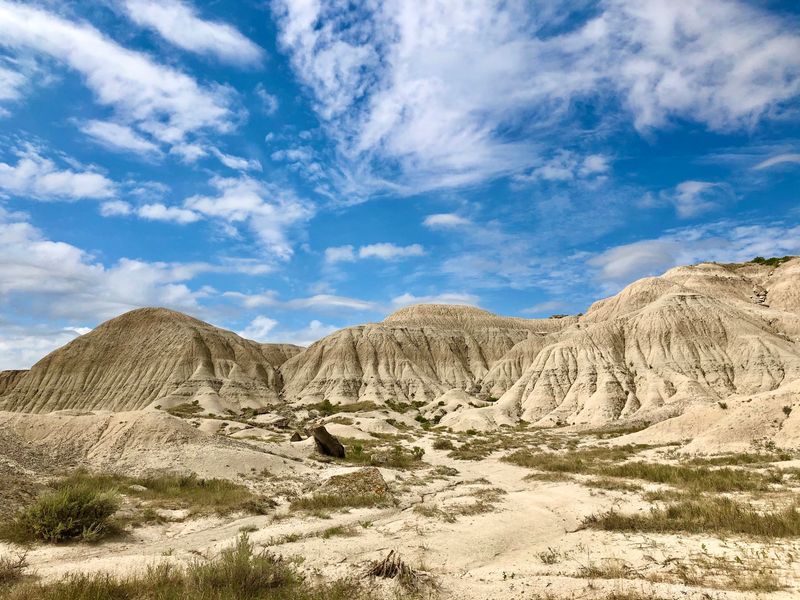
Today these pebbles sit loose on the ground in badlands that look borrowed from another planet. Hunters walk slowly, eyes down, scanning gravel for a glassy glint.
No shovel required.
I can’t think of a better excuse to slow down on a Nebraska backroad. The trick is knowing where you can pick up a rock, where you can’t, and what else is waiting out there.
So which pebble catches your eye first?
1. Prairie Agate
Rebels make the best state symbols, and this rock refuses to wear stripes. Most agates show crisp bands, while many prairie agates look swirled, mottled, or speckled instead.
Underneath the attitude, it’s chalcedony, a form of quartz. That’s why good pieces catch light with a glassy, see-through glow when you hold them up.
Nebraska made it the state rock in 1967, during the state’s centennial year. The timing feels fitting for a stone that took the long road to get here.
Geologists trace prairie agates to sedimentary rocks in Wyoming and South Dakota. Over millions of years, those rocks eroded and streams rolled the pebbles south into Nebraska.
Those trips left marks you can still feel. Many specimens carry a frosted, weathered skin, so a dull pebble may hide bright color inside.
Collectors usually find them as loose stones on the surface. You won’t need a quarry, just patience and sharp eyes.
Jewelry makers love them for their range of colors and translucency. Plenty of hunters prefer keeping them rough, though, as proof of a good day outside.
Either way, you’re holding a little travel story. It just happens to be millions of years long.
2. Blue Agate
Every rock family has a sibling who gets the fancier title. In Nebraska, that’s blue agate, officially named the state gemstone.
Lawmakers picked it in 1967, the same year they crowned the prairie agate. Talk about a family that shares the spotlight.
Blue agate is blue chalcedony, so it’s a cousin of the state rock. Expect a soft, pale blue shade rather than anything loud.
Some pieces show bands of blue and white. Others carry darker shapes inside that look like tiny drawings sealed in stone.
You’ll want to know this stone before heading out. It turns up in northwestern Nebraska too, often in the same kinds of places as prairie agates.
That means one hunt can deliver both state symbols. It’s a pretty good return for a walk with your eyes on the ground.
Jewelry makers like blue agate for its calm color. Polished, it can pass for something far pricier than a Panhandle find.
So keep an eye out for that pale blue flash. A hand lens helps you see the inner patterns once you’ve picked a piece up.
Your pocket may end up holding Nebraska’s whole rock lineup.
3. Toadstool Geologic Park
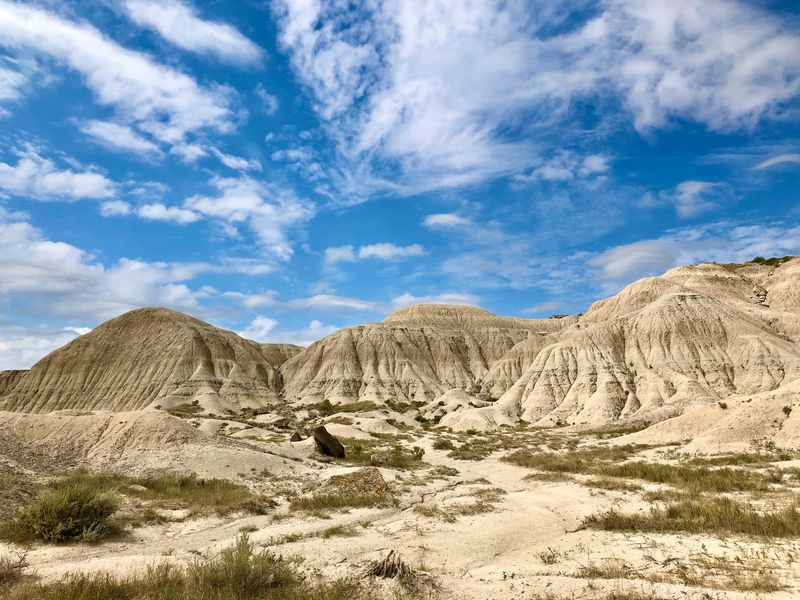
Giant mushrooms made of stone sound like a cartoon, yet they stand north of Crawford. Narrow clay pillars wear flat sandstone caps, and the name practically wrote itself.
Wind and water carved these badlands over a very long time. The rock layers date back roughly 38 to 24 million years.
A one-mile interpretive loop starts near the picnic area. It winds right through the strangest formations, and a kiosk at the trailhead explains the geology.
Fossil tracks and bones of ancient rhinos, horses, and dogs have been preserved here. That’s exactly why collecting anything inside the park is off-limits.
So think of Toadstool as the showroom, not the shopping aisle. Enjoy the views, snap photos, and save your agate hunting for outside the boundary.
A small campground offers a handful of sites with picnic tables and fire rings. Bring plenty of water, since you’ll need your own.
Pets can come along on a short leash. The open ground gets very hot in midsummer, with almost no shade anywhere.
Late spring and early fall make the gentlest visits. Rain can turn the gravel access road rough, so check conditions first.
Address: Toadstool Road, Crawford, NE 69346
4. Oglala National Grassland
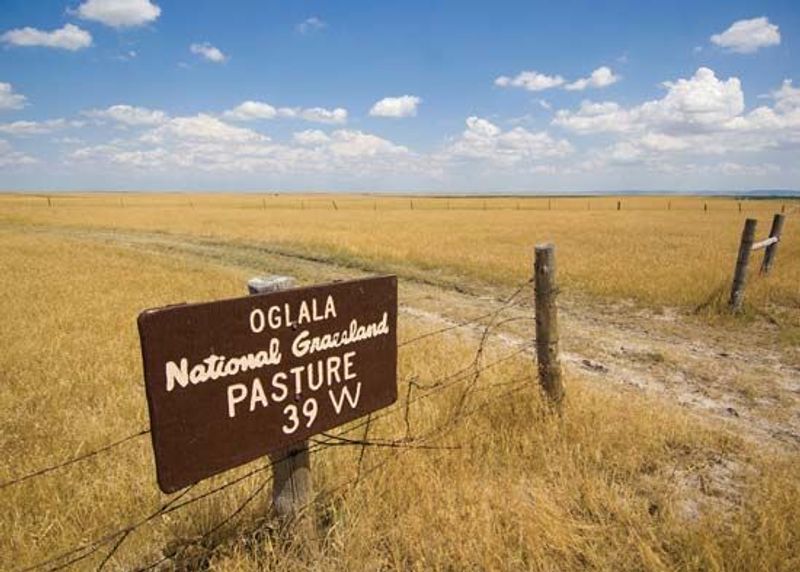
Here’s where the hunt actually happens, on a grassland bigger than many people expect. Toadstool sits inside it, but the wider grassland is open to hobby collecting.
You can generally surface collect rocks and minerals for personal, noncommercial use. No special permit is needed for that kind of casual hunting.
Forest Service guidance suggests a limit of about 25 pounds a day. Over a year, the total shouldn’t top 250 pounds.
That’s a lot of agates, honestly. Your car’s suspension may object before the rules do.
Hand tools only, so leave power diggers at home. A small rock hammer or trowel is plenty for loose surface stones.
Selling is not allowed for rocks gathered on these national forests and grasslands. Your finds stay a hobby, which keeps the hunt fun.
Fossils are a different story entirely. Bones, plant remains, tracks, and burrows are protected by federal law and must stay put.
When in doubt, leave it on the ground and snap a picture. Bring water, sun protection, and a good map, since open country here feels huge.
Address: Oglala National Grassland, Crawford, NE 69339
5. Sod House Replica
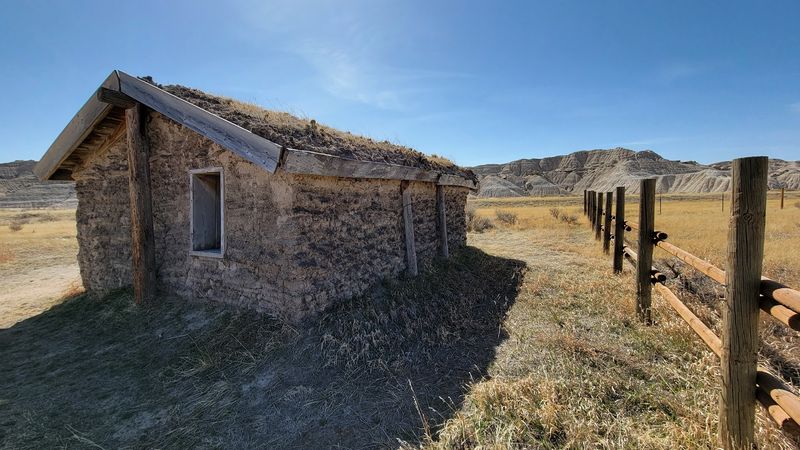
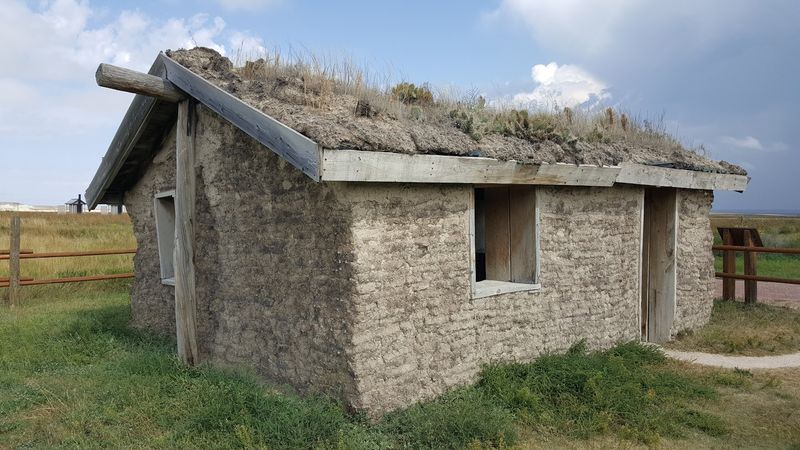
Homesteaders out here built with the only thing in endless supply: the ground itself. Near Toadstool’s trails, you can see how that looked.
A reconstructed sod house stands close to the park. It was built in 1984 near the site of an earlier soddie from 1929.
Those dates give you a neat gap to think about. The original went up when settlers still leaned on prairie sod for walls.
Grass roots held each cut block together like natural rebar. Stack enough of them, and you had a sturdy home with thick, earthy walls.
Seeing one in person beats any textbook photo. You get a real sense of how small and snug prairie living could be.
It also pairs nicely with an agate hunt. One stop shows ancient rock history, while the soddie shows a much more recent Nebraska chapter.
Kids especially tend to find the idea of dirt walls fascinating. Ask them where the windows would go before you peek inside.
Treat the structure gently, since it’s part of the site’s story. Then head back out and keep scanning the gravel for color.
Address: Toadstool Road, Crawford, NE 69346
6. Bison Trail
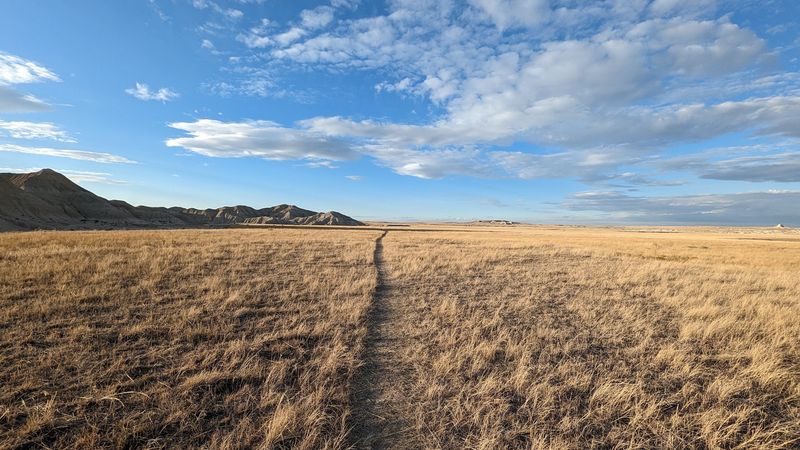
Three miles of prairie separate two very different kinds of history. The Bison Trail connects Toadstool Geologic Park with the Hudson-Meng Education and Research Center.
It branches off the park’s interpretive loop. From there it runs about three miles one way across open grassland and badlands.
That makes a six-mile round trip if you go out and back. Pack more water than seems reasonable, then add a little extra.
Hudson-Meng is known for a large bonebed of ancient bison. Researchers have studied the site for decades, which explains the trail’s fitting name.
Along the way, the scenery shifts from striped clay to rolling grass. It’s an easy place to lose track of time between landmarks.
Hikers who love agates should remember the rules. Inside the geologic park and on interpretive trails, collecting isn’t allowed.
Keep your eyes busy anyway, because spotting color is half the fun. Photos weigh nothing, and they never break any federal laws.
A five-mile loop through badlands and grassland also leaves from the area. It forms part of the long-distance Great Plains Trail network.
Address: Toadstool Road, Crawford, NE 69346
7. Spring and Fall Hunting Season
Timing matters as much as eyesight when you’re chasing agates in the Panhandle. Late spring and early fall are the sweet spots for comfortable hunting.
May and June bring milder days on the open prairie. September and October offer a second window before winter shows up.
July and August can push past 100 degrees out there. With no shade around, midsummer hunts get uncomfortable fast.
Winter brings snow and freezing temperatures to northwest Nebraska. Dirt roads can close, which ends the treasure hunt before it starts.
Rain changes the picture too. A good soaking can make gravel and dirt roads hard to travel for a while.
On the bright side, weather also helps rockhounds. Wind and water keep wearing down the badlands, which can expose fresh pebbles over time.
That’s part of why people return season after season. The same stretch of ground can look a little different on the next trip.
Most visitors reach the trailhead fine in a regular car. Head deeper into remote areas, though, and higher clearance makes life easier.
Pick your window, check the forecast, and go slow. Your next favorite rock might be sitting right beside your boot.